Author: lthistle@whyy.org

  • U.S. and Iran exchange strikes, threatening peace talks to end war

    Transcript:

    STEVE INSKEEP, HOST:

    The United States and Iran spent another weekend of their ceasefire not ceasing fire.

    LEILA FADEL, HOST:

    The latest exchange of missiles began in the Strait of Hormuz. Iranians say Iran alone has control. Iran opposed a U.N.-backed plan, fired on ships, starting a whole new round of attacks with the U.S. The latest missiles yesterday went after U.S. bases in Kuwait and Bahrain.

    INSKEEP: In a moment, we’ll hear from Jake Sullivan – former U.S. national security adviser – with long experience with Iran. We begin with NPR’s Carrie Kahn, who’s in Tel Aviv. Hi there, Carrie.

    CARRIE KAHN, BYLINE: Hi.

    INSKEEP: OK. I just got to ask, are the ceasefire peace talks – the continuing peace talks still on?

    KAHN: President Trump just posted on his social media platform that, quote, “Iran has requested a meeting,” and he said it will take place tomorrow in Doha. Iran’s deputy foreign minister earlier today, however, was quoted by Iranian media saying that consultations continue with the mediator Qatar but that technical talks with the U.S. are not yet planned for this week and will be held only when, quote, “the conditions are met.” And he did not elaborate.

    INSKEEP: And yet we did have this exchange of fire. What happened over the weekend?

    KAHN: In recent days, Iran struck two ships attempting passage through the Strait of Hormuz. These ships were going through this newly coordinated route that hugged the coast of Oman, which shares part of the strait with Iran. Last week, the U.N.’s International Maritime Organization and Oman set up this route. Iran says it is a violation of the preliminary plan for permanent peace. After Iran’s attack on the first ship, the U.S. then struck multiple drone, missile and radar sites in Iran. Then Iran fired into Bahrain and Kuwait in retaliation.

    INSKEEP: OK. If Iran is striking ships on their way through the strait, is the strait open?

    KAHN: Well, we’ll see. Traffic did drop over the weekend, according to monitoring groups. But the conflict over who controls the Strait of Hormuz continues. Secretary of State Marco Rubio is just in the region and told Gulf allies it will remain open. But yesterday, Iran’s foreign minister, Abbas Araghchi, was adamant. He said any alternative or, quote, “separate arrangements” for the strait will lead to complications.

    (SOUNDBITE OF ARCHIVED RECORDING)

    ABBAS ARAGHCHI: (Non-English language spoken).

    KAHN: “The responsibility for these arrangements lies with Iran and no other entity or country,” he said.

    INSKEEP: OK. So we’ve got two major sticking points in negotiations. One we’ve just been discussing, the Strait of Hormuz. The other is Lebanon, where Israeli troops remain in the southern part of the country, and they say they’re going to stay there. But Israel did reach an agreement with Lebanon’s government. What’s going on there?

    KAHN: Yes. A deal was reached between the U.S., Israel and the Lebanese government late Friday. Israel says it’s historic, with the Lebanese army agreeing to disarm Hezbollah. Hezbollah, however, was not part of those talks, and its leader over the weekend condemned the deal and demanded Israel’s withdrawal from Lebanon. Last night I spoke with Ophir Falk. He’s the foreign affairs adviser to Israel’s prime minister, and I asked him repeatedly, how is this deal going to work without Hezbollah signing on and given the Lebanese army’s poor track record? And here’s what he said.

    OPHIR FALK: There’s only going to be one weapon in Lebanon, and it’s going to be the Lebanese government. It’s historic that they recognize Israel’s sovereignty, and they seek peace with Israel. They’re saying that straight out.

    KAHN: He said Israel has laid the path for the Lebanese army by greatly degrading Hezbollah’s military might. But, Steve, fighting continued over the weekend, too. Despite the deal, authorities in Lebanon and Israel say there were multiple deaths in Lebanon, and one Israeli soldier was killed.

    INSKEEP: Carrie, thanks for the update.

    KAHN: You’re welcome.

    INSKEEP: That’s NPR’s Carrie Kahn in Tel Aviv.
  • Record-breaking heat wave moves east, engulfing more of Europe

    Transcript:

    STEVE INSKEEP, HOST:

    A heat wave that has shattered records and killed hundreds across Western Europe is now rolling eastward into Lithuania, Poland and Ukraine. It remains very hot in Rome, which is where we find reporter Megan Williams.

    (SOUNDBITE OF FOUNTAIN TRICKLING)

    MEGAN WILLIAMS, BYLINE: Here in Rome, it’s not the grand tourist fountains that locals flock to in this heat.

    (SOUNDBITE OF FOUNTAIN TRICKLING)

    WILLIAMS: It’s these smaller ones in neighborhoods across the city, the iron street-corner spigots that run cold all day, all year. Italy has been sweltering for weeks, with temperatures reaching 104. France recorded its hottest day ever, one town hitting 111 degrees. Spain topped 113, and Britain issued its highest-level heat alert. What scientists once predicted is now a reality. Europe is warming faster than any other inhabited continent, and heat waves like this are the new normal. Across Europe, more than 300 people have died since last week, many drowning as they sought relief in rivers and lakes. Now that heat dome is rolling east.

    (SOUNDBITE OF ACCORDION PLAYING)

    WILLIAMS: In Vilnius, Lithuania – which shattered its all-time June record Sunday at 97 degrees – people stroll under umbrellas and line up for ice cream.

    AURELIJA BRAZE: I will definitely go to work, as I usually work from home. I don’t have AC at home, and my work office has AC, so I definitely go in.

    WILLIAMS: Says finance compliance worker Aurelija Braze. Poland and the Czech Republic both set all-time temperature records this week. But further east in Ukraine, the heat compounds a summer already strained by war.

    (SOUNDBITE OF WATER LAPPING)

    WILLIAMS: In Kyiv, families are cooling off at Dnipro River beaches – for most, the only option.

    OLENA KLYMENKO: (Speaking Ukranian).

    WILLIAMS: “I know the city where the shelters are. Going somewhere unfamiliar would be more stressful than staying in Kyiv,” said resident Olena Klymenko.

    For NPR News, I’m Megan Williams in Rome.

    (SOUNDBITE OF MUSIC)

  • 3 World Cup rivals find ‘Common Ground’ in a cross-border beer

    3 World Cup rivals find ‘Common Ground’ in a cross-border beer

    The British betting company William Hill predicts that soccer fans will throw back more than 5 million pints of beer in stadiums and fan zones during this year’s World Cup. And that number doesn’t even account for the millions of pints being poured in bars as fans tune in to the global soccer event.

    But while international soccer crowds are focusing on goals and penalties, a trio of craft breweries from the tournament’s three host nations are using the tournament to brew something increasingly rare: cross-border solidarity.

    A shared recipe with local spin

    The collaboration began months ago over a flurry of video chats and emails. The beermakers at Rey Árbol Brewing Co. in Mexico, Headlands Brewing in the United States, and Cabin Brewing Co. in Canada set out to design a single, unified recipe representing the brewing traditions of all three nations.

    “It’s a Mexican lager,” said Alejandro Gomez, founder of Rey Árbol.

    “That’s like a West Coast IPA,” said Ryan Frank, chief operating officer and brewmaster for Headlands.

    “And up in Canada, most of our beers are hop driven,” said Haydon Dewes, co-founder of Cabin. “So we thought, let’s go for a dry-hopped Mexican lager.”

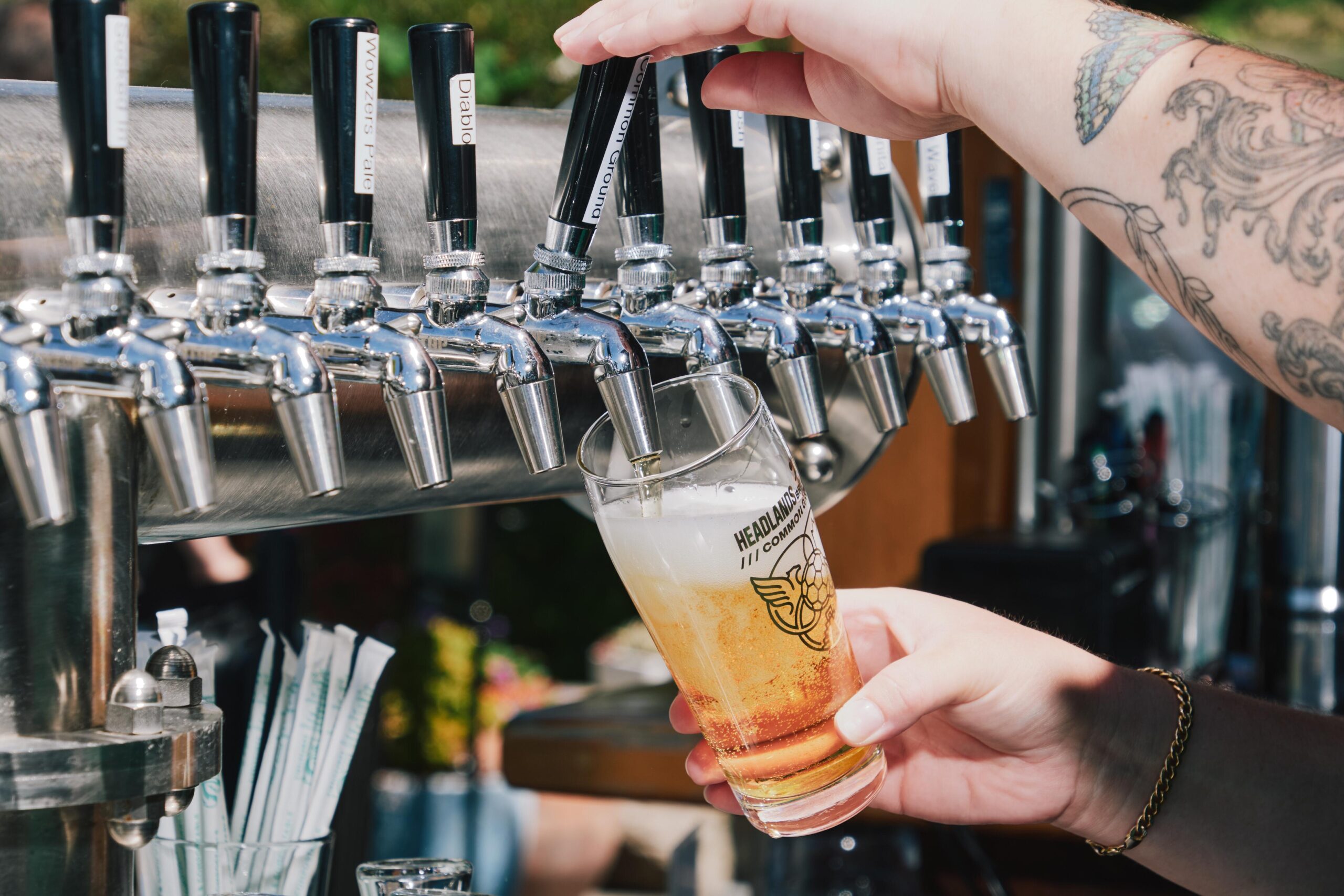
    While all three breweries share the exact same recipe, each is giving the final product a distinct local spin, including unique, regionally designed labels. A four-pack of the U.S version costs $15.99. Frank said Headlands has produced about 130 cases of the limited-run brew.

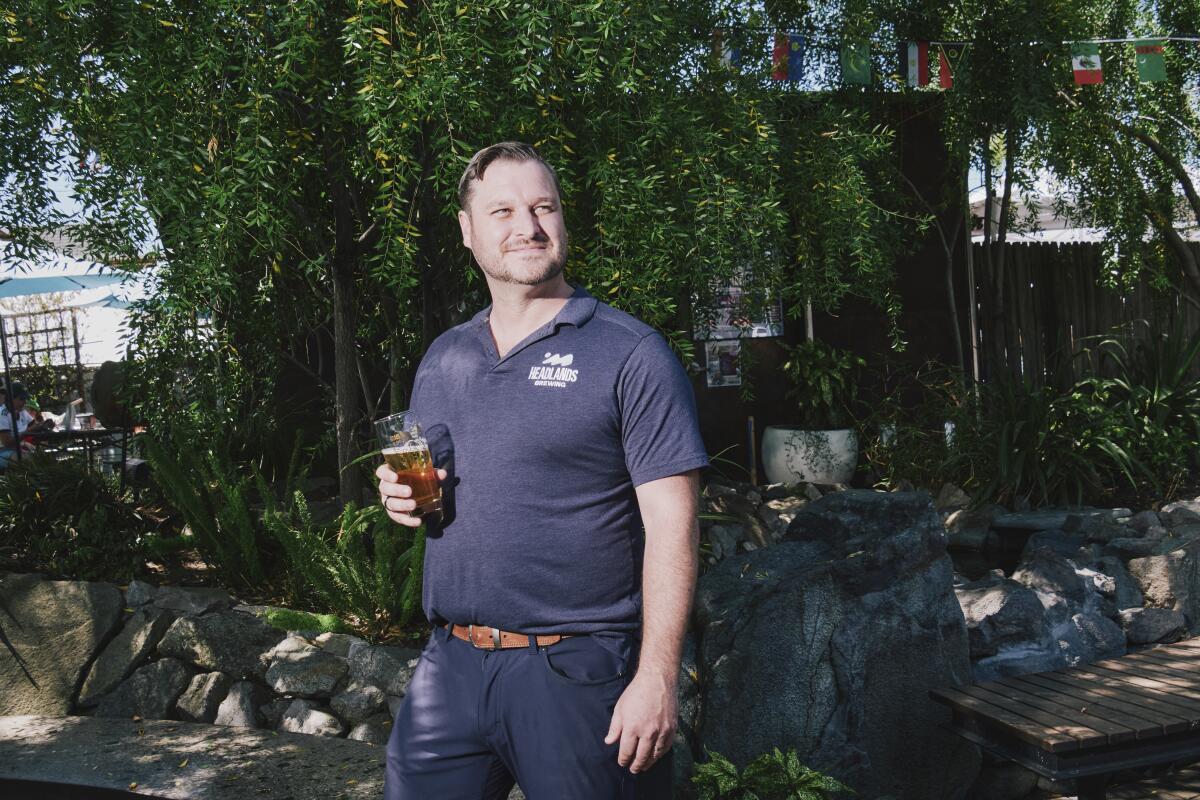
    Headlands Brewing COO and brewmaster Ryan Frank drinks a Common Ground beer in Berkeley, Calif., on June 11.
    Headlands Brewing COO and brewmaster Ryan Frank drinks a Common Ground beer in Berkeley, Calif., on June 11. (Justin Gellerson for NPR)

    For the brewers, however, the project is less about marketing and more about connection: They named the multinational beer “Common Ground.”

    “When I go to California or Canada, they will treat me like family,” Gomez said.

    “It makes the world feel so much smaller,” said Dewes.

    “It’s about building bridges and knowing what’s important in life,” said Frank. “And for us, that’s soccer and beer.”

    Geopolitical friction in the taproom

    The official rhetoric surrounding World Cup 2026 mirrors the brewers’ optimism, with promotional materials promising a tournament where billions are “united as individuals, united as billions.”

    Yet this idealistic messaging stands in sharp contrast to a prickly geopolitical reality. Tensions between the U.S., Mexico and Canada have mounted over trade tariffs and auto manufacturing standards as the three nations renegotiate long-standing trade agreements.

    The independent brewers behind Common Ground are feeling that friction firsthand through the rising costs of aluminum cans and raw ingredients.

    “There are 15% tariffs slapped on any European-grown hops, which are really critical to some of our core brands,” Frank said.

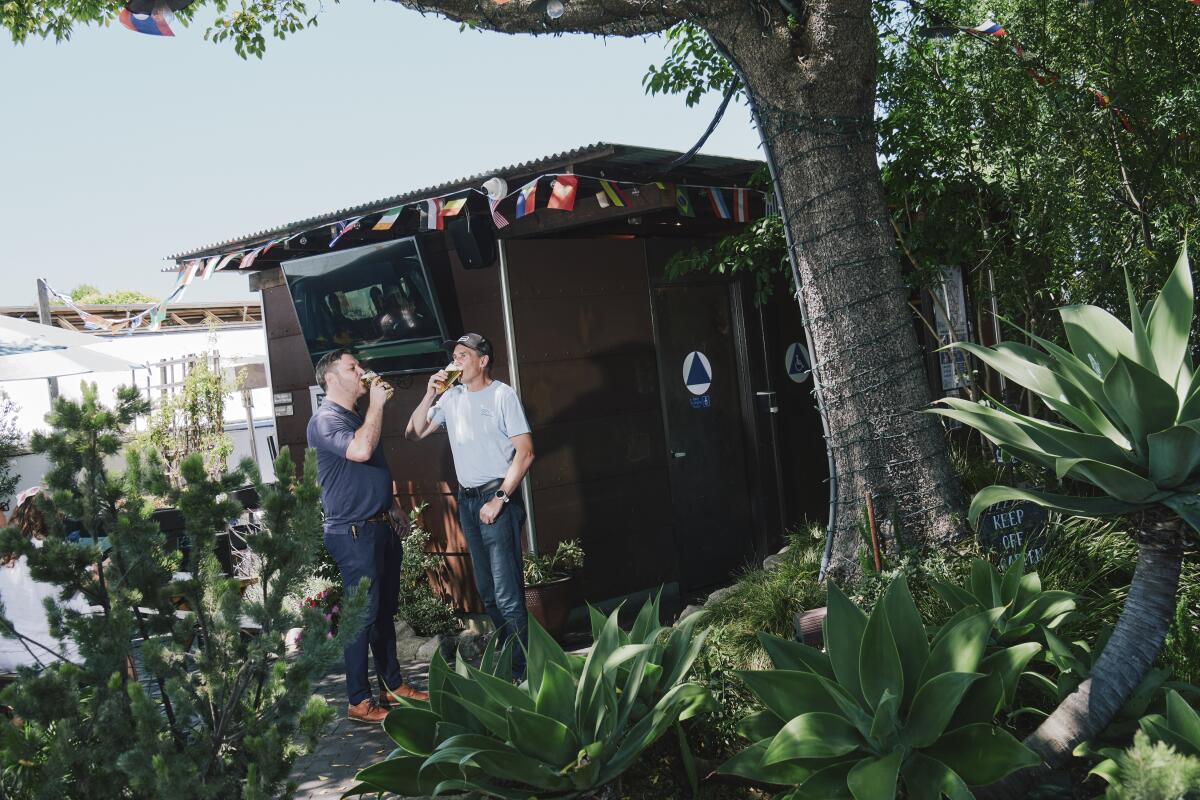
    Headlands Brewing brewmaster Ryan Frank and CEO Austin Sharp share a Common Ground beer in Berkeley, Calif., ahead of the first World Cup game on June 11.
    Headlands Brewing brewmaster Ryan Frank and CEO Austin Sharp share a Common Ground beer in Berkeley, Calif., ahead of the first World Cup game on June 11. (Justin Gellerson for NPR)

    The political discord hasn’t just been confined to trade boards.

    When signing an executive order to establish a White House Task Force for the World Cup in March 2025, President Trump suggested that cross-border hostilities might actually benefit the tournament. “Oh, I think it’s gonna make it more exciting,” the president said.

    A bittersweet reminder

    Tension on the soccer field is one thing; between nations, it’s another.

    “It’s true that when it comes to the actual soccer, we’ve developed a very healthy, vibrant rivalry between the three countries,” said Andrés Martinez, the author of The Great Game: A Tale of Two Footballs and America’s Quest to Conquer Global Sport and co-director of Arizona State University’s Great Game Lab, which studies the intersection of sports, media and geopolitics. “But we’re also linked together in this very symbiotic relationship.”

    Martinez said that when the U.S., Canada and Mexico initially launched their collaborative bid to host the World Cup back in 2017, the political climate was warmer.

    “It was meant to showcase these tight bonds that had developed between the three countries,” Martinez said.

    The makers of Common Ground used a shared recipe, but all created their own distinct packaging for the beer: Canada's Cabin Brewing Co.; Mexico's Rey Árbol Brewing Co.; the United States' Headlands Brewing.
    The makers of Common Ground used a shared recipe, but all created their own distinct packaging for the beer: Canada’s Cabin Brewing Co.; Mexico’s Rey Árbol Brewing Co.; the United States’ Headlands Brewing. (Cabin Brewing Company, Rey Árbol Brewing Company, Headlands Brewing)

    But relations have soured since then, making cross-border business collaborations like Common Ground an anomaly rather than the norm for this tournament.

    “To see craft beers across the three countries coming together like this, it’s a bittersweet reminder of what we were hoping to see a lot more of,” Martinez said.

    Finding the real common ground

    If trade wars and political posturing are looming large in Washington, D.C., Ottawa and Mexico City, they feel a world away at Headlands Brewing’s busy North Berkeley location.

    As fans gathered to watch a crucial match between Mexico and South Africa at the start of the tournament, the sunny patio erupted into cheers and shrieks of “Goal!” when Mexico found the back of the net.

    Headlands Brewing hosts a screening of the first World Cup game on June 11 in Berkeley, Calif.
    Headlands Brewing hosts a screening of the first World Cup game on June 11 in Berkeley, Calif. (Justin Gellerson for NPR)

    Hovering over a pint of the collaborative brew, soccer fan Roberto Mandujano reflected on the cross-border experiment.

    “Three different ways, three different taste buds come together to make something cool,” he said.

    When asked about the underlying political tensions between the host nations, Mandujano shrugged off the discord.

    “We live in a world where everyone wants to make everything political,” Mandujano said. “But I think we’re all here for soccer. So I guess that’s the common ground.”

    Transcript:

    SCOTT DETROW, HOST:

    The British betting company William Hill predicts more than 5 million pints of beer will be consumed in stadiums and fan zones at this year’s World Cup, and that is before you count all the beer being drunk in bars where people are watching the tournament. Three craft breweries based in three World Cup host countries are using the occasion to brew something increasingly rare, cross-border solidarity. NPR’s Chloe Veltman reports.

    CHLOE VELTMAN, BYLINE: The beermakers at Rey Arbol Brewing Co. in Mexico, Headlands Brewing in the U.S. and Cabin Brewing Co. in Canada say they came up with the recipe for their World Cup-themed beer over months of back-and-forth on video chat and email.

    ALEJANDRO GOMEZ: It’s a Mexican lager.

    RYAN FRANK: That is like a West Coast IPA.

    HAYDON DEWES: And then us up in Canada, most of our beers are hop driven. So we thought, let’s go for a dry-hopped Mexican lager.

    VELTMAN: Cabin’s Haydon Dewes says they’re all sharing the same recipe, but each brewery is giving the product its own individual spin.

    DEWES: All three of us ended up designing our own label for the beer.

    VELTMAN: Rey Arbol’s Alejandro Gomez says he’s created World Cup-themed beers before, but this one is about more than just making a product.

    GOMEZ: When I go to California or Canada, they will treat me like family.

    VELTMAN: And Headlands’ Ryan Frank says they named their trinational collaboration Common Ground in honor of the cross-border friendship.

    FRANK: Building bridges and knowing what’s important in life – and for us, that’s soccer and beer.

    (SOUNDBITE OF AD, “THIS IS FIFA WORLD CUP 26”)

    UNIDENTIFIED NARRATOR: Sixteen cities, 48 teams…

    VELTMAN: The official messaging around the World Cup is also about building bridges.

    (SOUNDBITE OF AD, “THIS IS FIFA WORLD CUP 26”)

    UNIDENTIFIED NARRATOR: All of us, united as individuals, united as billions.

    VELTMAN: But this rhetoric stands in sharp contrast to geopolitical realities. Tensions between the U.S., Mexico and Canada over everything from trade tariffs to auto manufacturing standards are high. The beermakers behind Common Ground are feeling the friction – for example, Frank says, through the rising costs of aluminum cans and raw ingredients.

    FRANK: There are tariffs slapped on any European-grown hops, which are really critical to some of our core brands.

    VELTMAN: Meanwhile, when signing an executive order establishing a White House task force for the World Cup in March 2025, President Trump said he viewed the cross-border hostilities as a good thing for the World Cup.

    (SOUNDBITE OF ARCHIVED RECORDING)

    PRESIDENT DONALD TRUMP: Oh, I think it’s going to make it more exciting.

    ANDRES MARTINEZ: It’s true that when it comes to the actual soccer, we’ve developed a very healthy, vibrant rivalry between the three countries.

    VELTMAN: This is Andres Martinez. He’s the codirector of Arizona State University’s Great Game Lab, which explores the connection between sport media and geopolitics.

    MARTINEZ: But we’re also linked together in this very symbiotic relationship.

    VELTMAN: Martinez says when the U.S., Canada and Mexico first launched their collaborative bid to cohost the World Cup in 2017, they were closer partners.

    MARTINEZ: It was meant to showcase these tight bonds that had developed between the three countries.

    VELTMAN: But things have soured since then, and he says cross-border collaborations related to this year’s event, like Common Ground, are rare.

    MARTINEZ: To see craft beers across the three countries coming together like this, it’s a bittersweet reminder of what we were hoping to see a lot more of, right?

    VELTMAN: Geopolitics couldn’t be further from the minds of fans as they watch Mexico play South Africa at Headlands Brewing’s North Berkeley location.

    UNIDENTIFIED FAN: Woo, Mexico.

    VELTMAN: Roberto Mandujano sips on a pint of Common Ground.

    ROBERTO MANDUJANO: Three different ways – right? – three different tastebuds come together and make something cool.

    VELTMAN: He’s less enthusiastic about the topic of cross-border relations.

    MANDUJANO: We live in a world where everyone wants to make everything political, right? But I think it’s more of, I guess, we’re all here for soccer, right?

    VELTMAN: The Mexico fan says that’s the true common ground. Chloe Veltman, NPR News, Berkeley, California.

  • People are taking allergy and heartburn pills for PMS. Could it work?

    For the latest stories on the science of healthy living, subscribe to NPR’s Health newsletter.


    People who feel extra rotten in the days leading up to their period say they’re finding relief from a new TikTok trend.

    It’s a combination of two over-the-counter drugs: an allergy pill, such as Claritin or Zyrtec, along with Pepcid AC, the heartburn medication.

    It might sound unbelievable, but after dealing with years of unexplained symptoms, Terese Hansen of Omaha, Neb., was willing to try almost anything.

    Hansen told NPR that for the past four years she’s suffered from persistent nausea, heartburn and an erratic body temperature: She felt constantly on edge and exhausted. And her symptoms got worse around her period.

    “I could not be around anyone because I knew I was unpleasant,” she says.

    The TikTok videos of people taking Pepcid AC and allergy medicine impressed Hansen, especially those who claimed it helps with their premenstrual dysphoric disorder, or PMDD, which is when people experience depression and anxiety caused by premenstrual hormonal shifts.

    After talking to her doctor, she decided to “take a shot in the dark” by giving the TikTok trend a try.

    She says it was like a switch in her body flipped from bad to good, improving her physical symptoms, as well as her energy and mood.

    “It was nuts,” she recalls. “My kids noticed, my boyfriend noticed. My boss noticed.”

    The claim

    TikTokers say that taking a combination of allergy medication and Pepcid AC helps to combat their premenstrual blues, leading them to feel less irritable and more energetic. Others going through perimenopause report that this combo helps to lessen similar symptoms.

    The evidence

    There haven’t been clinical trials testing the safety or efficacy of this TikTok trend.

    “This is basically an evidence-free zone,” says Leigh A. Frame, executive director of the Office of Integrative Medicine & Health at George Washington University. “There’s no evidence that it does or doesn’t work.”

    However, experts who spoke to NPR for this story agree there’s a plausible biological mechanism for why Hansen and others may be finding benefit from this over-the-counter hack.

    It has to do with histamine.

    Histamine is a chemical your immune system releases when your body comes into contact with an allergen. It triggers an inflammatory response, which is why you feel crappy during an allergic reaction.

    There’s some evidence to suggest that histamine also fluctuates with your menstrual cycle.

    Estrogen, which stimulates the release of histamine, ebbs and flows throughout the month. Progesterone seems to act as a sort of natural antihistamine, and in the days leading up to your period, progesterone takes a nosedive.

    And in perimenopause, levels of both hormones rise and fall rapidly, often erratically.

    These dramatic shifts can cause moodiness and discomfort, explains Dr. Mara Rivera, an Austin-based psychiatrist who specializes in the mental health challenges related to the menstrual cycle and reproductive health transitions.

    Pepcid AC and allergy pills are both histamine blockers and act on different receptors throughout the body. Though the relationship between hormones and histamine is not well understood, Rivera says the theory is that these over-the-counter drugs may help keep histamine in check, essentially replacing progesterone’s effect.

    Histamine also interacts with neurotransmitter systems, including serotonin and dopamine. Anecdotally, Rivera notes some of her patients report mental health benefits after taking antihistamines for other conditions, such as allergies.

    In some ways, Rivera sees this trend as a modern-day example of how some old wives’ tales hold a pearl of truth.

    “Women have been doing this forever, just talking to one another, and seeing what works,” she says.

    It’s possible that people are experiencing some level of placebo effect, says Dr. Tami Rowen, a gynecologist at the University of California, San Francisco.

    She notes that multiple studies show that patients benefit from the placebo effect, whether or not a medication works. That might be happening with these over-the-counter antihistamines, says Rowen, who agrees with Rivera that people are likely experiencing real relief.

    She notes that currently the treatments for perimenopause and PMDD are limited.

    “As an academic researcher myself, it would be lovely if there was a way to study this,” she said.

    A Band-Aid, not a solution

    There’s no clinical evidence that this over-the-counter hack works, says Frame, who worries that people who use Pepcid AC and allergy medicine to treat their symptoms aren’t getting to the bottom of why they’re sick. Histamine is associated with all sorts of health problems, including hormonal fluctuations, poor sleep or thyroid issues.

    “A healthy menstrual cycle should not be painful,” she says. “That’s a misrepresentation that we have been disserved by.”

    The popularity of this online trend shows there’s a real need to improve research into women’s health, she adds.

    The bottom line

    There’s no data to support their use for PMDD or other medical conditions, but it might be reasonable to try these medications temporarily while waiting to connect with a specialist, says Frame. She warns that people should speak with their doctors before taking any new medications.

    While Pepcid AC and allergy drugs are relatively low-risk, they are not risk-free. Antihistamines can cause drowsiness, fatigue, dry mouth, gastrointestinal symptoms and adverse drug interactions, especially among older adults and those with kidney or liver issues.

    Transcript:

    LEILA FADEL, HOST:

    In the U.S., there’s a new TikTok trend for people who feel extra rotten in the days leading up to their period. Users recommend a combination of two over-the-counter drugs, an allergy pill, like Claritin or Zyrtec, taken with Pepcid AC, the heartburn medication. Health journalist Sarah Boden reports on this premenstrual hack.

    SARAH BODEN: Terese Hansen of Omaha, Nebraska, has been suffering from a host of unexplained symptoms. For years, she’s dealt with heartburn, nausea. Her body temperature goes up and down. She was constantly on edge, especially before her period.

    TERESE HANSEN: I could not be around anybody because I knew that I was unpleasant.

    BODEN: Hansen says her doctors couldn’t figure it out. Then a few months ago, she started seeing TikTok videos of people taking Pepcid AC and allergy medicine. She was impressed by those who said it improved their mood.

    HANSEN: Specifically around hormonal times, like around their PMDD issues.

    BODEN: PMDD is when you feel really anxious or depressed before your period. Hansen says, with her doctor’s blessing, she gave it a try and started to feel a whole lot better.

    HANSEN: It was nuts. Like, my whole life flipped. My kids noticed. My boyfriend noticed. Like, my boss noticed.

    BODEN: But why would over-the-counter heartburn and allergy medicine help Hansen’s symptoms while improving her energy and mood? Well, both are histamine blockers. Dr. Mara Rivera, an Austin-based psychiatrist says histamine can really affect how you feel. It’s why you feel so crappy when you have an allergic reaction.

    MARA RIVERA: The headaches, flushing, stomach upset.

    BODEN: Histamine is a chemical that your immune system releases. It also interacts with neurotransmitter systems, including serotonin and dopamine.

    RIVERA: I have definitely had patients who have used antihistamines, actually, for other conditions and notice mental health benefits.

    BODEN: Some evidence to suggest that histamine also fluctuates with your menstrual cycle, which is plausible because the hormone estrogen stimulates histamine release. And in the days leading up to your period, your level of another hormone, progesterone, takes a nosedive.

    RIVERA: Progesterone seems to be, in some ways, a natural antihistamine.

    BODEN: Meaning it prevents the inflammatory reaction that makes you feel like garbage. So these over the counter drugs might replace what the progesterone does by keeping your histamine in check. At least that’s the theory.

    LEIGH A FRAME: We have a real need to improve the research in women’s health.

    BODEN: Leigh A. Frame is executive director of the Office of Integrative Medicine and Health at George Washington University. Frame notes, there’s no clinical evidence that this over-the-counter hack actually works, and she worries that people who use it to treat their symptoms aren’t getting to the bottom of why they’re sick.

    FRAME: You often need someone who really is an expert so they can look at, is it hormonal fluctuations? Is your sleep disturbed?

    BODEN: Do you exercise? Are you stressed? How’s your thyroid?

    FRAME: What does your nutrition look like?

    BODEN: It can take a while to find the right specialist. So Frame says it might be reasonable to temporarily use these medications. Pepcid AC and allergy drugs are relatively low risk, though, obviously, talk to your doctor. But even if these medicines do improve your symptoms…

    FRAME: A healthy menstrual cycle should not be painful. And that’s a misrepresentation that we have been disserved by.

    BODEN: She says this over-the-counter hack is likely a Band-Aid, not a solution.

    For NPR News, I’m Sarah Boden.

  • Red, white and glowing blue: Trump’s push for new reactors reaches the finish line

    Red, white and glowing blue: Trump’s push for new reactors reaches the finish line

    A little over a year ago, President Trump set an ambitious goal: He wanted to see American companies build at least three new experimental nuclear reactors by July 4, 2026, the 250th anniversary of the Declaration of Independence.

    Shortly after Trump signed an executive order enshrining his goal, the Department of Energy launched its Reactor Pilot Program. The program is designed to help companies build and run test reactors quickly, in part by radically cutting back on the regulations required for such reactors.

    That program has sparked a nuclear race, and with less than a week to go, two companies have already reached the goal of switching on their reactor (“going critical” in nuclear-speak).

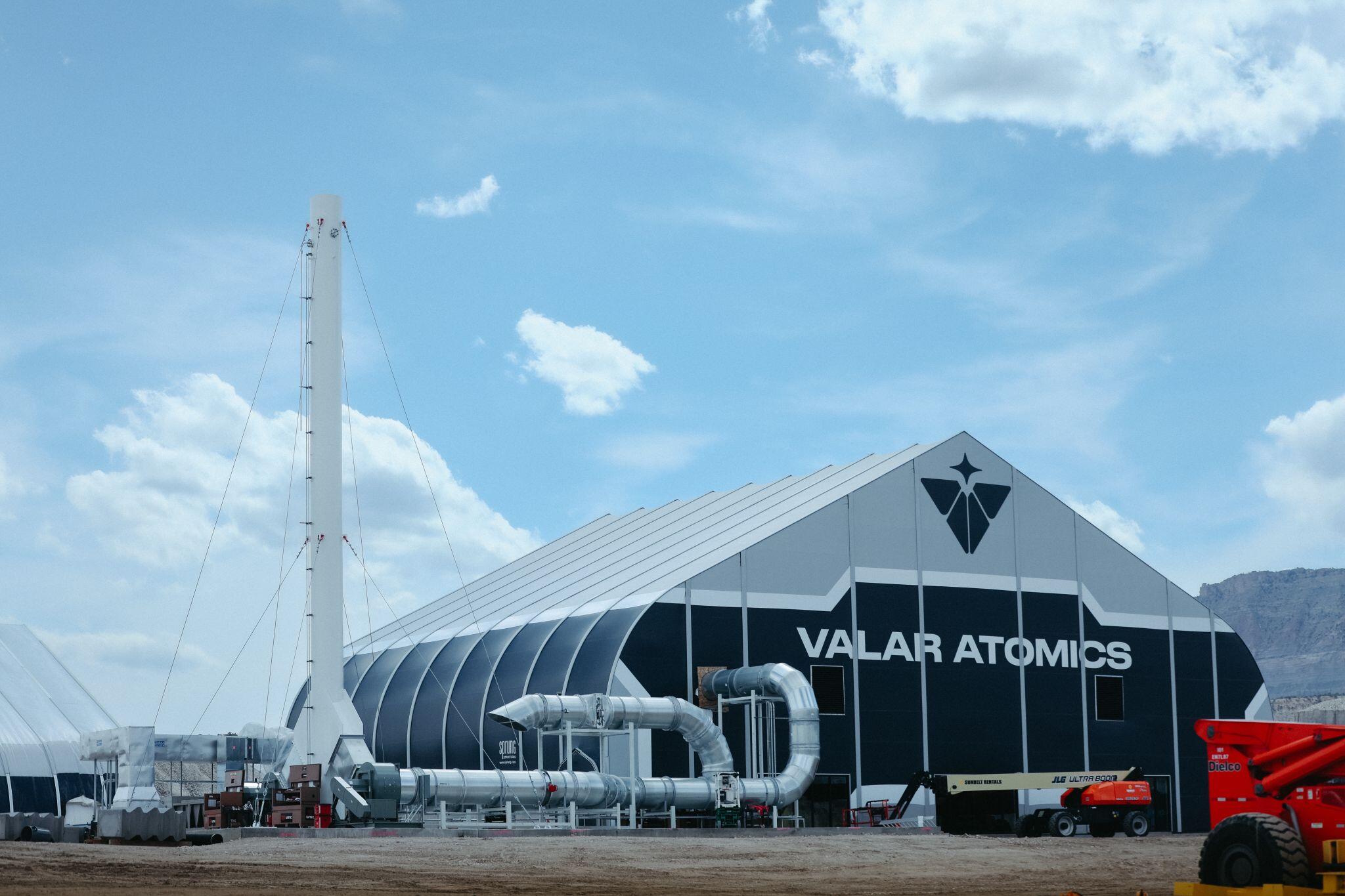
    On June 4, Antares Nuclear announced it had gone critical, and Valar Atomics said it went critical on June 18 and is now producing tens of kilowatts of heat from its new reactor core, which is operating out of a tentlike structure in the Utah desert.

    Other companies are getting close to making the deadline, and all this happened in less than the span of a year.

    “We haven’t done anything this fast, basically ever,” said Nick Touran, chief nuclear officer at Ocean Atomics, which seeks to put nuclear power onto civilian ships. His company isn’t part of this program, but he has been tracking it closely.

    He says this pilot program could jump-start America’s nuclear industry.

    President Trump displays an executive order regarding nuclear reactor testing in the Oval Office of the White House on May 23, 2025. The executive order stipulates that the president hopes to see reactors online by July 4 of this year.
    President Trump displays an executive order regarding nuclear reactor testing in the Oval Office of the White House on May 23, 2025. The executive order stipulates that the president hopes to see reactors online by July 4 of this year. (Evan Vucci | AP)

    “I’m just excited that we’re now actually building these little reactors and trying it out and we’re going to look at what the economic story is and find out if there’s a market,” he said. “It’s going to be so much better than sitting there talking about it like we did for the last 40 years.”

    But for others, the speed sparks alarm. The race is “essentially an exercise in public relations,” said Edwin Lyman, director of nuclear power safety at the Union of Concerned Scientists. And, he added, the slashing of regulations undoes decades of safety lessons learned in the nuclear industry.

    “This is taking us back to the 1950s, and that is not progress,” he said.

    Building the core

    A lot of the action is happening at the Department of Energy’s Idaho National Laboratory, where several of the companies have set up shop. One of them is Radiant, which hopes to build small reactors for everything from disaster relief to data centers. Rita Baranwal, the firm’s chief nuclear officer, said they are assembling their reactor inside a special secure building called the DOME.

    “By July 4, we’re tracking to get the reactor into DOME and to initiate the testing,” she told NPR this month.

    Initiating testing isn’t quite the same as going critical, and Baranwal said Radiant probably won’t be critical by the July 4 deadline. But she does expect that Radiant’s reactor will be running soon. “The only thing we will not be doing at [Idaho National Laboratory] this summer is generating electricity,” she said.

    Radiant’s reactor looks radically different from the massive reactors that exist today. It’s far smaller, and its nuclear fuel takes a different form. In a modern power reactor, nuclear fuel is loaded into long tubes, but Radiant’s reactor uses little nuclear fuel balls filled with grains of uranium. “Do you remember gobstoppers?” Baranwal said.

    These nuclear gobstoppers can operate at higher temperatures and are more resistant to melting down. Radiant and several other companies plan on using this type of fuel along with other tech to build a bunch of smaller, more mobile reactors.

    “We have broken ground on our factory to mass-produce reactors. We’re targeting around 50 per year,” she said. (Currently, 96 reactors are operating in the United States.)

    Aalo Atomics' Critical Test Reactor stands inside the company's facility in Idaho Falls, Idaho. The reactor will test the nuclear core of what the company hopes will eventually be a 10-megawatt sodium-cooled reactor.
    Aalo Atomics’ Critical Test Reactor stands inside the company’s facility in Idaho Falls, Idaho. The reactor will test the nuclear core of what the company hopes will eventually be a 10-megawatt sodium-cooled reactor. (Aalo Atomics)

    Safety worries

    To get the reactors built this quickly comes at a cost. This year, NPR reported that the Energy Department completely rewrote its safety and security standards to make it easier for companies to win regulatory approval. The department has said that the cut regulations were “unnecessary” and that safety hasn’t been compromised.

    The department consulted with the companies but not with the public. It also exempted the new reactors from environmental reviews.

    And that has some skeptics of the program worried.

    “Yes, of course, if you bend all the rules, you can do things quickly,” said Lyman, referring to the Energy Department’s decision to rewrite its rules for the program.

    The test reactors might be working, he said, “but that should not be confused with anything related to a nuclear power reactor that’s capable of producing electricity in a stable and safe way.”

    Lyman said he worries that deregulation will erode standards for things like how much security is required or how much environmental monitoring should be done, at a time when these mass-produced little reactors could start popping up at locations all over the country.

    Transcript:

    STEVE INSKEEP, HOST:

    We find out soon if American companies will be able to meet a goal set by President Trump. He wanted them to build at least three new nuclear reactors by July Fourth. NPR’s Geoff Brumfiel examines how close the companies are.

    GEOFF BRUMFIEL, BYLINE: A lot of the action is happening at a Department of Energy laboratory in Idaho. Rita Baranwal is the chief nuclear officer at a company called Radiant. They’re setting up their reactor inside a special secure building called the DOME.

    RITA BARANWAL: By July Fourth, we’re tracking to get the reactor into DOME and to initiate the testing.

    BRUMFIEL: Radiant is one of 10 companies in the Department of Energy’s reactor pilot program. That program was set up last June to help jump start a new generation of small nuclear power plants. They could power data centers, and they look radically different than today’s reactors. For example, nuclear fuel is currently loaded into long tubes, but many of the new reactors use a different kind of fuel.

    BARANWAL: Do you remember gobstoppers? Are you familiar with what that looks like?

    BRUMFIEL: Well, it’s the same idea here – little nuclear fuel balls filled with grains of uranium. They can operate at higher temperatures and are more resistant to melting down. A lot of companies in the program plan on using nuclear gobstoppers with other tech to build a bunch of little reactors.

    BARANWAL: We have broken ground for our factory to mass produce reactors. You know, we’re targeting about 50 a year.

    BRUMFIEL: The first step is to build a test reactor and switch it on, going critical in nuclear speak. Radiant probably won’t be critical by the July Fourth deadline, but two other companies have already reached that goal. On June 4, Antares Nuclear announced it had gone critical, and another company, Valar Atomics, says it’s producing around a hundred kilowatts of heat from its new reactor core, which is operating out of a tent-like structure in the Utah desert, all in less than a year.

    NICK TOURAN: We haven’t done anything this fast, basically ever.

    BRUMFIEL: Nick Touran is chief nuclear officer at Ocean Atomics, which seeks to put nuclear power into civilian ships. His company isn’t part of the program, but he’s been tracking it closely. He says this pilot program could jump-start America’s nuclear industry.

    TOURAN: I’m just excited that we’re now actually building these little reactors and trying it out, and we’re going to look at what the economic story is and find out if there’s a market. And it’s going to be so much better than sitting there talking about it like we did for the last 40 years.

    BRUMFIEL: But getting these reactors built quickly came at a cost. Earlier this year, NPR reported that the energy department overhauled its safety and security standards to make it easier for companies to win regulatory approval. They consulted with the companies, but not with the public. And that has skeptics of the program worried. Edwin Lyman is director of nuclear power safety at the Union of Concerned Scientists.

    EDWIN LYMAN: Yes, of course, if you’ve done all the rules, you can do things quickly.

    BRUMFIEL: The test reactors might be working, he says.

    LYMAN: But that should not be confused with anything related to a nuclear power reactor that’s capable of producing electricity in a stable and safe way.

    BRUMFIEL: Lyman says he worries that deregulation will erode standards for things like security or how much environmental monitoring should be done at a time when these mass-produced little reactors could start popping up at locations all over the country.

    Geoff Brumfiel, NPR News.

  • PJ Morton showcases pop and gospel influences on new album

    Transcript:

    A MARTÍNEZ, HOST:

    How many people slink into church on Sunday morning after getting a little wild on Saturday night? That you? Oh, don’t worry. I’m sure it’s all forgiven. With that in mind, singer PJ Morton splits his latest collection of songs, one-half sacred, one-half secular. Or better yet, one for the party…

    (SOUNDBITE OF SONG, “DON’T GIVE UP ON US”)

    PJ MORTON: (Singing) I’m so sorry. You know that I need you.

    MARTÍNEZ: …And one for the penance.

    (SOUNDBITE OF SONG, “BLESS HIS NAME”)

    MORTON: (Singing) Oh, bless His name. Oh, bless His name.

    MARTÍNEZ: His new double album is called “Saturday Night/Sunday Morning.” PJ Morton, welcome to the show.

    MORTON: Yeah, thanks for having me. Good to be here.

    MARTÍNEZ: PJ, I’m sure there’s going to be some people that are going to think, well, you know what? Those two sides should not coexist ever.

    MORTON: (Laughter) Right.

    MARTÍNEZ: So who made that rule? I mean, where did that rule come from?

    MORTON: I don’t know, man. I’m here to break it.

    (SOUNDBITE OF SONG, “SELL MY SOUL”)

    MORTON: (Singing) No matter how hard you try, you can’t have control. This I promise you, I’ll never sell my soul.

    This has kind of been, you know, a lifelong journey for me, you know, growing up a preacher’s kid and hearing about the secular, you know, devil’s music and whatnot. And as I grew up and fell in love with Stevie Wonder and Al Green and Donny Hathaway, it started to get confusing. My dad even said, you know, I wasn’t listening to “Amazing Grace” when I was courting your mother, you know? And so love is biblical, you know?

    MARTÍNEZ: Yeah. Saturday and Sunday, to me, I think, always go together. And the reason why is because I had an uncle, PJ, who would go out on Saturday night. And he’d come home, like, at 5 in the morning on Sunday, right? But he would be ready to go to church right at 8 o’clock, like, without fail.

    MORTON: Yeah.

    MARTÍNEZ: And one time after years, I’d ask him, why do you even go to church on Sundays anymore? And he would tell me this. He would say it in Spanish. (Speaking Spanish), which means, how am I going to get forgiven for what I did Saturday if I don’t go to church on Sunday?

    (LAUGHTER)

    MARTÍNEZ: So to me, I think it makes sense that both Saturday and Sunday are mixed together in the way you did it.

    MORTON: Yeah. But for me, it’s been the Black experience to work hard all week, a lot of times on a job you don’t even want to be at, right? And then Saturday, you decompress. But then you always culturally needed that Sunday for community and, you know, most times church, to, you know, recharge for that week that’s coming again. So I just think they naturally roll together.

    (SOUNDBITE OF SONG, “ALWAYS ON TIME”)

    MORTON: (Singing) My whole life, you never failed me yet, oh. When I’m stuck in a mess, I sometimes forget. And you may not come exactly when I like, but you’re always on time, oh.

    MARTÍNEZ: So I’m wondering. You said you’re a preacher’s son. I mean, was there any – I mean, have you felt it in your life, like, the pressure not to, like, escape those bounds in a way?

    MORTON: I was a believer, and I was writing gospel music. Gospel music gave me my start as a songwriter and a producer. But I knew as an artist I didn’t want to be a gospel artist. First, I didn’t want to be a preacher. So, like, that was bad.

    MARTÍNEZ: (Laughter).

    MORTON: That was some pushback in the house. I’m like, Dad, I don’t want to follow in your footsteps. I don’t want to be a pastor. And then I’m like, you know, I don’t even want to sing gospel music (laughter).

    MARTÍNEZ: Oh.

    MORTON: And then so, like any parents – I was probably 13, you know, 14 – any parents, they just thought I was a preacher’s kid rebelling.

    MARTÍNEZ: Oh, yeah, yeah.

    MORTON: But I think the more they saw, like, having success in R&B music, of course, and pop music with Maroon 5, they became my No. 1 supporters after that.

    MARTÍNEZ: How do you muster up that courage to tell your preacher father that you don’t want to be a preacher and you don’t want to sing gospel music? I mean, man.

    MORTON: That’s why it’s no question in my mind that this was purpose for me, you know, like, because I was trying my best to just please him, you know, do Christian records, do gospel records.

    MARTÍNEZ: Yeah.

    MORTON: And I had gotten to the end of that, like, OK, I can’t fake anymore. And I knew in myself, like, I’m going to do this regardless of whether he approves or not. But, man, it would be good if he approved, you know? So for me to do that, I knew it was a real thing for me. And probably that was probably signal to him, like, oh, if he’s doing this, he must – this must be serious, so let me listen.

    MARTÍNEZ: Yeah.

    (SOUNDBITE OF SONG, “USED TO BE”)

    MORTON: (Singing) My momma told me keep them out your business. I tried my best to keep it all between us. ‘Cause everybody don’t want to see you happy. Now it’s not all it’s cracked up to be without me.

    MARTÍNEZ: You’re not just a solo artist. You mentioned Maroon 5.

    MORTON: Yeah.

    MARTÍNEZ: You know, you’re – actually, we caught you while you’re on tour with them right now.

    MORTON: That’s right.

    MARTÍNEZ: I don’t know. I’ve seen a Maroon 5 show, and it can get a little sexually charged, I mean, sometimes.

    MORTON: Yeah. Sure.

    MARTÍNEZ: I mean, fans go a little crazy for Adam Levine. I mean, do you have to go find a church somewhere after some of those shows?

    (LAUGHTER)

    MORTON: No, man. I mean, sex isn’t bad, you know, first of all. Yeah, there are some sexual songs. I mean, I got here some way.

    MARTÍNEZ: (Laughter).

    MORTON: So but for me, it’s also my job. I’m a musician, you know?

    MARTÍNEZ: Yeah.

    MORTON: I think, you know, I’ve never let myself be boxed in by that. And those Maroon 5 shows are amazing. Those are my brothers, man. And I feel just fine (laughter)…

    MARTÍNEZ: Yeah.

    MORTON: …After those shows, yeah.

    (SOUNDBITE OF SONG, “FEELING FREE”)

    MORTON: (Singing) You give me freedom. The sins of the world, I don’t need them. In Your spirit, I have found liberty. There’s no feeling like being free.

    MARTÍNEZ: I read that you were searching for, why I wanted to make music this time around…

    MORTON: Yeah.

    MARTÍNEZ: …When it comes to this double album. So, PJ, a bit of a blunt question here. Isn’t making music what you do? And if it is, why were you searching?

    MORTON: Up to this point, you know, I don’t know how anybody else does it, but up to this point, I’m literally inspired to make things, you know? Like, I have to be inspired. And I think once you get to album 10, you know, not including Maroon albums, you know, and all these other things I’ve worked on – I watched that Billy Joel doc, you know, when he said, look, (laughter) I’ve written everything. Like, I don’t know what to say.

    MARTÍNEZ: (Laughter) Yeah.

    MORTON: And he stopped writing lyrics. You know, I think I’m not quite at that point. But for me, it still has to be for a reason because that’s – it’s hard out here, you know? Like, you got to really work hard if you want people to hear your music, if you want to get – especially today, algorithms you’re fighting against. So it’s really got to be worth it for me. It’s got to, like, be for a reason.

    (SOUNDBITE OF SONG, “MESS”)

    MORTON: (Singing) I take back everything I said.

    MARTÍNEZ: That’s PJ Morton. His new double album is called “Saturday Night/Sunday Morning.” PJ, thanks a lot.

    MORTON: Thank you.

    (SOUNDBITE OF SONG, “MESS”)

    MORTON: (Singing) But I’ve been a mess since you left.

  • World Cup enters knockout phase

    Transcript:

    STEVE INSKEEP, HOST:

    We’re in the knockout stage at the World Cup, which is exactly what it sounds like. The field was cut to 32 countries, and from here on, any team that loses goes home. South Africa lost to Canada on Sunday. They’re out. NPR’s Jasmine Garsd is traveling the United States, covering the World Cup. Hi, they’re Jas.

    JASMINE GARSD, BYLINE: Hi.

    INSKEEP: OK, so I keep hearing lots of conversation about the World Cup. I was running yesterday, and I hear the conversations of people going the other way, and there’s a big group of bikers talking excitedly about France. So what’s going on?

    GARSD: Oh, my God, I have really been enjoying watching France play. Team captain Kylian Mbappe and right winger Ousmane Dembele are playing some beautiful football. Then, of course, I’m watching Argentina, the defending champions, led by one of the best players in the world, Lionel Messi. The big question is, could they do it again? But, Steve, I think this World Cup, the big story is African teams – not just Cape Verde, but also Morocco is crushing it – Ghana, the Democratic Republic of Congo. African soccer is having a moment.

    INSKEEP: OK, you mentioned African teams winning. Cape Verde played against Saudi Arabia, and you got to see them there in Houston, where you are. What was that like?

    GARSD: Oh, my God, Steve, it was insane. It was, like, 105 degrees…

    INSKEEP: Wow.

    GARSD: …Outside the stadium.

    INSKEEP: Water break.

    GARSD: (Laughter).

    INSKEEP: Anyway, go on.

    GARSD: And it was still a huge party.

    INSKEEP: They have them now. Go on.

    GARSD: It was a huge party. Cape Verde is, like, the Cinderella story of this tournament, right? It’s their first World Cup. They’re one of the smallest nations to ever make it, and their goalie, Vozinha, is – like, nothing is getting past that guy. Here’s Vanessa Leveille from Cape Verde outside the game.

    VANESSA LEVEILLE: We are a small island nation of 10 Islands, and this is the first time we’ve made it to the World Cup, and, you know, our island is – we’re quiet. We’re a small people, but we have big hearts. So this means a lot to us.

    GARSD: They tied 0-0 with Saudi, and now they’re in the knockout stage. Next opponent is Argentina.

    INSKEEP: Now, the United States plays Bosnia-Herzegovina on Wednesday. How is the U.S. approaching that game?

    GARSD: So the U.S. is coming off of a 3-2 loss in its final group stage match against Turkey. I should say the U.S. had already advanced to the knockout stage and already won the group before they even took the field against Turkey. So most of the starters, they didn’t even play, and that game, the substitute players got some really valuable World Cup experience.

    INSKEEP: Right.

    GARSD: But now that we’re in a knockout stage, forward player, Folarin Balogun, says it’s more serious.

    FOLARIN BALOGUN: It’s crunch time, you know. It’s knockout football, and, you know, you lose, you go home. So, you know, this is the stage where, in my opinion, you know, the big players step forward, and the big players, you know, carry the pressure and make things happen.

    GARSD: A reminder, Balogun scored twice in the opening game against Paraguay, and he says he’s not done winning.

    INSKEEP: Big picture, what do you expect to see in the knockout stage games?

    GARSD: I mean, things are about to get much more tense and grueling. Now there’s no such thing as a draw. If a team plays 90 minutes and they’re even, they play an extra 30 minutes. They’re still tied after that, it goes to penalty kick.

    INSKEEP: Yeah. That can be some of the most exciting soccer that there is. Jasmine, thanks so much.

    GARSD: Thank you.

    INSKEEP: Jasmine Garsd is one of the correspondents covering the World Cup for NPR News.

    (SOUNDBITE OF MUSIC)

  • Drought conditions in several Western states force farmers to make tough decisions

    Transcript:

    LEILA FADEL, HOST:

    Colorado has joined several Western states in declaring a drought emergency. This past winter was warm with record low snowfall. CPR’s Dan Boyce takes us to one small family ranch facing hard choices near the border with New Mexico.

    DAN BOYCE, BYLINE: Barely a trace of snow is left on the towering gray peaks across the road. The sun is that midday bright that bleaches color, including the baby blue of Dwight Mondragon’s weathered ranch house.

    DWIGHT MONDRAGON: This was my dad’s house. They built this house the year I was born.

    BOYCE: One hundred twenty acres that’s been in his family for a century. He wants to pass it down to his two adult sons someday. Mondragon has 20 cows and their calves. It’s late May, and normally we’d see…

    MONDRAGON: Beautiful green fields. Grass would be about foot and a half high already. Now it’s barely a couple of inches.

    BOYCE: And it’s more yellow. Stepping out onto the land, you can hear the bone-dry grass. The cows are picking through that grass, looking for the green.

    MONDRAGON: I don’t see much pasture left in this field. So I’m going to have to move them here pretty soon.

    BOYCE: This region near the town of San Luis, is one of the driest in Colorado, but the drought is widespread.

    (SOUNDBITE OF ARCHIVED RECORDING)

    KATE GREENBERG: We are sort of tracking stress around the state.

    BOYCE: Colorado’s agriculture commissioner Kate Greenberg, speaking during a recent state drought task force meeting.

    (SOUNDBITE OF ARCHIVED RECORDING)

    GREENBERG: Stress on crops, stress on livestock, stress on people, and how we can help navigate through this time together.

    BOYCE: The drought emergency declared this month should allow farmers and ranchers more access to federal disaster money, emergency loans and grants for crop loss. But even if ranchers like Mondragon do get that help, it’s shaping up to be a generationally bad season.

    (SOUNDBITE OF COW MOOING)

    BOYCE: About 160 hay bales lie stacked near Mondragon’s corral might sound like a lot, but it’s all he’s got to get him through next winter. He’s not at all sure will be enough.

    MONDRAGON: If I have to start buying hay to feed my animals, then it’s not worth it, so then I’ll have to get rid of some of them.

    BOYCE: The cows and calves rest beneath a stand of shady cottonwoods. Mondragon says the last time he experienced a dry spell like this was 2002. His herd was twice the size back then.

    MONDRAGON: When that drought hit, we had to get rid of half of them.

    BOYCE: So more than two decades later, he still has not recovered. He has to downsize again, he’s worried the business won’t be viable.

    MONDRAGON: And that’s a heartbreaking situation ’cause I don’t want to let this farm go to waste. Once the cows are off of here, there’s nothing left.

    BOYCE: He says a lot of his neighbors are in a similar position. And nationwide, the size of America’s total cattle herd is now smaller than it’s been in three-quarters of a century. Years of dry conditions in the West have forced ranchers to downsize, as have rising costs and international competition. There are fewer cows and fewer young people choosing to be ranchers. Climbing back into the truck, the herd starts to move across the brittle grass toward us.

    MONDRAGON: Yeah, see, they even want to get out of here already. Got to listen to the animals sometimes. They’ll tell you, hey, there’s nothing here.

    BOYCE: He’ll move them to his cousin’s pasture soon, and that’ll serve for a time. Driving back to the ranch house, Dwight Mondragon nods to himself. “We’ll get water eventually. Faith and patience,” he says. “Something my dad always told me. Have lots of faith and patience.”

    For NPR News, I’m Dan Boyce outside San Luis, Colorado.

  • Search for survivors continues after devastating earthquakes in Venezuela

    Transcript:

    LEILA FADEL, HOST:

    Venezuelan officials say at least 1,450 people were killed by two powerful earthquakes last week. Throughout the most affected areas, rescue crews and families are still digging through rubble hoping for a miracle. NPR’s Eyder Peralta reports on the search for the missing.

    UNIDENTIFIED PERSON #1: (Speaking Spanish).

    EYDER PERALTA, HOST:

    As soon as rescue crews suspect life, they rush into action. Most of them are just volunteers in hi-vis vests and jeans and t-shirts.

    (SOUNDBITE OF CONCRETE BEING BROKEN)

    UNIDENTIFIED PERSON #1: (Speaking Spanish).

    UNIDENTIFIED PERSON #2: (Speaking Spanish).

    PERALTA: Before them is what used to be a 12-story building. When the earthquakes shook, the whole structure slipped from its foundation and the floors crumbled on top of each other. The rescuers break concrete. They try to cut a metal gate with a handheld saw, and then someone hears something.

    Telling everybody to be quiet and silent.

    UNIDENTIFIED PERSON #1: (Speaking Spanish).

    PERALTA: The motorcycles turn off their engines. The workers put down their hammers, and one of them three stories up screams into the large void in the middle of the rubble.

    UNIDENTIFIED PERSON #3: (Speaking Spanish).

    PERALTA: “We’re the rescue crew. If you’re alive, make some noise.”

    UNIDENTIFIED PERSON #4: (Speaking Spanish).

    PERALTA: “They’ve identified someone,” a man says. “They’ve heard something. They’ve heard something here.”

    (SOUNDBITE OF TRUCK ENGINE STARTING)

    UNIDENTIFIED PERSON #1: (Speaking Spanish).

    PERALTA: And they rush back to work, trying to remove the metal gate by tying it to a truck.

    (SOUNDBITE OF ENGINE REVVING)

    UNIDENTIFIED PERSON #1: (Speaking Spanish).

    PERALTA: Jesus Javier Fajardo came from Maracaibo to help with the rescue effort. He says these moments of hope can also be difficult. The day before in a building down the road, they thought they heard calls for help.

    JESUS JAVIER FAJARDO: (Speaking Spanish).

    PERALTA: Three people put their ears to the ground and they heard moans of pain, but they couldn’t reach them. In another building, they found a woman pinned by a concrete slab.

    FAJARDO: (Speaking Spanish).

    PERALTA: “I gave her water. We had a conversation.”

    FAJARDO: (Speaking Spanish).

    PERALTA: “We were there for two or three hours.”

    FAJARDO: (Speaking Spanish).

    PERALTA: “But we couldn’t release her, and she died.”

    This is a scene that repeats itself across a wide swath of Venezuela’s northern coast. Dozens of other countries have sent rescue crews to Venezuela, and the government has deployed the military and other security forces to help, but it’s just not enough. And as the hours go by, the hopeful noises coming from the buildings begin to dim. The whole coast starts smelling of death.

    (SOUNDBITE OF CONCRETE AND GLASS BREAKING)

    PERALTA: The Bello Horizonte used to be a 16-story building that faced the Caribbean. Jaylou Davila and Mariana Zambrano sat on a curb staring at the rubble. Their sister and her son were on the 14th floor.

    JAYLOU DAVILA: (Speaking Spanish).

    PERALTA: “Yesterday,” said Davila, “a rescue crew came, looked and said this was too much, too dangerous for them.”

    MARIANA ZAMBRANO: (Speaking Spanish).

    PERALTA: “But it’s our family members who are in there,” says Zambrano, “so we don’t care if this is risky.”

    Davila lowers her gaze. They haven’t heard any noises coming from the building today. What they need, she says, is heavy equipment.

    DAVILA: (Speaking Spanish).

    PERALTA: “They say if they use heavy equipment, the bodies can be mutilated.”

    DAVILA: (Speaking Spanish).

    PERALTA: “But at this point, what are we going to find? We at least need their bodies.”

    The heat, the dust, the dying hope, however, don’t stop families. They still climb through the rubble. They use mallets to break the concrete. They use hand saws to cut through five-inch rebars. They stop listening for sounds and are instead guided by the smell of death. And as they dig, the authorities do arrive.

    UNIDENTIFIED PERSON #1: (Speaking Spanish).

    PERALTA: They’re no longer looking for survivors, though, only for bodies to recover. Eyder Peralta, NPR News, La Guaira, Venezuela.