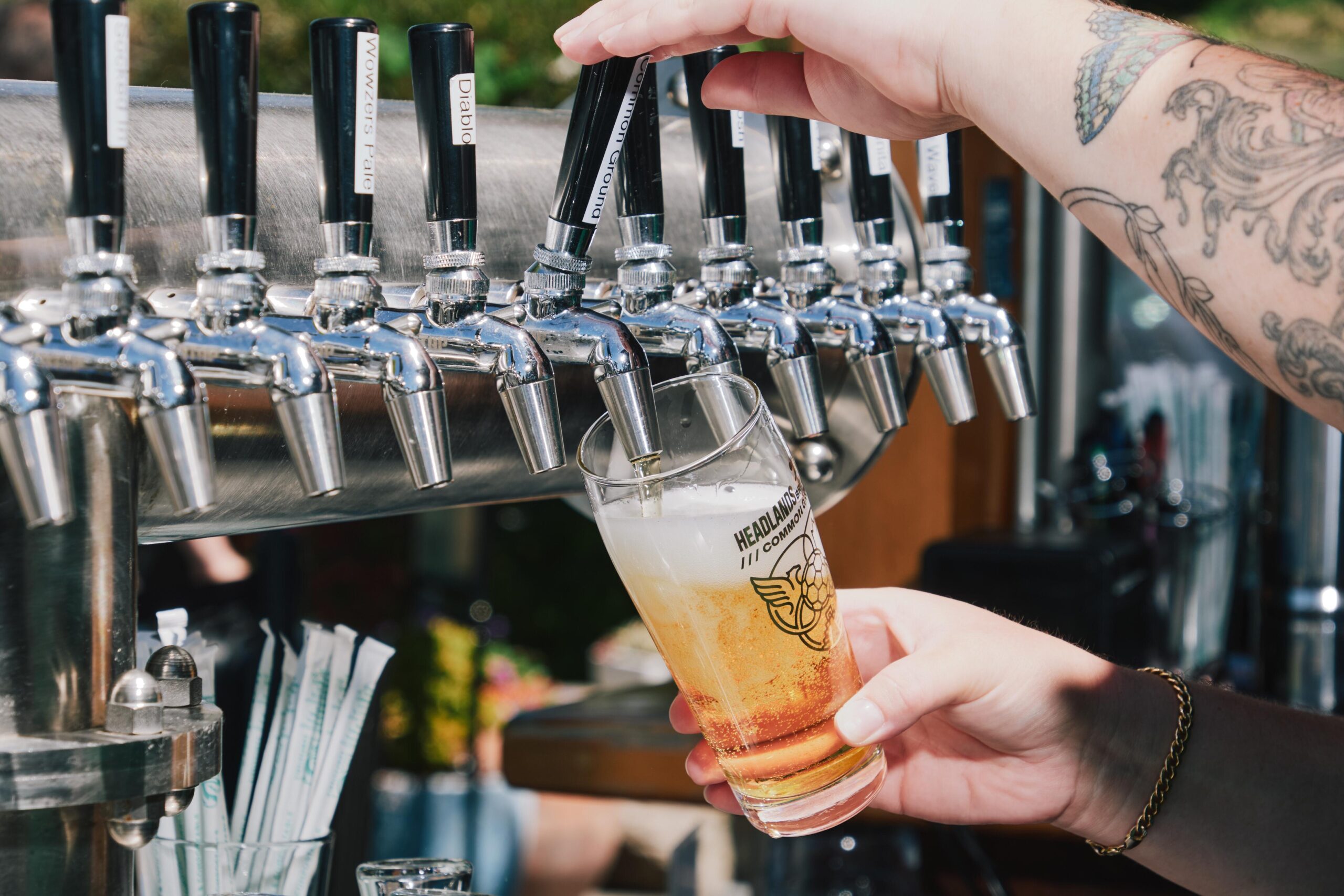
The British betting company William Hill predicts that soccer fans will throw back more than 5 million pints of beer in stadiums and fan zones during this year’s World Cup. And that number doesn’t even account for the millions of pints being poured in bars as fans tune in to the global soccer event.
But while international soccer crowds are focusing on goals and penalties, a trio of craft breweries from the tournament’s three host nations are using the tournament to brew something increasingly rare: cross-border solidarity.
A shared recipe with local spin
The collaboration began months ago over a flurry of video chats and emails. The beermakers at Rey Árbol Brewing Co. in Mexico, Headlands Brewing in the United States, and Cabin Brewing Co. in Canada set out to design a single, unified recipe representing the brewing traditions of all three nations.
“It’s a Mexican lager,” said Alejandro Gomez, founder of Rey Árbol.
“That’s like a West Coast IPA,” said Ryan Frank, chief operating officer and brewmaster for Headlands.
“And up in Canada, most of our beers are hop driven,” said Haydon Dewes, co-founder of Cabin. “So we thought, let’s go for a dry-hopped Mexican lager.”
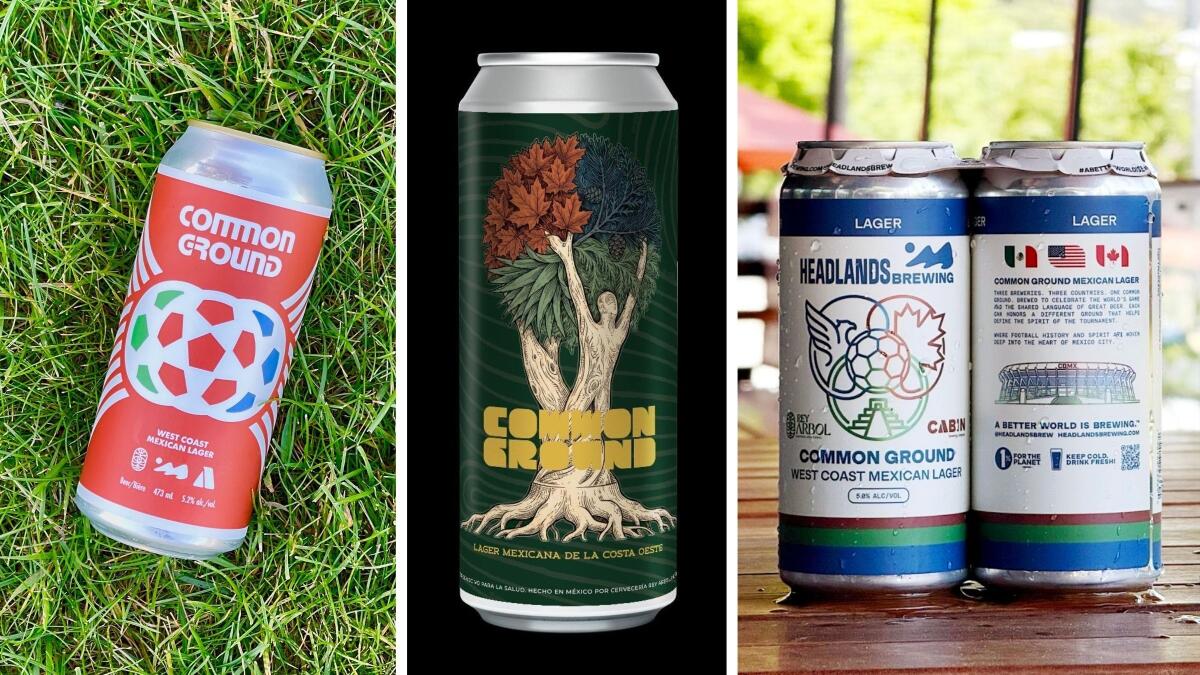
While all three breweries share the exact same recipe, each is giving the final product a distinct local spin, including unique, regionally designed labels. A four-pack of the U.S version costs $15.99. Frank said Headlands has produced about 130 cases of the limited-run brew.
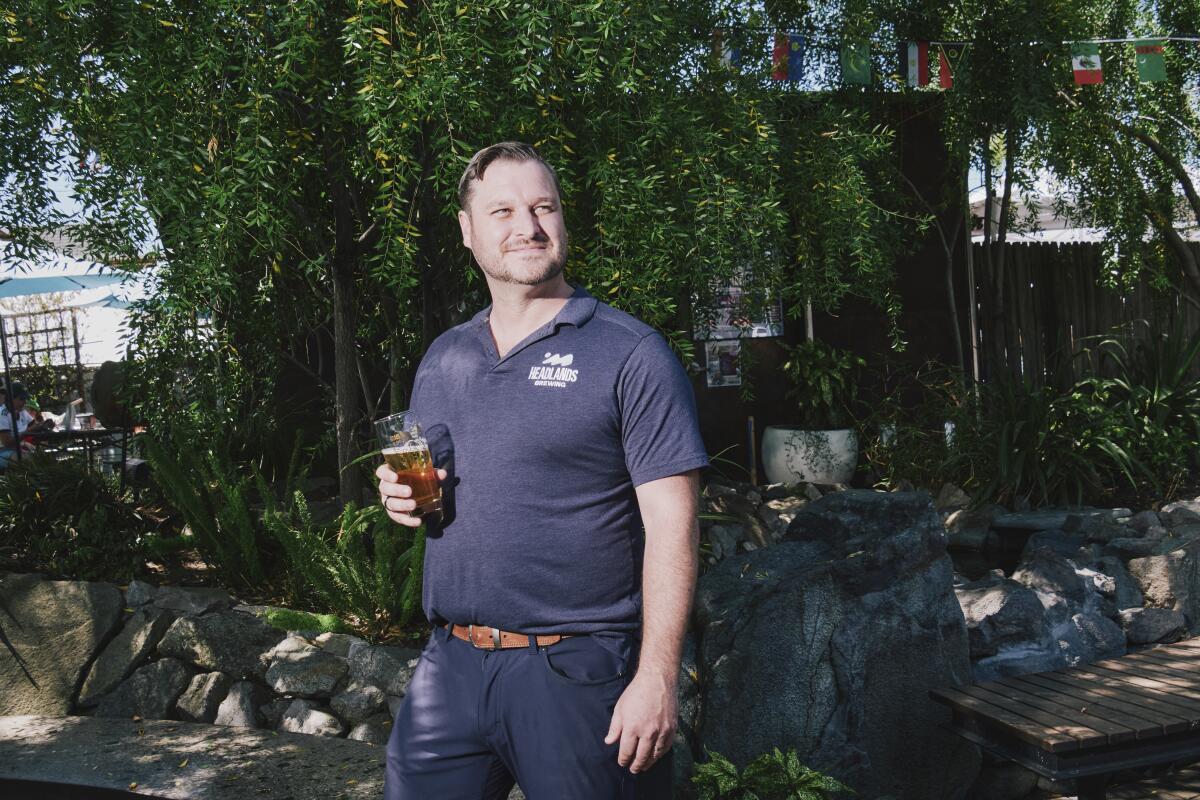
For the brewers, however, the project is less about marketing and more about connection: They named the multinational beer “Common Ground.”
“When I go to California or Canada, they will treat me like family,” Gomez said.
“It makes the world feel so much smaller,” said Dewes.
“It’s about building bridges and knowing what’s important in life,” said Frank. “And for us, that’s soccer and beer.”
Geopolitical friction in the taproom
The official rhetoric surrounding World Cup 2026 mirrors the brewers’ optimism, with promotional materials promising a tournament where billions are “united as individuals, united as billions.”
Yet this idealistic messaging stands in sharp contrast to a prickly geopolitical reality. Tensions between the U.S., Mexico and Canada have mounted over trade tariffs and auto manufacturing standards as the three nations renegotiate long-standing trade agreements.
The independent brewers behind Common Ground are feeling that friction firsthand through the rising costs of aluminum cans and raw ingredients.
“There are 15% tariffs slapped on any European-grown hops, which are really critical to some of our core brands,” Frank said.
The political discord hasn’t just been confined to trade boards.
When signing an executive order to establish a White House Task Force for the World Cup in March 2025, President Trump suggested that cross-border hostilities might actually benefit the tournament. “Oh, I think it’s gonna make it more exciting,” the president said.
A bittersweet reminder
Tension on the soccer field is one thing; between nations, it’s another.
“It’s true that when it comes to the actual soccer, we’ve developed a very healthy, vibrant rivalry between the three countries,” said Andrés Martinez, the author of The Great Game: A Tale of Two Footballs and America’s Quest to Conquer Global Sport and co-director of Arizona State University’s Great Game Lab, which studies the intersection of sports, media and geopolitics. “But we’re also linked together in this very symbiotic relationship.”
Martinez said that when the U.S., Canada and Mexico initially launched their collaborative bid to host the World Cup back in 2017, the political climate was warmer.
“It was meant to showcase these tight bonds that had developed between the three countries,” Martinez said.
But relations have soured since then, making cross-border business collaborations like Common Ground an anomaly rather than the norm for this tournament.
“To see craft beers across the three countries coming together like this, it’s a bittersweet reminder of what we were hoping to see a lot more of,” Martinez said.
Finding the real common ground
If trade wars and political posturing are looming large in Washington, D.C., Ottawa and Mexico City, they feel a world away at Headlands Brewing’s busy North Berkeley location.
As fans gathered to watch a crucial match between Mexico and South Africa at the start of the tournament, the sunny patio erupted into cheers and shrieks of “Goal!” when Mexico found the back of the net.
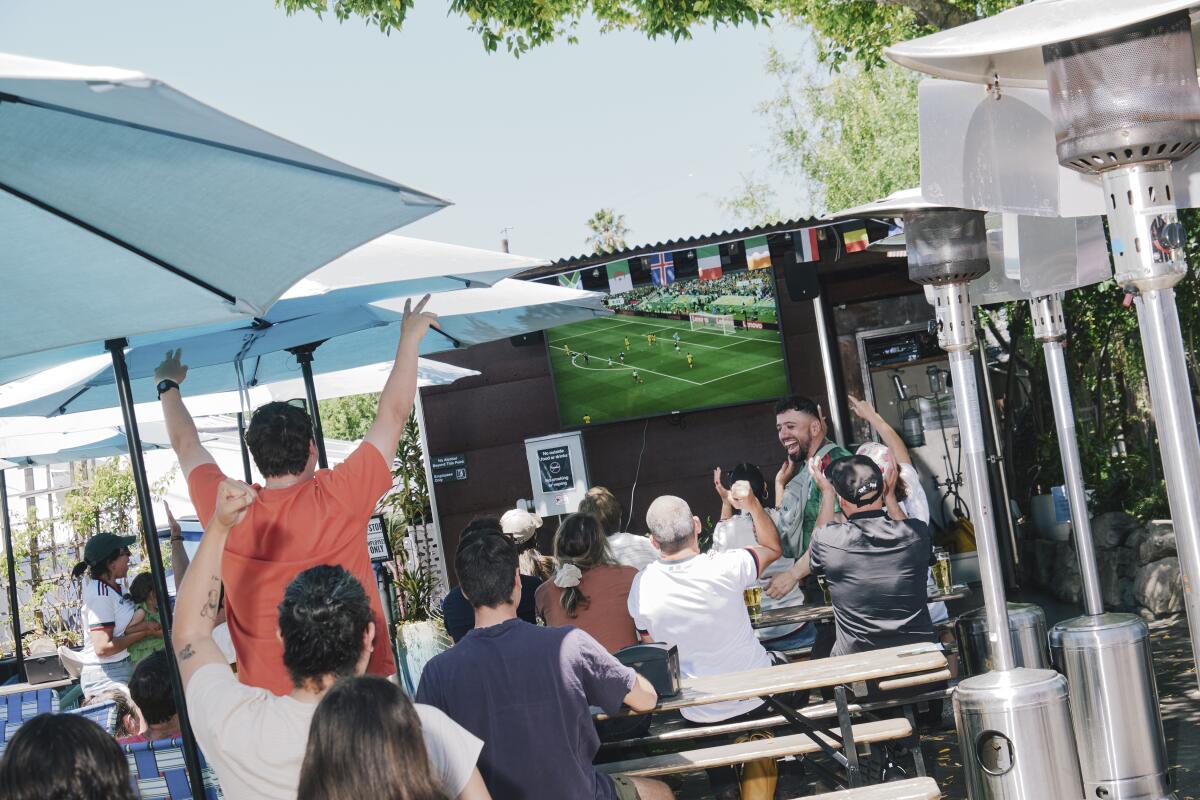
Hovering over a pint of the collaborative brew, soccer fan Roberto Mandujano reflected on the cross-border experiment.
“Three different ways, three different taste buds come together to make something cool,” he said.
When asked about the underlying political tensions between the host nations, Mandujano shrugged off the discord.
“We live in a world where everyone wants to make everything political,” Mandujano said. “But I think we’re all here for soccer. So I guess that’s the common ground.”
Transcript:
SCOTT DETROW, HOST:
The British betting company William Hill predicts more than 5 million pints of beer will be consumed in stadiums and fan zones at this year’s World Cup, and that is before you count all the beer being drunk in bars where people are watching the tournament. Three craft breweries based in three World Cup host countries are using the occasion to brew something increasingly rare, cross-border solidarity. NPR’s Chloe Veltman reports.
CHLOE VELTMAN, BYLINE: The beermakers at Rey Arbol Brewing Co. in Mexico, Headlands Brewing in the U.S. and Cabin Brewing Co. in Canada say they came up with the recipe for their World Cup-themed beer over months of back-and-forth on video chat and email.
ALEJANDRO GOMEZ: It’s a Mexican lager.
RYAN FRANK: That is like a West Coast IPA.
HAYDON DEWES: And then us up in Canada, most of our beers are hop driven. So we thought, let’s go for a dry-hopped Mexican lager.
VELTMAN: Cabin’s Haydon Dewes says they’re all sharing the same recipe, but each brewery is giving the product its own individual spin.
DEWES: All three of us ended up designing our own label for the beer.
VELTMAN: Rey Arbol’s Alejandro Gomez says he’s created World Cup-themed beers before, but this one is about more than just making a product.
GOMEZ: When I go to California or Canada, they will treat me like family.
VELTMAN: And Headlands’ Ryan Frank says they named their trinational collaboration Common Ground in honor of the cross-border friendship.
FRANK: Building bridges and knowing what’s important in life – and for us, that’s soccer and beer.
(SOUNDBITE OF AD, “THIS IS FIFA WORLD CUP 26”)
UNIDENTIFIED NARRATOR: Sixteen cities, 48 teams…
VELTMAN: The official messaging around the World Cup is also about building bridges.
(SOUNDBITE OF AD, “THIS IS FIFA WORLD CUP 26”)
UNIDENTIFIED NARRATOR: All of us, united as individuals, united as billions.
VELTMAN: But this rhetoric stands in sharp contrast to geopolitical realities. Tensions between the U.S., Mexico and Canada over everything from trade tariffs to auto manufacturing standards are high. The beermakers behind Common Ground are feeling the friction – for example, Frank says, through the rising costs of aluminum cans and raw ingredients.
FRANK: There are tariffs slapped on any European-grown hops, which are really critical to some of our core brands.
VELTMAN: Meanwhile, when signing an executive order establishing a White House task force for the World Cup in March 2025, President Trump said he viewed the cross-border hostilities as a good thing for the World Cup.
(SOUNDBITE OF ARCHIVED RECORDING)
PRESIDENT DONALD TRUMP: Oh, I think it’s going to make it more exciting.
ANDRES MARTINEZ: It’s true that when it comes to the actual soccer, we’ve developed a very healthy, vibrant rivalry between the three countries.
VELTMAN: This is Andres Martinez. He’s the codirector of Arizona State University’s Great Game Lab, which explores the connection between sport media and geopolitics.
MARTINEZ: But we’re also linked together in this very symbiotic relationship.
VELTMAN: Martinez says when the U.S., Canada and Mexico first launched their collaborative bid to cohost the World Cup in 2017, they were closer partners.
MARTINEZ: It was meant to showcase these tight bonds that had developed between the three countries.
VELTMAN: But things have soured since then, and he says cross-border collaborations related to this year’s event, like Common Ground, are rare.
MARTINEZ: To see craft beers across the three countries coming together like this, it’s a bittersweet reminder of what we were hoping to see a lot more of, right?
VELTMAN: Geopolitics couldn’t be further from the minds of fans as they watch Mexico play South Africa at Headlands Brewing’s North Berkeley location.
UNIDENTIFIED FAN: Woo, Mexico.
VELTMAN: Roberto Mandujano sips on a pint of Common Ground.
ROBERTO MANDUJANO: Three different ways – right? – three different tastebuds come together and make something cool.
VELTMAN: He’s less enthusiastic about the topic of cross-border relations.
MANDUJANO: We live in a world where everyone wants to make everything political, right? But I think it’s more of, I guess, we’re all here for soccer, right?
VELTMAN: The Mexico fan says that’s the true common ground. Chloe Veltman, NPR News, Berkeley, California.