A little over a year ago, President Trump set an ambitious goal: He wanted to see American companies build at least three new experimental nuclear reactors by July 4, 2026, the 250th anniversary of the Declaration of Independence.
Shortly after Trump signed an executive order enshrining his goal, the Department of Energy launched its Reactor Pilot Program. The program is designed to help companies build and run test reactors quickly, in part by radically cutting back on the regulations required for such reactors.
That program has sparked a nuclear race, and with less than a week to go, two companies have already reached the goal of switching on their reactor (“going critical” in nuclear-speak).
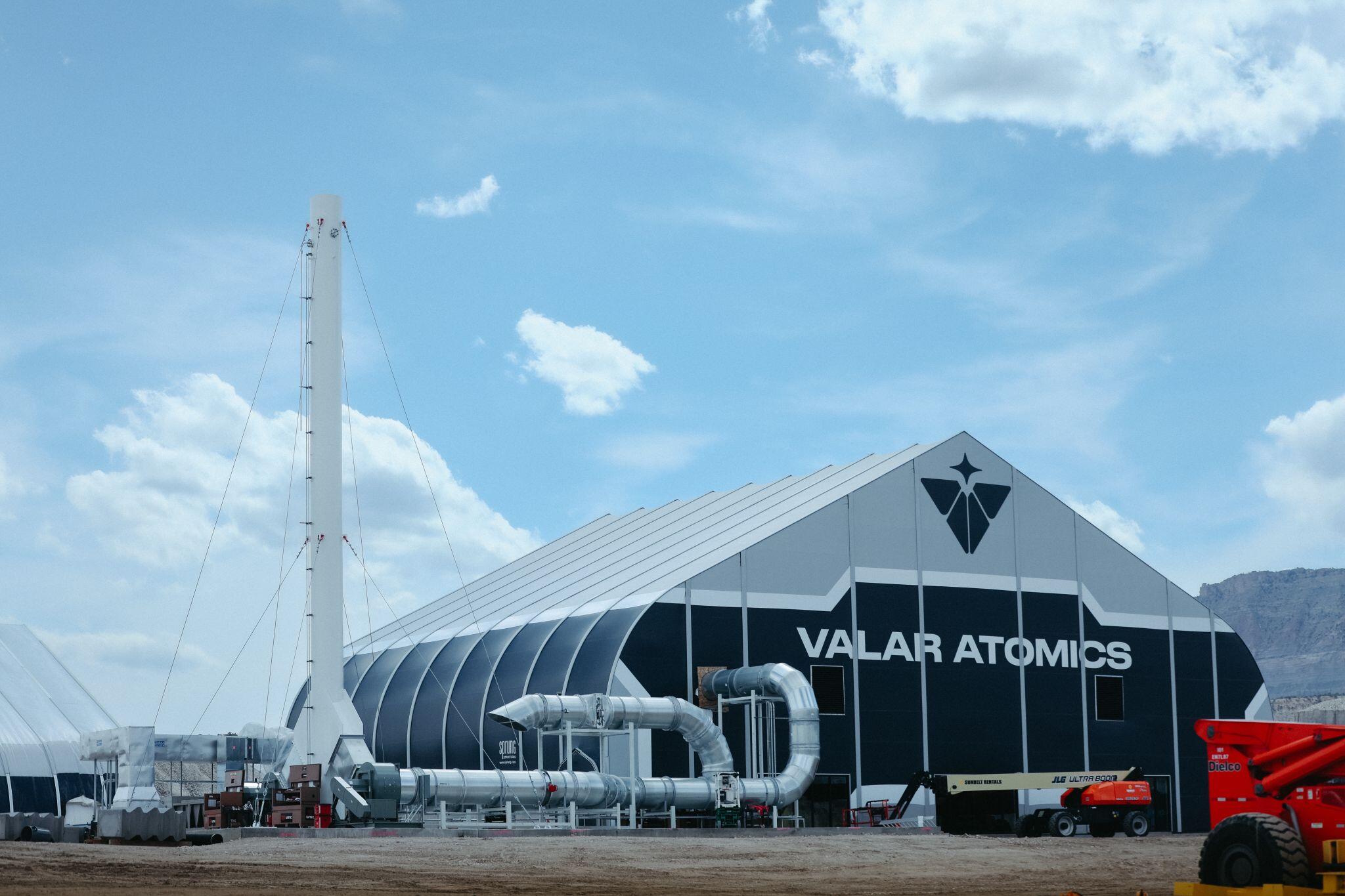
On June 4, Antares Nuclear announced it had gone critical, and Valar Atomics said it went critical on June 18 and is now producing tens of kilowatts of heat from its new reactor core, which is operating out of a tentlike structure in the Utah desert.
Other companies are getting close to making the deadline, and all this happened in less than the span of a year.
“We haven’t done anything this fast, basically ever,” said Nick Touran, chief nuclear officer at Ocean Atomics, which seeks to put nuclear power onto civilian ships. His company isn’t part of this program, but he has been tracking it closely.
He says this pilot program could jump-start America’s nuclear industry.

“I’m just excited that we’re now actually building these little reactors and trying it out and we’re going to look at what the economic story is and find out if there’s a market,” he said. “It’s going to be so much better than sitting there talking about it like we did for the last 40 years.”
But for others, the speed sparks alarm. The race is “essentially an exercise in public relations,” said Edwin Lyman, director of nuclear power safety at the Union of Concerned Scientists. And, he added, the slashing of regulations undoes decades of safety lessons learned in the nuclear industry.
“This is taking us back to the 1950s, and that is not progress,” he said.
Building the core
A lot of the action is happening at the Department of Energy’s Idaho National Laboratory, where several of the companies have set up shop. One of them is Radiant, which hopes to build small reactors for everything from disaster relief to data centers. Rita Baranwal, the firm’s chief nuclear officer, said they are assembling their reactor inside a special secure building called the DOME.
“By July 4, we’re tracking to get the reactor into DOME and to initiate the testing,” she told NPR this month.
Initiating testing isn’t quite the same as going critical, and Baranwal said Radiant probably won’t be critical by the July 4 deadline. But she does expect that Radiant’s reactor will be running soon. “The only thing we will not be doing at [Idaho National Laboratory] this summer is generating electricity,” she said.
Radiant’s reactor looks radically different from the massive reactors that exist today. It’s far smaller, and its nuclear fuel takes a different form. In a modern power reactor, nuclear fuel is loaded into long tubes, but Radiant’s reactor uses little nuclear fuel balls filled with grains of uranium. “Do you remember gobstoppers?” Baranwal said.
These nuclear gobstoppers can operate at higher temperatures and are more resistant to melting down. Radiant and several other companies plan on using this type of fuel along with other tech to build a bunch of smaller, more mobile reactors.
“We have broken ground on our factory to mass-produce reactors. We’re targeting around 50 per year,” she said. (Currently, 96 reactors are operating in the United States.)

Safety worries
To get the reactors built this quickly comes at a cost. This year, NPR reported that the Energy Department completely rewrote its safety and security standards to make it easier for companies to win regulatory approval. The department has said that the cut regulations were “unnecessary” and that safety hasn’t been compromised.
The department consulted with the companies but not with the public. It also exempted the new reactors from environmental reviews.
And that has some skeptics of the program worried.
“Yes, of course, if you bend all the rules, you can do things quickly,” said Lyman, referring to the Energy Department’s decision to rewrite its rules for the program.
The test reactors might be working, he said, “but that should not be confused with anything related to a nuclear power reactor that’s capable of producing electricity in a stable and safe way.”
Lyman said he worries that deregulation will erode standards for things like how much security is required or how much environmental monitoring should be done, at a time when these mass-produced little reactors could start popping up at locations all over the country.
Transcript:
STEVE INSKEEP, HOST:
We find out soon if American companies will be able to meet a goal set by President Trump. He wanted them to build at least three new nuclear reactors by July Fourth. NPR’s Geoff Brumfiel examines how close the companies are.
GEOFF BRUMFIEL, BYLINE: A lot of the action is happening at a Department of Energy laboratory in Idaho. Rita Baranwal is the chief nuclear officer at a company called Radiant. They’re setting up their reactor inside a special secure building called the DOME.
RITA BARANWAL: By July Fourth, we’re tracking to get the reactor into DOME and to initiate the testing.
BRUMFIEL: Radiant is one of 10 companies in the Department of Energy’s reactor pilot program. That program was set up last June to help jump start a new generation of small nuclear power plants. They could power data centers, and they look radically different than today’s reactors. For example, nuclear fuel is currently loaded into long tubes, but many of the new reactors use a different kind of fuel.
BARANWAL: Do you remember gobstoppers? Are you familiar with what that looks like?
BRUMFIEL: Well, it’s the same idea here – little nuclear fuel balls filled with grains of uranium. They can operate at higher temperatures and are more resistant to melting down. A lot of companies in the program plan on using nuclear gobstoppers with other tech to build a bunch of little reactors.
BARANWAL: We have broken ground for our factory to mass produce reactors. You know, we’re targeting about 50 a year.
BRUMFIEL: The first step is to build a test reactor and switch it on, going critical in nuclear speak. Radiant probably won’t be critical by the July Fourth deadline, but two other companies have already reached that goal. On June 4, Antares Nuclear announced it had gone critical, and another company, Valar Atomics, says it’s producing around a hundred kilowatts of heat from its new reactor core, which is operating out of a tent-like structure in the Utah desert, all in less than a year.
NICK TOURAN: We haven’t done anything this fast, basically ever.
BRUMFIEL: Nick Touran is chief nuclear officer at Ocean Atomics, which seeks to put nuclear power into civilian ships. His company isn’t part of the program, but he’s been tracking it closely. He says this pilot program could jump-start America’s nuclear industry.
TOURAN: I’m just excited that we’re now actually building these little reactors and trying it out, and we’re going to look at what the economic story is and find out if there’s a market. And it’s going to be so much better than sitting there talking about it like we did for the last 40 years.
BRUMFIEL: But getting these reactors built quickly came at a cost. Earlier this year, NPR reported that the energy department overhauled its safety and security standards to make it easier for companies to win regulatory approval. They consulted with the companies, but not with the public. And that has skeptics of the program worried. Edwin Lyman is director of nuclear power safety at the Union of Concerned Scientists.
EDWIN LYMAN: Yes, of course, if you’ve done all the rules, you can do things quickly.
BRUMFIEL: The test reactors might be working, he says.
LYMAN: But that should not be confused with anything related to a nuclear power reactor that’s capable of producing electricity in a stable and safe way.
BRUMFIEL: Lyman says he worries that deregulation will erode standards for things like security or how much environmental monitoring should be done at a time when these mass-produced little reactors could start popping up at locations all over the country.
Geoff Brumfiel, NPR News.