Author: lthistle@whyy.org

  • Beyond the Shore podcast uncovers the hidden world of the Great Lakes

    Transcript:

    DON GONYEA, HOST:

    It’s ALL THINGS CONSIDERED from NPR News. I’m Don Gonyea. This time of year, millions of people head to the Great Lakes to swim and fish or sail or just relax on the beach. But it’s easy to forget just how extraordinary these lakes are. They stretch so far you can’t even see the opposite shore. And underneath that water is a world most of us never see – old shipwrecks, ancient species of fish and ecosystems scientists are still trying to understand. A new podcast from Michigan Public explores these hidden stories. It’s called Beyond the Shore. Rebecca Williams is the host, and she’s here with me now. Rebecca, welcome.

    REBECCA WILLIAMS, BYLINE: Thanks so much.

    GONYEA: For people who’ve never been to the Great Lakes, what’s the first thing that you find surprises them?

    WILLIAMS: Most of the time when people see the lakes for the first time, they say something like, whoa, I did not know that the lakes were so huge. They say that looks like the ocean. The lakes take a while to warm up in the summertime, and so the best time to swim is usually later, in mid-August or in the fall. But that doesn’t stop a lot of people, especially kids, from jumping in just, you know, as soon as it’s springtime, and they can get in the water. But, you know, these lakes are enormous, and they’re beautiful. And they’re so important culturally and economically, and for, of course, fish and wildlife and for drinking water for those of us who live in the region.

    GONYEA: So one thing I love about the podcast is you make it clear that every Great Lake has its own personality. One episode takes us to a place called Shipwreck Alley in Lake Huron – sounds like it earned its name the hard way, perhaps. Tell us about it.

    WILLIAMS: It did, for sure. So we wanted to tell one story for each of the five Great Lakes, a sort of behind-the-scenes look at the lakes and what makes each one of them unique. For Lake Huron, we have the very first freshwater marine sanctuary that was ever designated in the U.S., and it’s called the Thunder Bay National Marine Sanctuary. And it’s full of shipwrecks. There’s about a hundred that underwater archaeologists have identified. And the experts think there are probably about another 100 that are yet to be discovered.

    GONYEA: And why are these shipwrecks hidden under the water – why are they still in such remarkable condition?

    WILLIAMS: Well, we found out that actually, it’s the quality of the Great Lakes. They’re especially good at preserving shipwrecks because of the cold, fresh, deep water.

    GONYEA: Fresh water not salt water…

    WILLIAMS: Right.

    GONYEA: …Is important.

    WILLIAMS: Exactly. And it turns out it’s crucial for why these are so well preserved. Sophie Stuart with the sanctuary told us that there are microorganisms and creatures like teredo worms in the ocean that eat wood. And so that means that the shipwrecks that are in warm, salty water deteriorate a lot faster.

    SOPHIE STUART: We get shipwrecks off the Atlantic coast where all that’s left is the iron fastenings or cannons or cannonballs or things like that because all of the wood has literally been eaten away. Whereas here, those microorganisms and creatures can’t survive in cold, fresh water.

    WILLIAMS: So that means that scuba divers, I guess, from around the world – we were told – love coming to the Great Lakes because of how well our shipwrecks are preserved.

    GONYEA: One thing that comes through in this podcast is how much the Great Lakes have been shaped by people, for better and for worse. I grew up on Lake Erie, which, sadly, when I was a kid, those beaches were labeled unsafe for swimming. It’s been cleaned up. It’s a much different situation now. But what struck you the most about our impact and, I guess, our ongoing impact on these lakes?

    WILLIAMS: Yeah. I mean, I think it’s exactly what you just said, Don. It’s the – we’ve made so many big changes to the lakes as humans over time. And unfortunately, a lot of those are for the worse, but there also are a lot of efforts to restore the lakes. And we have a couple of examples of that in the podcast. In our Lake Erie episode, we bring you the story of this dinosaur-like fish, the lake sturgeon. This is a really incredible fish. It can live more than a hundred years old, and they were nearly wiped out from the Great Lakes.

    GONYEA: And this looks like a giant prehistoric fish.

    WILLIAMS: Oh, yeah. I mean, it has like – it actually has armor on it.

    GONYEA: Right. And ridges and all that.

    WILLIAMS: Yeah.

    GONYEA: But I digress. Continue. Yeah.

    WILLIAMS: (Laughter) But so they were nearly eliminated from the lakes, and now people are doing painstaking work to bring them back.

    GONYEA: And your final episode takes us to a lake that maybe people in the Midwest kind of forget about a little bit – Lake Ontario – ’cause it’s up there to the northeast. What did you learn about that place that people will be surprised by?

    WILLIAMS: Well, I learned that it has American eels in the lake. I don’t know if a lot of people know that. They have this incredible life story. And they travel – when they’re ready to reproduce, they travel to the Sargasso Sea, which is in the North Atlantic. And they mate, and then their babies swim all the way back up to Lake Ontario. So that’s something that maybe a lot of people are not aware of.

    But we did find out – our reporters Kate Furby and Jodi Westrick took a road trip. They traveled 500 miles of the eels’ migration journey, which is a total of about 3,000 miles. And they found out that these eels are struggling to survive as a population, and hydroelectric dams are a big reason for that.

    GONYEA: They have to swim through areas where dams are just stopping the flow.

    WILLIAMS: Yeah.

    GONYEA: And they have to encounter the technology of the dam. Is that turbines and all that?

    WILLIAMS: That’s right. And in the episode, Kate interviewed Mary Ann Perron. She’s an aquatic ecologist at the St. Lawrence River Institute. And she asked her, what does it take for an eel to make it through the turbine of a dam?

    (SOUNDBITE OF ARCHIVED NPR CONTENT)

    MARY ANN PERRON: Look, if you think of a propeller that’s, you know – that’s going extremely fast, they just need to sort of be in that opening at the right time.

    WILLIAMS: So there is alternative technology – fish-safe turbines that are more of a scoop than a blade. And one of the companies that operates one major dam said it’s part of a feasibility study looking at turbine design to help eels migrate downstream. The other company declined to comment.

    GONYEA: So after spending so much time reporting this series, what do you see differently now when you stand on the shore of one of these Great Lakes?

    WILLIAMS: I think just that there’s so much mystery left, right? And I’ve lived in this region for decades. I’ve been an environment reporter for a long time here. I didn’t know there were eels in Lake Ontario, right? I didn’t actually know that much about the restoration of the sturgeon. So I think that’s one of the things that has really stood out to me is that even when you live around here, there’s just – there’s so much left to learn.

    GONYEA: We’ve been talking to Rebecca Williams, host of Michigan Public’s new podcast about the Great Lakes. It is called Beyond the Shore. Listen wherever you find your podcasts. Rebecca, thank you.

    WILLIAMS: Thank you so much.
  • A bridge to Canada may be blocked by the Trump administration

    A bridge to Canada may be blocked by the Trump administration

    Millions of trucks carrying billions of dollars worth of car parts, machinery and a long list of other commodities pass checkpoints along one small stretch of the U.S.-Canada border each year.

    It’s known as North America’s busiest land crossing, and it sits between Detroit and Windsor, Ontario.

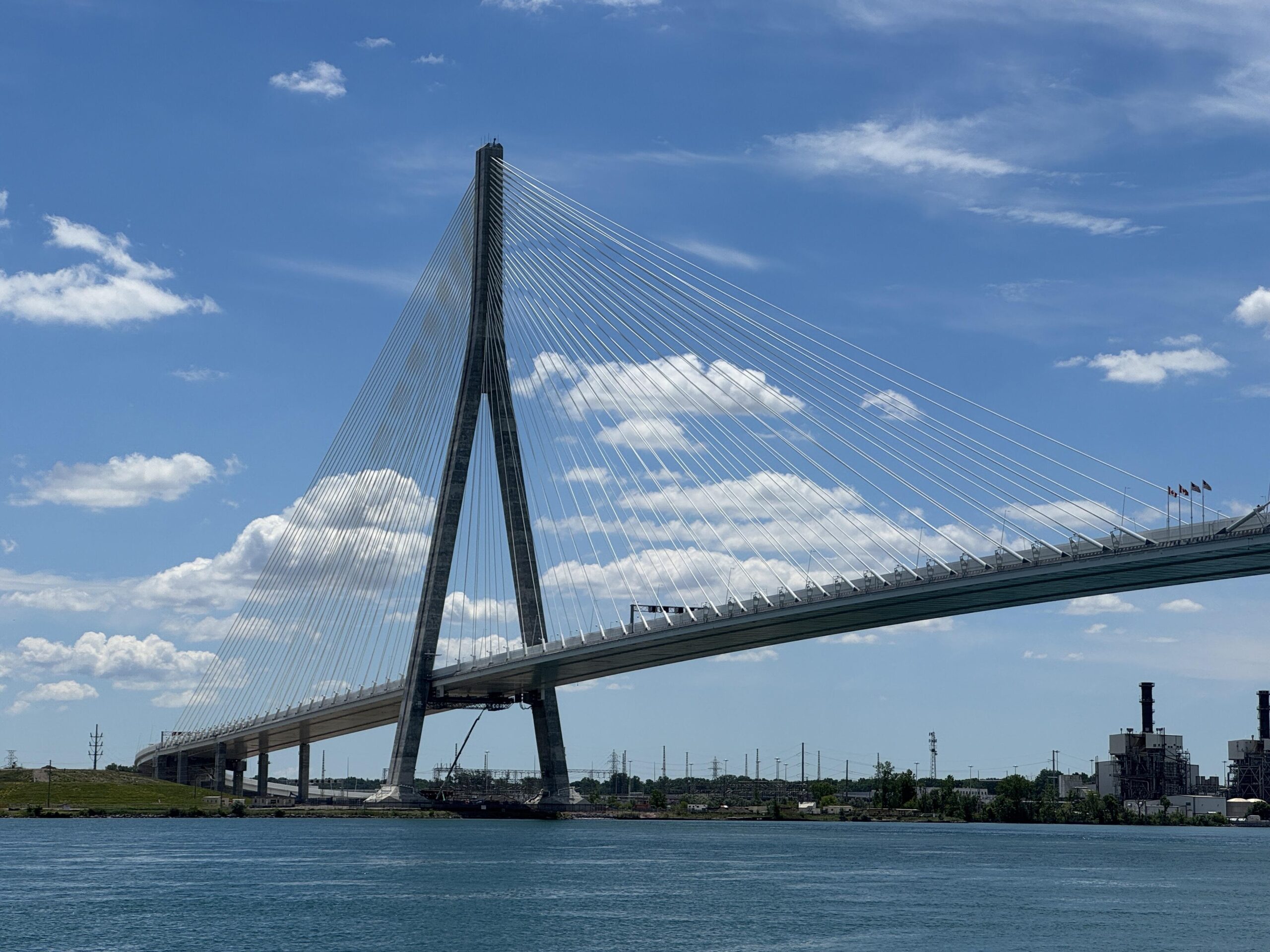
    NPR’s Don Gonyea recently visited this crossing to take a look at a brand new bridge that sits completed and unopened.

    Construction on the Gordie Howe International Bridge, named for the Hall of Fame Canadian-born hockey legend who played for the Detroit Red Wings, began in 2018. It was set to open early this year. That was before President Trump intervened in a social media post.

    Trump demanded that Canada share ownership with the United States before he would allow the bridge to open. Months passed. In June, the bridge authority actually scheduled a grand opening. But at the last minute, it was canceled.

    Stephen Laskowski is president of the Canadian Trucking Alliance and head of the Ontario Trucking Association. He was about to make his way to the grand opening when he got the news.

    “I was heading out. My wife said, ‘Your phone’s ringing’ … it said, don’t bother going,” Laskowski told NPR.

    The Canadian government and Michigan jointly own the bridge. Canada agreed to front the cost of construction and to split the toll fees with the state once the cost has been recouped.

    But the president has said that isn’t good enough. Some Canadian politicians have suggested the owners of a rival bridge linking Detroit and Windsor are responsible for Trump’s interest in delaying the opening. The Moroun family, which owns the Ambassador Bridge, has given millions to Republicans in recent years, including a $1 million donation to a Trump-aligned super PAC.

    Gonyea spoke with WDET reporter Alex McLenon, Canadian residents and others to understand how the bridge’s closure is rippling across the continent.

    Listen to the full story by clicking on the blue play button above.

    Transcript:

    DON GONYEA, HOST:

    American businesses, especially those in the northern half of the United States, depend on trade with our closest neighbor, Canada. Millions of trucks carrying billions of dollars’ worth of car parts, machinery and a long list of other commodities pass across checkpoints along one small stretch of the border each year. It’s known as North America’s busiest land crossing, and it sits between Detroit, Michigan, and Windsor, Ontario.

    I’m standing here on the Detroit side of the Detroit River. Windsor is just a short distance across the way. That, of course, is Canada. And more significantly, I’m essentially underneath or close to it – the brand-new Gordie Howe Bridge. Construction on the Gordie Howe, named for the Hall of Fame Canadian-born hockey legend who played for the Detroit Red Wings, began in 2018. The Canadian government and the state of Michigan share 50/50 ownership of the bridge. Canada agreed to front the cost of construction and to split the toll fees with the state of Michigan once that cost has been recouped.

    Today, there’s a problem. The bridge is ready to open, but it’s still closed. Across the river in the Canadian city, Windsor, residents are angry about the delays.

    MISTY SERGE: I think it’s absolutely ridiculous. I mean, this took eight years to build, $6 billion. Canada paid for everything and to get this held up just is out of our control, obviously, out of Canada’s control.

    GONYEA: Sixty-five-year-old Misty Serge (ph) says she’s refrained from traveling to the U.S. or buying American as tensions have increased between the two countries.

    SERGE: The American businesses, you know, are waiting for the opening ’cause Canadians will spend their money. And it’s not their fault this is going on.

    GONYEA: In February, President Trump posted on Truth Social, demanding that Canada share ownership with the U.S. federal government before he would allow it to open. Months passed after the threat. In June, the bridge authority actually scheduled a grand opening, but at the last minute, it was canceled. WDET reporter Alex McLenon has been covering the bridge since the construction began eight years ago.

    ALEX MCLENON, BYLINE: It was on track to happen, and then at the last minute, the government seemingly stepped in and said no.

    GONYEA: I met up with McLenon on the American side of the Detroit River to understand why the Gordie Howe Bridge has yet to open.

    So there is another bridge, just to the east of us here, that is the current route for trucks carrying goods back and forth between the two countries. It’s the Ambassador Bridge. How does that bridge’s situation affect what we’re looking at with the new Gordie Howe Bridge?

    MCLENON: Well, pretty closely. The Moroun family has owned the Ambassador Bridge for generations. They’re big supporters of the Trump administration. They’ve donated millions to the Republican Party. And when you talk to politicians over on the other side of the border in Windsor, they say that that relationship with the Trump administration is one of the reasons that this bridge hasn’t opened yet. Essentially, they’re currying favor with the Trump administration. They’ve given them a lot of money, and they would like assurances that they’re not going to be losing money once the new span opens. Mayor Drew Dilkens over in Windsor says that’s a major reason why the bridge hasn’t opened yet. And that seems to be a sticking point.

    GONYEA: So the mayor of Windsor, Dilkens, has been outspoken and very frustrated.

    MCLENON: Yeah. He’s frequently critical of both the Trump administration and the Moroun family. And this isn’t the first time that they’ve butted heads.

    GONYEA: So the bridge was built and paid for by the Canadian government.

    MCLENON: Correct.

    GONYEA: People are no doubt wondering what the role of the White House is then. How can the White House stop the opening?

    MCLENON: Well, they have – the staffing for the bridge has to come from the federal government.

    GONYEA: Are we hearing Michigan and Detroit politicians be as critical as what we’re hearing from across the river in Windsor, Mayor Dilkens?

    MCLENON: No, really not – the rhetoric seems to be fairly different. And you get the sense that a lot of the politicians on the American side would like it to kind of go under the radar and be as quiet as possible, while the ones on the Canadian side have been very critical because the relationship isn’t just about the bridge. It’s a microcosm of the ongoing political climate between the two countries. And there’s a lot of tension there. The Canadians are very willing to call that out. It seems like when it comes to especially city politicians in Detroit, they don’t want to draw the eye of the president too much, and they are keeping as low of a profile as possible when it comes to talking about big issues like the bridge.

    GONYEA: In the meantime, we wait.

    MCLENON: Everyone will just be twiddling their thumbs until the bridge opens.

    GONYEA: Alex, thanks for bringing us up to speed on all of this.

    MCLENON: Any time, Don.

    GONYEA: One of those thumb twiddlers is Stephen Laskowski. He’s the head of the Ontario Trucking Association and president of the Canadian Trucking Alliance. Based in Toronto, Laskowski was about to make the drive to the Detroit-Windsor border for the Gordie Howe’s ribbon-cutting ceremony when he got the news.

    STEPHEN LASKOWSKI: I was heading out. My wife said, your phone’s ringing. And I said, oh, God. And the oh, God was answered and said, don’t bother going.

    GONYEA: I wanted to talk to Laskowski to better understand just how important the bridge is for the people who drive 4 million trucks across this corridor every year.

    Can you kind of put me in the driver’s seat of a truck being piloted by one of your members approaching the Ambassador Bridge? What are the kind of things that go through their mind today?

    LASKOWSKI: I think No. 1 is, how many lights am I going to hit? There’s 10 of them. And then, when you get to the other side, when you finally get there, and if you’re moving agricultural product, am I going to be sent to secondary that’s kilometers off the bridge?

    GONYEA: Secondary, meaning just, like, a secondary checkpoint…

    LASKOWSKI: Correct.

    GONYEA: …To go more closely through the cargo?

    LASKOWSKI: Yeah. Exactly it. So what’s going through their head – why am I going through these inefficiencies when there’s a brand-new, efficient connection that I can use?

    GONYEA: Describe for me how that will change with the Gordie Howe Bridge when that’s an option.

    LASKOWSKI: So you don’t just have a logistical improvement with the Gordie Howe Bridge. You have an efficiency improvement with regards to toll collections. But more importantly, for everyone, security – X-ray machines, new plazas where trucks can be efficiently inspected but ensuring security from all around.

    GONYEA: U.S. President Donald Trump has held up the bridge’s opening, and he has said it’s because America isn’t getting a good deal. How do you react to that?

    LASKOWSKI: So I’m not going to react necessarily to what individuals are saying in Ottawa or in Washington, but I’ll explain what the deal is, and then people can make their own judgments of what is happening. The bridge was conceived in controversy, and its birth is in controversy. The U.S. and Canada couldn’t agree on how it would be funded. And ultimately, Canada took the leadership and said this – we will build it. We will pay for it. When the debt is paid by the tolls, we will share that toll revenue with the state of Michigan and Washington, however that was to play out. And so to me, ultimately, as a businessperson, I don’t think you can get a fairer deal.

    GONYEA: Obviously, you represent your organizations, but are you just finding this maddening? Are you angry about it on any level?

    LASKOWSKI: Unfortunately, I have to keep my robe of president on. I think there’s a lot of frustration – a lot of frustration. This makes way too much business sense for that bridge to open. And there’s a credible frustration within my own offices, within my members’ offices at this situation. There is anger by some in our membership – anger at the fact that waste is happening, just unnecessary waste. And our economies and society have become great by eliminating waste. We could be better together. Why aren’t we? That’s frustrating and now verging on anger. We can be better, and we’re being held back unnecessarily.

    GONYEA: Stephen Laskowski is CEO of the Ontario Trucking Association. Stephen, thank you.

    LASKOWSKI: Thank you very much.

    GONYEA: And we reached out to the Ambassador Bridge, owned by the Trump-friendly Moroun family, and to the White House about accusations that the family has asked the administration to delay the opening of its rival bridge. Neither has responded yet. Meanwhile, Misty Serge, the Windsor resident who swore off visiting America, she says if and when the bridge opens, she’ll end her personal boycott.

    SERGE: I will probably walk over, maybe drive over. You know, but I can’t wait to see that bridge open. Like, we’ve been waiting eight years for this (laughter).

    GONYEA: After all, she says, it is a Canadian bridge, and she wants to support her country.

  • Will the new student loan limits actually drive down tuition? Economists weigh in

    For the past two decades, graduate students have been able to take out an unlimited amount of federal student loans to cover the full cost of their education.

    If they needed $60,000 a year, they could borrow $60,000 a year, year after year.

    The Trump administration has a plan to change that by capping graduate school loans for many students at $20,500 a year, and $100,000 overall — effective July 1. (A federal court temporarily blocked a small piece of that plan, but the U.S. Education Department confirmed to NPR that loan limits will indeed begin July 1.)

    In a year packed with changes to higher education policy, this new loan limit is one of the biggest, and one of the most controversial.

    U.S. Secretary of Education Linda McMahon says the endgame is to force colleges to slash their tuition prices.

    “College costs are just exorbitant. Students are burdened with debt…” McMahon told the House education committee in May. “We really have to do something to bring down the cost of college.”

    With that goal in mind, Republicans used last year’s One Big Beautiful Bill Act to scuttle the program known as Grad PLUS and limit graduate loans. The thinking goes: Borrowers will choose cheaper programs, and expensive schools will have to cut prices to compete.

    But many economists aren’t so sure it will do what Republicans say it will.

    A decades-old idea

    The idea that there’s a connection between federal student loans and what colleges charge dates back almost four decades, to Feb. 18, 1987.

    That’s the day then-Education Secretary William Bennett, under President Ronald Reagan, penned a scathing opinion piece for The New York Times, titled “Our Greedy Colleges.”

    In it, Bennett excoriated schools for tuition increases that outpaced inflation, and he argued that increases in federal student aid “have enabled colleges and universities blithely to raise their tuitions, confident that Federal loan subsidies would help cushion the increase.”

    His idea took hold, and economists have dubbed it “The Bennett Hypothesis.”

    “The Bennett Hypothesis essentially says that, if you provide greater federal aid to schools, they will respond by increasing the price,” says Phillip Levine, a professor of economics at Wellesley College.

    Almost 40 years later, Republicans are dusting off the Bennett Hypothesis to justify severe limits to student borrowing.

    Graduate school is fueling the explosive growth of student debt 

    To be clear, current limits on undergraduate loans aren’t budging – and haven’t budged in years. One reason: According to Levine, the net price for undergraduate programs – what families actually pay – has been pretty stagnant lately.

    “We’ve seen at the undergraduate level for at least the last five years or so that college costs have actually been fairly flat,” says Preston Cooper, who studies higher education policy at the conservative-leaning American Enterprise Institute (AEI).

    But the cost of graduate school has increased considerably.

    “We’re at a point where almost half of the borrowing right now is among graduate students, despite them being a much smaller share of the overall population,” says Robert Kelchen, a professor of higher education at the University of Tennessee, Knoxville.

    Which brings us to Grad PLUS, which the Trump administration plans to shut down on July 1.

    For two decades, Grad PLUS has worked as an add-on to the traditional loan program, allowing graduate students to effectively borrow as much as they needed – no limits or guardrails.

    Cooper says it’s not a stretch to think Grad PLUS helped fuel a rise in graduate school costs.

    “Up to this time, it has been a very easy answer [for schools] to basically increase revenues a little bit every year by just raising the cost of graduate school tuition because they know that the federal government is going to have to give their students a loan for those extra costs.” 

    What the research shows

    “Having essentially uncapped loans, I think, is not a great policy,” says Jeff Denning, an economist and professor at the University of Texas at Austin.

    Denning was part of a team of researchers who studied the Grad PLUS program – to put the Bennett Hypothesis to the test. They wanted to know if, in Texas, the suddenly limitless font of Grad PLUS loans that began in 2006 contributed to graduate programs hiking their prices.

    The short answer: Yes.

    The researchers wrote that, for every additional dollar students received in loans, graduate schools increased their prices by $0.64 (after accounting for grants they gave out).

    Republicans often cite Denning’s work as justification for ending Grad PLUS, arguing: If schools increased their prices nearly as much as federal aid increased, why wouldn’t the opposite be true? Less aid should lead to lower prices.

    But it’s not that simple, says the University of Tennessee’s Kelchen, who has also researched the impact of Grad PLUS, specifically on business, medical and law schools.

    “I did not find evidence” of a direct connection between federal aid and prices, Kelchen says.

    Even Denning, when asked if the Bennett Hypothesis is true, says “it depends. I think there’s some evidence that this happens in certain circumstances, and there’s evidence that it doesn’t.”

    The Bennett Hypothesis is “a logical conclusion,” according to Kelchen, “if you think that these graduate programs are massive profit centers.” Some are, he says. Some aren’t.

    Medical school, for example, “is wildly unprofitable” for schools, Kelchen says. “It can take a million dollars of resources to produce one medical degree. So limiting borrowing is not going to reduce that cost.”

    Overall, he adds, evidence backing the Bennett Hypothesis “is largely mixed.”

    Levine says much of the increase in the cost of higher education over the years is attributable to a phenomenon known as “cost disease.” What’s that?

    Well, over time, most businesses tend to become more efficient, Levine says, which helps them contain costs while boosting wages. But higher education doesn’t work that way.

    “Since wages rise elsewhere, colleges need to keep pace to attract workers who could work elsewhere. In the end, costs rise to produce exactly the same product.”

    The half-dozen economists and higher education experts NPR spoke with did agree on one thing: Whatever its impact on prices, the Grad PLUS program, as a policy, was flawed.

    “I think there was broad consensus that the idea of letting graduate students borrow basically infinite amounts of money was not a good idea,” says Sandy Baum, a senior fellow at the Urban Institute, a nonpartisan think tank.

    But, of the Bennett Hypothesis, Baum is skeptical: “There’s been lots of study of what causes increases in college prices and of the effects of increases in student aid. And most of them find that in some cases… in particular for-profit institutions, it’s true. But mostly it’s not true.”

    Instead, Baum argues, price hikes have been driven by a host of factors, from “cost disease” and student loans, to the rising costs of insurance, technology – even the cost of living.

    Will ending Grad PLUS force colleges to cut prices?

    So what should we make of Republicans’ current contention, that cutting student loans for graduate students will lead to lower prices?

    AEI’s Cooper agrees with ending Grad PLUS, but doesn’t expect an immediate drop in prices.

    “I don’t want to promise that, in the first year, everybody’s going to slash their costs, and, you know, it’s gonna be great,” Cooper says. “But I do think that this is going to create some pressure [on prices] over time.”

    Kelchen at the University of Tennessee is keeping his expectations low.

    “I expect to see, at most, a small decrease in tuition as students may become a bit more price-sensitive and shop institutions a little bit more,” Kelchen says.

    Levine, at Wellesley, says dramatic price cuts are unlikely: “Is it conceivable that it could contribute to some small change in graduate student pricing? Maybe. … Colleges don’t just make up their prices. Colleges have costs, and it has to be the case that the revenue that they generate covers their costs.”

    Even Denning, whose research found the clearest evidence of a connection between federal loans and college prices, says of these new loan limits potentially driving price cuts: “It certainly is possible. I’m not sure if it will happen. I do not have a crystal ball. I wish I did.”

    Denning points out that it’s hard to predict student behavior. The dramatic cut in federal loans could shift students to cheaper programs. It could also send them scrambling into the private loan market. After all, he says, while the new loan limits are roughly the same as they were in 2006, before Grad PLUS, they’re actually “much lower” because they don’t account for two decades of inflation.

    “We needed loan limits,” says Baum at the Urban Institute, “but these limits are extreme.”

    As for the effect they could have on college prices, Baum predicts, “It’s not like prices are gonna plummet. They might rise more slowly.”

    And she worries the limits are going into effect so suddenly that they could put graduate school out of reach for some low-income students – a concern shared by Dominique Baker, an associate professor of education and public policy at the University of Delaware.

    “We have really robust evidence on what happens when we reduce access to financial aid,” Baker says, “and that is that students stop enrolling.” Especially lower-income students who may not have the kind of credit history to qualify for a private student loan.

    Recent analyses suggest these new limits will affect roughly 30% of graduate borrowers.

    In her testimony before lawmakers, Education Secretary McMahon repeatedly said that some graduate schools have already lowered their prices ahead of the big change.

    NPR followed-up with the Education Department to get a list of those programs, some of which are offering discounts through new scholarships. They include:

    Borrowers likely hope this short list gets longer – and fast.

    Digital story edited by: Nicole Cohen
    Audio story edited by: Alex Goldmark and Nicole Cohen

    Transcript:

    LEILA FADEL, HOST:

    The Trump administration has a plan to lower the cost of graduate school, limit how much graduate students can borrow. This is scheduled to take effect this week on July 1. NPR’s Cory Turner and Planet Money took a look at the economic theory behind the plan.

    CORY TURNER, BYLINE: Education Secretary Linda McMahon recently argued to lawmakers that the way to make graduate school cheaper is by loaning students less money to pay for it.

    (SOUNDBITE OF ARCHIVED RECORDING)

    LINDA MCMAHON: There’s been no other measure that’s been taken to try to bring down the cost of education.

    TURNER: And so the Grad PLUS loan program is ending. It allowed students to borrow unlimited amounts, which McMahon says, led graduate schools to raise their prices.

    MCMAHON: A student could go to a university, and whatever that university said was the cost of the graduate program, that’s how much you could borrow.

    TURNER: Now loans for graduate students will be capped at $20,500 a year. McMahon’s argument dates back to Ronald Reagan, specifically to his Linda McMahon, Reagan’s education secretary, William Bennett. It’s come to be known as the Bennett hypothesis. Dominique Baker studies education at the University of Delaware.

    DOMINIQUE BAKER: The Bennett hypothesis suggests that when the federal government expands access to student loans, the college and universities increase the prices of programs in order to capture more of that public money.

    TURNER: In 1987, Bennett wrote an op-ed for The New York Times titled “Our Greedy Colleges,” and in it, he wrote that increases in federal student aid enabled schools to, quote, “blithely raise their tuitions.” I called a researcher who’s actually put this hypothesis to the test.

    JEFF DENNING: I’m Jeff Denning. I’m an economist and a professor at the University of Texas at Austin.

    TURNER: We call it a hypothesis. So is it true?

    DENNING: Classic economist answer – it depends. I think there’s some evidence this happens in certain circumstances and there’s some evidence that it doesn’t.

    TURNER: Denning studied what happened in Texas at the start of the Grad PLUS loan program that let students borrow as much as they want. He wanted to see if that big switch back then to unlimited borrowing triggered a spike in the price of grad school.

    DENNING: And the short answer is that we found that the price did go up.

    TURNER: For every additional dollar in federal student aid, Texas schools raise their prices by 64 cents. That sounds like pretty strong evidence in favor of the Bennett hypothesis. But another researcher looked at it in a slightly different way and…

    ROBERT KELCHEN: I did not find evidence.

    TURNER: Robert Kelchen at the University of Tennessee studied prices nationally for business, medical and law schools. His research found little connection between federal aid and prices.

    KELCHEN: And that’s broadly consistent with the body of research that is largely mixed.

    TURNER: So the Bennett hypothesis is sometimes right, sometimes not, sort of, but the U.S. government is about to cap graduate student loans broadly on the assumption that the Bennett hypothesis is broadly right.

    KELCHEN: I expect to see, at most, a small decrease in tuition, but there will be nowhere near a one-to-one relationship.

    TURNER: And Jeff Denning at UT Austin, does he think schools will lower their prices?

    DENNING: It certainly is possible. I’m not sure if it will happen. You know, I don’t have a crystal ball. I wish I did.

    TURNER: The Education Department tells NPR a handful of graduate programs have already responded to the news by lowering costs. Borrowers no doubt hope that short list gets a lot longer and fast.

    Cory Turner, NPR News.

    FADEL: You can hear Cory’s full story on tuition prices and what drives them in the Planet Money podcast feed.

    (SOUNDBITE OF GIRAFFES? GIRAFFES!’ “A QUICK ONE, WHILE SHE’S AWAY”)

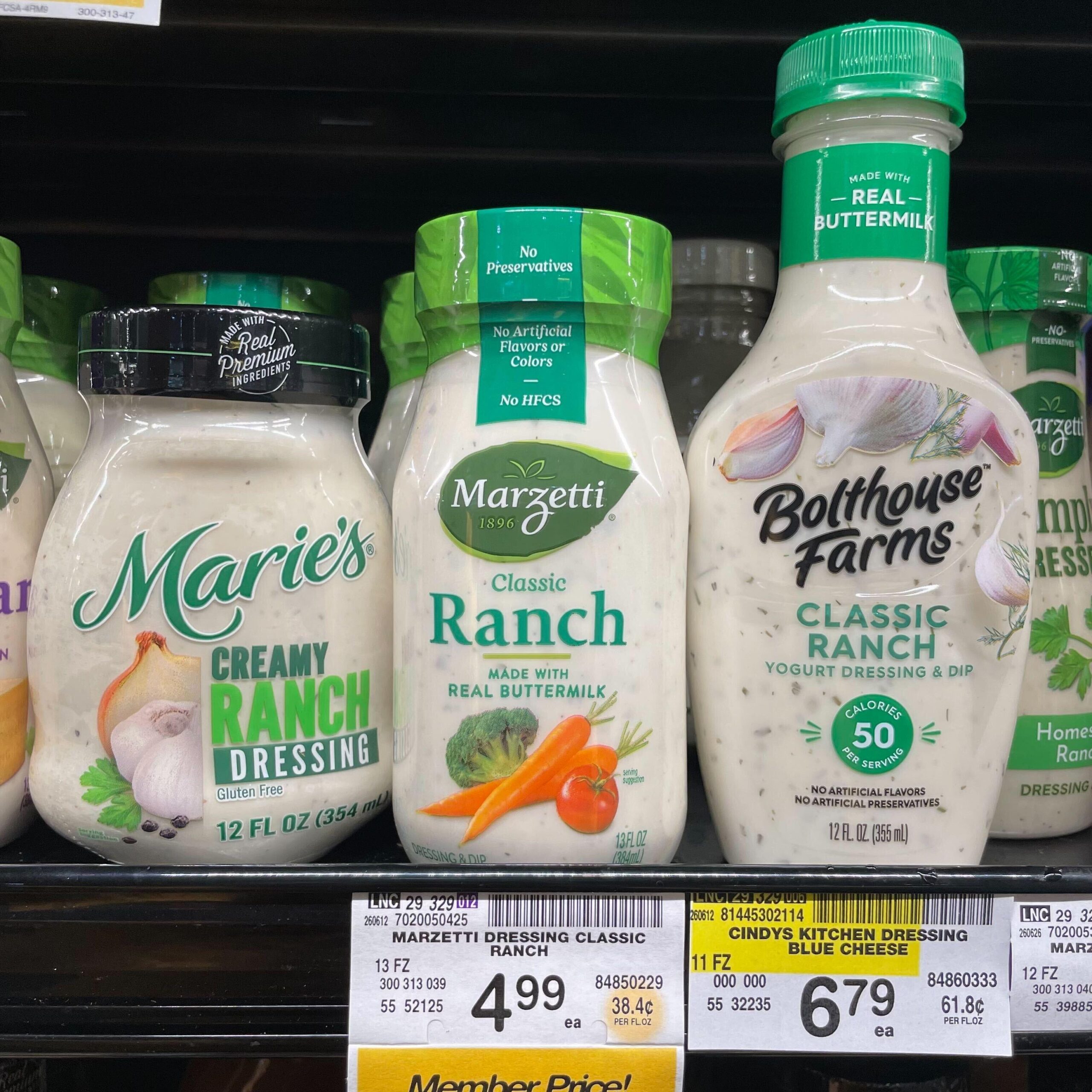
  • Opinion: Ranch dressing is a winner at the World Cup games

    Opinion: Ranch dressing is a winner at the World Cup games

    Soccer fans visiting the U.S. for World Cup matches seem to be delighted by American friendliness and dazzled by the way our highways roll from skyscrapers into wide-open spaces, abounding with monster trucks, big-box stores, “Big Gulp” drinks, central air conditioning, and ranch dressing.

    Elsa Thora, a visitor from Sweden, wrote in what’s become a widely quoted post on X, “EUROPE WE NEED RANCH ASAP.” Hidden Valley had already hired six “Ranchbassadors” this summer to spread the “sauce-pel” on the other side of the Atlantic.

    Then World Cup soccer brought more than a million international fans to the heart of ranch country. The TSA cautioned on Instagram, “If you’re visiting for a very large sporting event & you happen to discover RANCH while you’re here… please pack it in your CHECKED BAG on the way home.”

    I am not a fan of ranch dressing. I think it tastes like creamy, curdled pillow stuffing. But I am outnumbered. In 2024, ranch eclipsed ketchup to become the nation’s top-selling condiment.

    The food industry research firm Datassential says 75% of Americans like or love ranch dressing. These days, it’s hard to imagine 75% of Americans agreeing they like puppies.

    As it happens, ranch dressing has a distinctly American creation story. In 1949, a Nebraska plumbing contractor named Steve Henson was working in Anchorage, Alaska and concocted a salad dressing out of buttermilk, mayonnaise, and herbs to help feed his crew on remote job sites.

    A few years later, Henson and his wife bought a California dude ranch, which they called the Hidden Valley Ranch, and served the dressing at their restaurant. Guests loved it. Then Henson started selling packets of his seasoning mix by mail. The dude ranch went under. But ranch flavor was just getting started.

    Today, hundreds of companies produce “ranch-style” dressings and dips, and “ranch” flavor has been infused into popcorn, taco shells, ice cream, and even a lip balm that sold out in hours. You can have a ranch fountain at your wedding or bat mitzvah! Glub-glub-glub.

    Maybe World Cup visitors’ passion for America’s favorite condiment has reawakened some national pride here. Steve Henson didn’t need to be a Michelin-starred chef or culinary scientist to change people’s tastes. He was a journeyman plumbing contractor, giving a treat to friends. And now, much of the world.

    Transcript:

    SCOTT SIMON, HOST:

    Soccer fans visiting the U.S. for World Cup matches seem to be delighted by American friendliness and dazzled by the way our highways roll from skyscrapers into wide-open spaces, abounding with monster trucks, big-box stores, Big Gulp drinks, central air conditioning and ranch dressing. Elsa Thora, a visitor from Sweden, wrote in what’s become a widely quoted post on X, “Europe, we need ranch ASAP.”

    Hidden Valley had already hired six ranchbassadors this summer to spread the sauce-pel on the other side of the Atlantic. Then World Cup soccer brought more than a million international fans to the heart of ranch country. The TSA cautioned on Instagram, if you’re visiting for a very large sporting event and you happen to discover ranch while you are here, please pack it in your checked bag on the way home.

    I am not a fan of ranch dressing. I think it tastes like creamy, curdled pillow stuffing. But I am outnumbered. In 2024, ranch eclipsed ketchup to become the nation’s top-selling condiment. The food industry research firm Datassential says 75% of Americans like or love ranch dressing. These days, it’s hard to imagine 75% of Americans agreeing they like puppies.

    As it happens, Ranch dressing has a distinctly American creation story. In 1949, a Nebraska plumbing contractor named Steve Henson was working in Anchorage, Alaska, and concocted a salad dressing out of buttermilk, mayonnaise and herbs to help feed his crew on remote job sites. A few years later, Henson and his wife bought a California dude ranch, which they called the Hidden Valley Ranch, and served their dressing at their restaurant. Guests loved it. Then Henson started selling packets of his seasoning mixed by mail. The dude ranch went under, but ranch flavor was just getting started.

    Today, hundreds of companies produce ranch-style dressings and dips, and ranch flavor has become infused into popcorn, taco shells, ice cream and even a lip balm that sold out in hours. You can have a ranch fountain at your wedding or bat mitzvah – glub, glub, glub. Maybe World Cup visitors’ passion for America’s favorite condiment has reawakened some national pride here. Steve Henson didn’t need to be a Michelin-starred chef or culinary scientist to change people’s tastes. He was a journeyman plumbing contractor giving a treat to friends, and now much of the world.

    (SOUNDBITE OF THE CANCEL’S “BLOOM”)

  • Trump administration partially lifts export ban on Anthropic’s most advanced AI model

    Transcript:

    SCOTT SIMON, HOST:

    U.S. government’s asserting a new level of control over AI. Earlier this month it banned foreigners from using two of Anthropic’s most powerful new models. It partially reversed the ban yesterday but retains control over which companies have access. Meanwhile, Anthropic’s rival OpenAI said yesterday that it had agreed to let the administration screen users of its newest model. NPR’s tech correspondent John Ruwitch joins us. John, thanks so much for being with us.

    JOHN RUWITCH, BYLINE: Sure thing, Scott.

    SIMON: And how powerful are these new AI models?

    RUWITCH: Yeah. I’ve talked with a couple of people who’ve used related models, and they say they are really powerful. The AI model that kind of kicked all this off is called Mythos. It’s from Anthropic. It’s not public yet, but a small number of tech companies have been getting exclusive access to a preview version. That includes companies like Google, Microsoft. It also includes Cisco. I spoke with the head of security at Cisco, Anthony Grieco.

    ANTHONY GRIECO: AI is a game changer for security, period. The world is changing. Mythos has amped up that change.

    RUWITCH: He’s talking about cybersecurity, of course. That’s one of the things that Mythos was designed to be good at. And what it does is find vulnerabilities in software and help fix them. These are the kind of vulnerabilities that hackers might want to exploit. Grieco says his team had Mythos scan 1.8 billion lines of code across several coding languages, and he says it did that deftly.

    GRIECO: And allowed us to cover that amount of territory and amount of complexity in just eight weeks, which would have otherwise taken humans mixed with machines and tools eight-plus years to do.

    SIMON: I mean, John, eight years of work in just eight weeks is astounding, but it also creates some concern, doesn’t it?

    RUWITCH: Yeah. These are double-edged swords, right? So good guys can use tools like this to find and fix problems. Bad guys could use them to find and exploit holes, to hijack networks or steal data, that kind of thing. In fact, that’s happening actually already with widely available, less powerful AI tools. There’s been an explosion in the number of AI-assisted cyberattacks, and, you know, fear of that getting supercharged could be what’s behind the administration’s shift from being pretty hands-off about AI to wanting more control.

    SIMON: So are AI models being seen now as a potential national security risk?

    RUWITCH: Yeah. It seems like the cutting-edge ones might be. I mean, Anthropic, in early June, put out two AI models that were based on Mythos. They were weaker. Now, they had guardrails built in so they couldn’t do the most powerful cyber stuff. Within days, though, the Trump administration told Anthropic it knew of a way that those safeguards could be circumvented, and so it slapped an export ban on those models, basically, meaning no foreigners could use them, including Anthropic employees. So the company took them offline.

    Fast-forward to Friday, the Commerce Department partially lifted the export ban on one of those two models. According to a letter from the commerce secretary that NPR has seen, it’s now allowing a small list of American companies, including their foreign staffers, to use the model. In a statement emailed to NPR, Anthropic said it was pleased with this change, and it’ll continue to work with the government.

    SIMON: And is working with the government now a new expectation?

    RUWITCH: Yeah. It seems to be. OpenAI said just yesterday also that it had let the government vet a list of companies that would have access to its latest and greatest model. You know, the company said this was the strongest path to broader availability of the model in the coming weeks but that this kind of vetting should not be the norm long term.

    SIMON: You’ve been talking to cybersecurity experts. What do they see in the future for these tools?

    RUWITCH: Yeah. The tools are powerful. Some think these models will tilt the balance in their sort of arms race against hackers. Lee Klarich is with Palo Alto Networks, a cybersecurity company that’s had access to some of these models. He says there’s a wave now of companies like his finding and fixing vulnerabilities.

    LEE KLARICH: And then as we come down the other side of that as an industry, we’ll actually go to a level where we are – have more secure software than we’ve had before because we’re finding and fixing things before they ever get released in the first place.

    RUWITCH: That may be the case. It may be a little optimistic, but experts say, you know, this now AI-enabled cat-and-mouse game between cyberattackers and defenders is not ending anytime soon.

    SIMON: John Ruwitch. Thanks so much. And we want to note, Anthropic, Microsoft and Google are all financial supporters of NPR.

  • Texas will require students to read Bible passages in a new state curriculum

    Transcript:

    SCOTT SIMON, HOST:

    The Texas State Board of Education approved a required student reading list yesterday. It includes Bible passages, along with classics by writers like Shakespeare. Trustees also rewrote a social studies curriculum to include biblical references, biblical influences and a stronger focus on the U.S. and Texas. Bill Zeeble with member station KERA in Dallas joins us. Bill, thanks for being with us.

    BILL ZEEBLE, BYLINE: Good morning.

    SIMON: And what’s behind this decision?

    ZEEBLE: Well, for years, the state basically has been rewriting its Texas Essential Knowledge and Skills, what officials here call the TEKS. That’s for social studies, and for changing which books Texans have to read in school. Yesterday, the board made it official by approving the social studies requirements. They take Texas and U.S. exceptionalism perspective. So there’s less of a world history and less about cultures and more of a focus on patriotism and the state’s history here. As for the reading list, it adds at least one Bible passage for every grade. So passages like the prodigal son or Psalm 23.

    SIMON: Of course, Bible passages have officially been kept out of school curricula across the country for years to honor the idea of separating church and state. This is a big change, isn’t it?

    ZEEBLE: Yeah. I mean, I’m reading that it’s a first. Those who favor the Bible passages say, in part, it basically follows recent state law that called for their inclusion, and that the First Amendment lets you mention religion in schools as long as you don’t make that religion official. The majority of the 15 elected board members say Christianity was key to the founding of this state and the country. Brandon Hall is one of the board members. He’s also a minister.

    BRANDON HALL: America and Texas have been a Christian nation and a Christian state forever. Of course, there are other faiths that are represented, but they’ve had a minimal impact.

    SIMON: Bill, I gather nearly 500 people signed up to address the board about these changes. I’m going to guess a lot of them disagreed.

    ZEEBLE: A lot of them agreed, but yes, hundreds disagreed. They signed up to oppose the biblical passages and changes to the social studies curriculum. They said it ignores other religions, and it pushes Christianity over Islam, Judaism, other faiths, and those who don’t believe in God at all. Rabbi Joshua Fixler – he told the board there’s a difference between teaching religion and teaching about religion.

    JOSHUA FIXLER: My fourth grader would have to read three religious texts. All three center on Christian messages of faith and theology to which my family does not ascribe.

    ZEEBLE: Fixler said using Christian passages and the reading requirements puts teachers in a really tough spot, and he basically wasn’t alone.

    SIMON: What happens next?

    ZEEBLE: Well, the board approved the required reading list, changes to social studies and history for grades K-8 were approved. Most of the work for high school has been put off until the board meets again in September. The changes are scheduled to start in 2030, 2031, that school year. So that gives publishers time to make their changes.

    SIMON: Bill Zeeble out of KERA in Dallas. Thanks so much.

    ZEEBLE: It’s been a pleasure.

  • Latest updates as Venezuela reels from a pair of devastating back-to-back earthquakes

    Transcript:

    SCOTT SIMON, HOST:

    Venezuela is struggling to cope with the destruction of a powerful double earthquake that struck three days ago. The quakes hit within a minute of each other causing widespread destruction just north of Caracas. The government says more than 900 people have been killed and more than 3,000 injured. Thousands more are still missing. International search and rescue teams are arriving, but limited equipment and an overstretched health system have slowed the response. In some areas, residents are using their bare hands to dig for survivors. John Otis has just arrived in Caracas overnight. John, thanks so much for being with us.

    JOHN OTIS: Thanks for having me, Scott.

    SIMON: You have been to Caracas many times before. What were your first impressions as you came in this time?

    OTIS: Yeah. Well, the fact is we had to drive in all the way from the Colombian border into Caracas, and that’s quite telling because, you know, the international airport just outside of the city was badly damaged in the earthquake, and it remains close. So we really had no other way to get here. And as for Caracas, many areas were spared, but parts of some neighborhoods, like Altamira, were devastated.

    (SOUNDBITE OF CHAINSAW RUNNING)

    OTIS: Now, that’s the sound of rescue workers using a chainsaw to cut a tunnel through the remains of this high-rise apartment building that collapsed. Nearby were piles of mangled rebar and a crushed car. For their part, many survivors of quake-damaged buildings are too scared to sleep indoors, and so they’re camping in the Altamira park. I saw one couple curled up in blankets sleeping with their pet poodle next to a sculpture in the park. For me, this is an especially surreal sight. Altamira’s this beautiful upscale neighborhood. I’ve stayed here on previous reporting trips, and it’s just really sad to see.

    SIMON: John, that critical window of 48 to 72 hours to find survivors is obviously closing. Aid is arriving from abroad and locally, but is it enough?

    OTIS: Well, while we were driving into Caracas, we passed convoy after convoy of aid trucks trying to get to the disaster zone. But one problem is that the government lacks heavy equipment, like bulldozers and backhoes. That’s partly why you see a lot of average folks taking matters into their own hands. One of them is Carlos Ramirez (ph), a lawyer whose aunt and cousin were in that high-rise that collapsed.

    CARLOS RAMIREZ: (Non-English language spoken).

    OTIS: So he’s wearing a yellow helmet and gloves, and he’s saying that he’s been here for the past three days, helping to remove debris and also praying that his loved ones somehow survive.

    SIMON: John, what’s the government’s response been so far?

    OTIS: Acting President Delcy Rodriguez and her team appear to be doing what they can with very limited resources, but these limitations are also the government’s own fault. Remember, Rodriguez took power after U.S. troops ousted President Nicolás Maduro back in January. And she was Maduro’s vice president as well as a big, big cheerleader for his authoritarian regime for many years, and that regime ended up strangling the country’s democracy and badly mismanaging its economy. One reason there’s a shortage of heavy equipment is because so many Venezuelan factories have shut down. Hospitals were defunded, and now they lack everything from antibiotics to, in some cases, even running water. Rescue workers and firefighters lack protective gear. So in the end, previous mistakes are making it a lot harder for the government to deal with this ongoing disaster.

    SIMON: John Otis in Caracas. Thank you so much.

    OTIS: Thanks, Scott.

  • An emergency response expert explains the situation in Venezuela after 2 earthquakes

    Transcript:

    SCOTT SIMON, HOST:

    Frantic search and rescue operations continue in Venezuela after two powerful earthquakes struck the country on Wednesday. More than 900 people are dead, with thousands more injured and missing. Aid is flowing in from around the world, including the U.S., but given the scope of the damages and the country’s fledgling economy, the needs on the ground remain acute. Karol Bassim is a senior program manager with International Medical Corps’ emergency response unit. She joins us from Caracas. Thanks so much for being with us.

    KAROL BASSIM: Thank you so much, Scott.

    SIMON: I understand you’ve been visiting some of the hardest-hit sites. What have you seen?

    BASSIM: Yeah. We have. We visited one of the most affected area, which is called La Guaira. What has struck us is the scale of loss, like families searching for loved ones, people standing in front of what used to be their homes. And the community is trying to support each other while in – still in shock. The level of suffering is heartbreaking.

    In many areas, there’s definitely widespread destruction. Homes, buildings, essential services are damaged or completely collapsed. Majority are without food, drinking water, shelter or access to basic healthcare. We have visited communities and hospitals. Hospitals are overwhelmed. Some are operating far beyond capacity. Health workers are definitely exhausted. And many of them have lost their homes and – or, you know, family members, and they continue to show up every day to save lives. We are seeing many trauma injuries, fractures – severe fractures, wounds. The hospitals are well beyond capacity.

    SIMON: How hard has it been to get aid in?

    BASSIM: So far, we’ve sourced locally. We have purchased medical supplies and, you know, nonmedical supplies locally for now. That’s how we’ve been operating.

    SIMON: Has it been difficult for rescue workers and aid workers to get into affected areas?

    BASSIM: Yes. It has been difficult, especially in the area that we have visited. Not all roads are accessible.

    SIMON: I gather you’ve been in touch with some U.S. State Department-assisted teams on site. Where are you and your colleagues trying to direct the aid right now?

    BASSIM: In La Guaira and the hospitals operating in La Guaira and Catia La Mar.

    SIMON: What would you say are the most critical needs right now? Maybe everything, is what it sounds like – food, water?

    BASSIM: Yeah. You know, medical care, trauma care, essential medicines, surgical supplies and infection prevention materials. People are urgently in need of food, water, shelter, hygiene items. Additional safe space to treat patients is really critical. And at community level, people need help with search and rescue. They need shelter. They need medical support, basic protection. There’s a huge need in terms of supplies, in terms of medical emergency lifesaving services.

    SIMON: Well, ’cause I know your humanitarian group has been operating in Venezuela for years, and the healthcare system has been on the brink of collapsing even before these earthquakes. What would be the best way for international aid groups and people who just want to help to actually help the healthcare system and healthcare workers right now?

    BASSIM: What we’re trying to do is we’re trying to support those hospitals and communities. We’re deploying mobile medical units to help decongest overwhelmed trauma. We’re delivering medicines, essential supplies. Also, we’re bringing clean water since those health facilities, those hospitals – key hospitals – do not have access to water. We have two large field hospitals prepositioned, and we – they’re ready to be deployed to significantly expand trauma care capacity. We are working with the ministry of health to identify suitable sites and to coordinate the arrival of these supplies and pallets.

    SIMON: Karol Bassim is with the International Medical Corps, speaking with us from Caracas. Thanks so much.

    BASSIM: Thank you so much.

  • A look at the Supreme Court’s decision to end TPS for thousands of Haitians and Syrians

    Transcript:

    SCOTT SIMON, HOST:

    This week, the U.S. Supreme Court gave the Trump administration a green light to extend its immigration crackdown to hundreds of thousands of people from Haiti and Syria who’ve been living in the U.S. legally for years. The White House hailed the decision as a correction long overdue. But for employers who depend on those foreign-born workers to staff nursing homes, meatpacking plants and factories, it could be a problem, as NPR’s Scott Horsley reports.

    SCOTT HORSLEY, BYLINE: The high court’s conservative majority gave the Trump administration wide latitude to cancel what’s known as temporary protected status, which has allowed more than 300,000 Haitians to live and work in the U.S. since a deadly earthquake struck the island in 2010. A White House spokeswoman called the decision a tremendous win and stressed the status was always meant to be temporary, not a path to permanent residency. But over the years, Haitians have become an important part of the U.S. workforce. About 30% work in nursing homes as home health aides or delivering other kinds of care to seniors. Katie Smith Sloan, who represents thousands of senior care organizations, says it will leave a huge hole if those workers are forced to leave the country.

    KATIE SMITH SLOAN: They are the backbone. And they are wonderful, wonderful workers that have developed deep, deep relationships with residents. It’s just horrifying to think about what the world is going to be like for our members and for older adults and families without these workers.

    HORSLEY: Smith Sloan says there have never been enough native-born workers willing to provide that kind of care, at least not at the existing wages. If foreign-born workers are sent away, she says more of the caregiving responsibility will fall to family members or, in some cases, more costly hospital stays.

    SMITH SLOAN: We’ll see nursing homes closing beds, maybe closing down wings, maybe closing altogether, that just won’t be able to accommodate as many people as they could in the past if they don’t have a workforce.

    HORSLEY: Haitian immigrants have also been filling key jobs in hotels, food-processing businesses and manufacturing plants. Jamie McGregor, who runs a factory in Springfield, Ohio, told NPR two years ago Haitians made up more than 10% of his workforce.

    (SOUNDBITE OF ARCHIVED NPR CONTENT)

    JAMIE MCGREGOR: The fact of the matter is, without the Haitian associates that we have, we had trouble filling these positions.

    HORSLEY: While the case before the high court involved people from Haiti and Syria, the effects of the decision are much broader. Temporary protected status has been granted to some 1.3 million immigrants from more than a dozen countries, including Venezuela and Ukraine. The Trump administration has tried to end all those protections as they come up for renewal. That consistency is one reason the court’s majority rejected a claim that the White House approach is racist and therefore unconstitutional. Racist or not, Rebecca Shi, who heads a coalition of American employers that rely on immigrant labor, says the administration’s move is very destabilizing.

    REBECCA SHI: These are vetted immigrants who arrive through legal pathways and hold valid, legal work authorizations, many for over a decade. Now, overnight, they faced forced removal from their communities, from the workforce. And these are ties that they have spent years building.

    HORSLEY: The crackdown on temporary protected status is just one part of the administration’s broader effort to sharply curtail both legal and illegal immigration. The White House argues that’ll free up more jobs for U.S.-born workers. But so far, evidence points in the opposite direction. Two separate studies by economists at the Brookings Institution and the University of Colorado have found that aggressive efforts to deport immigrants often result in American workers losing jobs as well. If a short-staffed nursing home has to scale back or shut down, for example, some U.S. workers may also be laid off. Other businesses may suffer collateral damage when their immigrant customers are deported or too scared to go out shopping. Aaron Sojourner, who’s with the Upjohn Institute for Employment Research, says the administration’s efforts could backfire.

    AARON SOJOURNER: Bulldozing paths by which generations of people have contributed to the American dream – it’s very self-defeating.

    HORSLEY: The House voted this spring to extend temporary protected status for Haitians past the end of President Trump’s term in office. That measure has not gotten a vote in the Senate, though, and if it were to pass, Trump has threatened to veto.

    Scott Horsley, NPR News, Washington.

  • Saturday Sports: The World Cup enters knockout stage; Serena returns to Wimbledon

    Transcript:

    SCOTT SIMON, HOST:

    And now, it’s time for sports.

    (SOUNDBITE OF MUSIC)

    SIMON: The World Cup moves into the knockout stage, and Queen Serena returns to Wimbledon. What a week. Howard Bryant joins us. Good morning, Howard.

    HOWARD BRYANT: Good morning, Scott Simon. How are you?

    SIMON: I’m fine, thanks, my friend. How are you?

    BRYANT: I’m terrific. Thank you.

    SIMON: Yes, you are terrific.

    BRYANT: (Laughter).

    SIMON: But in addition to that, the Men’s World Cup wraps up group play today. Cape Verde – they became the smallest country ever to win and advance to the knockout stage, a scoreless tie with Saudi Arabia. Boy, they’re easy to love, aren’t they?

    BRYANT: Yeah. The whole thing has been so much fun, and it’s been a little bit of nostalgia as well. It reminds me of 1994, the last time the World Cup was in North America. And I was living in San Francisco, and all of the different teams were all over the place. And I lived in Haight-Ashbury, and the Brazilians were everywhere. And it was just a party for, like, two weeks.

    SIMON: Yeah.

    BRYANT: And you see all of the shots, whether it was, you know, the – Scotland invading Boston. And obviously, the Cape Verdians know anybody down in the South Shore of Massachusetts. It’s a home away from home. It’s an adopted country. And you see the – you know, the Senegalese everywhere and the French and the Norwegians. And it’s just been – it’s been…

    SIMON: Yeah.

    BRYANT: …Great. And I think that one of the things that’s been really fun about this is that we spent so much time of the – during the run-up to the World Cup talking about what was happening in the politics and…

    SIMON: Yeah.

    BRYANT: …What was happening in Washington and what happens in the White House. And yet you do realize that the sport does belong to the people. Despite the prices and despite all of the different machinations that go with the business side of it, when it’s go time and when the fans come out, the game does belong to the fans. And that has really – the energy of World Cup has really superseded anything that’s been going on in Washington, and that’s really a good thing.

    SIMON: And the U.S. has been playing well.

    BRYANT: And the U.S. is doing something we haven’t seen before. They had a shot to do something they’d never done before, which was to win all three of the group-stage games. They lost in the last kick of the match to Turkey, but that was a fun match. And they’ve moved on, and they are now going to play Bosnia-Herzegovina in the knockout stage. And so this is something interesting we are used to. We are used to World Cup domination on the women’s side. We are not used to it on the men’s side. This has actually been fun for them, too.

    SIMON: I got to tell you, I’m rooting for Bosnia. I covered the terrible war conflict there. It just has warmed my heart to see how well they’re playing.

    BRYANT: Well, once again – and that is the thing – the individual stories. It’s not just a nationalistic thing. It’s knowing what this means to a lot of countries. And people do think about it from the United States standpoint. Sports dominates everything here, but for some of these other countries, this is their everything. This is the one…

    SIMON: Yeah.

    BRYANT: …Sport that they care the most about. And so it’s – the vibe is different with every team, every nation.

    SIMON: Serena Williams, maybe the best women’s tennis player ever, making a comeback to Wimbledon at the age of 44. Her first opponent, Maya Joint, is 20.

    BRYANT: Is 20.

    SIMON: You don’t think Serena’s coming back just to make a – you know, a farewell appearance, do you?

    BRYANT: Well, she says she is. She says she has nothing to prove, and I’m sure she wants her daughters to have seen her in action. And – you know, but you don’t do this if you’re not here to win. I don’t think Serena’s coming out here to get a double bagel put on her. I don’t think that – that’s in her DNA, to get on the court, especially on the grass, a tournament, she’s won seven times. And so I don’t think that she’s here just for funzies. I think when you get out there and you start playing, even though her opponent was born when she was in – you know, almost mid-career.

    SIMON: Yeah.

    BRYANT: She’ll be 45 in September. But at the same time, it’s also a great inspiration. You never count out a champion. I don’t have a great deal of expectation. I mean, what do you – it’s a young person’s game. Do you really think a 44-year-old can win? But – you know, but it’ll be fun to see her, and it’ll be fun to see her back. She hasn’t played since 2022. It’s been…

    SIMON: Yeah.

    BRYANT: …Four years since we’ve seen Serena Williams. And so I’m really excited about seeing what she does and how she competes, and then, of course, for the rest of the tournament as well. Let’s face it. There’s – I’m interested in seeing what Coco Gauff does. I’m interested in seeing what Sabalenka does on the women’s side. I’m very, very interested in seeing what Iga Swiatek can do. And – but the end of the day, this tournament – because she’s back, it’s going to be remembered as Serena Williams’ return.

    SIMON: Yeah. Howard Bryant, thanks so much, my friend. Talk to you soon.

    BRYANT: Oh, my pleasure, Scott.

    (SOUNDBITE OF H I K E’S “AMERICANO”)