Author: lthistle@whyy.org
-
Holiday Weekend Politics, Iran Mourns Supreme Leader, US Vs Belgium World Cup Drama
Transcript:
(SOUNDBITE OF MUSIC)
MICHEL MARTIN, HOST:
What could be more American than dueling points of view?
STEVE INSKEEP, HOST:
President Trump marked Independence Day by talking about communists. New York’s mayor gave his speech among naturalized citizens and spoke of immigrant contributions to America.
MARTIN: I’m Michel Martin. That’s Steve Inskeep, and this is UP FIRST from NPR News.
(SOUNDBITE OF MUSIC)
MARTIN: Coming up, Israel wants to know where it fits into a U.S. agreement with Iran. Our colleague in Tel Aviv reports that Prime Minister Benjamin Netanyahu has been seeking a meeting with President Trump.
INSKEEP: Also the U.S. placed Belgium tonight in the World Cup, with all of their top players available. Team USA’s top scorer in the tournament received a red card, which would have meant his suspension tonight, and then FIFA, the soccer authority, suspended the suspension. Was there political interference? Stay with us. We’ve got the news you need to start your day.
(SOUNDBITE OF MUSIC)
MARTIN: Americans celebrated the Fourth of July in all kinds of ways.
INSKEEP: It was the 250th anniversary of the United States. New York had so many fireworks, they set the Brooklyn Bridge on fire. Other cities dodged extreme heat or thunderstorms and celebrated anyway. In Washington, a white nationalist group marched through the city, as did counterprotesters, while military jets flew over the city for much of the day. I think, Michel, you were watching and listening to that as we went through the day. The D.C. fireworks began very late, delayed by a thunderstorm and by a speech by the president who started after 11 o’clock.
(SOUNDBITE OF ARCHIVED RECORDING)
PRESIDENT DONALD TRUMP: Our warriors did not fight communism on battlefields across the world, only to have that menace rear its ugly head right back here in America.
INSKEEP: The weekend offered contrasting views of America, and NPR’s Mara Liasson was watching and listening to much of it. Mara, good morning.
MARA LIASSON, BYLINE: Good morning, Steve.
INSKEEP: What was your impression of the president’s speech?
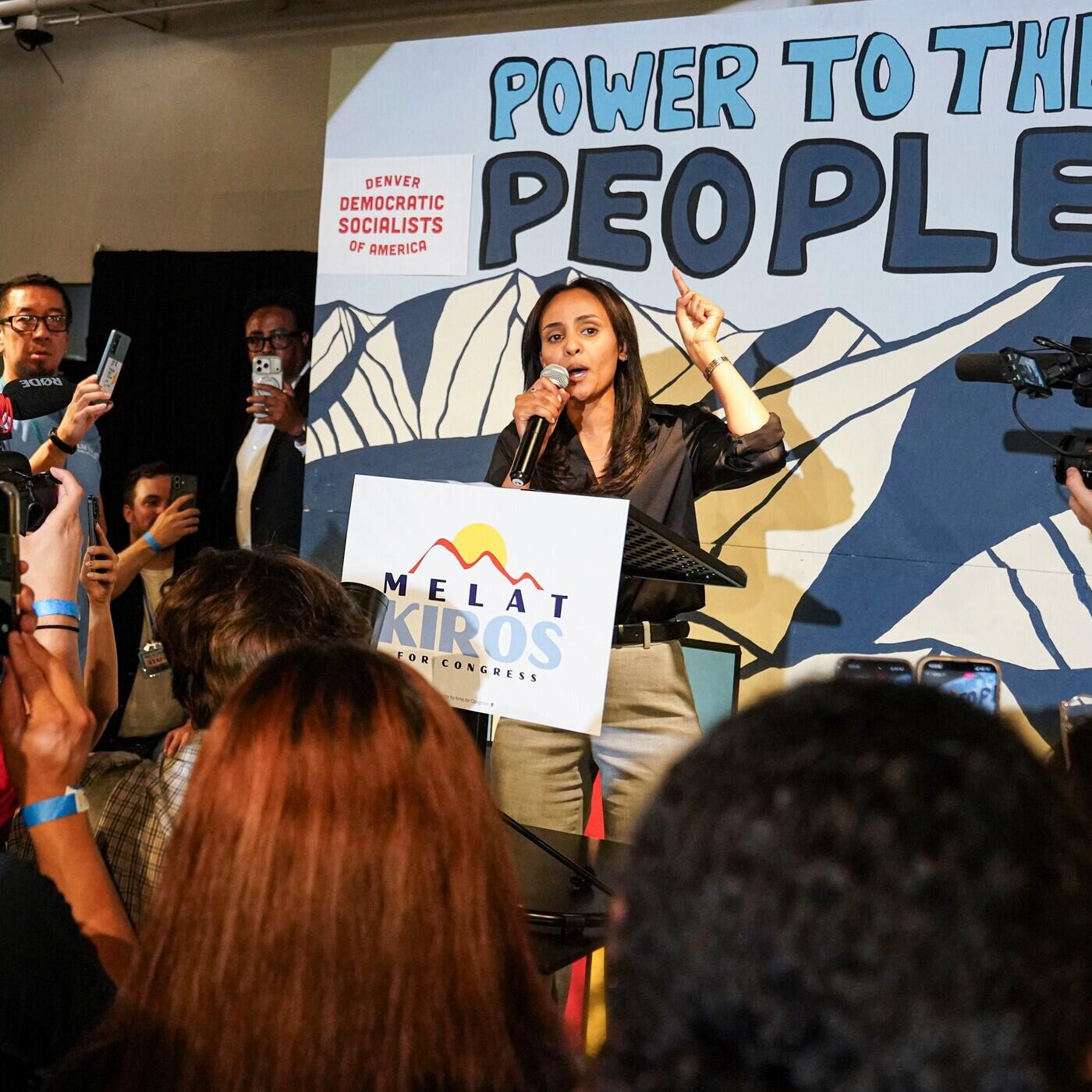
LIASSON: The president’s speech was overtly political. Just like his speech on Friday at Mount Rushmore, he excoriated Democrats, using his latest epithet for them – communists. He’s trying to use to his advantage the fact that a handful of members of the Democratic Socialists of America won some primaries, which in deep blue districts in places like New York City may not matter that much, since the districts are likely to elect a Democrat in the general election. But there are many Democrats who are worried that in some swing states and districts, they could be nominating candidates who are too far to the left to win.
So the president and the Republicans are trying to take advantage of this, and they’re using the communist label, as well as some of the positions found on the Democratic Socialists for America website, like defund the police, abolish ICE, free all incarcerated individuals, and they’re trying to paint the entire Democratic Party as too far to the left and as communists.
INSKEEP: Well, the highest-profile person on the left in the United States right now is probably Mayor Zohran Mamdani of New York City, who has focused in his own public presentations on practical governance in New York, and he certainly hasn’t been shy about the spotlight – gave his own speech over this holiday weekend. How different was his view of America?
LIASSON: It was very different. Mamdani gave a speech on July 3 at New York City’s City Hall to a group of newly naturalized citizens, and his speech really was the opposite of Donald Trump’s. He criticized the constant denigration of immigrants. Here’s what Mamdani said.
(SOUNDBITE OF ARCHIVED RECORDING)
ZOHRAN MAMDANI: American exceptionalism, the conventional wisdom tells us, makes our freedom a little more free, is how we dug the Erie Canal and irrigated the West, is why children in faraway lands grow up dreaming of one day moving here. And yet the irony is that the story of America has so often been written by those who were told by others with power and influence and wealth that they were anything but exceptional.
LIASSON: Mamdani said that instead, America should continue to be a place of asylum for the persecuted, and he described a kind of patriotism that sees the nation’s flaws and embraces dissent.
INSKEEP: Mara, listening to you, you noted that’s the alternative view, the alternative view to the administration. But in many of the decades of politics that you’ve covered, I think that would have been the normal bipartisan view of America – that it’s a nation of immigrants, that we work on our flaws.
LIASSON: Right, absolutely. It’s almost a nostalgic view, a kind of retro view of what makes America great. But in this case, standing up for immigrants and talking about how they are great contributions to America and actually made America great is now considered the opposition viewpoint.
INSKEEP: Mara, the president moves on, of course, as I guess we all must. He’s heading to a NATO meeting this week. What do you expect?
MARTIN: That’s right. Since Trump came into office for a second term, he has continued to attack NATO allies. He’s complained that NATO doesn’t do enough to help the United States. He’s reduced the number of U.S. troops stationed in Europe. He’s threatened to take Greenland by force. He’s also threatened to make Canada the 51st state, and he has repeatedly called into question America’s commitment to Article 5, which, of course, is the beating heart of NATO that says an attack on one is an attack on all.
So the Europeans are now pretty desperate, trying to figure out how they can protect themselves against potential Russian aggression without the United States, and the summit will tell us how far apart the U.S. and its European allies are on the war in Ukraine. Russia news outlets reported that Trump and Putin spoke for about 90 minutes this weekend, but the White House has not confirmed that. Of course, Donald Trump and Vladimir Putin have had many conversations over the years that produce little or no movement on the Ukraine war.
INSKEEP: NPR’s Mara Liasson. Thanks so much.
LIASSON: You’re welcome.
(SOUNDBITE OF MUSIC)
INSKEEP: Huge crowds are following the funeral procession for Iran’s former supreme leader, Ali Khamenei, through the streets of Tehran today.
MARTIN: Khamenei was killed on the first day of the U.S.-Israeli war on Iran. So were four of his family members, and their caskets are also in the procession. A shaky truce remains in place between the U.S. and Iran, and Israel is still trying to find its place within a ceasefire it did not negotiate and did not approve.
INSKEEP: NPR’s Carrie Kahn is covering all this from Tel Aviv. Hi, Carrie.
CARRIE KAHN, BYLINE: Hi. Good morning.
INSKEEP: What does the funeral look like in Tehran?
KAHN: Well, we’re watching it on state media and we see these large crowds surrounding this huge semitruck and it’s adorned in white paneling and it’s carrying the caskets of the former supreme leader and his family members. Iranian officials say they had to wait months for the funeral because of the, quote, “war conditions.” They were afraid of attacks, possibly on such a large public crowd. Key mediators in the war sent officials there. Pakistan’s prime minister is there and Qatar sent a delegation, as well as Saudi Arabia, a longtime rival of Iran. Meanwhile, indirect talks in Doha to hash out the details to end the war between the U.S. and Iran are on hold. That’s according to Qatar’s foreign minister, and that’s until the funeral ends in a few days.
INSKEEP: Well, as you know very well, Prime Minister Benjamin Netanyahu’s government is not part of those talks that you mentioned. How is Israel’s prime minister trying to get back in the game here?
KAHN: A source familiar with the matter, who was not authorized to speak publicly about the visit, tells NPR that Netanyahu has been asking Trump for a face-to-face meeting for some time, but was repeatedly turned down until now. He wants to talk about Iran and looking for U.S. approval for potential Israeli military action against Iran, if, quote, “that becomes necessary.” Netanyahu has been on the defensive here about that interim deal. It’s very unpopular in Israel. It’s seen as being too lenient to Iran, and the prime minister, who faces elections this fall, has had to defend his relationship with Trump. Here he is on Fox News yesterday.
(SOUNDBITE OF ARCHIVED RECORDING)
PRIME MINISTER BENJAMIN NETANYAHU: Our alliance has been a terrific one, and it’ll continue to the extent that I have anything to do with it and the people of Israel, who are unabashedly pro-America.
KAHN: We’re not sure exactly when Netanyahu will meet with Trump at the White House. First, Trump will attend the NATO summit this week in Turkey. But remember, too, that that 60-day deadline to hash out the details of the preliminary peace plan to the war – it’s about a month away now.
INSKEEP: You mentioned that Israelis do not like the terms with Iran. They seem especially not to like the idea that they would be limited in their actions in Lebanon. How is the ceasefire there going?
KAHN: We still see near-daily strikes in Lebanon, which Israel insists are defensive tactics that they have to use to stop Hezbollah militants there. Lebanon’s president, though, yesterday defended the U.S.-brokered ceasefire agreement between Israel and Lebanon. He said, look, it has its flaws, but for now, it’s the best that will, quote, “get us out of wars.” His government is getting a lot of heat this week, too, Steve. These bright electronic billboards projecting huge American flags and saying, happy Fourth of July lit up highways and roads around Beirut. Many took to social media to condemn them, saying, remember, it’s U.S. weapons Israel uses to attack Hezbollah, that, according to Lebanese authorities, have killed more than 4,000 people there and displaced more than a million.
INSKEEP: Really interesting. NPR’s Carrie Kahn in Tel Aviv. Thanks so much.
KAHN: You’re welcome.
(SOUNDBITE OF MUSIC)
MARTIN: The U.S. faces its toughest World Cup matchup tonight, Belgium. The winner goes to the quarterfinals. The match is still hours away, but controversy off the pitch has already kicked off.
INSKEEP: It’s the news that President Trump spoke directly to FIFA’s president about a red card given to an American player.
MARTIN: NPR sports correspondent Becky Sullivan is in Seattle for today’s game and is with us now to tell us about this whole thing. So, Becky, fill us in on this whole thing.
BECKY SULLIVAN, BYLINE: Yeah, Michel, this is a wild one. I mean, so this all started last week when the U.S. striker Folarin Balogun was shown a red card in the Americans’ game against Bosnia-Herzegovina. Of course, a red card automatically comes with a one-game suspension in the following game. That’s supposed to be today. But now we’ve learned that after that game last week, President Trump called FIFA president Gianni Infantino directly to ask about the red card desk (ph), why the suspension was necessary. That’s according to an official with knowledge of the conversation who spoke to NPR on condition of anonymity to discuss this private conversation.
Then yesterday, a FIFA disciplinary committee made this very bare-bones announcement, saying that they were going to suspend Balogun’s suspension by a year, basically allowing him to play against Belgium. So the fact of this phone call, coupled with FIFA’s highly unusual decision to allow Balogun to play, has the soccer world just totally up in arms.
MARTIN: You say it’s highly unusual. Like, what did FIFA…
SULLIVAN: Yeah.
MARTIN: …Say about why they’re letting Balogun play?
SULLIVAN: I mean, I think that’s the thing. They said very little about why they are making this decision, which is adding to the controversy. I think especially because this was just a challenging red card from the very start. It wasn’t a clear, obvious foul. The contact looked very much unintentional. And, in fact, the referee on the field didn’t even give a foul initially. The red card came only after a video replay review of the play in slow motion. There’s questions about whether slow-mo review was even appropriate on that kind of play.
And then also similar contact between players and other games in this tournament have gone unpunished. And yet this got a red card. And so, you know, clearly, there’s questions, but FIFA has not been transparent about answering them, this whole process by which they have reached this result I think raises a lot of questions, and it’s not the first time that FIFA has been criticized for lack of transparent explanation for a red card decision, even at this World Cup because FIFA allowed Portugal star Cristiano Ronaldo to play in the first two games at the World Cup, despite having been given his own suspension for three games in a qualifying match last fall for elbowing a player. He should have sat out those first two games, but FIFA made the exception, and so it’s just been tremendously messy.
MARTIN: What’s the U.S. team saying about this?
SULLIVAN: You know, they said in a statement that they are pleased about the decision. The players themselves found out on the team bus yesterday morning, actually, as they were on their way to training. They arrived right before talking to the media, and so these guys came out and just immediately gave us their fresh reactions. And so here is star winger Christian Pulisic reacting to the news.
(SOUNDBITE OF ARCHIVED RECORDING)
CHRISTIAN PULISIC: Yeah, it was extremely harsh. So if you want to call it justice, you want to call it whatever, I mean, we were prepared to play without him. We’ve been granted this now opportunity to have him, which is great for us. I’m mostly just happy for him. Seeing that smile on his face. He deserves to be playing in this game.
SULLIVAN: And Coach Mauricio Pochettino said he thought that FIFA had made the fair decision because he thought it should have never been a red card at all.
MARTIN: OK. What about other teams? Are other teams commenting on this?
SULLIVAN: Yeah. I mean, well, certainly the Belgian football federation is against it. They said in a statement that they were astonished by the decision. They said they were going to pursue all potential avenues for recourse, you know, in a press conference and just the routine pregame press conference, the Belgian coach, Rudi Garcia, said that it felt like April Fools’ Day and said that, you know, with its pursuit of recourse, that the Belgian football federation wasn’t just defending the national team, but that they were defending all of football – the integrity, the ethics of the game.
Some coaches of other teams that played on Sunday were asked about this whole situation, and they had strong words. And one of the things that they asked was, you know, what happens with the next red card? What happens with the next yellow card? What happens then? Are those going to be reviewed a similar way? You know, Norway’s coach just said, this was a bad decision that’s going to hurt the World Cup.
MARTIN: That’s NPR’s Becky Sullivan. Becky, thank you.
SULLIVAN: You’re welcome.
INSKEEP: Although it’s Monday, we would invite you to tune in to The Sunday Story here in the UP FIRST podcast feed. For decades, Chicago has dominated Illinois politics, and now rural residents say they’ve had enough.
(SOUNDBITE OF ARCHIVED NPR CONTENT)
VIRGIL STRADER: There comes a time of reckoning, and we’re getting very close.
INSKEEP: On The Sunday Story, secession is brewing in the land of Lincoln, who had an opinion about secession, as I recall. You can listen to The Sunday Story now right here in the UP FIRST podcast from NPR News.
(SOUNDBITE OF MUSIC)
INSKEEP: And that’s UP FIRST for this Monday, July 6. I’m Steve Inskeep.
MARTIN: And I’m Michel Martin. Today’s episode of UP FIRST was edited by Kelsey Snell, Tina Kraja, Russell Lewis, Mohamad ElBardicy and Lindsay Totty. It was produced by Ziad Buchh and Ben Abrams. Our director is Christopher Thomas. We get engineering support from Stacey Abbott and Eowyn Fain. Our technical director is Damian Herring. Join us again tomorrow.
(SOUNDBITE OF MUSIC)
-

Going outside in this heat? Follow these guidelines to stay safe
As the holiday weekend approaches, large swaths of the Midwest and the Eastern U.S. are under extreme heat warnings or heat advisories, according to the National Weather Service.
Heat is a serious health threat. Hundreds of people die of heat-related illness in the U.S. each year. Heatstroke can damage your body, leading to multiple organ failure or kidney failure, and it can trigger a heart attack.
If you plan to spend time outdoors this week, here’s a roundup of advice from NPR reporting on how to protect yourself and your loved ones.
For the latest stories on the science of healthy living, subscribe to NPR’s Health newsletter.
1. Assess the heat risk before you go outside
There’s not an absolute temperature at which extreme heat turns dangerous. Rather, it depends on your individual circumstances, how acclimated to heat you are and how long you’re exposed to the heat, Lewis Halsey, a professor of environmental physiology at the University of Roehampton in the U.K., told NPR.
Humidity is also a key factor, he says. Sweating works better to cool you off in dry heat than in humidity. Wind flow can also affect the risk of overheating.
“If it’s a very humid day and there’s no wind speed, then you are more at risk, even if the air temperature is lower,” Ashley Ward, director of Duke University’s Heat Policy Innovation Hub, told NPR’s Life Kit.
Keep an eye out for heat advisories or warnings in your area issued by the National Weather Service. These typically take into account the local heat index, which includes humidity as well as the air temperature, to get a more accurate read on how hot it will feel outside.
But they are not foolproof, says Nick Staub, incident commander for extreme heat response in Maricopa County, Ariz. “We see a significant number of heat-related deaths on days that are not an extreme heat warning,” Staub said, speaking on NPR’s Short Wave.
One reason for this is that the heat index values are calibrated for shady locations with light wind. If you’re in direct sunlight, it can be 15 degrees hotter than in the shade.
Instead of relying on heat indices alone, check the National Weather Service’s HeatRisk tool, which takes several factors into account, including: how far above normal the current temperature is for your location and time of year; heat duration; and humidity forecasts.
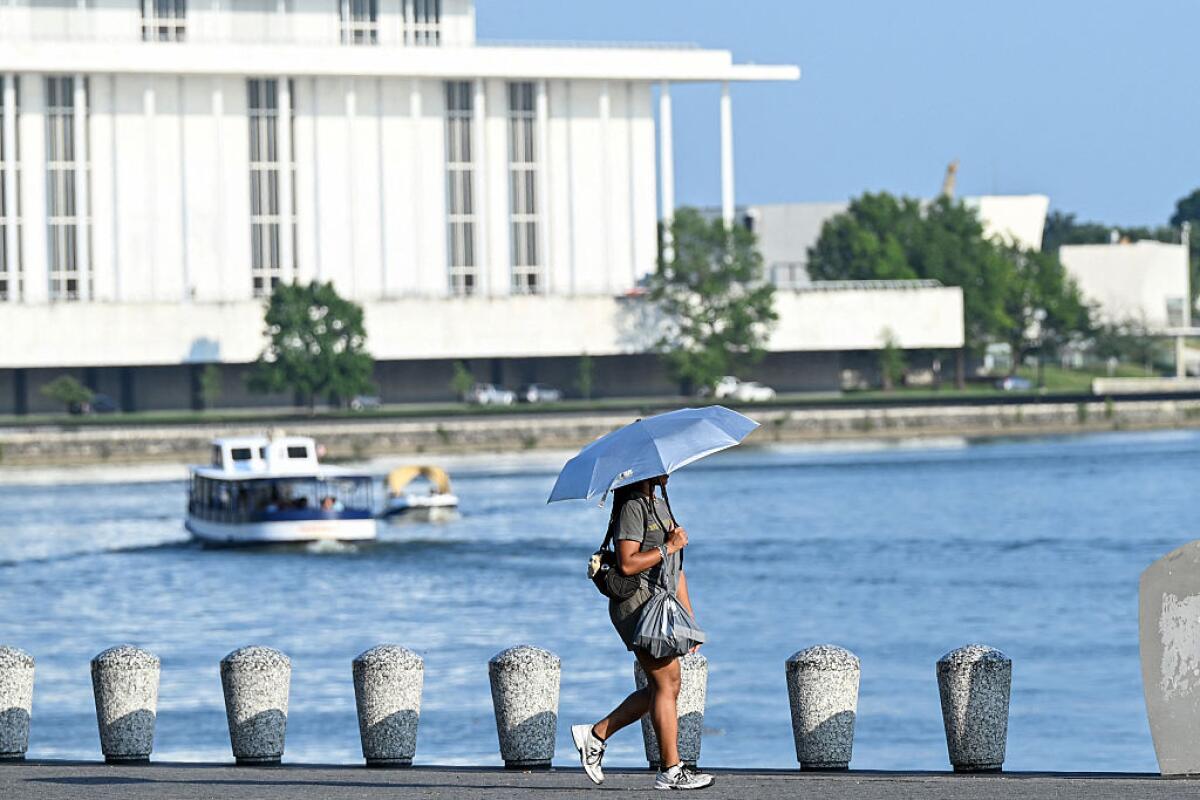
Carrying your own shade is one way to stay cool. Experts advise avoiding the midday sun altogether. (Alex Wroblewski | AFP via Getty Images) 2. Know if you’re high risk
Some people are at higher risk for heat-related illness, as NPR has reported, and they need to take extra care to stay cool.
This includes people who aren’t acclimatized to the heat because they are from cooler regions or spend little time outdoors. Infants and small children can be particularly at risk, partly because of their small body size. Kids also might not notice how they’re feeling, or not communicate it clearly, so it’s important to watch for changes in their behavior that might suggest they’re overheating.
People in their 60s and older may have a reduced ability to sweat and thus cool off. Pregnant women’s bodies also may not cool off well, and heat can raise the risk of pregnancy-related health problems. People with certain chronic health conditions or on certain medications may have trouble too.
And finally, outdoor workers or others who do strenuous outdoor activity and those without access to air conditioning are at high risk.
3. Check prescriptions — heat and some medicines don’t mix
Certain medications can make people more vulnerable to heat. For instance, blood pressure drugs, which millions of people take, are diuretic. “Those medications are trying to get rid of fluid from your body,” Wafi Momin, a cardiologist at Memorial Hermann Health System in Katy, Texas, told NPR. And if you then add heat, “that can cause a very dangerous situation” of dehydration.
Other types of medications can impair your body’s ability to cool off, including anticholinergic medications (a category that includes Benadryl) and stimulants, like ADHD drugs. ACE inhibitors, commonly prescribed for heart issues, make it harder to notice you’re thirsty, and beta blockers — another heart medication — can decrease sweating.
“When you’re taking these medications and you’re exposed to heat, it’s like asking a car to drive up a mountain in the summer with the air conditioner broken,” David Eisenman, a physician and researcher at the University of California, Los Angeles, told NPR. “Overheating becomes much more likely.”
Psychiatric medications can also interfere with your body’s thermoregulation. Antipsychotics and some antidepressants can reduce how much you sweat.
Sedative medications like benzodiazepines may “reduce alertness and perception of heat, says Dr. Ashwini Nadkarni, a psychiatrist and medical director of Brigham General Adult Psychiatry at Mass General Brigham in Boston.
Patients should still take their prescribed medications, Eisenman stresses. But he urges them to take heat risks seriously and make a plan to keep cool.
Ask your doctor whether any of your medicines could increase your risk of heat-related illness. And you can explore a list of medicines that contribute to heat sensitivity from the Centers for Disease Control and Prevention.
4. Know the difference between heat exhaustion and heat stroke and when to seek emergency care
The warning signs of heat exhaustion include fatigue, extreme thirst, nausea, headache, shortness of breath, rapid breathing, muscle cramping and feeling dizzy or lightheaded.
Heatstroke is a much more serious emergency. The warning signs include all the above but also may include a strong, rapid heartbeat, confusion, vomiting, seizures, slurred speech, or passing out. Watch for a body temperature that exceeds 103 degrees F.
The first step to help anyone who exhibits symptoms of heat exhaustion or heatstroke is to get them to immediately stop what they are doing and rest somewhere out of the sun, Dr. Matt Leonard, attending emergency physician at Suburban Hospital, Johns Hopkins School of Medicine, told NPR.
Take steps immediately to cool the person who’s overheated: Get them into air conditioning if possible, or at least shade with a fan or breeze. Mist them with a spray bottle, for example, or pour water over their head. The most important places to cool are the head and face, the armpits and the groin, he says.
If symptoms point to heatstroke (watch especially for neurological symptoms like confusion), get them to an emergency room right away.

Staying hydrated and letting your skin aerate can help you stay cool. (Spencer Platt | Getty Images) 5. Keep cool: Avoid midday sun and choose protective clothing
One of the simplest ways to keep your body temperature at a reasonable level on a hot summer day is to only go outside in the morning or evening when it’s cooler. And stay in the shade, especially if you’re doing anything active.
“That midday sun can add as much as 20 degrees or more to the actual air temperature,” Carol Ewing Garber, professor of movement science at Columbia University, told NPR. “You really have to be careful about that.”
And it’s important to protect your skin, says Leonard. Your skin is an “amazing self-cooling apparatus,” he says. It’s designed “to move warm blood away from your core to keep your vital organs cool.”
Consider wearing lightweight clothing that blocks the sun, and include a hat. Leonard recommends wicking athletic fabrics that allow you to sweat.
Choose loose-fitting silhouettes, recommends Dr. Renee Salas, assistant professor of emergency medicine at Harvard Medical School. If your clothes are too tight, the sweat on your skin can’t evaporate, which is key to keeping your body cool. “I’m sure people don’t love sweating profusely, but sweating is actually our friend when it comes to heat,” Salas told Life Kit.
6. Prehydrate — and rehydrate often
If you’re outside or in a hot place, dehydration can happen fast. So prepare by hydrating in advance, says Momin, of Memorial Hermann Health System. “Grab a glass of water or a sports drink before you head out to the outdoors,” he says.
Bring plenty of water with you, and don’t wait until you’re thirsty to start drinking during an outdoor activity. “The moment you begin to feel thirsty, you’re likely anywhere between 10 to 25% dehydrated already,” says Neil Gandhi, a physician at Houston Methodist Hospital.
Water is the best way to hydrate. Adding electrolytes is not necessary under normal circumstances. But they can be helpful if you’ve gotten overheated or you’re doing something very physically active and sweating a lot. In that case, it can be a good idea to replace those electrolytes promptly, Asher Rosinger, an associate professor and director of the Water, Health, and Nutrition Lab at Penn State University, told NPR.
7. If you struggle with mental health, take extra care
Higher temperatures are known to have an impact on mental health. Studies show that higher temperatures are linked to higher rates of visits to the Emergency Department for mental health conditions and addiction.
And suicide risk goes up too, a recent study found. “We think that every summer roughly an additional hundred young adults are dying by suicide due to increasing temperatures,” says study author and psychiatrist Dr. Joshua Wortzel at the Hartford HealthCare Institute of Living, who runs the institute’s Heat Mind Lab.
If you or someone you know may be struggling with suicidal thoughts, contact the 988 National & Suicide Crisis Lifeline by calling or texting 988.
So, what can people with mental health conditions do to protect themselves from excessive heat? Avoid exposure to heat as much as you can, says Nadkarni of Mass General Brigham. She advises “staying indoors in cooler places” and making sure to hydrate.
She also recommends people talk to their doctors about what their risks are. There can be added risk for people with substance use disorders — alcohol and certain drugs are diuretics and can cause dehydration. And people with mental illness are also vulnerable to heat-related illness, says Nadkarni, so it’s important to watch out for symptoms and seek medical attention promptly if they develop.
Lean into your social networks during times of high heat, suggests Amruta Nori-Sarma, an environmental health researcher at Harvard University’s Chan School of Public Health. “If you have a loved one that you know is prone or vulnerable, make sure that you’re checking in with them when there’s a heat wave,” she says.
Rhitu Chatterjee contributed to this report.
Other reporting was drawn from earlier NPR stories. Contributing reporters include: Allison Aubrey, Alejandra Borunda, Maria Godoy, Pien Huang, Emily Kwong, Suzette Lohmeyer, Christine Ro, and Clare Marie Schneider.