Author: lthistle@whyy.org

  • Working hard as ever, Wendell Pierce aims for an annual trifecta: TV, film and theater

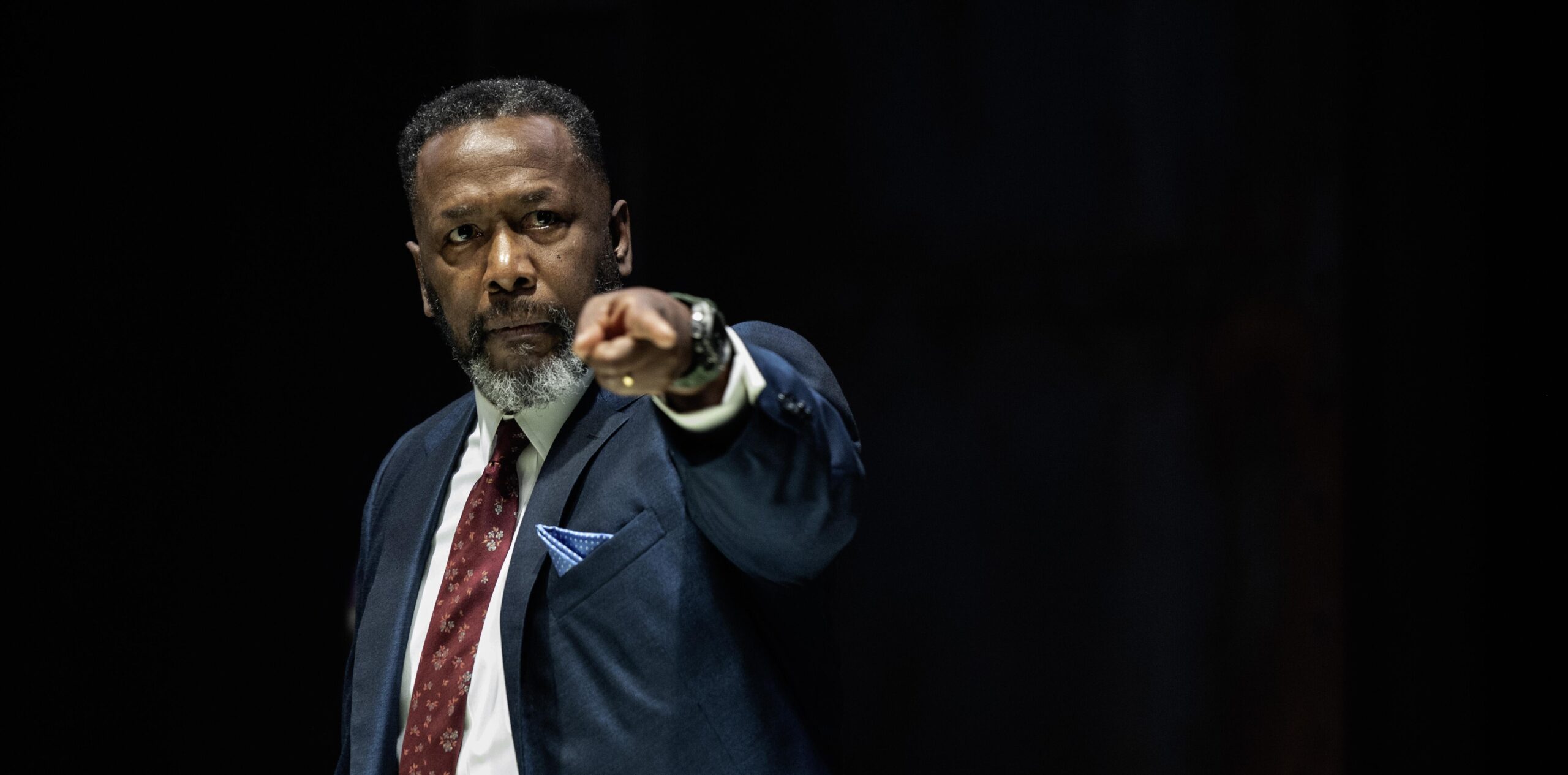
    Working hard as ever, Wendell Pierce aims for an annual trifecta: TV, film and theater

    Wendell Pierce says there’s a joke actors have about the five stages of their careers:

    “There’s ‘Who is Wendell Pierce?’ ‘Get me Wendell Pierce.’ ‘Get me someone like Wendell Pierce.’ ‘Get me a younger Wendell Pierce.’ And then the last and final and fifth stage is: ‘Who is Wendell Pierce?’” he says.

    After starring roles on The Wire and Treme, and a 2023 Tony Award nomination as the first Black actor to play Willy Loman in the Broadway revival of Death of a Salesman, Pierce is working as hard as ever. He says he’s motivated by the “ticking clock of mortality” — but also by the desire to challenge himself as an actor.

    Though many entertainers shy away from the label “journeyman actor,” Pierce proudly embraces the term: “It’s not just to go from job to job, but [to] be intentional about the jobs I take,” he says. “I try to do the trifecta, as I call it — television and film and theater — every year.”

    Pierce currently plays a captain on CBS’ Elsbeth and a CIA officer in the film Tom Clancy’s Jack Ryan: Ghost War. He’s also starring in the Shakespeare Theatre Company production of Othello in Washington, D.C.

    Pierce likens tackling Shakespeare to detective work. First, he says, there’s the “mining the text for all of its understanding and everything that Shakespeare is telling you not only about the characters, but how to portray them and what’s happening.”

    More than that, though, there’s also the emotional aspect of connecting with the character — and the physical and vocal strength required of a three-hour production. “The challenge is physical, it’s intellectual, and it’s emotional, and that’s the great thing about doing Shakespeare, and even specifically doing Othello,” Pierce says. “I always think of these … iconic roles and large roles like the beginning of a hike up Mount Everest.”


    Interview highlights

    On how many years ago, jazz helped him crack the code on Shakespeare 

    I went to the club to hear Arthur Blythe, a great alto saxophonist. And he’s pretty avant-garde, but he had this really hip, swinging tune. I was humming along with it. And then he went into his solo, which was free and wild and all over the place. And I was just looking around the club, still humming the song in my head. And when he finished his solo, we were right exactly on the same note in the melody of the song.

    And that’s when I had this epiphany that while he was free and wild and doing his solo, he was aware of the structure of the song, and knew exactly where he was at all times, and came back to it. So he was free within the form, and then I understood that’s what Shakespeare is like: To have freedom within the form, don’t allow the verse to constrict you, but let it be the guard rails of where you’re supposed to be. But you have the opportunity to take it wherever you would like to take it. That’s really what all great art is about, a merger of technical proficiency and expression, and unlimited expression, but being able to be technically proficient and exact. And that opened up Shakespeare to me, that night, in September, 1981, in New York, listening to jazz at the Village Vanguard.

    On why he almost quit The Wire 

    During the course of The Wire, people would challenge us all the time — “You are only demonstrating the thuggery and the crime and you’re perpetuating this idea that, the stereotype that Black folks are criminally inclined and violent and all.”

    I remember a woman on the train challenging me, African American woman who worked on Wall Street. And I said, “I accept your criticism. … I welcome the challenge and the criticism so I can make sure that we don’t fall victim to that criticism. … But we have judges, the mayor, the president of the city council, the city council members, police officers, lawyers, doctors, teachers, who are all African American. But you’re only seeing the criminals. Imagine how tough it is for a little kid in those neighborhoods. They don’t see the lawyers or the doctors. If you don’t see them as an educated woman, a professional, and you can only see the thuggery, imagine how susceptible those young kids are to it. And that’s what we’re trying to tell and the story we’re trying to tell.”

    Now, in the fourth season, I almost quit because at our wrap party a young lady comes up to me. She says, “Mr. Pierce, I was on the show this year. I really wanted to work with you. We didn’t have anything together. I just wanted to tell you how much I enjoy your work and all.” And I said, “Who did you play?” And she says, “I look younger than I am, so I was one of the kids in the middle school.” … She played this out of control young woman who slashes another girl’s face. … She was like, “I’m going to Brown University on full scholarship.”

    And I thought to myself, why are we not telling your story? … And I thought about the criticism and I said, that woman was right. And I said, I should leave the show because we’re perpetuating a stereotype. And then the episode came on for the fourth season and it was so impactful. And we see exactly where we lose our kids. And we see that inflection point where we can save them and put them on the right track. And where we make them the young woman who goes to Brown on a full scholarship, and where we lose them and send them into that pipeline, into the penal system, and calling our dysfunction out in our society that creates the criminality, that doesn’t celebrate the education of this young woman going to school and all. So it wasn’t arbitrary, and then that’s the only thing that made me come back.

    U.S. Attorney General Eric Holder, left, and Wendell Pierce participate in a panel discussion during a Federal Interagency Drug Endangered Children (DEC) Task Force event at the Justice Department May 31, 2011 in Washington, D.C. The event was organized to announce a public awareness campaign, addressing the challenges faced by children and families affected by drug abuse.
    U.S. Attorney General Eric Holder, left, and Wendell Pierce participate in a panel discussion during a Federal Interagency Drug Endangered Children (DEC) Task Force event at the Justice Department May 31, 2011 in Washington, D.C. The event was organized to announce a public awareness campaign, addressing the challenges faced by children and families affected by drug abuse. (Chip Somodevilla | Getty Images)

    On taking care of his late father in his last 10 years 

    He was two months away from his 99th birthday. He passed in my hands, we were holding hands. I was there with him. I had my father for a long time. I got closer to my father in the last 10 years of his life than I ever had before. My mother passed, and one of her dying wishes was, “Wendell, take care of your father.” She knew. While I was working in Budapest, if I got four days off, I would go home to New Orleans, and spend time with him. It was a blessing. I was traveling the world and being an actor and at the same time my home base is New Orleans, and here I would have my father with me for all those years and he was fuel to my fire. He was reminding me of everything that he taught me and as I attack these challenges of these great roles and the different roles that I play, he is very much in my process.

    This is a man who fought in [the Battle of] Saipan in World War II, fought for the country that he loved when this country wasn’t loving him back and came back and his voting rights weren’t even protected and here he was risking his life in The Double V campaign in the Black community — victory abroad and victory at home. So he very much believed in that.

    On the erasure of Black history  

    The idea of trying to eliminate any sort of contributions that the African-American community has made to this country in the year that we try to celebrate 250 — it is so insulting. … It feels like a visceral attack.

    My brother was purged out of his job here in Washington, D.C. I know so many people and so many Black women in particular, this attack on minorities and women in a world where people are trying to erase them, we realize that that is our call to duty of our generation. We know now that we have to mark our passing on the tree and declare who we are, who we were, what our accomplishments are and have been and what we have created. And exercise our right of self-determination and declaration of accomplishment. We owe that to our ancestors, we owe that to the generations yet to come because there are those who do not have our best interest at heart.

    Ann Marie Baldonado and Nico Gonzalez Wisler produced and edited this interview for broadcast. Bridget Bentz, Molly Seavy-Nesper and Beth Novey adapted it for the web.

    Transcript:

    TONYA MOSLEY, HOST:

    This is FRESH AIR. I’m Tonya Mosley. My guest today, actor Wendell Pierce, is taking on a part he’s wanted to play for years – Shakespeare’s “Othello,” one of the most demanding roles ever written for the stage. The classic is a story of a celebrated military leader who is slowly manipulated into doubting his own wife until jealousy and deception consume him. Pierce is known to many as Detective Bunk Moreland on “The Wire” and Antoine Batiste on HBO’s “Treme.” On Broadway, he became the first Black actor to play Willy Loman in “Death Of A Salesman,” earning a 2023 Tony nomination for the role. His range these days runs just as wide – a police captain on CBS’ “Elsbeth,” a CIA officer in “Jack Ryan: Ghost War” and a villain in “Raising Kanan” on Starz. He plays Othello at the Shakespeare Theatre Company in Washington, D.C., until June 28.

    Wendell Pierce, welcome to FRESH AIR.

    WENDELL PIERCE: Thank you for having me, Tonya.

    MOSLEY: OK. So we are talking just a few hours before you go on stage there in D.C. as Othello. And what is your head like a few hours before you take on this role?

    PIERCE: Oh, it’s really rest and relaxation because I have a couple of hours that I have to prepare for. But I try to relax and warm up and – mind, body and spirit – prepare for the journey. You know, I always think of these roles – you know, these iconic roles and large roles – like the beginning of a hike up Mount Everest. So I’m at Base Camp at this time of the day.

    (LAUGHTER)

    MOSLEY: That’s a good analogy or metaphor – whatever you want to call it – because, I mean, this role, you’ve said, has challenged you like few ever have. What is it about Othello?

    PIERCE: Well, first of all, just the playwright himself, Mr. William Shakespeare, is a great challenge. You know, I try to do the trifecta, as I call it. I do television and film and theater every year – you know, the great trifecta and all of the different mediums. But I think I’m going to expand that to quartet because I would like to do a Shakespeare every year if I can because of, first of all, the detective work, I call it, of mining the text for all of its understanding and everything that Shakespeare was – is telling you not only about the characters, but how to portray them and what’s happening.

    And that’s with – in the verse in the iambic pentameter, but it’s also in the onomatopoeia of the words sounding like what they are, the monosyllabic words denoting a slower pace and the opposite being true – multisyllabic words, a faster pace. That’s just the technical aspect of doing a – the – a classical text like that.

    And then you have the emotional work that you have to do and the connection with the other actors and characters and the love that I have for Desdemona. And actually, the discovery in this role is the love that I have for Iago, which has been key for opening up Othello for me. Normally, he is just seen as the villain and manipulated by Iago. But actually, he is – that is a part of the love story, too. He is – in my interpretation, he is the person that I’ve known and loved and trusted all of my life because I’m orphaned. I am an outsider, and I’m orphaned since a small child. And so you build that up, and then you have to have the physical and then the vocal strength for a three-hour production. So the challenge is physical. It’s intellectual. And it’s emotional.

    MOSLEY: You mentioned a little bit ago that you do a trifecta every year. But is that an intentional thing that you’re making for yourself? This year, I’m going to make sure I’m doing one of these three things. Now the fourth one – making sure that you do a Shakespeare play.

    PIERCE: Yeah. I mean, you know, I’m in the third act of my career, I think, you know, and I’m challenging myself. It’s not just to go from job to job but to be intentional about the jobs I take. And I try to plan out the year that way. I still have to hope that someone hires me to do it, and I have to be good enough to get the auditions and get the offers and all.

    And then also, just as an actor, you want to be as diverse as possible, and I want it. And that’s been the reason I’ve been able to have a 40-year career as a – working in New York and Los Angeles and doing television, doing film, doing theater – as many different places. I’ve produced a play in Uganda. I’ve – in Kampala, Uganda, at the National Theatre there. I try to make it as diverse as possible, and it’s a great challenge. And that’s what the journey is all about.

    MOSLEY: I’m hearing the words you’re saying, Wendell. But I saw all the things that you’re doing right now, and I thought, whoa. I mean, this is, like – these – I – you are – you’re doing more in a year than many people do in five years. It seems like as you get older, you’re almost riding yourself even harder.

    PIERCE: Well, you know, that ticking clock of mortality kind of helps.

    MOSLEY: Yeah.

    (LAUGHTER)

    PIERCE: You want to build a body of work. You want to (laughter) – you know, subconsciously, that probably is a part of it. But also, it’s not all at the same time, you know? Right now “Jack Ryan: Ghost War” is out, but that was last summer and spring when we shot that in Dubai and London. And then “Elsbeth” just ended the season. We do that during the course of a regular television season from September to March. And now – while I’m doing that, I was planning out “Othello” for as soon as we got finished to do the – to come to Washington, D.C., and do “Othello” here. I’m – and then “Raising Kanan” – we had already shot that prior to last year. It’s been in the can for, like, a year.

    So it’s all fortunate that they’re all coming out at the same time. So it seems like I’m doing them at the same time. But I break – but, you know, all these jobs – an actor’s life is in – well, I’ve discovered they’re kind of in quarters of the year, you know? First, second, third, fourth quarter. And that’s how I think of my planning because we work in three-month periods, you know? A play in three months. You know, a full season of television is maybe six months, so – and a film is three months. So you’re constantly planning, and it’s constantly changing. But I’m a journeyman actor. And some people say I shouldn’t say that, but I actually embrace that. That’s something that is a – I wear with pride. I love to call myself a journeyman.

    MOSLEY: Is there a stigma to being a journeyman actor?

    PIERCE: Some people think so. They say, oh, Wendell. You shouldn’t say that, man. You know, you’ve established yourself in the industry as someone significant. You know, I guess people are thinking of some star system or whatever. And I said, you know, I – there’s the joke that we have as actors as – of the five stages of your career. There’s, who is Wendell Pierce? Get me Wendell Pierce. Get me someone like Wendell Pierce.

    MOSLEY: (Laughter).

    PIERCE: Get me a younger Wendell Pierce. And then the last and final and fifth stage is, who is Wendell Pierce? (Laughter) So…

    MOSLEY: (Laughter) So you’re racing against not being, who is Wendell Pierce?

    PIERCE: Is Wendell Pierce, yes.

    MOSLEY: At that stage. Right.

    PIERCE: Yeah. Yes.

    MOSLEY: Do you have a favorite scene from “Othello”?

    PIERCE: Oh, no. I have favorite – oh, there’s too many. It’s so rich. You know, what’s interesting is Desdemona and Othello don’t have any love scenes.

    MOSLEY: They don’t.

    PIERCE: They literally do not have any love scenes. And it’s one of the things that I really love about our production, that in the midst of scenes of strife, of conflict, of war, we find the moments to show our love for each other. But, you know, the first time is, like, they’re going to war. And I have to say, this is why I married her – this is what the intention is. I talk about my love for her. And then I get to war. I say – get to Cyprus. And I realize that she’s there, and I go, oh, thank God. You know, I’ve made it through it.

    But what is normally a rousing speech on the battlefront, I make it into a declaration of love to Desdemona because she’s there and present. And I don’t care what others around me at this time and moment are saying. And, you know, I say, if it were now to die, it were now to be most happy, you know? I cannot speak enough of this content. It stops me here. It is too much of joy. And I’m only talking about her, right? And it’s normally played as, you know, I made it through the battle, and I made it here. And all you guys are here, and I happen to have my wife, too, and it’s a really wonderful thing. We’ve done it. The war is done, you know? And I’m like, no, it’s a love scene.

    MOSLEY: If you’re just joining us, my guest is actor Wendell Pierce. He’s starring as the title character in Shakespeare’s “Othello” at the Shakespeare Theatre Company in Washington, D.C. We’ll continue our conversation after a short break. This is FRESH AIR.

    (SOUNDBITE OF ALLEN TOUSSAINT’S “EGYPTIAN FANTASY”)

    MOSLEY: This is FRESH AIR, and today I am talking with actor Wendell Pierce. You know him from HBO’s “The Wire” and “Treme,” his Tony-nominated turn as Willy Loman in “Death Of A Salesman” on Broadway, and currently as Captain Wagner on the CBS series “Elsbeth.” Right now, he is also onstage in Washington, D.C., playing the title role in Shakespeare’s “Othello.”

    Wendell, I’m noticing a theme in your work. You’re drawn to roles that take you somewhere dark and deep. And, of course, Othello does that. And so did Willy Loman, which you played back in 2022 when you became the first Black actor to play him in “Death Of A Salesman” on Broadway. He is an aging, traveling salesman chasing success. He really wants to be well-liked. How did you find your way into Willy Loman?

    PIERCE: The first man I thought of was my father. My father was – had a great work ethic. He was a man, very simple laborer who had wanderlust, loved to travel. He kind of instilled that in us. He said, you can be whatever you want to be. And he also warned us that there are going to be people who will do everything possible that you won’t succeed. And so it was always there that I started to think of Willy Loman.

    And what is so tragic about Willy Loman is, for men like that, the American dream was still something that was denied them at every step of the way. We achieved part of the American dream, but it was through an extreme difficulty. And that’s what – and that can break people. That can destroy people’s psyche and destroy their heart, destroy their mental facility.

    And I think that’s what happened with Willy Loman, right? Because he was a Black man in America that loved the country, that loved the economic ethos and idea of the American dream. But then that dream was a nightmare for him. He was placed in – his expectations far outlasted and grew far past what was available to him. And out of that desperation, he destroyed himself and he destroyed his family.

    MOSLEY: You know, that’s what’s so powerful about you playing this character. Because I think that the whole premise, the idea of “Death Of A Salesman,” it is something that everyone can sort of connect to, especially as an American here in America.

    PIERCE: Absolutely.

    MOSLEY: But there’s another layer there when you add on you and your identity as a Black man. It’s like another…

    PIERCE: Yeah, as a Black man in America. I mean, because what happens is, there are people that came to the play that thought we rewrote the play. They said, you can’t change that. A producer actually came to me with great concern, like, wait, you changed – you can’t say. There’s the scene where Willy Loman is caught in an infidelity with a woman in a hotel by his son. It is the moment that broke all of their lives. And I tell her, listen, go into the bathroom, you know, and be quiet. There may be a law against this, right?

    And in our production, I’m having an affair with a white woman. And it’s 1937, I think it was. And we’re in this hotel. And she is, you know, scantily clothed. And there’s a knocking on the door, and I’m thinking it’s someone that can expose our infidelity. And I say, you know, there may be a law against this. And I’m thinking of the laws that were of the time, that if – the literal laws of, you know, you could not marry, you could not be together in an interracial relationship. And then there was the time that so many Black men were lynched because they were caught with a white woman. It’s one of the most dangerous things that can ever happen. It was the time of the Scottsboro Boys. It was the time of – you know, of danger.

    And actually, the producer thought we put it in there, right? And I said, no, that’s in the play because actually, the law at the time was no unmarried couple could be in a hotel together. And that’s the law that they were thinking of, that – in Boston, at this time, you know, it was, you’re not supposed to be in a hotel together unless you’re married. You know, there may be a law against this. And that simple line rang out like something you had never heard before in other productions.

    MOSLEY: It felt different. Right.

    PIERCE: It felt different.

    MOSLEY: Yep. The last time that I spoke with you, we were in the pandemic, and you were spending a lot of time with your dad during that time. It was, like, 2021. And since then, he has passed away. And I just want to offer my condolences, first off.

    PIERCE: Yeah, well, thank you. Thank you. I had my dad for – he was two months away from his 99th birthday. I literally – he passed in my hands, you know? We were holding hands. I was there with him. And so I had my father for a long time, and those last years, I spent – I got closer to my father in the last 10 years of his life than I ever had before. My mother passed, and one of her dying wishes was, Wendell, take care of your father, right? She knew. And, you know, while I was working in Budapest, if I got four days off, I would go home to New Orleans – right? – and spend time with him.

    It was – but it was a blessing. I was traveling the world and being an actor, and at the same time, my home base is New Orleans, and here I would have my father with me for all those years. And he was fuel to my fire, you know? He was reminding me of everything that he taught me. And as I attacked these challenges of these great roles and the different roles that I play, you know, he is very much in my process.

    This is a man who fought in Saipan in World War II, you know, and came back and was not – his voting rights weren’t even protected, and here he was risking his life in the Double V campaign in the Black community – victory abroad and victory at home. So he very much believed in that.

    MOSLEY: There’s a – there’s actually a moving speech that you gave the opening night of “Death Of A Salesman,” where you’re paying tribute to your father, and he was actually in the audience at the time. And I want to play some of it. Let’s listen to a little bit.

    (SOUNDBITE OF ARCHIVED RECORDING)

    PIERCE: When this play was written, a young man came from New Orleans to be a photographer. He decided to go home and raise his three boys in New Orleans, one of which is me.

    UNIDENTIFIED CROWD: (Murmuring).

    PIERCE: He fought for this country and loved it when it didn’t love him back.

    UNIDENTIFIED CROWD: (Murmuring).

    PIERCE: But he gave me the most precious thing ever – love and time.

    (APPLAUSE)

    MOSLEY: That was my guest, Wendell Pierce, on opening night of “Death Of A Salesman.” And at that moment, when you say he gave me time, you hold up a timepiece, and you walk off the stage, and you present it to your dad.

    PIERCE: And that was the timepiece pocket watch from the play that you see Willie Loman receive from his brother. It is – and I presented it to him. And I knew in that moment, it was probably the last time he would ever see me on stage. And I just wanted to honor him.

    MOSLEY: Our guest today is actor Wendell Pierce. We’ll be right back after a short break. I’m Tonya Mosley and this is FRESH AIR.

    (SOUNDBITE OF ALLEN TOUSSAINT’S “JUST A CLOSER WALK WITH THEE”)

    MOSLEY: This is FRESH AIR. I’m Tonya Mosley. And my guest today is actor Wendell Pierce. Over a career spanning four decades, he’s played some of the most memorable characters on television – Detective Bunk Moreland on HBO’s “The Wire,” the trombone player Antoine Batiste in “Treme.” And in 2022, he became the first Black actor to play Willy Loman in “Death Of A Salesman” on Broadway. He’s currently starring as Captain Wagner on the CBS series “Elsbeth,” is back as a CIA officer, James Greer, in “Jack Ryan: Ghost War” and in the final season of “Raising Kanan” on Starz. He’s currently on stage in Washington, D.C., playing the title role in Shakespeare’s “Othello.” It runs through June 28 at the Shakespeare Theatre.

    You know, I’m thinking about how you say that you got into the character Willy Loman by really thinking about the journey of your father. And that story you told in your speech just then for opening night – that was a revelation to you that your father was a young photographer right around the time “Death Of A Salesman” was going out into the world because your dad – for the longest time, you thought he didn’t want this life of a creator for you. He – you thought…

    PIERCE: Oh, yes.

    MOSLEY: …He wanted you to be kind of traditional man – a lawyer or a doctor.

    PIERCE: Absolutely.

    MOSLEY: Something safe.

    PIERCE: He was a – oh, man. I went to a very good school, very great college preparatory school – Ben Franklin. It’s the No. 1 high school in Louisiana. And it – it’s – you know, it’s all these great National Merit scholars and people with scholarships and going to the Ivy Leagues and great careers. And he just – and when I decided early on in the middle of that I wanted to be an actor at 14, going to this other great school, the New Orleans Center for Creative Arts – I had the best of both worlds – oh, he was so adamantly against it. He was like, let your mama take you to all that stuff. I’m not going to do it. But he stuck to his guns. His principle was, you do what you want to do but give 100%.

    And so he was adamantly against it. And – but then my brother made me remember that my father was a photographer. And he said, I want Daddy’s pictures. You know, if anything ever happens, I want Daddy’s pictures. I said, what pictures? And he showed me these pictures from an art exhibit my father had done when he had studied as a photographer.

    And he went to New York. I knew he had gone to New York to study photography because that was a trade back in the day. We didn’t have our phones and Instamatic cameras. You went to a photography studio and got your pictures taken. So the – but – so when the Instamatic camera came out, actually, an entire industry went away because a photographer was like your – like a grocer or a dry cleaner, you know? The family got together. They went to the photography studio, and they took pictures. And that’s what he was expecting to do.

    And that’s what I thought he was training to do when I realized he had an artistic vocation of being a photographer like Roy DeCarava or James Van Der Zee and all of these wonderful photographers when I saw these from his exhibit. So it was a dream deferred for him. So a part of his pushback on my wanting to be an actor was his desire as a father not to see his son go through the hurt and the disappointment that he had gone through. And so that’s why he tried to steer me away from being an actor early on when I was in high school.

    MOSLEY: You went on to study at Juilliard, which you have said is kind of the most terrifying experience of your life. You made it through there – you could make it through anywhere. But you – there’s this other story you tell that you’ve told many times, but what we got to hear it here – your most memorable audition. You had just graduated from Juilliard, and you’re in front of Bob Fosse.

    PIERCE: Oh, wow. Yeah. That audition I consider one of the highlights of my career. And it was for “The Big Deal” on Broadway. And I went in, and I had come up with – they had already started. It was a play about a boxer who is being manipulated by the Mob, and he’s throwing fights. And he takes his life back. He goes, listen. All right. This is it. I’m not going to do this anymore. I’m taking my life back.

    And so he explodes in the middle of – in this one scene. And so I was going in to audition. They had already started rehearsal, and on the break, I was going to go in and do my audition. So as the doors open and they’re coming out for a break, I run into the room, and I said, all right. Listen up, everybody. This is what’s going to happen. I’m taking my life back. And I go into the scene, right? Everybody stops, like, who is this crazy guy? They say, OK. OK. All right. Everybody, go on break.

    Bob Fosse clears the room. He says, OK. Now, do it. The stage manager is fumbling, trying to find the scene. I say, all right, everybody. This is it. I’m taking my life back. He goes, stop, stop, stop. The stage manager was lost. He says – he turns to the pianist, and he goes, Give me an F vamp. Bump, bump. Bump, bump. Bump, bump. Then he says, give me the script. And he says, OK. Start. And I said, all right, everybody. This is how it’s going to go. I’m taking my life back. And he reads the scene with me. No, you aren’t. I’m going to – you’re still going to do what we say. I said, no. It’s going to go this way. Bump, bump.

    And he circles me, and we read the scene together. And at the end, he goes, oh, you’re good. But you’re too young. You’re too young. Oh, man. But I want to work with you. He calls my agent. My agent calls me and says, What did you do today? Bob Fosse called and said he’s going to work with you this year. I said, oh, my God. That’s great. But – you’re too young for this, but he’s going to find something. He’s going to work with you this year. Later that year, I’m in a hotel room, and I see – Bob Fosse’s picture comes up. And they say, ladies and gentlemen, Bob Fosse died today.

    MOSLEY: Ah.

    PIERCE: And I was like, oh, man. I was going to work with him. I was going to work with him. And then I had the epiphany. I did work with him. I did. We did a scene together. It had the music behind it. We read it. It was great. We had an audience of one, but I did work with Bob Fosse. And that’s when I realized an audition is an opportunity to share your work. You’re not asking for a job. You’re saying this is what I would do with this role, this is what this play is about, this is what this film is about. And just go and do the work. It’s opening and closing night, and that’s it. And if something comes out of it, the job itself or whatever, then that’s – then you get to continue to do the work. But that’s my Bob Fosse story.

    MOSLEY: What a confident young man you were.

    PIERCE: Yeah, because…

    MOSLEY: I’m taking my life back.

    PIERCE: Yes.

    (LAUGHTER)

    MOSLEY: If you’re just joining us, my guest is actor Wendell Pierce. He’s starring as the title character in Shakespeare’s “Othello.” We’ll continue our conversation after a short break. This is FRESH AIR.

    (SOUNDBITE OF JON CLEARY SONG, “DYNA-MITE”)

    MOSLEY: This is FRESH AIR, and today I am talking with actor Wendell Pierce. You know him from HBOs “The Wire” and “Treme,” his Tony-nominated turn as Willy Loman in “Death Of A Salesman” on Broadway and currently as Captain Wagner on the CBS series “Elsbeth.” Right now, he is also onstage in Washington, D.C., playing the title role in Shakespeare’s “Othello.”

    You know, Wendell, so many of the men you play are holding onto dignity within systems who don’t fully see them. And it seems to be kind of like the through line that I see with so many of the characters you play. And I want to talk for just a moment about Bunk Moreland from “The Wire.” In a lot of ways, anyone who’s seen the show knows it, but I mean, he was the conscience of the show. He took so much pride in his job, even inside of this department that made it kind of hard.

    And I want to play a scene that comes after a shootout. It’s where one of the women in Omar’s crew has been shot dead in the street. And now Omar, who is played by the late Michael K. Williams, is this fierce kind of stickup man who robs high-end drug dealers. And Bunk is investigating that killing. And he pulls Omar aside to this quiet, deserted spot. And they have this moment that we’re about to play. Let’s listen.

    (SOUNDBITE OF TV SHOW, “THE WIRE”)

    PIERCE: (As Detective Bunk Moreland) I was a few years ahead of you at Edmonson, but I know you remember the neighborhood, how it was. We had some bad boys for real. It wasn’t about guns so much as knowing what to do with your hands. Those boys could really rack. My father had me on the straight. But like any young man, I wanted to be hard, too. So I would turn up at all the house parties where the tough boys hung. Yeah, they knew I wasn’t one of them.

    Them hard cases would come up to me and say go home, schoolboy, you don’t belong here. Didn’t realize at the time what they were doing for me. As rough as that neighborhood could be, we had us a community. No body, no victim that didn’t matter. And now all we got is bodies and predatory [expletive] like you. And out where that girl fell, I saw kids acting like Omar, calling you by name, glorifying your [expletive]. It makes me sick how far we done fell.

    MOSLEY: I just want to listen to the rest of the show right now.

    PIERCE: (Laughter).

    MOSLEY: That was my guest, Wendell Pierce, in “The Wire.” Wendell, is it true that there was actually a turning point during the height of the success of this show when you thought about leaving it?

    PIERCE: Yes, yes. There came a point. Someone – during the course of “The Wire,” people would challenge us all the time. You know, you are only demonstrating the thuggery and the crime. And you’re perpetuating this idea that – the stereotype that Black folks are criminally inclined and violent and all. I remember a woman on the train challenging me, an African American woman who worked on Wall Street.

    And I said, I accept your criticism. We should never lose the ability to be offended, never lose that ability. So I welcome the challenge, and that’s – and the criticism, so I can make sure that we don’t fall victim to that criticism. I said, but we have judges, the mayor, the president of the city council, the city council members, police officers, lawyers, doctors, teachers who are all African American. But you’re only seeing the criminals.

    Imagine how tough it is for a little kid in those neighborhoods. They don’t see the lawyers or the doctors. And if you don’t see them, as an educated woman, a professional, and you can only see the thuggery, imagine how susceptible those young kids are to it. And that’s what we’re trying to tell and the story we’re trying to tell. Now, in the fourth season, I almost quit because…

    MOSLEY: Yeah.

    PIERCE: …At our wrap party, a young lady comes up to me. She says, oh, Mr. Pierce, I was on the show this year. I really wanted to work with you. I didn’t get – we didn’t have anything together. I just wanted to tell you how much I enjoy your work and all. And, you know, this is my only time being on “The Wire.” And I’m going to Brown, I think she was going to, on a full scholarship. And I said, who did you play? And she says, I look younger than I am. So I was one of the kids in the middle school.

    MOSLEY: (Laughter).

    PIERCE: And I said, oh. And then she described the character that she played was this out-of-control young woman who slashes another girl’s face…

    MOSLEY: Oh, I know that episode. Yeah.

    PIERCE: …Over something trivial. And I said, wait a minute, you played that? And she said yes. And I said, and what do you do in life? Wait, where are you going? She was like, I’m going to Brown University on full scholarship. And I thought to myself, why are we not telling your story? Why are we not telling your story? And I thought about the criticism, and I said, that woman was right. And I said, I should leave the show ’cause we’re perpetuating a stereotype. And then the episode came on for the fourth season. And it was so impactful. And we see exactly where we lose our kids. And we see that inflection point, where we can save them and put them on the right track, and where we can make them the young woman who goes to Brown on a full scholarship, and where we lose them and send them into that pipeline into the penal system.

    And then I said, OK, it’s not arbitrary. That’s the role we’re playing on “The Wire.” We are the cautionary tale. We are, as Shakespeare said, holding a mirror up to nature and calling our dysfunction out in our society that creates the criminality, that doesn’t celebrate the education of this young woman going to school and all. So it wasn’t arbitrary, and then that’s the only thing that made me come back.

    MOSLEY: Let’s take a short break. If you’re just joining us, my guest is actor Wendell Pierce. He’s starring in the title role of Shakespeare’s “Othello” at the Shakespeare Theater Company in Washington, D.C. We’ll be right back after a break. This is FRESH AIR.

    (SOUNDBITE OF BILL FRISELL’S “MESSIN’ WITH THE KID”)

    MOSLEY: This is FRESH AIR. Today, I’m talking with actor Wendell Pierce. He’s currently on stage in Washington, D.C, playing the title role in Shakespeare’s “Othello.” He’s also known for his roles in HBO’s “The Wire” and “Treme,” his Tony-nominated portrayal as Willie Loman in “Death Of A Salesman” on Broadway and the CBS series “Elsbeth.”

    You know, I think anybody who knows you or even knows just a little bit about you knows that you are from New Orleans. You rep it very hard.

    PIERCE: (Laughter) Yes.

    MOSLEY: And you grew up in Pontchartrain Park…

    PIERCE: Yes.

    MOSLEY: …In New Orleans. It sounds so idyllic. You had a pretty idyllic childhood, it sounds like.

    PIERCE: It was. I called I call Pontchartrain Park the Black Mayberry, you know?

    MOSLEY: (Laughter).

    PIERCE: It grew out of the Civil Rights Movement, when there was so many prohibitions and where Blacks could not participate in the expansion of post-World War II, you know, suburbia. And there was a movement to make sure that Black folks had access to homes and all. And Pontchartrain Park came out of sort of an appeasement. It was separate but equal, adjacent to Gentilly Woods, which was a white neighborhood, where the covenant of Blacks couldn’t move in.

    And they set aside another 200 acres and replicated that neighborhood in Pontchartrain Park. But right in the middle of it, Joseph Bartholomew designed a golf course, a little municipal golf course. And Joseph Bartholomew was an African American landscape architect who designed most of the courses in New Orleans at the time and – but couldn’t play on them. So it was the ying and yang of fighting the ignorance of Jim Crow segregated New Orleans, but at the same time, creating pockets of idyllic communities. And Pontchartrain Park was one of them.

    And lawyers and doctors and teachers and janitors and the glass man – Mr. Wagner (ph) was a glass man. And Mr. Greenwood (ph) was the dry cleaner. So it was economic development, and everybody’s – your mother and father and playground there at Southern University at New Orleans, at a Black historic Black college, right in the neighborhood. So it was really, really idyllic.

    MOSLEY: Yeah. So many memories with you and your mom and your dad. Your mom, who was a school teacher, your siblings. And it was destroyed.

    PIERCE: And she taught two blocks from our home at Coghill Elementary School, where I went to elementary school. And for years, I was just known as Mrs. Pierce’s son because she was so beloved in the neighborhood, and she was a part of a community.

    MOSLEY: What was that like for you? What was that like for you, though, to be a child of a schoolteacher (laughter)?

    PIERCE: Well, it was – all of our teachers lived in the neighborhood, too, so the worst part about it is, you know, I would come home from school or come home from the playground, and my mother’s sitting there with my second grade teacher and my third grade teacher and my fourth grade teacher.

    MOSLEY: (Laughter).

    PIERCE: And – you know, and they’re having their cocktails after work, you know? So every – I – all of my teachers, I would see on a regular basis…

    MOSLEY: You couldn’t get away with anything.

    PIERCE: …Socially with my ma. I couldn’t get away with anything. But it was great, you know? It was great, the community. And it was totally destroyed by Katrina, one of the deepest parts of the flooding. And I knew how it was first built, the civic advocacy that constructed Pontchartrain Park in the Civil Rights Movement, led by A P Tureaud, one of the great civil rights lawyers of New Orleans in my parents’ generation.

    So I put out a clarion call to our generation after Katrina, saying we owe it to them. You know, we owe it to them to rebuild it. And so we have rebuilt it, our neighborhood, brick by brick, block by block, house by house, and Pontchartrain Park is back. I led an effort, and we rebuilt 40 homes. And that’s where I live to this day. I’m still there in Pontchartrain Park.

    MOSLEY: You wrote this book out of that devastation, “The Wind In The Reeds,” in 2015. I mean, it’s a memoir, but it also is this love letter to New Orleans that’s so descriptive about your childhood but then just about the city and the history. And there’s a particular moment. You say, decades from now, little kids will ask, Mr. Pierce, what did you…

    PIERCE: What did you do?

    MOSLEY: …Know about New Orleans’ darkest hour? And you will tell them – and that got me thinking about this quote that I’m kind of obsessed with right now from Bryan Stevenson, where he said that, basically, our ancestors fought for freedom, our parents fought for civil rights and our generation’s struggle is a narrative one, the honest accounting of what actually happened. And reading your book, I just felt echoes of that. I wonder what you – how you feel about that idea because you’re just so intentional in making sure that this story, particularly about New Orleans and Katrina, stays alive.

    PIERCE: It is the most important thing we have right now in our time and our generation. People are actively trying to erase who we are as a people. I am only minutes away from the Pentagon as I speak right now. And I remember my father admiring General Chappie James, Benjamin Chappie James (ph). And to know that they just removed his painting from the Pentagon – and whatever reason they come up with, we all know the reason. It’s just racist, and the idea of trying to eliminate any sort of contributions that the African American community has made to this country in the year that we try to celebrate 250, it is so insulting. It is so aggressively – it feels like a visceral attack.

    My brother was purged out of his job here in Washington, D.C. I know so many people and it’s so many Black women in particular, this attack on minorities and women in a world where we are trying to – where people are trying to erase them. We realize that that is our call to duty of our generation, which is, we know now that we have to mark our passing on the tree and declare who we are, who we were, what our accomplishments are and have been and what we have created and exercise our right of self determination and declaration of accomplishment. We owe that to our ancestors. We owe that to the generations yet to come because there are those who do not have our best interests at heart.

    MOSLEY: Wendell Pierce, this has been such a pleasure. Thank you so much for your time.

    PIERCE: Thank you. I really appreciate it.

    MOSLEY: Wendell Pierce stars in “Othello” at the Shakespeare Theatre Company in Washington, D.C.

    Tomorrow on FRESH AIR, the rise of masculinism. How the movement, which is now mainstream, aims to fight feminism and restore the primacy of men. We speak with Helen Lewis, who writes about the movement in The Atlantic. I hope you can join us.

    To keep up with what’s on the show and get highlights of our interviews, follow us on Instagram – @nprfreshair.

    (SOUNDBITE OF KENNY BURRELL’S “CHITLINS CON CARNE”)

    MOSLEY: FRESH AIR’s executive producer is Sam Briger. Our technical director and engineer is Audrey Bentham. Our interviews and reviews are produced and edited by Phyllis Myers, Ann Marie Baldonado, Lauren Krenzel, Therese Madden, Monique Nazareth, Thea Chaloner, Susan Nyakundi, Anna Bauman and Nico Gonzalez-Wisler. Our digital media producer is Molly Seavy-Nesper. Roberta Shorrock directs the show. With Terry Gross, I’m Tonya Mosley.

    (SOUNDBITE OF KENNY BURRELL’S “CHITLINS CON CARNE”)

  • US Lifts Oil Sanctions On Iran, Trump Shifts To Economy, MN Subpoenas Thrown Out

    Transcript:

    (SOUNDBITE OF MUSIC)

    MICHEL MARTIN, HOST:

    The U.S. has temporarily lifted oil sanctions on Iran for the first time in decades.

    A MARTÍNEZ, HOST:

    It’s one of several incentives to get Iran to comply with U.S. nuclear demands. Vice President Vance says Iran will let inspectors back in, but Iran says it agreed to no such thing.

    MARTIN: I’m Michel Martin. That’s A Martínez, and this is UP FIRST from NPR News.

    (SOUNDBITE OF MUSIC)

    MARTIN: President Trump is heading to Pennsylvania today to talk up the economy. He has promised gas and grocery prices will fall now that the war is ending. But his approval numbers are at record lows, and even some Republicans aren’t convinced.

    MARTÍNEZ: And a federal judge in Minnesota threw out grand jury subpoenas from the Trump administration. The judge said they were used to harass and retaliate against officials who wouldn’t help the president’s immigration crackdown. Stay with us. We’ve got the news you need to start your day.

    (SOUNDBITE OF MUSIC)

    MARTÍNEZ: The United States has lifted oil sanctions on Iran.

    MARTIN: It’s a temporary measure that lets Iran sell its oil in U.S. dollars on the global market. The 60-day sanctions exemption is just one of several economic incentives coming Iran’s way.

    MARTÍNEZ: NPR’s international correspondent Aya Batrawy is in Dubai to explain what all of this means. So OK, these oil sanction waivers were announced by Treasury Secretary Scott Bessent yesterday. What does it mean for Iran?

    AYA BATRAWY, BYLINE: Well, it basically means Iran can sell freely at standard prices just like any other major Gulf oil producer. And this is a pretty stunning turnaround from what was just a weekslong U.S. naval blockade on Iran’s ports. A, for years, Iran had been evading U.S. sanctions through dark fleets. These are ships that would turn off their tracking systems and hide their origin. And then Iran would mostly sell this cargo to state-linked Chinese companies who were motivated to buy from Iran because the oil was sold at a discount outside of the international dollar banking system. But the idea here with these waivers is to incentivize Iran to comply with U.S. demands on its nuclear program during the duration of these talks.

    MARTÍNEZ: So on that note, Vice President JD Vance, who’s leading the negotiations, says Iran has agreed to allow nuclear inspectors into the country. What can you tell us about that?

    BATRAWY: So the current deal with the United States not only lifts oil sanctions on Iran through much of August, but also unlocks billions of Iran’s frozen dollars in overseas accounts in Qatar. And with Vance as the face of these negotiations, he’s been trying to sell this deal as one that’s primarily good for the United States, and he says Iran won’t see anything until its policies change. And I want you to have a listen to what he said in Switzerland yesterday after the first round of high-level talks with Iran.

    (SOUNDBITE OF ARCHIVED RECORDING)

    JD VANCE: The Iranians have agreed to invite IAEA inspectors back into their country. That is a major milestone for the American people and the first step in permanently denuclearizing or permanently ending a nuclear weapons program in Iran.

    BATRAWY: OK. But for context here, the head of the International Atomic Energy Agency that Vance is referring to was in the United Arab Emirates earlier this month. And I was there when Rafael Grossi said inspectors are already in Iran and had visited small labs in places that hadn’t been attacked. But Vance seems to be implying here that they would be able to inspect nuclear sites like Fordo, Isfahan and Natanz, which were damaged in U.S. airstrikes last year. The IAEA says those airstrikes obscured its ability to check on these sites. And the agency says that just days before that war last June, they had been able to verify Iran’s stockpile of highly enriched uranium.

    MARTÍNEZ: All right. So what’s Iran been saying?

    BATRAWY: So Iran says there are no plans for inspections of damaged nuclear sites and that nothing of the sort was discussed in Switzerland. It says Iran’s interactions with the IAEA would continue as usual. And the foreign ministry pointed to a preliminary deal signed with the U.S. that says talks on a final agreement begin after oil sanctions in the U.S. naval blockade have been lifted, which we know has already happened, and after there’s a ceasefire in Lebanon between the Iran-backed Hezbollah and Israel, which has been largely holding since Sunday.

    But crucially, it also says that talks on a final deal come after the U.S. makes, quote, “fully available” Iran’s frozen assets. Those are the billions that are in Qatar right now. And for its part, Iran has to reopen the Strait of Hormuz to commercial shipping and oil tankers. But maritime tracking firms say just a couple dozen ships are transiting a day, so we’re still far below those prewar levels.

    MARTÍNEZ: That’s NPR’s Aya Batrawy in Dubai. Thank you very much.

    BATRAWY: Thanks, A.

    MARTÍNEZ: As his top negotiators look to finalize plans to end the war in Iran, the president is turning the page a bit to the economy.

    MARTIN: He is heading today to Lehigh Valley, Pennsylvania, where he will tour a Mack Trucks manufacturing plant to tout what he sees as his economic gains.

    MARTÍNEZ: NPR White House correspondent Franco Ordoñez will be following the visit. So not a typical domestic trip for President Trump, Franco.

    FRANCO ORDOÑEZ, BYLINE: Yes and no. But, A, I’d largely say no because of the timing of the visit. I mean, this is going to be his first domestic trip since signing an agreement with the Iranians to end their fighting in the Middle East. And as you mentioned, it’s a chance for Trump to turn the page and focus on his domestic agenda. Now, I expect he’ll outline some of the economic gains that he’s been promising would happen once the fighting has stopped. I mean, politically, he also needs this. His approval ratings continue falling to record lows over his handling of the economy. According to NPR’s most recent polling, just 36% of voters say they approve of Trump’s overall job performance, while 59% say they disapprove. And that’s the widest gap Trump has faced during either term in office.

    MARTÍNEZ: And he’s made big promises that gas prices and food prices will start to drop once the war is over. I mean, is that what you expect to hear today?

    ORDOÑEZ: Yeah, to a certain degree. I mean, he’s been very clear when pressed about the high cost of living in America right now that all that would change once the war is over and that the Strait of Hormuz is open again, that gas prices would plummet, and as would other energy prices. And he actually acknowledges thinking about the political and economic consequences if that doesn’t happen.

    (SOUNDBITE OF ARCHIVED RECORDING)

    PRESIDENT DONALD TRUMP: I don’t want to be Herbert Hoover. That’s a president I don’t want to be ’cause he, you know, he was in charge during the Great Depression.

    ORDOÑEZ: And yesterday, he boasted that the strait was open and that there was now a, quote, “oil gusher.” So I expect you’ll hear some of that today, but I wouldn’t be surprised at all if he urges folks to also have some patience.

    MARTÍNEZ: More patience, OK. So what do you mean?

    ORDOÑEZ: Well, I mean, obviously, there are a lot of factors that go into this. I mean, it’s a very delicate and uncertain moment. I mean, but even if the strait is reopened, it could take some time – likely months – until U.S. drivers see gas prices fall to pre-conflict levels. I mean, this was a monthslong blockade that severely disrupted energy markets and messed with prices across several sectors. I mean, the disruptions also involved natural gas, feedstock, fertilizer. It affected supply chains. So it could really be months before grocery prices come down.

    MARTÍNEZ: All right. Now, getting back to the politics, especially with the midterms coming up – but how important is it for President Trump to address the economy?

    ORDOÑEZ: I mean, it’s extremely important. I mean, pundits will tell you that voters don’t go to the polls on foreign policy issues, but they will absolutely make their voices heard about inflation and higher prices. I quoted NPR’s polling earlier, and it’s not just Democrats who are concerned about the economy under Trump. Republicans are, as well. I mean, 22% of Republicans say they disapprove of Trump’s handling of the economy. A, that’s a really big number for a president who has long had an iron grip on Republican support. I mean, Republican elected officials, lawmakers have been clamoring for Trump to zero in on the economy for months now, especially with the midterm approaching. They’ve been doing this over and over again, but the Trump administration continues to talk about these issues and foreign policy. I think the real question now is whether it’s going to be soon enough for Trump to make a difference, or is it too late?

    MARTÍNEZ: That’s NPR White House correspondent Franco Ordoñez. Thanks a lot.

    ORDOÑEZ: Thanks, A.

    (SOUNDBITE OF MUSIC)

    MARTIN: In Minnesota, a federal judge threw out grand jury subpoenas from the Trump administration.

    MARTÍNEZ: The judge said the subpoenas were used to harass, coerce, and retaliate against Minnesota officials who did not cooperate with the federal government’s immigration policies.

    MARTIN: Minnesota Public Radio’s Jon Collins is with us now to tell us more about it. Good morning.

    JON COLLINS, BYLINE: Good morning.

    MARTIN: So the federal government issued six subpoenas. What did the government say they were looking for?

    COLLINS: So they were looking for answers from some longtime opponents, including Governor Tim Walz and Attorney General Keith Ellison, as well as the mayors of Minneapolis and St. Paul, and the counties where they’re located. And the subpoenas came down during the height of the ICE surge into Minnesota, and that’s where thousands were arrested and two American citizens were shot to death by federal agents. But essentially, the subpoenas were aimed at getting these Minnesota officials to hand over any information about their response to the federal government’s immigration surge in Minnesota.

    MARTIN: And what did the judge say in throwing them out?

    COLLINS: The judge sided with Minnesota state and city officials who argued that these subpoenas violated their 10th Amendment rights, which says the federal government can’t use its powers to compel or harass local governments into adopting certain federal policies. And that’s exactly what the judge appears to think the Trump administration was trying to do here. And the judge in this case, Patrick Schiltz, noted the context that these subpoenas occurred in. They were issued right as President Trump threatened retribution against the state and at a time when top officials in the Trump administration were also publicly pushing the state to cooperate more closely with federal immigration efforts or to face the consequences.

    MARTIN: And what – did the judge say any more about how he came to this conclusion that the federal government overstepped its authority here?

    COLLINS: The judge said harassing local and state officials is not an appropriate use of grand jury subpoenas. It’s a misuse of a very powerful tool. But Judge Schiltz also said the federal government’s assertion that these incredibly broad subpoenas had any clear purpose in a criminal investigation was absurd. He said none of the federal government’s examples it cited justified the subpoenas. And he said it’s clear that the goal of the subpoenas was instead to coerce Minnesota officials into assisting with the enforcement of federal civil immigration law and to harass and retaliate against them for failing to do so.

    MARTIN: Have the Minnesota authorities responded to do this?

    COLLINS: Governor Tim Walz released a statement saying the decision is a, quote, “victory for the rule of law and our democracy.” And Walz said the use of grand jury subpoenas was just one more example of this federal administration’s lawlessness. Minneapolis Mayor Jacob Frey said it was a vindication of free speech, and he said criticizing the government is not a crime.

    MARTIN: And is the federal government responding? And what – if you know, what could be next here?

    COLLINS: The U.S. Department of Justice sent me a brief statement saying it takes the unlawful obstruction of federal law seriously and that it will continue to investigate. The judge here also took the step of saying he plans to unseal the grand jury testimony that led to these subpoenas, which is typically secret. He’s given the federal government time to challenge it, but he said there’s both a public interest and an interest by local governments in having these grand jury documents unsealed, and that could happen as soon as next month.

    MARTIN: Well, there’s actually some extraordinary developments there. That is Jon Collins of Minnesota Public Radio. Jon, thank you.

    COLLINS: Thank you.

    (SOUNDBITE OF MUSIC)

    MARTÍNEZ: And that’s UP FIRST for Tuesday, June 23. I’m A Martínez.

    MARTIN: And I’m Michel Martin. Today’s episode of UP FIRST was edited by Tina Kraja, Rebekah Metzler, Cheryl Corley, Mohamad ElBardicy and John Stolnis. It was produced by Ziad Buchh and Nia Dumas. Our director is Christopher Thomas. We get engineering support from Stacey Abbott (ph). Our technical director is Carleigh Strange, and our supervising senior producer is Vince Pearson. We hope you’ll join us again tomorrow.

    (SOUNDBITE OF MUSIC)

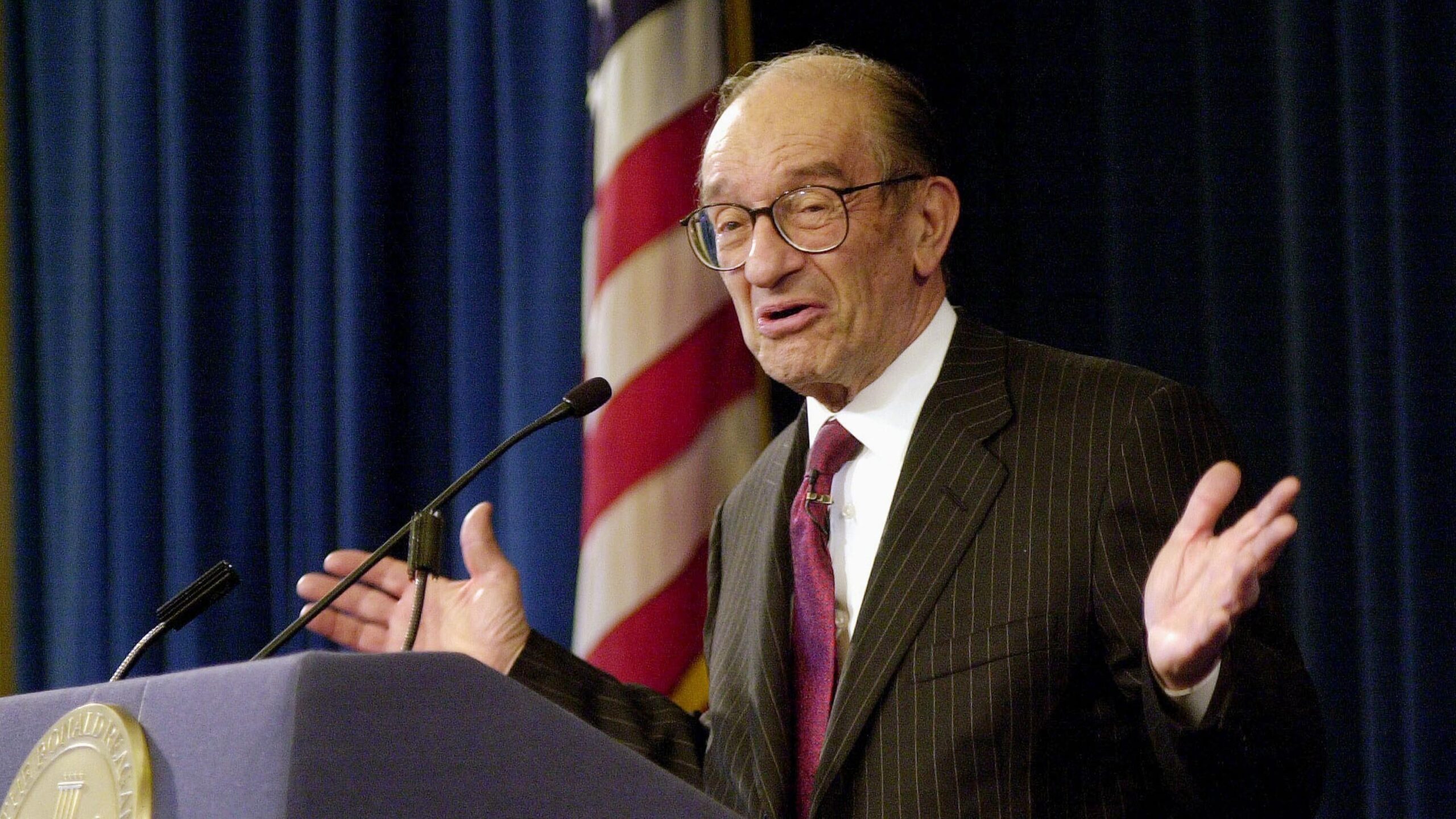
  • Alan Greenspan was a titan among Federal Reserve chairs. What’s his legacy?

    Alan Greenspan was a titan among Federal Reserve chairs. What’s his legacy?

    Transcript:

    JUANA SUMMERS, HOST:

    It’s CONSIDER THIS, where every day we go deep on one big news story. Today, remembering a titan among Federal Reserve chairs.

    (SOUNDBITE OF ARCHIVED RECORDING)

    RONALD REAGAN: It’s my pleasure to welcome Alan Greenspan back to official service to his country.

    SUMMERS: Alan Greenspan, the longtime Federal Reserve chairman, being sworn into office by President Ronald Reagan in 1987. Greenspan led the central bank for nearly 20 years. Much of his tenure was marked by falling unemployment and an economic boom. But two years after he retired came the 2008 financial crisis. Critics argue that it was his hands-off approach to regulation that set the stage for the crash. Greenspan admitted that his approach wasn’t perfect. Here he is speaking to the House Oversight Committee in October 2008.

    (SOUNDBITE OF ARCHIVED RECORDING)

    ALAN GREENSPAN: I made a mistake in presuming that the self-interest of organizations, specifically banks and others, were such as that they were best capable of protecting their own shareholders and their equity in the firms.

    SUMMERS: Greenspan died Monday at the age of 100.

    CONSIDER THIS – Alan Greenspan ran the Federal Reserve for nearly two decades and was a celebrity among central bankers. What legacy does he leave behind?

    (SOUNDBITE OF MUSIC)

    SUMMERS: From NPR, I’m Juana Summers.

    (SOUNDBITE OF MUSIC)

    SUMMERS: It’s CONSIDER THIS FROM NPR. Here to talk more about Alan Greenspan’s legacy is NPR’s Scott Horsley. Hi there.

    SCOTT HORSLEY, BYLINE: Hi. Good to be with you.

    SUMMERS: Good to talk with you. So, Scott, Greenspan led the Federal Reserve under four different presidents – Ronald Reagan, Bill Clinton, both George Bushes. How did the economy fare while he was in charge?

    HORSLEY: You know, the highs greatly outnumbered the lows, and that’s partly a credit to Greenspan. He’d only been on the job for a couple of months when the stock market crashed in 1987, tumbling more than 20% on what became known as Black Monday. And Greenspan moved quickly to make sure banks had plenty of money to keep lending so the gears of the economy did not seize up. And as a result, that crash of ’87’s barely a blip now in financial history. Donald Kohn, who worked with Greenspan at the Fed, says future chairs used similar tactics when they were faced with shocks like 9/11 or the coronavirus pandemic.

    DONALD KOHN: In a sense, what he did set a pattern for Fed reactions to these crises.

    HORSLEY: Greenspan was a larger-than-life figure whose celebrity was not confined to the business pages of the newspaper. Like his predecessor, Paul Volcker, he raised interest rates at times to keep prices under control. But Greenspan is perhaps best remembered for a decision not to raise interest rates, even though a lot of people thought he’d have to.

    SUMMERS: What was going on that people thought would require a rate hike?

    HORSLEY: In the mid-to-late 1990s, we had what seemed at the time like very low unemployment rates, and when that happens, central bankers often raise interest rates to keep the economy from overheating and causing inflation. But, you know, Greenspan was skeptical of that kind of formulaic policymaking. He was a very talented jazz musician. He studied clarinet at Juilliard. And he was not afraid to improvise. Kohn says Greenspan’s read of the economic data was that productivity was rising, so the economy was not in danger of overheating and inflation would stay in check.

    KOHN: He had to resist what the conventional wisdom wanted him to do, which was to raise rates to prevent a pickup in inflation. But it wasn’t just an idea he had. It was all backed by data and reasoning.

    HORSLEY: And you hear echoes of that argument today from people who want lower interest rates. Kevin Warsh, who just took over as Fed chairman, says he hopes to follow where Greenspan led.

    (SOUNDBITE OF ARCHIVED RECORDING)

    KEVIN WARSH: Chairman Greenspan was the first to tell me and show me what this role demands.

    HORSLEY: At his own swearing-in last month, Warsh praised Greenspan for his energy and his sense of purpose.

    SUMMERS: Now, Greenspan was widely quoted, but, Scott, I have to ask – did people really understand what he was saying?

    HORSLEY: (Laughter) You know, Greenspan was fluent in the obscure language known as Fed speak, and he sometimes deliberately obfuscated to avoid saying anything that might move financial markets.

    (SOUNDBITE OF ARCHIVED RECORDING)

    GREENSPAN: Looking at the overall gross domestic price index from a macro point of view confirms the essential order of magnitude of the bias implied.

    HORSLEY: Did you get that, Juana?

    (LAUGHTER)

    HORSLEY: One memorable exception was when Greenspan’s words did rattle markets. It came in 1996 at a time when the stock market was booming, and he fueled fears that it might be a bubble.

    (SOUNDBITE OF ARCHIVED RECORDING)

    GREENSPAN: How do we know when irrational exuberance has unduly escalated asset values?

    HORSLEY: NBC’s Andrea Mitchell alluded to that notorious comment in her statement today, saying Greenspan was irrationally exuberant for baseball, Washington’s pro football team, tennis, golf and music.

    SUMMERS: Greenspan retired as Fed chairman back in 2006. Two years later, of course, we had the financial crisis. How did that affect his legacy?

    HORSLEY: It definitely tarnished it. You know, Greenspan was a libertarian. He was a follower of the philosopher and novelist Ayn Rand, and he believed that bankers didn’t need a lot of regulation because he thought their own self-interest would prevent them from taking undue risks. Now, that turned out to be a very costly misjudgment. Greenspan’s hands-off approach to regulation set the stage for the financial crisis in which close to 10 million people lost their homes, millions more lost jobs and savings. Here’s Donald Kohn again.

    KOHN: Could he have raised the alarm more? Could he have tried to get the rest of the government to pay more attention? Yeah, I think he could have.

    HORSLEY: Kohn says he’ll remember Greenspan as someone who is really good at setting interest rates, maybe not so good at regulation. And Greenspan himself acknowledged those missteps when he later testified before a congressional committee that investigated the financial crisis.

    SUMMERS: NPR’s Scott Horsley, thank you.

    HORSLEY: You’re welcome.

    (SOUNDBITE OF MUSIC)

    SUMMERS: This episode was produced by Mia Venkat and Karen Zamora. It was edited by Pallavi Gogoi, Christopher Intagliata and Tinbete Ermyas. Our interim executive producer is Courtney Dorning.

    (SOUNDBITE OF MUSIC)

    SUMMERS: It’s CONSIDER THIS FROM NPR. I’m Juana Summers.

  • Laverne Cox wrote her memoir because ‘one more human story out there can help’

    For more than a decade, Laverne Cox has been one of the most visible trans women in America. But the Orange Is the New Black star says she spent most of her childhood in Mobile, Ala., keeping herself hidden.

    A turning point came when she was in third grade, on a church field trip to Six Flags. She bought a paper fan to cool herself, and caught the attention of her teacher.

    “I was having a Scarlett O’Hara moment, fanning myself,” Cox says. “And then later that day, my mother comes in and tells me she had gotten a call from the school … and [my teacher] said that I would end up in New Orleans wearing a dress if we didn’t get me into therapy right away.”

    When she was 8 or 9, Cox was sent to conversion therapy, where, she says, a therapist suggested injecting her with testosterone. “The idea was that that was supposed to make me more masculine,” she says. “My mother, thank God, said no to that.” But Cox knew she needed to leave Mobile.

    In her new memoir, Transcendent, Cox writes about her journey from Mobile to show business. She remembers being bullied mercilessly by other children at school — a situation made worse by her mother’s reaction: “My mother … instead of having an impulse to protect me or care for me or ask if I was OK, she made it my fault,” she says.

    In the 1990s, she moved to New York City and began auditioning for roles, first as a dancer and then as an actor. She also started experimenting with gender norms; she began her medical transition in 1998, at the age of 26.

    For Cox, writing her memoir is an act of resistance and healing: “After 2023, it became very clear to me that we, that trans people had lost the culture,” she says. “I knew this was the beginning of a disaster in terms of policy. … The dehumanization was so clear to me, and so I think I also thought maybe one more human story out there can help.”


    Interview highlights

    (Simon & Schuster)

    On the anger she still feels about being bullied as a child

    As an adult, I’m angry at the boys. I am angry at my mother. I want to protect that little child. I’m just so angry. I’m so hurt. … There’s also like the anger [about] all the kids that I’ve met who are trans or queer who are still experiencing this, and the anger of knowing that in states that have passed anti-trans laws that the percentage of bullying has skyrocketed in those states. … There’s the rhetorical piece that happens in the media that is dehumanizing and stigmatizing trans people. And it creates a permission structure. If, like your governor and your state legislators are doing [it], if your teachers and pundits on TV are doing it, then of course kids are emboldened to do it. And that makes me so angry.

    On beginning to wear skirts and dresses in college

    In high school I read about Oscar Wilde. He talked about creating yourself as a work of art, and I loved that as a concept.

    Laverne Cox

    I had internalized so much transphobia. Like, ending up “in New Orleans wearing a dress” was presented to me as the absolute worst thing that could happen to me. In my young mind I imagined I would be on the street and I would be homeless and a person who needed to like do unfortunate things to survive. So it just was presented as something that was the absolute opposite of the straight A student that I was, the human being that I was, who was determined to be successful. So I didn’t wear skirts and dresses until college … but I did start wearing girls’ clothes that I would purchase from the thrift stores in Mobile and in Birmingham. And it was such a fun, wonderful exploration. … In high school I read about Oscar Wilde. He talked about creating yourself as a work of art, and I loved that as a concept.

    On being drawn to show business

    There was always music in my head, which is such a wonderful gift. From the second I was walking, I was dancing, and I danced everywhere. And it just took me away. … [It was] like a character. There was a person that I could play. So I was in a character and then I was in a new setting. And so all the times we would be at the supermarket in the grocery store, I just loved pushing the grocery cart and then dancing with the grocery cart as if it was like a partner. … Finally in third grade, I got to start studying dance. And that really, that was the best thing ever for me.

    On growing up with a twin brother

    There’s a closeness now. It’s healthier now than it’s ever been with my brother. But … we were not a touchy feely family. We weren’t a family that said, “I love you.” We weren’t a family that hugged. There was no affection. So my brother and I, so we didn’t do that. … But we bonded most around music, art. There were periods when I would be in dance class and he would come and watch and critique and he’d give me his notes.

    On her twin brother playing her pre-transition character in Orange Is the New Black

    It was my character’s back story. And the initial idea was that they needed to hire another actor to play me pre-transition. … [And I] asked my brother if he’d be open to it. And he said, “How much does it pay?” And then he ended up going in for the audition, but he had an advantage because he kind of looks a little bit like me. … So he booked it and did it and he had regrets about it for a while because he has his own work and his own life and he wants to be defined by his work and not mine.

    Ann Marie Baldonado and Susan Nyakundi produced and edited this interview for broadcast. Bridget Bentz, Molly Seavy-Nesper and Beth Novey adapted it for the web.

    Transcript:

    TONYA MOSLEY, HOST:

    This is FRESH AIR. I’m Tonya Mosley, and my guest today is Laverne Cox. Chances are you met her the way most of the world did, a transgender woman in prison doing hair and fighting for her right to gender-affirming care in the Netflix series “Orange Is The New Black.”

    (SOUNDBITE OF TV SHOW, “ORANGE IS THE NEW BLACK”)

    LAVERNE COX: (As Sophia Burset) Listen, doc, I need my dosage. I’ve given five years, $80,000 and my freedom for this. I’m finding who I’m supposed to be. Do you understand? I can’t go back.

    UNIDENTIFIED ACTOR: (As character) Look, I’d like to help you. Unfortunately, you have elevated levels of AST and ALT, which could mean liver damage.

    COX: (As Sophia Burset) That’s [expletive]. That could mean anything.

    UNIDENTIFIED ACTOR: (As character) We’re going to take you off your hormones entirely.

    COX: (As Sophia Burset) What?

    UNIDENTIFIED ACTOR: (As character) Until we can schedule an ultrasound, get a clean read.

    COX: (As Sophia Burset) But that could take months.

    UNIDENTIFIED ACTOR: (As character) I can offer you an antidepressant.

    (LAUGHTER)

    MOSLEY: That’s Laverne Cox as Sophia Burset in 2014. The role made her the first openly transgender person nominated for a primetime Emmy in an acting category and put her on the cover of Time magazine next to the words, the transgender tipping point. For a decade now, she’s been one of the most visible trans women in America. But the woman on that magazine cover was carrying things she’d never told anyone, not even her therapist.

    She’s written a new memoir, titled “Transcendent.” And it arrives at a moment when her right to simply exist is being debated in state houses across the country. But the book makes clear that for Cox, none of this is new. Long before she had the words for it, she was bullied for who she was. Her very existence, as she writes, was an affront to the order of things. And she’s been fighting for the right to simply be her entire life. Laverne Cox, welcome to FRESH AIR. It’s such an honor to have you.

    COX: Thank you so much for having me. I have not heard – it’s rare that I just hear the clip from “Orange,” and it’s been so long. And I – gosh, it brings back memories. And it’s really – what’s interesting is even for actors out there, often when I watch a scene that I’ve done, it’s hard for me to have distance. I immediately am in the character again, and I’m in the emotion of the scene. And so I’m immediately, like, feeling what I was feeling when we shot this. This is 2012 that we shot it. So it was funny. I was just like…

    MOSLEY: Yeah, it made you laugh. Why did it make you laugh?

    COX: No, at the end when…

    MOSLEY: Yeah.

    COX: I mean, the writing is so fantastic – maybe I can offer you an antidepressant.

    MOSLEY: (Laughter).

    COX: It’s hilarious.

    MOSLEY: Well, “Orange Is The New Black”…

    COX: Yeah.

    MOSLEY: …Was revolutionary for the time.

    COX: Yeah.

    MOSLEY: And your character, I was very surprised to learn from the book that you weren’t a regular reoccurring character. You were a guest star.

    COX: Yes. And, I mean, that’s really a contractual thing. So I was in, I think – I don’t remember how many episodes I was in the first season. But I remember it was a day-to-day thing. I didn’t have, like, a contract the first season. I was literally a day player guest star, a day player. But I was kind of making day player rates. I wasn’t making, like, guest star rates.

    The second season, I was – my salary was, like, a guest star rate. And I had, like, I think, a seven-episode guarantee. And they ended up using me for nine episodes. So I was there a lot, and they wrote generously for me. I think because that my backstory episode came – it was the third episode of the show – that people thought…

    MOSLEY: Felt like you were a cast member.

    COX: Yes.

    MOSLEY: Yeah. I think people think, because so much of the work that you have done feels so true to life, that so much of that show might be your life.

    COX: Yeah.

    MOSLEY: And I think it’s part of what makes this book really eye-opening because we’re learning things about you that we didn’t know. I want to start with the beginning of your book.

    COX: OK.

    MOSLEY: Because you’re 8 years old. You decide to start at a moment when you’re 8 years old. You are at a park near your family’s apartment in Mobile, Alabama. You’re doing your kid thing and just playing out. And there are these boys that come up to you, the Caraway (ph) boys. And they begin teasing you, and then it gets violent. Can I have you pick up the story from there?

    COX: During one of these teasing sessions – why you talk like that? One of the Caraway boys shoved me. I don’t even remember which one. They were interchangeably menacing figures. This time, I couldn’t keep my balance and found myself falling, hitting the gravel of the playground. I scowled, annoyed at first.

    But then, looking up at them, I saw the switch flip in their eyes. I saw that flicker of threat, the way their stances shifted into those of aggression that made the hairs on my arm stand on end. They were disgusted by me. I was no longer a friend, up here, someone to play with. I was an easy target. I was prey. Their fists landed in unison on my face, my chest. You see this, [expletive]? Look at this sissy, like a girl. One of them sneered, half-laughing in glee as they punched me.

    Their voices blended into one as they pelted me, hurling every name they could think of. And my instinct, from as far back as the days of day care bullying, took over, rolling me onto my side and into a ball. The words rang in my ears, those from the past intermingling with those of the Caraway boys. I had heard these words before. At first, I had not known what they meant. But now, after years of it, I recognized them, words that meant I was different from the other kids – a girl when I should’ve acted like a boy.

    MOSLEY: Laverne, thank you for reading that passage. You go onto say that you curl up in a ball, and it doesn’t stop. They get energized. And finally, you’re able to make it home. And you get into your apartment and your mom sees you. And she doesn’t say, what happened to you? She immediately says, you let them beat you up like this? What did you do to make them do this to you? Why did you want to start the book off with that particular story?

    COX: I don’t know. That was my life. I mean, I think that was, like – just the physical violence of the other children, that was persistent throughout my childhood. And then my mother finding out, and instead of having an impulse to protect me or care for me or ask if I was OK, she made it my fault. And it just, in a way, it sort of epitomizes that kind of feeling of not feeling protected, not feeling safe. It sort of encapsulates a lot of the childhood.

    MOSLEY: Yeah.

    COX: I’m – you know, reading that again, I have to say, it’s still difficult to read. It’s still difficult to – yeah.

    MOSLEY: You grew up inside of people’s reactions to you.

    COX: Yeah.

    MOSLEY: An effeminate child, a gender non-conforming teenager, a trans woman. And everything that you received, it was like race, gender and class converging into one person. What really struck me from that very first story throughout the entire book is, the shame and hatred that people carried, they took it out on you. And it even happened in your home.

    COX: Yes. I’m just trying to gather my resilience. And, like – well, I guess I’m, like, having – and it’s like there’s – like, reading that, I’m just – like, I’m emotional. I’m angry. It’s – like, it’s hard to read that. And obviously, I lived it, but it’s hard to read about it again, I guess, and understand as an adult – like, I’m angry at the boys. I’m angry at my mother. I’m – I want to protect that little child. I’m just so – I’m so angry. And I think, like – yeah. I don’t know if I can be able to read excerpts from this book again. We’ll see. I’m just – I’m so pissed. I’m so angry, and I’m so hurt. And I’m so…

    MOSLEY: What are the – what – the anger comes from you having to experience it?

    COX: And it’s – there’s also, like, the anger of all the kids that I’ve met who are trans or queer who are still experiencing this, and the anger of knowing that in states that have passed anti-trans laws, that the bullying – percentage of bullying has, like, skyrocketed in those states. And that makes me angry.

    MOSLEY: You hear a lot of stories.

    COX: A lot of stories, but that’s actually – those are statistics. Like, there’s the anecdotes, but those are the stats from The Trevor Project. Because, like, to manufacture the consent to pass anti-trans laws that would ban gender-affirming care for kids and all – the menace of trans girls in sports – all, like, two of them – there’s the rhetorical piece that happens in the media that is dehumanizing and stigmatizing trans people. And it creates a permission structure if, like, your, you know, governor and your state legislators are doing it, if your, you know, teachers and, you know, pundits on TV are doing it, then, like, of course kids are emboldened to do it. And that makes me so angry. And, you know, it’s, like – the sadness is, like, you know – it’s just the loneliness. And I couldn’t process it fully as a child. And – I don’t know. It just really sucked.

    This was so – it was torture to write this. And the reason I wrote it is to tell the truth. I’m like, I just don’t think it’s – it makes any sense to write a book and, like, to clean stuff up and to, like, not be honest and not be raw. But it’s just like, wow, OK.

    MOSLEY: What made you decide to write it now, especially because I know you probably had folks coming to you wanting you to write books at the time when you were on “Orange Is The New Black” or you’re on the cover of Time magazine, when magazines are fighting to have you on the cover? What made you decide to do it now?

    COX: Yeah, I don’t know. I have the impulse to want to apologize, but I’m not going to do that – for my emotion right now.

    The opportunity came along, and when it did, I thought that I had done enough therapy that I could get through it. I thought that the memories that were buried would stay buried. And I came up with this device of, when I would disassociate as a kid when traumatic things would happen, I would pretend I was Darcel from “Solid Gold,” elite “Solid Gold” dancer on the – there was a TV show in the ’80s called – ’70s and ’80s called “Solid Gold.” They would count down the…

    MOSLEY: Our listeners will remember that. (Laughter) I love how you say it like…

    COX: I mean, I don’t…

    MOSLEY: Yeah.

    COX: I mean, there’s so many, you know…

    MOSLEY: Totally, yeah.

    COX: …People who are way younger than me who have no idea.

    MOSLEY: Yeah.

    COX: So I would go to these other places, and I thought that I could use that device in writing the book to sort of protect myself. And then we – I found we started to use that device not as much as I wanted to. And then I found that, like, memories I thought were buried came back. And it was just – it was harrowing because I thought I could handle it. And it just felt – it felt like the right time. I don’t know why. I’m – well, I’m in a new place with my mother. It just felt like the time to do it.

    And it did come, like, a couple years ago. And it was, I think, right after 2023, I was – it became very clear to me that we – that trans people had lost the culture and that I think half the country had banned gender-affirming care for young people. I knew, in layman’s parlance, that we were screwed as trans people. I knew this was the beginning of a disaster in terms of policy, in terms of stigma, scapegoating, and the dehumanization was so clear to me. And so I think I also thought, like, maybe one more human story out there can help.

    MOSLEY: Let’s take a short break. We’ll continue our conversation with Laverne Cox in just a moment. Her new memoir is called “Transcendent.” This is FRESH AIR.

    (SOUNDBITE OF NAOMI MOON SIEGEL’S “IT’S NOT SAFE”)

    MOSLEY: This is FRESH AIR, and today I am talking with Laverne Cox. Her breakout role as Sophia Burset on “Orange Is The New Black” made her the first openly transgender person nominated for a primetime Emmy in an acting category. Her new memoir, “Transcendent,” is out now.

    I want to go back to your home and your mom…

    COX: Yeah.

    MOSLEY: …And your decision to write all of this down because the majority of the book takes place in your childhood. Tell me about Mobile, Alabama, and that home that you grew up in. How would you describe it?

    COX: Mobile – it’s interesting. I go back now, and I find it quaint and way too hot in the summer. But, like, the azaleas – there’s lots of beautiful things about it, and there are all these antebellum homes that still exist on, like, Government Street. And there’s something quaint about parts of it. And there’s just a lot of trauma, though, literally on the streets, particularly in the old neighborhood where my mom still lives. Like, there’s trauma on those streets for me.

    MOSLEY: Is that a part of town? What part of town is that?

    COX: We would call it Down the Bay.

    MOSLEY: Down the Bay.

    COX: And it’s where most of the Black people in Mobile live. And – yeah, it is downtown. It’s downtown Mobile, which I think is fantastic, but – because Bienville Square and, like, the Mardi Gras parades. Mardi Gras started in Mobile in this country – not in New Orleans, as some people might think. And so the Mardi Gras parades are – happen downtown, and I love it. I love it.

    MOSLEY: And you grew up with your mother and your twin brother.

    COX: And my twin brother, yes. Yeah, Mobile, though, when I was growing up there, I was just – I just – I needed to get out. It was awful. It felt repressive. And I just knew I needed to be – the second I discovered there was a New York, I knew I had to be there. And so most of my childhood, I was in Mobile, but I was – in my imagination, I was in New York, or I was on a TV screen, or I was on a movie screen, or I was on a Broadway stage.

    MOSLEY: Yeah. It’s interesting the book is called “Transcendent,” and in a way, it sounds like disassociating was your way to transcend as a child. What were some of the ways that you would try to transcend?

    COX: I always had – there was always music in my head, which is such a wonderful gift. And so I just – from the second I was walking, I was dancing. And I was dancing – I danced everywhere, and it just kind of – like, it just took me away. It took me away from, like, so – because for me, when I danced, there was some music, but then there was, like, a character. There was a person that I could play. So I was, like, in a character, and then I was – it would be a new setting. And so, like, all the times when we would be at the supermarket, in the grocery store, I just love pushing the grocery cart and then dancing with the grocery cart as if it was, like, a partner.

    MOSLEY: Did you have headphones on, a Walkman?

    COX: No, darling. The music – groove is in the heart.

    (LAUGHTER)

    COX: A Walkman? This is like – I mean, you know, I was 5 years old. It would have been 1972 – what – 1977. Did Walkmans even exist? We couldn’t afford one if they did. The music was in my head, and the groove was in the heart. And actually, in the supermarkets, they would play music. And I remember loving TV show themes. I would learn the words to TV show themes and, like, sing along and dance to them. So there was always, like, a song and a rhythm and then a character and movement. And it was so amazing that I got to do – that I had that, that I could go there.

    And then when I discovered that you could study dance, so like, I want to take dance classes. I want to take dance classes at 5 years old. And I won’t give away that moment from the book. It’s a little humorous moment about that. But finally in third grade, I got to start studying dance, and that really – that was the best thing ever for me.

    MOSLEY: This disassociation, this going to all of these different places, I mean, this would happen to you everywhere – at home, at school. And there’s a particular moment in school where you’ve got your little fan, and you’re in your classroom. And something happens that kind of stays with you for the rest of your life.

    COX: Yeah. That was certainly a moment. So we had gone to Six Flags on a church trip, and I had some spending money and bought a handheld fan at the gift shop at Six Flags. And as the women in church would fan themselves and as Scarlett O’Hara would fan herself – I had seen “Gone With The Wind” on television. It seemed like it was always on in Alabama. Go figure.

    And I was having a Scarlett O’Hara moment, fanning myself in – beginning of the day in third grade. And my third-grade teacher, Ms. Ridgeway, says, you there, come here and bring that thing with you. And she marches me down the hall to the fourth-grade teacher and tells me to show her what I was doing with my fan. And so I proceed to fan myself the way I had in class. And she tells me to stop, and I wait. And she conferences with that teacher, and then she marches me down the hall with the fifth-grade teacher and tells me to do it again. And I was like, well, maybe I didn’t do it – you know, maybe I didn’t fully commit. So I committed more and really really dropped into Scarlett.

    And then later that day, my mother comes in and tells me she had gotten a call from the school, from Ms. Ridgeway, and Ms. Ridgeway said that I would end up in New Orleans wearing a dress if we didn’t get me into therapy right away – I understand now is what some people would refer to as conversion therapy. I guess there’s different kinds. But at the time, after three sessions with a therapist, the solution or, you know, the thing that they suggested that we do is to inject me with testosterone and that the idea was that that was supposed to make me more masculine and I would not – that there was a hormone issue. This would have been 1980. Yeah, 1980, ’81.

    MOSLEY: And you were how old?

    COX: I was 8, 9 years old

    MOSLEY: Eight, 9 years old.

    COX: I hadn’t even started going through puberty yet. So they were suggesting injecting an 8, 9 year old with testosterone, which sounds insane to me. My mother, thank God, said no to that. And so it was – I just felt relief that that didn’t happen to me.

    MOSLEY: Our guest today is actor and transgender activist Laverne Cox. We’ll be right back after a short break. I’m Tonya Mosley, and this is FRESH AIR.

    (SOUNDBITE OF RUSSELL MALONE’S “TIME FOR THE DANCERS”)

    MOSLEY: This is FRESH AIR. I’m Tonya Mosley. And my guest today is Laverne Cox. You know her as Sophia Burset on “Orange Is The New Black,” the role that made her the first openly transgender person nominated for a primetime Emmy in an acting category. Most recently, she co-created and starred in the Prime Video comedy “Clean Slate” as a trans woman who returns home to Alabama and the father she’d long been estranged from. Now she’s written a new memoir. It’s called “Transcendent,” and she traces her life from her childhood in Mobile, Alabama, to her rise as one of the most visible trans women in America.

    I’m thinking about that moment when your mother took you to this conversion therapy, and you write so compassionately about your mom, but you also are unsparing in the way that she treated you as a child. Typically, I don’t encounter memoirists who write this way unless they are estranged from their mother or their mother is dead. And that’s neither case for you.

    COX: No (laughter). I’m sorry, I’m laughing ’cause it’s like – it’s crazy. We haven’t – she hasn’t read the book yet.

    MOSLEY: How would you describe the kind of mother your mother was to you?

    COX: How would I describe it? That’s an interesting thing ’cause it was – the way I approached the book is I was like, this is what happened, and this [inaudible] made me feel. But characterizing how my mother was to me, my mother was a disciplinarian. She constantly corrected my grammar, which – and my brother’s grammar, which I’m insanely grateful for now. Insanely grateful for. My biggest pet peeve is when people say less when they mean fewer.

    MOSLEY: (Laughter).

    COX: Anyway, like, it’s just – it’s still great. So my mother was – she was critical of appearance and overly concerned about how she appeared to the world. That was almost like a driving force to her, her not being embarrassed and her – people not talking badly about her. And in small towns, people talk quite a bit.

    MOSLEY: And so you – that teacher calling to say that you were fanning in the classroom, and this is a problem. I mean, that became a problem for her.

    COX: She made it about her. She made it about what people were saying about her and that people were talking about her and I was a bad reflection of her. And then this therapy thing, too, was, like, who’s going to pay for it? Isn’t – you know, like, there’s no money. Like, so I was, all of a sudden, a problem. And I understood it being a big problem for me, but then even talking to my brother about it and him just sort of watching all of that happen, there was sort of a horror for him. You know, I’ve tried not to speak for him in this book, but, like, just – I think he won’t mind me saying this ’cause he’s told me watching all of this policing of my gender expression and this, like, attention that I was getting that wasn’t positive or affirming, like, the message that was sent to him is that, like, I can’t be anything like that. I have to, like, suppress the thing – anything that might evoke that kind of attention that Laverne is getting. And…

    MOSLEY: How did that affect your relationship? Because, you know, we who are not twins have this idea of what twins are like. The closeness that you feel, the – you know, the connection.

    COX: I mean, there’s a closeness now. It’s healthier now than it’s ever been with my brother. But I think the dynamic – we were not a touchy feely family. We weren’t a family that said I love you. So, like, my brother and I – so we didn’t do that. Like, we didn’t – like, that wasn’t our relationship. But what we did – we bonded most around music, art. There were periods where I would be in dance class and he would come and watch and critique, and he would give me his notes. And, you know, now, it’s like, we talk a lot of politics. But then we also talk a lot of art.

    MOSLEY: Your brother actually was in “Orange Is The New Black.” Was that your idea? Was that his idea? How did that come about?

    COX: Technically, it was mine, I guess, when it was determined that I wasn’t butch enough to play my character pre-transition. And I think what’s interesting about that now is there – I think Jodie, I think, the writers…

    MOSLEY: Jodie Foster, who was a guest director.

    COX: Yes. Jodie directed my backstory episode, and that episode got me my first Emmy nomination. So, it was my character’s backstory, and the initial idea was that they needed to hire another actor to play me pre-transition, and I was like, I’m an actor. I would, you know. And Jenji, to her credit, said, I don’t want to re-traumatize you. And I was like, no, I’m an actor. I can do it. And so they weren’t convinced. So we did a hair and makeup test for the character throughout her transition. And at the end of the day, we got to the butchest of the looks. And I remember, like, you know, they put a fake mustache on me. I mean, I can’t grow up facial hair or anything, obviously. And I went to Jodie. She was in a meeting, and I, like, really, you know, I was like, you know, and she looked at me and she was like, We’re going to have to hire someone. So then they started bringing in these very butch Black male actors, and they would stand them next to me and take a photo. And then I was like, why don’t you just do an audition? And then asked my brother if he’d be open to it. And he said, how much does it pay? And then he ended up going in for the audition, but he had an advantage because, you know, he kind of looks a little bit like me.

    MOSLEY: Just a little bit.

    COX: So he booked it and did it, and he had regrets about it for a while because…

    MOSLEY: Really? Why?

    COX: He has his own work and his own life, and he, you know…

    MOSLEY: He’s an artist.

    COX: …Wants to be defined by his work and not mine. He’s in a really…

    MOSLEY: He’s gotten a lot of attention from it.

    COX: Yeah. And people knew that work, and they didn’t know his work, but he – we’re in a really great place around all that now, and he’s in a great place with all of that.

    MOSLEY: Your brother was the first person to tell you you were an actor…

    COX: Yeah.

    MOSLEY: …And not a dancer.

    COX: Yeah, which is incredible and amazing. And I’m so grateful for that. And he’s genuinely proud of me and has an immense amount of respect for me, as I do for him. And that is wonderful. It has been dysfunctional, and in some ways, might still be, but there is an unconditional love that we have for each other.

    MOSLEY: It sounds like it was dysfunctional, though, in part because this world ripped you guys apart. It was the world’s reaction to you that caused a rift because as children, he had to navigate that, and you had to navigate that.

    COX: And we felt like, as twins, people didn’t think of us as individuals. Like we were, like, one person – the twins. And so, I was more, quote-unquote, “flamboyant and visible,” and I got attention because I just did. And so my expression and behavior sort of defined, in a lot of ways, how a lot of people saw us. My brother has a – you think I have a huge personality. My brother’s personality is even bigger, and he is very much himself. And he, like me, has fought to be himself authentically. And so he does not want to be compared to someone else. And I get and understand that. And it’s – yeah, it’s interesting because, like, you know, he was just always into and it was very important for him to have his own identity. And I totally get and understand that. And so he went about doing that, you know, when we were in boarding school together. And I felt abandoned, certainly.

    MOSLEY: Just to let people know, you and your brother applied to a prep boarding school, an art school outside of your city in Alabama, for ninth grade. Like, the moment you all could, you left home.

    COX: Yeah. The first two years of freshman, sophomore year, we were both there, and then he went back home to Mobile and finished high school there. And I stayed. And now I understand. And it was actually wonderful just to be – it was wonderful to be away from him, and I think it was wonderful for him to be away from me so we could just, like, not be twins anymore. We could, like, have our own identities. It was actually kind of glorious.

    MOSLEY: If you’re just joining us, my guest is Laverne Cox. Her new memoir is called “Transcendent.” More of our conversation after a short break. This is FRESH AIR.

    (SOUNDBITE OF JASON ISBELL SONG, “GOOD WHILE IT LASTED”)

    MOSLEY: This is FRESH AIR, and today I am talking with Laverne Cox. Her new memoir, “Transcendent,” traces her life from a childhood in Mobile, Alabama, to becoming one of the most visible transwomen in America.

    After that childhood of being bullied from, like, K through eighth grade…

    COX: K-12. K-12, yeah. Even at the art school. Like, it got better junior and senior year, but it was still there.

    MOSLEY: This is when you start to step into – we call it gender-nonconforming, but it was the androgynous…

    COX: Yeah.

    MOSLEY: …For you.

    COX: Yeah.

    MOSLEY: You were stepping into trying to figure out an identity.

    COX: Needing to – I felt like, at the time, needing to express myself. You know, honestly, after the conversion therapy, there was – I had internalized so much transphobia, and, like, ending up in New Orleans wearing a dress was presented to me as the absolute worst thing that could happen to me. And in my young mind, I imagined I would be on the street, and I would be homeless and a person who needed to, like, do unfortunate things to survive.

    MOSLEY: …Things to survive.

    COX: Yeah. So it was presented as something that was the absolute opposite of, like, the straight-A student that I was, the human being that I was who was determined to be successful. So I didn’t wear skirts and dresses until college because I was just like, well, I can’t – you know, I internalized I can’t wear a dress or skirt in high school. But I did start wearing girls’ clothes that I would purchase from the thrift stores in Mobile and in Birmingham. And it was such a fun, wonderful exploration. And it felt like an extension of – I think it was in high school I read about Oscar Wilde.

    MOSLEY: Oh.

    COX: He talked about creating yourself as a work of art, and I love that as a concept, you know? And I think it was…

    MOSLEY: Was this also around the time when, I mean, androgynous musical artists were pretty big? Was this like the ’80s kind of?

    COX: It was certainly the ’80s. It was post, like, the heyday of Culture Club. Culture Club’s first album came out in 1983. So I would have been 11 years old. And that was, like – Boy George was pivotal for me in my childhood and Annie Lennox and just the whole British new wave that was filled with androgyny and gender bending of all sorts. Even looking back at old episodes of “Soul Train,” there was some real gay stuff going on. The ’80s, like – stuff that would never fly right now got through in the ’80s. Even Jermaine Stewart, who was a wonderful artist, who – we don’t have to take our clothes off to have a good time.

    MOSLEY: Oh, yeah.

    COX: He was – I don’t know if he was openly gay. He unfortunately passed away in the late ’80s or early ’90s. He had HIV/AIDS. And then his – this song was sampled later by LMAFO, I think.

    MOSLEY: Yep.

    COX: But he, like, had it – you know, his hair was pressed out, and it was laid. His – the hair was laid. He was – he had been a member of Shalamar.

    MOSLEY: Always wondering what cherry wine was, though – never could figure out.

    COX: Girl, OK, so you are my generation. You know cherry wine. That’s a deep cut, girl. Yes. Yeah, I don’t know what cherry wine is either. But he was a queen on “Soul Train,” like, just getting his life.

    MOSLEY: These were the people you were watching. Yeah.

    COX: But it was – the ’80s was so wonderful in that way.

    MOSLEY: You made your way to New York. You wanted to be a dancer. You wanted to be an entertainer.

    COX: I always knew that I would transition to acting ’cause dancers, you know, have a short shelf life. And, you know, so I imagined musical theater and broadway and then film and television as to – was what I thought, and I thought I would, you know, maybe be in the chorus or something. But I could never book roles as a dancer when I would audition for things. And I remember the year before I moved to New York, I was at Indiana University, and every year, I auditioned for the “Grand Ole Opry” ’cause there were always auditions and – regional auditions wherever I was.

    And that year, I remember the dance captain asking me to show the other – ’cause I learn – picked up the choreography quickly. She asked me to show the choreography to the other people auditioning. And I was just like, oh, maybe this means I’m finally going to get the job. And I didn’t get it that year. I got to New York and I did tons of open calls and never booked anything as a dancer. And I, you know, was never masculine enough. By that time, I had gotten a very good technique as a dancer. Maybe, you know, I wasn’t the best dancer, but I was very – I was technical. I could pick up choreography. You know, I could do six pirouettes, and I had technique. But I didn’t have an ideal dancer body, and I never figured out how to appear masculine while I was dancing. And so butch it up was the subtext of it all.

    MOSLEY: It is so fascinating to read about your early days in New York. And it sounds like you were pretty discerning about what scenes you were part of because you didn’t see yourself fitting into the drag queen world. You understood and appreciated what they did. And you understood what these other groups – like, there were all these other groups, and you were part of a club kid group.

    COX: I was – so there was a very – like, in the early ’90s, there was kind of – there was the downtown kids, there were the uptown kids. Like, I was a downtown girl. I was East Village, really East Village because the gender non-conforming thing, the androgynous thing that I was doing when I moved to New York in 1993 fit better in the East Village. By the time I made it to New York, I was wearing dresses, lots of vintage things. I had a black, lamé vintage dress that I would wear. And then I would incorporate dancewear so I could go out and dance and really do my thing. So a good, chunky heel, platform heel. And my head was shaved. And I shaved my brows and drew them on. And a lot of people thought Grace Jones because the look, this look was very androgynous.

    The drag scene, I wasn’t in. But I also, like – I had internalized transphobia. And, like, for me, there was – because by this time, by the time I made it to New York, I’d also read bell hooks. And so I had – and I’d read other feminist writers who were very skeptical of drag and this performance of womanhood that was sort of seen as mockery by some feminists. And so I was sort of contending with that and trying to, like, navigate my newfound feminist politics with, like, my gender and not wanting to sort of, like, feed into some sort of retrograde idea of womanhood. So there was also – that was introduced in college. But underneath all of that was, like, a deep, deep transphobia that I’d internalized.

    MOSLEY: That read as discernment, but really it was…

    COX: It was a lot of…

    MOSLEY: Yeah.

    COX: It was like I was terrified of ending up in New Orleans wearing a dress.

    MOSLEY: Dress.

    COX: Because I think in my mind, too, if I embraced the womanhood, the girlhood that I knew I was – and in my mind, I thought that, like, on top of, like, you know, all the stigma that you are a degenerate or something that I think I internalized about trans people, it’s also that I didn’t think I could be smart, even though I loved smart women. There was – I think there was just something about, I was never presented with images of drag performers or trans women on television, if I ever even saw a trans woman on television at the time, that were articulate…

    MOSLEY: Intellectual.

    COX: …And intellectual. And even as I entered the club scene, there were so many really, really smart drag performers who were just brilliant artists. But I needed time to, like, let all that stuff go. And I just needed time.

    MOSLEY: Let’s take a short break. We’ll continue our conversation with Laverne Cox in just a moment. Her new memoir is called “Transcendent.” This is FRESH AIR.

    (SOUNDBITE OF THE BENNIE MAUPIN QUARTET’S “PROPHET’S MOTIFS”)

    MOSLEY: This is FRESH AIR, and today I am talking with Laverne Cox. She has a new memoir out about her life and career. It’s titled “Transcendent.”

    In 2025, you cocreated the series and starred – it’s on Prime Video – called “Clean Slate.”

    COX: Yes.

    MOSLEY: And you play Desiree, a trans woman who comes home to Mobile, Alabama, after more than 20 years away to a father who’d been estranged from her, played by comedian George Wallace. And it was one of the last things the legendary Norman Lear made before he died. And here’s a scene of Desiree with her father trying to find their way back to each other. And Wallace speaks first.

    (SOUNDBITE OF TV SHOW, “CLEAN SLATE”)

    GEORGE WALLACE: (As Harry) Look at us, picking up right where we left off after all these years.

    COX: (As Desiree) Well, it will be a process.

    WALLACE: (As Harry) What’s going to be a process?

    COX: (As Desiree) You know, unpacking all our stuff.

    WALLACE: (As Harry) Well, you ain’t got but one suitcase.

    COX: (As Desiree) OK. My therapist says that our past and our present are linked. Like, with me, I have a pattern of choosing emotionally unavailable men. And that is linked to my past and to, well, you know, the first emotionally unavailable man in my life.

    WALLACE: (As Harry) Well, who the hell is he? Does he live around here? Do we need to go pay him a visit?

    COX: (As Desiree) OK. Let’s try something. Are you open to writing a letter to me as the 10-year-old girl I always was, but you were unable to see?

    WALLACE: (As Harry) Say what now?

    COX: (As Desiree) Dr. Vera Rishi Guerrera says…

    WALLACE: (As Harry) Doctor who?

    COX: (As Desiree) My therapist.

    WALLACE: (As Harry) Have y’all been up there talking about me behind my back? Maybe I need to write his a** a letter.

    COX: (As Desiree) She’s a she.

    WALLACE: (As Harry) Well, maybe I need to write her a** a letter.

    COX: (As Desiree) So I think I’m just going to retire to what I imagine is my completely unchanged childhood bedroom.

    WALLACE: (As Harry) That’s where you got it wrong. I put in a ceiling fan.

    MOSLEY: (Laughter) That was my guest, Laverne Cox, with the George Wallace in the Prime Video series “Clean Slate.” And it’s so funny. It’s a great series.

    COX: Thank you.

    MOSLEY: But you have so much compassion in it, in the same way that I see the way you write about your mother. There’s compassion there while also just showing the truth, you know?

    COX: Yeah. What a joy. I’ve never – it’s interesting, I’ve never just listened to that scene. I’ve watched it, but I’ve never just listened to it. What a joy it was working with George. I just go back to, like, how incredibly funny he was, but also how sensitive he was. And how, oh, just – it was glorious. And it’s very, very loosely based on my life. And the sort of question is, like, what if Laverne never became famous, and had a father, and went back home to Mobile?

    MOSLEY: Is that healing, to write from that place? Because you write in great detail about the truth about your father, which for many years, you had told a different story – that you had never met him, that he had died.

    COX: Yeah.

    MOSLEY: And the truth is you did meet him. And it was a pretty traumatic thing. And so watching this series, it kind of feels like a writing of the truth, but a rewriting in a way that kind of takes back something.

    COX: It was. The writing of it, the creating of the series – like, first with Dan Ewen, our co-showrunner and cocreator, and then with George – like, for years before we, you know, got a deal, that part was fun. Coming up with storylines and episodes and pulling things from my life, that was fun. But when it was time to actually act it and relive it, I was triggered. Again, hello, trigger. I was triggered a lot because we added a lot of things from my life.

    And we gave George a lot of the characteristics that my mother has. I mean, my mother’s funny, but she’s not that funny. So George is hilarious. And so, yeah, I never obviously had a father in my life, so we had to endow that. But something interesting happened by the end, where I felt this very dysfunctional but sort of paternal relationship with George that, in the moment of the show, felt strangely healing in a way that I didn’t expect, particularly in the last episode. I…

    MOSLEY: What do you mean? Why? Yeah.

    COX: There’s a scene where I just – where I needed my dad, and he was there. And it was everything that Desiree needed as a child that she was able to finally get from him as an adult – care and feeling seen by him and feeling protected in a way that he had not done when she was a child. There was sometimes when it’s the character, and then sometimes it’s just you. And, yeah, that’s certainly what I needed as a child. And so there was a – I was – there was a moment I just start – I cry and in my – like, he’s holding me, and it just, like – it just wasn’t acting anymore. It was George and me. It was – I don’t know. It was – I can’t, like – I don’t have words for it, but it was really beautiful, a beautiful experience for me as an actor.

    It’s a scene I can’t watch. Like, I probably need, like, three more years to be able to watch it with some perspective. But how wonderful ’cause, I mean, George is, like, an icon as a comedian, and there’s – the comedy in this show is wonderful, but there’s a lot of drama in “Clean Slate.” And he was just so dialed into that huge heart and that love and that generosity. And it was such an honor to receive all of that love that he has inside that he surrendered to the character and to our circumstances as father and daughter.

    MOSLEY: Do you ever have a desire – you know, you are sitting in who you are, and you are representing who you are in this lane as a trans woman. Do you ever want to branch out and do other types of roles that…

    COX: I already have. I’ve been very…

    MOSLEY: And do you feel like it’s there for you, that material?

    COX: It may not exist yet, but I know that there are artists out there who I maybe haven’t met yet who are writing it. I – you know, Shonda Rhimes cast me to play Kacy Duke, who is a real-life human being and a brilliant woman who I got to meet, and she’s not transgender, in “Inventing Anna.” I’m not fully clear if the character I played in “Promising Young Woman” is trans or not. It doesn’t suggest that she’s trans, so the audience can make the decision.

    And I always have wondered if – with Kacy, it’s explicit that she’s not trans. But if a character’s not written as trans – well, like, if a character’s not written as Black and I play her, the character becomes Black. If the character’s not written as trans, does she become trans because I’m playing her? And I think in some cases, maybe, and in some cases, maybe not. It depends on if there’s source material if I’m playing a real person. And so, for me, it’s really about how complicated the character is, how challenging she is to play and less about, like, whether she’s trans or not. I certainly I don’t see any limitations around what I can play as an actor. And I think what I’m most excited about is, if people see – feel that there’s a limitation, I look forward to proving them wrong. Yes. I’m very excited about that.

    MOSLEY: Laverne Cox, it’s been such a pleasure to meet you, and thank you for this conversation.

    COX: Thank you. This has really been wonderful.

    MOSLEY: Laverne Cox’s new memoir is called “Transcendent.”

    Tomorrow on FRESH AIR, actor Wendell Pierce. You know him as Bunk in “The Wire,” and now he’s taking on one of Shakespeare’s giants, Othello. But it was playing Willy Loman on Broadway that took him somewhere personal, drawing on his own father to build that role. Pierce talks with us about his father and the men he plays. I hope you can join us.

    To keep up with what’s on the show and get highlights of our interviews, follow us on Instagram @nprfreshair. You can also subscribe and watch some of our interviews on our YouTube page, @thisisfreshair.

    Fresh Air’s executive producer is Sam Briger. Our technical director and engineer is Audrey Bentham. Our interviews and reviews are produced and edited by Phyllis Myers, Ann Marie Baldonado, Lauren Krenzel, Therese Madden, Monique Nazareth, Thea Chaloner, Susan Nyakundi, Anna Bauman and Nico Gonzalez Wisler. Our digital media producer is Molly Seavy-Nesper. Roberta Shorrock directs the show. With Terry Gross, I’m Tonya Mosley.

    (SOUNDBITE OF DENNIS WILSON’S “COMMON”)

  • UK PM Starmer Resigns, First Round Of US-Iran Talks, Iran Deal Scrutiny

    Transcript:

    (SOUNDBITE OF MUSIC)

    STEVE INSKEEP, HOST:

    British Prime Minister Keir Starmer resigned after months of pressure from his own party.

    MICHEL MARTIN, HOST:

    His likely successor is the popular mayor from Manchester. Will he fare any better than six previous leaders who didn’t last long?

    INSKEEP: I’m Steve Inskeep with Michel Martin, and this is UP FIRST from NPR News.

    (SOUNDBITE OF MUSIC)

    INSKEEP: U.S.-Iran talks almost fell apart in Switzerland over the weekend when President Trump threatened new strikes. The first round ended with a 60-day roadmap for a final deal, but Iran says the real test of the agreement is stopping the war in Lebanon.

    MARTIN: And the deal with Iran is facing scrutiny from the president’s own party. Trump is struggling to sell it to his MAGA base, and Republican war hawks say the agreement is too weak. NPR’s Mara Liasson breaks down the political stakes as the midterm elections loom. Stay with us. We’ve got news you need to start your day.

    (SOUNDBITE OF MUSIC)

    MARTIN: A revolving door of seven prime ministers in just 10 years. That’s the state of politics in the United Kingdom. The latest Keir Starmer has just made this announcement.

    (SOUNDBITE OF ARCHIVED RECORDING)

    PRIME MINISTER KEIR STARMER: I will resign as leader of the Labour Party. I have spoken to His Majesty the King this morning to inform him of my decision.

    INSKEEP: This means he eventually steps down as U.K. prime minister, though his party remains in power for the moment. His likely successor is Andy Burnham, the outgoing mayor of Manchester, England.

    MARTIN: For more on how that transition happens and why, let’s go to NPR’s Lauren Frayer in London. Lauren, good morning.

    LAUREN FRAYER, BYLINE: Good morning, Michel.

    MARTIN: So why has Starmer resigned?

    FRAYER: Yeah. He was elected two years ago with a landslide majority in Parliament, and now he has the lowest approval ratings of any prime minister in U.K. history. Part of it is scandals you may have heard about – his decision to appoint Peter Mandelson, a friend of Jeffrey Epstein, as the U.K. ambassador to Washington. But part of it is Starmer’s failure to connect with people and to deliver real change that he promised after 14 years of austerity under the previous Conservative Party rule, you know, improvements on cost of living and such. His own Labour Party lawmakers, his parliamentary party, began turning on him in recent weeks. And here’s what he said from behind a lectern at 10 Downing Street moments ago. At some point, his voice cracking and breaking with tears and emotion.

    (SOUNDBITE OF ARCHIVED RECORDING)

    STARMER: The question my party is asking now is whether I am best placed to lead us into the next general election. I have heard the answer of my parliamentary party to that question, and I accept that answer with good grace.

    FRAYER: Starmer said he will stay on as a caretaker prime minister, and then nominations for his successor will open on 9 July, so it will be a summer of politics here.

    MARTIN: Tell us about his likely successor.

    FRAYER: Yeah. So Labour MPs seem to be coalescing around Andy Burnham. He’s the popular outgoing mayor of Manchester, England. He was an MP in the past – a member of parliament – then returned home to northern England to serve as mayor in his home region. He brought economic development to post-industrial Manchester as mayor. He won a special election to parliament last week. He’s actually being sworn into Parliament this afternoon, after which he will be eligible to challenge Starmer. He’s seen more as sort of folksy, able to connect with voters in a way that Starmer did not, perhaps slightly to the left of Starmer, more likely to sort of robustly defend a welfare state. But he will face the same headwinds – you know, rising global energy prices, strained public finances. So in a way, this is a change in personality at the top, rather than policy. You know, both Burnham and Starmer are from the same party with roughly the same politics.

    MARTIN: But Burnham would be the seventh British prime minister in 10 years. Has that revolving door had an impact?

    FRAYER: Yeah. I spoke this morning with a former political secretary to former Prime Minister Tony Blair. His name is John McTernan. And he reminded me, actually, tomorrow is the 10th anniversary of the Brexit vote, when Britain voted to exit the European Union. Prime Minister – then-Prime Minister David Cameron resigned the very next day. Brexit ultimately hurt the British economy, you know, triggered 10 years of political turmoil that we are still experiencing now.

    MARTIN: That is NPR’s Lauren Frayer in London. Lauren, thank you.

    FRAYER: You’re welcome.

    (SOUNDBITE OF MUSIC)

    MARTIN: The U.S. and Iran had a long first day of negotiations in Switzerland with a goal of permanently ending the war.

    INSKEEP: President Trump was not there but was close to his phone and made bellicose remarks on social media that threatened to upend the talks just as they were starting. The two sides have agreed previously to a roadmap and have 60 days to resolve a host of issues.

    MARTIN: For details, we’re joined by NPR’s Greg Myre, who is in Tel Aviv. Greg, hello to you.

    GREG MYRE, BYLINE: Hi, Michel.

    MARTIN: So they’ve given themselves 60 days. How did Day 1 go?

    MYRE: Well, it was pretty rocky. Vice President JD Vance led the U.S. delegation in Switzerland and sounded an upbeat note, but President Trump threatened in social media posts and in interviews to again attack Iran. At one point, the Iranian media said the country’s delegation was walking out because of Trump’s comments, though that didn’t actually happen. The talks lasted into the early hours of Monday. The two countries mediating the talks, Pakistan and Qatar, put out a statement saying there was encouraging progress, and the U.S. and Iran have agreed to a roadmap. This includes a working group on the war in Lebanon, which will clearly be a key part of these talks. They also set up a line of communication to deal with the Strait of Hormuz, and lower-level working groups are now set to continue meetings all week.

    MARTIN: OK. Can we – I’m going to ask you about all these things. I’ll take them one by one. First, what is happening with the war in Lebanon?

    MYRE: You know, yesterday was a good day. U.N. peacekeepers said they did not record shooting by either side Sunday, the first such day since the fighting erupted on March 2. It’s now midday here today, and so far, it remains quiet. But it’s still very combustible. Iran’s foreign minister, Abbas Araghchi, said the first real test of this peace effort is the Lebanon war. There was very heavy fighting Friday and Saturday. Israeli troops remain miles inside southern Lebanon. The Israeli leader, Benjamin Netanyahu, says Israel will keep troops there for as long as it takes, he says, to protect northern Israel. Hezbollah is also defiant, saying the war will not be settled until Israeli troops leave Lebanon.

    MARTIN: OK. Let’s turn to the Strait of Hormuz. Is oil still flowing today?

    MYRE: Yeah, Michel. It’s a hard one. It’s kind of unclear at the moment. Iran said over the weekend it was closing the strait because of the fighting in Lebanon, but that was before the fighting died down in the last day and a half. Now, U.S. Central Command says the strait remains open. Quote, “Iran does not control the Strait of Hormuz.” Traffic continues to flow. Now, according to groups monitoring shipping traffic, dozens of ships passed through the strait Saturday. This was one of the busiest days, maybe the busiest day, since the waterway was closed nearly four months ago. But the traffic slowed down sharply on Sunday. We’re keeping watch today, trying to see what’s happening.

    MARTIN: And of course, the big issue remains – Iran’s nuclear program. Was there any movement on that front?

    MYRE: So a U.S. diplomat who is not authorized to speak publicly said there were, quote, “robust discussions on all elements of the nuclear deal.” Now, the statement by the Pakistan and Qatar mediators mentioned the nuclear issue as one of several discussed but gave no details. It seems the immediate focus is these urgent questions, like the war in Lebanon and the Strait of Hormuz. The U.S. certainly expects to address Iran’s nuclear program in depth and wants a deal, but it may not be the top of the agenda right now.

    MARTIN: Interesting, since that was the stated reason for starting all this. So that is NPR’s Greg Myre in Tel Aviv. Greg, thank you.

    MYRE: Sure thing, Michel.

    MARTIN: As Greg mentioned, Vice President JD Vance flew to a Swiss resort over the weekend, working out the details of a tentative peace plan between the U.S. and Iran. Here is the vice president before talks began.

    (SOUNDBITE OF ARCHIVED RECORDING)

    JD VANCE: The question before us now is, how much more can we accomplish together? Can we turn over a new leaf? Can we change relations in the Middle East permanently?

    INSKEEP: Raising those questions, Vance sounded tentative about the answers, which is also true of the memorandum of understanding that the two sides signed last week. It leaves a lot to negotiate.

    MARTIN: With Congress coming back to Washington this week, NPR senior national political correspondent Mara Liasson is with us now to tell us more about the political stakes for Trump in this moment. Good morning, Mara.

    MARA LIASSON, BYLINE: Good morning.

    MARTIN: How is this memorandum of understanding playing in the U.S. so far?

    LIASSON: Well, Trump is struggling to sell it. He’s getting criticism from both wings of his own party. There are some in the Make America Great Again, MAGA, base who are angry that he went to war in the first place. Many of them voted for him because he promised not to get involved in any more foreign wars, and they don’t feel like the U.S. has achieved anything of value so far. Then there are conservative Iran hawks in the GOP who feel the deal is weak, that it doesn’t do any better than a deal made by former President Barack Obama, which Trump has criticized bitterly. And they also say that Trump’s stated goals in the war haven’t been met. There’s certainly been no unconditional surrender, no regime change. Iran gets hundreds of millions of dollars in unfrozen assets, and so far, there’s nothing to stop Iran from enriching uranium or building a nuclear weapon.

    MARTIN: Has Trump responded to this criticism? How is he taking this?

    LIASSON: Well, he’s not very happy about it. He called his critics stupid and bad people. He was particularly angry about a New York Times headline that he actually reposted on social media. The headline said, quote, “What Changed After Almost Four Months Of War? Analysts Say Not Much.” And Trump went on to say that the Iranian air force is gone. Its military is decimated. Its leaders were killed. And all that is true, but it also appears that Iran took a beating, but the regime is still in place, arguably, more hard-line than the previous one, and Iran has been able to deploy a powerful new weapon they never used before – closing the Strait of Hormuz. And that’s given them leverage over the world economy.

    MARTIN: So why make a deal now? I mean, what is at stake for President Trump and his party?

    LIASSON: The short answer is the U.S. economy. The economic pressure, once the Strait of Hormuz was closed and prices went up, seems to have pushed Trump to make this deal. And when he signed it last week in France, he said he didn’t want to be like former President Herbert Hoover. Here’s what he said.

    (SOUNDBITE OF ARCHIVED RECORDING)

    PRESIDENT DONALD TRUMP: So rather than possibly going into a depression, rather than having your favorite president be Herbert Hoover, who was always the one I didn’t want to be.

    LIASSON: So Trump is being very transparent. He doesn’t want to seen – be seen as responsible for inflation rising. He’s basically telling the world and his opponents what his pain point is, which is $4-a-gallon gasoline.

    MARTIN: So just in the couple of minutes we have left here, Mara, what greeted Trump back in Washington when he returned from signing that tentative deal with Iran?

    LIASSON: Well, one thing he found was the reflecting pool at the Lincoln Memorial was full of green, slimy algae and peeling blue paint. That happened maybe because the pool is now absorbing more sunlight and heat after Trump had its bottom painted dark blue. So you could see that green algae and peeling blue paint as a metaphor for Trump’s troubles getting the world to follow his orders, or you could see it as just a temporary blip, as he makes Washington, D.C., more beautiful.

    MARTIN: At least in his eyes. That…

    LIASSON: In his eyes.

    MARTIN: That is NPR’s Mara Liasson. Mara, thank you.

    LIASSON: You’re welcome.

    MARTIN: Before you go, don’t forget to listen to The Sunday Story from UP FIRST. Cyber scams cost Americans more than $20 billion last year. But who are the people doing the scamming?

    (SOUNDBITE OF ARCHIVED NPR CONTENT)

    SHUAIB: I never knew the job that I was going to be doing.

    MARTIN: On The Sunday Story, an exclusive two-part series on Cambodia’s scam industry from the point of view of the scammers themselves. Listen to it wherever you get NPR’s UP FIRST podcast.

    (SOUNDBITE OF MUSIC)

    MARTIN: And that’s UP FIRST for Monday, June 22. I’m Michel Martin.

    INSKEEP: And I’m Steve Inskeep. Today’s episode of UP FIRST was edited by Tina Kraja, Anna Yukhananov, James Doubek, Mohamad ElBardicy and John Stolnis. It was produced by Ziad Buchh. Our director is Christopher Thomas. We get engineering support from Neisha Heinis, and our technical director is Carleigh Strange. Join us tomorrow.

    (SOUNDBITE OF MUSIC)