Author: lthistle@whyy.org
-
Remembering South African-born pianist and composer Abdullah Ibrahim
Transcript:
DAVID BIANCULLI, HOST:
This is FRESH AIR. South Africa-born pianist, composer and band leader Abdullah Ibrahim died Monday at age 91. He began recording in South Africa in the 1950s, when he played with a pioneering band called The Jazz Epistles alongside trumpeter Hugh Masekela. Abdullah Ibrahim left South Africa in 1962 and spent most of his life away, though he did play at President Nelson Mandela’s inauguration in 1994. Abdullah Ibrahim, in his travels, recorded dozens of albums for dozens of labels around the world. Jazz historian Kevin Whitehead has this appreciation.
(SOUNDBITE OF ABDULLAH IBRAHIM’S “CHERRY”)
KEVIN WHITEHEAD, BYLINE: “Cherry” by Abdullah Ibrahim, who wrote many hypnotic piano pieces that roll on and on. It’s named for Don Cherry, a fellow jazz globe-trotter. Abdullah Ibrahim was born in Cape Town in 1934 as Adolphus (ph) Brand. His early records were under the name Dollar Brand. Grandpa and mom played piano in the family church. Gospel music cadences and tin-whistle Cape Town street-music melodies left permanent marks on Abdullah’s composing. But the land of apartheid was no place for Black self-expression. In his late 20s, he moved to Switzerland, where Duke Ellington heard his trio in 1963 and recognized a kindred spirit. Luckily, a few days later, Duke was producing some recording sessions in Paris and made room for Abdullah’s South African trio. This is “Dollar’s Dance.”
BIANCULLI: (SOUNDBITE OF THE DOLLAR BRAND TRIO’S “DOLLAR’S DANCE”)
WHITEHEAD: His mature piano style’s not quite there yet. He’s still digesting influences like Duke and Monk, with their own percussive keyboard attacks. The resulting album banner “Duke Ellington Presents” brought him international attention, but Abdullah’s late ’60s and early ’70s solo records really made his reputation. Here’s another catchy one, “Tintinyana,” with a persistent, tumbling bass figure.
(SOUNDBITE OF ABDULLAH IBRAHIM’S “TINTINYANA”)
WHITEHEAD: A couple of minutes later, the left hand stubbornly sticks to that bass part while his right hand goes wherever, although the hands check in with each other periodically. There’s a suggestion of all manner of African percussion ensembles with their layered, contrasting rhythms. You might think of it as Africanized boogie-woogie.
(SOUNDBITE OF ABDULLAH IBRAHIM’S “TINTINYANA”)
WHITEHEAD: By the late 1970s, Abdullah Ibrahim was recording all over, from Toronto to Tokyo, in Europe and in New York, where he lived off and on, and even in South Africa. He recorded some traditional chants from back home alongside a fellow refugee, bassist Johnny Dyani. In that duo, Ibrahim also played a bit of flute, echoing those childhood tin-whistle tunes.
(SOUNDBITE OF ABDULLAH IBRAHIM’S “MSUNDUZA”)
WHITEHEAD: By 1980, now based in New York, Abdullah Ibrahim put together some larger ensembles that eventually led to his working septet, Ekaya. Like Ellington, Ibrahim wasn’t just a dynamic pianist who wrote steamroller tunes. He composed beautiful ballads – none more so than “The Wedding,” a song you could play in church. Saxophonist Carlos Ward takes the lead, but don’t miss the horns murmuring in the background.
(SOUNDBITE OF ABDULLAH IBRAHIM’S “THE WEDDING”)
WHITEHEAD: “The Wedding,” from Abdullah Ibrahim’s 1985 album “Water From An Ancient Well.” In later decades, he toured widely and kept making solo and small combo albums. He’d do guest appearances with European radio orchestras and big bands and played lots of jazz festivals. He slowed down some in his 80s, when he became an NEA Jazz Master, but he could still keep a band on its toes.
(SOUNDBITE OF ABDULLAH IBRAHIM & EKAYA’S “JABULA”)
WHITEHEAD: “Jabula,” recorded by a late version of his band Ekaya in 2018. In the end, the pianist divided his time among the U.S., South Africa and Germany, where he passed away on June 15 at 91. Abdullah Ibrahim was a citizen of the world who always remembered where he came from.
(SOUNDBITE OF ABDULLAH IBRAHIM’S “MANNENBERG REVISITED”)
BIANCULLI: Jazz historian Kevin Whitehead. That’s “Mannenberg Revisited.” Coming up, we listen back to our 1989 interview with Abdullah Ibrahim. This is FRESH AIR.
This is FRESH AIR. As a young man, Abdullah Ibrahim listened to jazz on Voice of America broadcasts in South Africa. Before he converted to Islam, he was known by the nickname Dollar, a name given to him by American soldiers stationed in Cape Town during World War II, who sold their latest jazz recordings to him. Ibrahim later recorded dozens of albums of his own for dozens of labels around the world. Pianist and composer Abdullah Ibrahim died Monday at the age of 91. His song, “Mannenberg,” became the theme of the 1976 Soweto uprising, and his composition “Mandela” was written for Nelson Mandela. Apartheid drove Ibrahim out of South Africa in 1962, and he lived in exile for many years in the U.S. and Europe. Terry Gross spoke with Abdullah Ibrahim in 1989. His parents wanted him to become a doctor, but Blacks were refused entry into medical school, another of the limits placed on his life under apartheid.
(SOUNDBITE OF ARCHIVED NPR CONTENT)
ABDULLAH IBRAHIM: In terms of the music, it was probably for me the only means of escape because at least we could play in our own environment. So I grew up in – playing dance bands, behind vocal groups, playing variety concerts. But the main halls or arena of activity on a social, economic and political – from those aspects were completely denied to us.
TERRY GROSS: What was it that finally made you decide to leave South Africa? Was there a last straw or a breaking point?
IBRAHIM: There are vivid images and memories of confrontation with apartheid and being subjected to its brutality. The – so one has decision to make. Either you stay there and toe the line, or you leave and try to carry on or play the music, or you stop. We just stopped giving – like, it’s happened to so many of our talented people.
GROSS: After you left South Africa, you returned again in the mid-’70s and recorded some sessions there. And one of the pieces that has recently been reissued is your piece “Cape Town Fringe.” And I know that this is very popular in South Africa at the time of the Soweto uprising. Can you tell me about writing and recording this piece?
IBRAHIM: Yes. It was after deep contemplation, being out all those years that we decided to go back, but it was at a time when I took shahada, when I became Muslim. And that was on the way to making Hajj, going to Mecca for pilgrimage. And I needed to do it from home. And it was at that time that I got together this group of young musicians, and we recorded a lot of music. The song “Cape Town Fringe” was recorded in Cape Town. The original title is called “Mannenberg.” Mannenberg is a township on the outskirts of Cape Town, the counterpart of Soweto, perhaps.
When the album was released in this country, the marketing people decided to call it “Cape Town Fringe,” which I think was agreeable because township, or just the word Mannenberg, was completely, I think, foreign to people here. Like always, as always in any struggle, and especially in Southern Africa, the music has played a very important role. We recorded this. We were in a studio in Cape Town, and this piece of music came. In the studio, we were busy recording some other pieces. And we recorded it just once – one take and left it, but we all felt so elated because we felt that we had captured the mood of the people at that time.
(SOUNDBITE OF ABDULLAH IBRAHIM’S “MANNENBERG”)
GROSS: On the original recording of “Mannenberg,” recorded in the mid-’70s, you’re playing electric piano, which I don’t think you play anymore (laughter).
IBRAHIM: No.
GROSS: How does that sound to you listening back to it – the electric piano?
IBRAHIM: Sounds good. But the reason for doing the reason for doing that was because we needed to take the music out to the people, I mean, live. And sometimes it was problematic to have an acoustic piano, let alone a grand piano. So we utilized the electric piano. That was really the only reason for…
GROSS: That’s interesting. When you left South Africa, you met Duke Ellington, and he was very helpful for you. In fact, I think he was responsible for your first recording outside of South Africa.
IBRAHIM: That’s right.
GROSS: I think your music still sounds very influenced by Ellington. Do you feel that way?
IBRAHIM: How can we escape Ellington?
GROSS: (Laughter) Who would want to?
IBRAHIM: Exactly. Exactly. Even if people want to deny it, there’s no way – and not – I’m not – we do not just mean jazz musicians, but contemporary 20th century music anyway and anywhere that it is played, how can you escape Ellington?
(SOUNDBITE OF ABDULLAH IBRAHIM AND EKAYA’S “SONG FOR SATHIMA”)
GROSS: When you are holding a rehearsal with your musicians, and you’re teaching them or giving them a new piece of yours, how do they learn it? Do you give them music? I mean, do you write it down for them? Do you sing it to them, play it for them? What do you do?
IBRAHIM: Well, the musicians have a saying when you say, we’re going to have rehearsals and they say, where’s the paper? Because I asked them to notate the basic skeleton of the piece first. So what I would do is when there is a new piece, I – the piano is, like, command post.
GROSS: (Laughter).
IBRAHIM: And I just come into the studio and start playing, even while they are busy setting up and talking about fried chicken they had or where they visited the night before. And whoever hears it first will pick it up. And so the song is built around that person, the first one who picks it up and finds an interest.
GROSS: Oh, really?
IBRAHIM: Yes.
GROSS: So what do you mean it’s built around them? Like the – they’ll get the first solo? Or…
IBRAHIM: No, not the first solo, but perhaps the lead.
GROSS: Oh, I see.
IBRAHIM: Yeah.
GROSS: What a really nice interaction. I guess, also, it makes – it’s kind of something of an incentive to make sure people pick up on it really quickly (laughter) ’cause then they’ll be more prominent.
IBRAHIM: Yeah, because the idea is really not to write notes and give it to people to play. It’s the other way around. And that’s why the so-called jazz music is so precious. It is so precious. It’s perhaps the last bastion of human creativity.
GROSS: Abdullah Ibrahim, I thank you so much for speaking with us.
IBRAHIM: You’re welcome. Thank you very much.
BIANCULLI: Abdullah Ibrahim, speaking with Terry Gross in 1989. The South African pianist and composer died Monday at age 91. On Monday’s show, Laverne Cox. For a decade, she’s been one of the most visible trans women in America, but she spent most of her life keeping herself hidden. We talk about her new memoir, her childhood in Mobile, Alabama, and the current political backlash against transgender people. Hope you can join us.
(SOUNDBITE OF ABDULLAH IBRAHIM AND WDR BIG BAND COLOGNE’S “MANDELA”)
BIANCULLI: FRESH AIR’s executive producer is Sam Briger. Our technical director and engineer is Audrey Bentham, with additional engineering support by Joyce Lieberman, Julian Herzfeld and Diana Martinez.
For Terry Gross and Tanya Mosley, I’m David Bianculli.
(SOUNDBITE OF ABDULLAH IBRAHIM AND WDR BIG BAND COLOGNE’S “MANDELA”)
-
How the 1874 Freedman’s Bank collapse connects to economic disparities we see today
In Savings and Trust, historian Justene Hill Edwards tells the story of the Freedman’s Bank, which was created for formerly enslaved people following the Civil War. Originally broadcast Nov. 7, 2024.
Transcript:
DAVID BIANCULLI, BYLINE: This is FRESH AIR. I’m David Bianculli. Today is Juneteenth, named for the day in 1865 when enslaved people of African descent in Galveston, Texas, finally learned of their freedom from the system of slavery, effectively ending slavery in this country. We’re going to listen to Tonya Mosley’s 2024 interview with Justene Hill Edwards about the story of a bank established in 1865 for formerly enslaved people. Here’s Tonya.
(SOUNDBITE OF ARCHIVED NPR CONTENT)
TONYA MOSLEY: In July of 1874, waves of Black Americans rushed to their local bank branches to find out if the news they were hearing was true. The Freedman’s Savings and Trust Company, a bank for newly emancipated Black Americans, was abruptly shutting down. And patrons at bank branches throughout the country were met with locked doors and cashiers who had to break the news. Most of their savings were gone. The rise and fall of the Freedman’s Savings and Trust Company is the subject of a new book by my guest, historian Justene Hill Edwards.
In the years after the Civil War, tens of thousands of formerly enslaved people deposited millions into the Freedman’s bank with high hopes that as free people, they too could create a piece of the American dream for themselves. Abolitionist Frederick Douglass even encouraged Black Americans to trust the banking system. But even his leadership as the president before its collapse could not save it. Hill Edwards’ book documents how the bank’s white trustees drove the bank to the ground by lending out millions in loans to white financiers and businessmen.
Justene Hill Edwards is a historian and associate professor of history at the University of Virginia. Her research explores the intersection of African American history, the history of slavery and the history of American capitalism. Her book is called “Savings And Trust.” Justene Hill Edwards, welcome to FRESH AIR.
JUSTENE HILL EDWARDS: Thank you so much for having me, Tonya.
MOSLEY: The Freedman’s Bank – let’s get into how it was established. So white abolitionists established it in 1865. Take us back to that time period. Who were these abolitionists and why was a bank for newly freed Black people a priority?
HILL EDWARDS: So the Freedman’s Bank was established by – well, it was really the brainchild of a white abolitionist minister named John Alvord. He was from Connecticut, and he lived in New Jersey during the Civil War. And in 1864, he was traveling with the Union army in the South, especially in the summer and fall of that year, following Union General William Sherman on his famed March to the Sea from Atlanta to Savannah. And he took the opportunity to talk to recently freed African Americans. And what he found, what he gleaned from his conversations with them is that they wanted a few things during this new and ripe period of freedom.
They wanted their families because a lot of them had been torn away from their families during slavery. But they also wanted the opportunity to live independently, and importantly, they wanted the opportunity to buy land. And so he figured that he could really contribute to their experience. He could help them in this, again, new period of freedom by establishing a bank for them. And so he gathers in New York in January of 1865 with a group of about 50 white, prominent abolitionists, philanthropists, bankers and politicians. And they came up with the idea for the Freedman’s Savings and Trust Company.
MOSLEY: John Alvord, he actually wrote letters talking about his fears around the future of freed people in the nation. But one of the things that you say is that he didn’t understand that while Black people had little experience with investments and the like, they did know about money. They earned it and they saved it through their experiences as enslaved people. In what ways did they know that?
HILL EDWARDS: Absolutely. I think even though most enslaved people didn’t have access to banking accounts, for example, or savings accounts – most Americans didn’t in the 19th century – the enslaved understood what money meant. They understood the value of their bodies, because capital was held in their bodies, right? They were legally property.
They understood what their work could garner, what they could be paid. They often worked for money, if possible. They – it was not uncommon for the enslaved to bargain with poor whites, with other enslaved people, even with their enslavers. And so this idea that the enslaved and the newly free kind of entered the period of freedom without knowledge of money or savings or thrift, as they called it, was not true and really incompatible with the ideas that the white founders of the Freedman’s Bank held at this time.
MOSLEY: What standards were created at the start to ensure people’s money was secure? How were they telling them that they would be able to do that?
HILL EDWARDS: Well, this was one of the supposed benefits of creating a savings bank. And so the Freedman’s Savings and Trust Company, what we call the Freedman’s Bank, was established as a simple savings bank. The bank was supposed to operate with the least amount of risk as possible. Bank administrators were supposed to invest depositors’ money in government-backed securities and bonds, which, again, were seen to be the lowest-risk possible financial product.
And depositors, if they kept their money in for a specific period of time, about six months, then they would get a small amount of interest back on their money. At this time, it was between 4% and 6%. And so it was seen to be very low-risk, very low-cost and the best way to help African Americans in their transition to freedom.
MOSLEY: What was the average sum that people were depositing at the opening?
HILL EDWARDS: Small amounts of money, a few dollars. So we’re not talking about hundreds of thousands of dollars. We’re talking about thousands of African Americans depositing money. And I think it is worth saying, too, that one of the kind of seed funds for the Freedman’s Bank came from the military savings banks established in 1864 for Black soldiers. And so even though most of the first depositors were depositing small amounts of money, a few of the bank branches – especially the ones in Norfolk, which was the first branch – Beaufort, South Carolina, and New Orleans kind of got their seed funding from the military banks established for Black soldiers in 1864.
MOSLEY: You can’t really tell this story without talking about the specter of white supremacy and violence at that time, too, because Black people were free. But what were some of the ways some white Americans struggled to cope with this new landscape of Black freedom, which also included earning, having money and saving money?
HILL EDWARDS: Yes, absolutely. The reality is that Reconstruction, although a period filled with the ideas of freedom, the expansion of the franchise to Black men, citizenship rights, the end of legal slavery, there was also white pushback. White violence against African Americans was rampant, especially in states such as Louisiana and Mississippi. And so the reality was that African Americans with money, African Americans exercising their own independence, especially financially, was a real threat, especially in the former Confederate South, where the Civil War was fought over the future of slavery in the nation.
And white Americans in the South had a hard time letting go of the idea of Black Americans as not being slaves but being free, as having the autonomy to live and choose to work where they want, the ability for, especially Black women, to decide not to work and to take care of their families. And so this resulted in, often, violent struggle between white Americans who had not fully accepted that slavery was over and Black Americans who were excited to exercise their newfound autonomy and freedom.
MOSLEY: You tell the story of a Houston branch of the bank from 1866. Someone documented all of the murders and brutal beatings that were happening and basically how freed people were afraid of retribution for any number of things from white perpetrators. It’s always remarkable when we see documentation like this because, you know, it was pre-everything. We’re just talking about things being written down. Where was this document? Who was this person writing to from the Freedman’s Bank?
HILL EDWARDS: Sure. There is a great kind of digest of sources. It’s called the records of murders and outrages. And when we talk about the violence of Reconstruction, you can go to these records and read about the sheer scale and the sheer severity of violence against African Americans. I think it’s apt to call it white terrorism. And so there is this compendium of records composed by Freedman’s Bank and Freedmen’s Bureau officials. And it details the fact that, in some places like Houston, for example, one of the reasons why the Houston branch was closed within a year was that white Americans began to harass and vandalize the bank branch and white Americans began to harass the Black depositors who were using the bank for perhaps economic uplift purposes.
And so, again, one of the reasons why I use the term economic violence here is because economic violence is part and parcel with physical violence. And, again, I think it’s important to underscore the fact that, again, Reconstruction was a period of extreme hope politically, economically and legally. But African Americans were – especially in the former Confederate South – were under constant fears of white retaliation for their willingness to exercise their newfound rights.
MOSLEY: So, Justene, this was a bank for Black people. But the people in charge, like the trustees – were any of them Black?
HILL EDWARDS: At first, no. When the bank was established in March of 1865 and opened its first branch in April of 1865, all of the bank’s trustees and the first cashier were white. They were a who’s who of abolitionists and politicians and bankers and philanthropists, mostly from New York. And it didn’t take long, but it did take a couple years. It took two years for the first Black trustees to accept appointments to the bank’s board of trustees.
BIANCULLI: Justene Hill Edwards talking with Tonya Mosley in 2024 about her book “Savings And Trust: The Rise And Betrayal Of The Freedman’s Bank.” We’ll learn more after a short break. This is FRESH AIR.
This is FRESH AIR. Let’s get back to Tonya Mosley’s 2024 interview with Justene Hill Edwards. Her book looks at the years immediately after the Civil War, when tens of thousands of formerly enslaved people deposited millions of dollars into the Freedman’s Bank only to experience that bank’s collapse nine years later.
(SOUNDBITE OF ARCHIVED NPR CONTENT)
MOSLEY: All right, now let’s get into the mismanagement and ultimate demise of the bank. Take us to March of 1870. Freedman’s total deposits at the time, according to your book, equaled out to about $12 million. That’s about $292 million in today’s money. How did the idea come about to loan out the money to white businessmen and investors?
HILL EDWARDS: Well, the bank was incredibly successful in its first few years. African Americans were depositing hundreds of thousands and millions of dollars into their bank accounts. But in 1867, John Alvord, who at that time was working with the bank as one of the administrators – he had convinced other trustees that it would be a great idea to move the bank’s main office from New York City to Washington, D.C.
And at the same time, while he was encouraging the trustees to embrace this idea, he invited a group of bankers onto the board that would dramatically shape its history, led by banker Henry Cooke, the brother of Jay Cooke, who founded Jay Cooke & Company, the nation’s first investment bank. He was invited onto the board and accepted a board appointment and more. He accepted the chairmanship of the bank’s financial committee, the committee who decided what to do with the bank’s deposits in terms of investment. He brought with him two of his colleagues who worked at the Washington, D.C., branch of Jay Cooke & Company, First National Bank.
And these three men decided to kind of shift the bank’s investment strategy. And so in 1869, Cooke embarks on a lobbying campaign to members of Congress, many of whom were his friends. And he convinced them to support a bill, an amendment to change the bank’s charter to allow the bank to transition from being just a simple savings bank to essentially a commercial bank, which meant that the bank could then make loans and specifically make business loans.
And so the members of Congress, who were kind of on the bank’s side or on Cooke’s side, decided to approve the amendment. And so in 1870, the bank started to legally make loans, and that would dramatically change the ways that the bank’s investment portfolio would kind of shake out. But it also shifted the bank’s major foundational goal, which was to support the economic aspirations of newly freed African Americans.
MOSLEY: Right. And a lot of it – a lot of the loans – went to real estate ventures, which is ironic because owning land and property was a major goal for many of the formerly enslaved and many people who had invested their money in this bank.
HILL EDWARDS: Absolutely. The bank started to make hundreds of thousands and then millions of dollars in loans to businessmen, even to politicians in and around D.C., to buy land, to buy property and to make those types of real estate investments. And a miniscule volume of loans went to African Americans. And this dramatically reshaped, again, the bank’s fundamental mission.
MOSLEY: What made getting a loan from Freedman’s Bank enticing to these white guys? – because I would assume that they could get loans from other banks, too, right? Was it the ease of them being able to get the money, the percentage on, like, the interest? What was it?
HILL EDWARDS: Yes, exactly. It was the ease with which they could get loans, the fact that the majority of the loans went to colleagues and business partners of members of the board of trustees. And so the loans had variable interest rates. Oftentimes very low or no interest would accrue on the bank loans. The borrower could write a letter or physically ask a member of the board of trustees if they could have an extension, and those extensions would be granted.
The amendment approved by Congress required that borrowers have collateral worth at least two times the loan amount, and oftentimes, those who borrowed money wouldn’t have to give collateral. And so the kind of foundations of these loans – the creditworthiness of the – of those who wanted to borrow money was not fully evaluated or vetted by members of the finance committee. And so millions of dollars were just flooding out of the bank to these businessmen at the expense of the formerly enslaved who were putting their money in the bank.
MOSLEY: How did people find out that their bank branch was going under?
HILL EDWARDS: Well, I think this is where the famed Frederick Douglass comes in. He is – he’s asked in 1874 – after John Alvord steps down at the beginning of that year, he’s asked in March to become the bank’s president. And he is – he has a bit of trepidation, but he also understands the importance of the institution. He and his family – he and his sons were depositors. And so once he gets into the role of the presidency, he accepts.
And in April of 1874, he sits down for his first trustee meeting, and he learns that the bank’s finances were in horrible shape. He learns that the bank is overleveraged. There are millions of dollars unpaid in loans, that the loan terms had been extended, that interest was not being collected, that Black depositors were not having access to their money, which was a problem for him. And news reports are starting to come out that the bank is underwater, that they cannot fulfill their obligations to depositors.
And so while Frederick Douglass is figuring this out, depositors are starting to realize that, hey, I can’t go to my bank branch and withdraw my money. I have to wait 60 or 90 days to withdraw the few dollars that I have in my account. And so this terrifies not only Douglass, but the tens of thousands of bank depositors across the country. And as he writes in his autobiography that he publishes in 1881, it was one of the worst decisions of his life. And I think that is saying a lot given what he had been through in his life fighting for his freedom as an enslaved young man.
MOSLEY: Right. He actually writes, (reading) despite my efforts to uphold the Freedman’s Savings and Trust, it has fallen. It has been the Black man’s cow but the white man’s milk. Bad loans and bad management have been the death of it. I was ignorant of its real condition to elect it as its president.
BIANCULLI: Justene Hill Edwards speaking to Tonya Mosley in 2024. More of their conversation after a break. And jazz historian Kevin Whitehead has an appreciation of South African jazz pianist and composer Abdullah Ibrahim, who died Monday at the age of 91. We’ll listen to an archived interview with him, as well. I’m David Bianculli, and this is FRESH AIR.
(SOUNDBITE OF MUSIC)
BIANCULLI: This is FRESH AIR. I’m David Bianculli. Let’s get back to Tonya Mosley’s 2024 interview with historian Justene Hill Edwards about Freedman’s Bank, created in 1865 for newly emancipated Black Americans. Tens of thousands of them deposited millions of dollars into the bank, only to experience its collapse nine years later. Frederick Douglass, the most famous African American at that time, was brought in to save the bank.
(SOUNDBITE OF ARCHIVED NPR CONTENT)
MOSLEY: What did he do to try to save the bank, though? – because really, even after finding out all of that information, initially, he wasn’t telling people to, hey, pull out your money. And he did not even pull out his money initially, right?
HILL EDWARDS: No. When he gets to that first board of trustees meeting, he is flanked by John Alvord, who was the outgoing president, and the bank’s actuary, George Stickney. And he is basically shown the books and kind of looks in horror at the state of the bank’s finances. And Alvord kind of jumps on him and says, well, there is a run on one of our branches, and so we need you to deposit $10,000 of your own money in this bank account.
And when I first read that, I was stunned. I was shocked because I’m thinking about Douglass getting to this very beautiful building. The building that they built in Washington, D.C., was one of the most expensive buildings at that time. It was one of the most stunning buildings in the city. And he’s sitting there with the trustees. At that time, there are two other Black trustees. And he is looking around, I imagine, at the white faces and saying, of all of these men, none of whom have my background – minus the African American trustees – but the white men in this room could all gather money to loan. And they’re asking me, the former slave, to do it. I just think about that, and it’s kind of mind-blowing.
MOSLEY: Did he feel overall that he had been used?
HILL EDWARDS: I think so. I think he comes to that point fairly quickly and essentially tries to right the ship. And what he does is he writes to try to assure depositors that their money is still safe and essentially not to pull their money out from the bank. And he ends up depositing $10,000 of his own money in the bank as a show of his confidence.
MOSLEY: This went before Congress, I should say, and you got ahold of some of the testimony. Douglass really showed a lot of anger towards John Alvord, who was responsible for actually founding the bank.
HILL EDWARDS: Unfortunately, no one was brought on charges. And the bank’s depositors, when the bank failed, were left to deal with federal authorities to hopefully – they hoped – get their money that they still had in the bank when it failed in July of 1874.
MOSLEY: Did they ever get money back from those that they loaned to?
HILL EDWARDS: Well, there were five disbursements. The first disbursement was about 10%, and then it went up to, like, 10%, 10%, 15% and then 5%. And so there was a very complicated process, though, for depositors to get money. Congress appointed three commissioners to figure out how to liquidate the bank’s assets and to figure out how to repay the depositors. They had a hard time selling off the bank’s assets, the buildings that they had purchased for bank branches across the country. The commissioners themselves were getting paid. And so all of this kind of chipped away at the money that African Americans could claim. So at the end, by 1900, Black depositors had claimed about 48, 49% of what they had in their accounts, and so nowhere near the full amount of money that they had when the bank collapsed.
MOSLEY: Have you charted just how much wealth many of these people might have had if they hadn’t lost their money?
HILL EDWARDS: It’s in perhaps a trillion dollars. I mean, it’s really hard to say. When the bank failed, their depositors had about $2.9 million in their accounts. At its height, though, the bank had taken in about $57 million, and now that’s about $1.5 billion. And the math on this is not exact, but if we think about how that money could have accrued – how interest could have accrued on that, we are talking about billions, if not trillions of dollars in wealth that African Americans could have now if not for the failure of the bank.
MOSLEY: Are you making the case for reparations?
HILL EDWARDS: That is a good question. I think so. I think there needs to be a reckoning. I think one of the major aspects of not just this work, but longer, broader conversations about the continued influence of slavery is that African Americans have been stripped of wealth. And that was strategic. It wasn’t just with the failure and plunder of the Freedman’s Bank. We’re talking about discriminatory housing practices, lack of access to credit, being credit-invisible, not trusting financial institutions, and so taking yourself out of the traditional financial marketplace.
And research shows that having and maintaining a relationship with a financial institution and trusting that your money will be safe with that financial institution is a vehicle to build wealth. And so if African Americans historically have both been left out of and, on the other side, don’t trust these institutions, we’re talking about one of the origins and roots of the racial wealth gap in America.
MOSLEY: Justene Hill Edwards, thank you so much for this book and this conversation and your research.
HILL EDWARDS: Thank you so much. This was wonderful.
BIANCULLI: Justene Hill Edwards talking with Tonya Mosley in 2024 about her book “Savings And Trust: The Rise And Betrayal Of The Freedman’s Bank.” Coming up, jazz historian Kevin Whitehead has an appreciation of South African jazz pianist and composer Abdullah Ibrahim, who died Monday at the age of 91. This is FRESH AIR.
-
Comic Ali Siddiq makes peace with the past in ‘My Father’
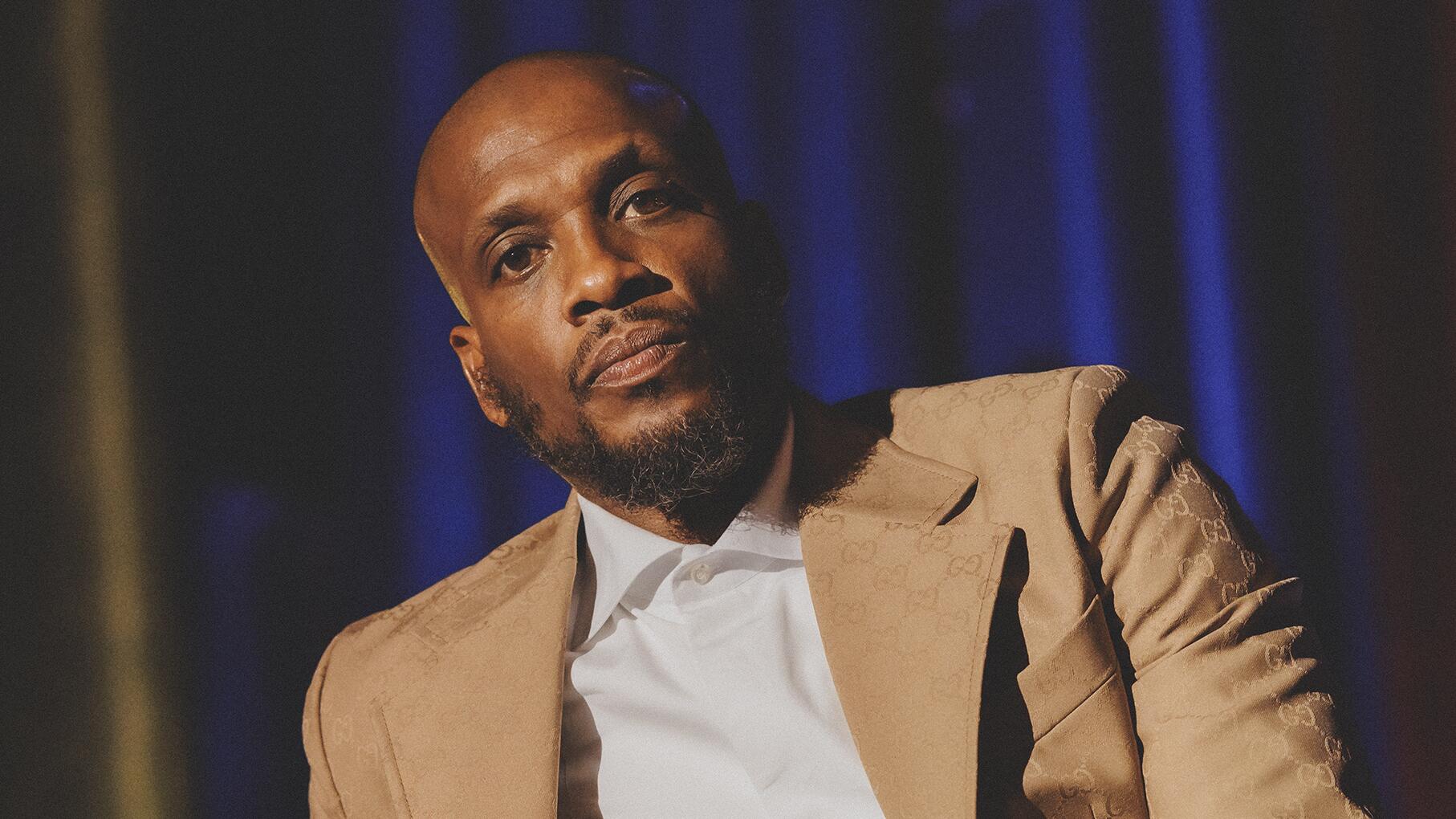
As a kid in Houston, comic Ali Siddiq’s father was largely absent. But there’s one parenting moment that Siddiq tells onstage with great detail. Ten-year-old Siddiq had a sore tooth, and his dad pulled a Cool Whip tub from the fridge — where he stashed his cocaine — and applied some to his son’s tooth.
“My dad was insane,” Siddiq laughs. When he first told the story onstage, his father was in the audience. “[After] he was like, ‘I can’t believe you remember that!’”
He wasn’t a perfect father — and yet Siddiq always admired him. He pays homage to his dad, who died in 2018, in his new special, My Father.
It’s the latest in more than a dozen specials Siddiq has released on YouTube. He remembers that his dad would watch all of his shows on a computer in the library: “And [he] would call and tell me, … ‘I watched about 10, 15 times.’ So I’m always missing those 10 or 15 views that I know that I would get from him,” Siddiq says.
For Siddiq, who served six years in a Texas prison for selling drugs before turning his life around, comedy and storytelling have always been a source of healing.
“I think that’s the biggest part of it, that I take the stories and me reliving them in front of people or revisiting them in front of people is a lot healing,” he says.
Interview highlights
On the regret he feels about selling drugs
I remember I was in San Francisco, the homeless population is so crazy. … And I just stopped in the streets and I just started sobbing. And I remembered saying, “How much of this is my fault?” Because I have been so destructive and reckless in my behavior. Obviously this is not the first generation. This is the generation that was affected by the first generation of what I did. Like, you can’t conceive the magnitude of destruction that you do when you sell drugs in a community. It’s people doing things that they would probably never do in order [to get drugs]. [It’s] ruining relationships. What child didn’t get fed because their mom or their father decided to do this? What uncle or aunt stole something … like, what did I do?
On the fact that he still remembers his inmate number, or “spin” number as he calls it
I think that these psychological wounds are different than my physical wounds. My physical wounds start to fade. Why haven’t these wounds faded yet?
Ali Siddiq
You do not get out of this situation unscathed. You may have survived it, but you still have wounds. I’ve been out 29 years at this point. Even if I’m at home by myself, I’ma lock the bedroom door [and] I still know this number. … You may survive, but you don’t get out unscathed. You gonna lose some skin in this game. And I think that these psychological wounds are different than my physical wounds. My physical wounds start to fade. Why haven’t these wounds faded yet?
On how his imprisonment impacted his family
My mom, even though she wasn’t physically there, she’s there in mind. Like, when you’re inside, your sister is concerned, your mother is concerned. Your dad is concerned your grandmother is concerned. It is all of these people that’s concerned about you because you’re in a position of danger. You’re in a dangerous place and there’s no guarantee that you will make it out of this place.
On getting his start in standup
When I started doing standup, I actually didn’t even know how to even start. … I literally started from a place of zero. Like I had zero information on how to become a comic, zero information of where to go. … I was at scratch. … I remember when I first got my first payment, it was $35 and it was in like fives and ones. And I thought it was a lot of money. I was like, boy, I came up.
On raising his own son differently than he was raised
I love the way that he lives. I applaud him and I just hope that he comes out on the other side and loves being a kid and then gives his children the opportunity to be a kid, and always have a softness for me. I need somebody to roll me around when I get old. So hopefully, hopefully he’s there taking me to go eat oysters and asking me, Do I want to go to a Boney James concert? or something. I just love him. I just love the softness of his life.
Lauren Krenzel and Susan Nyakundi produced and edited this interview for broadcast. Bridget Bentz, Molly Seavy-Nesper and Luis Clemens adapted it for the web.
Transcript:
TONYA MOSLEY, HOST:
This is FRESH AIR. I’m Tonya Mosley. And my guest today is Ali Siddiq. He’s a comedian, but that word undersells it. What he really does is tell stories – true ones – from his own life. And he’s told so many of them that while watching his specials, I realized Siddiq is giving us a memoir, delivered one set at a time. For instance, a few years back, he went viral with the story about surviving a prison riot. Siddiq served six years for cocaine trafficking, arrested four days after his 19th birthday. He started doing stand-up after he got out, and nearly 30 years later, he’s got more than a dozen specials, most of them independent on YouTube with millions of views. In his 2022 series, “Domino Effect,” he traces his life growing up in Houston, starting at 10 – the year he went to live with his father and first got into trouble – all the way through the choices that landed him in prison. This month, he has a new special called “My Father.” It’s about everything that passed between Siddiq and his dad before his father died in 2018. It premieres on YouTube June 21. Here’s a clip.
(SOUNDBITE OF COMEDY SPECIAL, “MY FATHER”)
ALI SIDDIQ: My dad had a thing about how he dressed. My dad always wore tailor-made suits. This is when he was on his note (ph), ’cause he was a – there’s not a lot of men can say how they felt about their pops. I really wanted to look like this man. He was tall, dark, jet Black, had a lot of charisma about himself. But he just wasn’t an ideal…
(LAUGHTER)
SIDDIQ: …Father. My dad asked me one time. I’m sitting at his house, and my daddy said, man, why you don’t never say nothing bad about your mama on stage?
(LAUGHTER)
MOSLEY: Ali Siddiq, welcome to FRESH AIR.
SIDDIQ: (Laughter) Thank you. Thank you for having me.
MOSLEY: Man, your timing is great. And I was thinking when I was watching this that there is really nothing like remembering something funny about somebody after they’re gone. It’s, like, the truest way, the most purest way to grieve them. But I was just wondering watching this, if your dad felt some kind of way about being in your act, what do you think he’d say about you doing this entire special about him?
SIDDIQ: He never actually felt any type of way about being in my act. He just wanted to know when I was going to say something negative about somebody else and not just him. So…
(LAUGHTER)
SIDDIQ: You know, I get a lot of views, but it’s definitely 10 views, 15 views that I miss ’cause my dad would go to the library, and he would look me up on the computer and watch all of my stuff. And he would call and tell me, I just seen something else. I watched it about 15 – 10, 15 times. So I’m always missing those 10 or 15 views that I know I – that I would get from him.
MOSLEY: You say straight up, I’m a responsible man because of my mother, but I’m a good man…
SIDDIQ: Yes.
MOSLEY: …Because of my daddy. Explain that.
SIDDIQ: My mom, she would think that it was her, but it’s really him because for some time, I felt a certain type of way about him not being there or the things that I would see from other people’s, you know, fathers or what I view from TV. I was judging him based upon that and what I thought. And I had certain feelings towards him. And I didn’t want my kids to ever feel like that about me. I didn’t – I don’t want my kids to think that anything else was more important than them – not being in the streets, not women, not gambling, not hustling, not anything. I didn’t want them to ever think that anything that I was doing was more important than them. And my father made me at times feel unimportant to him.
You know, I played sports. He went to one game. Out of all the sports that I played, he went to one game. You know, he came to one basketball game. You know, I don’t remember ever doing anything father and son with my dad. So that’s another thing. I just knew becoming a father, I would never be like that. Like, my kids are going to see me actively at their games or at their recitals or at their – whatever they may be doing, I’m going to actively be there. If – you know, if you need something, I want you to be able to call me. So I’ve always made myself available for that type of effort that I was making. I always made myself available for them, so they would never feel a type of way towards me, like I felt for my father for a couple of years – well, more than a couple of years.
MOSLEY: Your daddy, he left when you were 3, but you’d see him every blue moon. But then around 10, he comes back into your life. You went to live with him.
SIDDIQ: Yes.
MOSLEY: And it seems like he was very much do as I say, not as I do. When did you first understand that contradiction?
SIDDIQ: Oh, man. Probably the first year I lived with him (laughter). Like, yo, my dad was – like I say, I don’t think he was ready. I don’t think he was ready to have his son with him. I think that he was…
MOSLEY: But yet he asked for you to live with him, right?
SIDDIQ: He asked, but I don’t think he was ready. You know, people ask for a lot of things they’re not ready for. So…
(LAUGHTER)
SIDDIQ: And then, like – not a human, though. I didn’t think a human was a part of that, but he definitely wasn’t ready yet, you know, ’cause he couldn’t have been. Like, when I look back at it, I’m like, yo, bruh, you – there’s no way that you was ready for me to come live with you ’cause you hadn’t calmed down yet, you know? Just the story of him waking me up, saying that he was getting ready to go to San Antonio, and I’m 10. I got to go to school tomorrow. I’m like, yo, bruh, like…
(LAUGHTER)
SIDDIQ: I was like, what’d you think – what am I supposed to do that you finna go to San Antonio? He said, just do what you been doing. Get yourself up. Get ready to go to school.
MOSLEY: (Laughter).
SIDDIQ: You know how to – hey, bruh, that’s not how this go, man. I’ve never been in a house by myself before (laughter). Like, what’s wrong with you?
MOSLEY: Ali, I mean, is it true that – OK. You tell this story about him putting cocaine on a sore wisdom tooth. And I was wondering, is this true, or is this just for laughter?
SIDDIQ: No, 100% true – 100% true. That’s why I described it so vividly. See, that’s the thing about when I tell a story – I want people to understand. I describe all the even little things so people understand it. This is a true story ’cause you can’t – it’s hard to make up little things. You know, you can make up big things, but little intricate details about something, like, you know who was there – James (ph) and Ivory (ph). And James was the one that saw me sitting on the step. And he was like, what’s up? ‘Cause my dad’s name is Limbird (ph), and he called me little bird. Little bird, what’s going on? And I said – I told him about my tooth. And then my daddy called me over and said, let me see, and put that cocaine on my tooth. I said, this man.
MOSLEY: (Laughter).
SIDDIQ: I didn’t even know that’s what it was or – I just know it was the stuff that was in the Cool Whip tub that was in the refrigerator.
MOSLEY: Wait. He kept the cocaine in a Cool Whip tub in the refrigerator.
SIDDIQ: In – yeah, the big Cool Whip thing. You know how Cool Whips come in that little container – that big container?
MOSLEY: Oh, yeah.
SIDDIQ: He kept it.
MOSLEY: And you reuse them.
SIDDIQ: Yeah. And he put it in – that’s where the cocaine was at – inside the refrigerator. And then as I thought about that earlier, like, I told the story, and I never even realized how super irresponsible he was. I am 10. You don’t think I like Cool Whip?
(LAUGHTER)
MOSLEY: The things that could’ve happened, you know? Like…
SIDDIQ: The things that could’ve happened. If I would’ve dipped the – ’cause he always had strawberries. My dad loves strawberries, right? So he always had strawberries in the house. And I was like, yo – what I thought about, if I would’ve just took one of those strawberries and put it in that Cool Whip bowl thinking it was Cool Whip, because I still would’ve ate it even though I would’ve thought the Cool Whip was bad. I’m like, oh, the Cool – it’s fizzing out. And then I’m like, that’s what it would’ve looked like to me. I said, he was so, so irresponsible. It’s crazy.
MOSLEY: OK, he dips a little cocaine on that sore wisdom tooth. What happened to you?
SIDDIQ: Never had a problem with that wisdom tooth again (laughter).
MOSLEY: Never even needed to have it taken out?
SIDDIQ: Never. I probably still got that tooth in my mouth right now.
MOSLEY: (Laughter).
SIDDIQ: I never had a problem. I don’t even remember getting my wisdom teeth taken out ever. Luckily, I never – I don’t have an addictive personality. I can just stop doing stuff. Like, hopefully, that was it because my dad was insane. And I had told that story before, before I ever – before it ever aired on anything. And I remember he was at the show when I did it. And he was like, I can’t believe you remember that.
MOSLEY: Do you feel like you’re working out that relationship onstage? I mean, I think the obvious is yes. But, like, how are you working it out? What is it doing for you, aside from just making us laugh?
SIDDIQ: I think that with the relationship with him or the relationship with my little sister or my things that I had problems with as a young person, I don’t hold onto things. I release them. The ups and downs of me and my dad are really molding of me. And it’s also healing for me to be able to say these stories. So I think that’s the biggest part of it, that I take the stories and me reliving them in front of people, or revisit them in front of people is a – I can’t even say a bit healing. It’s a lot healing. It’s a lot of healing that goes on with me with that.
MOSLEY: I want to ask you about something that you do onstage that is – feels like maybe like a centering. You know, most comics, when they go onstage, like, everybody does it different. But most of them, like, kind of come out swinging. They, like, run or walk in or they, like, take in the applause. You sit in a chair, you wait for the crowd to die down, and then you always start with, hey. Tell me what you’re doing with that.
SIDDIQ: I’m paying homage to the first time I was ever onstage. First time. So I went to this comedy club. Just Joking Comedy Cafe is where I started at in 1997, December 4. It was the first time I was ever onstage. I walked onstage, and I said, hey, and the whole entire crowd booed me. I didn’t even say nothing but hey, no jokes, no nothing. And this is because I started at Apollo night. And they were instructed to boo the next person that was coming onstage.
MOSLEY: Yeah.
SIDDIQ: So I happened to be the next person. So I waited two weeks. I came back to Just Joking Comedy Cafe after two weeks. Brought me up. I did well. They brought me – I came – and then I started coming every week. And then by February – I started in December. By February, I was the cohost of that Apollo night. And I always start with hey.
MOSLEY: Why do you think you need to be reminded of that particular night 30 years later?
SIDDIQ: Yeah, to understand that I had – I made the right decision when I first went up. I wasn’t in the wrong for saying, hey. It’s a lot of things that keep me grounded in this business. I’m never too up, and I’m never too down. I’m always even keel. And the attention that I didn’t get the first time I said hey is what people wait on now. When I say hey, the whole entire audience say hey back.
MOSLEY: If you’re just joining us, my guest today is comedian Ali Siddiq. His new comedy special is called “My Father.” We’ll be right back. This is FRESH AIR.
(SOUNDBITE OF THE ROOTS SONG, “PROCEED IV (A.J. SHINE MIX)”)
MOSLEY: This is FRESH AIR. And today, we’re talking with comedian Ali Siddiq. He’s released more than a dozen specials independently on YouTube, where they’ve drawn tens of millions of views. His new one, “My Father,” is about the man he spent his life trying to understand and everything between them before his father died in 2018.
Let’s go back to young Ali Siddiq, before the comedy. You are 14 years old. You start selling drugs. You like to joke onstage, you say, I was a pharmaceutical sales rep.
SIDDIQ: (Laughter).
MOSLEY: By the time, though, that the feds got you, you were 19. You were in college at Texas Southern University. And this is the ironic part. You were actually planning to stop selling drugs when you were caught. How close were you to quitting?
SIDDIQ: I had stopped, actually. I was done. I was wrapped up. And I got a phone call to come help, assist, you know? And I went out of me feeling obligated to – OK, you know, I’ll hold your bag. But I was done. It had become like, man, what am I doing? You know?
MOSLEY: ‘Cause you started in the first place because you wanted money. You wanted to – you wanted your own money.
SIDDIQ: Yeah. And I think I fight so hard now to explain that it was a character flaw. It was, like, no manhood or responsibility in that because I could’ve just worked for money. You know, I could’ve just did something else. I could’ve – it’s so many things that I could have done versus being so destructive to a community. And I remember being asked, Ali, when do you think that you’re going to blow up? And my honest answer was, when I pay back the – I got to – I owe this world something.
MOSLEY: Because you sold drugs, like, you owe…
SIDDIQ: Yeah.
MOSLEY: You owe back because of that harm you did. That’s interesting.
SIDDIQ: When I pay back society for the destruction. And I think that when you are a person that has really done things, and you have really changed your life and you think back on these things, you can’t help but to have a heavy heart.
I remember I was in San Francisco. The homeless population is so crazy. And I’m at this Comedy Central festival. It’s a comedy festival, and I’m walking from my hotel to the festival. And I’m there for days, and I keep trying to find different ways to get there not to run into homeless people. And I then walked five blocks down, 10 blocks down, 10 blocks this way. I walked every which way and couldn’t. And I remember it was in the morning, and I was on my way to prayer. And I just stopped in the streets, and I just started sobbing. And I remember saying, how much of this is my fault because I have been so destructive and reckless in my behavior? I just don’t understand.
Like, obviously, this is not the first generation. This is the generation that was affected by the first generation of what I did. Like, you can’t conceive the magnitude of destruction that you do when you sell drugs in a community. You know, there’s people doing things that they would probably never do in order – that’s ruined their relationships. That’s – what child didn’t get fed because they mom or they father decided to do this? And what uncle or aunt stole something? Like, what did I do?
MOSLEY: Did you and your dad ever talk about this, that – ’cause, you know, I mean, he sold drugs, and then you went on to sell drugs.
SIDDIQ: We never talked about it because my dad ended up using drugs. That was the lick that society took back. I remember a story that I told about some young guys. I come on the block, and they had told me they robbed these old guys. And I looked at the stuff that they had, and I made them put it in a bag because I recognized the stuff. And then I went and took my dad and his friend his stuff back. And I said, man, what were you doing over there? And my dad blamed it on his friend, told me, I’m over there with him. He got me robbed.
And my mom – I told my mom about it later, and my mom said he was probably using drugs. And I said, no, he told me he wasn’t using no drugs. And that’s when she told me, why they put your daddy in rehab twice since we’ve been apart (laughter)? And so I went back and told him. I said, hey, I thought you said you weren’t using drugs. And my – and he said, who told you that? Your mama? Man, your mama – (laughter) your mama violating my HIPAA rights. I’m just – this man is nuts. Like, he’s so – even when he’s doing something crazy, he’s still funny. He’s so crazy.
So the – unfortunately, the rumor around where my dad has gone is an overdose. And I don’t believe that. I think that that’s what people wanted to say. But I don’t not believe it either.
MOSLEY: The rumor that he died because of an overdose?
SIDDIQ: Yeah. Yeah, ’cause he had a heart attack. And I know he hadn’t been.
MOSLEY: Using?
SIDDIQ: So if you hadn’t been doing something, and then you decide, I’m going to do it one time, you know, you don’t know what your heart can take on that. So my dad just had a heart attack out of nowhere.
MOSLEY: Our guest today is comedian Ali Siddiq. We’ll be right back after a short break. I’m Tonya Mosley, and this is FRESH AIR.
(SOUNDBITE OF ADRIAN YOUNGE AND ALI SHAHEED MUHAMMAD’S “BETTER ENDEAVOR”)
MOSLEY: This is FRESH AIR. I’m Tonya Mosley, and my guest today is comedian Ali Siddiq. His new stand-up special, “My Father,” explores his relationship with his dad, who died in 2018. Siddiq has released more than a dozen specials on YouTube, including two filmed inside of jails. He himself was arrested at 19 for selling cocaine and served six years of a 15-year sentence. Part of his work includes talking with prisoners about accountability and the realities of recidivism. This past spring, he released “Ali Siddiq: From Inside,” shot in a county jail in Charlotte, North Carolina, where he talks to inmates for almost two hours straight about the experiences of being locked up and its lasting psychological effects. Here he recalls his inmate number, which he calls a spin number.
(SOUNDBITE OF YOUTUBE VIDEO, “ALI SIDDIQ: FROM INSIDE (A CONVERSATION WITH INMATES)”)
SIDDIQ: Ask the old heads. They’ve been there before. Ask them, do they remember they original spin number? This the [expletive] that haunts me. I’ve been out for 25 years, almost 26 years – 67-93-46. I can’t forget this number. It’s ingrained in my head like my Social Security number.
UNIDENTIFIED PERSON: S***, that’s your name.
SIDDIQ: It’s my slavery number – 67-93-46.
MOSLEY: That’s my guest, Ali Siddiq, in his YouTube special “From Inside (A Conversation With Inmates).” And what goes on to happen after you rattle off your number? The guys start blurting out their numbers, too. What does it signify that you can remember your spin number 30 years after you’re out of prison?
SIDDIQ: That you did not get out of this situation unscathed. You may have survived it, but you still have wounds. I’ve been out 29 years at this point. Even if I’m at home by myself, I’ma lock the bedroom door. I still know this number. So it’s still things that you may survive, but you don’t get out unscathed. You’re going to lose some skin in this game. And I think that these psychological wounds are different than my physical wounds. My physical wounds start to fade. Why haven’t these wounds faded yet?
MOSLEY: There was this powerful thing you said during that talk with those inmates that also is kind of sticking with me. You were saying, when you get locked up, your people get locked up, too. And I wanted you to explain what you meant by that.
SIDDIQ: My mom, even though she wasn’t physically there, she’s there in mind. Like, it was in those days that my mother didn’t think about me. When you’re inside, your sister is concerned. Your mother is concerned. Your dad is concerned. Your grandmother’s concerned. It is all of these people that’s concerned about you because you’re in a position of danger. You’re in a dangerous place, and there’s no guarantee that you will make it out of this place. There’s no – you can get a year. Doesn’t mean that you’re coming home. You can get two years. Does not mean that you’re coming home. Nothing about this place says, I’m going to survive.
MOSLEY: I want to know about – I think you call it your sarcastic nature ’cause it’s not like you started doing comedy in prison, but you did find that your humor could serve you well there. And I wonder what ways you used your sarcastic nature in comments when you were locked up.
SIDDIQ: Because I was such a violent person from the beginning – the first two years, I was insane. Like, I was literally a madman.
MOSLEY: Why? ‘Cause were you like that out of prison, before you got there?
SIDDIQ: Yeah. I’m in the streets.
MOSLEY: Yeah.
SIDDIQ: It’s what happens in the streets, you know? And I’m still hurt from my sister. I’m a very heartless person. It just…
MOSLEY: Hurt from her passing.
SIDDIQ: Yeah, and things that I never revealed to people that – four months later, that my first son passed as well. So I never – I’m dealing with a lot of pain at this time. And so my whole thing was to administer pain towards people who just was in my way. You just in my way, you know. And I’m inviting this type of behavior. Like, it’s like, hey, bruh, this – all this is going to be bad for you, you know.
So then, you know, I got told – and it’s always an older wise person that comes to you and say – that really care about you, you know, just letting you know how life goes or see something in you. Hey, man, you keep doing your time like this, somebody going to kill you. And they’re going to kill you because they scared of you. They don’t know what you’re going to do, so they’re going to kill you. They’re going to set you up. Whether it’s a group or whether it’s one person, they’re going to kill you. So you might want to do your time a little different. And plus, you’re better than this. Like, you can really be a different type of person, and you can get out of here. You know, you’re not here forever. You know, but I’m doing my 15 years. Like, I’m doing 15 years. Like, I’m not thinking about parole or nothing.
MOSLEY: Getting out early.
SIDDIQ: I’m doing the whole 15 years.
MOSLEY: Yeah.
SIDDIQ: Yeah. So then I became this jovially sarcastic person about everything. Like, anything that the person was going to do that was going to get them in trouble, I was going to say something about. (Laughter) And I remember this dude was about to do something, and I said, I thought you said that you didn’t steal that stuff, like, that you was innocent, ’cause you’re doing really guilty behavior. I’ll be so sarcastic. And I remember – this is one of my classic sayings – that I was like, I guess I’m the only one in here guilty ’cause it seem like everybody else innocent.
(LAUGHTER)
SIDDIQ: Like, they’re like, this is a part of – no accountability. Man, y’all don’t have no accountability for nothing. And so – and if people was about to fight, I would just – I would always say something like, oh, y’all about to fight? Wow. That’s interesting. You do know somebody going to lose this fight twice? And they’re like, what you talking about? I said, well, one of y’all going to win, and then the CO’s going to come in here and beat both of y’all.
(LAUGHTER)
SIDDIQ: Like, somebody got to be willing to lose this fight twice. Like, y’all got to make a decision. And I would say so much sarcastically jovial things that they were like, man, he always got something to say. Like, yes, I do.
MOSLEY: I read that, you know, as you’re doing your time, that’s when you started to think, when I get out of here, I could probably have my hand in comedy. And I was wondering, were there people that you were also, like, watching or studying or thinking about as you were thinking about what type of comic you wanted to be?
SIDDIQ: Not at all. When I started doing stand-up, I actually didn’t even know how to even start. It’s like, when I think about this journey, I literally started from a place of zero. Like, I had zero information on how to become a comic, zero information on where to go. Zero, like, I was at scratch. And so when I think about – like, I don’t ever not feel successful because I’m like, yo, I did what I said I was going to do when I got out. I was going to become a comic, not knowing how to do it.
MOSLEY: When you get out of prison, though, how do you make that leap to, like, truly making this a profession? What was your first stop?
SIDDIQ: Whew, Just Joking Comedy Cafe. You know, just – I learned a lot there. And I remember when I first got my first payment, it was $35. And it was in, like, fives and ones. And I thought it was a lot of money. I was like, boy, I came up. And…
MOSLEY: (Laughter) And the comedy cafe is in Houston. It’s a place in Houston.
SIDDIQ: It was. It was on Richmond. And then I went through this dilemma of people now saying that you’re not a real comic because you don’t do it for a living. And I remember asking Bruce Bruce about it. I said, man…
MOSLEY: Who is that?
SIDDIQ: Bruce Bruce, he’s a comedian, another comic. I asked Bruce Bruce, I said, hey, man, are you – this is when he was the host of ComicView. And I asked him, hey, people say that you’re not a real comic unless you doing it for full-time, for a living. And he said, man, let me give you some advice, brother. I worked for Frito-Lay – you know what I’m saying? – until my comedy started making more money for me consistently than my job. And once that happened, then I quit my job. He said, don’t quit your job until your career start making more money consistently than your job. And I remember…
MOSLEY: And what were you doing? Like, what was your job?
SIDDIQ: I was selling clothing. I was working in a men’s apparel store, you know, in the mall. And I worked at Sunglass Hut. You know, I used to be a street pharmaceutical rep. Then I went to being a sales rep. Ain’t that something?
(LAUGHTER)
MOSLEY: Did it take the same amount of skill, like, the selling drugs to selling…
SIDDIQ: The same amount of skill. The same thing – hey, I need to find somebody who addicted to suits and shades.
MOSLEY: (Laughter).
SIDDIQ: You know what I’m saying? So (laughter) to make my commission.
MOSLEY: If you’re just joining us, my guest is comedian and storyteller Ali Siddiq. His new stand-up special is called “My Father,” and it’s about his relationship with his dad. It premieres on YouTube June 21. We’ll be right back after a break. This is FRESH AIR.
(SOUNDBITE OF CLARK TERRY AND RED MITCHELL’S “SWINGIN’ THE BLUES”)
MOSLEY: This is FRESH AIR, and today we’re talking with comedian Ali Siddiq. He’s released more than a dozen specials independently on YouTube, where they’ve drawn tens of millions of views. His new one, “My Father,” is about the man he spent his life trying to understand and everything between them before his father died in 2018.
I want to talk to you briefly about parenthood, about you being a father. You were telling me earlier that you just want to not make the same mistakes that your dad made with your children. And, I mean, you joke about this a lot. But your kids are getting a very different father than you got, which I actually want to play a clip from your latest special where you talk about taking your son, Hassan, to a concert, to the elements, Earth, Wind & Fire, when he’s 11. Let’s listen.
(SOUNDBITE OF COMEDY SPECIAL, “MY FATHER”)
SIDDIQ: I know that I am a better father than my father was – and I’m supposed to be, I’m supposed to be – just by my son’s first concert and my first concert with my father.
(LAUGHTER)
SIDDIQ: My son, Hassan, he’s 11. His first concert was Earth, Wind & Fire. And he asked to go. He asked to go. My son came in to me and said, father…
(LAUGHTER)
SIDDIQ: …Because he’s very upper crust. He said, I would like to attend a concert. I said, Hassan, what concert would you like to attend? He said, I would like to go see the Elements.
(LAUGHTER)
SIDDIQ: And I teared up. I teared up.
(LAUGHTER)
SIDDIQ: My son want to go see the Elements. And I said, wait, who are the Elements, Hassan? Is it some little, white internet group that you been listening to?
(LAUGHTER)
SIDDIQ: Hassan said, no, father. They’re formerly known as Earth, Wind & Fire. I immediately ran and got them tickets.
(LAUGHTER)
SIDDIQ: I wanted to get them tickets for me and my son. Me and my son going to see Earth, Wind & Fire. He is 11. He’s 11 years old when we went to his first concert. Me and him, we’re going. We get to the concert. Hassan is the youngest person in this whole entire concert.
(LAUGHTER)
SIDDIQ: And I know that for facts because I am the second youngest person.
(LAUGHTER)
MOSLEY: That was my guest today in his latest special, “My Father.” And, Ali, that whole special, you marveling at your bougie kid, you know, you have built a soft life for him on purpose. But I wonder this, because, I mean, as a parent who also grew up a certain way, do you ever look at your son and worry that the thing that made you, some of the positive things, you know, not all that challenging stuff you went through, but, like, the positive stuff might also be the thing, like, you’re keeping from him, too.
SIDDIQ: I – no, I don’t. I think that the softness of his life now, I hope that he continues to desire that. And, you know, he goes through his own certain struggles, you know, ’cause there’s a certain struggle that happens in softness as well. But, you know, whether he want oysters or crab, you know, it’s a dilemma for him. So he…
(LAUGHTER)
SIDDIQ: He got the – you know, choices, choices. But yeah, he – I love how he’s living. I love the way that he lives. I applaud him, and I just hope that, you know, he comes out on the other side and always is like this and loves being a kid and then gives his children the opportunity to be a kid and always have a softness for me. I need somebody to roll me around when I get old. So hopefully, he’s there, you know, taking me to go eat oysters and, you know, asking me, do I want to go to a Boney James concert or something. I, you know, just…
MOSLEY: (Laughter).
SIDDIQ: I just love him. I just love the softness of his life.
MOSLEY: All right. You are a Houston boy, born and bred. Do you feel like you might have ever missed out or lost out or it taken you longer than maybe it would have if you hadn’t moved to a place like LA and New York? And, you know, you could’ve taken your kids with you.
SIDDIQ: I don’t think that that’s a thing. I think that there’s no opportunity that has been lost. You know, it’s only all gain. And there’s a certain protection of being in your home spaces. You know, my mom’s from – I have – what? – maybe 40 relatives in California. But who’s to say I was going to go to California and make something of myself? ‘Cause multiple comics have done that as well and never, you know, arrived, in their perspective. You know, same in New York. Same in Atlanta. You know, I think that what makes me unique is being home.
MOSLEY: Oh, this has been such a pleasure, Ali. And thank you so much, and best wishes as you continue on your tour. Are there particular cities that you love the most? You know, you’re a Houston boy. So are there other places throughout the country where it’s like, oh, yeah, they get me – it feels like a homecoming?
SIDDIQ: Oh, so many places – Chicago, D.C., Baltimore, Detroit, New York, Atlanta, Philadelphia, Appalachias (ph). There’s too many places to even name. I’m so connected to the Earth that when I’m – when I come somewhere, all of it feel like home. That’s who’s coming, and that’s who I have a connection with. Now, what’s crazy is I don’t think that Corpus Christi gets me.
(LAUGHTER)
SIDDIQ: And it’s right down the street. Corpus Christi, Texas. It’s crazy. It’s right down the street. I don’t think Corpus really fool with me. They’re a fishing town. They’re like, is he talking about bass? Like…
(LAUGHTER)
MOSLEY: Ali Siddiq, it has been such a pleasure to talk with you. Thank you so much for this special and your time.
SIDDIQ: Pleasure is all mine. I thank you very, very much.
MOSLEY: Ali Siddiq’s new special is called “My Father.” It premieres on YouTube June 21. He’s also currently on his international Custom Fit stand-up tour. Coming up, film critic Justin Chang reviews “Toy Story 5,” opening in theaters this week. This is FRESH AIR.
(SOUNDBITE OF RAY CHARLES’ “DOODLIN’”)
-
An inside look at President Trump’s campaign to acquire Greenland
Transcript:
DAVE DAVIES, HOST:
This is FRESH AIR. I’m Dave Davies. At a White House news conference in April, as President Donald Trump was discussing his displeasure at our European allies over the war in Iran, he said this about his problem with the NATO allies.
(SOUNDBITE OF ARCHIVED RECORDING)
PRESIDENT DONALD TRUMP: You know, it all began with, if you want to know the truth, Greenland. We want Greenland. They don’t want to give it to us. And I said, bye-bye.
DAVIES: That’s President Donald Trump in April. Trump’s campaign to acquire the territory of Greenland from Denmark through purchase, threat, negotiation or even military action is one of the stranger episodes of his presidency. And while Trump hasn’t spoken publicly about the issue in a while, our guest, New Yorker staff writer Ben Taub, says it hasn’t gone away. In a new article, he writes that there are ongoing influence operations at Trump’s direction to keep the possibility alive. Taub’s reporting traces Trump’s Greenland project from its inception in 2018 to the present day, a campaign that’s yielded some comical moments as Americans sought to woo allies and wield influence in the territory with just 57,000 people.
Taub also reveals some of the private actors who have helped to drive the process – players motivated by financial gain, notoriety or ideology. Ben Taub has been contributing to The New Yorker since 2015. Among his many journalistic honors, he won the 2020 Pulitzer Prize for Feature Writing for his work on the lasting effects on former detainees and guards of American abuses in Guantanamo Bay. His new article in The New Yorker is titled “Inside The Ludicrous, Deadly Serious Plan To Take Over Greenland.” Ben Taub, welcome back to FRESH AIR.
BEN TAUB: Thank you very much, Dave.
DAVIES: I want to begin with a moment – just before President Trump was inaugurated in 2025, when his son, Donald Trump Jr., and the late Charlie Kirk took a trip to Greenland to try and build some support among locals for this effort of the United States acquisition. How did it go for these guys?
TAUB: Well, so Charlie Kirk and Don Jr. arrived in Nuuk, Greenland, with very little warning. There was a sort of advanced team that had gone before them carrying MAGA caps to hand out to people. But the locals weren’t really sure what was happening until the Trump-branded 757 landed in their airport. And at first, people were very curious, very open to the idea of a high-profile visit, I think. But during the course of the day, President Trump himself mentioned the prospect of a military takeover. But the people who – at the time didn’t know that this was happening. They were simply hanging out with Don Jr. and Charlie Kirk.
So they arrived in Nuuk, the capital of Greenland, and were greeted by a solitary Trump supporter, a Greenlander named Jorgen Boassen, who led them down to the harbor and over to Nuuk’s most expensive hotel, where they hosted a number of locals for a very expensive lunch. And it was only after they left that local journalists in Nuuk working for the Greenlandic publications found that, in fact, among those supporters were a number of homeless people who had been recruited with the promise of a free meal. And the portrayal in sort of both Charlie Kirk’s words and those of Don Jr. was that actually, this was evidence of a profound support building for an America takeover, effectively – framed as these people would like to join the United States.
And in the aftermath of their trip, there was a huge surge in propaganda and influencers – pro-Trump influencers – arriving in Greenland and trying to sort of get a piece of their own. And the strange thing about this propaganda is it wasn’t actually directed at persuading Greenlanders that it would be good for them to join the United States. It was mostly aimed at convincing conservative Americans that this is something that Greenlanders wanted rather than actually building organic support.
DAVIES: Right. And one of the details that I love here is that you tracked down a high school student who had had an interaction here. You want to tell us about that? Was this guy…
TAUB: Sure.
DAVIES: …Easy to find for you (laughter)?
TAUB: Actually, yes. So Nuuk is a small town. I mean, it is the capital of the country, but it is a capital with 20,000 people. And it’s very easy to – once you build some local context and local trust, to get to know pretty much whoever you need to relatively quickly. So through the help of a local Greenlandic journalist named Nukaaka Tobiassen, I found a young high schooler named Malik Dollerup-Scheibel, who had run into Don Jr. and Charlie Kirk at a pool bar called Daddy’s in the center of Nuuk. It’s a gathering space for a lot of people in town. It’s very close to the Greenlandic Parliament, and so it’s colloquially known in town as the Danish embassy. So they were at Daddy’s, holding court, and he was handed a MAGA hat and took a photograph with Don Jr., Charlie Kirk and several other locals. And it was only later that he realized that he was being used. He said, we were kind of manipulated. It was only when they posted the pictures that it looked like there were so many people who liked him, but actually, we were just friendly and people got free beer.
But of course, when they went back to the U.S., Charlie Kirk went to his broadcast studio and gave a pretty, let’s say, dubious account of the – his few hours in Greenland, claiming falsely that there were polar bears walking around in Nuuk and that there were young Greenlanders coming up to him saying that they have rubies the size of baseballs which the Danes won’t let them mine, and the Danes won’t let them mine their gold, their lithium, their gas, all this stuff, which is completely untrue because Greenland has total autonomy of and ownership over its natural resources. And he used this to sort of pivot into the – he claimed – locally, the narrative that it’s time for a rebellion against the Danes, which is not really what you hear in Nuuk when you actually go talk to people.
DAVIES: All right. Let’s go back to the beginning of this strange episode. You know, the origins of this idea, you tell us in the story, goes back to Trump’s first term in office – I think 2018 – when he hears about this from a former business school classmate. Is that right?
TAUB: Yes. It was from his longtime friend, Ronald Lauder, who had suggested that he buy the island. And the first time he ever brought it up in any context which any of us are aware of is when he summoned his national security adviser at the time, John Bolton, into the Oval Office and confided that Ron Lauder had suggested that he buy the island. He asked Bolton what he thought of it, and Bolton was a little bit startled but said, essentially, well, it is true that there are security issues of importance to the Arctic, and it’s a region that we’ve largely neglected in recent years. And there’s probably a lot of ways to sort of handle this. And so he told Trump that he would do some research and get back to him with options.
But actually, what followed was a kind of – as Fiona Hill, who was serving as the senior director for Europe on the National Security Council, put it to me, it was all done in a slightly clandestine cloak-and-dagger way, where Bolton summoned her into his office, ashen-faced, and essentially said, look, Ron Lauder has told Trump that he needs to buy Greenland, and we’ve got to head this off before he announces this to everybody.
DAVIES: People will remember Fiona Hill from the impeachment hearings in 2019, right? She was quite an impressive figure on the National Security Council. So she does some research. What happens?
TAUB: So it is absolutely true and important that the Arctic is becoming a really serious site of national security interests, not just for the United States but for Russia, for China, for Norway, for all of the Arctic nations or, as China likes to call themselves somewhat questionably, a near-Arctic nation. And, you know, basically, this is a region that has not really been useful or traversable for any military or commercial purpose, except for Cold War-era submarines going under the ice cap. But as it melts, this opens up new waterways that are very strategically important to a lot of countries. And during the Cold War, it was primarily viewed through the lens of the direct pathway for nuclear ballistic missiles to travel from Russia or from Soviet submarines in the far North.
DAVIES: The United States does have this one base there. Under a treaty, it has the opportunity to establish military facilities in Greenland. Most of them have been abandoned, except for this one base to track incoming missiles, right?
TAUB: Correct. So the U.S. essentially took over Greenland militarily during the second world war. It was at the request of the Danish consul in Washington, D.C., at the time, who was essentially acting alone in what he regarded were the interests of his country while the actual government in Copenhagen was under Nazi occupation. And so he encouraged and essentially allowed the U.S. to build military facilities in Greenland to defend those critical waterways and the northwest sort of coastal areas from Nazi incursion. This was an incredibly important and valuable thing.
And then during the Cold War, the agreement between the United States and Denmark that – which is in place since 1951, was that the U.S. could stay, could continue to maintain its military and presence and could expand it pretty much however it saw fit in coordination with the Danish and Greenlandic governments. That’s been true since the ’50s. It remains true today. If the U.S. wanted to expand its military presence against legitimate security concerns from Russia or China or anyone else, it could do so in coordination with the Danes. And up until about a year and a half ago, I think that would have been most welcome.
DAVIES: Right. You know, so eventually, this does become public because The Wall Street Journal does a story that says Trump is talking about buying Greenland, which gets a lot of attention. And John Bolton, the national security adviser, wonders where this came from ’cause he’s quite sure his staff were under strict orders not to talk about it. Finally figures it out. Where did it come from?
TAUB: So yeah. Bolton said that he’d sort of looked around to figure out what had happened. And what he found out was that at various occasions down at Mar-a-Lago, Trump was sitting around at his dinner table and saying to the guests, what would you think if we bought Greenland? And the guests would say, oh, well, that’s a good idea. And that’s how this sort of came out at the time.
And, you know, the truth is that just before The Wall Street Journal published this information and took the Danes by complete surprise, a couple of weeks prior to that, the U.S. embassy in Copenhagen had called the Danish Foreign Ministry and said that Trump and Melania Trump, the first lady, would like to visit Denmark. And they would appreciate a formal invitation from the queen.
So the framing was going to be, you guys have to issue a formal invitation from the royal family to the United States, which we will then accept. And the Danes, of course, proceeded to do so, unaware that the reason for this was actually that White House staffers had heard that Melania wanted to see Copenhagen and thought that it was going to be a nice stop for her and Trump on the way home from a state visit elsewhere in Europe. So that was why that sort of all happened, and the Danes kicked into gear to organize this state visit – very expensive, lots of security, lots of pomp and circumstances involving the royal family.
Then this leak takes place in the Journal and throws it all into kind of a political scandal prior to the visit taking place. And at that moment, the prime minister of Denmark, Mette Frederiksen, when asked about Trump’s aspirations to buy the island, you know, said, this is absurd. Greenland has had a self-government since 2009. It’s not really Denmark’s to sell in the first place. So even if it was the 19th century and countries were still buying and selling territories, it wasn’t really theirs legally to do so, even if they wanted to, which they didn’t.
So Trump fixated on her comment that it was absurd and said that that was really nasty of her. And what actually sort of followed was – as it was reported at the time – he then, because she had said this, was so offended, he canceled the state visit to Denmark. But in reality, the reason that they canceled, according to Bolton, is that while he was in a private meeting with Trump, Melania called. And Trump answered the phone on speaker, and Bolton overheard the exchange. And she said, I don’t know why people keep saying I want to go to Denmark. If you want to go, I’ll go with you. But the idea had not come from her. And so Trump hung up the phone, canceled the trip and then blamed it on Mette Frederiksen.
DAVIES: Wow. We need to take a break here. Let me reintroduce you. We are speaking with Ben Taub. He is a staff writer for The New Yorker. His new article is titled “Inside The Ludicrous, Deadly Serious Plan To Take Over Greenland.” We’ll continue our conversation in just a moment. This is FRESH AIR.
(SOUNDBITE OF MARCO BENEVENTO’S “GREENPOINT”)
DAVIES: This is FRESH AIR, and we are speaking with Ben Taub. He’s a staff writer for The New Yorker, and he has a new article that takes an inside look at Donald Trump’s efforts to acquire Greenland. It’s called “Inside The Ludicrous, Deadly Serious Plan To Take Over Greenland.” Taub’s reporting reveals some of the private actors who sought to advance the acquisition effort with motives of their own.
So give us an idea of who some of these characters were. You want to pick a couple and tell us about them?
TAUB: Yeah. So right after this sort of episode involving The Wall Street Journal and the visit to Denmark that never took place, it seemed to the Danes and to the public in both the United States and in Denmark that this entire idea had essentially evaporated. But what actually happened was the discussion just moved to secure rooms in the Eisenhower Executive Office Building, where the National Security Council meets. And there it took up a lot of energy among Trump’s national security staff.
You had a new – what they call a Policy Coordination Committee that was set up, which is – in this case, it was a secret National Security Council task force that was focused on the acquisition of Greenland. And among the leaders of this effort were a former special operations soldier named Drew Horn. During Trump’s first term, he worked for both the departments of Energy and Defense. He worked for the Office of the Vice President, and he also worked in the Office of the Director of National Intelligence. And he was the co-leader of the Greenland PCC, as they called it.
And then you also had ideologues, such as a man named Tom Dans, who is sort of a part of the MAGA crowd, as he would describe himself, who joined Trump’s term after his brother, who went on to become the director of Project 2025. His brother was a lawyer in the White House who essentially participated and led a purge of career officials and replaced them with loyalists. And so Tom Dans joined the administration in early 2020 in the Treasury Departmentì and, soon thereafter, was serving as the Treasury’s representative on the Greenland PCC.
And the focus of the Greenland PCC was – it was to subvert the Kingdom of Denmark. There’s sort of no easier or clearer way of putting it. Their activities were centered on a real concern about potential pathways for Greenlandic independence and potential vulnerabilities of Greenlandic independence. There was a real legitimate national security issue to consider about – if Greenland is on an inevitable path towards independence, then would the Greenlandic government in, say, 10 or 20 or 30 or 50 years still want to honor the agreements and the treaties that the United States has with Denmark, its former colonial master, as one of the senior national security officials put it to me? But the way that they went about addressing this question was not to coordinate, you know, this in open dialogue with the Greenlanders or the Danes and articulate their concerns, but rather to essentially work to try to accelerate Greenlandic independence in ways that would bring about a greater reliance on the U.S. and essentially cut Denmark out of the picture.
DAVIES: Right. We should, just for context, note that in 2009…
TAUB: Yeah.
DAVIES: …Greenland had acquired self-rule. So even though it was a part of the Kingdom of Denmark, it now elected its own parliament, right? There are political parties.
TAUB: That’s right. They have their own self-government, which has jurisdiction over most domestic matters. Denmark still maintains jurisdiction over matters that involve national security, defense, the constitutional law and certain things that sort of are integrated across the kingdom. But Greenland has the right, as part of the 2009 home-rule agreement, to essentially activate through referendum its own decision to move forward with full independence. And so they could do that whenever they choose to.
DAVIES: Yeah. And I’m wondering, from your sense reporting in Greenland – you took several reporting trips there – do Greenlanders feel that Denmark is a colonial power that is exploiting the territory, or do they feel some loyalty towards the kingdom?
TAUB: It’s a very difficult sort of domestic politics question for Greenland. I think there are obvious instances of historical injustice, which are very fresh in Greenland and which affect people to this day, which the Danes are doing, you know, deep reflection on and trying to pursue just pathways forward with the Greenlanders to rectify these past injustices. And the truth is that, you know, prior to Trump’s second term, most Greenlandic political parties were, in some form or another, pro-independence. What sort of pathway or timeline were among the chief variations between the parties themselves.
But really, Trump’s aggression towards Greenland and efforts to overtly break it apart have been essentially the greatest thing that’s ever happened to Danish-Greenlandic relations in the past hundred years. I think Trump’s subversive activities and overt aggression towards the incredibly small and vulnerable population of Greenland has driven them to seek protection and unity with Denmark, with the European Union and with the rest of the NATO Alliance as their greatest chance of defending themselves against the United States.
DAVIES: One of the interesting things about this to me is, you know, when we think about Trump coming back in for a second presidential term, I mean, there are a lot of issues he’s dealing with – I mean, the economy and tariffs and all this. But somehow, this guy, Tom Dans, who’s fascinated with the Greenland thing, managed to have a real effect on the transition process and elevate this idea in the Trump agenda.
TAUB: Yes, that’s absolutely true. And essentially, as he put it to me, he spent the weeks following the election pushing his Greenland agenda in conversations with people who were on the transition team until it eventually became one of Trump’s central fixations. He said, essentially, you – if you coach an idea and you work it and sell it and help people understand why it makes sense, and ultimately it becomes their idea, not yours, then there’s no end to what you can accomplish in D.C. if you’re willing to give other people the credit. So that’s sort of how this seems to have taken off.
Dans, for his part, has a family connection to Greenland in that his grandfather served in – as a merchant mariner in the second world war for the United States and was deployed to Greenland and helped build the Pituffik Space Base there, which is the only remaining military base for the United States open still. So he had never been to Greenland himself until, I believe, last year. But it was something that he thought about a lot and he had a connection to, and that’s why he was sort of obsessed with it during the first term and wanted to be the representative for the Treasury on the Greenland PCC.
DAVIES: That’s the Greenland Policy Coordinating Committee that’s kind of – operates within the National Security Council, right?
TAUB: Correct, yeah.
DAVIES: Which the government of Denmark did not learn about for a long time.
TAUB: Yeah. In fact, I went to Copenhagen in the course of my reporting to – once I’d learned details from the Greenland Policy Coordination Committee because their work was retroactively classified. And so once I sort of knew how it worked and who was on it and what it was aiming to do, I went to Copenhagen to essentially ask the Danes how they navigated that entire period while, you know, overtly dealing with the diplomatic situation with the United States and everyone’s an ally and everything’s good, but knowing that Americans were covertly running operations against them. And to my surprise, the Danish government was unaware of this and was learning it from me because the United States had taken such measures to essentially – I mean, it’s really sad and difficult for me to be using these words, but because they were being duplicitous towards an ally. Like, that is what was happening. They were working to subvert the Kingdom of Denmark while pretending to be a strong ally.
DAVIES: We need to take another break here. Let me reintroduce you. We are speaking with Ben Taub. He is a staff writer for The New Yorker. His new article is titled “Inside The Ludicrous, Deadly Serious Plan To Take Over Greenland.” He’ll be back to talk more after this short break. I’m Dave Davies, and this is FRESH AIR.
(SOUNDBITE OF AARON PARKS’ “SMALL PLANET”)
DAVIES: This is FRESH AIR. I’m Dave Davies. We’re speaking with New Yorker staff writer Ben Taub. He has a new article which takes an inside look at President Donald Trump’s campaign to acquire Greenland from Denmark. It began during Trump’s first term as a proposal to buy the territory, which went nowhere. That effort would blossom in his second term into threats of military action and high tariffs. Taub’s reporting reveals some of the private actors who sought to advance the acquisition effort with motives of their own. Taub’s article is titled “Inside The Ludicrous, Deadly Serious Plan To Take Over Greenland.”
So early in the second Trump term, all these conservative influencers get into the act of trying to convince Greenland that it is in their interest to welcome the embrace of the United States, you know, that they’re being mistreated by Denmark. What does this feel like? I mean, what is Trump saying about all of this?
TAUB: In terms of what they promised to Greenlanders, it’s pretty much uniformly one thing, and it’s just money. There’s not really any other case that they’re making that sticks. You know, when Charlie Kirk was making the case himself after Greenlandic elections last year, he was saying that joining the United States would be nothing but upside for the great people of Greenland, he said. But like Trump, he just focused on money. And these four lines are just verbatim what the case was, and it’s saying the same thing over and over again. He said, you will be wealthier. You will be richer. You will have the U.S. dollar. You will have more purchasing power.
And it’s framed as if, you know, these are four different things because he’s coming up with four different reasons, but it’s all the same thing. It’s that the U.S. has more money, and we’re going to give it to you. That’s the pitch. There’s nothing about dignity or self-determination that really holds – or healthcare – that makes any more sense.
As for Trump’s case to the United States, it’s – you know, first of all, he’s always saying that we need to defend it against all the Russian and Chinese ships that are circling Greenland, trying to take it militarily. That’s completely fiction.
It is absolutely the case that throughout the entire Cold War and to this day, Russian ballistic nuclear submarines go between Greenland and Iceland and the United Kingdom to get into the North Atlantic. That is an extremely well-defended focus of NATO, has been for 80 years. There’s all kinds of multidomain military operations focused on tracking Russian submarines as they go past the east coast of Greenland to get into the North Atlantic. But the Chinese ships are in the Russian part of the Arctic. They’re nowhere near Greenland. And the Russian ships are focused on getting into the Atlantic Ocean, not in taking Greenland.
The east coast of Greenland, by which they pass anyway, is basically depopulated. There’s only 2,300 people on the east coast of Greenland, while 96% of the Greenlandic population lives on the west coast because the way that the currents flow, you have – on the west coast of Greenland, facing Canada and the United States, you have ports that have open water even in the winter. And on the east coast of Greenland, you have water and wind blowing down from the Arctic. And for the 100 kilometers out from the coastline, it’s just solid ice. So you can’t even approach the Greenlandic mainland, let alone land on it or let alone have any military utility in sort of taking eastern Greenland, because there’s no one there.
DAVIES: One of the other things that Trump and others have said is that there are rare earth minerals in Greenland that could be mined and would be a strategic advantage to the United States and a financial advantage for Greenland.
TAUB: Yes. And in some sense, that is true in that there are very likely rare-earth deposits in Greenland that have valuable minerals in them. But the challenge economically is that it’s not profitable to mine them. The problem is in the cost of logistics and infrastructure, poor weather and bureaucracy. It’s an incredibly remote Arctic environment, and the costs exceed the value of whatever can be pulled from the ground.
And the truth is that you don’t need to annex the island to do business with them. The Greenlanders have been saying since 2019, when Trump’s ambitions first leaked in the Journal, you know, we are not open for annexation, but we are open for business. And they’ve been open for investment for a very long time, and no one wants to invest in it, frankly. It’s just not a profitable investment. That’s the challenge.
So the mining thing doesn’t really add up. The only explanation that has ever come out of Trump’s mouth that actually makes sense for his ambitions was when, about six months ago, he told The New York Times that he considers it psychologically important to own the territory rather than to merely have military access to it. And he added that, you know, essentially, with respect to limits to his global powers, the only thing is his own morality. He said, my own mind – it’s the only thing that can stop me.
DAVIES: As part of the United States’ effort to woo support in Greenland, there was a plan to have Usha Vance, the wife of Vice President Vance, visit Nuuk, the capital of Greenland, but that didn’t happen. Why not? What happened?
TAUB: Yeah. So this was one of those amazing moments. The White House announced that Usha Vance, the vice president’s wife, would attend the dog sled race with one of her sons and visit Nuuk as a tourist. And Trump’s phrasing of this was, she’s a very nice woman and loves the concept of Greenland, so she is going there. So then a couple of military transport planes from the United States delivered an advanced security team because, you know, this is the second family of the United States. And the Danes, too, treated this as an important VIP visit that needed security. So they deployed police to maintain public order and make sure that they would be safe in Nuuk. And for the next several days, American representatives were – as a Danish TV correspondent, put it, they were seen walking around, practically knocking on one door after another and asking people if they’d be interested in a visit from the vice president’s wife, and everywhere, the response was no thanks.
So at that point, the White House canceled Usha’s touristic visits completely and, instead, reframed this as, the vice president is going to make sure that we’ve got a good check on the security situation in Greenland, given all the essentially fictional Russian and Chinese threats happening up there. And so he traveled up to Pituffik Space Base on an official visit, where he then berated Denmark, lied about Russia and China attempting a lot of very aggressive incursions into Greenland and essentially blurted out the truth at one point. He said, the president said we have to have Greenland, and added, we can’t just ignore the president’s desires. So that was sort of the end of that for a while. And from that point forward, it seemed like things were quieting down in terms of influence operations for a while. But it soon became clear in Denmark and Greenland that what was actually happening, was it was just kind of a strategic pause while they regrouped and figured out what to do instead.
DAVIES: We need to take another break here. Let me reintroduce you. We are speaking with Ben Taub. He is a staff writer for The New Yorker. His new article is titled “Inside The Ludicrous, Deadly Serious Plan To Take Over Greenland.” We’ll continue our conversation after this short break. This is FRESH AIR.
(SOUNDBITE OF MUSIC)
DAVIES: This is FRESH AIR, and we’re speaking with Ben Taub. He is a staff writer for The New Yorker. He has a new article titled “Inside The Ludicrous, Deadly Serious Plan to Take Over Greenland.”
So there were these efforts to get people in Greenland to welcome acquisition by the United States, to build support for that. Didn’t seem to go very well. And then in January of this year, after the U.S. military action to take out Venezuelan President Nicolás Maduro, Trump’s rhetoric about taking over Greenland really kind of ramped up, didn’t it?
TAUB: Yes. In the aftermath of the Venezuela raid, it really seemed to the Danes and the Greenlanders that, sort of piggybacking off of the success of that raid, he might do something else. And there were a number of indications that Greenland would be the next target. Among them was that a former White House official, Katie Miller, who’s also married to Stephen Miller, Trump’s Homeland Security adviser, posted online a map of Greenland overlaid with the American flag with a one-word caption. It just said, soon.
And then Trump said, we do need Greenland. Absolutely. And his acolytes were basically making clear that this was a priority. Stephen Miller himself went on CNN and said, nobody’s going to fight the United States militarily over the future of Greenland. By what right does Denmark assert control over Greenland?
So at that point, the Danes were really spooked, and they and seven other European nations deployed troops to Greenland. They actually carried live ammunition and explosives, and they prepared to blow up Greenland’s runways to slow any possible invasion. The Danes also carried fresh blood packs in case of casualties and were operating under standing orders that were reiterated to them that they should shoot at any invading forces.
One thing to be really clear of, though, is that they don’t have any concrete evidence of a planned U.S. attack. There was no direct intelligence that this was likely to happen. It was more contextual. And in the aftermath of Venezuela, it seemed like this – as Trump’s folks frame it, this extension of the Monroe Doctrine, which was really now looking at – as a kind of, like, conquering strategy all over the Western Hemisphere – that was something that would put them in the target sights.
And so as far as the Europeans were concerned – and this is as one senior European source who was involved with the planning put it to me – the idea was to raise the cost. As in explicitly, if the United States is going to invade Greenland, they’re going to have to kill European troops to do so. And probably the Americans would succeed at taking over Greenland. They have the military capacity to do so. The Europeans didn’t doubt that. But they would actually fight. And they would force them to shoot them, and they would force them to kill them.
And this was the gamble – that doing so would sort of raise the cost politically as well for Trump and the White House in terms of planning for something like this. It would make it difficult to do the quick-and-dirty annexation, as a Danish military intelligence officer put it to me. It would make it something that would be potentially very, very complicated and unpalatable in terms of domestic politics, where obviously going to war with Europe is the kind of thing that could escalate to impeachment very quickly in a way that going to war with Iran did not. And so that was the message they intended to send.
DAVIES: I mean, this is a remarkable moment – I mean, a NATO ally arming to defend itself from the United States because Trump had refused to rule out military action to acquire Greenland. How did Trump respond to these military steps by all of these allied European countries?
TAUB: He absolutely understood the message of force, and his response was to announce that every European nation that had deployed troops to Greenland would face new tariffs – at first 10%. And then he added that if by June 1 the United States did not reach a deal for what he called the complete and total purchase of Greenland by that date, he said then they would rise to 25%.
Later, Mark Rutte, the secretary-general of NATO, spoke to Trump a few days later at Davos. And he diffused the situation, and Trump rolled back these tariff threats and said that for now, military options were off the table. And things have kind of quieted down since then. But the truth is that the Greenlanders and the Danes, I think, are essentially lucky, as they see it, that the U.S. got tied up in Iran and are fearing that if things wind down with Iran and this new deal sort of sticks, that he might refocus his attention to Greenland soon enough. But since January, there have been no military threats and things appear to have been quieted down.
DAVIES: Now, you do write that even though, you know, this isn’t being talked about actively now, there are ongoing influencing operations at the direction of Trump. What exactly are they?
TAUB: Yeah. So in December of last year, Trump announced on Truth Social that he had a new so-called special envoy to Greenland, and that’s Jeff Landry, the governor of Louisiana. This appointment came as a surprise to Denmark, Greenland and the State Department.
DAVIES: And the State Department?
TAUB: Yeah. The State Department didn’t know either. And so Landry, who, of course, had never been to Greenland until last month, took it upon himself to sort of refocus and professionalize the influence operations that had gone so spectacularly poorly last year when they were done privately. And so he invited Jorgen Boassen, this solitary Greenlander who supports Trump, to the governor’s mansion in Louisiana. And he asked Boassen what really mattered to Greenlanders that they could help with. And Boassen said that the healthcare system in Greenland is a disaster and, as he put it, it’s a death sentence to get sick in Greenland.
Now, Greenland has universal healthcare. And for serious operations or health problems, Greenlanders are often flown to Denmark for treatment – for free treatment. But it is also the case, of course, that in very, very remote parts of Greenland there are towns that have no doctors. There are towns where access to care is very difficult. And in order to get proper care, they do have to travel to Nuuk. So it is true that there is a very vulnerable situation for people living in remote parts of the country, but Boassen gave Landry the impression that it was a death sentence to get sick in Greenland.
So at that point, Landry talks to Trump, and they decide to deploy a U.S. naval hospital ship to Greenland to pick up the slack. And Trump takes to Truth Social to announce that it’s on its way, and he posts an illustration of the U.S. naval ship the Mercy. Of course, it wasn’t on the way. The Mercy was in dry dock in Alabama. So, too, was the other U.S. Navy hospital ship. Both were undergoing repairs. No ship was on the way.
DAVIES: And we should note that Danish officials responded strongly to the notion that, you know, getting sick in Greenland was a death sentence, right? I mean, they said there is a healthcare system.
TAUB: Yeah. In fact, the prime minister of Greenland himself said, look, we have a public healthcare system where treatment is free for citizens. And he added, please talk to us instead of just making more or less random statements on social media.
DAVIES: So again, we’re talking about the governor of Louisiana. The sitting governor of Louisiana is Trump’s special envoy to Greenland – Jeff Landry. One of the other things you write about is that he traveled to Greenland uninvited to attend a business conference with the instruction of just trying to – what? – make some friends.
TAUB: Yeah. He – so upon landing, he said that his instructions from Trump were to go over there and make a bunch of friends, as many friends as he can. So he also brought with him a doctor who claimed to have come to assess the medical needs of the Greenlanders. But the Greenlandic health ministry had no idea that he was coming, and there had been no coordination. So they were obviously very upset about that. And the health minister even put out a statement to the effect of, essentially, you know, this isn’t a population for you to come experiment on and view as subjects for your research.
Of course, you know, the business conference was a real opportunity for the Americans, if they wanted to, to show real investment interest in Greenlandic businesses. But instead, Landry’s visit essentially took all the oxygen out of the event. A lot of journalists flew in just to basically try to figure out what on earth Landry was doing there, since he was not officially part of the conference. He had merely sort of bought a ticket to show up in the audience.
He then sat in for about 30 minutes before walking out and then going around trying to talk to young Greenlandic children, offering them chocolate chip cookies. He said, if you come to Louisiana and you come to the governor’s mansion, all the chocolate chip cookies you could eat. So then in another sort of bizarre encounter that was captured on film, a Greenlandic boy apparently asked if Landry was famous. And Landry’s wife said, I don’t know if he’s famous, but he’s the governor of Louisiana, at which point Landry said to him, do you want to take a picture? And the boy just shook his head and said no. So that’s pretty much how the visit went.
This was against the backdrop of a very important event, though, whose significance can’t be understated. The day after Landry left Greenland, the United States opened a very, very large consulate in Nuuk. It’s 30,000 square feet. And up until recently, you know, the U.S. had no diplomatic presence in Greenland since 1953, when they shut down their last consulate, but they reopened it during the pandemic in 2020. And at the time, it was operating, up until very recently, out of a small red cabin that had, I think, two or three employees total. Now they were renting this 30,000-square-foot office space in the center of Nuuk, and the day after Landry left, they opened it as the official new U.S. Consulate. This is a huge facility in one of the biggest buildings in the capital of Greenland and therefore the entire country. It’s about 150 meters from the parliament. And it’s now regarded as something that people fear as a kind of annexation headquarters because the facility does not make sense, except in the context of something that looks like a takeover.
DAVIES: We need to take another break here. Let me reintroduce you. We are speaking with Ben Taub. He is a staff writer for The New Yorker. His new article is titled “Inside The Ludicrous, Deadly Serious Plan To Take Over Greenland.” We’ll continue our conversation after this short break. This is FRESH AIR.
(SOUNDBITE OF JAY-Z AND BEYONCE SONG, “’03 BONNIE & CLYDE”)
DAVIES: This is FRESH AIR, and we’re speaking with Ben Taub. He is a staff writer for The New Yorker. He has a new article titled “Inside The Ludicrous, Deadly Serious Plan To Take Over Greenland.”
You know, you’ve made several reporting trips to Greenland. You spent a lot of time there doing reporting on things other than this acquisition effort. But what’s your sense of – from looking at the media there, the public debate, the online discourse – of how the threat of an American invasion translates into what they might experience, what their own perceptions of this are?
TAUB: Yeah. It has taken a tremendous toll in Greenland. You know, there’s sort of shocking figures of the mental health toll that it’s taken just in the past year. A recent health survey by the Center for Public Health in Greenland noted a more than fourfold increase in the past year alone in the percentage of Greenlanders who show symptoms of psychological distress. Eighty-two percent of respondents said that Trump’s annexation rhetoric negatively affects their everyday lives, and 1 in 4 said that they have difficulty sleeping. There’s also Greenlanders who have left the country out of fear of an invasion and moved to Denmark for safety reasons.
I mean, it just is the case that as Americans, we are represented by a government that has a very, very powerful military and is a superpower. It’s – as Stephen Walt put it in an essay for Foreign Affairs earlier this year, we have become a predatory hegemon. And the people on the receiving end of this are a small, indigenous population in a country that has received very little attention in recent decades and, in fact, throughout all of history. And now, suddenly, they’re thrust into the spotlight in the most unpleasant, most hostile possible way. And at the end of the day, it’s the people who are representing us who are doing this to them.
DAVIES: In some ways, it sort of seems like such an abstract and – kind of idea, I mean…
TAUB: Yeah.
DAVIES: …An abstract and, as the title of your story says, ludicrous idea.
TAUB: Yeah.
DAVIES: I mean, you might think that people might laugh it off, but it sounds like people are not.
TAUB: No.
DAVIES: How do they talk about this?
TAUB: Yeah. A lot of Greenlanders are just completely exhausted. I mean, I think that Trump’s initial sort of interest in Greenland was, in some ways, regarded at first as a kind of opportunity. This was a way of potentially luring greater investment from the outside world, not just America, but from Europe, frankly, from Denmark by – you know, some Greenlandic politicians saw the U.S. interest as a kind of cudgel, a piece of leverage to use against Denmark in their own domestic negotiations for greater control over their destiny. And now it’s kind of morphed into something where people are just completely exhausted and worn down. They don’t trust the United States. That trust cannot be rebuilt. It’s something you can only break once, and it is broken.
At the same time, there is this kind of resilience in the society to influence operations, partly because they have such a unique language and such a small population. So everyone really does know everyone else. And so there is a kind of domestic resilience in that everyone can instantly identify what’s going on around them. But it’s sad because there’s also a great suspicion now and a great deal of alertness that, you know, they can’t just regard American businessmen coming to invest in their businesses as pure interest in their future or in a joint venture. They have to be on their guard and be suspicious in ways that are actually unhealthy, unhelpful and might actually divert legitimate business interest in their country for mining or minerals or other activities altogether.
DAVIES: And I wonder if the United States’ willingness to engage in military action, like, you know, deposing Maduro in Venezuela and, you know, attacking these ships that are regarded as drug runners but which are, you know, subject to attack without any warning – if that kind of sends a message that there may be a reckless use of this enormous power.
TAUB: Yeah. If there’s one consolation that people can take from that, it was articulated to me quite well, I think, by a man named Jacob Kaarsbo, who was a Danish former senior military intelligence officer who worked alongside the United States in Afghanistan and Iraq for 15 years. And he was saying the absurdity of that scenario – a full-scale invasion of Greenland – is in some ways kind of reassuring because he thinks that the rank-and-file of the U.S. military, the generals, the intelligence officials, are still very closely integrated with European allies. There’s daily operations and work together, and they are close allies, even as the politics are what they are.
And his sort of solace that he takes in this scenario is that it’s so absurd that it would definitely get leaked if there was a sort of plan for an amphibious assault. An amphibious assault would take time. You have to get ships in the vicinity of Nuuk to pull that off. And so, by that point, you know, this is the kind of thing that would be all over The New York Times and the press in the United States and forcing congressional hearings if this was really something that was on the table.
And so what he’s more concerned about is this kind of quick-and-dirty takeover – the 2 a.m. version, as he put it – where a couple of planes with a flight plan that says Pituffik Space Base suddenly just veer towards Nuuk. And then you have a couple hundred Special Forces officers who just land and take over the capital, the airport, the Parliament and so on. But that’s the kind of scenario that really can be deterred with the small European force that they deployed in January. You blow up the runways, you have troops who will fight back. And suddenly, it’s a politically unviable thing, and it’s the kind of thing where you can be deterred.
And so as long as the Europeans essentially continue to show that they will fight for Greenland, as they showed in January, I think that, you know, there might be a lot of continued interest, rhetoric, aggression, influence operations and every manner of sort of denigrating remarks towards Greenland and Denmark and Europe for the remainder of the term and possibly beyond. But I think that the message was sent that Europe will fight for this, and there will be casualties on both sides. And the question is, is that something that Trump – or any president, for that matter – could survive domestically?
DAVIES: Well, Ben Taub, thank you so much for speaking with us.
TAUB: Thank you so much for having me on, Dave.
DAVIES: Ben Taub is a staff writer for The New Yorker. His new article is titled “Inside The Ludicrous, Deadly Serious Plan To Take Over Greenland.”
On tomorrow’s show, we hear from comedian Ali Siddiq. He served six years in a Texas prison and turned his life into some of the most-watched storytelling in comedy. He has a new special out in time for Father’s Day called “My Father” about a man who wasn’t always there but who Siddiq wanted to be like anyway. I hope you can join us. To keep up with what’s on the show and get highlights of our interviews, follow us on Instagram – @nprfreshair.
(SOUNDBITE OF PAT MARTINO’S “EL HOMBRE”)
DAVIES: FRESH AIR’s executive producer is Sam Briger. Our technical director and engineer is Audrey Bentham. Our interviews and reviews are produced and edited by Phyllis Myers, Ann Marie Baldonado, Lauren Krenzel, Therese Madden, Monique Nazareth, Thea Chaloner, Susan Nyakundi, Anna Bauman and Nico Gonzalez-Wisler. Our digital media producer is Molly Seavy-Nesper. Roberta Shorrock directs the show. For Terry Gross and Tonya Mosley, I’m Dave Davies.
TAUB: (SOUNDBITE OF PAT MARTINO’S “EL HOMBRE”)
-
‘Spider-Noir’ is the best TV superhero series since ‘The Penguin’
Transcript:
DAVE DAVIES, HOST:
This is FRESH AIR. The Spider-Man character was introduced in a Marvel comics book in 1962. Since then, he’s been the center of several live action superhero movies over the decades, some well-received animated features and has been reimagined in stories set in different times, even in different universes. One comic book series that began in 2008, “Spider-Man Noir,” imagined the hero as a gumshoe of the 1930s but with superpowers. Now Prime Video has brought that concept to television as “Spider-Noir,” starring Nicolas Cage. Our TV critic David Bianculli says everything about the series is unexpectedly enjoyable.
DAVID BIANCULLI, BYLINE: In this universe, I’m pretty much tired of superhero films and TV series and random multiverses and don’t approach any new one with much enthusiasm. When I heard about “Spider-Noir” and that Nicolas Cage was starring, I couldn’t imagine why he’d choose a superhero story for his first TV starring role. Then I watched the eight-episode first season and realized it probably represents one of the best and boldest Nicolas Cage performances of his entire risk-taking career.
From the very start, “Spider-Noir” takes the noir part seriously. It’s set in the Depression-era New York of the 1930s, and Cage plays a superpowered masked character known as The Spider. When we meet him, he’s loved and lost a woman, a story he recounts in the rain over her grave. He’s gone on a multi-year bender and now has an office as a private eye. His name is Ben Reilly.
(SOUNDBITE OF TV SHOW, “SPIDER-NOIR”)
NICOLAS CAGE: (As Ben Reilly) We were going to be married in the spring. I even bought a ring to make it official, a ring I never had the chance to give her.
(SOUNDBITE OF THUNDER CRACKING)
CAGE: (As Ben Reilly) Ruby once told me that with great power comes great responsibility. Well, she was the greatest responsibility I ever had. And I failed her. The Spider failed her. After that, I didn’t want the power or the responsibility.
(SOUNDBITE OF MUSIC)
CAGE: (As Ben Reilly) So I went back to being just an ordinary man. That was five years ago.
BIANCULLI: If that opening narration sounds as though Cage is channeling a bit of bogey, well, he is. But the imaginative conceit of “Spider-Noir” is that the bite that gave The Spider superpowers also made him more spidery than human. Ben Reilly, in order to blend in and do his job, really does have to act like a human and like a private eye. So he goes to the movies and watches the latest Humphrey Bogart and James Cagney films and imitates them a bit. But there also are scenes where Ben Reilly, the gumshoe, like James Garner’s Jim Rockford in “The Rockford Files,” hands out fake business cards and adopts different accents and dialects.
Cage has enormous fun with all of this but also establishes that his character sometimes is primarily a spider and physicalizes that in a way that’s just a riot. If you saw him in “Vampire’s Kiss,” you’re familiar with his brand of unbridled acting. And he’s not acting alone. Lamorne Morris, who won a well-deserved Emmy as the deputy on Season 5 of FX’s “Fargo,” plays a reporter who works with The Spider and keeps his secret. It’s a rich role, and Morris delivers, and so do the show’s other costars.
The always commanding Brendan Gleeson plays the ruthless power broker Silvermane, who tracks down superpowered mutants to persuade them to join his gang. As always with this genre, the villains have a lot of the fun. Gleeson, as Silvermane, veers easily between playful and menacing, as when he captures a mutant played by Andrew Lewis Caldwell and introduces himself. Caldwell, for his part, is great fun, too.
(SOUNDBITE OF TV SHOW, “SPIDER-NOIR”)
BRENDAN GLEESON: (As Finbar Byrne) Well, I assume you know who I am.
ANDREW LEWIS CALDWELL: (As Dirk Leyden) The man with the mane of silver, born from nothing, built his empire through gut and guile, purveyor of the finest spirited potions, king of the five buroughs, Mr. Finbar Byrne himself.
GLEESON: (As Finbar Byrne) I see you like to talk. Think you could listen for a second?
CALDWELL: (As Dirk Leyden) Oh, I am like a Nebraskan cornfield – all ears.
BIANCULLI: Of course, every classic noir, even a “Spider-Noir,” has to have a femme fatale. This one is a chanteuse and heartbreaker played by Li Jun Li, who played Grace in “Sinners” and was a star of the 2008 Lincoln Center revival of “South Pacific.” She gets to show off her musical talent when Cage’s Ben Reilly first sees and hears her at Silvermane’s nightclub.
(SOUNDBITE OF TV SHOW, “SPIDER-NOIR”)
UNIDENTIFIED ACTOR: (As character) Ladies and gentlemen, Cat Hardy.
(APPLAUSE)
LI JUN LI: (As Cat Hardy, singing) Stars shining bright, above you. Night breezes seem to whisper I love you. Birds singing in the sycamore trees. Dream a little dream of me.
BIANCULLI: She sounds beautiful and looks dazzling, too, outfitted in stylish costumes with vibrant colors. Well, they’re vibrant and in color, depending upon how you choose to watch “Spider-Noir.” Oren Uziel, who developed this series for TV is presenting it in an unprecedented manner. On Prime Video, you can decide to watch in what it calls either true hue color or authentic black-and-white, or toggle between the two. I found it fun to keep switching, especially to learn the colors of sets or costumes in the color-saturated versions. But both versions are exciting to watch.
There are loads of allusions to classic films. The fight scenes explode with energy, and the various writers and directors work as a coherent team, whether they’re presenting intimate scenes between characters or wildly hallucinatory dream sequences. No matter which way you watch it, “Spider-Noir” is the best TV superhero series since “The Penguin.”
DAVIES: TV critic David Bianculli reviewed “Spider-Noir,” starring Nicolas Cage. On tomorrow’s show, New Yorker staff writer Ben Taub gives us an inside look at Donald Trump’s campaign to acquire Greenland. While it’s faded from the headlines, Taub says there are ongoing influence operations at Trump’s direction to keep the possibility alive. In a new article, Taub reveals some key players in the effort and its impact on Greenland and our European allies. I hope you can join us. To keep up with what’s on the show and get highlights of our interviews, follow us on Instagram, @nprfreshair.
(SOUNDBITE OF MUSIC)
DAVIES: FRESH AIR’s executive producer is Sam Briger. Our technical director and engineer is Audrey Bentham. Our interviews and reviews are produced and edited by Phyllis Myers, Ann Marie Baldonado, Lauren Krenzel, Therese Madden, Monique Nazareth, Thea Chaloner, Susan Nyakundi, Anna Bauman and Nico Gonzalez-Wisler. Our digital media producer is Molly Seavy-Nesper. Roberta Shorrock directs the show. For Terry Gross and Tonya Mosley. I’m Dave Davies.
(SOUNDBITE OF MUSIC)
-
‘The Lost Founder’ profiles a brilliant lawyer who helped craft the Constitution
Transcript:
DAVE DAVIES, HOST:
This is FRESH AIR. I’m Dave Davies. As we celebrate America’s 250th birthday, we’ll hear a lot about George Washington, Thomas Jefferson and others. But what if I told you that one of the nation’s founders, one of only six who signed both the Declaration of Independence and the Constitution, a critical voice at the Constitutional Convention, and arguably the man most responsible for the government we’ve had for two centuries is someone you’ve never heard of?
That’s precisely the case made by our guest today, Jesse Wegman. He’s a journalist who writes about the Constitution and democracy. Wegman’s new book is about James Wilson, a man regarded as one of the American colonies’ most brilliant lawyers in the late 18th century and one who led a colorful and impactful life. He was nearly killed during the Revolutionary War when rioters attacked his house in Philadelphia. He later became a Supreme Court justice and died at the age of 55 in the back room of a tavern in North Carolina, on the run from the law and creditors. But Wegman argues that a careful review of records from the founding show that James Wilson was a highly influential figure in crafting the Constitution and a powerful voice for democracy, insisting that direct rule by the people should be the guiding principle of the new government.
Jesse Wegman served for 12 years on the editorial board of The New York Times. He’s currently a senior fellow at the Brennan Center for Justice. He was last on FRESH AIR to talk about his earlier book, “Let The People Pick The President: The Case For Abolishing The Electoral College.” Lately, he’s written opinion pieces advocating term limits for Supreme Court justices. Wegman’s new book is “The Lost Founder: James Wilson And The Forgotten Fight For A People’s Constitution.” Jesse Wegman, welcome back to FRESH AIR.
JESSE WEGMAN: Thanks for having me.
DAVIES: You know, you write about James Wilson and how he was a significant lawyer in the colonies in, you know, the 1760s, when tensions between the colonies and Great Britain were growing. And he wrote this essay, which was a groundbreaking legal analysis, which concluded that the British Parliament had no legitimate authority over American colonies because all lawful government is founded on the consent of those subject to that government.
This essay proved very influential in the years to come. And, you know, as I was reading about this, it struck me, these ideas don’t seem so novel or revolutionary. I mean, to the modern ears – right? – it’s commonplace. We have lived with this notion of, you know, government by this consent of the government for a long time. And I wonder, was it hard for you, as you got deeply into this research, to get into the mindset of the 18th century, when these ideas were really new?
WEGMAN: That’s a great question. And I was, at first, having trouble, you know, remembering how radical these ideas were at the time. They aren’t particularly new to us now. They weren’t even particularly new then. I think a lot of people were saying bits and pieces of these things. Obviously, you know, the consent of the governed goes back to Locke and before. And many of these ideas are floating around, but nobody took them up with the clarity and the vigor of Wilson.
And I think that came through in this essay, which he writes as a 26-year-old who’s just come over from Scotland on a boat a few years before to the colonies and, you know, apprentices in law and quickly becomes one of the sharpest and most sort of forward-thinking lawyers in the colonies. So he writes this essay in 1768 in which he says all men are, by nature, equal and free. No one has a right to any authority over another without his consent. All lawful government is founded on the consent of those who are subject to it.
So, you know, these are words and phrases that we actually know very well because several years later, they end up, only slightly altered, in the Declaration of Independence. And so when I see these words coming, you know, eight years before the Declaration of Independence comes out, I think, who is this guy, (laughter) you know? How did I miss him? Did I skip some class? Because, you know, Wilson seems to be at the center of everything from almost the moment he arrives in America.
DAVIES: You know, many of the founders came from very privileged backgrounds. You know, some were wealthy farmers, merchants, many owned slaves. James Wilson was different, right? He grew up in Scotland. Tell us about his background.
WEGMAN: James Wilson was, like a few of the framers of the Constitution – Alexander Hamilton, I think, being the one people are most aware of – he was an immigrant. And he was born into a poor farming family in the lowlands of Scotland, outside of Edinburgh. And so he has this pretty standard Scottish upbringing for a young farm boy of the – you know, in the mid- to later 18th century. He grows up, you know, in the Presbyterian Church, which is far more democratic in its governance than, say, the Anglican Church or the Catholic Church.
The parishioners vote for the elders. There’s much more involvement by the regular people in the church than in these other churches where it’s much more of a top-down hierarchy. So Wilson is – so already he’s imbued with this democratic notion of governance early in his life. He’s also educated in schools in Scotland that are explicitly there to educate all Scottish children. Everybody is expected to get an education. Everyone is expected to learn to read and write.
So Wilson, you know, by the time he’s a teenager, he is already sort of filled with these just very natural ideas of democratic rule, the equality of all people and the sense that everybody – no matter what their station in life, where they come from – has equal access to the truth and has an equal right to govern themselves. And that’s what he brings over to America. And it’s true, you know? Few, if any, of the other founders that he worked with had that kind of background, had that kind of upbringing.
DAVIES: Right. He immigrates to the United States and settles in Pennsylvania, gets a law degree and quickly becomes a well-recognized and prosperous lawyer. He eventually is a delegate to the Continental Congress in 1776, which drafted the Declaration of Independence. What have you learned about his role in drafting that document?
WEGMAN: So Wilson does not have a direct role in the drafting of the declaration itself. That’s obviously Thomas Jefferson and John Adams and a few of the others that we know well. But what Wilson did do was write this essay that, you know, he first drafted in 1768, arguing that the British Parliament had no authority at all over the colonies. This was a groundbreaking argument at the time because Everyone else was trying to argue that, well, you know, Parliament has some power over us. Parliament is sovereign over us, but, you know, they can’t impose taxes.
You know, all of the things that we know the colonists were arguing over are against this backdrop of Parliament being sovereign, Parliament having ultimate authority over the colonies. James Wilson is the first to argue, no, they have zero. They have no authority over us at all. Now, this is such a groundbreaking argument that one of his mentors reads it and says, James, you’re a young man. You have a, you know, big career ahead of you. Don’t put this out there yet. It’s too bold.
DAVIES: And so he kept it secret for, what, six, eight years? Yeah. Yeah.
WEGMAN: So he put it away in a drawer for six years. But in 1774, he publishes it. It’s published anonymously. And instantly, it was attributed to Benjamin Franklin, who, you know, very quickly says, no, this isn’t by me. You know, it’s by a man named James Wilson. And, you know, suddenly, people start to find out who this guy is. We know that Thomas Jefferson, who is the writer of the Declaration of Independence, had whole sections of Wilson’s essay, this essay on the authority of Parliament, pasted into his commonplace book, where he kept, you know, quotes that were important to him. We know that the essay as a whole deeply influenced Jefferson. And historians going back now about a hundred years have theorized that Wilson’s essay was one of the biggest, if not the biggest influence on Jefferson as he sat down to draft those famous words of the declaration.
DAVIES: Right. The words, we hold these truths to be…
WEGMAN: Yes.
DAVIES: …Self-evident, that all men are created equal. It’s likely that Wilson had some significant influence on Jefferson’s thinking.
WEGMAN: That’s right.
DAVIES: Right. It’s interesting that he authored this legal theory, which led to the radical conclusion that the colonies could separate from Britain, but he himself was more cautious about that, wasn’t anxious to do that initially. But nonetheless, the declaration was signed. The rupture was complete. The Revolutionary War erupted. And there’s this remarkable episode in 1779, just a few years into the war, when James Wilson has moved his family into Philadelphia after the British have evacuated it. They had occupied the city for, I guess, nine months or so, and it was tough. I mean, there were – you know, there were killings. There were – shops and homes were looted. The population suffered. There were food shortages, and there was a lot of anger there. And in 1779, a mob starts going after people regarded as disloyal. They target Wilson’s home. Tell us what happened.
WEGMAN: Yeah, so this is, in some ways, the most shocking riot of the revolutionary period because it is Americans targeting other Americans. You know, they’re in the middle of a war against Great Britain at the time for their independence, and this really shakes a lot of the people down to their core. Wilson is one of the elites of Philadelphia at this time. He is a leading lawyer. He’s become very wealthy. He has a young and growing family with his wife, Rachel, and, you know, he’s enjoying the high life. You know, for all his commitment to popular rule and to the power of common people to govern themselves, he really is happy being an elite. And, you know, he is an awkward guy too. This is part of what, I think, made him fall out of the sort of – the founding narrative, our national narrative of the American founding, is that he’s a difficult guy to get to know and to like. And so he doesn’t have a lot of, let’s say, social capital at the time. And in 1779, it’s a pretty tough time. And so people like Wilson stand out.
On this particular day in October of 1779, a mob of militiamen gather at a bar. They drink all morning. They get themselves liquored up, and then they go out looking for the elite of Philadelphia to capture and to, you know, teach a lesson to. Wilson gets word that there is a mob of now, I think, several hundred men coming toward his house. They’re armed. They’re drunk. And he barricades himself in his house with about two dozen of his friends and allies, and the mob approaches the house. There are words exchanged. A gun is fired. There end up being about seven people who are killed. There are many more wounded. Wilson is almost pulled out of the house himself. They breach the front door. They go in with clubs, and they try to pull him down the stairs. He actually escapes, you know, with his life. He leaves town in the middle of the night. He hides out for several days and doesn’t come back until things have quieted down.
But it was – this incident really drove me to want to write this book because I was so struck that a man who was committed to the idea of popular sovereignty, the idea that people are the foundation of all power in government, would experience a life-threatening attack by a mob and come out the other side no less committed to that ideal. I wanted to know, how could somebody experience that sort of attack and not for a second stop and think, maybe I don’t want democracy, maybe democracy is too dangerous?
DAVIES: Well, we should take a break here. Let me reintroduce you. We are speaking with Jesse Wegman. He is a journalist who writes about the Constitution and democracy. His new book is “The Lost Founder: James Wilson And The Forgotten Fight For A People’s Constitution.” We’ll talk more after this short break. This is FRESH AIR.
(SOUNDBITE OF MUSIC)
DAVIES: This is FRESH AIR, and we’re speaking with journalist Jesse Wegman. His new book about James Wilson, an influential figure in the founding of the nation who is not so well-known, is called “The Lost Founder.” So let’s talk about the Constitutional Convention in the summer of 1787. Colonies, after they separated from Britain, were – they had a loose federation, governed by the Articles of Confederation, which didn’t really work. And so a bunch of them came together in the summer of 1787 in Philadelphia to craft a new Constitution. And it’s really kind of interesting just what a weird enterprise this was. These were people who had no particular authority to do this, right? I mean, who does, you know, bring birth to a nation? You write that one delegate from Georgia said, Wilson ranks among the foremost in legal and political knowledge. The delegates were very impressed with him. Tell us about that relationship.
WEGMAN: Wilson is, without question, one of the leading lawyers in the country at the time, if not the leading lawyer. Everyone looks to him for his legal acumen, but also his knowledge of history and of government that he developed through his training in the Scottish Enlightenment. But Wilson brings this energy to the convention that I had not noticed before. You know, he’s constantly saying things that sound more like they were said by someone in the 21st century than someone in the 18th century, and those have to do primarily with the ideals of political equality, the idea that people are the foundation of government, and all people are equal, right?
This is not very welcome to a lot of the delegates who are much more interested, say, in their states, right? They care about making sure their state has equal power. So one of the biggest fights at the convention is over the Senate. Will the Senate be a body of states with equal power, or will it be based on the population of the states and the people themselves? Wilson argues tirelessly throughout the summer for a government based on population. And he says, people should be represented in accordance with their numbers. Why is this so hard? And (laughter) he can’t understand why so many of the other founders resist him. So that fight – that fight over popular rule versus, you know, state equality takes up the entire first half of the summer. And in the end, Wilson, for all his arguments, actually ends up losing that one. Wilson and James Madison and a few of the other nationalists had really wanted a government based on population. They don’t get it. They get a Senate that has equal state power.
DAVIES: Right, but there were some things he did win, and that was the popular election to representatives of the House of Representatives. And that wasn’t an equal apportion for each state. It was based on population, but there was this huge, troubling debate about the slaveholding states, which wanted their slaves to count as members of their population, even though they, you know, had no legal rights and no vote. There was a compromise that resolved this question. What was Wilson’s role in that?
WEGMAN: And this is one of the ironies of Wilson’s life and of his role in our founding. And it’s a complicated one – and I take him to task for it in the book – which is he really, I think, did not go after slavery with the energy and the commitment of some of the other founders, including slaveholders themselves, who were quite open about the evil – the moral evil of the practice. Wilson actually introduces the three-fifths clause, which counted enslaved people as three-fifths of a free person for purposes of representation in Congress and for taxation.
Now, Wilson didn’t come up with the three-fifths number himself. It was already there, floating around from earlier debates under the Articles of Confederation. But the fact that he was willing to countenance that, the fact that he said, it’s OK, we – it’s more important for us to have a union here, even if it means the perpetuation of slavery, I think, really undercuts a lot of his fundamental commitments to equality, to popular self-rule, to the basic dignity of humans.
And, you know, in the book, I quote a number of his contemporaries being very open about the fact that this is an evil. This is a moral profanity. And Wilson is really quite muted on this point, and it’s something that there’s no good resolution to. He wanted the union more than he wanted an end to slavery, and he accepted – although he was opposed to slavery, he accepted this compromise, and I think, you know, he doesn’t get a pass for that.
DAVIES: Yeah. Well, I think there are clearly a number of cases. That is one. Another one is the proportional representation in the Senate, where he finally agrees to let each state have equal representation. We should also note that there were some things he did win. Like, for example, when the discussion initially began on how Congress would be structured, there was a lot of strong support for having members of Congress selected by state legislatures. I mean, simply the direct election of members of Congress was a contested issue, right?
WEGMAN: Absolutely. And Wilson was the strongest advocate for popular self-rule. You know, he says at one point, can we forget for whom we are forming a government? Is it for men or for the imaginary beings called states? It is all a mere illusion of names. We talk of states till we forget what they are composed of. Right? He had this just laser-like focus on people as the foundation of all government power. And so he really leads the charge, along with James Madison and a few others, for a House of Representatives, at least, that is, you know, apportioned by population.
DAVIES: Right. And he would often invoke the phrase in the Declaration of Independence, you know, that all men are created equal. It doesn’t say all states are created equal.
WEGMAN: (Laughter).
DAVIES: And he brought that up, right?
WEGMAN: Well, yes. I mean, this is the part of Wilson that I think is, in some ways, the most thrilling and the most, I think, useful to us today, is how much he understood the Constitution and the Declaration of Independence as being connected. So the Declaration of Independence, you know, is based on this theory of popular sovereignty – the idea that when people are not happy with their government, they may change it. They may change it whenever and however they please. And that is what they do by first declaring independence and fighting a war to be independent from Britain, and then by drafting a Constitution.
And perhaps the way in which Wilson brings the spirit of the Declaration of Independence most directly into the Constitution happens in the middle of the summer. He’s on this committee. It’s called the Committee of Detail. Most of the other delegates go away for 10 days and just take a break ’cause they’re all exhausted over – fighting for the last two months over Congress, and Wilson and a few other delegates write the first draft of the Constitution. We have no records of what exactly they discussed, but what comes out of that committee is Wilson’s opening words of the Constitution. He put the words, we the people, at the beginning of the Constitution. And what he was doing there is he was making clear that this is a constitution. This is a government founded on people – not states, people. We the people he understood to be the three most important words in the Constitution.
DAVIES: We need to take another break here. Let me reintroduce you. We are speaking with Jesse Wegman. His new book is “The Lost Founder: James Wilson And The Forgotten Fight For A People’s Constitution.” He’ll be back to talk more after this short break. I’m Dave Davies, and this is FRESH AIR.
(SOUNDBITE OF EDGAR MEYER, ET AL.’S “OLD TYME”)
DAVIES: This is FRESH AIR. I’m Dave Davies. We’re speaking with journalist and senior fellow at the Brennan Center for Justice Jesse Wegman. In his writing, he’s advocated eliminating the Electoral College in presidential elections and imposing term limits on Supreme Court justices. His new book is about James Wilson, a signer of the Declaration of Independence and the Constitution who Wegman argues was more influential in crafting the government we’ve had for two centuries than better-known Founding Fathers. He writes that Wilson, whose colorful life had a tragic end, was a tireless proponent of the principle of direct rule by the people. Wegman’s book is “The Lost Founder: James Wilson And The Forgotten Fight For A People’s Constitution.”
We were talking about the Constitutional Convention. This was, you know, the summer of 1787 in Philadelphia. It’s hot. It’s humid. And in the middle of the proceedings, there’s a break, and a five-member committee called the Committee of Detail actually drafts the text of the Constitution, and Wilson was one of those five. He was very influential here. And one of the big issues they had to confront was how much power the federal government would have, as opposed to the individual states. Remember that as the country was governed then, the states had enormous power. The Congress had no power to tax. And so all these centrifugal forces were sort of tearing the country apart. So what perspective did Wilson bring to this question of how much power a central government should have, and how did he wield it in this debate and in the drafting?
WEGMAN: Wilson very much wanted a powerful central government, with several of the other founders on this point. You know, he said – going back, I think, to 1776, he said, we are not so many states. We are one large state. We lay aside our individuality whenever we come here. And I think that sort of sums up his philosophy. He believed that the states were, you know, pointless, imaginary beings that deserve no respect. And Wilson in the Committee of Detail comes up with what we call the Necessary and Proper Clause. This is a clause that ends up being one of the most consequential in the Constitution. It gives Congress massive power to legislate for the nation and over the states. And, you know, there’s a huge amount of resistance to it from the opponents of the Constitution, who come to be known as the Anti-Federalists.
But Wilson pushes strongly for the inclusion of this clause because he believes Congress cannot legislate, it can’t do its job, the federal government can’t do its job without an enormous amount of power, without enormous latitude and authority to pass laws and do the things that a federal government needs to do, such as raise an army, collect taxes. All of these things, Congress has used that clause throughout American history to justify its power to pass laws that have transformed America. So I think Wilson himself is really at the heart of giving the federal government the power that it has today.
DAVIES: Now, another big, big issue that they had to resolve at the Constitutional Convention was the nature of the executive branch of the government. And, you know, today we’re used to the idea of a single chief executive, the president, chosen in a national election. But this was not assumed at all, right? I mean, some people saw – maybe thought the executive branch should be a council controlled directly by Congress. Wilson felt that it’s critical that they have a strong executive and that it be vested in a single person. What were the objections and alternatives? How did that debate go?
WEGMAN: Well, this is how I came to Wilson in the first place. I was writing my book on the Electoral College, and I was looking through the notes of the Constitutional Convention – James Madison’s notes – to find when was the moment that the Electoral College is adopted. And here’s this guy, this long-winded Scot who keeps saying things that sound more like they come from our era than his own and saying, you know, the president should be a single person, which was not at the time fully agreed upon, and that he should be elected directly by the people.
When Wilson says this about the president being a single person, James Madison records what he calls a considerable pause in the room. You know, the other delegates are sitting there basically shifting in their seats. Nobody’s very comfortable at this prospect. You know, they don’t want to have another tyrant like King George, and they’re also sitting right there in front of another George, George Washington, who is widely understood to be the front-runner for any sort of executive office that might be created. So everyone’s feeling awkward at that moment. Wilson is not at all. He says, this is obvious. Of course. We need a single executive who has the power to carry out his duties, and he should be elected directly by the people because anyone who’s that powerful needs to be in direct connection to the people over whom he has that power. If he’s not, there will be problems.
So Wilson basically is the first person to argue for a direct popular vote for president, which is what we still talk about today. He’s saying it in 1787. He does not get a lot of support for this. So they say, you know, James, go home, come up with something a little better. He comes back the next day, and he proposes a system of electors who are chosen by eligible voters and who then, in turn, choose the president. That is remarkably similar to the system that we have today that we call the Electoral College. So this is yet another of the ironies of James Wilson’s life is that he ends up proposing the very system that he opposed for choosing the president.
DAVIES: But once he agreed and the convention agreed that people would choose electors who would themselves choose the president, the question was, how many electors does each state get, which is pretty critical, right? I mean, is it going to be proportional to their population? Is it going to be equal numbers of electors for the states? How does that work out?
WEGMAN: What ends up being adopted is the system that we know today, which is that each state gets a number of electors equal to its representation in Congress. So that’s the number of members of the House of Representatives it has, plus its two senators. So that means smaller states get a real benefit in the electoral college because they have proportionately more electors given their voters. Again, Wilson was not happy with this arrangement, but he accepted it as the price of business. And as the convention neared its end in September, I think everyone was so exhausted and wanting just to get this document out the door and ratified that he agreed to it.
DAVIES: But in the end, they come up with a document that will bring a far more unified country because there’s a strong central government. There is popular election of the members of the House and some participation by voters in the election of the Senate and the president. So it’s a lot of what Wilson wanted. There is, of course, this glaring hypocrisy here in that, you know, it tolerates a half-million humans being held in bondage, and women are denied the right to vote, as well as other basic rights. What, if anything, did Wilson have to say about, you know, those so disenfranchised and exploited?
WEGMAN: You know, at the ratifying convention in Pennsylvania, where Wilson takes a leading role in convincing the delegates to that convention to support the Constitution, you know, he says, I acknowledge this was not the best arrangement. I would’ve done it differently if I had had my way. But we have laid the groundwork for the eventual elimination of slavery in the states. You know, obviously, the Constitution, as it was written, barred any intrusion on the slave trade for 20 years after its ratification.
But as we know, that fight would continue on into the middle of the 19th century and lead to the Civil War, which resulted in the deaths of more than half a million people. And, you know, it was only then that slavery was actually banished from the Constitution. Wilson did oppose slavery. But, you know, he was willing to live with it as the price of a Constitution with the other elements that he wanted so badly.
DAVIES: Need to take another break here. Let me reintroduce you. We are speaking with Jesse Wegman. His new book is “The Lost Founder: James Wilson And The Forgotten Fight For A People’s Constitution.” We’ll talk more after this break. This is FRESH AIR.
(SOUNDBITE OF SLOWBERN’S “WHEN WAR WAS KING”)
DAVIES: This is FRESH AIR. And we’re speaking with journalist and senior fellow at the Brennan Center for Justice Jesse Wegman. His new book is about James Wilson, a signer of the Declaration of Independence and the Constitution, who Wegman argues was more influential in crafting the government we’ve had for two centuries than many better-known Founding Fathers. The name of his book is “The Lost Founder.”
You know, so this government that was drafted by these 50 men in Philadelphia has endured, I mean, not without some problems. I mean, we needed a civil war to settle the question of slavery and another century to recognize basic civil and voting rights. And, of course, women couldn’t vote until the 1920s. But this basic structure of an elected Congress, you know, and a president, an independent judiciary – the three branches checking one another’s power – has kind of held together arguably until, well, really, recent years, in the current administration in the White House, where we’ve seen – I mean, it’s just a fact that longstanding boundaries and norms have been violated. You’re following this closely. I mean, this is a big question. But what’s the impact of the changes we’re seeing? And, you know, what lies ahead?
WEGMAN: One of the reasons I wrote the electoral college book back in 2020 was the election twice in the century to that point of the person who won fewer votes. That’s a fundamental violation of majority rule, right? You know, majority rule is at the heart of Wilson’s theory of government. Why? Because majority rule is the only way that we ensure political equality. It’s the only way that you count all votes as equal. Any other method, by definition, counts some votes as worth more than others.
So, you know, this violation of majority rule, I think, is at the heart of so much of what ails us today. You know, both George W. Bush in 2000 and then Donald Trump in 2016 were elected to the White House with fewer votes than their opponent. And I really think that there’s a toxin there, that people feel that their wishes, as a majority, are not being represented. And that leads to all these other problems that we see every day now. I think the Senate itself is obviously, you know, by design, a non-majoritarian institution.
The House of Representatives is technically majoritarian. But with, you know, partisan gerrymandering kind of spiraling out of control now, with the help of the Supreme Court, we are finding that fewer and fewer people feel represented by that House of Congress. So on every level of government, you have this sense that what a majority of the people want is not being reflected in their government. And that, I think Wilson understood that 250 years ago as being what he called a poison contaminating the government. And that was why he fought so hard to make sure that there were mechanisms to ensure majority rule would be the way we governed.
DAVIES: You know, the other thing we’ve seen is we’ve seen enormous influence on the judicial branch by the president, him picking political loyalists for, you know, district courts, appeals courts and arguably for supreme court. No way around that, really, is there? I mean, that’s the power that was given to the president under the Constitution.
WEGMAN: Yeah. I mean, every president chooses judges, you know, who are – you know, they think will be ideologically aligned with them. And that’s understandable. But at the same time, you know, this interacts with this life tenure that the founders gave to Supreme court – well, to all federal judges. And this creates a problem because now you have people living far longer than they did at the founding, people serving on the court, like Clarence Thomas, for 30-plus years. He could go 40. He could even go 50 years. He’s not even that old (laughter) by the standards of Supreme Court justices.
And I think when you have presidents appointing justices who sit on the court that long, then you add on top of that presidents who were chosen by, you know, a minority of the population, you have essentially minority rule in America, where you have the judiciary representing political realities from decades before and sometimes not even a reality that was – you know, that represented the majority of the people. So I think you have a real problem with a court that is so unrepresentative. You know, the court is not supposed to be democratically representative the way that the elected branches are. But when it is so far removed, I think you start to run into serious problems of legitimacy.
DAVIES: You have a specific proposal for the Supreme Court. You want to explain that?
WEGMAN: Right. Well, this has been suggested for a long time. But term limits for Supreme Court justices, I think, would go a long way to making people feel more like that the court was a democratically legitimate branch of government. So the most popular proposal out there is 18-year terms. So on a nine-member Supreme Court, that would mean that every two years, a new vacancy would open up. And every president would, by definition, get two appointments to the Supreme Court per term. The justices who finish their 18-year term would be allowed to stay on as senior justices, which is the system we have now in the lower Federal Courts of Appeals. But I think it would make a really big difference in giving people the sense that there wouldn’t be this unpredictability, this sort of unfairness where one president gets four picks to the court and the next one gets zero. We want a Supreme Court that basically reflects the country as it is today, not as it was decades ago.
DAVIES: You know, you write regularly on constitutional questions. You have a Substack, right?
WEGMAN: Yes.
DAVIES: Major Questions, I think, is what’s called.
WEGMAN: Yes.
DAVIES: Right, right. And, you know, as we talk about this stuff, I mean, these are interesting but very tough questions and require a lot of knowledge and thought, and, you know, you want to bring your experience to bear. And when I think about the fact that, you know, nobody reads the newspaper anymore, and, like, internet memes capture our attention so quickly with all the algorithms of the social media, do we have a shot at actually doing – thinking rationally about government anymore?
WEGMAN: Yeah, I mean, you know, I think the founders faced this same question. There was a real concern that most people would not understand politics, were not educated enough. At that time, they were largely right. And I’m not going to stand here and say, I think social media is an unalloyed good. But I do think we also live in this moment of incredible explosion of good writing and thoughtful commentary on the Constitution, on democracy, on the way that we can live together as a people, an incredibly large and diverse country.
When the founders built this country, they were trying to do something that had never been done before, which was to design a republic, you know, over an expanse that was larger than any that had been tried in the past. And I think we’re still, in some way, trying to do that. We’re trying to keep a government running that is far larger and more diverse than anyone could have imagined.
And I mean, I’m actually – when I read other writers and other thinkers – not just legal scholars, but regular people – talking about what they want and what they imagine for the country, I’m actually quite invigorated by it. I think most people want a country in which their voice is heard, in which the majority gets its way, in which there are protections for minorities that are generally, you know, applied by the courts, but that majority rule and political equality are the fundamental guiding lights of our system. And I think, you know, in this moment, we actually have more people more thoughtfully and more critically talking about these things than we’ve had in my lifetime.
DAVIES: All right. Well, a hopeful thought there. Jesse Wegman, thank you so much for speaking with us.
WEGMAN: Thanks so much for having me. I appreciate it.
DAVIES: Jesse Wegman’s new book is, “The Lost Founder: James Wilson And The Forgotten Fight For A People’s Constitution.” Coming up, David Bianculli reviews the new prime video series “Spider-Noir.” This is FRESH AIR.
(SOUNDBITE OF MUSIC)