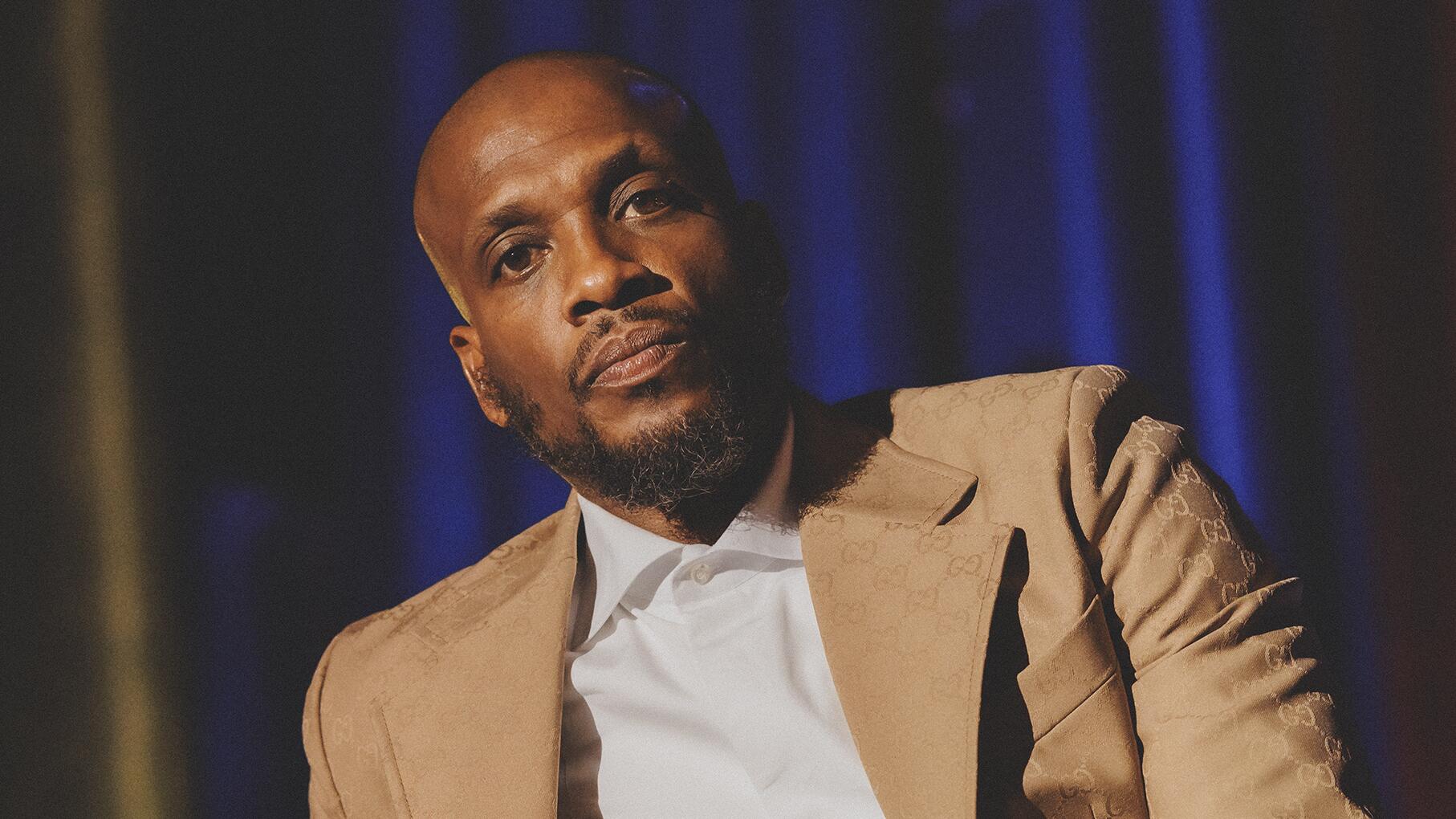
As a kid in Houston, comic Ali Siddiq’s father was largely absent. But there’s one parenting moment that Siddiq tells onstage with great detail. Ten-year-old Siddiq had a sore tooth, and his dad pulled a Cool Whip tub from the fridge — where he stashed his cocaine — and applied some to his son’s tooth.
“My dad was insane,” Siddiq laughs. When he first told the story onstage, his father was in the audience. “[After] he was like, ‘I can’t believe you remember that!’”
He wasn’t a perfect father — and yet Siddiq always admired him. He pays homage to his dad, who died in 2018, in his new special, My Father.
It’s the latest in more than a dozen specials Siddiq has released on YouTube. He remembers that his dad would watch all of his shows on a computer in the library: “And [he] would call and tell me, … ‘I watched about 10, 15 times.’ So I’m always missing those 10 or 15 views that I know that I would get from him,” Siddiq says.
For Siddiq, who served six years in a Texas prison for selling drugs before turning his life around, comedy and storytelling have always been a source of healing.
“I think that’s the biggest part of it, that I take the stories and me reliving them in front of people or revisiting them in front of people is a lot healing,” he says.
Interview highlights
On the regret he feels about selling drugs
I remember I was in San Francisco, the homeless population is so crazy. … And I just stopped in the streets and I just started sobbing. And I remembered saying, “How much of this is my fault?” Because I have been so destructive and reckless in my behavior. Obviously this is not the first generation. This is the generation that was affected by the first generation of what I did. Like, you can’t conceive the magnitude of destruction that you do when you sell drugs in a community. It’s people doing things that they would probably never do in order [to get drugs]. [It’s] ruining relationships. What child didn’t get fed because their mom or their father decided to do this? What uncle or aunt stole something … like, what did I do?
On the fact that he still remembers his inmate number, or “spin” number as he calls it
I think that these psychological wounds are different than my physical wounds. My physical wounds start to fade. Why haven’t these wounds faded yet?
Ali Siddiq
You do not get out of this situation unscathed. You may have survived it, but you still have wounds. I’ve been out 29 years at this point. Even if I’m at home by myself, I’ma lock the bedroom door [and] I still know this number. … You may survive, but you don’t get out unscathed. You gonna lose some skin in this game. And I think that these psychological wounds are different than my physical wounds. My physical wounds start to fade. Why haven’t these wounds faded yet?
On how his imprisonment impacted his family
My mom, even though she wasn’t physically there, she’s there in mind. Like, when you’re inside, your sister is concerned, your mother is concerned. Your dad is concerned your grandmother is concerned. It is all of these people that’s concerned about you because you’re in a position of danger. You’re in a dangerous place and there’s no guarantee that you will make it out of this place.
On getting his start in standup
When I started doing standup, I actually didn’t even know how to even start. … I literally started from a place of zero. Like I had zero information on how to become a comic, zero information of where to go. … I was at scratch. … I remember when I first got my first payment, it was $35 and it was in like fives and ones. And I thought it was a lot of money. I was like, boy, I came up.
On raising his own son differently than he was raised
I love the way that he lives. I applaud him and I just hope that he comes out on the other side and loves being a kid and then gives his children the opportunity to be a kid, and always have a softness for me. I need somebody to roll me around when I get old. So hopefully, hopefully he’s there taking me to go eat oysters and asking me, Do I want to go to a Boney James concert? or something. I just love him. I just love the softness of his life.
Lauren Krenzel and Susan Nyakundi produced and edited this interview for broadcast. Bridget Bentz, Molly Seavy-Nesper and Luis Clemens adapted it for the web.
Transcript:
TONYA MOSLEY, HOST:
This is FRESH AIR. I’m Tonya Mosley. And my guest today is Ali Siddiq. He’s a comedian, but that word undersells it. What he really does is tell stories – true ones – from his own life. And he’s told so many of them that while watching his specials, I realized Siddiq is giving us a memoir, delivered one set at a time. For instance, a few years back, he went viral with the story about surviving a prison riot. Siddiq served six years for cocaine trafficking, arrested four days after his 19th birthday. He started doing stand-up after he got out, and nearly 30 years later, he’s got more than a dozen specials, most of them independent on YouTube with millions of views. In his 2022 series, “Domino Effect,” he traces his life growing up in Houston, starting at 10 – the year he went to live with his father and first got into trouble – all the way through the choices that landed him in prison. This month, he has a new special called “My Father.” It’s about everything that passed between Siddiq and his dad before his father died in 2018. It premieres on YouTube June 21. Here’s a clip.
(SOUNDBITE OF COMEDY SPECIAL, “MY FATHER”)
ALI SIDDIQ: My dad had a thing about how he dressed. My dad always wore tailor-made suits. This is when he was on his note (ph), ’cause he was a – there’s not a lot of men can say how they felt about their pops. I really wanted to look like this man. He was tall, dark, jet Black, had a lot of charisma about himself. But he just wasn’t an ideal…
(LAUGHTER)
SIDDIQ: …Father. My dad asked me one time. I’m sitting at his house, and my daddy said, man, why you don’t never say nothing bad about your mama on stage?
(LAUGHTER)
MOSLEY: Ali Siddiq, welcome to FRESH AIR.
SIDDIQ: (Laughter) Thank you. Thank you for having me.
MOSLEY: Man, your timing is great. And I was thinking when I was watching this that there is really nothing like remembering something funny about somebody after they’re gone. It’s, like, the truest way, the most purest way to grieve them. But I was just wondering watching this, if your dad felt some kind of way about being in your act, what do you think he’d say about you doing this entire special about him?
SIDDIQ: He never actually felt any type of way about being in my act. He just wanted to know when I was going to say something negative about somebody else and not just him. So…
(LAUGHTER)
SIDDIQ: You know, I get a lot of views, but it’s definitely 10 views, 15 views that I miss ’cause my dad would go to the library, and he would look me up on the computer and watch all of my stuff. And he would call and tell me, I just seen something else. I watched it about 15 – 10, 15 times. So I’m always missing those 10 or 15 views that I know I – that I would get from him.
MOSLEY: You say straight up, I’m a responsible man because of my mother, but I’m a good man…
SIDDIQ: Yes.
MOSLEY: …Because of my daddy. Explain that.
SIDDIQ: My mom, she would think that it was her, but it’s really him because for some time, I felt a certain type of way about him not being there or the things that I would see from other people’s, you know, fathers or what I view from TV. I was judging him based upon that and what I thought. And I had certain feelings towards him. And I didn’t want my kids to ever feel like that about me. I didn’t – I don’t want my kids to think that anything else was more important than them – not being in the streets, not women, not gambling, not hustling, not anything. I didn’t want them to ever think that anything that I was doing was more important than them. And my father made me at times feel unimportant to him.
You know, I played sports. He went to one game. Out of all the sports that I played, he went to one game. You know, he came to one basketball game. You know, I don’t remember ever doing anything father and son with my dad. So that’s another thing. I just knew becoming a father, I would never be like that. Like, my kids are going to see me actively at their games or at their recitals or at their – whatever they may be doing, I’m going to actively be there. If – you know, if you need something, I want you to be able to call me. So I’ve always made myself available for that type of effort that I was making. I always made myself available for them, so they would never feel a type of way towards me, like I felt for my father for a couple of years – well, more than a couple of years.
MOSLEY: Your daddy, he left when you were 3, but you’d see him every blue moon. But then around 10, he comes back into your life. You went to live with him.
SIDDIQ: Yes.
MOSLEY: And it seems like he was very much do as I say, not as I do. When did you first understand that contradiction?
SIDDIQ: Oh, man. Probably the first year I lived with him (laughter). Like, yo, my dad was – like I say, I don’t think he was ready. I don’t think he was ready to have his son with him. I think that he was…
MOSLEY: But yet he asked for you to live with him, right?
SIDDIQ: He asked, but I don’t think he was ready. You know, people ask for a lot of things they’re not ready for. So…
(LAUGHTER)
SIDDIQ: And then, like – not a human, though. I didn’t think a human was a part of that, but he definitely wasn’t ready yet, you know, ’cause he couldn’t have been. Like, when I look back at it, I’m like, yo, bruh, you – there’s no way that you was ready for me to come live with you ’cause you hadn’t calmed down yet, you know? Just the story of him waking me up, saying that he was getting ready to go to San Antonio, and I’m 10. I got to go to school tomorrow. I’m like, yo, bruh, like…
(LAUGHTER)
SIDDIQ: I was like, what’d you think – what am I supposed to do that you finna go to San Antonio? He said, just do what you been doing. Get yourself up. Get ready to go to school.
MOSLEY: (Laughter).
SIDDIQ: You know how to – hey, bruh, that’s not how this go, man. I’ve never been in a house by myself before (laughter). Like, what’s wrong with you?
MOSLEY: Ali, I mean, is it true that – OK. You tell this story about him putting cocaine on a sore wisdom tooth. And I was wondering, is this true, or is this just for laughter?
SIDDIQ: No, 100% true – 100% true. That’s why I described it so vividly. See, that’s the thing about when I tell a story – I want people to understand. I describe all the even little things so people understand it. This is a true story ’cause you can’t – it’s hard to make up little things. You know, you can make up big things, but little intricate details about something, like, you know who was there – James (ph) and Ivory (ph). And James was the one that saw me sitting on the step. And he was like, what’s up? ‘Cause my dad’s name is Limbird (ph), and he called me little bird. Little bird, what’s going on? And I said – I told him about my tooth. And then my daddy called me over and said, let me see, and put that cocaine on my tooth. I said, this man.
MOSLEY: (Laughter).
SIDDIQ: I didn’t even know that’s what it was or – I just know it was the stuff that was in the Cool Whip tub that was in the refrigerator.
MOSLEY: Wait. He kept the cocaine in a Cool Whip tub in the refrigerator.
SIDDIQ: In – yeah, the big Cool Whip thing. You know how Cool Whips come in that little container – that big container?
MOSLEY: Oh, yeah.
SIDDIQ: He kept it.
MOSLEY: And you reuse them.
SIDDIQ: Yeah. And he put it in – that’s where the cocaine was at – inside the refrigerator. And then as I thought about that earlier, like, I told the story, and I never even realized how super irresponsible he was. I am 10. You don’t think I like Cool Whip?
(LAUGHTER)
MOSLEY: The things that could’ve happened, you know? Like…
SIDDIQ: The things that could’ve happened. If I would’ve dipped the – ’cause he always had strawberries. My dad loves strawberries, right? So he always had strawberries in the house. And I was like, yo – what I thought about, if I would’ve just took one of those strawberries and put it in that Cool Whip bowl thinking it was Cool Whip, because I still would’ve ate it even though I would’ve thought the Cool Whip was bad. I’m like, oh, the Cool – it’s fizzing out. And then I’m like, that’s what it would’ve looked like to me. I said, he was so, so irresponsible. It’s crazy.
MOSLEY: OK, he dips a little cocaine on that sore wisdom tooth. What happened to you?
SIDDIQ: Never had a problem with that wisdom tooth again (laughter).
MOSLEY: Never even needed to have it taken out?
SIDDIQ: Never. I probably still got that tooth in my mouth right now.
MOSLEY: (Laughter).
SIDDIQ: I never had a problem. I don’t even remember getting my wisdom teeth taken out ever. Luckily, I never – I don’t have an addictive personality. I can just stop doing stuff. Like, hopefully, that was it because my dad was insane. And I had told that story before, before I ever – before it ever aired on anything. And I remember he was at the show when I did it. And he was like, I can’t believe you remember that.
MOSLEY: Do you feel like you’re working out that relationship onstage? I mean, I think the obvious is yes. But, like, how are you working it out? What is it doing for you, aside from just making us laugh?
SIDDIQ: I think that with the relationship with him or the relationship with my little sister or my things that I had problems with as a young person, I don’t hold onto things. I release them. The ups and downs of me and my dad are really molding of me. And it’s also healing for me to be able to say these stories. So I think that’s the biggest part of it, that I take the stories and me reliving them in front of people, or revisit them in front of people is a – I can’t even say a bit healing. It’s a lot healing. It’s a lot of healing that goes on with me with that.
MOSLEY: I want to ask you about something that you do onstage that is – feels like maybe like a centering. You know, most comics, when they go onstage, like, everybody does it different. But most of them, like, kind of come out swinging. They, like, run or walk in or they, like, take in the applause. You sit in a chair, you wait for the crowd to die down, and then you always start with, hey. Tell me what you’re doing with that.
SIDDIQ: I’m paying homage to the first time I was ever onstage. First time. So I went to this comedy club. Just Joking Comedy Cafe is where I started at in 1997, December 4. It was the first time I was ever onstage. I walked onstage, and I said, hey, and the whole entire crowd booed me. I didn’t even say nothing but hey, no jokes, no nothing. And this is because I started at Apollo night. And they were instructed to boo the next person that was coming onstage.
MOSLEY: Yeah.
SIDDIQ: So I happened to be the next person. So I waited two weeks. I came back to Just Joking Comedy Cafe after two weeks. Brought me up. I did well. They brought me – I came – and then I started coming every week. And then by February – I started in December. By February, I was the cohost of that Apollo night. And I always start with hey.
MOSLEY: Why do you think you need to be reminded of that particular night 30 years later?
SIDDIQ: Yeah, to understand that I had – I made the right decision when I first went up. I wasn’t in the wrong for saying, hey. It’s a lot of things that keep me grounded in this business. I’m never too up, and I’m never too down. I’m always even keel. And the attention that I didn’t get the first time I said hey is what people wait on now. When I say hey, the whole entire audience say hey back.
MOSLEY: If you’re just joining us, my guest today is comedian Ali Siddiq. His new comedy special is called “My Father.” We’ll be right back. This is FRESH AIR.
(SOUNDBITE OF THE ROOTS SONG, “PROCEED IV (A.J. SHINE MIX)”)
MOSLEY: This is FRESH AIR. And today, we’re talking with comedian Ali Siddiq. He’s released more than a dozen specials independently on YouTube, where they’ve drawn tens of millions of views. His new one, “My Father,” is about the man he spent his life trying to understand and everything between them before his father died in 2018.
Let’s go back to young Ali Siddiq, before the comedy. You are 14 years old. You start selling drugs. You like to joke onstage, you say, I was a pharmaceutical sales rep.
SIDDIQ: (Laughter).
MOSLEY: By the time, though, that the feds got you, you were 19. You were in college at Texas Southern University. And this is the ironic part. You were actually planning to stop selling drugs when you were caught. How close were you to quitting?
SIDDIQ: I had stopped, actually. I was done. I was wrapped up. And I got a phone call to come help, assist, you know? And I went out of me feeling obligated to – OK, you know, I’ll hold your bag. But I was done. It had become like, man, what am I doing? You know?
MOSLEY: ‘Cause you started in the first place because you wanted money. You wanted to – you wanted your own money.
SIDDIQ: Yeah. And I think I fight so hard now to explain that it was a character flaw. It was, like, no manhood or responsibility in that because I could’ve just worked for money. You know, I could’ve just did something else. I could’ve – it’s so many things that I could have done versus being so destructive to a community. And I remember being asked, Ali, when do you think that you’re going to blow up? And my honest answer was, when I pay back the – I got to – I owe this world something.
MOSLEY: Because you sold drugs, like, you owe…
SIDDIQ: Yeah.
MOSLEY: You owe back because of that harm you did. That’s interesting.
SIDDIQ: When I pay back society for the destruction. And I think that when you are a person that has really done things, and you have really changed your life and you think back on these things, you can’t help but to have a heavy heart.
I remember I was in San Francisco. The homeless population is so crazy. And I’m at this Comedy Central festival. It’s a comedy festival, and I’m walking from my hotel to the festival. And I’m there for days, and I keep trying to find different ways to get there not to run into homeless people. And I then walked five blocks down, 10 blocks down, 10 blocks this way. I walked every which way and couldn’t. And I remember it was in the morning, and I was on my way to prayer. And I just stopped in the streets, and I just started sobbing. And I remember saying, how much of this is my fault because I have been so destructive and reckless in my behavior? I just don’t understand.
Like, obviously, this is not the first generation. This is the generation that was affected by the first generation of what I did. Like, you can’t conceive the magnitude of destruction that you do when you sell drugs in a community. You know, there’s people doing things that they would probably never do in order – that’s ruined their relationships. That’s – what child didn’t get fed because they mom or they father decided to do this? And what uncle or aunt stole something? Like, what did I do?
MOSLEY: Did you and your dad ever talk about this, that – ’cause, you know, I mean, he sold drugs, and then you went on to sell drugs.
SIDDIQ: We never talked about it because my dad ended up using drugs. That was the lick that society took back. I remember a story that I told about some young guys. I come on the block, and they had told me they robbed these old guys. And I looked at the stuff that they had, and I made them put it in a bag because I recognized the stuff. And then I went and took my dad and his friend his stuff back. And I said, man, what were you doing over there? And my dad blamed it on his friend, told me, I’m over there with him. He got me robbed.
And my mom – I told my mom about it later, and my mom said he was probably using drugs. And I said, no, he told me he wasn’t using no drugs. And that’s when she told me, why they put your daddy in rehab twice since we’ve been apart (laughter)? And so I went back and told him. I said, hey, I thought you said you weren’t using drugs. And my – and he said, who told you that? Your mama? Man, your mama – (laughter) your mama violating my HIPAA rights. I’m just – this man is nuts. Like, he’s so – even when he’s doing something crazy, he’s still funny. He’s so crazy.
So the – unfortunately, the rumor around where my dad has gone is an overdose. And I don’t believe that. I think that that’s what people wanted to say. But I don’t not believe it either.
MOSLEY: The rumor that he died because of an overdose?
SIDDIQ: Yeah. Yeah, ’cause he had a heart attack. And I know he hadn’t been.
MOSLEY: Using?
SIDDIQ: So if you hadn’t been doing something, and then you decide, I’m going to do it one time, you know, you don’t know what your heart can take on that. So my dad just had a heart attack out of nowhere.
MOSLEY: Our guest today is comedian Ali Siddiq. We’ll be right back after a short break. I’m Tonya Mosley, and this is FRESH AIR.
(SOUNDBITE OF ADRIAN YOUNGE AND ALI SHAHEED MUHAMMAD’S “BETTER ENDEAVOR”)
MOSLEY: This is FRESH AIR. I’m Tonya Mosley, and my guest today is comedian Ali Siddiq. His new stand-up special, “My Father,” explores his relationship with his dad, who died in 2018. Siddiq has released more than a dozen specials on YouTube, including two filmed inside of jails. He himself was arrested at 19 for selling cocaine and served six years of a 15-year sentence. Part of his work includes talking with prisoners about accountability and the realities of recidivism. This past spring, he released “Ali Siddiq: From Inside,” shot in a county jail in Charlotte, North Carolina, where he talks to inmates for almost two hours straight about the experiences of being locked up and its lasting psychological effects. Here he recalls his inmate number, which he calls a spin number.
(SOUNDBITE OF YOUTUBE VIDEO, “ALI SIDDIQ: FROM INSIDE (A CONVERSATION WITH INMATES)”)
SIDDIQ: Ask the old heads. They’ve been there before. Ask them, do they remember they original spin number? This the [expletive] that haunts me. I’ve been out for 25 years, almost 26 years – 67-93-46. I can’t forget this number. It’s ingrained in my head like my Social Security number.
UNIDENTIFIED PERSON: S***, that’s your name.
SIDDIQ: It’s my slavery number – 67-93-46.
MOSLEY: That’s my guest, Ali Siddiq, in his YouTube special “From Inside (A Conversation With Inmates).” And what goes on to happen after you rattle off your number? The guys start blurting out their numbers, too. What does it signify that you can remember your spin number 30 years after you’re out of prison?
SIDDIQ: That you did not get out of this situation unscathed. You may have survived it, but you still have wounds. I’ve been out 29 years at this point. Even if I’m at home by myself, I’ma lock the bedroom door. I still know this number. So it’s still things that you may survive, but you don’t get out unscathed. You’re going to lose some skin in this game. And I think that these psychological wounds are different than my physical wounds. My physical wounds start to fade. Why haven’t these wounds faded yet?
MOSLEY: There was this powerful thing you said during that talk with those inmates that also is kind of sticking with me. You were saying, when you get locked up, your people get locked up, too. And I wanted you to explain what you meant by that.
SIDDIQ: My mom, even though she wasn’t physically there, she’s there in mind. Like, it was in those days that my mother didn’t think about me. When you’re inside, your sister is concerned. Your mother is concerned. Your dad is concerned. Your grandmother’s concerned. It is all of these people that’s concerned about you because you’re in a position of danger. You’re in a dangerous place, and there’s no guarantee that you will make it out of this place. There’s no – you can get a year. Doesn’t mean that you’re coming home. You can get two years. Does not mean that you’re coming home. Nothing about this place says, I’m going to survive.
MOSLEY: I want to know about – I think you call it your sarcastic nature ’cause it’s not like you started doing comedy in prison, but you did find that your humor could serve you well there. And I wonder what ways you used your sarcastic nature in comments when you were locked up.
SIDDIQ: Because I was such a violent person from the beginning – the first two years, I was insane. Like, I was literally a madman.
MOSLEY: Why? ‘Cause were you like that out of prison, before you got there?
SIDDIQ: Yeah. I’m in the streets.
MOSLEY: Yeah.
SIDDIQ: It’s what happens in the streets, you know? And I’m still hurt from my sister. I’m a very heartless person. It just…
MOSLEY: Hurt from her passing.
SIDDIQ: Yeah, and things that I never revealed to people that – four months later, that my first son passed as well. So I never – I’m dealing with a lot of pain at this time. And so my whole thing was to administer pain towards people who just was in my way. You just in my way, you know. And I’m inviting this type of behavior. Like, it’s like, hey, bruh, this – all this is going to be bad for you, you know.
So then, you know, I got told – and it’s always an older wise person that comes to you and say – that really care about you, you know, just letting you know how life goes or see something in you. Hey, man, you keep doing your time like this, somebody going to kill you. And they’re going to kill you because they scared of you. They don’t know what you’re going to do, so they’re going to kill you. They’re going to set you up. Whether it’s a group or whether it’s one person, they’re going to kill you. So you might want to do your time a little different. And plus, you’re better than this. Like, you can really be a different type of person, and you can get out of here. You know, you’re not here forever. You know, but I’m doing my 15 years. Like, I’m doing 15 years. Like, I’m not thinking about parole or nothing.
MOSLEY: Getting out early.
SIDDIQ: I’m doing the whole 15 years.
MOSLEY: Yeah.
SIDDIQ: Yeah. So then I became this jovially sarcastic person about everything. Like, anything that the person was going to do that was going to get them in trouble, I was going to say something about. (Laughter) And I remember this dude was about to do something, and I said, I thought you said that you didn’t steal that stuff, like, that you was innocent, ’cause you’re doing really guilty behavior. I’ll be so sarcastic. And I remember – this is one of my classic sayings – that I was like, I guess I’m the only one in here guilty ’cause it seem like everybody else innocent.
(LAUGHTER)
SIDDIQ: Like, they’re like, this is a part of – no accountability. Man, y’all don’t have no accountability for nothing. And so – and if people was about to fight, I would just – I would always say something like, oh, y’all about to fight? Wow. That’s interesting. You do know somebody going to lose this fight twice? And they’re like, what you talking about? I said, well, one of y’all going to win, and then the CO’s going to come in here and beat both of y’all.
(LAUGHTER)
SIDDIQ: Like, somebody got to be willing to lose this fight twice. Like, y’all got to make a decision. And I would say so much sarcastically jovial things that they were like, man, he always got something to say. Like, yes, I do.
MOSLEY: I read that, you know, as you’re doing your time, that’s when you started to think, when I get out of here, I could probably have my hand in comedy. And I was wondering, were there people that you were also, like, watching or studying or thinking about as you were thinking about what type of comic you wanted to be?
SIDDIQ: Not at all. When I started doing stand-up, I actually didn’t even know how to even start. It’s like, when I think about this journey, I literally started from a place of zero. Like, I had zero information on how to become a comic, zero information on where to go. Zero, like, I was at scratch. And so when I think about – like, I don’t ever not feel successful because I’m like, yo, I did what I said I was going to do when I got out. I was going to become a comic, not knowing how to do it.
MOSLEY: When you get out of prison, though, how do you make that leap to, like, truly making this a profession? What was your first stop?
SIDDIQ: Whew, Just Joking Comedy Cafe. You know, just – I learned a lot there. And I remember when I first got my first payment, it was $35. And it was in, like, fives and ones. And I thought it was a lot of money. I was like, boy, I came up. And…
MOSLEY: (Laughter) And the comedy cafe is in Houston. It’s a place in Houston.
SIDDIQ: It was. It was on Richmond. And then I went through this dilemma of people now saying that you’re not a real comic because you don’t do it for a living. And I remember asking Bruce Bruce about it. I said, man…
MOSLEY: Who is that?
SIDDIQ: Bruce Bruce, he’s a comedian, another comic. I asked Bruce Bruce, I said, hey, man, are you – this is when he was the host of ComicView. And I asked him, hey, people say that you’re not a real comic unless you doing it for full-time, for a living. And he said, man, let me give you some advice, brother. I worked for Frito-Lay – you know what I’m saying? – until my comedy started making more money for me consistently than my job. And once that happened, then I quit my job. He said, don’t quit your job until your career start making more money consistently than your job. And I remember…
MOSLEY: And what were you doing? Like, what was your job?
SIDDIQ: I was selling clothing. I was working in a men’s apparel store, you know, in the mall. And I worked at Sunglass Hut. You know, I used to be a street pharmaceutical rep. Then I went to being a sales rep. Ain’t that something?
(LAUGHTER)
MOSLEY: Did it take the same amount of skill, like, the selling drugs to selling…
SIDDIQ: The same amount of skill. The same thing – hey, I need to find somebody who addicted to suits and shades.
MOSLEY: (Laughter).
SIDDIQ: You know what I’m saying? So (laughter) to make my commission.
MOSLEY: If you’re just joining us, my guest is comedian and storyteller Ali Siddiq. His new stand-up special is called “My Father,” and it’s about his relationship with his dad. It premieres on YouTube June 21. We’ll be right back after a break. This is FRESH AIR.
(SOUNDBITE OF CLARK TERRY AND RED MITCHELL’S “SWINGIN’ THE BLUES”)
MOSLEY: This is FRESH AIR, and today we’re talking with comedian Ali Siddiq. He’s released more than a dozen specials independently on YouTube, where they’ve drawn tens of millions of views. His new one, “My Father,” is about the man he spent his life trying to understand and everything between them before his father died in 2018.
I want to talk to you briefly about parenthood, about you being a father. You were telling me earlier that you just want to not make the same mistakes that your dad made with your children. And, I mean, you joke about this a lot. But your kids are getting a very different father than you got, which I actually want to play a clip from your latest special where you talk about taking your son, Hassan, to a concert, to the elements, Earth, Wind & Fire, when he’s 11. Let’s listen.
(SOUNDBITE OF COMEDY SPECIAL, “MY FATHER”)
SIDDIQ: I know that I am a better father than my father was – and I’m supposed to be, I’m supposed to be – just by my son’s first concert and my first concert with my father.
(LAUGHTER)
SIDDIQ: My son, Hassan, he’s 11. His first concert was Earth, Wind & Fire. And he asked to go. He asked to go. My son came in to me and said, father…
(LAUGHTER)
SIDDIQ: …Because he’s very upper crust. He said, I would like to attend a concert. I said, Hassan, what concert would you like to attend? He said, I would like to go see the Elements.
(LAUGHTER)
SIDDIQ: And I teared up. I teared up.
(LAUGHTER)
SIDDIQ: My son want to go see the Elements. And I said, wait, who are the Elements, Hassan? Is it some little, white internet group that you been listening to?
(LAUGHTER)
SIDDIQ: Hassan said, no, father. They’re formerly known as Earth, Wind & Fire. I immediately ran and got them tickets.
(LAUGHTER)
SIDDIQ: I wanted to get them tickets for me and my son. Me and my son going to see Earth, Wind & Fire. He is 11. He’s 11 years old when we went to his first concert. Me and him, we’re going. We get to the concert. Hassan is the youngest person in this whole entire concert.
(LAUGHTER)
SIDDIQ: And I know that for facts because I am the second youngest person.
(LAUGHTER)
MOSLEY: That was my guest today in his latest special, “My Father.” And, Ali, that whole special, you marveling at your bougie kid, you know, you have built a soft life for him on purpose. But I wonder this, because, I mean, as a parent who also grew up a certain way, do you ever look at your son and worry that the thing that made you, some of the positive things, you know, not all that challenging stuff you went through, but, like, the positive stuff might also be the thing, like, you’re keeping from him, too.
SIDDIQ: I – no, I don’t. I think that the softness of his life now, I hope that he continues to desire that. And, you know, he goes through his own certain struggles, you know, ’cause there’s a certain struggle that happens in softness as well. But, you know, whether he want oysters or crab, you know, it’s a dilemma for him. So he…
(LAUGHTER)
SIDDIQ: He got the – you know, choices, choices. But yeah, he – I love how he’s living. I love the way that he lives. I applaud him, and I just hope that, you know, he comes out on the other side and always is like this and loves being a kid and then gives his children the opportunity to be a kid and always have a softness for me. I need somebody to roll me around when I get old. So hopefully, he’s there, you know, taking me to go eat oysters and, you know, asking me, do I want to go to a Boney James concert or something. I, you know, just…
MOSLEY: (Laughter).
SIDDIQ: I just love him. I just love the softness of his life.
MOSLEY: All right. You are a Houston boy, born and bred. Do you feel like you might have ever missed out or lost out or it taken you longer than maybe it would have if you hadn’t moved to a place like LA and New York? And, you know, you could’ve taken your kids with you.
SIDDIQ: I don’t think that that’s a thing. I think that there’s no opportunity that has been lost. You know, it’s only all gain. And there’s a certain protection of being in your home spaces. You know, my mom’s from – I have – what? – maybe 40 relatives in California. But who’s to say I was going to go to California and make something of myself? ‘Cause multiple comics have done that as well and never, you know, arrived, in their perspective. You know, same in New York. Same in Atlanta. You know, I think that what makes me unique is being home.
MOSLEY: Oh, this has been such a pleasure, Ali. And thank you so much, and best wishes as you continue on your tour. Are there particular cities that you love the most? You know, you’re a Houston boy. So are there other places throughout the country where it’s like, oh, yeah, they get me – it feels like a homecoming?
SIDDIQ: Oh, so many places – Chicago, D.C., Baltimore, Detroit, New York, Atlanta, Philadelphia, Appalachias (ph). There’s too many places to even name. I’m so connected to the Earth that when I’m – when I come somewhere, all of it feel like home. That’s who’s coming, and that’s who I have a connection with. Now, what’s crazy is I don’t think that Corpus Christi gets me.
(LAUGHTER)
SIDDIQ: And it’s right down the street. Corpus Christi, Texas. It’s crazy. It’s right down the street. I don’t think Corpus really fool with me. They’re a fishing town. They’re like, is he talking about bass? Like…
(LAUGHTER)
MOSLEY: Ali Siddiq, it has been such a pleasure to talk with you. Thank you so much for this special and your time.
SIDDIQ: Pleasure is all mine. I thank you very, very much.
MOSLEY: Ali Siddiq’s new special is called “My Father.” It premieres on YouTube June 21. He’s also currently on his international Custom Fit stand-up tour. Coming up, film critic Justin Chang reviews “Toy Story 5,” opening in theaters this week. This is FRESH AIR.
(SOUNDBITE OF RAY CHARLES’ “DOODLIN’”)