Blog

  • What we know about an Iran deal

    What we know about an Iran deal

    Transcript:

    SCOTT DETROW, HOST:

    It’s CONSIDER THIS, where every day we go deep on one big news story. Today, what we know about an Iran deal. After months of war and deadlocked negotiations, President Donald Trump announced Sunday on social media he has struck a deal with Iran.

    (SOUNDBITE OF ARCHIVED RECORDING)

    PRESIDENT DONALD TRUMP: The Iran deal that we made is going to bring a lot of success to the world because the oil was really clogged up there for a while.

    DETROW: That was Trump speaking today in France ahead of the G7 summit. According to Trump and Iranian officials, the deal would open the Strait of Hormuz and end fighting on all fronts, including between Israel and Hezbollah in Lebanon. But Israel, the U.S. partner in this war, is not a party to this agreement, and Israeli officials have said that their forces in Lebanon are not going anywhere. Prime Minister Benjamin Netanyahu has yet to comment on the deal. Trump says a final agreement would limit Iran to enrich uranium for, quote, “nonmilitary purposes forever.”

    (SOUNDBITE OF ARCHIVED RECORDING)

    TRUMP: This is a very powerful document. It’s not like the Obama document, which was just a terrible document. This is a very powerful document, and I want it to be released. So probably pretty soon. I would say after – sometime after Friday.

    DETROW: CONSIDER THIS – Trump says the long-sought deal to end the U.S.-Israel war with Iran is imminent. But without Israel on board, will it actually stick?

    (SOUNDBITE OF MUSIC)

    DETROW: From NPR, I’m Scott Detrow.

    (SOUNDBITE OF MUSIC)

    DETROW: It’s CONSIDER THIS FROM NPR. The U.S. and Iran have reached an agreement that could end more than three months of war in Iran. But a day after the deal was announced, we still do not know what exactly is in it. We have called on two of our correspondents to break down what we know and what we don’t know. NPR’s Danielle Kurtzleben is here in Washington, and Greg Myre is in Tel Aviv. Greg, I’m going to start with you. This memorandum of understanding has not yet been released, but is there anything that we know about that that should be set into motion, and how soon?

    GREG MYRE, BYLINE: Yeah, Scott, there is. If this agreement works as planned, several important things could start happening quickly, anytime over the next couple days. The U.S. and Iran will end the sporadic attacks taking place despite a ceasefire. Iran and the U.S. will lift their dueling blockades of the Strait of Hormuz, reopening it to oil tankers. And Israel and Hezbollah fighting in Lebanon should stop. So these are all significant positive developments, but if you remember, these conditions existed before the war began, so it’s really just a return to the status quo. The hard stuff has been put off for negotiations over the next 60 days, and this includes the fate of Iran’s nuclear program. Again, remember, the U.S. and Iran were negotiating this issue in Switzerland back in February, and as it turns out, that’s where this new agreement is supposed to be formally signed on Friday.

    DETROW: OK. So, Danielle, Greg lays this out like a return to the way things were before the war began. So I’m curious how President Trump is portraying it.

    DANIELLE KURTZLEBEN, BYLINE: Well, he’s sure been making it sound like he’s done something unprecedented. In a social media post, he wrote, quote, “the leaders of the region have, for the first time, found a president who can help them achieve real peace.” But like Greg said, this is, in many ways, a return to the status quo. And let’s also remember more than 3,000 people in Iran have been killed in this war, along with 15 U.S. service members. So in short, Trump is, yeah, overstating this as a victory when it really appears to just be fixing some of the problems he created.

    But he’s also probably celebrating because he needed an off-ramp here. His approval plummeted amid this war, including his approval on the economy, which had been a strong point for him. Gas prices went up. Fertilizer prices went up. Inflation passed 4%, so he wanted out. And now, since this all was announced, yeah, oil prices have fallen and stocks went up, so Trump is likely happy, even if this memorandum isn’t the win he says it is.

    DETROW: OK. Greg, how is Iran responding to all of this?

    MYRE: Yeah, multiple Iranian officials have spoken out in support of this agreement. And the general tone is that this is positive for Iran, though they’re deeply suspicious of the U.S. when it comes to the upcoming negotiations. The Iranians are also offering a somewhat different interpretation on how parts of this agreement will work. Iran wants billions of dollars of its assets that have been frozen abroad. It wants U.S. and international sanctions lifted, and it wants this sooner rather than later. U.S. officials are stressing that this will be performance-based, that Iran will have to deliver on its part of the deal first before it gets money. Also, Iran’s foreign ministry suggested Iran could charge fees for ships going through the Strait of Hormuz, even as it opens up. Well, Trump is saying it will be toll-free.

    DETROW: Danielle, you were talking about the economic implications of this war. It’s been pretty unpopular in the U.S. from the beginning. I’m curious whether you think this deal offers Trump a way to move on, even if there end up being problems with Iran down the road.

    KURTZLEBEN: I mean, it really depends on what those problems are. In general, yeah, this gives him a way to move on in the sense that we’ll see gas and diesel prices drop, but it could be weeks or more until they’re even anywhere near pre-war levels. And then for those prices to trickle through to other goods, that could take some time as well. But let’s be real. Those prices are what many Americans care about. So will this ease Trump’s political problems? Yeah, maybe some. But there are more complicated questions that hover over all of this.

    For example, how long of a memory will Americans have for this time of high prices? And then if Trump doesn’t get what he wants on the nuclear front, does he look weak? Does this hurt his party in the midterms? And you really get the sense that the White House knows that the messaging is important here. Senior administration officials have done multiple calls where they’re really just pushing back against what they call misinformation and emphasizing what they are framing as the big wins, even while we still don’t know details.

    DETROW: OK. So, Greg, you’re talking to us from Tel Aviv, and this agreement actually does call for a second ceasefire, and that’s one between Israel and Hezbollah in Lebanon. Curious – is a truce likely to hold there?

    MYRE: Yeah, Scott, that really is a big question mark. Israeli troops are still all over southern Lebanon. Israel’s prime minister, Benjamin Netanyahu, said Israel will keep them there indefinitely. Now, Hezbollah supports the ceasefire but considers it a prelude to an Israeli withdrawal from Lebanon. So if these Israeli troops remain on Lebanese territory, this will keep the region very tense.

    And one other point we should emphasize – Netanyahu spoke this evening about the Iran war and said, quote, “this victory will endure for generations.” But that really goes the kind of – against the kind of assessment we’re hearing throughout Israeli society today, particularly politicians and political analysts. They’re saying overwhelmingly that this is a very bad deal outcome for Israel. For decades, Netanyahu has been the leading Israeli voice in opposing Iran. He wanted to topple its government and dismantle its nuclear program. He long sought a major military campaign against Iran. It finally happened in the past few months, and now it’s fallen far, far short of his goals.

    DETROW: Danielle, all of this is happening as President Trump’s in France for the G7 summit. Is he likely to find criticism there for launching this war or support for ending it?

    KURTZLEBEN: Well, we already saw a little general praise from French President Emmanuel Macron today. He called the deal important for addressing the nuclear issue, in his words. But of course, we still don’t know how that nuclear issue will shake out. It’s just possible that altogether, the leaders at the G7 are going to praise Trump even while they’re pretty frustrated with him. This war, after all, hurt their economies.

    Now, the U.K. and France have said they’ll take the lead on getting mines out of the strait. That apparently is being discussed this week. But zooming out, as my colleague Franco Ordoñez has reported, Trump’s repeated antagonism towards European countries regarding NATO, Greenland, tariffs, it’s really pushed those countries together and made them somewhat more willing to link arms and just disagree with the U.S. sometimes.

    DETROW: That is NPR’s Danielle Kurtzleben in Washington and Greg Myre in Tel Aviv. Thanks to you both.

    MYRE: Sure thing, Scott.

    (SOUNDBITE OF MUSIC)

    DETROW: This episode was produced by Kai McNamee with audio engineering by Ted Mebane. It was edited by James Hider, Rebekah Metzler, Sarah Handel, Courtney Dorning and Tinbete Ermyas. Our interim executive producer is Courtney Dorning.

    (SOUNDBITE OF MUSIC)

    DETROW: It’s CONSIDER THIS FROM NPR. I’m Scott Detrow.

  • As the U.S. turns 250, this historian has blunt advice: ‘America has to grow up’

    As the U.S. turns 250, this historian has blunt advice: ‘America has to grow up’

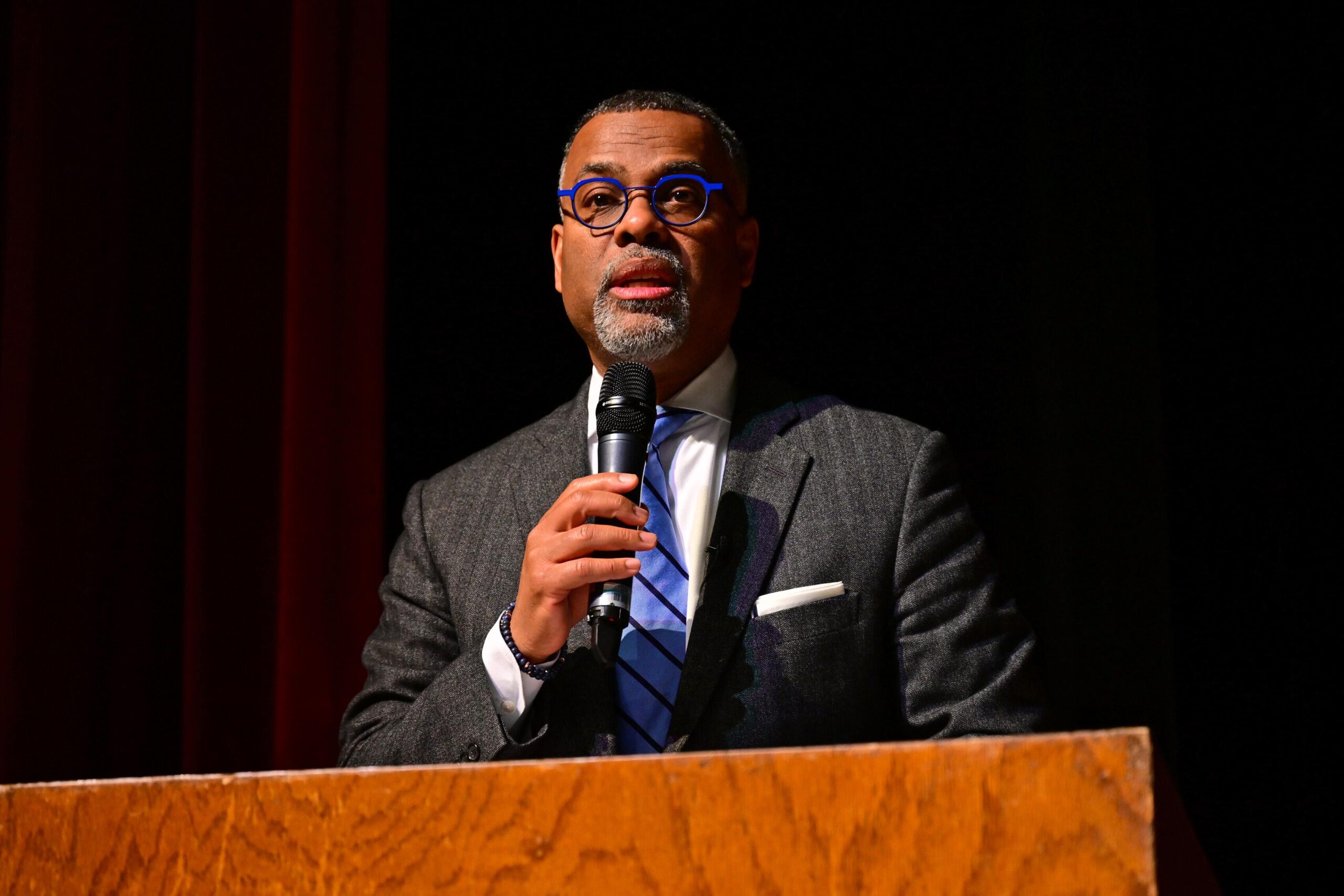
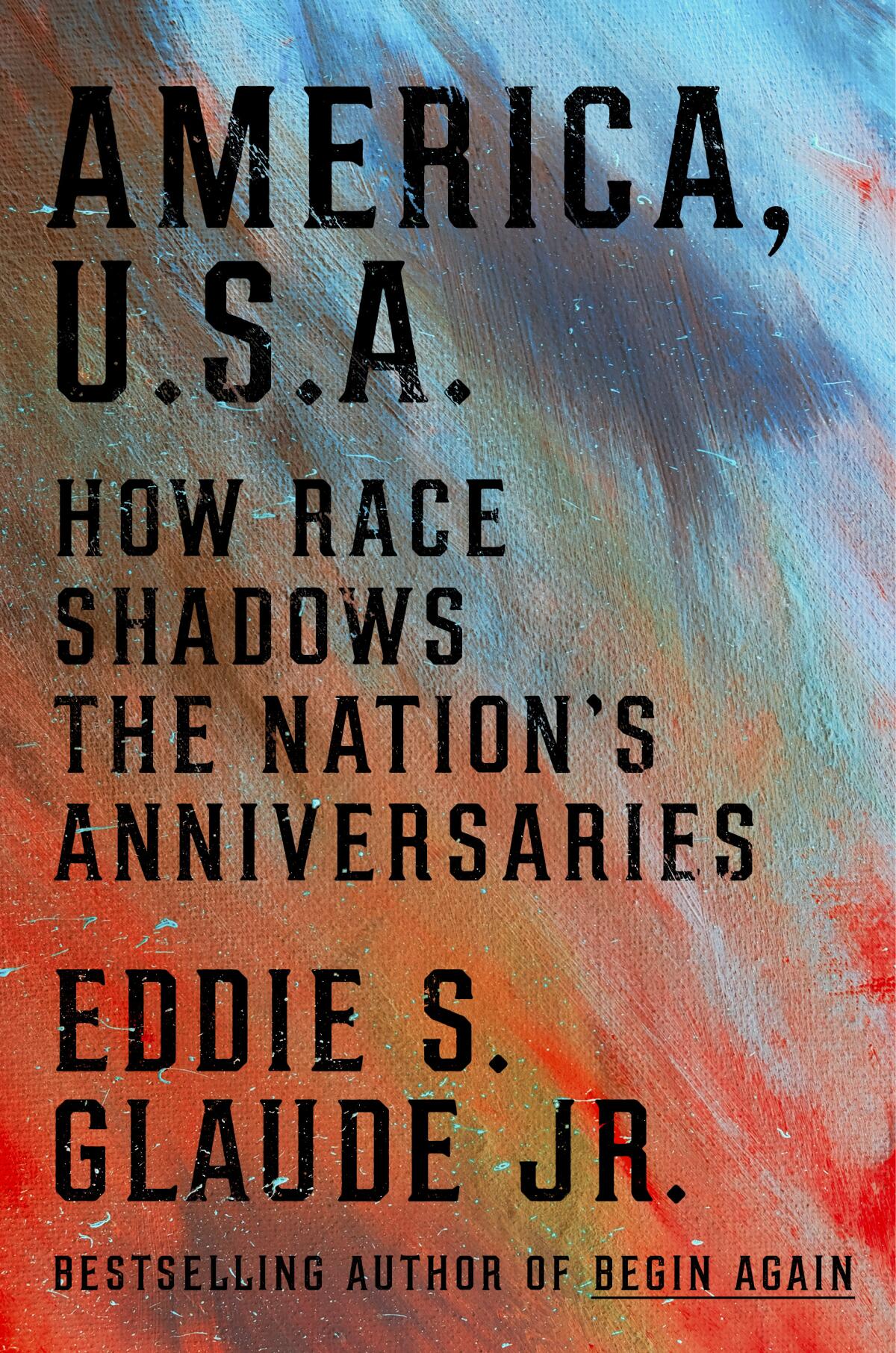
    As the United States prepares to celebrate its 250th anniversary, historian and Princeton professor Eddie Glaude Jr. says he’s feeling rageful. He opens his new book, America, U.S.A.: How Race Shadows the Nation’s Anniversaries, bluntly, with the declaration: “I do not love America, and never have, especially now.”

    Glaude points to the Supreme Court’s dismantling of the Voting Rights Act, and to redistricting efforts that threaten to limit Black representation in Congress.

    “What I was trying to do with this book was kind of write some security underneath my feet. So that I could actually get this rage under control, to get my sadness, my melancholy under control,” Glaude says.

    America, U.S.A. looks at the country through the lens of its previous anniversaries and centennials. Today, as in the past, Glaude says, “the divided soul of the nation is in full view.” As the 250th anniversary approaches, he says it’s past time for the country to acknowledge the ways it has failed to deliver on its founding principles:

    “America has to grow up. It can no longer hide in its adolescence,” he says. “America imagines itself at once as a beacon of freedom and as a white republic. And to hold those two things together … deposits the kind of madness at the heart of the country.”


    Interview highlights

    (Penguin Random House)

    On starting his book with the sentence: “I do not love America”

    I had written some version of the introduction and it didn’t land. I thought I was holding something back. … And so I returned to that first paragraph, and suddenly this sentence just came on the page. And I got up and I started walking around my study and I was afraid of what this would mean if I left it there. And then something inside of my head just simply said, “But this is what you have to say. You have to begin here and then you can explain.” So I left it.

    On the significance of the country’s anniversaries

    Each of these moments, the country has to tell a story about itself. It has to tell a story about its founding. And so here we are in the 250th and look at the kinds of the contours of the story — just don’t look at the UFC arena or the Great American Fair or the garden of statues of heroes. But they’re going to tell a story [about] the saintliness of the founders, a story about the sacredness of this grand experiment.

    On what patriotism means to him

    Sometimes patriotism, to my ear, sounds like a rebel yell.

    Eddie Glaude Jr.

    Sometimes patriotism, to my ear, sounds like a rebel yell. Those people who embrace the flag, who wrap themselves up in the piety of the country, are often, more than not, folk who think I should be in my place, folk who are behind the assault on voting rights, folk who want to deny the specificity of the experiences that shape how I see this place. So usually when I hear a robust, visceral embrace of love of country, you know, my head goes on a swivel. Who sang it, and for what ends and for what purposes?

    On a storybook version of America’s founding he was told during a 2024 tour of Philadelphia’s Congress Hall

    [The guide was] walking us through the House and then the Senate, and he’s telling us these stories and finally talks about the conflict. [He says] that they weren’t divided according to party but, you know, region and whatnot. And [he] said the biggest conflict is that they came from the South and the North. And I was like, OK, here we go. We’re going to start talking about slavery. And then he says they didn’t know how to shake hands. That was the example of the conflict between the congresspersons, that one would bow [and the other would shake]. And I was like, that’s it? And then I just saw ghosts. I saw ghosts all around Congress Hall. But it was an example for me of a startling example of the storybook version of the country.

    Anna Bauman and Susan Nyakundi produced and edited this interview for broadcast. Bridget Bentz and Meghan Sullivan adapted it for the web.

    Transcript:

    TONYA MOSLEY, HOST:

    This is FRESH AIR. I’m Tonya Mosley, and my guest today is Eddie Glaude Jr. He’s a professor at Princeton and a familiar voice on the country’s hardest conversations about race and democracy. He’s the author of “Begin Again,” lessons from the late James Baldwin, and “We Are The Leaders We’ve Been Looking For.” Those books look clearly at this country’s failures but still held onto something hopeful. But his latest book set sentimentality aside. It’s called “America, U.S.A.: How Race Shadows The Nation’s Anniversaries.” In it, Glaude takes us to the country’s big birthdays – 1876, 1926, 1976, and now the 250th – and shows us the same ritual each time.

    The nation throws itself a party and quietly edits out the parts of the story it cannot bear to face. He goes back to 1876, the centennial, with Frederick Douglass watching the promise of emancipation come undone. And he argues that what happened then is happening again now. It’s a book written in grief and rage – and underneath both, a stubborn kind of love of country. We spoke earlier this month in Seattle on stage at the Cascade PBS Ideas Festival, a daylong gathering of journalists and thinkers hosted by Seattle’s public media station. Here’s our conversation.

    (APPLAUSE)

    MOSLEY: I am so honored to be in conversation with you for so many reasons. I’ve had the pleasure of talking with you many times, our first time, though, in person with each other. And I think a great way to start is to actually have you read a passage from the book. Let’s start with the very first page.

    EDDIE GLAUDE JR: Sure. But before I started reading, I want to just say how honored I am to be in conversation with you. To have an opportunity to talk about this book in this moment with you is so meaningful to me. So here it is.

    (Reading) Bitterness at the bottom of the cup. I do not love America and never have, especially now. It seems to me misplaced or dangerous to love something so abstract and so morally dubious. Love is most often felt and experienced close to the ground, in the life lived in a particular place in time and in memories that take up resonance in the heart. I suspect love of country is shorthand for the heartfelt relationships and experiences that make us who we are, things that happen in the place we call home, no matter how complicated that place may be.

    (Reading) James Baldwin was right. Whoever is part of whatever civilization helplessly loves some aspects of it and some of the people in it. And I suppose that is why, in part, we are willing to risk our lives in defense of this place and of what it might become. But in America, those feelings and experiences have always been stained by the ugliness of what white people believe about color, that somehow or in some inscrutable way, the color of one’s skin determines your value. You end up spending much of your life trying to prove to others and to yourself, not because you are obsessed with white people, but because you want to live, that you are not an N-word.

    (Reading) Some Americans may believe that this view is a relic of a past that we have long left behind. After all, they might say, we elected a Black president and vice president. Look how far we’ve come. Stop complaining, I hear them say. You teach at Princeton University. You are not a victim. But I speak from the experience of a life lived in this country, and I trust what I know, what I’ve seen and what now sits in the pit of my stomach.

    (APPLAUSE)

    MOSLEY: When did that sentence – I do not love America – become true to you? When did you consciously realize that that was a truth for you?

    GLAUDE: I had written some version of the introduction. And it didn’t land. But I was holding something back. And so, you know, writing is mostly about revision. And so I returned to that first paragraph, and suddenly this sentence just came on the page. And I got up and I started walking around my study. And I was afraid of what this would mean if I left it there, and then almost as if, you know, something inside of my head just simply said, but this is what you have to say. You have to begin here, and then you can explain it. So I left it there. And I decided, you know, in this time, you have to be courageous and vulnerable and daring. And I…

    MOSLEY: And truthful.

    GLAUDE: Yeah, exactly.

    MOSLEY: One of the things that struck me from the very beginning of this book was that I realized I wasn’t reading from the same man who wrote “Begin Again,” because in “Begin Again, which is a previous book of yours, you use James Baldwin’s work to kind of beat back despair. And in this book in particular, I felt that optimism of a truth teller, of a freedom fighter, it was gone.

    GLAUDE: Yeah. Yeah.

    MOSLEY: Am I right in that feeling? In the same way that Langston Hughes, we felt in his later writings and in James Baldwin.

    GLAUDE: Yeah. So in so many ways, I’m arguing with Jimmy. You know, in “Notes Of A Native Son,” Baldwin says, you know, I love my country more than anything. And because of that love, I reserve the right to criticize it relentlessly, to paraphrase him. I never begin there. I didn’t begin there. Maybe it’s because I’m from Mississippi, you know?

    MOSLEY: Mm hmm.

    GLAUDE: But I’m rageful. There are moments when I’m battling depression because the country has done this again. At the end of “Begin Again,” I said, well, you know, we can – we have to make a choice, right? Will we do this or that? And we have a choice to put this moment behind us, and look what we did. And now people have to raise their children in the midst of this. They’ve gutted the Voting Rights Act. They’re redrawing districts. We’re in the midst of what could very well be described as a Second Redemption, a Second Lost Cause. And, you know, the last sentence of the book speaks that emotion. And so what I was trying to do with this book was kind of write some security underneath my feet – right? – so that I could actually get this rage under control, to get my sadness, my melancholia under control.

    MOSLEY: Why anniversaries as a way to look at this country’s relationship with race? You could have chosen court cases. You could have chosen lots of different ways. What is it about our nation’s anniversaries that allow us to see the problem so clearly?

    GLAUDE: So at each of these moments, the country has to tell a story about itself. It has to tell a story about its founding. And so here we are in the 250th, and look at the kinds of – the contours of the story. Just don’t look at the UFC arena.

    (LAUGHTER)

    GLAUDE: Or the Great American Fair, or the garden of statues of heroes. But they’re going to tell a story. It’s going to be a particular story. We’re the greatest nation in the history of the world. It’s going to be a story about the – you know, the saintliness of the founders, a story about the sacredness of this grand experiment. In each of these anniversaries, the nation has to tell a story about itself about its founding. And in each of these moments, Tonya, the country is struggling and grappling with its contradiction. In each of these moments, the divided soul of the nation is in full view. All right, Du Bois in 1903 wrote “The Souls Of Black Folk.” And in “The Souls Of Black Folk,” he says that Black folks see themselves through the eyes of those who despise them. This is what he called double consciousness.

    But I believe that double consciousness is actually a consequence of the double consciousness of the nation, that America imagines itself at once as a beacon of freedom and as a White republic. And to hold those two things together with – you can’t, really, without contradiction. And it deposits a kind of madness at the heart of the country. And we see it evidenced every single milestone anniversary, 1876, 1926, 1976 and by God, 250 years later, 2026.

    MOSLEY: If you’re just joining us, we’re listening to the conversation I had onstage with Eddie Glaude Jr. at the Cascade PBS Ideas Festival in Seattle. Glaude’s new book is “America, U.S.A.: How Race Shadows The Nation’s Anniversaries.” More of our conversation after a break. This is FRESH AIR.

    (SOUNDBITE OF CUONG VU AND PAT METHENY’S “SEEDS OF DOUBT”)

    MOSLEY: This is FRESH AIR. Let’s get back to my conversation with Eddie Glaude Jr., recorded at the Cascade PBS Ideas Festival in Seattle. Glaude is the James S McDonald, distinguished University professor of African American Studies at Princeton University. His new book is “America, U.S.A.: How Race Shadows The Nation’s Anniversaries.”

    I want to talk with you in particular about two moments, 1926, 1976. But I’m very curious about the title, “America,” comma, “U.S.A.” Why both of those in the title?

    GLAUDE: Yeah. You know, usually it’s not a comma. It’s a hyphen.

    MOSLEY: Yes.

    GLAUDE: The Italian American, the Irish American, you know, the Black American, African American. The hyphen gives us a sense of the kind of the idea of America best represented by Ellis Island, yes? We need to remind the Trump administration about Ellis Island, right?

    (LAUGHTER)

    GLAUDE: But the comma signals a break, not connection. And so, “America, U.S.A.” actually reflects the divided soul of the country. And so, part of what I’m doing is signifying on these attempts to tell the story of America and trying to capture in the title, by way of the comma, the divided soul, the double consciousness that haunts this place.

    MOSLEY: And you’re talking about the anniversaries and all of the pomp and circumstance. As I’m reading your book, don’t laugh at this, but that song, “God Bless The USA” – proud to be an American because at least I know I’m free. And as I’m reading the words in your book, for the first time, those words, at least I know I’m free, kept coming back up for me. And I wonder, what’s your relationship to patriotism overall, and to that idea of us holding such reverence and such pride in this myth and this idea of freedom being something that could be bestowed upon us?

    GLAUDE: Yeah. Patriotism. You know, the first sentence, what it’s trying to do is hold off idolatry, the idolatry of the state, right? Something so morally dubious and so abstract, right? And sometimes – and I’ll say this, and I wonder what you think about this, but sometimes patriotism to my ear sounds like a rebel yell.

    MOSLEY: Say more.

    GLAUDE: Those people who embrace the flag, who wrap themselves up in the piety of the country are often more than not folk who think I should be in my place, folk who are behind the assault on voting rights, folk who want to deny the specificity of the experience that shape how I see this place. So usually, when I hear a robust, visceral embrace of love of country, you know, my head goes on a swivel. Who’s saying it and for what ends and for what purposes, you see? We’ve always served as a kind of counter to the myth, to the illusion that this place is a beacon of freedom.

    MOSLEY: Us meaning Black folks?

    GLAUDE: Yes. Yes. John – just think about John Adams. This is an apocryphal story. But John Adams supposedly said to King George, we will not be your Negroes. At the very moment in which he’s giving voice to a notion of freedom, it’s based on an intimate understanding of unfreedom – us. In the early days of July Fourth, if we showed up to the July Fourth celebrations, like the July days of 1834 in New York, we would literally be physically attacked because our bodies represented the contradiction of what was being said.

    We have a counter calendar, what I call a counter, alternative, commemorative calendar around freedom. While the nation is celebrating itself as the embodiment of freedom, we are celebrating January 1. Why? Because January 1, 1808, was the day that they ended the transatlantic slave trade. We’re celebrating in August, West Indian Emancipation Day. Why? Because it’s the end of slavery.

    We celebrate the most important of all of those days in the early 19th century, is July 5. Douglass’ famous July 5, 1852, oration stands in the tradition. Why July 5? It’s the abolition of slavery in the state of New York. Juneteenth stands in that tradition, where we’re giving voice to a notion of freedom over and against a country that embraces the idea of freedom but doesn’t quite live it in practice.

    MOSLEY: I want to spend some real time on two of the anniversaries that sit on top of each other. So 1876 and 1976. So 1876 is where you note that racial justice starts to get treated as philanthropy.

    GLAUDE: Yeah.

    MOSLEY: It’s a gift that white people can extend and also withdraw, rather than something that is owed. Can you talk more about that and why this reframe of understanding this is so important as we read through your book and your ideas?

    GLAUDE: Yeah. Well, I’m trying to figure out this cycle. Why is it that we’re always returning to this? What’s going on? And one of the ways I’ve resolved it is that – or I haven’t resolved the cycle – of the way in which I describe it is, OK, if America imagines itself as a beacon of freedom and as a white republic and if you can’t hold those things without contradiction, how do you finesse it? Well, you finesse it by assuming that white people possess freedom to give and to take away. Oh, let me be clear now, before people get uncomfortable. When I say white people, I’m talking at a certain level of generality. This is my reading of James Baldwin. Baldwin will say, I happen to love – and I say this – I happen to love a lot of people who happen to be white, and then there are white people.

    (LAUGHTER)

    GLAUDE: The point is is that we’re all – we all bear the burden of racialization. We’re all socialized in this way in which these categories matter to how we see ourselves and understand ourselves, right? So those people believe that they possess freedom to give and to take away. And so what we see is antislavery movement, right? Folk are fighting against slavery and they are arguing that this contradicts their commitment to principles of equality and liberty and democracy and the like. And then, once the Civil War amendments are passed, particularly the one that ends slavery – the 13th Amendment – what do we get? This debate about whether or not these folk can bear the burden and responsibility of citizenship. So you see folk who were once – right? – antislavery suddenly become – right? – folk who are arguing against extending citizenship to Black folk.

    So 1876 is this moment. Douglass is – Frederick Douglass is…

    MOSLEY: Frederick Douglass.

    GLAUDE: …Grappling with this. He’s an example of these freedom snatchers – these people who believe that they can give freedom and to take away. He was born in slavery. He – you know, he escaped. He witnessed Lincoln sign the Emancipation Proclamation, the ratification of the 13th, 14th and 15th Amendments, and he lived long enough to see Jim Crow. He called these folk the apostles of forgetfulness, right? And then he would say – and he said in 1875 – I don’t want your alms, I want justice. He’s skeptical of people who want to do something for us as opposed to with us, huh?

    And so 1876 is this extraordinary moment, Tonya, when the country engages, for the first time after the carnage of the Civil War, in a national remembrance of its founding and it engages in this horrific act, at scale, of disremembering.

    Frederick Douglass was actually invited to be on the dais with President Grant. He’s trying to get in. This is in Philadelphia. Not in Philadelphia, Mississippi, but Philadelphia, Pennsylvania.

    (LAUGHTER)

    MOSLEY: Yes.

    GLAUDE: He’s trying to get in. He shows the Philadelphia police officer his ticket, which puts him on the dais. The officer says, there’s no way an N-word should be on the dais with President Grant. He would not allow him in. If it wasn’t for a senator who sees him – Senator Conkling, I believe – who sees him and then escorts him in, Frederick Douglass would not have been able to even enter the exposition. Then they sit him on the stage – the most famous orator in the United States at the time. They sit him on the stage and he cannot say a word. He’s just there, silent. Silent.

    So there’s this disremembering that’s happening as the country barrels towards the end of the 19th century with the violence of these coups that are taking place – political coups that are taking place in Mississippi and Alabama and Georgia in the – against the backdrop of the horror that will leave over 53,000 Black people dead by the end of the 19th century. The country tells itself a story about the grandness of the American project. My, my, my.

    MOSLEY: My guest is Princeton professor Eddie Glaude Jr. To accompany his new book, Glaude worked with classical composer Joel Thompson to create music to capture what Glaude sees as the spirit of the nation. Here’s pianist Leah Claiborne performing the piece called “And Blue.”

    (SOUNDBITE OF JOEL THOMPSON’S “AND BLUE”)

    MOSLEY: That was Leah Claiborne performing “And Blue.” More of our conversation with scholar Eddie Glaude Jr. after a break. I’m Tonya Mosley, and this is FRESH AIR.

    (SOUNDBITE OF JOHN COLTRANE’S “UNTITLED ORIGINAL”)

    MOSLEY: This is FRESH AIR. I’m Tonya Mosley. Let’s get back to my conversation with scholar Eddie Glaude Jr., professor at Princeton University and a familiar voice on the country’s hardest conversations about race and democracy. This latest book, “America, U.S.A.,” takes us through the country’s big birthdays from the centennial in 1876 to now, 2026, as we approach the 250th, revealing how the ritual is the same each time. The nation throws itself a party and quietly edits out the parts of the story it cannot bear to face. It’s a book written in grief and rage and, underneath both, a stubborn kind of love of country. Glaude is also the author of several other books, including “Begin Again” and “We Are The Leaders We’ve Been Looking For.” We spoke earlier this month in Seattle onstage at the Cascade PBS Ideas Festival, a daylong gathering of journalists and thinkers hosted by Seattle’s public media station.

    I’m thinking about 2020, when we all seemed to be coming to this same realization in the same way that we found during Reconstruction, where, oh, we understand the ills. We want to right the wrongs. And the white allies are in our corner, and they believe us, and they’re speaking truth to power as well. And then something happens. Like, the idea of it being a philanthropic effort, this idea that you can put it on the shelf, and then you can take it off the shelf when it comes to racial equality.

    GLAUDE: Yeah. Yeah. Sentimentality. At the heart of this idea that certain people think that they possess freedom to give and to take away is the cycle of sentimentality and rage. You cry your crocodile tears. I remember writing this passage, trying to figure it out just five years ago, six years ago. We were in the midst of a racial reckoning. I was crying on national television about George Floyd and the like. And in the blink of an eye, we’re here. In the blink of an eye. And the only thing I could conclude is that people were lying. You weren’t telling the truth. Or you didn’t have anywhere else to land. And you just returned back, returned to the status quo.

    And so I was trying to describe it in a way, drawing on Baldwin’s notion of sentimentality – and Oscar Wilde and others, right? That sentimentality is really just, you know, about your own individual feelings. Baldwin says it’s the mask of cruelty, right? You cry your crocodile tears for us. Oh, we want to do this for you. We’re going to make sure. We’re going to resolve – we’re going to absolve ourselves of our sins by actually engaging in this effort. We’re going to tell the truth about what we’ve done.

    And then when the people who bear the brunt of what we’ve done continue to ask for justice, then the question becomes, what else do you want? We’ve given you enough. Overreach. How much more are you going to ask? And as soon as you hear those questions, we’re on the cusp of the backlash, the rage. And here we are, because sentimentality carries with it rage. Uncle Tom – you know who’s the flip side of Uncle Tom? Nat Turner.

    MOSLEY: Yes. Yes.

    GLAUDE: Same side of the same coin in our imaginations.

    MOSLEY: Yes.

    GLAUDE: This – I’m thinking we’re being too hard. Y’all all right?

    UNIDENTIFIED AUDIENCE MEMBERS: Yes.

    (LAUGHTER)

    GLAUDE: You sure? I’m just checking on you.

    MOSLEY: This is Seattle, OK?

    GLAUDE: OK, I’m just checking on them.

    MOSLEY: This is not – we can go there. We can go there with Seattleites.

    (APPLAUSE)

    GLAUDE: I’m just checking on them. Yeah.

    MOSLEY: I want to go back to Frederick Douglass, though, 1876. It’s the centennial, as you said. It’s the nation’s hundredth birthday. He is turned away initially. And…

    GLAUDE: Yeah. Yeah.

    MOSLEY: …He is the most famous Black man in America at the time. He’s watching it all collapse around him. Take me, in particular, though, to July 5.

    GLAUDE: Yeah.

    MOSLEY: 1875. What was he contending with as he’s preparing to speak?

    GLAUDE: Yeah. And, you know, usually we talk about July 5, 1852, when he delivers that famous July 5 address in Corinthian Hall in Rochester, New York. But in 1875, the old man has to figure out what he’s going to say to the country, what he’s going to say to these people in Metropolitan Church.

    And he knew exactly what was going to happen come 1876. They would tell the story of the grandness of the American project. And it so mirrors our day. But here’s that moment. Douglass says, and I always get choked up when I say it, we gained our freedom through the falling out of white men. Now we must brace ourselves – I’m paraphrasing – for what will happen now that they’ve reconciled. What – we must brace ourselves for what’s to come.

    MOSLEY: Yes.

    GLAUDE: And it’s a powerful speech, so much so that I try to pull it forward by the time I get to 2025…

    MOSLEY: Yes.

    GLAUDE: …And I’m trying to write to the 2026 celebration, yeah.

    MOSLEY: Yes. I was surprised to know that you went to school in Philadelphia, but you had never really taken tours of all of the landmarks. But you decide to take a tour of Independence Hall, what was it, like 2024?

    GLAUDE: Yeah.

    MOSLEY: So not that long ago.

    GLAUDE: Yeah.

    MOSLEY: And you’re on this tour. And you’re hearing this tour guide tell a story. And what’s interesting about that time period is there was a lot of effort that went into making it diverse to kind of show a more perfect union. And you’re noticing something very specific as you’re going through this tour. What did you find?

    GLAUDE: Well, it’s the storybook version of America, right?

    MOSLEY: Yes.

    GLAUDE: And he’s talking, he’s taking us through the Congress Hall, right? And I’ve never been a tourist. I could go – I go overseas, and I stay in my hotel and read books. My wife hates it.

    (LAUGHTER)

    GLAUDE: So I’m in Philly. I never go to the Liberty Bell or any of that stuff. But here, I wanted to return to it. And he’s telling a story. And he looks like he’s cosplaying a kind of drill sergeant. He has his, you know, force outfit on.

    MOSLEY: Yeah.

    GLAUDE: And he’s walking us through the House and then the Senate. And he’s telling us these stories. And finally, he talks about the conflict between, that they weren’t divided according to party but, you know, region and whatnot. He said, the biggest conflict is that they came from the South and the North. And I was like, OK, here we go.

    (LAUGHTER)

    GLAUDE: We’re going to start talking about slavery.

    MOSLEY: Lots to get into. Yes.

    GLAUDE: Got it. And then he says, they didn’t know how to shake hands. That was an example of the conflict…

    MOSLEY: That was the conflict

    GLAUDE: …Between the congresspersons, that they didn’t – one would bow and one would – and I was like, that’s it? We’re not going to – and so – and then I just saw ghosts. I saw ghosts all around Congress Hall. You know, pursed-lip ghosts, right? But it was an example for me – a startling example – of the storybook version of the country because in that very building, Congress decided by – only one person voted – decided to maintain the fugitive slave law.

    MOSLEY: Yes.

    GLAUDE: And Moses Gordon’s story is located right in that moment.

    MOSLEY: Talk a little bit about Moses Gordon.

    GLAUDE: Moses Gordon was – you see how good she is?

    (LAUGHTER)

    GLAUDE: Moses Gordon was enslaved and manumitted in 1776, just three months after the signing of the Declaration of Independence in North Carolina. His slavemaster was Caleb Trueblood, a Quaker. And for two years, Moses Gordon lived as a free man. But the colony or the – you know, South – North Carolina had passed a statute saying that you could not manumit your slaves unless – for meritorious service unless they fought in the Revolutionary War. So Moses Gordon was captured two years later and sold back into slavery and he freedom dreamed. And then he escaped, and he escaped to Philadelphia, and for 10 years he lived as a free man.

    But because of the fugitive slave clause in the Constitution and the Fugitive Slave Act of 1793, Moses Gordon was a thief because he stole himself. He belonged to the man to whom he was sold – Brigadier General William Skinner. And 10 years later, he was captured, put in shackles and was to be sent back to North Carolina. In the papers of John Parrish, a Quaker abolitionist in – at Haverford College, reside – are the manumission papers of Moses Gordon, and on the back, John Parrish wrote, instead of returning to slavery, Moses Gordon committed suicide. And that becomes a story of freedom snatching. He was freed, enslaved, escaped, captured, death. And it becomes a through line.

    MOSLEY: We’re listening to the conversation I had on stage with Eddie Glaude Jr. at the Cascade PBS Ideas Festival. Glaude’s new book is “America, U.S.A.” More of our conversation after a break. This is FRESH AIR.

    (SOUNDBITE OF JOHN COLTRANE QUARTET’S “OUT OF THIS WORLD”)

    MOSLEY: This is FRESH AIR. Let’s get back to my conversation with Eddie Glaude Jr. recorded at the Cascade PBS Ideas Festival. Glaude is the James S. McDonnell distinguished university professor of African American studies at Princeton University. His new book is “America, U.S.A.: How Race Shadows The Nation’s Anniversaries.”

    I want to take us now to 1976 ’cause this is a time period where you and I are alive, we’re coming of age. How old were you in 1976?

    GLAUDE: Eight.

    MOSLEY: You were 8 years old. Yeah. It’s the bicentennial. And the question has shifted by then. This is the apex of white flight, the thick of desegregation fights.

    GLAUDE: Yeah.

    MOSLEY: And it’s the first time, as you write in your book, that the nation is forced to kind of acknowledge Black history. But the question isn’t whether Black freedom should be retracted. It’s whether we should participate at all in the bicentennial.

    GLAUDE: Yeah.

    MOSLEY: Can you talk briefly about that?

    GLAUDE: Sure. You know, it’s just – I remember as – well, I have a photo. I have a vague memory of me being in red, white and blue pants…

    (LAUGHTER)

    MOSLEY: Yeah.

    GLAUDE: …How kitschy…

    MOSLEY: Yeah.

    GLAUDE: …The ’76 bicentennial celebration was – you know, from red, white and blue whoopee cushions to a range of things. But this is a celebration really of white ethnics in 1976. Remember, 1926, there is this real intense debate around immigration.

    MOSLEY: And this is such an interesting point in history because this is where immigrants have the ability to become white.

    GLAUDE: Yes.

    MOSLEY: They have a choice to make.

    GLAUDE: Yes.

    MOSLEY: And as Black people, we sit very squarely in that because we’re representative of what?

    GLAUDE: The journey of the country itself, right?

    MOSLEY: Yes.

    GLAUDE: But, you know, 1926, you know, if you’re from Italy, you’re from Ireland, you’re Jewish, you’re from the S-hole (ph) countries of Europe – right? – the Klan can’t stand them. They are as much against Irish Catholics – Catholicism in particular – as they are against Black people in the 1920s. But by 1976, their children are claiming the revolution as their own. Black folk are still arguing. We’re in this moment of deep dissensus, Tonya – Watergate, Vietnam, Black Power, the Black student – SDS. There’s all of this deep suspicion and skepticism about the country. And so the bicentennial is supposed to be this ritual that’s going to bring us together over and against all of this conflict and discord that’s defined the decade of the ’60s and the early part of the ’70s.

    And is this the first year? ‘Cause in – 1926 is the first time Negro History Week is celebrated – in 1926. 1976, Negro History Week becomes Black History Month. President Ford recognizes and acknowledges Negro History Week and then Black History Month. But there’s this debate – ’cause Black folk are still struggling – ought we to celebrate this? Because what’s happening is that instead of disappearing Black history, Black history is being absorbed into the story of America to affirm America’s inherent goodness.

    MOSLEY: So you write about the Reagan years.

    GLAUDE: Yeah.

    MOSLEY: This is the time period where we start talking about, like, color blindness.

    GLAUDE: Yeah.

    MOSLEY: It’s assorting. It parts Black history to fit into this fairy tale, but it – but we’re still kind of off to the side. It’s not integrated into the full story.

    GLAUDE: What so – makes this moment so crazy is that they don’t even accept the redacted version of our story. So Reagan signs MLK holiday into law. Barack Obama becomes the kind of culmination of that, right? Even so much so you can tell the story of the March on Washington in such a way that, you know, affirms the possibility of American life. We lost our way with Black power. But no, no, no, no, this is what we’re doing. The MAGA folk don’t even want that to be a part of the story. But what we see in this moment is this absorption of Black history as an affirmation of the inherent goodness of the country. So our story is blunted. It doesn’t provide a critique, right? Instead – right? – the country can tell our story and pat itself on the back. Look at you. Look at me.

    MOSLEY: Exceptionalism.

    GLAUDE: Look how far we’ve come.

    MOSLEY: Yep.

    GLAUDE: Look how decent we are, right? And then, in the blink of an eye, we find ourselves here.

    MOSLEY: You call this book an elegy. It’s pitched in the note of the blues. But I want to know, very quickly, why the blues is the right form of the story of America at this 250th anniversary? And I’m going to double this question as well to ask you what you will be doing on July Fourth or July 5?

    GLAUDE: Why the blues and what am I going to be doing? America has to grow up. It can’t – it can no longer hide in its adolescence. You know, when grown folk act like kids, they’re monstrous, more often than not. And so it keeps telling itself this story that affirms its innocence. And what the blues does, the blues – right? – takes you to the heart of the problem. B.B. King’s nobody loves you but my mother, and she can be jiving, too.

    (LAUGHTER)

    GLAUDE: It offers a tragic sense of the world, right? We don’t have to be all angels, right? The devil and the angel is in us, so all we need to do is to look in the mirror. So we need to grow up, because if you don’t grow up, you can bomb Iran and then tell somebody else to fix it. If you don’t grow up, you can do all of this evil in these detention centers, in these black sites and not hold anybody responsible, right? You can become complicit with evil because you are by definition innocent. So the country has to sing the blues. And you know what? We’ve deposited it there since we got here.

    MOSLEY: That’s the thing you talk about, too, is, like, we aren’t just a part of American history. We are interwoven into the very meaning of what this country is.

    GLAUDE: It’s on our tongue. It’s in our food. We have made – your country? No, no. We, in the fullness of our diversity, make this place swing. So on July Fourth and July 5, we need to show the full diversity of America and claim the country as our own.

    MOSLEY: Eddie Glaude, this has been a pleasure. Thank you so much for this conversation. When you say, I do not love this country, actually, this book is a love letter to America.

    GLAUDE: Oh, you’ve got me.

    MOSLEY: Yes. Thank you.

    GLAUDE: Absolutely.

    (APPLAUSE)

    MOSLEY: Eddie Glaude Jr., author of “America, U.S.A.: How Race Shadows The Nation’s Anniversaries.” After a short break, book critic Maureen Corrigan reviews some spring releases on her summer reading list. This is FRESH AIR.

    (SOUNDBITE OF BILL EVANS TRIO’S “MILESTONES”)
  • Iran Deal, UFC Event At White House, Trump Heads To G7

    Transcript:

    (SOUNDBITE OF MUSIC)

    STEVE INSKEEP, HOST:

    President Trump said he’ll sign a deal with Iran, and this time, Iran confirmed it.

    A MARTÍNEZ, HOST:

    It’s set to be signed Friday in Switzerland. Israel was left out. So what do they think of the agreement with their longtime enemy?

    INSKEEP: I’m Steve Inskeep with A Martínez, and this is UP FIRST from NPR News.

    (SOUNDBITE OF MUSIC)

    INSKEEP: On his 80th birthday, the president did not celebrate the Iran deal by jumping on top of the fence at a UFC match at the White House, but some of the fighters did, as the president looked on. Mara Liasson analyzes the politics of a Paramount+ TV program on the White House lawn.

    MARTÍNEZ: And right after the fight, the president headed to France for the G7 summit. How might they help with the aftermath of the war in Iran? Stay with us. We’ve got the news you need to start your day.

    (SOUNDBITE OF MUSIC)

    MARTÍNEZ: The United States and Iran say they are ready to stop their nearly four-month war.

    INSKEEP: The president started the war by saying a U.S. bombing campaign would set up Iran’s people to overthrow their government. That government is still in power, and Trump now makes an agreement with it. In recent weeks, reports of the terms have included payments to Iran to stop the fighting, although the actual terms are unknown. It is thought to be a temporary deal to end the shooting and return to negotiating the hard issues, including the status of Iran’s nuclear program.

    MARTÍNEZ: NPR’s Carrie Kahn joins us now from Tel Aviv. So, Carrie, President Trump announced this final agreement on his social media platform, posting Sunday evening. What do you have to say?

    CARRIE KAHN, BYLINE: He portrayed it as a victory for the U.S. and that once it is signed this Friday in Geneva, the U.S. naval blockade of Iranian ports will end. Trump says the Strait of Hormuz will be open and free to all, and he added, ships of the world, start your engines. Let the oil flow. Oil prices did drop on news of a deal. Iran is also claiming the deal as a victory. Iran’s deputy foreign minister said the cessation of fire will be immediate and on all fronts, and he did state that includes Lebanon.

    MARTÍNEZ: OK. So details, Carrie. What do we know about any details here?

    KAHN: Not a lot. Lots of questions remain. But Trump says the straits opening will happen after the deal is signed on Friday. That’s in Geneva, and it will begin with a sweeping of the vital waterway of all minds. He said in the past that the pact would entail a 60-day ceasefire while both sides begin negotiations on a permanent end to the war. And then comes the really tough issues like Iran’s nuclear capabilities and sanctions relief. In an interview with The New York Times last night, Trump said Iran would be allowed low-level nuclear enrichment, but what that looks like is unknown. And then there’s the role of Israel in all of this deal. Israel has not been part of talks leading up to the agreement, and as of now, is not expected at the future negotiations.

    MARTÍNEZ: OK. So what has Iran said about this deal?

    KAHN: Iran’s Supreme National Security Council confirmed the deal, too. It said it was agreed to and that Iran expects fighting on all fronts to end, including Lebanon. The semi-official state news agency, Mehr, did have a lengthy 14-point draft of what Iran says is in the memorandum of understanding with the U.S. Most important – and this could be another wrench and finalization of the deal – Iran says the U.S. will release $24 billion in blocked funds during the 60-day ceasefire. And they said that half of that amount, quote, “must be made available to Iran before further negotiations begin” (ph). No word from Washington on that point.

    INSKEEP: OK. And what about Israel? What are they saying?

    KAHN: Officially, Israel’s defense minister, Israel Katz, posted a response that also casts doubt about Israel’s cooperation and U.S. control over its military actions. He said both he and Prime Minister Benjamin Netanyahu agree Israel will not retreat from Lebanon, where it’s fighting Iranian-backed Hezbollah militants or Syria or Gaza. He added that is, quote, “despite all the existing pressures and those that may yet come” (ph). Israel struck a Beirut suburb Sunday after detecting Hezbollah drones in northern Israel, and that cross-border clash almost scuttled yesterday’s announcement of the deal.

    MARTÍNEZ: That’s NPR’s Carrie Kahn in Tel Aviv. Carrie, thank you very much.

    KAHN: You’re welcome.

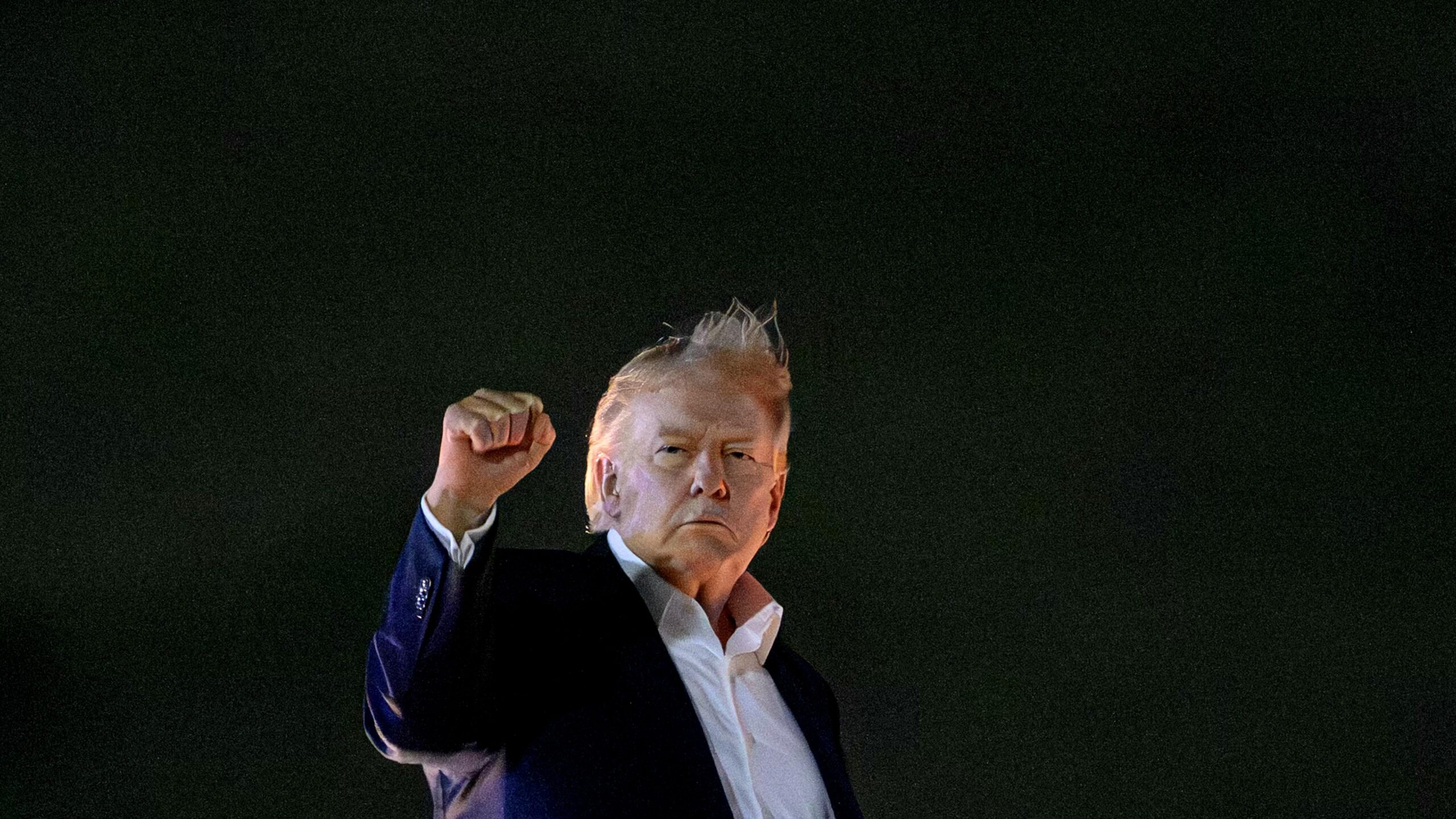
    MARTÍNEZ: President Trump celebrated his 80th birthday and the country’s 250th birthday last night, with a spectacle never before seen at the White House. It was a UFC fight right on the White House lawn.

    (SOUNDBITE OF ARCHIVED RECORDING)

    BRUCE BUFFER: We are live from the South Lawn of the White House.

    INSKEEP: We should do things on NPR like that sometimes.

    MARTÍNEZ: (Laughter).

    INSKEEP: Anyway, mixed martial arts fighters went after each other in a scene that included the White House backside, along with giant ads for Monster Energy drink, Bud Light and sports betting. The Paramount+ streaming program included shots inside the White House and fighters warming up in a historic room in the building next door.

    MARTÍNEZ: Steve Inskeep’s a grappler. That’s why I wouldn’t take him on. NPR’s Mara Liasson has been covering all of this. So, Mara, this wasn’t just a presidential birthday bash. I mean, this was a major political event. So what was President Trump conveying with this fight?

    MARA LIASSON, BYLINE: That’s right. I think on the simplest level, Trump wanted a spectacle for his own entertainment for his 80th birthday, happy birthday, Mr. President. But the cage match at the White House also happened in the middle of an election season where age and generational change are big issues. Trump’s critics say he’s been showing signs of decline. He’s closed his eyes at White House meetings. There’s been a lot of talk about his health. The White House denies that he’s ever fallen asleep. But the fight last night certainly contradicted the image of decline. Trump’s brand is strength and toughness – fight, fight, fight. It’s also spectacle and hype.

    And it was an unprecedented scene. As Steve said, fighters warmed up barefoot in these grand meeting rooms at the White House filled with historic paintings. There was a pre-fight broadcast from inside the White House, and even the commentators kept on saying how surreal it felt. But Trump is a base politician, and there is a lot of overlap between the UFC fans, young men, particularly white noncollege-educated men, who are a critical part of his MAGA base. And even though his support is still very strong among that demographic, it has slipped a lot.

    MARTÍNEZ: All right. So let’s get into some of the criticism. Is the criticism mostly coming from Democrats, or is Trump facing maybe broader blowback on this?

    LIASSON: Well, mostly from Democrats, but Republicans will complain privately. Democrats say that Trump is spending money on his personal whims, a birthday party, a grand arch, a ballroom, not worrying about problems that ordinary people are facing. And for Republicans, their concern is just that they want him to focus more on issues that might actually help them keep their majorities in Congress in the midterms.

    MARTÍNEZ: OK. So what do they want him to be saying out loud? What do they want him talking about?

    LIASSON: What they’d like him to be talking about is ordinary people’s concerns, first and foremost, high prices. They want him to tell them how he plans to bring down gas prices, how he plans to keep rural hospitals open, how he plans to make it easier to buy a home, etc.

    MARTÍNEZ: So what does the White House say in response to all that?

    LIASSON: Well, the White House says that Trump, like any president, can and should walk and chew gum at the same time. They say there’s nothing preventing him from having a birthday celebration or worrying about the aesthetics of the National Mall while also doing the work of a president. And they point to the deal with Iran as a perfect example because just before the fight began, Trump announced a deal to end hostilities there. That’s a big promise he’s been making to end the unpopular war. And also, he left immediately after the fight to fly to France for the G7 summit. So a UFC fight and a trip to an international summit all in one day, the White House says that proves their point.

    MARTÍNEZ: That’s NPR’s Mara Liasson. Thanks a lot.

    LIASSON: You’re welcome.

    MARTÍNEZ: All right. So as Mara said, President Trump will join leaders of the world’s wealthiest nations for a summit in the French Alps today, known as the G7.

    INSKEEP: The meeting we expect will involve talk of that peace agreement between the United States and Iran. The closure of the Strait of Hormuz raised oil prices and affected just about every economy on Earth.

    MARTÍNEZ: We turn now to NPR’s Eleanor Beardsley, who is following from France. Eleanor, this G7 summit will open in a few hours. What’s the mood there?

    ELEANOR BEARDSLEY, BYLINE: Well, leaders will be bracing for the arrival of President Trump later today, but that’s usually the case because he has a tendency to dictate the timing, the agenda, and the mood of such international summits. Commentators are saying he’ll be arriving in a good mood, like a hero, fresh off of a deal to end the war with Iran. But European analysts are also noting that both the U.S. and Iran are claiming total victory and that the U.S. is only fixing something it had broken. So basically, the world is back to where we were before the U.S. and Israel launched this war 107 days ago, they say. French President Emmanuel Macron is hosting the summit. This is his last G7, his last year in office. He reacted last night when the news broke, speaking from Evian-les-Bains in the French Alps, where he’ll be receiving President Trump and the leaders of Canada, Japan, the U.K., Italy and Germany later today. He was cautiously optimistic. Here he is.

    (SOUNDBITE OF ARCHIVED RECORDING)

    PRESIDENT EMMANUEL MACRON: (Speaking French).

    BEARDSLEY: He says, “we need to see the consequences of this agreement, support for Lebanon, the reopening of the Strait of Hormuz long term and, of course, an agreement on Iran’s nuclear and ballistic weapons.”

    MARTÍNEZ: So trying to remember, didn’t European leaders say that they would help reopen the Strait of Hormuz once the fighting stops? If so, I mean, is that still on the table?

    BEARDSLEY: Yes, it absolutely is. Around 40 countries met in April in Paris, led by Britain and France, and they said they would contribute to such a force once the war ends. And France has an aircraft carrier in the region, the Charles de Gaulle, standing by. Alice Rufo, who is France’s deputy defense minister, spoke this morning on the radio. Here she is.

    (SOUNDBITE OF ARCHIVED RECORDING)

    ALICE RUFO: (Speaking French).

    BEARDSLEY: So she says, “we are ready to contribute to reopening the strait and demining it as long as there’s this agreement in place and the fighting has stopped.” You know, Trump disparaged, he even mocked British Prime Minister Keir Starmer and President Macron for this offer of force after the war ends a couple of months ago. But he wants them involved today. Analysts say Trump will be counting on these allies to help him buttress the deal and give it credibility. So we likely will see Trump treating his allies with respect in the next couple of days, they say.

    MARTÍNEZ: OK. So that’s the big topic at the G7. What else will be discussed there?

    BEARDSLEY: Artificial intelligence, world trade imbalances, immigration and also the war in Ukraine, which is a top priority – ending it is – for Europeans. That’s four of the G7 members. President Zelenskyy will be at the summit. Ukraine has been very successful striking deep into Russia with its own, you know, drones and missiles, long range, that’s crippling Russian oil refining capacity. And Zelenskyy is hoping that strength will get Trump back to the negotiating table to put pressure on Russia to end the war.

    MARTÍNEZ: And one more thing. Anything else on President Trump’s European agenda?

    BEARDSLEY: Well, the summit ends Wednesday, but we know President Trump will be staying at least through Wednesday night because he’s been invited to a tete-a-tete dinner by President Macron at the palace of Versailles, where there will be fireworks to celebrate America’s 250th anniversary.

    MARTÍNEZ: But no Octagon cage at the Palace of Versailles. You haven’t seen…

    BEARDSLEY: No.

    MARTÍNEZ: That’s NPR’s Eleanor Beardsley. Thank you.

    BEARDSLEY: Thank you.

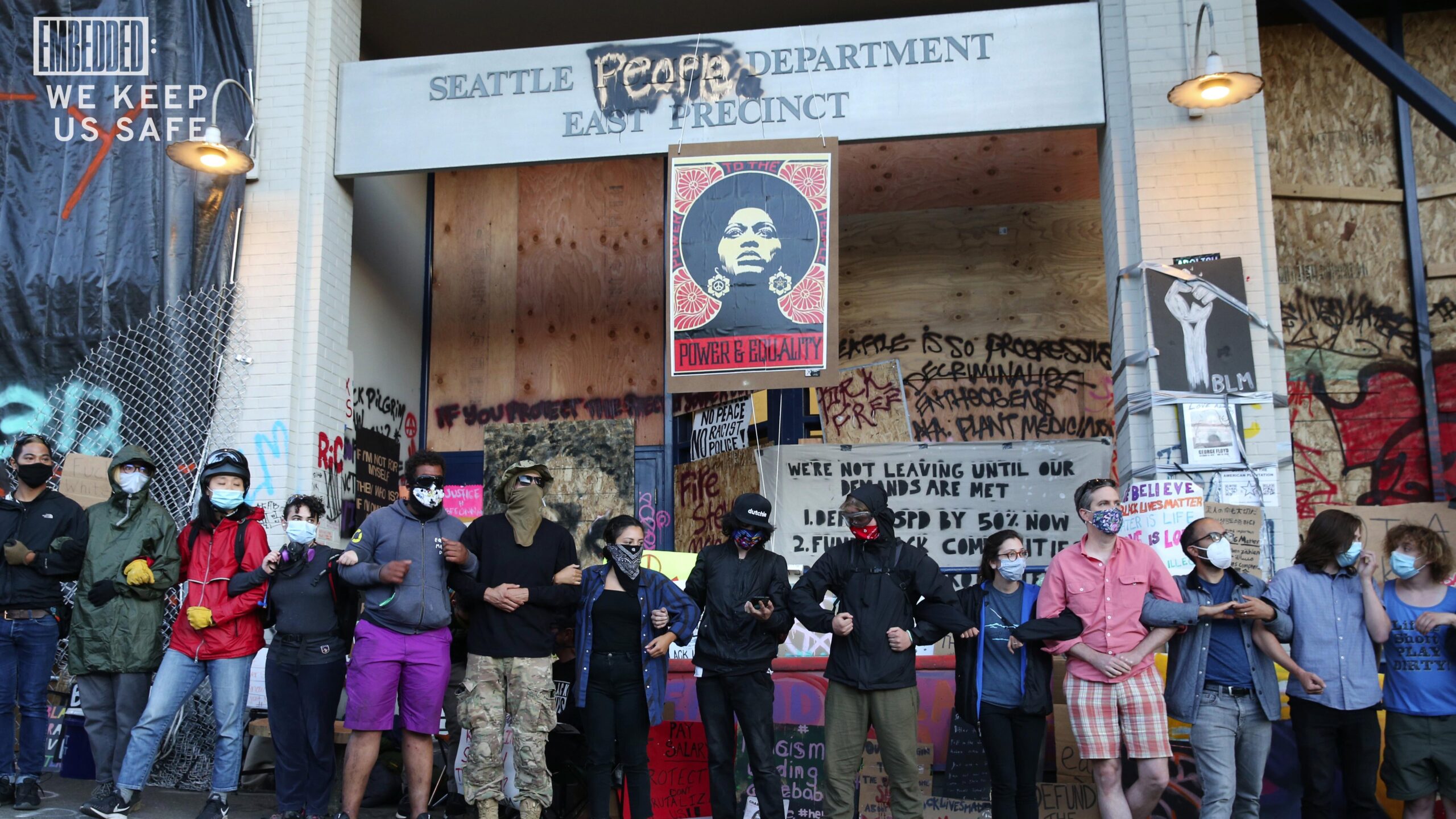
    MARTÍNEZ: Before you go, don’t forget to listen to UP FIRST Sunday Story. In 2020, an anti-police violence protest in Seattle ended in a teenage boy’s death. And as the questions mounted, protesters closed ranks.

    (SOUNDBITE OF ARCHIVED NPR CONTENT)

    ASHLEY DORELUS: It’s, like, what’s the No. 1 rule of Fight Club?

    DAVID GUTMAN: Don’t talk about Fight Club.

    DORELUS: Exactly.

    MARTÍNEZ: On The Sunday Story, the unsolved killing of a young man and how the protesters’ circle of silence continues to hide the truth. Listen now to The Sunday Story from UP FIRST on the NPR app.

    (SOUNDBITE OF MUSIC)

    MARTÍNEZ: And that’s UP FIRST for Monday, June 15. I’m A Martínez.

    INSKEEP: And I’m Steve Inskeep. Today’s UP FIRST was edited by Tina Kraja, Kelsey Snell, Miguel Macias, Mohamad Elbardicy and Taylor Haney. It was produced by Ziad Buchh and Ben Abrams. Our director is Christopher Thomas. We get engineering support from Zo van Ginhoven, and our technical director is Carleigh Strange. Join us again tomorrow.

    (SOUNDBITE OF MUSIC)

  • If you plan to catch up on reading this summer, start with these 3 books

    (W. W. Norton & Company)

    I love reviewing books but sometimes the pace of reading them can feel like that classic I Love Lucy episode at the chocolate factory. The conveyer belt speeds up and the books keep coming along faster than they can be “wrapped” in a review. Summer gives me a chance to catch up with some good books that whizzed by in spring.

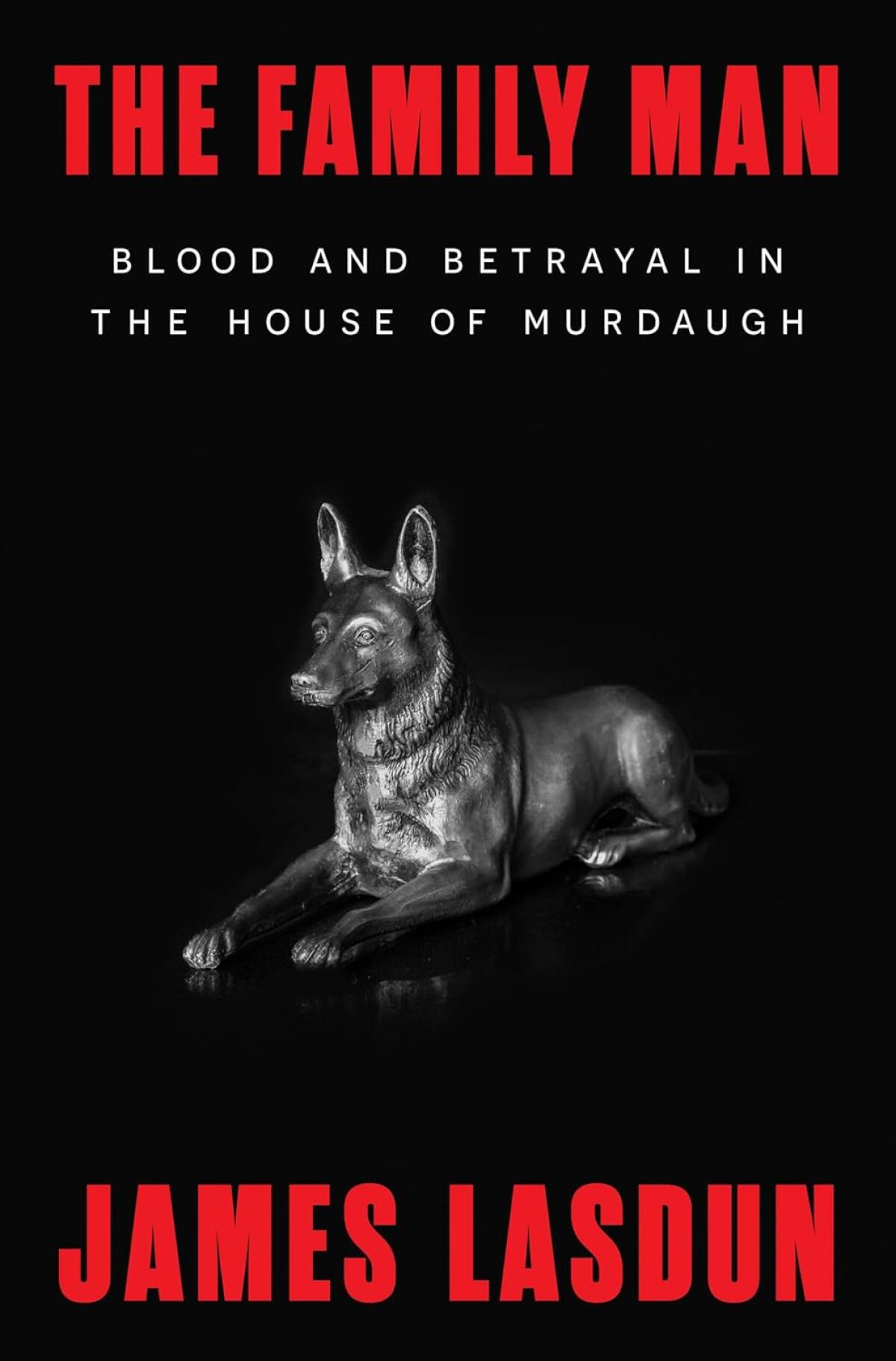
    James Lasdun’s The Family Man: Blood and Betrayal in the House of Murdaugh came out the first week of May, which is when I read it. This nonfiction book, which grew out of a piece Lasdun wrote for The New Yorker, is about the investigation and conviction of prominent South Carolina lawyer Alex Murdaugh for the 2021 murders of his wife and adult son.

    Then came the real-life plot twist: A little over a week after Lasdun’s book was published, Murdaugh’s conviction was overturned because of jury tampering. A retrial is being scheduled. Rather than rendering The Family Man obsolete, this new twist intensifies the miasma of stories that swirl around the Murdaugh case — including suspicious deaths and embezzlement.

    Lasdun is a “true crime” writer in the reflective mold of his late New Yorker colleague Janet Malcolm. Although investigating the double murder case drives this narrative, Lasdun is most interested in exploring the ultimate unsolvable mystery: the mystery of evil.


    (Farrar, Straus and Giroux)

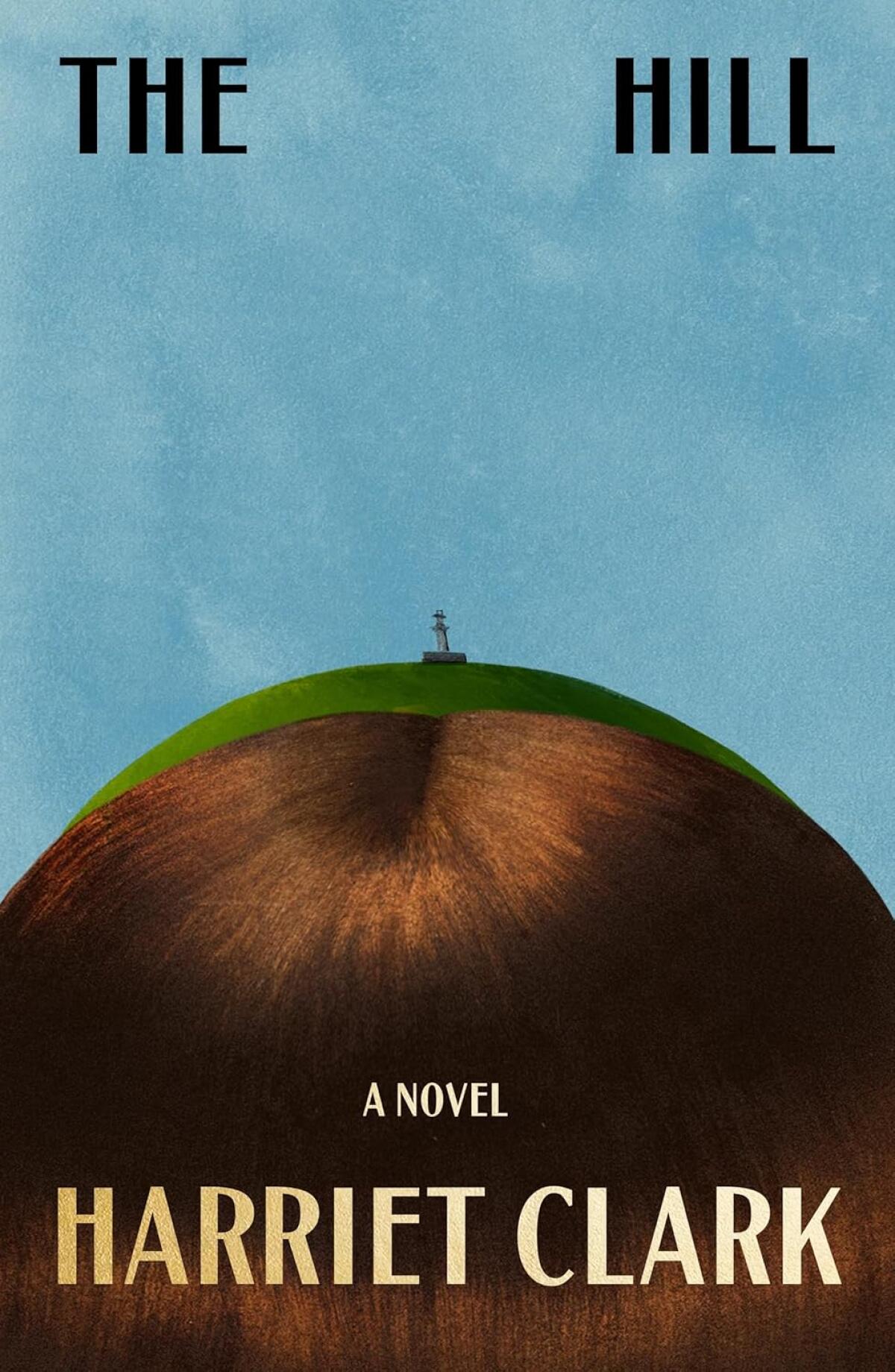
    Harriet Clark’s debut novel, The Hill, which came out in May, has been getting tons of deserved praise. The novel draws explicitly from Clark’s own background: Born in 1980, Clark was 11 months old when her mother, a member of the radical Weather Underground, was arrested and sentenced for her involvement in a Brinks armored truck robbery that resulted in the deaths of three men. Clark’s maternal grandparents got custody and she visited her mother in prison for almost 40 years, before she was paroled in 2019.

    Clark’s main character, Suzanna, is 8 when the story begins and living with her grandparents, former members of the American Communist Party. The plot here is a marvel of sustained claustrophobic stasis. Every week, Suzanna is taken — first by her grandfather, then by a nun, then on her own — to visit her mother at the Children’s Center in Hillcrest prison. Suzanna’s voice charges this novel with intelligence:

    Each week … my mother fixed and re-fixed my hair. I slept and didn’t sleep, . … Around us women counted down to release, but my mother and I had been released from countdowns. No reason to look forward, no interest in looking back, we were, as I saw it, free of the past and free of the future. Carnival Day, Friendship Day, Birthday Day — the holidays in the Center followed their own lilting rhythms, and eventually we submitted again to the lull and pleasures of our timeless life.

    All the while I was reading The Hill, I kept thinking of E.L. Doctorow’s The Book of Daniel, inspired by the Rosenberg case. The two novels differ in scope, but like Doctorow, Clark interrogates the cost of parents’ radical commitment to their children, as well as how the world itself shifts radically, from generation to generation.


    (W. W. Norton & Company)

    Sometimes I put aside a good book for a bad reason. Mary Costello’s slim novel, A Beautiful Loan, touted as a devastating story about relationships, came out in March. “No,” I thought back then, “not another ersatz Sally Rooney in time for St. Patrick’s Day.”

    But, one empty afternoon, I picked it up and kept reading, mostly because the present-tense narration of the main character, Anna, struck me as so weird in tone. Her deadened voice was at odds with her emotional turbulence. Here’s 19-year-old Anna summarizing how Paul, an elusive older man she’ll eventually marry, keeps her in thrall to what she calls “this oscillating life”:

    In the middle of the night, … he rises on one elbow in the bed beside me and, in an urgent, desperate voice, says, I love you. In the morning, he makes no reference to this, and I think he must have spoken in his sleep. Never again in our lives together will he say those three words.

    A Beautiful Loan spans 25 years and Anna’s obsessive devotion to two men, one dog, the writings of Camus and Jung, and the practice of Islam. Like the other two books I’ve caught up with here, it may not be the ideal “beach read,” but it would be perfect for a wash-out of a summer weekend.

    Transcript:

    TONYA MOSLEY, HOST:

    This is FRESH AIR. For our book critic, Maureen Corrigan, summer reading sometimes means catching up on the books she missed earlier in the year. Here’s her short roundup of some spring books.

    MAUREEN CORRIGAN, BYLINE: I love reviewing books. But sometimes the pace of reading them can feel like that classic “I Love Lucy” episode at the chocolate factory. The conveyor belt speeds up, and the books keep coming along faster than they can be wrapped in a review. Summer gives me a chance to catch up with some good books that whizzed by in spring. James Lasdun’s “The Family Man” came out the first week of May, which is when I read it. This nonfiction book, which grew out of a piece Lasdun wrote for The New Yorker, is about the investigation and conviction of prominent South Carolina lawyer Alex Murdaugh for the 2021 murders of his wife and adult son.

    Then came the real-life plot twist. A little over a week after Lasdun’s book was published, Murdaugh’s conviction was overturned because of jury tampering. A retrial is being scheduled. Rather than rendering “The Family Man” obsolete, this new twist intensifies the miasma of stories that swirl around the Murdaugh case, including suspicious deaths and embezzlement. Lasdun is a true crime writer in the reflective mold of his late New Yorker colleague, Janet Malcolm. Although investigating the double murder case drives this narrative, Lasdun is most interested in exploring the ultimate unsolvable mystery, the mystery of evil.

    Harriet Clark’s debut novel, “The Hill, “which came out in May, has been getting tons of deserved praise. The novel draws explicitly from Clark’s own background. Born in 1980, Clark was 11 months old when her mother, a member of the radical Weather Underground, was arrested and sentenced for her involvement in a Brinks armored truck robbery that resulted in the deaths of three men. Clark’s maternal grandparents got custody. And she visited her mother in prison for almost 40 years before she was paroled in 2019.

    Clark’s main character, Suzanna, is 8 when the story begins and living with her grandparents, former members of the American Communist Party. The plot here is a marvel of sustained, claustrophobic stasis. Every week, Suzanna is taken first by her grandfather, then by a nun, then on her own, to visit her mother in the children’s center in Hillcrest Prison. Suzanna’s voice charges this novel with intelligence. Listen.

    (Reading) Each week, my mother fixed and refixed my hair. I slept and didn’t sleep. Around us, women counted down to release, but my mother and I had been released from countdowns, no reason to look forward, no interest in looking back. We were, as I saw it, free of the past and free of the future. Carnival day, friendship day, birthday day, the holidays followed their own lilting rhythms. And eventually, we submitted again to the lull and pleasures of our timeless life.

    All the while I was reading “The Hill,” I kept thinking of E. L. Doctorow’s “The Book Of Daniel,” inspired by the Rosenberg case. The two novels differ in scope, but like Doctorow, Clark interrogates the cost of parents’ radical commitment on their children, as well as how the world itself shifts radically from generation to generation.

    Sometimes I put aside a good book for a bad reason. Mary Costello’s slim novel, “A Beautiful Loan,” touted as a devastating story about relationships, came out in March. No, I thought back then, not another ersatz Sally Rooney in time for St. Patrick’s Day, but one empty afternoon, I picked it up and kept reading, mostly because the present tense narration of the main character, Anna, struck me as so weird in tone. Her deadened voice was at odds with her emotional turbulence. Here’s 19-year-old Anna, summarizing how Paul, an elusive older man she’ll eventually marry, keeps her enthralled to what she calls this oscilating life.

    (Reading) In the middle of the night, he rises on one elbow in the bed beside me and in an urgent, desperate voice, says, I love you. In the morning, he makes no reference to this, and I think he must have spoken in his sleep. Never again in our lives together will he say those three words.

    “A Beautiful Loan” spans 25 years and Anna’s obsessive devotion to two men, one dog, the writings of Camus and Jung and the practice of Islam. Like the other two books I’ve caught up with here, it may not be the ideal beach read but it would be perfect for a washout of a summer weekend.

    MOSLEY: Maureen Corrigan is a professor of literature at Georgetown University. She reviewed “The Family Man” by James Lasdun, “The Hill” by Harriet Clark and “A Beautiful Loan” by Mary Costello.

    Tomorrow on FRESH AIR, as we approach America’s 250th birthday, writer Jesse Wegman tells the forgotten story of James Wilson, a brilliant 18th century lawyer who played a critical role in crafting the Constitution, pushing for a strong federal government and the direct election of lawmakers. Wegman’s book is “The Lost Founder.” I hope you can join us. To keep up with what’s on the show and get highlights of our interviews, follow us on Instagram – @NPRFreshAir.

    (SOUNDBITE OF MUSIC)

    MOSLEY: FRESH AIR’s executive producer is Sam Briger. Our technical director and engineer is Audrey Bentham. Our interviews and reviews are produced and edited by Phyllis Myers, Ann Marie Baldonado, Lauren Krenzel, Therese Madden, Monique Nazareth, Thea Chaloner, Susan Nyakundi, Anna Bauman and Nico Gonzalez-Wisler. Our digital media producer is Molly Seavy-Nesper. Roberta Shorrock directs the show. With Terry Gross, I’m Tanya Mosley.

    (SOUNDBITE OF MUSIC)

  • Slavery exhibit targeted by Trump faces uncertain future

    Slavery exhibit targeted by Trump faces uncertain future

    Transcript:

    ADRIAN FLORIDO, HOST:

    It’s CONSIDER THIS, where every day we go deep on one big news story. We’re just a few weeks away from celebrating the nation’s 250th birthday. So I went to the city called the birthplace of America – Philadelphia.

    (SOUNDBITE OF BELLS TOLLING)

    FLORIDO: It was right here at Independence Hall that the Founding Fathers signed the Declaration of Independence in 1776. Philadelphia became the nation’s first capital, George Washington its first president. He lived a block away. For decades and decades, people have come to these few old city blocks, all cobblestone and red brick, to steep themselves in this history of American freedom. Our producer, Henry Larson, and I came because of a battle playing out right now over that history. Specifically, over whether the National Park Service, which runs these historic sites, should have to tell the stories of the Black people who are part of it.

    We’re standing here looking at this beautiful rear facade of Independence Hall, and then you turn around, and just a few steps away is the house where George Washington, when he was president during those early years, lived, and not only where he lived, but where he enslaved nine people.

    MICHAEL COARD: Austin, Paris, Hercules, Christopher Sheels, Richmond, Giles, Oney Judge, Moll.

    FLORIDO: Michael Coard is reading their names etched onto a wall at the site of Washington’s house. Coard’s a lawyer and an activist, and like many Philadelphians, he was stunned in the early 2000s when a local historian unearthed records that George and Martha Washington had brought nine slaves to work for them here.

    COARD: Many of us knew that he enslaved, but not many knew that nine were held right here in Philadelphia. So I was enraged. I put together a group of local activists. We formed it…

    FLORIDO: He called it the Avenging the Ancestors Coalition. It began pressing the Park Service to create an exhibit. It took years, but in 2010, it was finished. The house, long gone except for its foundations, was partially rebuilt. Panels and video screens along the walls told the stories of George Washington’s nine enslaved workers.

    COARD: It was the grand opening of the first slave memorial of its kind on federal property in the history of the United States of America. We thought it would last forever, but 15 years later, the destruction came.

    FLORIDO: Last year, President Trump signed an executive order titled Restoring Truth and Sanity to American History. It ordered national parks and historic sites to remove any exhibit or display that, quote, “inappropriately disparages Americans past or living.” A few months later, federal workers showed up at the slavery exhibit here at the president’s house with crowbars.

    COARD: There were 34 interpretive panels to tell this old story. They pulled all 34 down. I felt like a part of my soul was being ripped out with each interpretive panel being ripped out because this is my story.

    FLORIDO: At national parks and historic sites across the U.S., the Trump administration has for months been removing displays about slavery and other ugly chapters in U.S. history. Trump’s order said that telling history this way deepens societal divides and fosters a sense of national shame. This week, a federal judge temporarily blocked the president’s order, but it’s not clear what that will mean for the slavery exhibit here in Philly, which has already been partially restored because of a separate lawsuit brought by the city.

    (SOUNDBITE OF ARCHIVED RECORDING)

    UNIDENTIFIED PERSON: One, three, four, eight, city of Philadelphia against the Secretary U.S. Department of Interior.

    FLORIDO: CONSIDER THIS – just days before thousands of people are expected to stream into Philadelphia to celebrate the nation’s 250th birthday, some of the exhibit at the president’s house has been restored, but a lot is still missing.

    (SOUNDBITE OF MUSIC)

    FLORIDO: From NPR, I’m Adrian Florido.

    (SOUNDBITE OF MUSIC)

    FLORIDO: It’s CONSIDER THIS FROM NPR. In Philadelphia, a historic site meant to tell the stories of Black people enslaved by George Washington is at the center of a battle over history.

    (SOUNDBITE OF BELL RINGING)

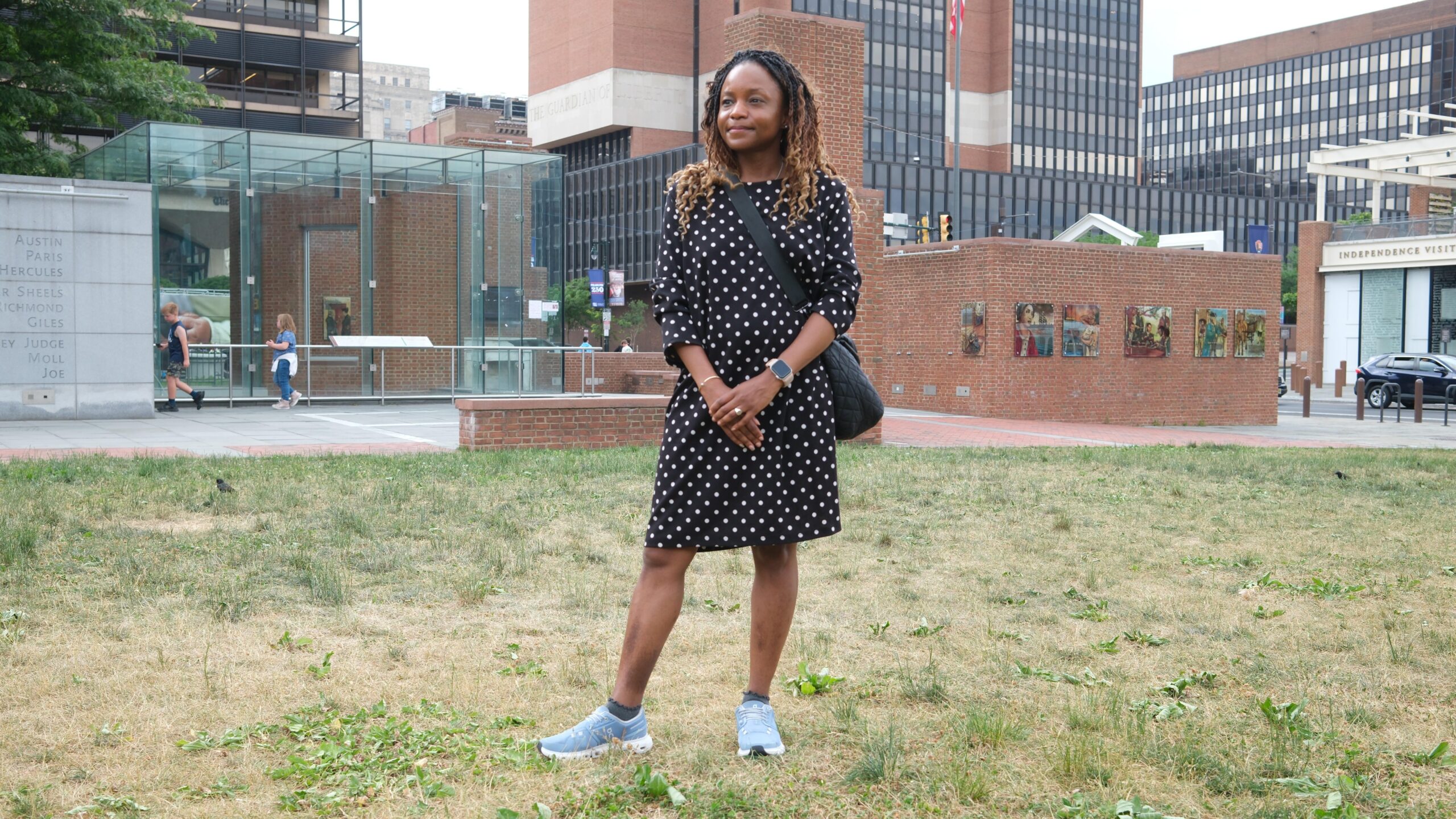
    FLORIDO: Five months ago, the Trump administration took down an exhibit at the site. To get a sense of what the slavery exhibit’s removal has meant, we met tour guide Raina Yancey at the house. Her shock hasn’t gone away.

    RAINA YANCEY: I wasn’t prepared for the full range of emotions that overcame me. I don’t know. I’m still upset. I’m still angry.

    FLORIDO: Seven years ago, Yancey started a company called The Black Journey. She gives walking tours about Philadelphia’s Black history. Here at President Washington’s house, she always tells the story of Ona Judge, who ran away – escaped to freedom. Yancey gave me a bit of the tour.

    YANCEY: So you have about 50% of the walls as it would’ve had. We’re walking to a wall that once held a panel information about the dirty business of slavery. There are metal brackets where the panels used to be secured to the wall.

    FLORIDO: We’re looking at an empty wall now.

    YANCEY: We’re looking at an empty wall. It doesn’t make sense without the context. There are footprints that are supposed to represent Ona Judge’s triumphant escape in the ground. They’re bronzed. They’re beautiful. But it doesn’t make sense without the story – what the significance of the names etched in granite, the footprints. It doesn’t make sense.

    FLORIDO: When you’re bringing people through this house, what is the story you’re trying to tell them while you’re standing right here, where we’re standing right now?

    YANCEY: I want them to understand that history of slavery in the United States is from the very beginning, from the very top. And I also want to tell the story of triumph, that people stood up for themselves, in particular, Ona Judge. She emancipated herself. She was a young woman. She had no idea where she was going. She knew she would never see her family again.

    FLORIDO: Yancey tells me that after she learned of the story of Judge’s escape and the stories of the other eight enslaved workers, she felt an urge to tell as many people as possible.

    Did you ever consider, after those panels came down, not doing the tours?

    YANCEY: No. I see the Black journey as stewards of this history, and we saw how easily the history was previously lost for over a century, and I want to make sure that that doesn’t happen again.

    FLORIDO: How do you grapple with this paradox of slavery in the shadow of Independence Hall?

    YANCEY: I call it hypocrisy. On the tour, we share a picture of the founders. There’s a famous oil painting, and it’s supposed to depict the signing of the Declaration of Independence. And there are red dots on the faces of most of the founders, and I always ask the visitors, well, what do you think those red dots represent? And of course, it represents those that owned human beings.

    FLORIDO: When people are making that realization as you’re telling them that story, what do you notice come across their faces?

    YANCEY: Some people thought about it, but for some people, it’s, like, the first time that that’s clicked. And they realized, oh, my, like, there are, like, so many levels of freedom right in this square block. And so we want to make sure that the panels tell the full story of slavery and how people did self-emancipate. It was so intolerable to so many people, and people resisted in so many ways.

    FLORIDO: In his executive order, President Trump directed the Parks Department to remove exhibits that did not emphasize American greatness. What does that say to you?

    YANCEY: I think Ona Judge’s story is a prime example of American greatness, of self-emancipating herself to create her own life, her own story, and people need to understand it so that we don’t go back. Just by taking the panels down, you can’t make it disappear. You can’t make that history go away.

    FLORIDO: We asked the Trump administration for an interview. The Interior Department sent us a statement saying the administration, quote, “is committed to celebrating and acknowledging the full breadth of our nation’s history.” It also sent us a link to new exhibit panels it wants to replace the ones it removed. These new panels would tell some of the story of the people Washington enslaved at his Philadelphia house, but they also downplay their possible suffering, suggesting they had better lives than slaves at Washington’s plantation in Virginia.

    As we walked through the house with Raina Yancey, we noticed something – all the little acts of public rebellion. On some of the walls, people had taped up handwritten explanations of why the exhibit was missing.

    YANCEY: So the signs are removed by the Department of the Interior every day – these protest signs. There’s facsimiles of what used to be there printed on, you know, 8 by 10 paper. But every day, they’re taken down in the evening, and every day, people exercise their First Amendment rights and replace them.

    FLORIDO: In front of another wall, a woman named Nikia Stevenson (ph) was reading aloud from a white binder.

    NIKIA STEVENSON: 1793, the Fugitive Slave Act passed by Congress…

    FLORIDO: She told me it was the text from the missing panels.

    STEVENSON: I’m very passionate about history, and I am obviously African American. So this is my history that they’re trying to erase.

    FLORIDO: Michael Coard, the activist who fought to have this exhibit created, says it’s urgent to get it back up before July 4, when thousands of people will stream into Philadelphia.

    COARD: So either the federal government is going to tell the story, or damn it, we’ll tell the story.

    FLORIDO: He’s planning a number of events here to tell the story of Black people’s fight for freedom in the birthplace of American freedom.

    (SOUNDBITE OF MUSIC)

    FLORIDO: This episode was produced by Henry Larson. It was edited by Sarah Robbins. Our executive producer is Courtney Dorning.

    (SOUNDBITE OF MUSIC)

    FLORIDO: IT’S CONSIDER THIS FROM NPR. I’m Adrian Florido.

  • How an anti-police violence protest ended in a teen’s death

    How an anti-police violence protest ended in a teen’s death

    In the summer of 2020, sixteen-year-old Antonio Mays Jr. traveled a thousand miles to be part of the racial justice movement. He arrived in Seattle during the Capitol Hill Occupied Protest, known as CHOP. Less than a week later, he was shot and killed there. The case remains unsolved.

    Today on The Sunday Story, we bring you the first episode of a new series from NPR’s Embedded podcast that investigates Mays’ death.


    This episode of The Sunday Story was produced by Ben Rappaport with support from Andrew Mambo. 

    We’d love to hear from you. Send us an email at TheSundayStory@npr.org.

    Listen to Up First on Apple Podcasts and Spotify.