Blog
-
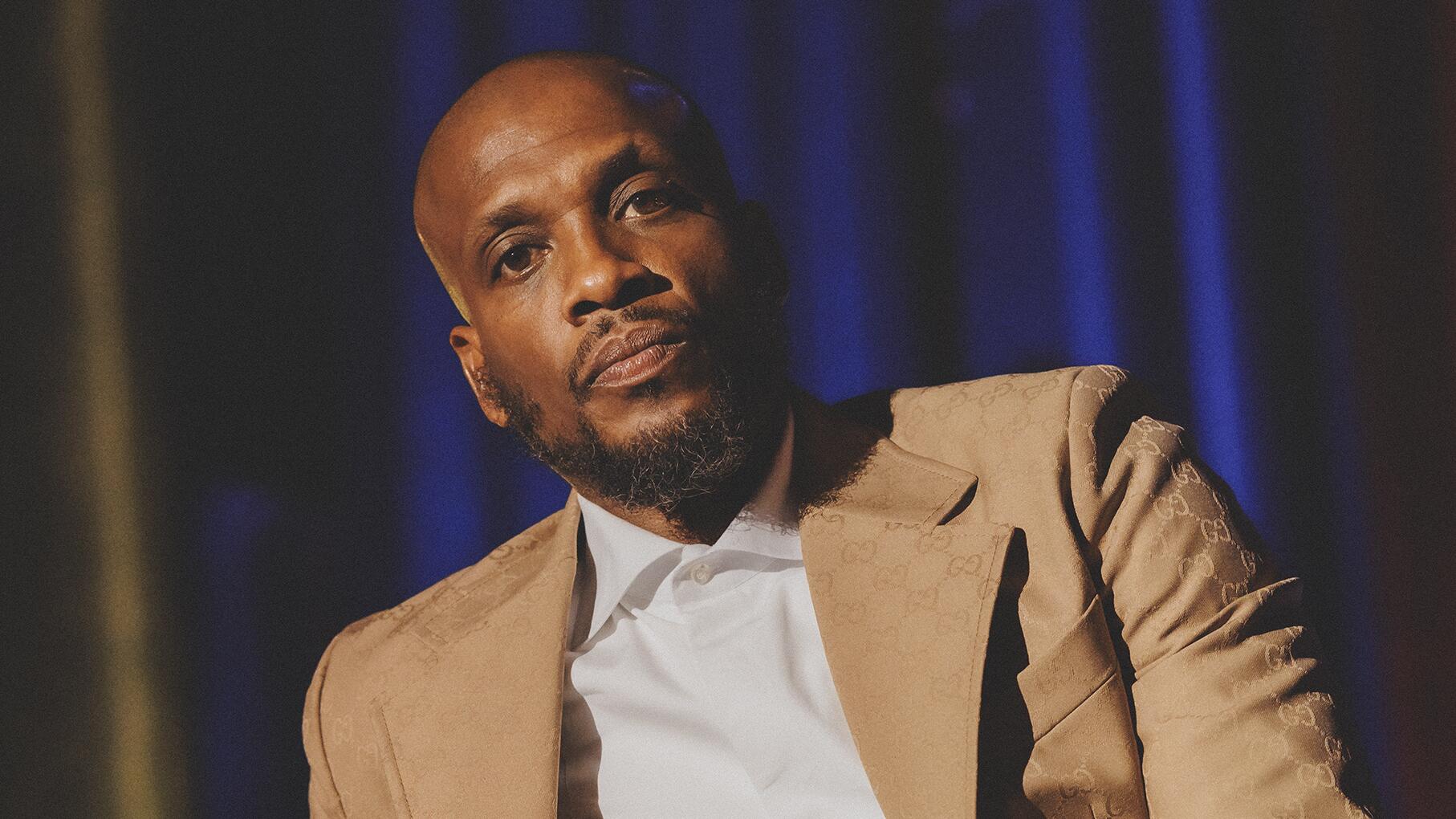
Comic Ali Siddiq makes peace with the past in ‘My Father’
As a kid in Houston, comic Ali Siddiq’s father was largely absent. But there’s one parenting moment that Siddiq tells onstage with great detail. Ten-year-old Siddiq had a sore tooth, and his dad pulled a Cool Whip tub from the fridge — where he stashed his cocaine — and applied some to his son’s tooth.
“My dad was insane,” Siddiq laughs. When he first told the story onstage, his father was in the audience. “[After] he was like, ‘I can’t believe you remember that!’”
He wasn’t a perfect father — and yet Siddiq always admired him. He pays homage to his dad, who died in 2018, in his new special, My Father.
It’s the latest in more than a dozen specials Siddiq has released on YouTube. He remembers that his dad would watch all of his shows on a computer in the library: “And [he] would call and tell me, … ‘I watched about 10, 15 times.’ So I’m always missing those 10 or 15 views that I know that I would get from him,” Siddiq says.
For Siddiq, who served six years in a Texas prison for selling drugs before turning his life around, comedy and storytelling have always been a source of healing.
“I think that’s the biggest part of it, that I take the stories and me reliving them in front of people or revisiting them in front of people is a lot healing,” he says.
Interview highlights
On the regret he feels about selling drugs
I remember I was in San Francisco, the homeless population is so crazy. … And I just stopped in the streets and I just started sobbing. And I remembered saying, “How much of this is my fault?” Because I have been so destructive and reckless in my behavior. Obviously this is not the first generation. This is the generation that was affected by the first generation of what I did. Like, you can’t conceive the magnitude of destruction that you do when you sell drugs in a community. It’s people doing things that they would probably never do in order [to get drugs]. [It’s] ruining relationships. What child didn’t get fed because their mom or their father decided to do this? What uncle or aunt stole something … like, what did I do?
On the fact that he still remembers his inmate number, or “spin” number as he calls it
I think that these psychological wounds are different than my physical wounds. My physical wounds start to fade. Why haven’t these wounds faded yet?
Ali Siddiq
You do not get out of this situation unscathed. You may have survived it, but you still have wounds. I’ve been out 29 years at this point. Even if I’m at home by myself, I’ma lock the bedroom door [and] I still know this number. … You may survive, but you don’t get out unscathed. You gonna lose some skin in this game. And I think that these psychological wounds are different than my physical wounds. My physical wounds start to fade. Why haven’t these wounds faded yet?
On how his imprisonment impacted his family
My mom, even though she wasn’t physically there, she’s there in mind. Like, when you’re inside, your sister is concerned, your mother is concerned. Your dad is concerned your grandmother is concerned. It is all of these people that’s concerned about you because you’re in a position of danger. You’re in a dangerous place and there’s no guarantee that you will make it out of this place.
On getting his start in standup
When I started doing standup, I actually didn’t even know how to even start. … I literally started from a place of zero. Like I had zero information on how to become a comic, zero information of where to go. … I was at scratch. … I remember when I first got my first payment, it was $35 and it was in like fives and ones. And I thought it was a lot of money. I was like, boy, I came up.
On raising his own son differently than he was raised
I love the way that he lives. I applaud him and I just hope that he comes out on the other side and loves being a kid and then gives his children the opportunity to be a kid, and always have a softness for me. I need somebody to roll me around when I get old. So hopefully, hopefully he’s there taking me to go eat oysters and asking me, Do I want to go to a Boney James concert? or something. I just love him. I just love the softness of his life.
Lauren Krenzel and Susan Nyakundi produced and edited this interview for broadcast. Bridget Bentz, Molly Seavy-Nesper and Luis Clemens adapted it for the web.
Transcript:
TONYA MOSLEY, HOST:
This is FRESH AIR. I’m Tonya Mosley. And my guest today is Ali Siddiq. He’s a comedian, but that word undersells it. What he really does is tell stories – true ones – from his own life. And he’s told so many of them that while watching his specials, I realized Siddiq is giving us a memoir, delivered one set at a time. For instance, a few years back, he went viral with the story about surviving a prison riot. Siddiq served six years for cocaine trafficking, arrested four days after his 19th birthday. He started doing stand-up after he got out, and nearly 30 years later, he’s got more than a dozen specials, most of them independent on YouTube with millions of views. In his 2022 series, “Domino Effect,” he traces his life growing up in Houston, starting at 10 – the year he went to live with his father and first got into trouble – all the way through the choices that landed him in prison. This month, he has a new special called “My Father.” It’s about everything that passed between Siddiq and his dad before his father died in 2018. It premieres on YouTube June 21. Here’s a clip.
(SOUNDBITE OF COMEDY SPECIAL, “MY FATHER”)
ALI SIDDIQ: My dad had a thing about how he dressed. My dad always wore tailor-made suits. This is when he was on his note (ph), ’cause he was a – there’s not a lot of men can say how they felt about their pops. I really wanted to look like this man. He was tall, dark, jet Black, had a lot of charisma about himself. But he just wasn’t an ideal…
(LAUGHTER)
SIDDIQ: …Father. My dad asked me one time. I’m sitting at his house, and my daddy said, man, why you don’t never say nothing bad about your mama on stage?
(LAUGHTER)
MOSLEY: Ali Siddiq, welcome to FRESH AIR.
SIDDIQ: (Laughter) Thank you. Thank you for having me.
MOSLEY: Man, your timing is great. And I was thinking when I was watching this that there is really nothing like remembering something funny about somebody after they’re gone. It’s, like, the truest way, the most purest way to grieve them. But I was just wondering watching this, if your dad felt some kind of way about being in your act, what do you think he’d say about you doing this entire special about him?
SIDDIQ: He never actually felt any type of way about being in my act. He just wanted to know when I was going to say something negative about somebody else and not just him. So…
(LAUGHTER)
SIDDIQ: You know, I get a lot of views, but it’s definitely 10 views, 15 views that I miss ’cause my dad would go to the library, and he would look me up on the computer and watch all of my stuff. And he would call and tell me, I just seen something else. I watched it about 15 – 10, 15 times. So I’m always missing those 10 or 15 views that I know I – that I would get from him.
MOSLEY: You say straight up, I’m a responsible man because of my mother, but I’m a good man…
SIDDIQ: Yes.
MOSLEY: …Because of my daddy. Explain that.
SIDDIQ: My mom, she would think that it was her, but it’s really him because for some time, I felt a certain type of way about him not being there or the things that I would see from other people’s, you know, fathers or what I view from TV. I was judging him based upon that and what I thought. And I had certain feelings towards him. And I didn’t want my kids to ever feel like that about me. I didn’t – I don’t want my kids to think that anything else was more important than them – not being in the streets, not women, not gambling, not hustling, not anything. I didn’t want them to ever think that anything that I was doing was more important than them. And my father made me at times feel unimportant to him.
You know, I played sports. He went to one game. Out of all the sports that I played, he went to one game. You know, he came to one basketball game. You know, I don’t remember ever doing anything father and son with my dad. So that’s another thing. I just knew becoming a father, I would never be like that. Like, my kids are going to see me actively at their games or at their recitals or at their – whatever they may be doing, I’m going to actively be there. If – you know, if you need something, I want you to be able to call me. So I’ve always made myself available for that type of effort that I was making. I always made myself available for them, so they would never feel a type of way towards me, like I felt for my father for a couple of years – well, more than a couple of years.
MOSLEY: Your daddy, he left when you were 3, but you’d see him every blue moon. But then around 10, he comes back into your life. You went to live with him.
SIDDIQ: Yes.
MOSLEY: And it seems like he was very much do as I say, not as I do. When did you first understand that contradiction?
SIDDIQ: Oh, man. Probably the first year I lived with him (laughter). Like, yo, my dad was – like I say, I don’t think he was ready. I don’t think he was ready to have his son with him. I think that he was…
MOSLEY: But yet he asked for you to live with him, right?
SIDDIQ: He asked, but I don’t think he was ready. You know, people ask for a lot of things they’re not ready for. So…
(LAUGHTER)
SIDDIQ: And then, like – not a human, though. I didn’t think a human was a part of that, but he definitely wasn’t ready yet, you know, ’cause he couldn’t have been. Like, when I look back at it, I’m like, yo, bruh, you – there’s no way that you was ready for me to come live with you ’cause you hadn’t calmed down yet, you know? Just the story of him waking me up, saying that he was getting ready to go to San Antonio, and I’m 10. I got to go to school tomorrow. I’m like, yo, bruh, like…
(LAUGHTER)
SIDDIQ: I was like, what’d you think – what am I supposed to do that you finna go to San Antonio? He said, just do what you been doing. Get yourself up. Get ready to go to school.
MOSLEY: (Laughter).
SIDDIQ: You know how to – hey, bruh, that’s not how this go, man. I’ve never been in a house by myself before (laughter). Like, what’s wrong with you?
MOSLEY: Ali, I mean, is it true that – OK. You tell this story about him putting cocaine on a sore wisdom tooth. And I was wondering, is this true, or is this just for laughter?
SIDDIQ: No, 100% true – 100% true. That’s why I described it so vividly. See, that’s the thing about when I tell a story – I want people to understand. I describe all the even little things so people understand it. This is a true story ’cause you can’t – it’s hard to make up little things. You know, you can make up big things, but little intricate details about something, like, you know who was there – James (ph) and Ivory (ph). And James was the one that saw me sitting on the step. And he was like, what’s up? ‘Cause my dad’s name is Limbird (ph), and he called me little bird. Little bird, what’s going on? And I said – I told him about my tooth. And then my daddy called me over and said, let me see, and put that cocaine on my tooth. I said, this man.
MOSLEY: (Laughter).
SIDDIQ: I didn’t even know that’s what it was or – I just know it was the stuff that was in the Cool Whip tub that was in the refrigerator.
MOSLEY: Wait. He kept the cocaine in a Cool Whip tub in the refrigerator.
SIDDIQ: In – yeah, the big Cool Whip thing. You know how Cool Whips come in that little container – that big container?
MOSLEY: Oh, yeah.
SIDDIQ: He kept it.
MOSLEY: And you reuse them.
SIDDIQ: Yeah. And he put it in – that’s where the cocaine was at – inside the refrigerator. And then as I thought about that earlier, like, I told the story, and I never even realized how super irresponsible he was. I am 10. You don’t think I like Cool Whip?
(LAUGHTER)
MOSLEY: The things that could’ve happened, you know? Like…
SIDDIQ: The things that could’ve happened. If I would’ve dipped the – ’cause he always had strawberries. My dad loves strawberries, right? So he always had strawberries in the house. And I was like, yo – what I thought about, if I would’ve just took one of those strawberries and put it in that Cool Whip bowl thinking it was Cool Whip, because I still would’ve ate it even though I would’ve thought the Cool Whip was bad. I’m like, oh, the Cool – it’s fizzing out. And then I’m like, that’s what it would’ve looked like to me. I said, he was so, so irresponsible. It’s crazy.
MOSLEY: OK, he dips a little cocaine on that sore wisdom tooth. What happened to you?
SIDDIQ: Never had a problem with that wisdom tooth again (laughter).
MOSLEY: Never even needed to have it taken out?
SIDDIQ: Never. I probably still got that tooth in my mouth right now.
MOSLEY: (Laughter).
SIDDIQ: I never had a problem. I don’t even remember getting my wisdom teeth taken out ever. Luckily, I never – I don’t have an addictive personality. I can just stop doing stuff. Like, hopefully, that was it because my dad was insane. And I had told that story before, before I ever – before it ever aired on anything. And I remember he was at the show when I did it. And he was like, I can’t believe you remember that.
MOSLEY: Do you feel like you’re working out that relationship onstage? I mean, I think the obvious is yes. But, like, how are you working it out? What is it doing for you, aside from just making us laugh?
SIDDIQ: I think that with the relationship with him or the relationship with my little sister or my things that I had problems with as a young person, I don’t hold onto things. I release them. The ups and downs of me and my dad are really molding of me. And it’s also healing for me to be able to say these stories. So I think that’s the biggest part of it, that I take the stories and me reliving them in front of people, or revisit them in front of people is a – I can’t even say a bit healing. It’s a lot healing. It’s a lot of healing that goes on with me with that.
MOSLEY: I want to ask you about something that you do onstage that is – feels like maybe like a centering. You know, most comics, when they go onstage, like, everybody does it different. But most of them, like, kind of come out swinging. They, like, run or walk in or they, like, take in the applause. You sit in a chair, you wait for the crowd to die down, and then you always start with, hey. Tell me what you’re doing with that.
SIDDIQ: I’m paying homage to the first time I was ever onstage. First time. So I went to this comedy club. Just Joking Comedy Cafe is where I started at in 1997, December 4. It was the first time I was ever onstage. I walked onstage, and I said, hey, and the whole entire crowd booed me. I didn’t even say nothing but hey, no jokes, no nothing. And this is because I started at Apollo night. And they were instructed to boo the next person that was coming onstage.
MOSLEY: Yeah.
SIDDIQ: So I happened to be the next person. So I waited two weeks. I came back to Just Joking Comedy Cafe after two weeks. Brought me up. I did well. They brought me – I came – and then I started coming every week. And then by February – I started in December. By February, I was the cohost of that Apollo night. And I always start with hey.
MOSLEY: Why do you think you need to be reminded of that particular night 30 years later?
SIDDIQ: Yeah, to understand that I had – I made the right decision when I first went up. I wasn’t in the wrong for saying, hey. It’s a lot of things that keep me grounded in this business. I’m never too up, and I’m never too down. I’m always even keel. And the attention that I didn’t get the first time I said hey is what people wait on now. When I say hey, the whole entire audience say hey back.
MOSLEY: If you’re just joining us, my guest today is comedian Ali Siddiq. His new comedy special is called “My Father.” We’ll be right back. This is FRESH AIR.
(SOUNDBITE OF THE ROOTS SONG, “PROCEED IV (A.J. SHINE MIX)”)
MOSLEY: This is FRESH AIR. And today, we’re talking with comedian Ali Siddiq. He’s released more than a dozen specials independently on YouTube, where they’ve drawn tens of millions of views. His new one, “My Father,” is about the man he spent his life trying to understand and everything between them before his father died in 2018.
Let’s go back to young Ali Siddiq, before the comedy. You are 14 years old. You start selling drugs. You like to joke onstage, you say, I was a pharmaceutical sales rep.
SIDDIQ: (Laughter).
MOSLEY: By the time, though, that the feds got you, you were 19. You were in college at Texas Southern University. And this is the ironic part. You were actually planning to stop selling drugs when you were caught. How close were you to quitting?
SIDDIQ: I had stopped, actually. I was done. I was wrapped up. And I got a phone call to come help, assist, you know? And I went out of me feeling obligated to – OK, you know, I’ll hold your bag. But I was done. It had become like, man, what am I doing? You know?
MOSLEY: ‘Cause you started in the first place because you wanted money. You wanted to – you wanted your own money.
SIDDIQ: Yeah. And I think I fight so hard now to explain that it was a character flaw. It was, like, no manhood or responsibility in that because I could’ve just worked for money. You know, I could’ve just did something else. I could’ve – it’s so many things that I could have done versus being so destructive to a community. And I remember being asked, Ali, when do you think that you’re going to blow up? And my honest answer was, when I pay back the – I got to – I owe this world something.
MOSLEY: Because you sold drugs, like, you owe…
SIDDIQ: Yeah.
MOSLEY: You owe back because of that harm you did. That’s interesting.
SIDDIQ: When I pay back society for the destruction. And I think that when you are a person that has really done things, and you have really changed your life and you think back on these things, you can’t help but to have a heavy heart.
I remember I was in San Francisco. The homeless population is so crazy. And I’m at this Comedy Central festival. It’s a comedy festival, and I’m walking from my hotel to the festival. And I’m there for days, and I keep trying to find different ways to get there not to run into homeless people. And I then walked five blocks down, 10 blocks down, 10 blocks this way. I walked every which way and couldn’t. And I remember it was in the morning, and I was on my way to prayer. And I just stopped in the streets, and I just started sobbing. And I remember saying, how much of this is my fault because I have been so destructive and reckless in my behavior? I just don’t understand.
Like, obviously, this is not the first generation. This is the generation that was affected by the first generation of what I did. Like, you can’t conceive the magnitude of destruction that you do when you sell drugs in a community. You know, there’s people doing things that they would probably never do in order – that’s ruined their relationships. That’s – what child didn’t get fed because they mom or they father decided to do this? And what uncle or aunt stole something? Like, what did I do?
MOSLEY: Did you and your dad ever talk about this, that – ’cause, you know, I mean, he sold drugs, and then you went on to sell drugs.
SIDDIQ: We never talked about it because my dad ended up using drugs. That was the lick that society took back. I remember a story that I told about some young guys. I come on the block, and they had told me they robbed these old guys. And I looked at the stuff that they had, and I made them put it in a bag because I recognized the stuff. And then I went and took my dad and his friend his stuff back. And I said, man, what were you doing over there? And my dad blamed it on his friend, told me, I’m over there with him. He got me robbed.
And my mom – I told my mom about it later, and my mom said he was probably using drugs. And I said, no, he told me he wasn’t using no drugs. And that’s when she told me, why they put your daddy in rehab twice since we’ve been apart (laughter)? And so I went back and told him. I said, hey, I thought you said you weren’t using drugs. And my – and he said, who told you that? Your mama? Man, your mama – (laughter) your mama violating my HIPAA rights. I’m just – this man is nuts. Like, he’s so – even when he’s doing something crazy, he’s still funny. He’s so crazy.
So the – unfortunately, the rumor around where my dad has gone is an overdose. And I don’t believe that. I think that that’s what people wanted to say. But I don’t not believe it either.
MOSLEY: The rumor that he died because of an overdose?
SIDDIQ: Yeah. Yeah, ’cause he had a heart attack. And I know he hadn’t been.
MOSLEY: Using?
SIDDIQ: So if you hadn’t been doing something, and then you decide, I’m going to do it one time, you know, you don’t know what your heart can take on that. So my dad just had a heart attack out of nowhere.
MOSLEY: Our guest today is comedian Ali Siddiq. We’ll be right back after a short break. I’m Tonya Mosley, and this is FRESH AIR.
(SOUNDBITE OF ADRIAN YOUNGE AND ALI SHAHEED MUHAMMAD’S “BETTER ENDEAVOR”)
MOSLEY: This is FRESH AIR. I’m Tonya Mosley, and my guest today is comedian Ali Siddiq. His new stand-up special, “My Father,” explores his relationship with his dad, who died in 2018. Siddiq has released more than a dozen specials on YouTube, including two filmed inside of jails. He himself was arrested at 19 for selling cocaine and served six years of a 15-year sentence. Part of his work includes talking with prisoners about accountability and the realities of recidivism. This past spring, he released “Ali Siddiq: From Inside,” shot in a county jail in Charlotte, North Carolina, where he talks to inmates for almost two hours straight about the experiences of being locked up and its lasting psychological effects. Here he recalls his inmate number, which he calls a spin number.
(SOUNDBITE OF YOUTUBE VIDEO, “ALI SIDDIQ: FROM INSIDE (A CONVERSATION WITH INMATES)”)
SIDDIQ: Ask the old heads. They’ve been there before. Ask them, do they remember they original spin number? This the [expletive] that haunts me. I’ve been out for 25 years, almost 26 years – 67-93-46. I can’t forget this number. It’s ingrained in my head like my Social Security number.
UNIDENTIFIED PERSON: S***, that’s your name.
SIDDIQ: It’s my slavery number – 67-93-46.
MOSLEY: That’s my guest, Ali Siddiq, in his YouTube special “From Inside (A Conversation With Inmates).” And what goes on to happen after you rattle off your number? The guys start blurting out their numbers, too. What does it signify that you can remember your spin number 30 years after you’re out of prison?
SIDDIQ: That you did not get out of this situation unscathed. You may have survived it, but you still have wounds. I’ve been out 29 years at this point. Even if I’m at home by myself, I’ma lock the bedroom door. I still know this number. So it’s still things that you may survive, but you don’t get out unscathed. You’re going to lose some skin in this game. And I think that these psychological wounds are different than my physical wounds. My physical wounds start to fade. Why haven’t these wounds faded yet?
MOSLEY: There was this powerful thing you said during that talk with those inmates that also is kind of sticking with me. You were saying, when you get locked up, your people get locked up, too. And I wanted you to explain what you meant by that.
SIDDIQ: My mom, even though she wasn’t physically there, she’s there in mind. Like, it was in those days that my mother didn’t think about me. When you’re inside, your sister is concerned. Your mother is concerned. Your dad is concerned. Your grandmother’s concerned. It is all of these people that’s concerned about you because you’re in a position of danger. You’re in a dangerous place, and there’s no guarantee that you will make it out of this place. There’s no – you can get a year. Doesn’t mean that you’re coming home. You can get two years. Does not mean that you’re coming home. Nothing about this place says, I’m going to survive.
MOSLEY: I want to know about – I think you call it your sarcastic nature ’cause it’s not like you started doing comedy in prison, but you did find that your humor could serve you well there. And I wonder what ways you used your sarcastic nature in comments when you were locked up.
SIDDIQ: Because I was such a violent person from the beginning – the first two years, I was insane. Like, I was literally a madman.
MOSLEY: Why? ‘Cause were you like that out of prison, before you got there?
SIDDIQ: Yeah. I’m in the streets.
MOSLEY: Yeah.
SIDDIQ: It’s what happens in the streets, you know? And I’m still hurt from my sister. I’m a very heartless person. It just…
MOSLEY: Hurt from her passing.
SIDDIQ: Yeah, and things that I never revealed to people that – four months later, that my first son passed as well. So I never – I’m dealing with a lot of pain at this time. And so my whole thing was to administer pain towards people who just was in my way. You just in my way, you know. And I’m inviting this type of behavior. Like, it’s like, hey, bruh, this – all this is going to be bad for you, you know.
So then, you know, I got told – and it’s always an older wise person that comes to you and say – that really care about you, you know, just letting you know how life goes or see something in you. Hey, man, you keep doing your time like this, somebody going to kill you. And they’re going to kill you because they scared of you. They don’t know what you’re going to do, so they’re going to kill you. They’re going to set you up. Whether it’s a group or whether it’s one person, they’re going to kill you. So you might want to do your time a little different. And plus, you’re better than this. Like, you can really be a different type of person, and you can get out of here. You know, you’re not here forever. You know, but I’m doing my 15 years. Like, I’m doing 15 years. Like, I’m not thinking about parole or nothing.
MOSLEY: Getting out early.
SIDDIQ: I’m doing the whole 15 years.
MOSLEY: Yeah.
SIDDIQ: Yeah. So then I became this jovially sarcastic person about everything. Like, anything that the person was going to do that was going to get them in trouble, I was going to say something about. (Laughter) And I remember this dude was about to do something, and I said, I thought you said that you didn’t steal that stuff, like, that you was innocent, ’cause you’re doing really guilty behavior. I’ll be so sarcastic. And I remember – this is one of my classic sayings – that I was like, I guess I’m the only one in here guilty ’cause it seem like everybody else innocent.
(LAUGHTER)
SIDDIQ: Like, they’re like, this is a part of – no accountability. Man, y’all don’t have no accountability for nothing. And so – and if people was about to fight, I would just – I would always say something like, oh, y’all about to fight? Wow. That’s interesting. You do know somebody going to lose this fight twice? And they’re like, what you talking about? I said, well, one of y’all going to win, and then the CO’s going to come in here and beat both of y’all.
(LAUGHTER)
SIDDIQ: Like, somebody got to be willing to lose this fight twice. Like, y’all got to make a decision. And I would say so much sarcastically jovial things that they were like, man, he always got something to say. Like, yes, I do.
MOSLEY: I read that, you know, as you’re doing your time, that’s when you started to think, when I get out of here, I could probably have my hand in comedy. And I was wondering, were there people that you were also, like, watching or studying or thinking about as you were thinking about what type of comic you wanted to be?
SIDDIQ: Not at all. When I started doing stand-up, I actually didn’t even know how to even start. It’s like, when I think about this journey, I literally started from a place of zero. Like, I had zero information on how to become a comic, zero information on where to go. Zero, like, I was at scratch. And so when I think about – like, I don’t ever not feel successful because I’m like, yo, I did what I said I was going to do when I got out. I was going to become a comic, not knowing how to do it.
MOSLEY: When you get out of prison, though, how do you make that leap to, like, truly making this a profession? What was your first stop?
SIDDIQ: Whew, Just Joking Comedy Cafe. You know, just – I learned a lot there. And I remember when I first got my first payment, it was $35. And it was in, like, fives and ones. And I thought it was a lot of money. I was like, boy, I came up. And…
MOSLEY: (Laughter) And the comedy cafe is in Houston. It’s a place in Houston.
SIDDIQ: It was. It was on Richmond. And then I went through this dilemma of people now saying that you’re not a real comic because you don’t do it for a living. And I remember asking Bruce Bruce about it. I said, man…
MOSLEY: Who is that?
SIDDIQ: Bruce Bruce, he’s a comedian, another comic. I asked Bruce Bruce, I said, hey, man, are you – this is when he was the host of ComicView. And I asked him, hey, people say that you’re not a real comic unless you doing it for full-time, for a living. And he said, man, let me give you some advice, brother. I worked for Frito-Lay – you know what I’m saying? – until my comedy started making more money for me consistently than my job. And once that happened, then I quit my job. He said, don’t quit your job until your career start making more money consistently than your job. And I remember…
MOSLEY: And what were you doing? Like, what was your job?
SIDDIQ: I was selling clothing. I was working in a men’s apparel store, you know, in the mall. And I worked at Sunglass Hut. You know, I used to be a street pharmaceutical rep. Then I went to being a sales rep. Ain’t that something?
(LAUGHTER)
MOSLEY: Did it take the same amount of skill, like, the selling drugs to selling…
SIDDIQ: The same amount of skill. The same thing – hey, I need to find somebody who addicted to suits and shades.
MOSLEY: (Laughter).
SIDDIQ: You know what I’m saying? So (laughter) to make my commission.
MOSLEY: If you’re just joining us, my guest is comedian and storyteller Ali Siddiq. His new stand-up special is called “My Father,” and it’s about his relationship with his dad. It premieres on YouTube June 21. We’ll be right back after a break. This is FRESH AIR.
(SOUNDBITE OF CLARK TERRY AND RED MITCHELL’S “SWINGIN’ THE BLUES”)
MOSLEY: This is FRESH AIR, and today we’re talking with comedian Ali Siddiq. He’s released more than a dozen specials independently on YouTube, where they’ve drawn tens of millions of views. His new one, “My Father,” is about the man he spent his life trying to understand and everything between them before his father died in 2018.
I want to talk to you briefly about parenthood, about you being a father. You were telling me earlier that you just want to not make the same mistakes that your dad made with your children. And, I mean, you joke about this a lot. But your kids are getting a very different father than you got, which I actually want to play a clip from your latest special where you talk about taking your son, Hassan, to a concert, to the elements, Earth, Wind & Fire, when he’s 11. Let’s listen.
(SOUNDBITE OF COMEDY SPECIAL, “MY FATHER”)
SIDDIQ: I know that I am a better father than my father was – and I’m supposed to be, I’m supposed to be – just by my son’s first concert and my first concert with my father.
(LAUGHTER)
SIDDIQ: My son, Hassan, he’s 11. His first concert was Earth, Wind & Fire. And he asked to go. He asked to go. My son came in to me and said, father…
(LAUGHTER)
SIDDIQ: …Because he’s very upper crust. He said, I would like to attend a concert. I said, Hassan, what concert would you like to attend? He said, I would like to go see the Elements.
(LAUGHTER)
SIDDIQ: And I teared up. I teared up.
(LAUGHTER)
SIDDIQ: My son want to go see the Elements. And I said, wait, who are the Elements, Hassan? Is it some little, white internet group that you been listening to?
(LAUGHTER)
SIDDIQ: Hassan said, no, father. They’re formerly known as Earth, Wind & Fire. I immediately ran and got them tickets.
(LAUGHTER)
SIDDIQ: I wanted to get them tickets for me and my son. Me and my son going to see Earth, Wind & Fire. He is 11. He’s 11 years old when we went to his first concert. Me and him, we’re going. We get to the concert. Hassan is the youngest person in this whole entire concert.
(LAUGHTER)
SIDDIQ: And I know that for facts because I am the second youngest person.
(LAUGHTER)
MOSLEY: That was my guest today in his latest special, “My Father.” And, Ali, that whole special, you marveling at your bougie kid, you know, you have built a soft life for him on purpose. But I wonder this, because, I mean, as a parent who also grew up a certain way, do you ever look at your son and worry that the thing that made you, some of the positive things, you know, not all that challenging stuff you went through, but, like, the positive stuff might also be the thing, like, you’re keeping from him, too.
SIDDIQ: I – no, I don’t. I think that the softness of his life now, I hope that he continues to desire that. And, you know, he goes through his own certain struggles, you know, ’cause there’s a certain struggle that happens in softness as well. But, you know, whether he want oysters or crab, you know, it’s a dilemma for him. So he…
(LAUGHTER)
SIDDIQ: He got the – you know, choices, choices. But yeah, he – I love how he’s living. I love the way that he lives. I applaud him, and I just hope that, you know, he comes out on the other side and always is like this and loves being a kid and then gives his children the opportunity to be a kid and always have a softness for me. I need somebody to roll me around when I get old. So hopefully, he’s there, you know, taking me to go eat oysters and, you know, asking me, do I want to go to a Boney James concert or something. I, you know, just…
MOSLEY: (Laughter).
SIDDIQ: I just love him. I just love the softness of his life.
MOSLEY: All right. You are a Houston boy, born and bred. Do you feel like you might have ever missed out or lost out or it taken you longer than maybe it would have if you hadn’t moved to a place like LA and New York? And, you know, you could’ve taken your kids with you.
SIDDIQ: I don’t think that that’s a thing. I think that there’s no opportunity that has been lost. You know, it’s only all gain. And there’s a certain protection of being in your home spaces. You know, my mom’s from – I have – what? – maybe 40 relatives in California. But who’s to say I was going to go to California and make something of myself? ‘Cause multiple comics have done that as well and never, you know, arrived, in their perspective. You know, same in New York. Same in Atlanta. You know, I think that what makes me unique is being home.
MOSLEY: Oh, this has been such a pleasure, Ali. And thank you so much, and best wishes as you continue on your tour. Are there particular cities that you love the most? You know, you’re a Houston boy. So are there other places throughout the country where it’s like, oh, yeah, they get me – it feels like a homecoming?
SIDDIQ: Oh, so many places – Chicago, D.C., Baltimore, Detroit, New York, Atlanta, Philadelphia, Appalachias (ph). There’s too many places to even name. I’m so connected to the Earth that when I’m – when I come somewhere, all of it feel like home. That’s who’s coming, and that’s who I have a connection with. Now, what’s crazy is I don’t think that Corpus Christi gets me.
(LAUGHTER)
SIDDIQ: And it’s right down the street. Corpus Christi, Texas. It’s crazy. It’s right down the street. I don’t think Corpus really fool with me. They’re a fishing town. They’re like, is he talking about bass? Like…
(LAUGHTER)
MOSLEY: Ali Siddiq, it has been such a pleasure to talk with you. Thank you so much for this special and your time.
SIDDIQ: Pleasure is all mine. I thank you very, very much.
MOSLEY: Ali Siddiq’s new special is called “My Father.” It premieres on YouTube June 21. He’s also currently on his international Custom Fit stand-up tour. Coming up, film critic Justin Chang reviews “Toy Story 5,” opening in theaters this week. This is FRESH AIR.
(SOUNDBITE OF RAY CHARLES’ “DOODLIN’”)
-
Trump Signs Initial Deal With Iran, Trump Withholds DNI Nominee, Trump Approval Poll
Transcript:
: [POST-BROADCAST CORRECTION June 18, 2026: A previous version of this episode misstated NPR editor Jason Breslow’s first name as James.]
STEVE INSKEEP, HOST:
President Trump and Iran’s president signed an initial agreement to end the war.
A MARTÍNEZ, HOST:
In exchange for lifting sanctions, Iran reopens the Strait of Hormuz and promises not to make a nuclear weapon, both of which were the case before the war. So what did the U.S. gain?
INSKEEP: I’m Steve Inskeep with A Martínez, and this is UP FIRST from NPR News.
(SOUNDBITE OF MUSIC)
INSKEEP: President Trump is putting Senate Republicans in a hard spot. He held back his pick for director of national intelligence until they meet his demands. His threat is to leave that vital agency directed by a man who lawmakers consider dangerously unqualified.
MARTÍNEZ: And a new NPR/PBS News/Marist poll finds Americans still aren’t happy with the economy or with President Trump. His approval numbers are the lowest they’ve been, even dropping among groups that helped put him in office. Stay with us. We’ve got news you need to start your day.
(SOUNDBITE OF MUSIC)
MARTÍNEZ: President Trump signed the agreement with Iran intended to end the war and get oil flowing again through the Strait of Hormuz.
INSKEEP: The United States says it is prepared to lift decades of sanctions, potentially allowing hundreds of billions of dollars to flow to Iran. In return, Iran repeats its promise never to build a nuclear weapon – a promise Iran has made for decades and that U.S. officials usually have not believed. The idea now is to spend 60 days negotiating terms to back up that promise.
MARTÍNEZ: All right, here to break this down, we’re joined by NPR’s Greg Myre in Tel Aviv. So, Greg, there was supposed to be a big U.S.-Iran signing ceremony in Switzerland on Friday. What changed?
GREG MYRE, BYLINE: Yeah. We got a last-minute surprise. Trump and Iran’s president signed the formal agreement Wednesday. Iran’s leader did it in his home country. Trump did it at the French Palace of Versailles. Now, we know Trump is enamored with such opulence, but historically, this is where a treaty ending World War I was signed – a treaty ultimately considered a failure. So there’s no need for that ceremony planned Friday in Switzerland, though we are hearing the U.S. and Iran may go ahead and meet and just start working on the final agreement that still needs to happen.
MARTÍNEZ: OK, so I saw that President Trump spoke at length about the deal and also took questions from reporters. What jumped out at you?
MYRE: Yeah. Many things, A. I’ll just mention two. First was Trump’s language. He said he didn’t want to be another Herbert Hoover, the president who presided over the Great Depression. He also said oil supplies would be depleted in another four weeks if the war had gone on. So remember; in the early days of the war, Trump was calling for Iran’s unconditional surrender. Now he says he’s ending it to avert an economic catastrophe. And second, this deal is designed to end the war, yet Trump was still using belligerent language, saying he reserves the right to resume the war.
(SOUNDBITE OF ARCHIVED RECORDING)
PRESIDENT DONALD TRUMP: If I don’t like it, if they don’t behave, we’ll go right back to dropping bombs right smack in the middle of their head.
MYRE: And he talked about bombing Iran a half dozen times at this press conference.
MARTÍNEZ: All right. So what should we be on the lookout for first out of this agreement?
MYRE: Yeah, the Strait of Hormuz opening. Everybody wants this – perhaps Iran most of all. It needs to export oil for its crippled economy. So there may be logistical issues, like clearing Iranian mines, for example. But everyone is expected to look for solutions, not create problems here.
MARTÍNEZ: President Trump says Iran’s nuclear program is the most important issue, so how are those negotiations shaping up?
MYRE: Yeah. This is going to be the hardest issue to resolve. And the memorandum says both sides will freeze in place as they negotiate. Iran won’t work on its nuclear program. The U.S. won’t impose more sanctions. But there’s a lot of tough issues here, and the most important is what happens to nearly 1,000 pounds of highly enriched uranium. These negotiations are supposed to last 60 days, but that deadline can be extended.
MARTÍNEZ: All right. So what else can the U.S. and Iran expect out of this preliminary deal?
MYRE: Well, the U.S. is getting two things it had before the war – the opening of the Strait of Hormuz and an Iranian promise not to have a nuclear weapon. This raises a key question. What did the U.S. gain from this war? Well, Iran has a lot to gain. Iran can now sell its oil freely. This is a huge immediate benefit. And a final agreement would call for the lifting of all U.S. and U.N. sanctions. Now, that’s a big if, but the U.S. has squeezed Iran since the 1979 revolution there with all sorts of punitive measures. For the first time, Iran could begin to operate without all these restrictions.
MARTÍNEZ: That’s NPR’s Greg Myre in Tel Aviv. Greg, thanks.
MYRE: Sure thing, A.
(SOUNDBITE OF MUSIC)
MARTÍNEZ: President Trump is putting Senate Republicans on the spot again, this time over his pick for director of national intelligence.
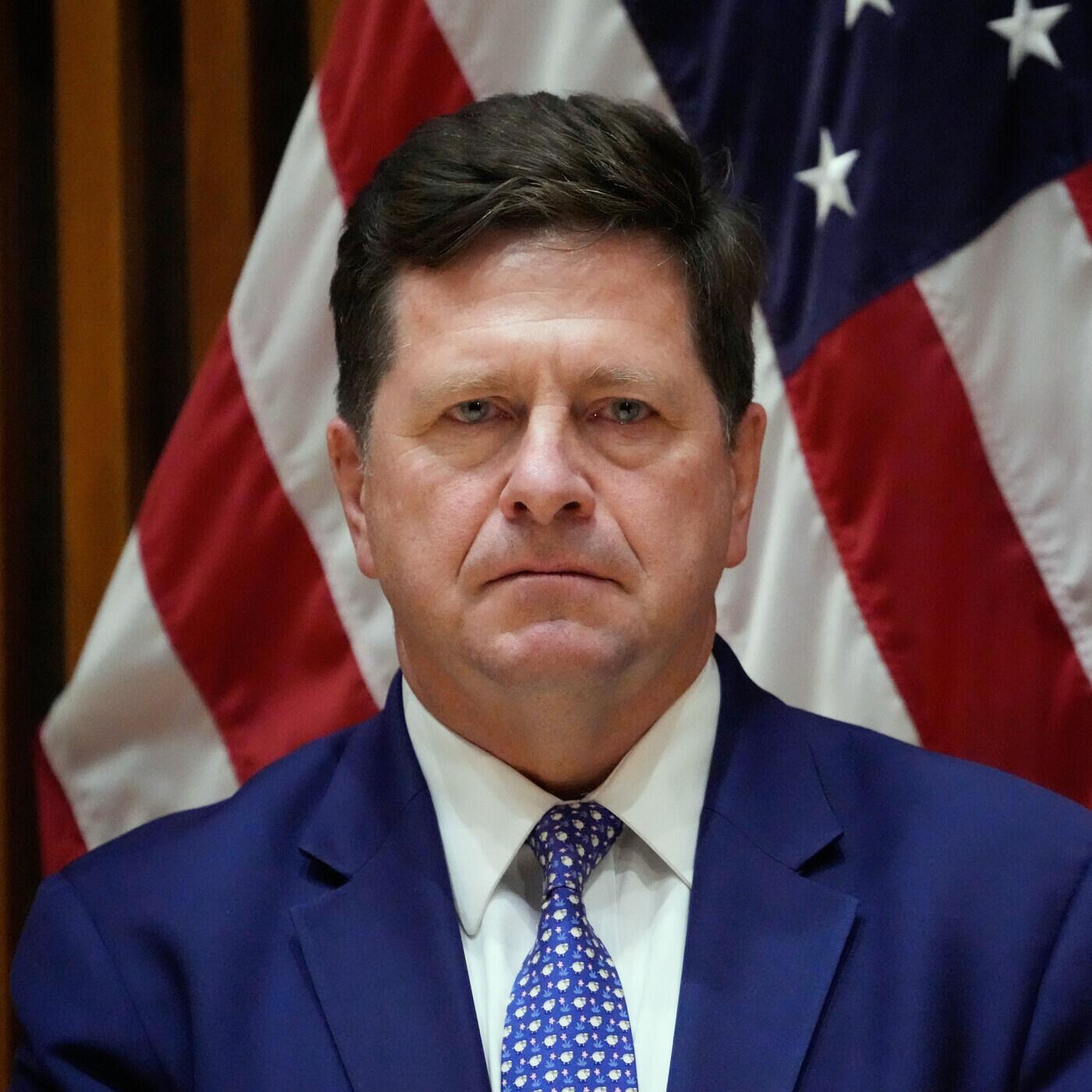
INSKEEP: OK, it’s a little complicated because the president is stopping himself from installing someone in office, but here’s what we think is happening. Bill Pulte, a man with a record of weaponizing government information to undermine Trump’s perceived foes, will serve as the temporary boss of the nation’s 18 intelligence agencies. President Trump does not want his full-time pick for that role, Jay Clayton, to move ahead with Senate confirmation until the Senate confirms a replacement for the job Clayton is leaving – U.S. attorney for the Southern District of New York.
MARTÍNEZ: NPR Congress reporter Eric McDaniel is covering this. So, Eric, take us through what the president is asking of GOP senators.
ERIC MCDANIEL, BYLINE: So in an overnight post on Wednesday, Trump made two demands. They both show his relationship with Senate Republicans is breaking down. Let’s start with the first demand. Trump said he would hold back his own director of national intelligence until the pick’s replacement is confirmed, like you heard. That leaves the very controversial Bill Pulte as director of national intelligence for now.
MARTÍNEZ: So why is he so controversial?
MCDANIEL: Yeah. He used his first role in the administration as director of the Federal Housing Finance Agency to assail folks who’d frustrated the president, like Democratic Senator Adam Schiff of California and former Fed Chair Jerome Powell. Pulte accused Schiff of mortgage fraud, which Schiff denies, and Democrats are worried Pulte would do worse with access to the entire government surveillance tool kit. Republicans are frustrated that he lacks any national security or intelligence background.
MARTÍNEZ: And the president won’t let the confirmation of his full-time pick move ahead?
MCDANIEL: No. He says it’s because he wants a backfill person in place, but he also says the Senate is trying to deprive Pulte of a turn at the job. Trump has said he wants Pulte to declassify 2020 election documents and fire folks at the DNI office.
MARTÍNEZ: OK, so you mentioned Trump had two demands.
MCDANIEL: The second is for Republicans to pass his election security law. Senate Republicans have tried twice and failed twice because the SAVE America Act doesn’t have enough support to become law. As the top Senate Republican, John Thune, said, the U.S. Senate is bound by arithmetic, and they do not have the votes to overcome the chamber’s de facto 60-vote majority required to pass legislation. But because they haven’t passed it, Trump says he’ll block the renewal of a key spy tool – part of the Foreign Intelligence Surveillance Act the government says underpins 60% of the president’s daily intelligence brief.
MARTÍNEZ: So why would the president block a key spy tool or hold open a seat in his own Cabinet?
MCDANIEL: I mean, things have broken down. First, we’ve got three coequal branches of government. The Senate can’t do what Trump wants because they don’t have the votes. U.S. elections are also already secure. The president keeps making the demands anyway. Second, the Senate is supposed to be able to vet Cabinet nominees, but the president’s decision to block the confirmation of the full-time guy deprives them of that constitutional responsibility. This is not how checks and balances are supposed to work, but it is where we find ourselves.
MARTÍNEZ: And here’s the thing – Senate Republicans have been here before not that long ago.
MCDANIEL: I mean, I’ve recently been here in studio to talk about the president’s $1.8 billion anti-weaponization fund the president hoped to use to issue payments to compensate people he says have been victimized by the government. There was also a billion dollars the president wanted to fund security of his White House ballroom project. Both of those are varying degrees of defeated, but they were both massive headaches for the Senate Republicans and nearly derailed funding for one of the president’s own priorities, immigration enforcement.
MARTÍNEZ: All this feels like it could be a little messy, Eric. I mean, where’s it heading now?
MCDANIEL: A, I don’t know. Presumably, the Senate tries to get Jay Clayton’s replacement as U.S. attorney for the Southern District of New York confirmed quickly to unlock some things. But the goalposts keep moving further away, and I imagine there are still some surprises that lie ahead.
MARTÍNEZ: All right. That’s NPR’s Eric McDaniel. Eric, thanks a lot.
MCDANIEL: Thank you.
(SOUNDBITE OF MUSIC)
MARTÍNEZ: Americans continue to not feel great about the economy or about President Trump’s leadership.
INSKEEP: And the latest NPR/PBS News/Marist poll released this morning adds more data points to that discussion.
MARTÍNEZ: NPR political reporter Stephen Fowler has been reviewing the results. OK, Stephen, so I’m going to take a guess and say, like many things in politics, Democrats don’t like how things are going, Republicans pretty much like how things are going and independents are somewhere in the middle. So how’d I do?
STEPHEN FOWLER, BYLINE: Wow. You’re pretty much spot-on.
MARTÍNEZ: Perfect.
FOWLER: Overall, President Trump faces the largest gap ever of people who approve of his job as president and those who disapprove. He’s at 36% approval and 59% disapproval – basically where we were with the last survey that came out in early May. You’ve got basically every Democrat that disapproves, about two-thirds of independents and 1 in 5 Republicans. Like previous versions of this poll, there are notable declines in different groups that helped Trump get elected in 2024 – Gen Z Americans, women, those with a household income below $50,000 a year. Some of these changes are within the margin of error of the poll, which was conducted last week, before news of the agreement between the U.S. and Iran, but it is still cratering numbers from February 2025. Case in point, back then, Trump had a net positive approval rating of 22 points among rural adults, but he’s now 10 points underwater. And by a roughly 2-to-1 margin, Latinos disapprove of Trump’s performance. It’s everywhere.
MARTÍNEZ: All right, so that’s how Americans feel about the president’s job overall. Tell us more about what people are feeling about the economy.
FOWLER: It’s even worse for Trump and, by extension, Republicans in Congress that are on the ballot this November. Only a third of Americans say they approve of how the president is handling the economy. That’s lower than the lowest marks that folks gave former President Joe Biden, who, as you may remember, presided over an economy people did not feel great about. When specifically asked about the economy, only 34% of white Americans without a college degree say they approve of Trump’s handling, down from about half in April 2025. And even though gas prices have dropped about 40 cents from this time a month ago, according to AAA, the cost of filling up continues to put a strain on budgets, people say.
MARTÍNEZ: So there’s a big-picture displeasure with President Trump’s performance and unhappiness with the economy overall. That’s one thing, though. Answering those things are one thing. What about real-world impacts of all this?
FOWLER: There are many economic factors working against Republicans this year, including the gas prices, high inflation, tariff policies, the war in Iran, although this survey was done before the latest memorandum of understanding that, as I understand, may or may not end things. In this month’s survey, people were asked about summer plans and if cost had any bearing on things. Two-thirds responded yes. Another interesting question to me asked if folks planned on taking a summer vacation, and if not, why? About half of those who said no cited cost as a top factor.
MARTÍNEZ: Still plenty of time, though, before November and the general election. What does this data tell you about what’s to come?
FOWLER: Well, it’s obviously much too soon to tell, especially when there are still primary elections going on. But this sort of persistent pessimism about the economy that dates back to the Biden administration and is especially acute among independents sets up the following situation that strategists from both parties say could play out, where in key races people who at one point supported Trump switch back to Democrats, who offer solutions to rising prices, and some of the most loyal Trump base opt to stay home.
MARTÍNEZ: All right. That’s NPR’s Stephen Fowler. Stephen, thanks.
FOWLER: Thank you.
(SOUNDBITE OF MUSIC)
MARTÍNEZ: And that’s UP FIRST for Thursday, June 18. I’m A Martínez.
INSKEEP: Indeed, you are. And I’m Steve Inskeep. Today’s UP FIRST was edited by Tina Kraja, Jason Breslow, Megan Pratz and Mohamad ElBardicy, along with HJ Mai. It was produced by Ziad Buchh and Ava Pukatch. Our director is Christopher Thomas. We got engineering support from Neisha Heinis, and our technical director is (imitating French accent) Carleigh Strange. That’s Carleigh Strange. Our deputy executive producer is Kelley Dickens. Join us tomorrow.
(SOUNDBITE OF MUSIC)
-
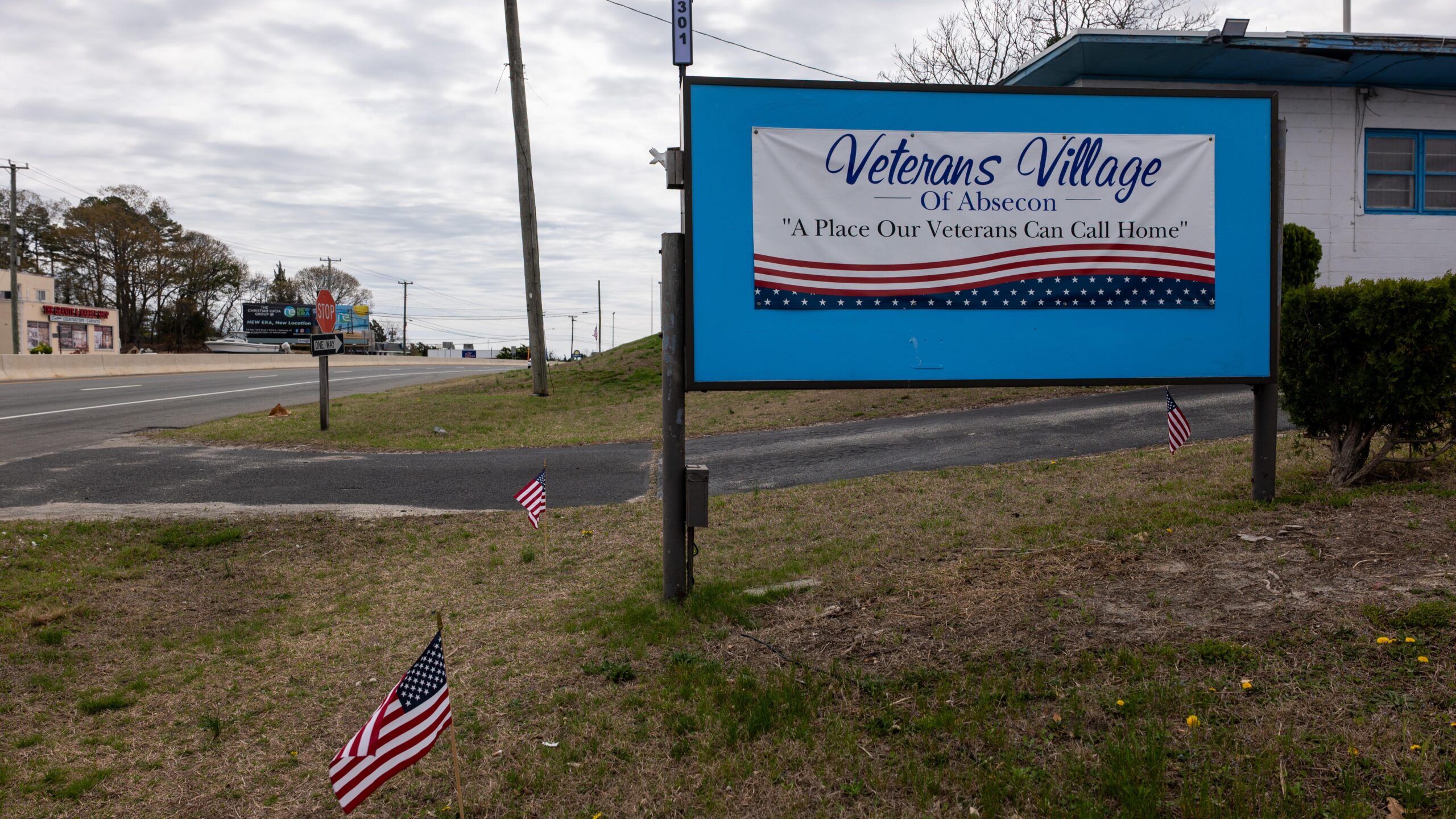
President Trump is fighting homelessness. Some worry his approach hurts veterans.
Transcript:
SCOTT DETROW, HOST:
It’s CONSIDER THIS, where every day we go deep on one big news story. Today, how the Trump administration is addressing homelessness among veterans. Nearly 750,000 people are homeless in the United States, including more than 30,000 military veterans. That’s according to the most recent government data. President Trump wants to see those numbers come down and signed an executive order to make that happen.
(SOUNDBITE OF ARCHIVED RECORDING)
UNIDENTIFIED PERSON: The Trump administration is changing federal policy when it comes to handling people who are homeless and living on the streets or in encampments. The new policy reverses putting people in housing first.
DETROW: Trump’s approach favors placing homeless veterans under involuntary or institutional care, like a guardianship, against their will. But advocates for homeless vets worry what that could mean for the people they serve.
PEDRO JAUREGUI: Rather than make it something traumatic, where we’re forcing you into it, let outreach workers like us build the relationship.
(SOUNDBITE OF MUSIC)
DETROW: CONSIDER THIS – the Trump administration issued an aggressive executive order targeting homeless people. Advocates fear what that will mean for homeless veterans. For NPR, I’m Scott Detrow.
(SOUNDBITE OF MUSIC)
DETROW: It’s CONSIDER THIS FROM NPR. More than 30,000 U.S. military veterans are homeless, though that number has gone down in the past decade, according to the latest government data. The Trump administration has promised new housing for vets, but President Trump also issued an executive order that aggressively targets homeless people. And veterans advocates fear that includes vets. NPR’s Quil Lawrence rode along with some street outreach workers in Long Beach, California, and sent us this report.
(SOUNDBITE OF DOOR SHUTTING)
QUIL LAWRENCE, BYLINE: Veronica Hood with the group U.S.VETS is loading up with hygiene kits and some hot meals, key tools for doing outreach to homeless vets.
(SOUNDBITE OF MUSIC)
VERONICA HOOD: So sorry.
LAWRENCE: The truck’s stereo starts blaring.
That’s OK.
HOOD: My phone just automatically connects (laughter).
LAWRENCE: Yeah. Yeah. Wow.
HOOD: (Laughter).
LAWRENCE: Old-school. Flock of Seagulls, whoa.
JAUREGUI: (Laughter).
HOOD: Pedro is like, stop – turn this off.
LAWRENCE: Wow.
(LAUGHTER)
JAUREGUI: Make it stop.
LAWRENCE: That’s Pedro Jauregui, her partner today.
JAUREGUI: My name is Pedro Jauregui. I served two tours in Iraq.
LAWRENCE: They’re both veterans with years of military service between them and, at this point, about as many years doing street outreach.
HOOD: So the first veteran we’re going to go meet, his name is Curtis (ph).
JAUREGUI: Curtis.
LAWRENCE: And they have a formula – a list of known homeless vets by name and a philosophy called housing first where they try to get the vet indoors and then after that tackle whatever other problems he or she has.
HOOD: And without sharing too much information, that’s his first name – 87-year-old man.
LAWRENCE: Yeah.
HOOD: Navy veteran.
LAWRENCE: OK.
HOOD: And…
LAWRENCE: Eighty-seven. Wow.
HOOD: Yes.
LAWRENCE: You heard that right. We’re looking for an 87-year-old vet living in his truck.
What’s your guess about how long he’s been on the street?
HOOD: It’s hard to say because he gives us different dates.
LAWRENCE: Yeah.
JAUREGUI: I think it’s been at least 20 years. I don’t think – I think that after he got his divorce and he lost his housing, it’s just not been consistent housing since then.
LAWRENCE: What’s he driving around?
HOOD: It’s a Dodge truck, maroon color. I can’t – I don’t know.
LAWRENCE: And that’s where he sleeps? Or…
HOOD: That’s his whole livelihood. He switches around, so we might have to search for him a bit.
LAWRENCE: U.S.VETS, the group they work with, has a bed lined up for him. And it doesn’t sound hard – right? – to convince an 87-year-old man that even temporary housing is better than living in his truck. But he’s reluctant.
HOOD: I think he might think he’d be a burden on people. So he really just wants to do it on his own.
JAUREGUI: And what proud man or vet wants to be a burden on anybody?
LAWRENCE: Yeah. Yeah.
JAUREGUI: Right?
LAWRENCE: Jauregui and Hood say it can take months or a year of dropping by with coffee or a hot meal to get from hostility to the trust that will lure a veteran off the street.
So you guys are, like, these experts in convincing people to let help?
HOOD: Yes (laughter).
JAUREGUI: We’re experts in building relationships.
HOOD: Yeah, that’s it.
JAUREGUI: We build relationships. And then we use whatever we can to…
HOOD: Yeah.
JAUREGUI: …Get the veteran the help he needs, you know?
HOOD: It’s the same thing, like, how I would want Pedro to be treated, I’m sure how he would want me to be treated.
LAWRENCE: And here’s the issue that they’re talking around, maybe to avoid the politics. President Trump made an executive order last year titled Ending Crime and Disorder on America’s Streets. It leans heavily toward institutionalizing homeless people against their will. This winter, NPR obtained a proposal following up on the executive order that would include veterans in that plan. It’s called Safe Harbor. Then in March, the VA put out a memorandum of understanding with the Justice Department about state court guardianships for veterans.
(SOUNDBITE OF ARCHIVED RECORDING)
DOUG COLLINS: We have veterans – not homeless, just veterans – who are in our facilities. They have no family.
LAWRENCE: That’s VA Secretary Doug Collins speaking at the National Coalition for Homeless Veterans Annual Conference last month.
(SOUNDBITE OF ARCHIVED RECORDING)
COLLINS: They have no representation. And they really are not in a position to actually take – make competent choices for their own healthcare.
LAWRENCE: Collins rejected the idea that VA is going to start bringing homeless veterans into treatment against their will. He said the deal with the DOJ is just for vets stranded in VA hospitals.
(SOUNDBITE OF ARCHIVED RECORDING)
COLLINS: The court will find somebody in the community – not a VA employee, not a VA attorney – will then represent that veteran with respect to their medical well-being, moving them along, getting them the healthcare that they need.
LAWRENCE: Collins says Safe Harbor, still just a proposal, was leaked. And he accused the lead Democrat on the House Veterans’ Affairs Committee, Mark Takano, of distorting it.
(SOUNDBITE OF ARCHIVED RECORDING)
COLLINS: And somebody in our building leaked it to the Hill. And guess what? Representative Takano happily put out information that wasn’t correct. But when it came out that we were attacking homeless and going after homeless, I wanted to puke. I’ve got veterans who are sitting in hospitals who can’t make competent choices for themselves to get better care and the next level of care. We’re helping them do that. The attorney general agreed with us on this.
LAWRENCE: Takano told NPR he doesn’t believe the VA secretary’s claim that Safe Harbor is just a proposal. Takano says his staff have compiled lists of cases where VA is asking courts to put homeless veterans under guardianship and strip them of their rights. Several veterans advocate groups have expressed similar concerns.
HOOD: Well, are you guys ready?
LAWRENCE: Yeah.
HOOD: OK. I’m going to ask him if it’s OK.
LAWRENCE: Back in Long Beach, our two outreach workers have found Curtis Ervin. He’s sitting in his pickup, which is pretty full of stuff. He’s got a beard, gone mostly white, and hair sticking out under a worn Oakland Raiders cap. He’s happy to see them.
CURTIS ERVIN: I was in engineering.
LAWRENCE: Ervin served in the Navy just after the Korean War.
ERVIN: I was an engine room diesel mechanic. And on the ship, that means you’re everything in engineering (laughter).
LAWRENCE: What ship were you on?
ERVIN: The last ship I was aboard was USS Bainbridge nuclear-powered destroyer.
LAWRENCE: Wow. So what year were you born?
ERVIN: 1938.
LAWRENCE: My goodness, you look good (laughter).
ERVIN: I’ve been trying (laughter).
LAWRENCE: Yeah. Wow.
ERVIN: And if I get rid of this beard – I keep telling myself I want to be better because I never worn a beard this long.
(LAUGHTER)
ERVIN: But it keeps the young women away from me.
HOOD: (Laughter).
LAWRENCE: Well, that’s the main purpose of a beard, right?
ERVIN: Yeah (laughter).
LAWRENCE: Do you mostly stay in your truck?
ERVIN: Right now, I’m in the truck. For the last two, three years, I’ve been dancing from hospital to hospital because I hurt my back and my hip. And I finally got out because they tried to keep me.
LAWRENCE: He says he’s been bouncing between hospitals for years, that and his truck. And he honestly can’t remember the last time he had a home. But Veronica Hood seems to have built a rapport, and Ervin says he’ll be here tomorrow to go with her to the hospital and then get a roof over his head.
HOOD: OK. And tomorrow…
ERVIN: OK.
HOOD: …She’s going to follow me. You’re going to follow in the truck.
ERVIN: OK.
HOOD: And you guys are going to meet me at the welcome center. We’re going to park it there, and you’re going to go to the hospital.
ERVIN: OK. Sounds good.
HOOD: OK. I’ll see you tomorrow.
ERVIN: OK.
HOOD: Right here?
ERVIN: Right here.
HOOD: OK.
LAWRENCE: Hey, it was great to meet you.
ERVIN: All right.
LAWRENCE: Good luck tomorrow.
ERVIN: OK.
LAWRENCE: All right. See you later.
ERVIN: All right.
JAUREGUI: Thank you.
(SOUNDBITE OF DOOR CLOSING)
JAUREGUI: Wow, that’s – he’s been homeless for a long time, but he’s new to this area, right?
LAWRENCE: Oh, yeah?
Driving back, Hood and Jauregui say they know some homeless people are a danger to themselves and maybe others. But for the most part, they wouldn’t want to see vets forced into treatment.
HOOD: As you saw with Ervin, it could be both beneficial or it could be extremely traumatic.
LAWRENCE: Yeah.
JAUREGUI: Rather than make it something traumatic, where we’re forcing you into it, let outreach workers like us build the relationship. Now he’s saying, yeah, I’m going to meet you guys tomorrow and we’re going to go.
LAWRENCE: I called to ask, and Curtis Ervin came in the next day. And he’s now in housing for the first time in who knows how many years. Quil Lawrence, NPR News, Long Beach, California.
(SOUNDBITE OF MUSIC)
DETROW: This episode was produced by Tyler Bartlam and Kathryn Fink. It was edited by Andrew Sussman and Tinbete Ermyas. Our interim executive producer is Courtney Dorning.
(SOUNDBITE OF MUSIC)
DETROW: It’s CONSIDER THIS FROM NPR. I’m Scott Detrow.
(SOUNDBITE OF MUSIC)
-
An inside look at President Trump’s campaign to acquire Greenland
Transcript:
DAVE DAVIES, HOST:
This is FRESH AIR. I’m Dave Davies. At a White House news conference in April, as President Donald Trump was discussing his displeasure at our European allies over the war in Iran, he said this about his problem with the NATO allies.
(SOUNDBITE OF ARCHIVED RECORDING)
PRESIDENT DONALD TRUMP: You know, it all began with, if you want to know the truth, Greenland. We want Greenland. They don’t want to give it to us. And I said, bye-bye.
DAVIES: That’s President Donald Trump in April. Trump’s campaign to acquire the territory of Greenland from Denmark through purchase, threat, negotiation or even military action is one of the stranger episodes of his presidency. And while Trump hasn’t spoken publicly about the issue in a while, our guest, New Yorker staff writer Ben Taub, says it hasn’t gone away. In a new article, he writes that there are ongoing influence operations at Trump’s direction to keep the possibility alive. Taub’s reporting traces Trump’s Greenland project from its inception in 2018 to the present day, a campaign that’s yielded some comical moments as Americans sought to woo allies and wield influence in the territory with just 57,000 people.
Taub also reveals some of the private actors who have helped to drive the process – players motivated by financial gain, notoriety or ideology. Ben Taub has been contributing to The New Yorker since 2015. Among his many journalistic honors, he won the 2020 Pulitzer Prize for Feature Writing for his work on the lasting effects on former detainees and guards of American abuses in Guantanamo Bay. His new article in The New Yorker is titled “Inside The Ludicrous, Deadly Serious Plan To Take Over Greenland.” Ben Taub, welcome back to FRESH AIR.
BEN TAUB: Thank you very much, Dave.
DAVIES: I want to begin with a moment – just before President Trump was inaugurated in 2025, when his son, Donald Trump Jr., and the late Charlie Kirk took a trip to Greenland to try and build some support among locals for this effort of the United States acquisition. How did it go for these guys?
TAUB: Well, so Charlie Kirk and Don Jr. arrived in Nuuk, Greenland, with very little warning. There was a sort of advanced team that had gone before them carrying MAGA caps to hand out to people. But the locals weren’t really sure what was happening until the Trump-branded 757 landed in their airport. And at first, people were very curious, very open to the idea of a high-profile visit, I think. But during the course of the day, President Trump himself mentioned the prospect of a military takeover. But the people who – at the time didn’t know that this was happening. They were simply hanging out with Don Jr. and Charlie Kirk.
So they arrived in Nuuk, the capital of Greenland, and were greeted by a solitary Trump supporter, a Greenlander named Jorgen Boassen, who led them down to the harbor and over to Nuuk’s most expensive hotel, where they hosted a number of locals for a very expensive lunch. And it was only after they left that local journalists in Nuuk working for the Greenlandic publications found that, in fact, among those supporters were a number of homeless people who had been recruited with the promise of a free meal. And the portrayal in sort of both Charlie Kirk’s words and those of Don Jr. was that actually, this was evidence of a profound support building for an America takeover, effectively – framed as these people would like to join the United States.
And in the aftermath of their trip, there was a huge surge in propaganda and influencers – pro-Trump influencers – arriving in Greenland and trying to sort of get a piece of their own. And the strange thing about this propaganda is it wasn’t actually directed at persuading Greenlanders that it would be good for them to join the United States. It was mostly aimed at convincing conservative Americans that this is something that Greenlanders wanted rather than actually building organic support.
DAVIES: Right. And one of the details that I love here is that you tracked down a high school student who had had an interaction here. You want to tell us about that? Was this guy…
TAUB: Sure.
DAVIES: …Easy to find for you (laughter)?
TAUB: Actually, yes. So Nuuk is a small town. I mean, it is the capital of the country, but it is a capital with 20,000 people. And it’s very easy to – once you build some local context and local trust, to get to know pretty much whoever you need to relatively quickly. So through the help of a local Greenlandic journalist named Nukaaka Tobiassen, I found a young high schooler named Malik Dollerup-Scheibel, who had run into Don Jr. and Charlie Kirk at a pool bar called Daddy’s in the center of Nuuk. It’s a gathering space for a lot of people in town. It’s very close to the Greenlandic Parliament, and so it’s colloquially known in town as the Danish embassy. So they were at Daddy’s, holding court, and he was handed a MAGA hat and took a photograph with Don Jr., Charlie Kirk and several other locals. And it was only later that he realized that he was being used. He said, we were kind of manipulated. It was only when they posted the pictures that it looked like there were so many people who liked him, but actually, we were just friendly and people got free beer.
But of course, when they went back to the U.S., Charlie Kirk went to his broadcast studio and gave a pretty, let’s say, dubious account of the – his few hours in Greenland, claiming falsely that there were polar bears walking around in Nuuk and that there were young Greenlanders coming up to him saying that they have rubies the size of baseballs which the Danes won’t let them mine, and the Danes won’t let them mine their gold, their lithium, their gas, all this stuff, which is completely untrue because Greenland has total autonomy of and ownership over its natural resources. And he used this to sort of pivot into the – he claimed – locally, the narrative that it’s time for a rebellion against the Danes, which is not really what you hear in Nuuk when you actually go talk to people.
DAVIES: All right. Let’s go back to the beginning of this strange episode. You know, the origins of this idea, you tell us in the story, goes back to Trump’s first term in office – I think 2018 – when he hears about this from a former business school classmate. Is that right?
TAUB: Yes. It was from his longtime friend, Ronald Lauder, who had suggested that he buy the island. And the first time he ever brought it up in any context which any of us are aware of is when he summoned his national security adviser at the time, John Bolton, into the Oval Office and confided that Ron Lauder had suggested that he buy the island. He asked Bolton what he thought of it, and Bolton was a little bit startled but said, essentially, well, it is true that there are security issues of importance to the Arctic, and it’s a region that we’ve largely neglected in recent years. And there’s probably a lot of ways to sort of handle this. And so he told Trump that he would do some research and get back to him with options.
But actually, what followed was a kind of – as Fiona Hill, who was serving as the senior director for Europe on the National Security Council, put it to me, it was all done in a slightly clandestine cloak-and-dagger way, where Bolton summoned her into his office, ashen-faced, and essentially said, look, Ron Lauder has told Trump that he needs to buy Greenland, and we’ve got to head this off before he announces this to everybody.
DAVIES: People will remember Fiona Hill from the impeachment hearings in 2019, right? She was quite an impressive figure on the National Security Council. So she does some research. What happens?
TAUB: So it is absolutely true and important that the Arctic is becoming a really serious site of national security interests, not just for the United States but for Russia, for China, for Norway, for all of the Arctic nations or, as China likes to call themselves somewhat questionably, a near-Arctic nation. And, you know, basically, this is a region that has not really been useful or traversable for any military or commercial purpose, except for Cold War-era submarines going under the ice cap. But as it melts, this opens up new waterways that are very strategically important to a lot of countries. And during the Cold War, it was primarily viewed through the lens of the direct pathway for nuclear ballistic missiles to travel from Russia or from Soviet submarines in the far North.
DAVIES: The United States does have this one base there. Under a treaty, it has the opportunity to establish military facilities in Greenland. Most of them have been abandoned, except for this one base to track incoming missiles, right?
TAUB: Correct. So the U.S. essentially took over Greenland militarily during the second world war. It was at the request of the Danish consul in Washington, D.C., at the time, who was essentially acting alone in what he regarded were the interests of his country while the actual government in Copenhagen was under Nazi occupation. And so he encouraged and essentially allowed the U.S. to build military facilities in Greenland to defend those critical waterways and the northwest sort of coastal areas from Nazi incursion. This was an incredibly important and valuable thing.
And then during the Cold War, the agreement between the United States and Denmark that – which is in place since 1951, was that the U.S. could stay, could continue to maintain its military and presence and could expand it pretty much however it saw fit in coordination with the Danish and Greenlandic governments. That’s been true since the ’50s. It remains true today. If the U.S. wanted to expand its military presence against legitimate security concerns from Russia or China or anyone else, it could do so in coordination with the Danes. And up until about a year and a half ago, I think that would have been most welcome.
DAVIES: Right. You know, so eventually, this does become public because The Wall Street Journal does a story that says Trump is talking about buying Greenland, which gets a lot of attention. And John Bolton, the national security adviser, wonders where this came from ’cause he’s quite sure his staff were under strict orders not to talk about it. Finally figures it out. Where did it come from?
TAUB: So yeah. Bolton said that he’d sort of looked around to figure out what had happened. And what he found out was that at various occasions down at Mar-a-Lago, Trump was sitting around at his dinner table and saying to the guests, what would you think if we bought Greenland? And the guests would say, oh, well, that’s a good idea. And that’s how this sort of came out at the time.
And, you know, the truth is that just before The Wall Street Journal published this information and took the Danes by complete surprise, a couple of weeks prior to that, the U.S. embassy in Copenhagen had called the Danish Foreign Ministry and said that Trump and Melania Trump, the first lady, would like to visit Denmark. And they would appreciate a formal invitation from the queen.
So the framing was going to be, you guys have to issue a formal invitation from the royal family to the United States, which we will then accept. And the Danes, of course, proceeded to do so, unaware that the reason for this was actually that White House staffers had heard that Melania wanted to see Copenhagen and thought that it was going to be a nice stop for her and Trump on the way home from a state visit elsewhere in Europe. So that was why that sort of all happened, and the Danes kicked into gear to organize this state visit – very expensive, lots of security, lots of pomp and circumstances involving the royal family.
Then this leak takes place in the Journal and throws it all into kind of a political scandal prior to the visit taking place. And at that moment, the prime minister of Denmark, Mette Frederiksen, when asked about Trump’s aspirations to buy the island, you know, said, this is absurd. Greenland has had a self-government since 2009. It’s not really Denmark’s to sell in the first place. So even if it was the 19th century and countries were still buying and selling territories, it wasn’t really theirs legally to do so, even if they wanted to, which they didn’t.
So Trump fixated on her comment that it was absurd and said that that was really nasty of her. And what actually sort of followed was – as it was reported at the time – he then, because she had said this, was so offended, he canceled the state visit to Denmark. But in reality, the reason that they canceled, according to Bolton, is that while he was in a private meeting with Trump, Melania called. And Trump answered the phone on speaker, and Bolton overheard the exchange. And she said, I don’t know why people keep saying I want to go to Denmark. If you want to go, I’ll go with you. But the idea had not come from her. And so Trump hung up the phone, canceled the trip and then blamed it on Mette Frederiksen.
DAVIES: Wow. We need to take a break here. Let me reintroduce you. We are speaking with Ben Taub. He is a staff writer for The New Yorker. His new article is titled “Inside The Ludicrous, Deadly Serious Plan To Take Over Greenland.” We’ll continue our conversation in just a moment. This is FRESH AIR.
(SOUNDBITE OF MARCO BENEVENTO’S “GREENPOINT”)
DAVIES: This is FRESH AIR, and we are speaking with Ben Taub. He’s a staff writer for The New Yorker, and he has a new article that takes an inside look at Donald Trump’s efforts to acquire Greenland. It’s called “Inside The Ludicrous, Deadly Serious Plan To Take Over Greenland.” Taub’s reporting reveals some of the private actors who sought to advance the acquisition effort with motives of their own.
So give us an idea of who some of these characters were. You want to pick a couple and tell us about them?
TAUB: Yeah. So right after this sort of episode involving The Wall Street Journal and the visit to Denmark that never took place, it seemed to the Danes and to the public in both the United States and in Denmark that this entire idea had essentially evaporated. But what actually happened was the discussion just moved to secure rooms in the Eisenhower Executive Office Building, where the National Security Council meets. And there it took up a lot of energy among Trump’s national security staff.
You had a new – what they call a Policy Coordination Committee that was set up, which is – in this case, it was a secret National Security Council task force that was focused on the acquisition of Greenland. And among the leaders of this effort were a former special operations soldier named Drew Horn. During Trump’s first term, he worked for both the departments of Energy and Defense. He worked for the Office of the Vice President, and he also worked in the Office of the Director of National Intelligence. And he was the co-leader of the Greenland PCC, as they called it.
And then you also had ideologues, such as a man named Tom Dans, who is sort of a part of the MAGA crowd, as he would describe himself, who joined Trump’s term after his brother, who went on to become the director of Project 2025. His brother was a lawyer in the White House who essentially participated and led a purge of career officials and replaced them with loyalists. And so Tom Dans joined the administration in early 2020 in the Treasury Departmentì and, soon thereafter, was serving as the Treasury’s representative on the Greenland PCC.
And the focus of the Greenland PCC was – it was to subvert the Kingdom of Denmark. There’s sort of no easier or clearer way of putting it. Their activities were centered on a real concern about potential pathways for Greenlandic independence and potential vulnerabilities of Greenlandic independence. There was a real legitimate national security issue to consider about – if Greenland is on an inevitable path towards independence, then would the Greenlandic government in, say, 10 or 20 or 30 or 50 years still want to honor the agreements and the treaties that the United States has with Denmark, its former colonial master, as one of the senior national security officials put it to me? But the way that they went about addressing this question was not to coordinate, you know, this in open dialogue with the Greenlanders or the Danes and articulate their concerns, but rather to essentially work to try to accelerate Greenlandic independence in ways that would bring about a greater reliance on the U.S. and essentially cut Denmark out of the picture.
DAVIES: Right. We should, just for context, note that in 2009…
TAUB: Yeah.
DAVIES: …Greenland had acquired self-rule. So even though it was a part of the Kingdom of Denmark, it now elected its own parliament, right? There are political parties.
TAUB: That’s right. They have their own self-government, which has jurisdiction over most domestic matters. Denmark still maintains jurisdiction over matters that involve national security, defense, the constitutional law and certain things that sort of are integrated across the kingdom. But Greenland has the right, as part of the 2009 home-rule agreement, to essentially activate through referendum its own decision to move forward with full independence. And so they could do that whenever they choose to.
DAVIES: Yeah. And I’m wondering, from your sense reporting in Greenland – you took several reporting trips there – do Greenlanders feel that Denmark is a colonial power that is exploiting the territory, or do they feel some loyalty towards the kingdom?
TAUB: It’s a very difficult sort of domestic politics question for Greenland. I think there are obvious instances of historical injustice, which are very fresh in Greenland and which affect people to this day, which the Danes are doing, you know, deep reflection on and trying to pursue just pathways forward with the Greenlanders to rectify these past injustices. And the truth is that, you know, prior to Trump’s second term, most Greenlandic political parties were, in some form or another, pro-independence. What sort of pathway or timeline were among the chief variations between the parties themselves.
But really, Trump’s aggression towards Greenland and efforts to overtly break it apart have been essentially the greatest thing that’s ever happened to Danish-Greenlandic relations in the past hundred years. I think Trump’s subversive activities and overt aggression towards the incredibly small and vulnerable population of Greenland has driven them to seek protection and unity with Denmark, with the European Union and with the rest of the NATO Alliance as their greatest chance of defending themselves against the United States.
DAVIES: One of the interesting things about this to me is, you know, when we think about Trump coming back in for a second presidential term, I mean, there are a lot of issues he’s dealing with – I mean, the economy and tariffs and all this. But somehow, this guy, Tom Dans, who’s fascinated with the Greenland thing, managed to have a real effect on the transition process and elevate this idea in the Trump agenda.
TAUB: Yes, that’s absolutely true. And essentially, as he put it to me, he spent the weeks following the election pushing his Greenland agenda in conversations with people who were on the transition team until it eventually became one of Trump’s central fixations. He said, essentially, you – if you coach an idea and you work it and sell it and help people understand why it makes sense, and ultimately it becomes their idea, not yours, then there’s no end to what you can accomplish in D.C. if you’re willing to give other people the credit. So that’s sort of how this seems to have taken off.
Dans, for his part, has a family connection to Greenland in that his grandfather served in – as a merchant mariner in the second world war for the United States and was deployed to Greenland and helped build the Pituffik Space Base there, which is the only remaining military base for the United States open still. So he had never been to Greenland himself until, I believe, last year. But it was something that he thought about a lot and he had a connection to, and that’s why he was sort of obsessed with it during the first term and wanted to be the representative for the Treasury on the Greenland PCC.
DAVIES: That’s the Greenland Policy Coordinating Committee that’s kind of – operates within the National Security Council, right?
TAUB: Correct, yeah.
DAVIES: Which the government of Denmark did not learn about for a long time.
TAUB: Yeah. In fact, I went to Copenhagen in the course of my reporting to – once I’d learned details from the Greenland Policy Coordination Committee because their work was retroactively classified. And so once I sort of knew how it worked and who was on it and what it was aiming to do, I went to Copenhagen to essentially ask the Danes how they navigated that entire period while, you know, overtly dealing with the diplomatic situation with the United States and everyone’s an ally and everything’s good, but knowing that Americans were covertly running operations against them. And to my surprise, the Danish government was unaware of this and was learning it from me because the United States had taken such measures to essentially – I mean, it’s really sad and difficult for me to be using these words, but because they were being duplicitous towards an ally. Like, that is what was happening. They were working to subvert the Kingdom of Denmark while pretending to be a strong ally.
DAVIES: We need to take another break here. Let me reintroduce you. We are speaking with Ben Taub. He is a staff writer for The New Yorker. His new article is titled “Inside The Ludicrous, Deadly Serious Plan To Take Over Greenland.” He’ll be back to talk more after this short break. I’m Dave Davies, and this is FRESH AIR.
(SOUNDBITE OF AARON PARKS’ “SMALL PLANET”)
DAVIES: This is FRESH AIR. I’m Dave Davies. We’re speaking with New Yorker staff writer Ben Taub. He has a new article which takes an inside look at President Donald Trump’s campaign to acquire Greenland from Denmark. It began during Trump’s first term as a proposal to buy the territory, which went nowhere. That effort would blossom in his second term into threats of military action and high tariffs. Taub’s reporting reveals some of the private actors who sought to advance the acquisition effort with motives of their own. Taub’s article is titled “Inside The Ludicrous, Deadly Serious Plan To Take Over Greenland.”
So early in the second Trump term, all these conservative influencers get into the act of trying to convince Greenland that it is in their interest to welcome the embrace of the United States, you know, that they’re being mistreated by Denmark. What does this feel like? I mean, what is Trump saying about all of this?
TAUB: In terms of what they promised to Greenlanders, it’s pretty much uniformly one thing, and it’s just money. There’s not really any other case that they’re making that sticks. You know, when Charlie Kirk was making the case himself after Greenlandic elections last year, he was saying that joining the United States would be nothing but upside for the great people of Greenland, he said. But like Trump, he just focused on money. And these four lines are just verbatim what the case was, and it’s saying the same thing over and over again. He said, you will be wealthier. You will be richer. You will have the U.S. dollar. You will have more purchasing power.
And it’s framed as if, you know, these are four different things because he’s coming up with four different reasons, but it’s all the same thing. It’s that the U.S. has more money, and we’re going to give it to you. That’s the pitch. There’s nothing about dignity or self-determination that really holds – or healthcare – that makes any more sense.
As for Trump’s case to the United States, it’s – you know, first of all, he’s always saying that we need to defend it against all the Russian and Chinese ships that are circling Greenland, trying to take it militarily. That’s completely fiction.
It is absolutely the case that throughout the entire Cold War and to this day, Russian ballistic nuclear submarines go between Greenland and Iceland and the United Kingdom to get into the North Atlantic. That is an extremely well-defended focus of NATO, has been for 80 years. There’s all kinds of multidomain military operations focused on tracking Russian submarines as they go past the east coast of Greenland to get into the North Atlantic. But the Chinese ships are in the Russian part of the Arctic. They’re nowhere near Greenland. And the Russian ships are focused on getting into the Atlantic Ocean, not in taking Greenland.
The east coast of Greenland, by which they pass anyway, is basically depopulated. There’s only 2,300 people on the east coast of Greenland, while 96% of the Greenlandic population lives on the west coast because the way that the currents flow, you have – on the west coast of Greenland, facing Canada and the United States, you have ports that have open water even in the winter. And on the east coast of Greenland, you have water and wind blowing down from the Arctic. And for the 100 kilometers out from the coastline, it’s just solid ice. So you can’t even approach the Greenlandic mainland, let alone land on it or let alone have any military utility in sort of taking eastern Greenland, because there’s no one there.
DAVIES: One of the other things that Trump and others have said is that there are rare earth minerals in Greenland that could be mined and would be a strategic advantage to the United States and a financial advantage for Greenland.
TAUB: Yes. And in some sense, that is true in that there are very likely rare-earth deposits in Greenland that have valuable minerals in them. But the challenge economically is that it’s not profitable to mine them. The problem is in the cost of logistics and infrastructure, poor weather and bureaucracy. It’s an incredibly remote Arctic environment, and the costs exceed the value of whatever can be pulled from the ground.
And the truth is that you don’t need to annex the island to do business with them. The Greenlanders have been saying since 2019, when Trump’s ambitions first leaked in the Journal, you know, we are not open for annexation, but we are open for business. And they’ve been open for investment for a very long time, and no one wants to invest in it, frankly. It’s just not a profitable investment. That’s the challenge.
So the mining thing doesn’t really add up. The only explanation that has ever come out of Trump’s mouth that actually makes sense for his ambitions was when, about six months ago, he told The New York Times that he considers it psychologically important to own the territory rather than to merely have military access to it. And he added that, you know, essentially, with respect to limits to his global powers, the only thing is his own morality. He said, my own mind – it’s the only thing that can stop me.
DAVIES: As part of the United States’ effort to woo support in Greenland, there was a plan to have Usha Vance, the wife of Vice President Vance, visit Nuuk, the capital of Greenland, but that didn’t happen. Why not? What happened?
TAUB: Yeah. So this was one of those amazing moments. The White House announced that Usha Vance, the vice president’s wife, would attend the dog sled race with one of her sons and visit Nuuk as a tourist. And Trump’s phrasing of this was, she’s a very nice woman and loves the concept of Greenland, so she is going there. So then a couple of military transport planes from the United States delivered an advanced security team because, you know, this is the second family of the United States. And the Danes, too, treated this as an important VIP visit that needed security. So they deployed police to maintain public order and make sure that they would be safe in Nuuk. And for the next several days, American representatives were – as a Danish TV correspondent, put it, they were seen walking around, practically knocking on one door after another and asking people if they’d be interested in a visit from the vice president’s wife, and everywhere, the response was no thanks.
So at that point, the White House canceled Usha’s touristic visits completely and, instead, reframed this as, the vice president is going to make sure that we’ve got a good check on the security situation in Greenland, given all the essentially fictional Russian and Chinese threats happening up there. And so he traveled up to Pituffik Space Base on an official visit, where he then berated Denmark, lied about Russia and China attempting a lot of very aggressive incursions into Greenland and essentially blurted out the truth at one point. He said, the president said we have to have Greenland, and added, we can’t just ignore the president’s desires. So that was sort of the end of that for a while. And from that point forward, it seemed like things were quieting down in terms of influence operations for a while. But it soon became clear in Denmark and Greenland that what was actually happening, was it was just kind of a strategic pause while they regrouped and figured out what to do instead.
DAVIES: We need to take another break here. Let me reintroduce you. We are speaking with Ben Taub. He is a staff writer for The New Yorker. His new article is titled “Inside The Ludicrous, Deadly Serious Plan To Take Over Greenland.” We’ll continue our conversation after this short break. This is FRESH AIR.
(SOUNDBITE OF MUSIC)
DAVIES: This is FRESH AIR, and we’re speaking with Ben Taub. He is a staff writer for The New Yorker. He has a new article titled “Inside The Ludicrous, Deadly Serious Plan to Take Over Greenland.”
So there were these efforts to get people in Greenland to welcome acquisition by the United States, to build support for that. Didn’t seem to go very well. And then in January of this year, after the U.S. military action to take out Venezuelan President Nicolás Maduro, Trump’s rhetoric about taking over Greenland really kind of ramped up, didn’t it?
TAUB: Yes. In the aftermath of the Venezuela raid, it really seemed to the Danes and the Greenlanders that, sort of piggybacking off of the success of that raid, he might do something else. And there were a number of indications that Greenland would be the next target. Among them was that a former White House official, Katie Miller, who’s also married to Stephen Miller, Trump’s Homeland Security adviser, posted online a map of Greenland overlaid with the American flag with a one-word caption. It just said, soon.
And then Trump said, we do need Greenland. Absolutely. And his acolytes were basically making clear that this was a priority. Stephen Miller himself went on CNN and said, nobody’s going to fight the United States militarily over the future of Greenland. By what right does Denmark assert control over Greenland?
So at that point, the Danes were really spooked, and they and seven other European nations deployed troops to Greenland. They actually carried live ammunition and explosives, and they prepared to blow up Greenland’s runways to slow any possible invasion. The Danes also carried fresh blood packs in case of casualties and were operating under standing orders that were reiterated to them that they should shoot at any invading forces.
One thing to be really clear of, though, is that they don’t have any concrete evidence of a planned U.S. attack. There was no direct intelligence that this was likely to happen. It was more contextual. And in the aftermath of Venezuela, it seemed like this – as Trump’s folks frame it, this extension of the Monroe Doctrine, which was really now looking at – as a kind of, like, conquering strategy all over the Western Hemisphere – that was something that would put them in the target sights.
And so as far as the Europeans were concerned – and this is as one senior European source who was involved with the planning put it to me – the idea was to raise the cost. As in explicitly, if the United States is going to invade Greenland, they’re going to have to kill European troops to do so. And probably the Americans would succeed at taking over Greenland. They have the military capacity to do so. The Europeans didn’t doubt that. But they would actually fight. And they would force them to shoot them, and they would force them to kill them.
And this was the gamble – that doing so would sort of raise the cost politically as well for Trump and the White House in terms of planning for something like this. It would make it difficult to do the quick-and-dirty annexation, as a Danish military intelligence officer put it to me. It would make it something that would be potentially very, very complicated and unpalatable in terms of domestic politics, where obviously going to war with Europe is the kind of thing that could escalate to impeachment very quickly in a way that going to war with Iran did not. And so that was the message they intended to send.
DAVIES: I mean, this is a remarkable moment – I mean, a NATO ally arming to defend itself from the United States because Trump had refused to rule out military action to acquire Greenland. How did Trump respond to these military steps by all of these allied European countries?
TAUB: He absolutely understood the message of force, and his response was to announce that every European nation that had deployed troops to Greenland would face new tariffs – at first 10%. And then he added that if by June 1 the United States did not reach a deal for what he called the complete and total purchase of Greenland by that date, he said then they would rise to 25%.
Later, Mark Rutte, the secretary-general of NATO, spoke to Trump a few days later at Davos. And he diffused the situation, and Trump rolled back these tariff threats and said that for now, military options were off the table. And things have kind of quieted down since then. But the truth is that the Greenlanders and the Danes, I think, are essentially lucky, as they see it, that the U.S. got tied up in Iran and are fearing that if things wind down with Iran and this new deal sort of sticks, that he might refocus his attention to Greenland soon enough. But since January, there have been no military threats and things appear to have been quieted down.
DAVIES: Now, you do write that even though, you know, this isn’t being talked about actively now, there are ongoing influencing operations at the direction of Trump. What exactly are they?
TAUB: Yeah. So in December of last year, Trump announced on Truth Social that he had a new so-called special envoy to Greenland, and that’s Jeff Landry, the governor of Louisiana. This appointment came as a surprise to Denmark, Greenland and the State Department.
DAVIES: And the State Department?
TAUB: Yeah. The State Department didn’t know either. And so Landry, who, of course, had never been to Greenland until last month, took it upon himself to sort of refocus and professionalize the influence operations that had gone so spectacularly poorly last year when they were done privately. And so he invited Jorgen Boassen, this solitary Greenlander who supports Trump, to the governor’s mansion in Louisiana. And he asked Boassen what really mattered to Greenlanders that they could help with. And Boassen said that the healthcare system in Greenland is a disaster and, as he put it, it’s a death sentence to get sick in Greenland.
Now, Greenland has universal healthcare. And for serious operations or health problems, Greenlanders are often flown to Denmark for treatment – for free treatment. But it is also the case, of course, that in very, very remote parts of Greenland there are towns that have no doctors. There are towns where access to care is very difficult. And in order to get proper care, they do have to travel to Nuuk. So it is true that there is a very vulnerable situation for people living in remote parts of the country, but Boassen gave Landry the impression that it was a death sentence to get sick in Greenland.
So at that point, Landry talks to Trump, and they decide to deploy a U.S. naval hospital ship to Greenland to pick up the slack. And Trump takes to Truth Social to announce that it’s on its way, and he posts an illustration of the U.S. naval ship the Mercy. Of course, it wasn’t on the way. The Mercy was in dry dock in Alabama. So, too, was the other U.S. Navy hospital ship. Both were undergoing repairs. No ship was on the way.
DAVIES: And we should note that Danish officials responded strongly to the notion that, you know, getting sick in Greenland was a death sentence, right? I mean, they said there is a healthcare system.
TAUB: Yeah. In fact, the prime minister of Greenland himself said, look, we have a public healthcare system where treatment is free for citizens. And he added, please talk to us instead of just making more or less random statements on social media.
DAVIES: So again, we’re talking about the governor of Louisiana. The sitting governor of Louisiana is Trump’s special envoy to Greenland – Jeff Landry. One of the other things you write about is that he traveled to Greenland uninvited to attend a business conference with the instruction of just trying to – what? – make some friends.
TAUB: Yeah. He – so upon landing, he said that his instructions from Trump were to go over there and make a bunch of friends, as many friends as he can. So he also brought with him a doctor who claimed to have come to assess the medical needs of the Greenlanders. But the Greenlandic health ministry had no idea that he was coming, and there had been no coordination. So they were obviously very upset about that. And the health minister even put out a statement to the effect of, essentially, you know, this isn’t a population for you to come experiment on and view as subjects for your research.
Of course, you know, the business conference was a real opportunity for the Americans, if they wanted to, to show real investment interest in Greenlandic businesses. But instead, Landry’s visit essentially took all the oxygen out of the event. A lot of journalists flew in just to basically try to figure out what on earth Landry was doing there, since he was not officially part of the conference. He had merely sort of bought a ticket to show up in the audience.
He then sat in for about 30 minutes before walking out and then going around trying to talk to young Greenlandic children, offering them chocolate chip cookies. He said, if you come to Louisiana and you come to the governor’s mansion, all the chocolate chip cookies you could eat. So then in another sort of bizarre encounter that was captured on film, a Greenlandic boy apparently asked if Landry was famous. And Landry’s wife said, I don’t know if he’s famous, but he’s the governor of Louisiana, at which point Landry said to him, do you want to take a picture? And the boy just shook his head and said no. So that’s pretty much how the visit went.
This was against the backdrop of a very important event, though, whose significance can’t be understated. The day after Landry left Greenland, the United States opened a very, very large consulate in Nuuk. It’s 30,000 square feet. And up until recently, you know, the U.S. had no diplomatic presence in Greenland since 1953, when they shut down their last consulate, but they reopened it during the pandemic in 2020. And at the time, it was operating, up until very recently, out of a small red cabin that had, I think, two or three employees total. Now they were renting this 30,000-square-foot office space in the center of Nuuk, and the day after Landry left, they opened it as the official new U.S. Consulate. This is a huge facility in one of the biggest buildings in the capital of Greenland and therefore the entire country. It’s about 150 meters from the parliament. And it’s now regarded as something that people fear as a kind of annexation headquarters because the facility does not make sense, except in the context of something that looks like a takeover.
DAVIES: We need to take another break here. Let me reintroduce you. We are speaking with Ben Taub. He is a staff writer for The New Yorker. His new article is titled “Inside The Ludicrous, Deadly Serious Plan To Take Over Greenland.” We’ll continue our conversation after this short break. This is FRESH AIR.
(SOUNDBITE OF JAY-Z AND BEYONCE SONG, “’03 BONNIE & CLYDE”)
DAVIES: This is FRESH AIR, and we’re speaking with Ben Taub. He is a staff writer for The New Yorker. He has a new article titled “Inside The Ludicrous, Deadly Serious Plan To Take Over Greenland.”
You know, you’ve made several reporting trips to Greenland. You spent a lot of time there doing reporting on things other than this acquisition effort. But what’s your sense of – from looking at the media there, the public debate, the online discourse – of how the threat of an American invasion translates into what they might experience, what their own perceptions of this are?
TAUB: Yeah. It has taken a tremendous toll in Greenland. You know, there’s sort of shocking figures of the mental health toll that it’s taken just in the past year. A recent health survey by the Center for Public Health in Greenland noted a more than fourfold increase in the past year alone in the percentage of Greenlanders who show symptoms of psychological distress. Eighty-two percent of respondents said that Trump’s annexation rhetoric negatively affects their everyday lives, and 1 in 4 said that they have difficulty sleeping. There’s also Greenlanders who have left the country out of fear of an invasion and moved to Denmark for safety reasons.
I mean, it just is the case that as Americans, we are represented by a government that has a very, very powerful military and is a superpower. It’s – as Stephen Walt put it in an essay for Foreign Affairs earlier this year, we have become a predatory hegemon. And the people on the receiving end of this are a small, indigenous population in a country that has received very little attention in recent decades and, in fact, throughout all of history. And now, suddenly, they’re thrust into the spotlight in the most unpleasant, most hostile possible way. And at the end of the day, it’s the people who are representing us who are doing this to them.
DAVIES: In some ways, it sort of seems like such an abstract and – kind of idea, I mean…
TAUB: Yeah.
DAVIES: …An abstract and, as the title of your story says, ludicrous idea.
TAUB: Yeah.
DAVIES: I mean, you might think that people might laugh it off, but it sounds like people are not.
TAUB: No.
DAVIES: How do they talk about this?
TAUB: Yeah. A lot of Greenlanders are just completely exhausted. I mean, I think that Trump’s initial sort of interest in Greenland was, in some ways, regarded at first as a kind of opportunity. This was a way of potentially luring greater investment from the outside world, not just America, but from Europe, frankly, from Denmark by – you know, some Greenlandic politicians saw the U.S. interest as a kind of cudgel, a piece of leverage to use against Denmark in their own domestic negotiations for greater control over their destiny. And now it’s kind of morphed into something where people are just completely exhausted and worn down. They don’t trust the United States. That trust cannot be rebuilt. It’s something you can only break once, and it is broken.
At the same time, there is this kind of resilience in the society to influence operations, partly because they have such a unique language and such a small population. So everyone really does know everyone else. And so there is a kind of domestic resilience in that everyone can instantly identify what’s going on around them. But it’s sad because there’s also a great suspicion now and a great deal of alertness that, you know, they can’t just regard American businessmen coming to invest in their businesses as pure interest in their future or in a joint venture. They have to be on their guard and be suspicious in ways that are actually unhealthy, unhelpful and might actually divert legitimate business interest in their country for mining or minerals or other activities altogether.
DAVIES: And I wonder if the United States’ willingness to engage in military action, like, you know, deposing Maduro in Venezuela and, you know, attacking these ships that are regarded as drug runners but which are, you know, subject to attack without any warning – if that kind of sends a message that there may be a reckless use of this enormous power.
TAUB: Yeah. If there’s one consolation that people can take from that, it was articulated to me quite well, I think, by a man named Jacob Kaarsbo, who was a Danish former senior military intelligence officer who worked alongside the United States in Afghanistan and Iraq for 15 years. And he was saying the absurdity of that scenario – a full-scale invasion of Greenland – is in some ways kind of reassuring because he thinks that the rank-and-file of the U.S. military, the generals, the intelligence officials, are still very closely integrated with European allies. There’s daily operations and work together, and they are close allies, even as the politics are what they are.
And his sort of solace that he takes in this scenario is that it’s so absurd that it would definitely get leaked if there was a sort of plan for an amphibious assault. An amphibious assault would take time. You have to get ships in the vicinity of Nuuk to pull that off. And so, by that point, you know, this is the kind of thing that would be all over The New York Times and the press in the United States and forcing congressional hearings if this was really something that was on the table.
And so what he’s more concerned about is this kind of quick-and-dirty takeover – the 2 a.m. version, as he put it – where a couple of planes with a flight plan that says Pituffik Space Base suddenly just veer towards Nuuk. And then you have a couple hundred Special Forces officers who just land and take over the capital, the airport, the Parliament and so on. But that’s the kind of scenario that really can be deterred with the small European force that they deployed in January. You blow up the runways, you have troops who will fight back. And suddenly, it’s a politically unviable thing, and it’s the kind of thing where you can be deterred.
And so as long as the Europeans essentially continue to show that they will fight for Greenland, as they showed in January, I think that, you know, there might be a lot of continued interest, rhetoric, aggression, influence operations and every manner of sort of denigrating remarks towards Greenland and Denmark and Europe for the remainder of the term and possibly beyond. But I think that the message was sent that Europe will fight for this, and there will be casualties on both sides. And the question is, is that something that Trump – or any president, for that matter – could survive domestically?
DAVIES: Well, Ben Taub, thank you so much for speaking with us.
TAUB: Thank you so much for having me on, Dave.
DAVIES: Ben Taub is a staff writer for The New Yorker. His new article is titled “Inside The Ludicrous, Deadly Serious Plan To Take Over Greenland.”
On tomorrow’s show, we hear from comedian Ali Siddiq. He served six years in a Texas prison and turned his life into some of the most-watched storytelling in comedy. He has a new special out in time for Father’s Day called “My Father” about a man who wasn’t always there but who Siddiq wanted to be like anyway. I hope you can join us. To keep up with what’s on the show and get highlights of our interviews, follow us on Instagram – @nprfreshair.
(SOUNDBITE OF PAT MARTINO’S “EL HOMBRE”)
DAVIES: FRESH AIR’s executive producer is Sam Briger. Our technical director and engineer is Audrey Bentham. Our interviews and reviews are produced and edited by Phyllis Myers, Ann Marie Baldonado, Lauren Krenzel, Therese Madden, Monique Nazareth, Thea Chaloner, Susan Nyakundi, Anna Bauman and Nico Gonzalez-Wisler. Our digital media producer is Molly Seavy-Nesper. Roberta Shorrock directs the show. For Terry Gross and Tonya Mosley, I’m Dave Davies.
TAUB: (SOUNDBITE OF PAT MARTINO’S “EL HOMBRE”)
-
Big Questions About US-Iran Deal, Trump Wraps G7 Summit, Georgia Primary Results
Transcript:
(SOUNDBITE OF MUSIC)
A MARTÍNEZ, HOST:
The U.S. and Iran are expected to sign a deal this Friday, but very few have actually seen what’s in it.
LEILA FADEL, HOST:
Big questions remain over billions in frozen Iranian funds and the continued Israeli occupation and attacks in Lebanon. Israel asked to see the agreement and was turned down.
MARTÍNEZ: I’m A Martínez. That’s Leila Fadel, and this is UP FIRST from NPR News.
(SOUNDBITE OF MUSIC)
MARTÍNEZ: President Trump wraps up three days at the G7 summit in France today. He says Iran is in the rearview, but Israel is hurting his efforts for peace.
(SOUNDBITE OF ARCHIVED RECORDING)
PRESIDENT DONALD TRUMP: I’ve had a great relationship with Bibi, but now Bibi has to be more responsible with respect to Lebanon.
MARTÍNEZ: He wants to focus on ending the war in Ukraine.
FADEL: And a candidate backed by President Trump won the Republican nomination for Georgia’s Senate seat, but his pick for governor lost to a billionaire who spent more than $100 million of his own money. Stay with us. We have the news you need to start your day.
(SOUNDBITE OF MUSIC)
FADEL: Vice President JD Vance is headed to Switzerland this Friday to sign a tentative deal to end the war with Iran.
MARTÍNEZ: But the details are still unknown, even to Israel, America’s partner in this war. So while the two went into this war together, how to end it is driving a wedge between them.
FADEL: Joining us to discuss this and more is NPR international correspondent Aya Batrawy, who is in Cairo. Good morning.
AYA BATRAWY, BYLINE: Good morning, Leila.
FADEL: So this agreement is being signed on Friday. And, Aya, I feel like I’ve been asking this since we first reported on it at the beginning of the week. Is there any more clarity on what is actually being agreed to here?
BATRAWY: Yeah. I mean, well, Iran is giving some indications of what this really centers on, and it’s three main points. They say the first is ending the war. The second is that Iran would open the Strait of Hormuz again for commercial shipping. And the third is that the U.S. would end its blockade of Iranian ports. And Iran says that already this week, ships have been reaching Iranian ports ever since this deal was announced.
Now, Iran also says that this is a 1 1/2-page memorandum of understanding and that after it is signed on Friday, the two sides will sit down for talks on Iran’s nuclear program and U.S. sanctions. And for those talks, Vance will be sitting across from Iran’s chief negotiator, who is Mohammad Bagher Ghalibaf. He’s a senior politician and a former commander in the Revolutionary Guard.
FADEL: OK, beyond Iran opening the Strait of Hormuz – which, by the way, was fully open before this war to oil tankers and ships – what do you know about what each side gets here?
BATRAWY: So Vance has been on a media blitz, pitching this as a good deal. He says Iran will dilute its highly enriched uranium and never be able to build a nuclear weapon. And Trump continues to say that once the Strait of Hormuz is open, gas prices in the U.S. will plummet. But Iran says it is getting money – a lot – under this deal. Iranian media say $12 billion in frozen assets will be released in the initial phase of the coming 60-day period and that billions more will come as nuclear talks progress. But Vance says Iranians won’t see any money until they’ve changed their behavior, but he hasn’t denied that Iranian funds will be unlocked in this deal.
FADEL: You know, Israel and the United States started this war together. Israel’s ambassador to the U.S. told NPR on this show yesterday that Israel doesn’t even know what’s in this agreement. So how is that going to affect talks?
BATRAWY: It’s important to remember, Leila, that Trump and every country in this region – from Egypt to Pakistan to the Gulf Arab states to Turkey – they all want this war to end, except for Israel. This is hurting their economies. But Iran insists that any ceasefire agreement has to include Israel’s war in Lebanon against the Iran-backed Hezbollah. And last night, Iran’s Revolutionary Guard issued a warning saying that if Israel does not stop those attacks in Lebanon, it should expect a harsh response from Iran. And Iran also says that the first clause of that deal being signed on Friday says that attacks on Lebanon will be halted, but that hasn’t happened yet.
And look; this is a major wedge issue now between Israel and the U.S. Trump has admitted to cursing at Prime Minister Benjamin Netanyahu in calls, and you can hear his frustration yesterday in comments he made at the G7 summit in France.
(SOUNDBITE OF ARCHIVED RECORDING)
TRUMP: I’ll tell you what. Israel’s fighting Hezbollah too long, and too many people are being killed. And you don’t have to knock down an apartment house every time you’re looking for somebody because there are a lot of people in those apartment houses, and they’re not all Hezbollah. That I can tell you.
BATRAWY: But these wars are popular in Israel, Leila, and Netanyahu faces elections this year, and it’s important that he demonstrates Israel’s policies are not being dictated by the White House. And he says Israel will remain in Lebanon for as long as necessary, but Iran says it views any continued occupation of Lebanon as a violation of this initial agreement.
FADEL: That’s NPR international correspondent Aya Batrawy in Cairo. Thank you, Aya.
BATRAWY: Thanks, Leila.
FADEL: President Trump wraps up a three-day visit to France, where he’s meeting with world leaders at the G7 summit.
MARTÍNEZ: Now, this afternoon, he will hold a press conference, where he’s expected to field questions about his uncertain agreement to end the war with Iran.
(SOUNDBITE OF ARCHIVED RECORDING)
TRUMP: We have our deal done with Iran, and it should be successful. It goes to a second stage, which I think will be actually easier.
MARTÍNEZ: But before leaving, he will stop at the opulent Palace of Versailles for dinner with French President Emmanuel Macron.
FADEL: NPR’s White House correspondent Franco Ordoñez has been traveling with the president, and he joins us now from Evian. Hi, Franco.
FRANCO ORDOÑEZ, BYLINE: Hey, Leila.
FADEL: So President Trump has been touting his agreement all week, but he has yet to really release any details, any specific details. Why is that raising concerns?
ORDOÑEZ: Well, I mean, it’s because the details of the agreement are so crucial. I mean, most experts and former officials that I speak with largely support this. I mean, it’s a step toward the end of fighting, and putting something in writing helps hold the sides accountable.
Now, Trump may say the second stage is easier, but I was speaking with Katherine Thompson, who worked on Middle East policy in Trump’s Defense Department and is now at the Cato Institute, a libertarian think tank, and she told me the next 60 days are crucial, and it’s where it really gets hard. And that’s because the thorniest issues are still on the table, like what happens to the nuclear material that Iran still has and what is the U.S. really prepared to do regarding sanctions relief.
KATHERINE THOMPSON: I am skeptical that we are going to achieve something in 60 days. I think that’s a really ambitious timeline.
FADEL: You know, the U.S. started with this war with Israel, and now Israel’s a potential spoiler, right? Their leadership has been really vocal about not wanting to comply with Iran’s demands in Lebanon. How do they fit in here?
ORDOÑEZ: Yeah. I expect that’s going to be another big part of the press conference this afternoon, I mean, particularly Trump’s relationship with Prime Minister Benjamin Netanyahu. And that is because Israel really is another wild card that could blow up this deal. I mean, Israel has not signed on yet, and Trump has openly raised his concerns that Netanyahu can’t stop dropping bombs on Lebanon, which Trump has said has hurt his own efforts to reach peace with Iran.
(SOUNDBITE OF ARCHIVED RECORDING)
TRUMP: I’ve had a great relationship with Bibi, but now Bibi has to be more responsible with respect to Lebanon.
ORDOÑEZ: Let me just add, Leila, when talking to us reporters yesterday, Trump seemed to be sending a message straight to Netanyahu when he said that, quote, “Israel would have been blown off the face of the Earth” if not for him. And these tensions, though, are not new, but they are important. And it’s something to watch in the coming weeks because what happens in Israel and Lebanon could play a major role in whether this deal is a success.
FADEL: So a lot of eyes on another leader this week, President Volodymyr Zelenskyy of Ukraine. He was at the summit, and there were a lot of questions about whether Trump would meet with him. Did he?
ORDOÑEZ: Yeah, he did. Trump was part of the group of G7 leaders who met with Zelenskyy to talk about the war in Ukraine. Trump met with Zelenskyy again briefly, along with Secretary of State Marco Rubio. Trump told us reporters after that it was a good meeting and that now with Iran in the rearview mirror – those are his words – that he plans to turn his focus to the war in Ukraine. He told us he would do whatever he could. And he added that he also spoke earlier with Russian President Vladimir Putin and noted that the U.S. would soon be able to reimpose sanctions on Russia, which were eased during the Iranian war.
FADEL: Well, we’ll have to see if Iran is really in the rearview mirror. That’s White House correspondent Franco Ordoñez in Evian, France. Thank you.
ORDOÑEZ: Thank you, Leila.
(SOUNDBITE OF MUSIC)
FADEL: Primary results in Georgia show a mixed record for President Trump’s endorsements. His pick for Senate won a primary runoff. His choice for governor did not.
MARTÍNEZ: There were also primaries on Tuesday in Oklahoma, Alabama and Washington, D.C.
FADEL: Rahul Bali with member station WABE in Atlanta is covering the primaries and joins me now. Good morning.
RAHUL BALI, BYLINE: Good morning.
FADEL: All right, we have a lot to cover here. Georgia’s a purple state, and the race for governor is expected to be close. Who’s the Republican nominee?
BALI: So the winner there, according to AP race call, was a candidate most Georgians, even his supporters, didn’t know when the year started – billionaire healthcare executive Rick Jackson. He came flying into this race in February, spent more than 100 million of his own money, eventually defeating Lieutenant Governor Burt Jones in a runoff. Jones has had the longtime backing of President Donald Trump. As a state senator, Jones backed efforts to overturn Georgia’s 2020 election results, where Trump lost. On the campaign trail, Jackson says he’s like Trump. In his victory speech, he focused on affordability and his personal rags-to-riches story, which has hit home with voters on the campaign trail.
(SOUNDBITE OF ARCHIVED RECORDING)
RICK JACKSON: When you grow up the way I did, you never forget where you came from. You never forget the families who are working harder than ever but still falling behind.
BALI: Jackson now faces Democratic nominee and former Atlanta Mayor Keisha Lance Bottoms this fall.
FADEL: OK. Let’s turn to the Senate race. Who’s the Republican nominee to challenge Democratic incumbent Jon Ossoff?
BALI: So there, AP race call says it’s Congressman Mike Collins, who picked up the endorsement of President Donald Trump on Sunday. He’s very much like Trump. He’s controversial – at times, incendiary – on social media. He focuses on issues like anti-immigrant rhetoric. In his victory speech, he attacked Ossoff.
(SOUNDBITE OF ARCHIVED RECORDING)
MIKE COLLINS: He’s going to have millions and millions of dollars pouring in here from his New York and California donors, the political establishment, the mainstream media and the global elites. Oh, they’re going to be working overtime to get him reelected.
BALI: Now, on social media last night, Ossoff, who is Jewish, called Collins, quote, “a notorious bigot, antisemite and extremist.” Ossoff has been attacking Trump, and he’ll be trying to tie Collins to him.
FADEL: And what are the takeaways from the primaries in Oklahoma and Alabama?
BALI: In both states, Republicans will be the favorites heading into the November general election. In Alabama, Republican Congressman Barry Moore, who was endorsed by Trump, won the party primary for Senate, defeating a former Navy SEAL, according to AP race call. He’ll face Democratic lawyer Everett Wess.
In Oklahoma, you may remember Markwayne Mullin was in the Senate but got appointed Homeland Security secretary. He’s being replaced. AP race call says the Trump-endorsed congressman, Kevin Hern, won the Republican primary for that. The Democrats are headed to a runoff.
FADEL: OK. I’m here in D.C., where there’s another closely watched primary race where voters are really weighing what kind of leader they want with a president who hasn’t been hesitant to interfere in local politics. Is there a clear winner yet?
BALI: We don’t have final results there yet. Votes are still being counted. There’s been a lot of attention on this race because Mayor Muriel Bowser is leaving after 12 years in office. That Democratic primary includes a Democratic socialist, Janeese Lewis George, who’s on city council. President Trump has threatened to have the federal government take over control of the city if she becomes mayor. Another contender, Kenyan McDuffie, is a former council member. Right now, Lewis George is leading. It’s ranked choice voting there, and votes are still being counted.
FADEL: That’s Rahul Bali of WABE in Atlanta. Thank you so much for your reporting.
BALI: No problem.
(SOUNDBITE OF MUSIC)
FADEL: And that’s UP FIRST for Wednesday, June 17. I’m Leila Fadel.
MARTÍNEZ: And I’m A Martínez. Today’s episode of UP FIRST was edited by Tina Kraja, Rebekah Metzler, Larry Kaplow, Mohamad ElBardicy and HJ Mai. It was produced by Chad Campbell, Ziad Buchh and Ava Pukatch. Our director is Christopher Thomas. We get engineering support from Stacey Abbott. Our technical director is Carleigh Strange, and our supervising producer is Michael Lipkin. Join us again tomorrow.
(SOUNDBITE OF MUSIC)