Blog

  • Can computer hackers get inside your mind?

    Can computer hackers get inside your mind?

    The cyber weapon that might have prevented nuclear war.

    The U.S. and Israel have long been in conflict with Iran over their nuclear development program. Some of that conflict has been out in the open, with bombs and blockades, but some of it has been invisible. 

    Recently some security researchers discovered a cyberweapon likely tied to that invisible conflict. It looks like it was designed to hide on nuclear scientists computers, then throw off their calculations–just as they got close to achieving their goals.

    Sounds like something out of science fiction. But it was created 20 years ago. 

    On today’s show: a whodunit about hackers, ‘Cyber Paleontologists’, spy-vs-spy protocols, cryptic intelligence leaks, nuclear physics, high-precision math, and epistemological warfare.

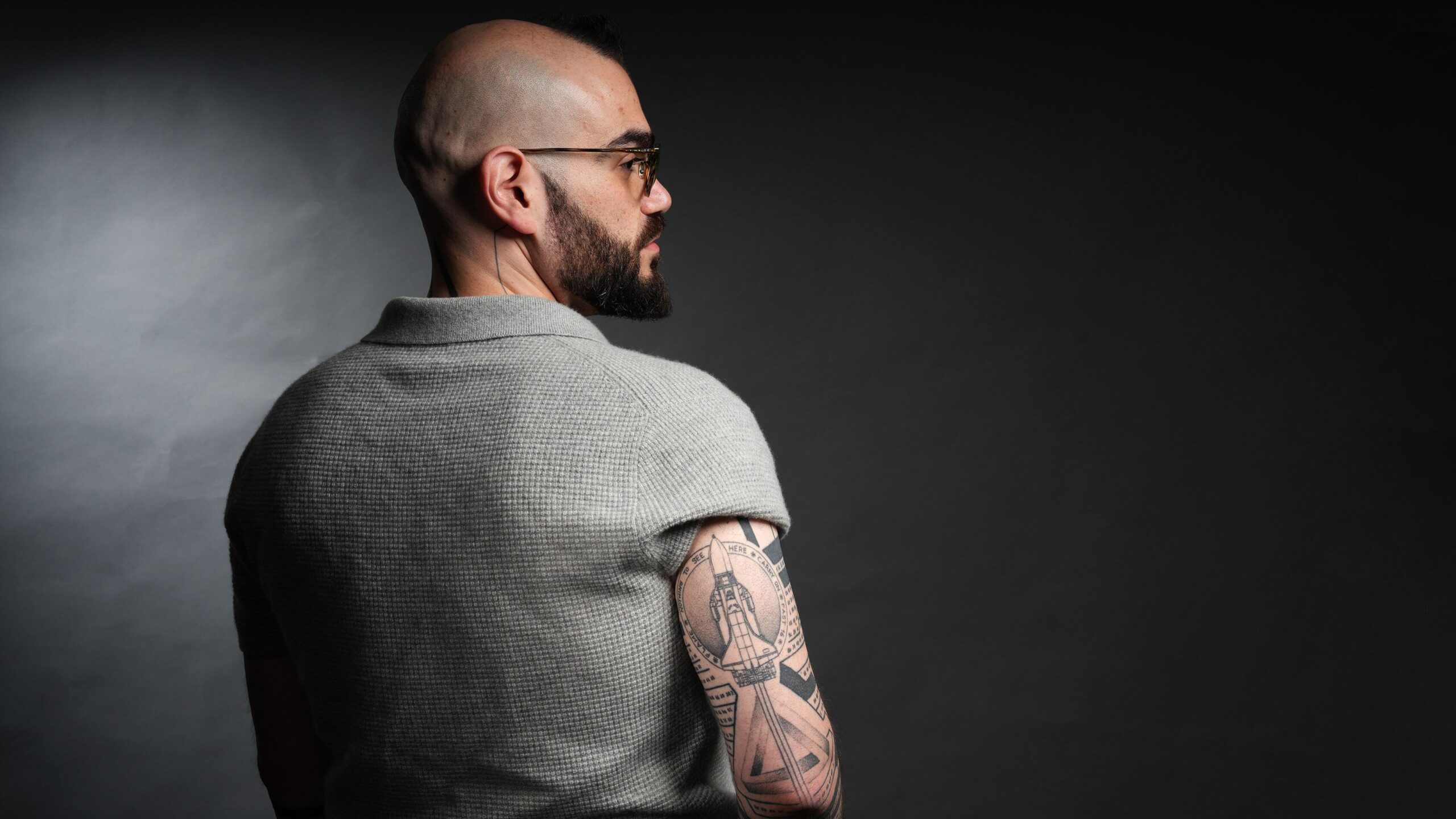
    Pictured: Juan Andres Guerrero Saade (JAGS) and his ‘Fast16 – NOTHING TO SEE HERE, CARRY ON’ tattoo. 

    Support:

    Read: 

    Follow: 

    This episode was hosted by Nick Fountain and Erika Beras. It was produced by Willa Rubin and edited by Marianne McCune with help from Jess Jiang. It was fact-checked by Charlotte Isidore and engineered by Kwesi Lee. Alex Goldmark is our executive producer.

    Music: NPR Source Audio – “High Tech Expert,” “Digital Wave,” and “Hyper Pop.”

    Transcript:

    ANNOUNCER: This is Planet Money from NPR.

    [COIN SPINNING]

    ERIKA BERAS: On Friday, if all goes according to plan, representatives from the US and Iran will meet in Geneva to sign another 60-day ceasefire agreement. But the two sides still have not come to an agreement on what’s been at the heart of this war and decades of conflict, Iran’s development of nuclear weapons.

    NICK FOUNTAIN: Right. This conflict has been on-again, off-again for years. And while the most recent iteration has been very violent with bombs and blockades, there is a whole other almost entirely invisible war that the US and allies have been waging with Iran using cyber espionage, or, more accurately, cyber sabotage– you know, computer viruses, malware. Recently, we heard a story about a piece of malware that might have been used in this invisible war that was diabolically cunning because it exploited weaknesses in computers, yes, but also, maybe in the human psyche. The more I think about it, the more I think this must have driven people insane. But it also might have saved the world from nuclear destruction.

    BERAS: We heard about this hack from someone whose job it is to identify computer hacks that could be a threat to all of us.

    FOUNTAIN: What’s your name? What do you do?

    JUAN ANDRES GUERRERO-SAADE: My name is Juan Andres Guerrero-Saade, which is why everybody calls me Jags.

    FOUNTAIN: [LAUGHS]

    BERAS: J-A-G-S, Jags. His initials are shorter and cooler.

    FOUNTAIN: Yeah, actually, he is a pretty cool guy. He’s got a fauxhawk, sleeves of tattoos. He was on track to go get a PhD in philosophy, but now?

    GUERRERO-SAADE: I’m a security researcher, who, I think, would be the simplest term. I think some folks would say cyber-paleontologist.

    BERAS: Cyber-paleontologist, like he digs for the remnants of cyber-attacks. Jags works for a cybersecurity company called SentinelOne. It helps big companies like Samsung and the Golden State Warriors and the government protect their computers and networks.

    FOUNTAIN: Yeah, hacking is a whole industry. And defending against hacks is this whole other industry. Jags just so happens to have the raddest job of all, which is dusting off old malware files buried deep on servers, and reverse-engineering how hackers got into systems in the first place, and what they did when they got there, so he can figure out how to defend against similar attacks in the future.

    BERAS: And Jags is kind of a big deal. There are actually a couple of pieces in the International Spy Museum in DC based on his cyber-paleontology work.

    FOUNTAIN: Ah, this is a little crude, but in the Jurassic Park movie, which paleontologist are you?

    GUERRERO-SAADE: As long as you don’t immediately default to Jeff Goldblum and–

    FOUNTAIN: [LAUGHS] I was going to go Jeff Goldblum!

    GUERRERO-SAADE: But I think that he is, like, a chaos theory mathematician, which I think fits the bill, right? I– what the hell do I actually know about paleontology?

    FOUNTAIN: Right.

    BERAS: We met up with Jags because we wanted to get a peek into the invisible war, because Jags has made a stunning discovery of a highly specialized, highly sophisticated cyber-weapon.

    FOUNTAIN: Often, these weapons don’t even get detected. If they do, it’s not usually until years later, when someone like Jags comes across an old fragment and tries to reconstruct what top-secret mission the weapon was designed to carry out.

    BERAS: For Jags, the fragment he found wasn’t even a piece of code. It was just six words. It came from a leaked list of malware from the NSA.

    FOUNTAIN: Yeah, the list came from this tool the NSA had meant to help NSA operators, while they were hacking into some computer in enemy territory, figure out whether some other hacker was already there, and if so, whether they were friends or foes.

    GUERRERO-SAADE: Essentially, it’ll run all these checks, and it’s going to give the operators– it’s going to give a list of instructions of saying, hey, look, suspicious thing here. We don’t know what that is. Known malware– pull back.

    FOUNTAIN: Like little warning signs. And this was a budding cyber-paleontologist’s dream. Each piece of malware on that list had the potential to teach you so much about how the world’s top hackers were getting the job done. And maybe one would turn out to be an incredibly sophisticated cyber weapon.

    BERAS: Jags, with great excitement, got a hold of this list and started scouring it for something he should start digging into. And one item screamed, look here.

    GUERRERO-SAADE: There’s one, just one line that’s, like, completely different to all the other ones.

    FOUNTAIN: OK.

    GUERRERO-SAADE: And it just says, “Fast16. Nothing to see here, carry on.”

    FOUNTAIN: In all caps?

    GUERRERO-SAADE: That’s it.

    FOUNTAIN: [LAUGHS]

    GUERRERO-SAADE: There’s nothing else like it.

    FOUNTAIN: Fast16 was what the NSA was calling the malware, and the cryptic instruction the agency was giving its operators– not seek help or pull back, simply, nothing to see here, carry on.

    GUERRERO-SAADE: You can’t put that there. Like, it was, like, catnip, right? It felt like bait. We couldn’t let it go. I couldn’t let it go.

    FOUNTAIN: He didn’t let it go. He had to know what this thing was. What did it do? What was its target? The NSA seemed to know about it, but who made it? And what was so top, top, top secret that the NSA was resorting to Jedi mind tricks to try to keep its own people in the dark?

    BERAS: At this point, Jags just had the name of this malware, Fast16, just a tibia. But he was able to use that to dig up the rest of the bones. Basically, he rummaged around this, like, public library of suspected malware until he found it. And eventually, he was able to put together the pieces of the skeleton that is Fast16. But still, when you try to reverse-engineer it to understand what its secret mission was, he couldn’t.

    GUERRERO-SAADE: I worked these, like, cracked out nights. And very often, I’ll run into something. I’m like, oh, my god, I found this amazing thing. And then by the morning, you’re like, no, this doesn’t work.

    FOUNTAIN: We call this the Valley of Despair.

    GUERRERO-SAADE: Oh, yes, I have built a home in the Valley of Despair. I’m in the process of gentrifying the Valley of Despair, if any of you would like to join me there.

    FOUNTAIN: After many, many fruitless nights, weeks, months, Jags had to turn to other projects and had to put Fast16 down. But to remind him of what was not solved, he inked Fast16 on his skin forever.

    [MUSIC PLAYING]

    GUERRERO-SAADE: Fast16 has been on the back of my arm for a while now.

    FOUNTAIN: You got it tattooed? Oh, yeah. Where is Fast16?

    GUERRERO-SAADE: It’s here. You can see Fast16 and then, “Nothing to see here, carry on.”

    FOUNTAIN: Nothing to see here, carry on. Hello, and welcome to Planet Money. I’m Nick Fountain.

    BERAS: And I’m Erika Beras. Today on the show, Nothing to See Here. Carry On.

    FOUNTAIN: Yeah, Jags sets out to solve the mystery of Fast16 and finds a cyberweapon with the potential to chip away at our very grasp of reality.

    [MUSIC PLAYING]

    FOUNTAIN: So what was this mysterious piece of malware that was so secret that the NSA was using Jedi mind tricks to try to keep their people away from it and so enticing that security researchers, or at least one overcaffeinated, keyboard-wielding security researcher got it tattooed on his tricep?

    GUERRERO-SAADE: Theoretical tricep, yes. [CHUCKLES]

    BERAS: Jags, said researcher, was pretty blocked, but he knew he had to keep at it, because he had a hunch that Fast16 might reveal important details about that invisible side of the conflicts we read about every day, like back when security researchers discovered a cybersabotage operation that blew everyone’s mind. It was called Stuxnet.

    FOUNTAIN: Yeah, Stuxnet is kind of the mother of all cybersabotage operations.

    GUERRERO-SAADE: In many ways, my industry is birthed by the discovery of Stuxnet.

    FOUNTAIN: For those not familiar, Stuxnet was this absolutely bonkers hacking operation that reportedly slowed down Iran’s nuclear program back in the mid-2000s. And to hear Jags describe it, it totally redefined what was possible.

    GUERRERO-SAADE: So before Stuxnet, if you went to these antivirus conferences with a lot of fun gals and guys, the possibility of cyber espionage was discussed as that, as a possibility.

    FOUNTAIN: It was theoretical.

    GUERRERO-SAADE: It was theoretical. There were–

    FOUNTAIN: Wouldn’t it be cool? This might be happening.

    GUERRERO-SAADE: Yeah, you’re like, there’s no way, people won’t. There’s value there, of course. And then, you know, Stuxnet is discovered, and you realize, not only has this been happening and at a scale and capacity way above anything we’d ever found before, but it’s been happening for years.

    BERAS: What had been happening was that Israel and the US, allegedly, had used cyberweapons to destroy real-world, physical things. They did this by managing to get a thumbdrive into Iran and inserting malware into the computer network at the heart of their uranium enrichment program, the system that controlled the centrifuges.

    FOUNTAIN: And Stuxnet was very, very clever. It spread throughout the network and carefully noted how everything looked when it was working normally, saved that, and then gave the centrifuges instructions to go haywire, speeding up and slowing down and braking, all while making everything in the computer system look A-OK. It looked normal.

    GUERRERO-SAADE: So the operators are hearing that these things are, like, making these weird noises. They’re spinning up. They sound like– it sounds like things aren’t going well in this room next door. But I’m looking at the computer, and the computer tells me everything’s normal.

    BERAS: All in all, Stuxnet reportedly destroyed a fifth of all the centrifuges that Iran was using. It led to nuclear scientists getting fired. And most importantly, it is widely believed to have slowed down Iran’s nuclear program.

    FOUNTAIN: And to the cyber-paleontologists of the world like Jags, when the bones of Stuxnet were dug up, they revealed this whole new age of cyberwarfare. But Jags always believed that Stuxnet was just a hint of what was out there.

    BERAS: Just a tibia.

    GUERRERO-SAADE: Clearly, we didn’t even know about all the different things they were doing.

    BERAS: So year after year, Jags remained committed to figuring out his white whale, figuring out the puzzle of Fast16. Who made it? Who were they targeting? What exactly were they doing to that target, and how? But he didn’t make much progress until earlier this year for a very this-year reason– AI.

    FOUNTAIN: Yeah, here’s why. Jags heads a big team of researchers at his cybersecurity firm. And like everyone else these days, he was wondering, could these new AI tools help us in our jobs? Could they do our jobs? Could they do a job that was so hard, even I, Jags, couldn’t do it? Could they solve the puzzle that is Fast16?

    GUERRERO-SAADE: There is no public guide to solving it. If it’s going to figure it out, it’s going to have to figure it out just in this little sandbox with a few tools and go, all right, kid, like, what can you do?

    BERAS: Jags sent a colleague to oversee these AI tests. That colleague was Vitaly Kamluk, a Belarusian cybersecurity researcher who also has a fauxhawk. He lives in Singapore and, according to Jags, is very zen-like.

    FOUNTAIN: And Jags says Vitaly, like any self-respecting human, he decided to, John Henry-style, try to beat the machines.

    GUERRERO-SAADE: I, being put in that position, would have said, cool, let’s go make the AI sweat. And Vitaly, being a much more patient, zen master-style dude, he said, well, if I’m going to know if it’s doing well, I need to know what this thing does. And Vitaly spent, like, two weeks in a black dark hole somewhere, not answering messages, nothing. I was like, is this guy OK? Like, what happened to Vitaly? And all of a sudden, I get from Vitaly super late, I guess, for him.

    VITALY KAMLUK: Yeah, yeah, it was, like, about 1:00 AM or so.

    GUERRERO-SAADE: And he’s like, hey, man, like, I need to talk.

    KAMLUK: Jags, yeah, we need to talk.

    BERAS: This, of course, is Vitaly Kamluk, reverse-engineering legend.

    FOUNTAIN: He describes you as zen-like. Do you think that’s fair?

    KAMLUK: Zen-like?

    FOUNTAIN: Yes.

    KAMLUK: Does it make me more peaceful and simple? I hope so, but–

    FOUNTAIN: But on this call, he was not very zen-like. Vitaly said he’d done the reverse-engineering, and he’d had the AI models double and triple-check his work. And now, Jags says, he seemed pretty disturbed.

    GUERRERO-SAADE: He’s like, look, I need you to test me here. But like, all the models, at least, agree with me, so I now need to talk to a human being. This is Stuxnet-like. And I hear that kind of nonsense from students, right? Like, you know, I hear this kind of– I’m like a lightning rod. Anybody in this industry is a lightning rod for, like, DMs from people clearly having, like, schizophrenic episodes of, like, the government’s spying on me. So you hear this kind of stuff all the time. When you hear it from Vitaly, who’s a very measured person, it makes you take pause, and you go, OK, what are you talking about? What do you mean?

    BERAS: Vitaly explained, they’re from the same era, the mid-2000s. And even though they don’t share any code, they seem to share similar architecture. But Vitaly couldn’t figure out what exactly Fast16’s mission was, only that it targeted the part of a computer that did complex math.

    GUERRERO-SAADE: Think of it as, like, floating point math, like the really, really details-based, hard calculation stuff that most of the time, you never deal with. And I’ve never run into a piece of malware that does that.

    BERAS: Jags says he’s never seen malware that messed with high-precision math. Most spy malware is designed to steal data, or, like in Stuxnet, make things go haywire. But this one was basically telling the computer, 2 plus 2 equals 5.

    FOUNTAIN: So at this point, Jags had found Fast16 buried in a cyberlibrary based on a hunch that it was something to pay attention to. And Vitaly had confirmed it was, because who messes with math? And maybe more importantly, whose math were they messing with?

    GUERRERO-SAADE: Who is running high-precision calculations back in 2005, doing something so interesting that it got somebody to build a super-specific, custom piece of malware to modify and mess with their workloads? Everything about this thing screams special. Like, it screams unique. It screams groundbreaking. And I think what’s most excruciating about it is that the mystery won’t yield. Like, you just kind of have to keep pushing and say, OK, why?

    [MUSIC PLAYING]

    BERAS: After the break–

    GUERRERO-SAADE: OK. I guess we’re back to the trenches of, like, OK, how do we nail this thing?

    BERAS: –Jags puts all the pieces together.

    [MUSIC PLAYING]

    BERAS: So Jags and Vitaly, still separated by a 12-hour time difference, set out to answer their next question– whose math was Fast16 designed to target?

    FOUNTAIN: And pretty quickly, they come upon a major clue by looking at a rules engine embedded in Fast16’s code, like, a list of instructions, basically if-then rules. If Fast16 sees something happen on a computer–

    GUERRERO-SAADE: Then it goes, oh, I’ve recognized this thing. What does my rule engine say? Oh, if I find this thing, then I need to change these 6 bytes into these 6 other bytes. If I find this thing, then I need to set this thing back into whatever the old value was. If I find this thing– right? But what the hell do those 6 bytes represent?

    FOUNTAIN: So they start scanning old systems and software from way back in the day, looking for those strings of bytes. Jags says it was like looking through a mathematician’s notebook of scribbles for a particular string of numbers, which is not easy. And it’s not like old code just exists out in the wild. But eventually, they do find a few pieces of software that contain some of those same strings of 6 bytes, which all had to do with complex physics modeling, like how to design a car that’ll crumple safely when it crashes or a bridge that will withstand an earthquake.

    BERAS: For Vitaly, the idea that someone was targeting calculations that were supposed to keep us safe was incredibly disturbing.

    KAMLUK: Like, do they have limits, really? Like, is this a new type of evil ideas? I felt that the target was scientists, civil engineers, corrupt their calculation results. And that would eventually produce risks for lives of others. So I was terrified. Like, why would people do that?

    FOUNTAIN: Very soon, they had a breakthrough that kind of answered the question. Jags was searching around for one of those pieces of software. It’s called LS-DYNA. It’s short for Livermore Software Dynamic Analysis.

    GUERRERO-SAADE: Something that I run into right away as I’m looking up LS-DYNA, is this report by the good ISIS.

    FOUNTAIN: The good ISIS?

    GUERRERO-SAADE: That’s what they call themselves. I don’t know what ISIS stands for. It’s some kind of think tank, the good ISIS.

    FOUNTAIN: Institute for–

    GUERRERO-SAADE: For something or other. And the good ISIS has this report saying, if you look back at this research that Iranian scientists have been publicly putting out, you can see that they were using software that they shouldn’t have been using.

    FOUNTAIN: They knew that these guys had this piece of software, LS-DYNA?

    GUERRERO-SAADE: Yeah, and what’s interesting is the example they put for LS-DYNA is trying to figure out the right explosive materials for nuclear payloads.

    BERAS: In other words, this documentation from the Institute of Science and International Security seemed to suggest that the software Fast16 was supposed to mess with was being used by Iranian nuclear scientists to maybe design nuclear bombs.

    FOUNTAIN: So that was the software that the Fast16 malware was likely targeting, telling it, if you find these bytes, change them to these other ones. But why change those specific bytes? What would changing the math in this software achieve?

    BERAS: To solve that part of the puzzle, they had to get their hands on that software the Iranian scientists were using, a very bespoke piece of physics modeling software released decades ago, very much not on the App Store.

    FOUNTAIN: Did you pay for it?

    GUERRERO-SAADE: No, you can’t buy it.

    FOUNTAIN: [LAUGHS]

    GUERRERO-SAADE: You can’t just buy it. And moreover, people don’t love it when you’re like, hey, do you happen to have a copy of your software from 21 years ago? They’re like, why? Don’t worry about it. Don’t worry about it. Just– you know, so you gotta get your hands on this thing somehow.

    FOUNTAIN: And Jags and Vitaly did. And what they found was that Fast16 was designed to hide in scientists’ computers and do nothing, basically to keep watch, to wait for LS-DYNA to get installed. At that point, it would stay low-key until it saw the computer doing these very specific tests that only someone developing a nuclear warhead would be doing. It had to do with the pressure calculations to simulate a nuclear explosion. And that is when Fast16 would do its mayhem. At the point when the engineers got near the pressure they needed, Fast16 would throw those calculations off by changing the math, the old 2 plus 2 equals 5 trick.

    BERAS: And furthermore, it was designed to spread from computer to computer.

    GUERRERO-SAADE: The idea being that if you– if I come to this computer and I run this simulation workload and go, hey, those results don’t look right, let’s go try this other computer, and you go and you run it in the other one, that, too, will give you the right wrong answer.

    FOUNTAIN: The exact same wrong answer.

    GUERRERO-SAADE: Exactly. And so the idea was to drive these people nuts, right? Like, you go, and, like, it’s right math, wrong answer, right formula, wrong answer over and over, everywhere you go. And you probably don’t know that it’s wrong until you then go and try to do another thing with it. And you go, damn it, this thing is not working.

    FOUNTAIN: Yeah.

    GUERRERO-SAADE: Right? Like, it’s devious. And the cunning of this attack is truly fascinating. Because at some point, I think, before you ever consider that the computers are wrong–

    FOUNTAIN: Yeah.

    GUERRERO-SAADE: –you almost certainly look at these scientists and go, maybe you guys are clowns. Maybe you guys don’t know what the hell you’re doing.

    BERAS: Jags and Vitaly were flabbergasted by the sophistication and the technical prowess of this malware from decades ago. Not just the coding parts, but also the deep knowledge of nuclear physics.

    FOUNTAIN: And after so many late nights of being haunted by Fast16, Jags and Vitaly were finally able to announce in April of this year that Fast16, which they’d started looking into on a hunch, was, indeed, a major cyber weapon whose mission seemed like it was to sabotage Iran’s nuclear development program. Was it worth the wait?

    GUERRERO-SAADE: Oh, absolutely. I mean, walking around with this, like, bag of open questions, right?

    BERAS: Yeah, there are still some unknowns. Number one, we don’t know definitively that this was targeting Iran. For example, North Korea also had nuclear ambitions at that time.

    GUERRERO-SAADE: You look back, and you go, well, North Korea was having a whole lot of problems with their missile program back then. We don’t know where all of these things were being used. We just know of one target that they definitely used this kind of stuff against, which is Iran.

    FOUNTAIN: You’re that confident?

    GUERRERO-SAADE: Look, let’s put it a different way, right? We’ve never, ever, ever, ever, ever, ever, ever heard of anybody doing this kind of cybersabotage anywhere for anything other than the Iranian nuclear program in the same era as when Fast16 is developed.

    FOUNTAIN: Thing number two we don’t know– who did this. It has echoes of Stuxnet, which is widely reported to have been deployed by the US and Israel. But when we reached out to the NSA and the CIA and the Israeli Defense Forces and asked them, was Fast16 you, they didn’t deny it.

    BERAS: They didn’t confirm it either.

    FOUNTAIN: Yeah, that’s true, too. The IDF never got back to us. And the others said, basically, sorry, but we have nothing to offer you on this.

    BERAS: Jags, for his part, also checked in with them.

    FOUNTAIN: Before you publish, do you reach out to the US and Israeli intelligence community and ask them, are we going to blow your cover?

    GUERRERO-SAADE: Yeah. Yeah, but I won’t go too far into that, right? Like, most of the time, we are good collaborators and good friends.

    FOUNTAIN: Do these meetings happen in person?

    GUERRERO-SAADE: No.

    FOUNTAIN: Was there any pushback this time?

    GUERRERO-SAADE: No.

    FOUNTAIN: Meaning, we’re not worried about you blowing our cover, you weird paleontologist. This stuff is 20 years old.

    BERAS: Right. And the third thing we don’t know is why the NSA wrote, in reference to Fast16, the instructions, “Nothing to see here, carry on.” Was that, like, with a wink?

    FOUNTAIN: One day, when this stuff is declassified, we might get an answer to all three of those questions. But we’re much less likely to figure out, did Fast16 change history? Jags says he’s sure it was deployed because he couldn’t have found it otherwise. But like, did it slow down Iran’s or someone’s nuclear program? Did it bring them to the bargaining table?

    BERAS: Yeah, did it prevent nuclear war?

    FOUNTAIN: And the last enduring mystery, how did Fast16 mess with the minds of the scientists who encountered it? Like, I have this picture in my head of the nuclear scientists in Iran working on this project of intense national significance. Presumably, their boss’s boss was constantly giving updates to Iran’s president or the Ayatollah. And these scientists would have been doing their experiments right and then, infuriatingly, getting the wrong answer. Is epistemological warfare what you would call this?

    GUERRERO-SAADE: If I had called it that, they would have said, oh, I was just being pretentious. I wouldn’t have allowed myself that as a repentant philosopher.

    FOUNTAIN: Yeah, but as a repentant philosopher?

    GUERRERO-SAADE: Yeah, sure. I think epistemological warfare is a fascinating way to frame it.

    FOUNTAIN: Break that out a little for me.

    GUERRERO-SAADE: Well, I think the– we take for granted how much we take for granted. Certainty– people think that certainty is a matter of coherent deduction, that somehow, you’re sitting here, and you have this perfect, cohesive worldview. That’s not actually how it works. That’s not how anything works. If you questioned everything in your life, you would be paralyzed, right? If you questioned that when you, you know, get out of bed, you don’t know if, like, the floor is going to hold you, right, you wouldn’t be able to function.

    FOUNTAIN: Jags told us about an interaction he recently had with Vitaly that kind of brings this home. They were in Singapore, where Vitaly lives, on their way to a hacker conference to present their Fast16 research.

    GUERRERO-SAADE: He gets us on a train, and he goes, oh, look, it’s a driverless train. The train just, you know– and I can’t remember. We were talking about something to do with Fast16. He stops, and he goes, I mean, this is precisely the kind of system that you would degrade with this kind of attack. You know, there was a collision, and they said there was no cyberattack involved. And then we looked at each other, and we go– you know, you kind of shrug, and you go, well, as far as we know.

    FOUNTAIN: Right. What I find fascinating is that these experts who spend their lives staring at computers, who know their capabilities more than anyone, are also some of the most skeptical people when it comes to trusting computers. Does that ever get to you?

    GUERRERO-SAADE: No.

    FOUNTAIN: Oh.

    GUERRERO-SAADE: No, I– I don’t know. I’m telling you, man, I’m not wired quite the right way.

    FOUNTAIN: To me, questioning everything does seem paralyzing, but they seem well-attuned to life in the computer age, life in the time of epistemological warfare.

    [MUSIC PLAYING]

    FOUNTAIN: If you are an intelligence operative who has info on a clandestine operation and want to tell me about it, you can reach me at– you know. Who am I kidding? You know how to find me.

    BERAS: And if you live outside the United States, we also need your help. For Planet Money summer school, we are scouring the world for the most interesting, surprising economic ideas that should spread. Think, like, a different way to do taxes, a mega-project that came in under budget. Somehow, rent is cheap. Get in touch, and tell us about an idea the world should know about. Email us at planetmoney@npr.org, and put Summer School in the subject. We might use your idea on the podcast. This episode was produced by Willa Rubin and edited by Marianne McCune. It was fact-checked by Charlotte Isidore and engineered by Kwesi Lee. Alex Goldmark is our executive producer.

    FOUNTAIN: Special thanks to the research team at Symantec, who also dug into Fast16, Andy Greenberg from Wired, who broke the story, Kim Zetter, who wrote the definitive book about Stuxnet, and David Albright of– and I can’t believe I’m saying this– the good ISIS, which, now, I know, stands for the Institute for Science and International Security. Jags has a podcast with also a funny name. It’s called the Three Buddy Problem. I’m Nick Fountain.

    BERAS: And I’m Erika Beras. This is NPR. Thanks for listening.

  • The Strait of Hormuz could open soon. But will it be safe for ships?

    The Strait of Hormuz could open soon. But will it be safe for ships?

    Transcript:

    AILSA CHANG, HOST:

    It’s CONSIDER THIS, where every day we go deep on one big news story. Today, what will it take for oil to start flowing again? President Trump and Iran say an agreement has been reached to end the war and reopen the Strait of Hormuz. It is said to be formally signed on Friday in Switzerland.

    (SOUNDBITE OF ARCHIVED RECORDING)

    PRESIDENT DONALD TRUMP: I think a lot of great things are going to happen in the Middle East right now. And very importantly, the oil is plummeting down and the stock market is shooting up like a rocket.

    CHANG: That was President Trump speaking at the G7 meeting on Monday. The ongoing Iran war has sent oil prices soaring and has exacerbated inflation in the U.S. A lot of that economic pressure is from the near-total closure of the Strait of Hormuz since the war began almost four months ago.

    (SOUNDBITE OF ARCHIVED RECORDING)

    TRUMP: The Iran deal that we made is going to bring a lot of success to the world because the oil was really clogged up there for a while.

    CHANG: Before the war, roughly a fifth of the world’s oil traveled through the Strait of Hormuz. Now, the traffic is way below that, in part because of blockades put in place by Iran and the U.S. But even if a deal ends those blockades, there’s another major issue – safety. One major risk is the possibility of sea mines. Here’s retired U.S. Navy Admiral James Stavridis on CNN in April.

    (SOUNDBITE OF ARCHIVED RECORDING)

    JAMES STAVRIDIS: If I’m the master, the captain of a big 200,000-ton oil tanker, I’m not enthusiastic about having the honor of leading the first convoy through the strait when this thing gets cleared up. Someone has to clear those mines.

    CHANG: CONSIDER THIS – even with an agreement to reopen the Strait of Hormuz, it may take a while for activity to pick up in that crucial waterway. What will it take for shipping companies to feel safe? After the break, we’ll hear from the chief safety and security officer of a major shipping association.

    (SOUNDBITE OF MUSIC)

    CHANG: From NPR, I’m Ailsa Chang.

    (SOUNDBITE OF MUSIC)

    CHANG: It’s CONSIDER THIS FROM NPR.

    (SOUNDBITE OF ARCHIVED NPR CONTENT)

    CHANG: With the U.S. and Iran set to sign a memorandum of understanding on Friday, there is renewed hope that shipping traffic will move freely through the Strait of Hormuz once again.

    (SOUNDBITE OF ARCHIVED RECORDING)

    TRUMP: As you know, they’re doing a little hunting for a couple of mines that they’ve already found. But it’s essentially – ships are starting to go out now. On Friday, it’ll be completely opened.

    CHANG: As we keep hearing during the course of this war with Iran, the strait is a critical shipping channel, especially for oil and fertilizer. And so we turn now to Jakob Larsen. He’s chief safety and security officer for BIMCO, the international shipping association. Welcome to All Things Considered.

    JAKOB LARSEN: Thanks a lot. Nice to be here.

    CHANG: Nice to have you. OK, so as we just heard, President Trump expects the strait to be completely opened again in just a few days. But based on what you know, do you think ships will be able to pass quite safely through by then?

    LARSEN: No. I think on the face of it, that’s quite unlikely. The situation is basically unchanged compared to just before this here deal was announced last Friday. So ships are still waiting inside the Persian Gulf. Both the U.S. and Iran are still enforcing their respective blockades in the Strait of Hormuz and surrounding waters. And it’s very difficult and very risky to – for ships to move through the strait currently.

    CHANG: What about the issue of mines? Because there’s a question about whether Iran laid any mines in the strait during this war. What is your sense of that?

    LARSEN: Yeah. It’s very difficult for me to assess whether they actually laid mines or not.

    CHANG: Right.

    LARSEN: So we are a bit in the hands of the naval forces there. But if, as expected, they have laid mines, then the whole central part of the Strait of Hormuz is considered a mine danger area and will be risky to go through. But we are a little bit in the hands of the military here. We don’t have any accurate information ourselves regarding the mine threat, but it – from the looks of it, it could well take some few weeks or even a few months before the mine threat has been completely neutralized.

    CHANG: What will it take for operators to feel confident that it is safe to sail through the strait? What kind of information do you need?

    LARSEN: What we need is assurances from both sides of the conflict that a given route is safe to navigate. And with that, I think shipping will gradually start to pick up. And of course, we need assurances also that hostilities will not be reopened, and that requires more than just unilateral statements. We need credible assurances from both sides. And once that is in place and that they, you know, assure us that the route they declare open is actually safe to use, then we will see ships start to move. But that doesn’t mean that everything is hunky-dory…

    CHANG: Right.

    LARSEN: …Because there are still lots of unanswered questions.

    CHANG: Well, one unanswered question is this question of fees, right? President Trump has declared the strait will be permanently toll-free, but Iran has said that no tolls will be levied, but there will be so-called fees. Did shipping companies pay fees to Iran prior to this war?

    LARSEN: No, they didn’t. The Strait of Hormuz is an international straits. And in accordance with international conventions, these have freedom of navigation, so all ships can sail in and out as long as they do it in a proper and safe way. And therefore, fees are, you know, not part of international law, and it would be a complete breach of…

    CHANG: Right, there’s some debate about whether fees would even be legal – right? – under international law.

    LARSEN: Yeah, exactly.

    CHANG: Yeah.

    LARSEN: Yeah, exactly. And international law has, you know, that freedom of navigation concept, which is so broadly described in the U.N. Convention on the Law of the Seas (ph). And that doesn’t include anything about fees. And the Strait of Hormuz is considered an international strait, so…

    CHANG: Yeah. Well, then how concerned are you that the flow of goods through the Strait of Hormuz will be permanently changed as a result of this war?

    LARSEN: I mean, it’s obviously a concern, also given that the international rules-based order seems to be under a lot of pressure these recent months. So there is some concern, obviously. And shipping industry is a firm supporter of international conventions because it’s really the bedrock of free and international and effective trade, which – you know, at as low a cost as possible. So therefore, we are concerned, but we also have hopes that common sense will prevail and we can return to…

    CHANG: Well, can I ask, though, going forward, will shipping companies ever feel like they can rely on the Strait of Hormuz again or in the same way? I mean, has this whole experience convinced you that maybe it’s time to invest in alternative routes?

    LARSEN: I think the shipping industry is, of course, really concerned with the fact that Iran now has demonstrated that they are able to virtually close the strait. So I think a lot of, especially the oil-producing countries, they are looking to alternatives, and that could, for example, be pipelines. Now, whether that will materialize or not, I think time will show.

    CHANG: Jakob Larsen, chief safety and security officer for BIMCO, thank you very much.

    LARSEN: Thank you.

    (SOUNDBITE OF MUSIC)

    CHANG: This episode was produced by Erika Ryan and Chris Harland-Dunaway. It was edited by Sarah Handel and Tinbete Ermyas. Our interim executive producer is Courtney Dorning.

    (SOUNDBITE OF MUSIC)

    CHANG: It’s CONSIDER THIS FROM NPR. I’m Ailsa Chang.

  • ‘Spider-Noir’ is the best TV superhero series since ‘The Penguin’

    Transcript:

    DAVE DAVIES, HOST:

    This is FRESH AIR. The Spider-Man character was introduced in a Marvel comics book in 1962. Since then, he’s been the center of several live action superhero movies over the decades, some well-received animated features and has been reimagined in stories set in different times, even in different universes. One comic book series that began in 2008, “Spider-Man Noir,” imagined the hero as a gumshoe of the 1930s but with superpowers. Now Prime Video has brought that concept to television as “Spider-Noir,” starring Nicolas Cage. Our TV critic David Bianculli says everything about the series is unexpectedly enjoyable.

    DAVID BIANCULLI, BYLINE: In this universe, I’m pretty much tired of superhero films and TV series and random multiverses and don’t approach any new one with much enthusiasm. When I heard about “Spider-Noir” and that Nicolas Cage was starring, I couldn’t imagine why he’d choose a superhero story for his first TV starring role. Then I watched the eight-episode first season and realized it probably represents one of the best and boldest Nicolas Cage performances of his entire risk-taking career.

    From the very start, “Spider-Noir” takes the noir part seriously. It’s set in the Depression-era New York of the 1930s, and Cage plays a superpowered masked character known as The Spider. When we meet him, he’s loved and lost a woman, a story he recounts in the rain over her grave. He’s gone on a multi-year bender and now has an office as a private eye. His name is Ben Reilly.

    (SOUNDBITE OF TV SHOW, “SPIDER-NOIR”)

    NICOLAS CAGE: (As Ben Reilly) We were going to be married in the spring. I even bought a ring to make it official, a ring I never had the chance to give her.

    (SOUNDBITE OF THUNDER CRACKING)

    CAGE: (As Ben Reilly) Ruby once told me that with great power comes great responsibility. Well, she was the greatest responsibility I ever had. And I failed her. The Spider failed her. After that, I didn’t want the power or the responsibility.

    (SOUNDBITE OF MUSIC)

    CAGE: (As Ben Reilly) So I went back to being just an ordinary man. That was five years ago.

    BIANCULLI: If that opening narration sounds as though Cage is channeling a bit of bogey, well, he is. But the imaginative conceit of “Spider-Noir” is that the bite that gave The Spider superpowers also made him more spidery than human. Ben Reilly, in order to blend in and do his job, really does have to act like a human and like a private eye. So he goes to the movies and watches the latest Humphrey Bogart and James Cagney films and imitates them a bit. But there also are scenes where Ben Reilly, the gumshoe, like James Garner’s Jim Rockford in “The Rockford Files,” hands out fake business cards and adopts different accents and dialects.

    Cage has enormous fun with all of this but also establishes that his character sometimes is primarily a spider and physicalizes that in a way that’s just a riot. If you saw him in “Vampire’s Kiss,” you’re familiar with his brand of unbridled acting. And he’s not acting alone. Lamorne Morris, who won a well-deserved Emmy as the deputy on Season 5 of FX’s “Fargo,” plays a reporter who works with The Spider and keeps his secret. It’s a rich role, and Morris delivers, and so do the show’s other costars.

    The always commanding Brendan Gleeson plays the ruthless power broker Silvermane, who tracks down superpowered mutants to persuade them to join his gang. As always with this genre, the villains have a lot of the fun. Gleeson, as Silvermane, veers easily between playful and menacing, as when he captures a mutant played by Andrew Lewis Caldwell and introduces himself. Caldwell, for his part, is great fun, too.

    (SOUNDBITE OF TV SHOW, “SPIDER-NOIR”)

    BRENDAN GLEESON: (As Finbar Byrne) Well, I assume you know who I am.

    ANDREW LEWIS CALDWELL: (As Dirk Leyden) The man with the mane of silver, born from nothing, built his empire through gut and guile, purveyor of the finest spirited potions, king of the five buroughs, Mr. Finbar Byrne himself.

    GLEESON: (As Finbar Byrne) I see you like to talk. Think you could listen for a second?

    CALDWELL: (As Dirk Leyden) Oh, I am like a Nebraskan cornfield – all ears.

    BIANCULLI: Of course, every classic noir, even a “Spider-Noir,” has to have a femme fatale. This one is a chanteuse and heartbreaker played by Li Jun Li, who played Grace in “Sinners” and was a star of the 2008 Lincoln Center revival of “South Pacific.” She gets to show off her musical talent when Cage’s Ben Reilly first sees and hears her at Silvermane’s nightclub.

    (SOUNDBITE OF TV SHOW, “SPIDER-NOIR”)

    UNIDENTIFIED ACTOR: (As character) Ladies and gentlemen, Cat Hardy.

    (APPLAUSE)

    LI JUN LI: (As Cat Hardy, singing) Stars shining bright, above you. Night breezes seem to whisper I love you. Birds singing in the sycamore trees. Dream a little dream of me.

    BIANCULLI: She sounds beautiful and looks dazzling, too, outfitted in stylish costumes with vibrant colors. Well, they’re vibrant and in color, depending upon how you choose to watch “Spider-Noir.” Oren Uziel, who developed this series for TV is presenting it in an unprecedented manner. On Prime Video, you can decide to watch in what it calls either true hue color or authentic black-and-white, or toggle between the two. I found it fun to keep switching, especially to learn the colors of sets or costumes in the color-saturated versions. But both versions are exciting to watch.

    There are loads of allusions to classic films. The fight scenes explode with energy, and the various writers and directors work as a coherent team, whether they’re presenting intimate scenes between characters or wildly hallucinatory dream sequences. No matter which way you watch it, “Spider-Noir” is the best TV superhero series since “The Penguin.”

    DAVIES: TV critic David Bianculli reviewed “Spider-Noir,” starring Nicolas Cage. On tomorrow’s show, New Yorker staff writer Ben Taub gives us an inside look at Donald Trump’s campaign to acquire Greenland. While it’s faded from the headlines, Taub says there are ongoing influence operations at Trump’s direction to keep the possibility alive. In a new article, Taub reveals some key players in the effort and its impact on Greenland and our European allies. I hope you can join us. To keep up with what’s on the show and get highlights of our interviews, follow us on Instagram, @nprfreshair.

    (SOUNDBITE OF MUSIC)

    DAVIES: FRESH AIR’s executive producer is Sam Briger. Our technical director and engineer is Audrey Bentham. Our interviews and reviews are produced and edited by Phyllis Myers, Ann Marie Baldonado, Lauren Krenzel, Therese Madden, Monique Nazareth, Thea Chaloner, Susan Nyakundi, Anna Bauman and Nico Gonzalez-Wisler. Our digital media producer is Molly Seavy-Nesper. Roberta Shorrock directs the show. For Terry Gross and Tonya Mosley. I’m Dave Davies.

    (SOUNDBITE OF MUSIC)

  • ‘The Lost Founder’ profiles a brilliant lawyer who helped craft the Constitution

    Transcript:

    DAVE DAVIES, HOST:

    This is FRESH AIR. I’m Dave Davies. As we celebrate America’s 250th birthday, we’ll hear a lot about George Washington, Thomas Jefferson and others. But what if I told you that one of the nation’s founders, one of only six who signed both the Declaration of Independence and the Constitution, a critical voice at the Constitutional Convention, and arguably the man most responsible for the government we’ve had for two centuries is someone you’ve never heard of?

    That’s precisely the case made by our guest today, Jesse Wegman. He’s a journalist who writes about the Constitution and democracy. Wegman’s new book is about James Wilson, a man regarded as one of the American colonies’ most brilliant lawyers in the late 18th century and one who led a colorful and impactful life. He was nearly killed during the Revolutionary War when rioters attacked his house in Philadelphia. He later became a Supreme Court justice and died at the age of 55 in the back room of a tavern in North Carolina, on the run from the law and creditors. But Wegman argues that a careful review of records from the founding show that James Wilson was a highly influential figure in crafting the Constitution and a powerful voice for democracy, insisting that direct rule by the people should be the guiding principle of the new government.

    Jesse Wegman served for 12 years on the editorial board of The New York Times. He’s currently a senior fellow at the Brennan Center for Justice. He was last on FRESH AIR to talk about his earlier book, “Let The People Pick The President: The Case For Abolishing The Electoral College.” Lately, he’s written opinion pieces advocating term limits for Supreme Court justices. Wegman’s new book is “The Lost Founder: James Wilson And The Forgotten Fight For A People’s Constitution.” Jesse Wegman, welcome back to FRESH AIR.

    JESSE WEGMAN: Thanks for having me.

    DAVIES: You know, you write about James Wilson and how he was a significant lawyer in the colonies in, you know, the 1760s, when tensions between the colonies and Great Britain were growing. And he wrote this essay, which was a groundbreaking legal analysis, which concluded that the British Parliament had no legitimate authority over American colonies because all lawful government is founded on the consent of those subject to that government.

    This essay proved very influential in the years to come. And, you know, as I was reading about this, it struck me, these ideas don’t seem so novel or revolutionary. I mean, to the modern ears – right? – it’s commonplace. We have lived with this notion of, you know, government by this consent of the government for a long time. And I wonder, was it hard for you, as you got deeply into this research, to get into the mindset of the 18th century, when these ideas were really new?

    WEGMAN: That’s a great question. And I was, at first, having trouble, you know, remembering how radical these ideas were at the time. They aren’t particularly new to us now. They weren’t even particularly new then. I think a lot of people were saying bits and pieces of these things. Obviously, you know, the consent of the governed goes back to Locke and before. And many of these ideas are floating around, but nobody took them up with the clarity and the vigor of Wilson.

    And I think that came through in this essay, which he writes as a 26-year-old who’s just come over from Scotland on a boat a few years before to the colonies and, you know, apprentices in law and quickly becomes one of the sharpest and most sort of forward-thinking lawyers in the colonies. So he writes this essay in 1768 in which he says all men are, by nature, equal and free. No one has a right to any authority over another without his consent. All lawful government is founded on the consent of those who are subject to it.

    So, you know, these are words and phrases that we actually know very well because several years later, they end up, only slightly altered, in the Declaration of Independence. And so when I see these words coming, you know, eight years before the Declaration of Independence comes out, I think, who is this guy, (laughter) you know? How did I miss him? Did I skip some class? Because, you know, Wilson seems to be at the center of everything from almost the moment he arrives in America.

    DAVIES: You know, many of the founders came from very privileged backgrounds. You know, some were wealthy farmers, merchants, many owned slaves. James Wilson was different, right? He grew up in Scotland. Tell us about his background.

    WEGMAN: James Wilson was, like a few of the framers of the Constitution – Alexander Hamilton, I think, being the one people are most aware of – he was an immigrant. And he was born into a poor farming family in the lowlands of Scotland, outside of Edinburgh. And so he has this pretty standard Scottish upbringing for a young farm boy of the – you know, in the mid- to later 18th century. He grows up, you know, in the Presbyterian Church, which is far more democratic in its governance than, say, the Anglican Church or the Catholic Church.

    The parishioners vote for the elders. There’s much more involvement by the regular people in the church than in these other churches where it’s much more of a top-down hierarchy. So Wilson is – so already he’s imbued with this democratic notion of governance early in his life. He’s also educated in schools in Scotland that are explicitly there to educate all Scottish children. Everybody is expected to get an education. Everyone is expected to learn to read and write.

    So Wilson, you know, by the time he’s a teenager, he is already sort of filled with these just very natural ideas of democratic rule, the equality of all people and the sense that everybody – no matter what their station in life, where they come from – has equal access to the truth and has an equal right to govern themselves. And that’s what he brings over to America. And it’s true, you know? Few, if any, of the other founders that he worked with had that kind of background, had that kind of upbringing.

    DAVIES: Right. He immigrates to the United States and settles in Pennsylvania, gets a law degree and quickly becomes a well-recognized and prosperous lawyer. He eventually is a delegate to the Continental Congress in 1776, which drafted the Declaration of Independence. What have you learned about his role in drafting that document?

    WEGMAN: So Wilson does not have a direct role in the drafting of the declaration itself. That’s obviously Thomas Jefferson and John Adams and a few of the others that we know well. But what Wilson did do was write this essay that, you know, he first drafted in 1768, arguing that the British Parliament had no authority at all over the colonies. This was a groundbreaking argument at the time because Everyone else was trying to argue that, well, you know, Parliament has some power over us. Parliament is sovereign over us, but, you know, they can’t impose taxes.

    You know, all of the things that we know the colonists were arguing over are against this backdrop of Parliament being sovereign, Parliament having ultimate authority over the colonies. James Wilson is the first to argue, no, they have zero. They have no authority over us at all. Now, this is such a groundbreaking argument that one of his mentors reads it and says, James, you’re a young man. You have a, you know, big career ahead of you. Don’t put this out there yet. It’s too bold.

    DAVIES: And so he kept it secret for, what, six, eight years? Yeah. Yeah.

    WEGMAN: So he put it away in a drawer for six years. But in 1774, he publishes it. It’s published anonymously. And instantly, it was attributed to Benjamin Franklin, who, you know, very quickly says, no, this isn’t by me. You know, it’s by a man named James Wilson. And, you know, suddenly, people start to find out who this guy is. We know that Thomas Jefferson, who is the writer of the Declaration of Independence, had whole sections of Wilson’s essay, this essay on the authority of Parliament, pasted into his commonplace book, where he kept, you know, quotes that were important to him. We know that the essay as a whole deeply influenced Jefferson. And historians going back now about a hundred years have theorized that Wilson’s essay was one of the biggest, if not the biggest influence on Jefferson as he sat down to draft those famous words of the declaration.

    DAVIES: Right. The words, we hold these truths to be…

    WEGMAN: Yes.

    DAVIES: …Self-evident, that all men are created equal. It’s likely that Wilson had some significant influence on Jefferson’s thinking.

    WEGMAN: That’s right.

    DAVIES: Right. It’s interesting that he authored this legal theory, which led to the radical conclusion that the colonies could separate from Britain, but he himself was more cautious about that, wasn’t anxious to do that initially. But nonetheless, the declaration was signed. The rupture was complete. The Revolutionary War erupted. And there’s this remarkable episode in 1779, just a few years into the war, when James Wilson has moved his family into Philadelphia after the British have evacuated it. They had occupied the city for, I guess, nine months or so, and it was tough. I mean, there were – you know, there were killings. There were – shops and homes were looted. The population suffered. There were food shortages, and there was a lot of anger there. And in 1779, a mob starts going after people regarded as disloyal. They target Wilson’s home. Tell us what happened.

    WEGMAN: Yeah, so this is, in some ways, the most shocking riot of the revolutionary period because it is Americans targeting other Americans. You know, they’re in the middle of a war against Great Britain at the time for their independence, and this really shakes a lot of the people down to their core. Wilson is one of the elites of Philadelphia at this time. He is a leading lawyer. He’s become very wealthy. He has a young and growing family with his wife, Rachel, and, you know, he’s enjoying the high life. You know, for all his commitment to popular rule and to the power of common people to govern themselves, he really is happy being an elite. And, you know, he is an awkward guy too. This is part of what, I think, made him fall out of the sort of – the founding narrative, our national narrative of the American founding, is that he’s a difficult guy to get to know and to like. And so he doesn’t have a lot of, let’s say, social capital at the time. And in 1779, it’s a pretty tough time. And so people like Wilson stand out.

    On this particular day in October of 1779, a mob of militiamen gather at a bar. They drink all morning. They get themselves liquored up, and then they go out looking for the elite of Philadelphia to capture and to, you know, teach a lesson to. Wilson gets word that there is a mob of now, I think, several hundred men coming toward his house. They’re armed. They’re drunk. And he barricades himself in his house with about two dozen of his friends and allies, and the mob approaches the house. There are words exchanged. A gun is fired. There end up being about seven people who are killed. There are many more wounded. Wilson is almost pulled out of the house himself. They breach the front door. They go in with clubs, and they try to pull him down the stairs. He actually escapes, you know, with his life. He leaves town in the middle of the night. He hides out for several days and doesn’t come back until things have quieted down.

    But it was – this incident really drove me to want to write this book because I was so struck that a man who was committed to the idea of popular sovereignty, the idea that people are the foundation of all power in government, would experience a life-threatening attack by a mob and come out the other side no less committed to that ideal. I wanted to know, how could somebody experience that sort of attack and not for a second stop and think, maybe I don’t want democracy, maybe democracy is too dangerous?

    DAVIES: Well, we should take a break here. Let me reintroduce you. We are speaking with Jesse Wegman. He is a journalist who writes about the Constitution and democracy. His new book is “The Lost Founder: James Wilson And The Forgotten Fight For A People’s Constitution.” We’ll talk more after this short break. This is FRESH AIR.

    (SOUNDBITE OF MUSIC)

    DAVIES: This is FRESH AIR, and we’re speaking with journalist Jesse Wegman. His new book about James Wilson, an influential figure in the founding of the nation who is not so well-known, is called “The Lost Founder.” So let’s talk about the Constitutional Convention in the summer of 1787. Colonies, after they separated from Britain, were – they had a loose federation, governed by the Articles of Confederation, which didn’t really work. And so a bunch of them came together in the summer of 1787 in Philadelphia to craft a new Constitution. And it’s really kind of interesting just what a weird enterprise this was. These were people who had no particular authority to do this, right? I mean, who does, you know, bring birth to a nation? You write that one delegate from Georgia said, Wilson ranks among the foremost in legal and political knowledge. The delegates were very impressed with him. Tell us about that relationship.

    WEGMAN: Wilson is, without question, one of the leading lawyers in the country at the time, if not the leading lawyer. Everyone looks to him for his legal acumen, but also his knowledge of history and of government that he developed through his training in the Scottish Enlightenment. But Wilson brings this energy to the convention that I had not noticed before. You know, he’s constantly saying things that sound more like they were said by someone in the 21st century than someone in the 18th century, and those have to do primarily with the ideals of political equality, the idea that people are the foundation of government, and all people are equal, right?

    This is not very welcome to a lot of the delegates who are much more interested, say, in their states, right? They care about making sure their state has equal power. So one of the biggest fights at the convention is over the Senate. Will the Senate be a body of states with equal power, or will it be based on the population of the states and the people themselves? Wilson argues tirelessly throughout the summer for a government based on population. And he says, people should be represented in accordance with their numbers. Why is this so hard? And (laughter) he can’t understand why so many of the other founders resist him. So that fight – that fight over popular rule versus, you know, state equality takes up the entire first half of the summer. And in the end, Wilson, for all his arguments, actually ends up losing that one. Wilson and James Madison and a few of the other nationalists had really wanted a government based on population. They don’t get it. They get a Senate that has equal state power.

    DAVIES: Right, but there were some things he did win, and that was the popular election to representatives of the House of Representatives. And that wasn’t an equal apportion for each state. It was based on population, but there was this huge, troubling debate about the slaveholding states, which wanted their slaves to count as members of their population, even though they, you know, had no legal rights and no vote. There was a compromise that resolved this question. What was Wilson’s role in that?

    WEGMAN: And this is one of the ironies of Wilson’s life and of his role in our founding. And it’s a complicated one – and I take him to task for it in the book – which is he really, I think, did not go after slavery with the energy and the commitment of some of the other founders, including slaveholders themselves, who were quite open about the evil – the moral evil of the practice. Wilson actually introduces the three-fifths clause, which counted enslaved people as three-fifths of a free person for purposes of representation in Congress and for taxation.

    Now, Wilson didn’t come up with the three-fifths number himself. It was already there, floating around from earlier debates under the Articles of Confederation. But the fact that he was willing to countenance that, the fact that he said, it’s OK, we – it’s more important for us to have a union here, even if it means the perpetuation of slavery, I think, really undercuts a lot of his fundamental commitments to equality, to popular self-rule, to the basic dignity of humans.

    And, you know, in the book, I quote a number of his contemporaries being very open about the fact that this is an evil. This is a moral profanity. And Wilson is really quite muted on this point, and it’s something that there’s no good resolution to. He wanted the union more than he wanted an end to slavery, and he accepted – although he was opposed to slavery, he accepted this compromise, and I think, you know, he doesn’t get a pass for that.

    DAVIES: Yeah. Well, I think there are clearly a number of cases. That is one. Another one is the proportional representation in the Senate, where he finally agrees to let each state have equal representation. We should also note that there were some things he did win. Like, for example, when the discussion initially began on how Congress would be structured, there was a lot of strong support for having members of Congress selected by state legislatures. I mean, simply the direct election of members of Congress was a contested issue, right?

    WEGMAN: Absolutely. And Wilson was the strongest advocate for popular self-rule. You know, he says at one point, can we forget for whom we are forming a government? Is it for men or for the imaginary beings called states? It is all a mere illusion of names. We talk of states till we forget what they are composed of. Right? He had this just laser-like focus on people as the foundation of all government power. And so he really leads the charge, along with James Madison and a few others, for a House of Representatives, at least, that is, you know, apportioned by population.

    DAVIES: Right. And he would often invoke the phrase in the Declaration of Independence, you know, that all men are created equal. It doesn’t say all states are created equal.

    WEGMAN: (Laughter).

    DAVIES: And he brought that up, right?

    WEGMAN: Well, yes. I mean, this is the part of Wilson that I think is, in some ways, the most thrilling and the most, I think, useful to us today, is how much he understood the Constitution and the Declaration of Independence as being connected. So the Declaration of Independence, you know, is based on this theory of popular sovereignty – the idea that when people are not happy with their government, they may change it. They may change it whenever and however they please. And that is what they do by first declaring independence and fighting a war to be independent from Britain, and then by drafting a Constitution.

    And perhaps the way in which Wilson brings the spirit of the Declaration of Independence most directly into the Constitution happens in the middle of the summer. He’s on this committee. It’s called the Committee of Detail. Most of the other delegates go away for 10 days and just take a break ’cause they’re all exhausted over – fighting for the last two months over Congress, and Wilson and a few other delegates write the first draft of the Constitution. We have no records of what exactly they discussed, but what comes out of that committee is Wilson’s opening words of the Constitution. He put the words, we the people, at the beginning of the Constitution. And what he was doing there is he was making clear that this is a constitution. This is a government founded on people – not states, people. We the people he understood to be the three most important words in the Constitution.

    DAVIES: We need to take another break here. Let me reintroduce you. We are speaking with Jesse Wegman. His new book is “The Lost Founder: James Wilson And The Forgotten Fight For A People’s Constitution.” He’ll be back to talk more after this short break. I’m Dave Davies, and this is FRESH AIR.

    (SOUNDBITE OF EDGAR MEYER, ET AL.’S “OLD TYME”)

    DAVIES: This is FRESH AIR. I’m Dave Davies. We’re speaking with journalist and senior fellow at the Brennan Center for Justice Jesse Wegman. In his writing, he’s advocated eliminating the Electoral College in presidential elections and imposing term limits on Supreme Court justices. His new book is about James Wilson, a signer of the Declaration of Independence and the Constitution who Wegman argues was more influential in crafting the government we’ve had for two centuries than better-known Founding Fathers. He writes that Wilson, whose colorful life had a tragic end, was a tireless proponent of the principle of direct rule by the people. Wegman’s book is “The Lost Founder: James Wilson And The Forgotten Fight For A People’s Constitution.”

    We were talking about the Constitutional Convention. This was, you know, the summer of 1787 in Philadelphia. It’s hot. It’s humid. And in the middle of the proceedings, there’s a break, and a five-member committee called the Committee of Detail actually drafts the text of the Constitution, and Wilson was one of those five. He was very influential here. And one of the big issues they had to confront was how much power the federal government would have, as opposed to the individual states. Remember that as the country was governed then, the states had enormous power. The Congress had no power to tax. And so all these centrifugal forces were sort of tearing the country apart. So what perspective did Wilson bring to this question of how much power a central government should have, and how did he wield it in this debate and in the drafting?

    WEGMAN: Wilson very much wanted a powerful central government, with several of the other founders on this point. You know, he said – going back, I think, to 1776, he said, we are not so many states. We are one large state. We lay aside our individuality whenever we come here. And I think that sort of sums up his philosophy. He believed that the states were, you know, pointless, imaginary beings that deserve no respect. And Wilson in the Committee of Detail comes up with what we call the Necessary and Proper Clause. This is a clause that ends up being one of the most consequential in the Constitution. It gives Congress massive power to legislate for the nation and over the states. And, you know, there’s a huge amount of resistance to it from the opponents of the Constitution, who come to be known as the Anti-Federalists.

    But Wilson pushes strongly for the inclusion of this clause because he believes Congress cannot legislate, it can’t do its job, the federal government can’t do its job without an enormous amount of power, without enormous latitude and authority to pass laws and do the things that a federal government needs to do, such as raise an army, collect taxes. All of these things, Congress has used that clause throughout American history to justify its power to pass laws that have transformed America. So I think Wilson himself is really at the heart of giving the federal government the power that it has today.

    DAVIES: Now, another big, big issue that they had to resolve at the Constitutional Convention was the nature of the executive branch of the government. And, you know, today we’re used to the idea of a single chief executive, the president, chosen in a national election. But this was not assumed at all, right? I mean, some people saw – maybe thought the executive branch should be a council controlled directly by Congress. Wilson felt that it’s critical that they have a strong executive and that it be vested in a single person. What were the objections and alternatives? How did that debate go?

    WEGMAN: Well, this is how I came to Wilson in the first place. I was writing my book on the Electoral College, and I was looking through the notes of the Constitutional Convention – James Madison’s notes – to find when was the moment that the Electoral College is adopted. And here’s this guy, this long-winded Scot who keeps saying things that sound more like they come from our era than his own and saying, you know, the president should be a single person, which was not at the time fully agreed upon, and that he should be elected directly by the people.

    When Wilson says this about the president being a single person, James Madison records what he calls a considerable pause in the room. You know, the other delegates are sitting there basically shifting in their seats. Nobody’s very comfortable at this prospect. You know, they don’t want to have another tyrant like King George, and they’re also sitting right there in front of another George, George Washington, who is widely understood to be the front-runner for any sort of executive office that might be created. So everyone’s feeling awkward at that moment. Wilson is not at all. He says, this is obvious. Of course. We need a single executive who has the power to carry out his duties, and he should be elected directly by the people because anyone who’s that powerful needs to be in direct connection to the people over whom he has that power. If he’s not, there will be problems.

    So Wilson basically is the first person to argue for a direct popular vote for president, which is what we still talk about today. He’s saying it in 1787. He does not get a lot of support for this. So they say, you know, James, go home, come up with something a little better. He comes back the next day, and he proposes a system of electors who are chosen by eligible voters and who then, in turn, choose the president. That is remarkably similar to the system that we have today that we call the Electoral College. So this is yet another of the ironies of James Wilson’s life is that he ends up proposing the very system that he opposed for choosing the president.

    DAVIES: But once he agreed and the convention agreed that people would choose electors who would themselves choose the president, the question was, how many electors does each state get, which is pretty critical, right? I mean, is it going to be proportional to their population? Is it going to be equal numbers of electors for the states? How does that work out?

    WEGMAN: What ends up being adopted is the system that we know today, which is that each state gets a number of electors equal to its representation in Congress. So that’s the number of members of the House of Representatives it has, plus its two senators. So that means smaller states get a real benefit in the electoral college because they have proportionately more electors given their voters. Again, Wilson was not happy with this arrangement, but he accepted it as the price of business. And as the convention neared its end in September, I think everyone was so exhausted and wanting just to get this document out the door and ratified that he agreed to it.

    DAVIES: But in the end, they come up with a document that will bring a far more unified country because there’s a strong central government. There is popular election of the members of the House and some participation by voters in the election of the Senate and the president. So it’s a lot of what Wilson wanted. There is, of course, this glaring hypocrisy here in that, you know, it tolerates a half-million humans being held in bondage, and women are denied the right to vote, as well as other basic rights. What, if anything, did Wilson have to say about, you know, those so disenfranchised and exploited?

    WEGMAN: You know, at the ratifying convention in Pennsylvania, where Wilson takes a leading role in convincing the delegates to that convention to support the Constitution, you know, he says, I acknowledge this was not the best arrangement. I would’ve done it differently if I had had my way. But we have laid the groundwork for the eventual elimination of slavery in the states. You know, obviously, the Constitution, as it was written, barred any intrusion on the slave trade for 20 years after its ratification.

    But as we know, that fight would continue on into the middle of the 19th century and lead to the Civil War, which resulted in the deaths of more than half a million people. And, you know, it was only then that slavery was actually banished from the Constitution. Wilson did oppose slavery. But, you know, he was willing to live with it as the price of a Constitution with the other elements that he wanted so badly.

    DAVIES: Need to take another break here. Let me reintroduce you. We are speaking with Jesse Wegman. His new book is “The Lost Founder: James Wilson And The Forgotten Fight For A People’s Constitution.” We’ll talk more after this break. This is FRESH AIR.

    (SOUNDBITE OF SLOWBERN’S “WHEN WAR WAS KING”)

    DAVIES: This is FRESH AIR. And we’re speaking with journalist and senior fellow at the Brennan Center for Justice Jesse Wegman. His new book is about James Wilson, a signer of the Declaration of Independence and the Constitution, who Wegman argues was more influential in crafting the government we’ve had for two centuries than many better-known Founding Fathers. The name of his book is “The Lost Founder.”

    You know, so this government that was drafted by these 50 men in Philadelphia has endured, I mean, not without some problems. I mean, we needed a civil war to settle the question of slavery and another century to recognize basic civil and voting rights. And, of course, women couldn’t vote until the 1920s. But this basic structure of an elected Congress, you know, and a president, an independent judiciary – the three branches checking one another’s power – has kind of held together arguably until, well, really, recent years, in the current administration in the White House, where we’ve seen – I mean, it’s just a fact that longstanding boundaries and norms have been violated. You’re following this closely. I mean, this is a big question. But what’s the impact of the changes we’re seeing? And, you know, what lies ahead?

    WEGMAN: One of the reasons I wrote the electoral college book back in 2020 was the election twice in the century to that point of the person who won fewer votes. That’s a fundamental violation of majority rule, right? You know, majority rule is at the heart of Wilson’s theory of government. Why? Because majority rule is the only way that we ensure political equality. It’s the only way that you count all votes as equal. Any other method, by definition, counts some votes as worth more than others.

    So, you know, this violation of majority rule, I think, is at the heart of so much of what ails us today. You know, both George W. Bush in 2000 and then Donald Trump in 2016 were elected to the White House with fewer votes than their opponent. And I really think that there’s a toxin there, that people feel that their wishes, as a majority, are not being represented. And that leads to all these other problems that we see every day now. I think the Senate itself is obviously, you know, by design, a non-majoritarian institution.

    The House of Representatives is technically majoritarian. But with, you know, partisan gerrymandering kind of spiraling out of control now, with the help of the Supreme Court, we are finding that fewer and fewer people feel represented by that House of Congress. So on every level of government, you have this sense that what a majority of the people want is not being reflected in their government. And that, I think Wilson understood that 250 years ago as being what he called a poison contaminating the government. And that was why he fought so hard to make sure that there were mechanisms to ensure majority rule would be the way we governed.

    DAVIES: You know, the other thing we’ve seen is we’ve seen enormous influence on the judicial branch by the president, him picking political loyalists for, you know, district courts, appeals courts and arguably for supreme court. No way around that, really, is there? I mean, that’s the power that was given to the president under the Constitution.

    WEGMAN: Yeah. I mean, every president chooses judges, you know, who are – you know, they think will be ideologically aligned with them. And that’s understandable. But at the same time, you know, this interacts with this life tenure that the founders gave to Supreme court – well, to all federal judges. And this creates a problem because now you have people living far longer than they did at the founding, people serving on the court, like Clarence Thomas, for 30-plus years. He could go 40. He could even go 50 years. He’s not even that old (laughter) by the standards of Supreme Court justices.

    And I think when you have presidents appointing justices who sit on the court that long, then you add on top of that presidents who were chosen by, you know, a minority of the population, you have essentially minority rule in America, where you have the judiciary representing political realities from decades before and sometimes not even a reality that was – you know, that represented the majority of the people. So I think you have a real problem with a court that is so unrepresentative. You know, the court is not supposed to be democratically representative the way that the elected branches are. But when it is so far removed, I think you start to run into serious problems of legitimacy.

    DAVIES: You have a specific proposal for the Supreme Court. You want to explain that?

    WEGMAN: Right. Well, this has been suggested for a long time. But term limits for Supreme Court justices, I think, would go a long way to making people feel more like that the court was a democratically legitimate branch of government. So the most popular proposal out there is 18-year terms. So on a nine-member Supreme Court, that would mean that every two years, a new vacancy would open up. And every president would, by definition, get two appointments to the Supreme Court per term. The justices who finish their 18-year term would be allowed to stay on as senior justices, which is the system we have now in the lower Federal Courts of Appeals. But I think it would make a really big difference in giving people the sense that there wouldn’t be this unpredictability, this sort of unfairness where one president gets four picks to the court and the next one gets zero. We want a Supreme Court that basically reflects the country as it is today, not as it was decades ago.

    DAVIES: You know, you write regularly on constitutional questions. You have a Substack, right?

    WEGMAN: Yes.

    DAVIES: Major Questions, I think, is what’s called.

    WEGMAN: Yes.

    DAVIES: Right, right. And, you know, as we talk about this stuff, I mean, these are interesting but very tough questions and require a lot of knowledge and thought, and, you know, you want to bring your experience to bear. And when I think about the fact that, you know, nobody reads the newspaper anymore, and, like, internet memes capture our attention so quickly with all the algorithms of the social media, do we have a shot at actually doing – thinking rationally about government anymore?

    WEGMAN: Yeah, I mean, you know, I think the founders faced this same question. There was a real concern that most people would not understand politics, were not educated enough. At that time, they were largely right. And I’m not going to stand here and say, I think social media is an unalloyed good. But I do think we also live in this moment of incredible explosion of good writing and thoughtful commentary on the Constitution, on democracy, on the way that we can live together as a people, an incredibly large and diverse country.

    When the founders built this country, they were trying to do something that had never been done before, which was to design a republic, you know, over an expanse that was larger than any that had been tried in the past. And I think we’re still, in some way, trying to do that. We’re trying to keep a government running that is far larger and more diverse than anyone could have imagined.

    And I mean, I’m actually – when I read other writers and other thinkers – not just legal scholars, but regular people – talking about what they want and what they imagine for the country, I’m actually quite invigorated by it. I think most people want a country in which their voice is heard, in which the majority gets its way, in which there are protections for minorities that are generally, you know, applied by the courts, but that majority rule and political equality are the fundamental guiding lights of our system. And I think, you know, in this moment, we actually have more people more thoughtfully and more critically talking about these things than we’ve had in my lifetime.

    DAVIES: All right. Well, a hopeful thought there. Jesse Wegman, thank you so much for speaking with us.

    WEGMAN: Thanks so much for having me. I appreciate it.

    DAVIES: Jesse Wegman’s new book is, “The Lost Founder: James Wilson And The Forgotten Fight For A People’s Constitution.” Coming up, David Bianculli reviews the new prime video series “Spider-Noir.” This is FRESH AIR.

    (SOUNDBITE OF MUSIC)

  • Israel Reacts To Iran Deal, Trump Meets World Leaders At G7, Georgia Primary Preview

    Transcript:

    (SOUNDBITE OF MUSIC)

    LEILA FADEL, HOST:

    The U.S. and Iran have a deal to end the war, but Israel is not happy.

    A MARTÍNEZ, HOST:

    Israel’s prime minister rejects Iran’s demands for Israel to withdraw from Lebanese land.

    FADEL: I’m Leila Fadel. That’s A Martínez, and this is UP FIRST from NPR News.

    (SOUNDBITE OF MUSIC)

    FADEL: President Trump is meeting with world leaders in France today. They’re expected to discuss the deal with Iran. But European leaders are eager to talk about Ukraine. What else is on the agenda?

    MARTÍNEZ: And voters in several states are heading to the polls today, including high-stakes runoffs in Georgia, a swing state, where President Trump’s endorsement is facing another test. He’s backing a different candidate in the state’s Senate race than Georgia’s Republican governor. Stay with us. We’ve got the news you need to start your day.

    (SOUNDBITE OF MUSIC)

    MARTÍNEZ: The U.S. and Iran will sign an agreement to negotiate an end to the war this Friday in Switzerland. What those negotiations will look like are still not clear.

    FADEL: But what is known is that Israel, which began the war with the U.S., will not be a party at those talks. Israel’s prime minister has been sidelined in the agreement and could be a spoiler in negotiations to end the war.

    MARTÍNEZ: For more, we go to NPR’s Carrie Kahn in Tel Aviv. So, Carrie, what’s in the agreement that Israel does not like?

    CARRIE KAHN, BYLINE: It’s not so much what is in the agreement, but what is not. We don’t have a lot of the details yet, as you said. But first and foremost, for Israel, there is no stated plan to deal with Iran’s nuclear capabilities. Prime Minister Benjamin Netanyahu says that’s why Israel started the war with Iran in the first place – to prevent what he said was this imminent nuclear threat, right? But the agreement being signed is just a commitment to negotiate, and that’s concerning to Israel. Also unclear what will happen to Iran’s proxies fighting with Israel, Hezbollah in Lebanon and Hamas in Gaza, and Israel rejects Tehran’s demands for Israel’s withdrawal from all Lebanese territory, which Israel has significantly attacked and occupied during this war. And that’s something Netanyahu says will not happen, and that could be a major sticking point in getting this pact even signed.

    MARTÍNEZ: And what is Netanyahu saying publicly about that and not being part of the negotiations to end the war?

    KAHN: He is not happy, and he’s getting a lot of heat here at home for it. He held a press conference last night and immediately addressed the criticism that his goals were not met, especially Iran’s nuclear question, which he calls his life’s mission – not to allow Iran to get a nuclear weapon. He says that will remain his priority. He was asked, of course, about his relationship with Trump. Recently, Trump has publicly called Netanyahu crazy, difficult, ungrateful. Netanyahu clearly didn’t want to address any rift. He just said, look, Trump doesn’t do everything I say, nor do I do everything Trump asks.

    (SOUNDBITE OF ARCHIVED RECORDING)

    PRIME MINISTER BENJAMIN NETANYAHU: (Non-English language spoken).

    KAHN: “We are partners, and often we agree, and sometimes we disagree.” That happens in the best of families was all he would say.

    MARTÍNEZ: All right. So what are Israelis saying about the deal?

    KAHN: There seems to be widespread dissatisfaction with the deal from the streets to the political corridors. Here’s Ori Ben Ami. He’s a communication and relationship coach that we talked to in Tel Aviv. He called the deal shameful, as it leaves Israel out of the picture and Hezbollah still active in Lebanon and Hamas still in Gaza.

    ORI BEN AMI: I think it’s a loss for us. We did a lot of effort. We’ve been through a hell of a time here in Israel it seems like not for a lot of benefit.

    KAHN: Political opponents and Netanyahu’s allies are hammering him over it. Remember; elections are coming this fall. The far right, even those in Netanyahu’s governing coalition, are calling it dangerous. And just remember, a few months back, Netanyahu saw a very different political landscape here for himself. He and the U.S. together would bring down Iran, and he would sail to another electoral victory. Now, just months before voters go to the polls, he has this very public rift with the U.S. president, and he is left out of negotiating the war’s end.

    MARTÍNEZ: That’s NPR’s Carrie Kahn in Tel Aviv. Carrie, thanks.

    KAHN: You’re welcome.

    (SOUNDBITE OF MUSIC)

    MARTÍNEZ: It’s President Trump’s first full day at the G7 summit.

    FADEL: Qatar and the UAE are not part of that group, but their top officials will be meeting with Trump today, key stakeholders to the deal he just came to with Iran. But as much as the European members of the G7 want the war to end, they are just as focused on getting Russia to negotiate an end to its war in Ukraine.

    MARTÍNEZ: NPR’s White House correspondent Danielle Kurtzleben is here. So, Danielle, what has the president done so far at the conference?

    DANIELLE KURTZLEBEN, BYLINE: Well, yesterday he met with French President Emmanuel Macron, and this morning, he and other G7 leaders met with Ukrainian President Volodymyr Zelenskyy. And while Iran has understandably gotten a lot of attention in the run-up to the summit, leaders at the G7 have been eager to talk Ukraine. Just this week, Russia fired dozens of missiles at Ukraine, killing 11 and sparking a fire on one of Ukraine’s religious landmarks. And that all just came hours after Trump spoke to Russian President Vladimir Putin and Zelenskyy.

    And ahead of the G7 amid all that, EU Commission President Ursula von der Leyen said one goal would be to increase the pressure on Russia in order to get Putin to negotiate. But of course, the topic of Iran will be central at this G7 meeting, as well. Like you said, Trump will meet with leaders from Qatar and the UAE, both of which had targets Iran attacked during this war. And then after all that, there’s a bigger meeting between G7 leaders and Middle Eastern leaders.

    MARTÍNEZ: So what’s the reaction been to the Iran deal there at the G7?

    KURTZLEBEN: Well, Macron praised it in brief remarks yesterday, calling the agreement important in that it deals with the nuclear issue. But of course, we don’t know how that will shake out in further U.S.-Iran talks. It’s also possible that the leaders of G7 countries – that’s a group that includes Canada, the U.K., France, Germany, Italy and Japan – that they’re going to praise Trump this week, even while they’re pretty frustrated with him. I mean, this war did hurt their economies after all. And additionally, we did see Trump get upset when some European countries didn’t help out with the war to his liking, such as allowing the U.S. to use their airspace.

    But zooming out, as our colleague Franco Ordoñez has reported, Trump’s repeated antagonism toward European nations – whether it’s regarding NATO or Greenland or tariffs – it’s pushed those countries together, making them more willing to just kind of band together and push back against the U.S., like with Iran, for example. And Macron has been one of the louder European voices calling for those nations to be a little more independent from the U.S.

    MARTÍNEZ: All right. So what’s left on President Trump’s G7 agenda?

    KURTZLEBEN: Well, in addition to those meetings he still has planned, there are other big topics the White House says it wants to talk about, like AI regulation, the Ebola outbreak in Africa and critical minerals. Beyond that, Trump has a private dinner with Macron before he leaves at the Palace of Versailles, no less, which seems like it’ll be the kind of spectacle Trump really enjoys. But altogether, he just seems to have come into this summit feeling like he has a better hand because of the Iran breakthrough. But there are still a lot of challenges to discuss. Not to mention, he’s just not been on the best of terms with a handful of leaders here.

    As for news, one more thing – there is the possibility of more news from Trump at the end of this trip because often at this type of summit, the president does take questions right before he leaves.

    MARTÍNEZ: All right. That’s NPR’s Danielle Kurtzleben. Thanks a lot.

    KURTZLEBEN: Thank you.

    (SOUNDBITE OF MUSIC)

    MARTÍNEZ: Another Tuesday brings another set of primary elections that tell us how American voters are feeling about the state of politics.

    FADEL: Yeah. That includes a set of runoffs in Georgia, which got some major endorsements over the weekend.

    MARTÍNEZ: NPR political reporter Stephen Fowler is covering this from Atlanta. All right, so there are Georgia runoffs for the Republican nominations for governor and U.S. Senate. What do we need to know there?

    STEPHEN FOWLER, BYLINE: Let’s start with the Senate. Jon Ossoff is, on paper, the most vulnerable incumbent on the ballot for Democrats, and whoever wins this Republican primary will set up a high-profile, big-money matchup in November. So in the wee hours of the morning Sunday, after early voting already finished, President Trump made a lengthy endorsement for his pick to try and beat Ossoff, Congressman Mike Collins. Trump dinged Collins’ opponent, former football coach Derek Dooley, for not living in Georgia, for not voting in 2016 and 2020 and for saying that Trump lost Georgia in 2020, which he did. Dooley has the financial and political support of outgoing Governor Brian Kemp, whose argument, among other things, is that Dooley is the more electable candidate in a purple state like Georgia in a year that will likely be harder for Republicans at the ballot box.

    MARTÍNEZ: Yeah. Kemp also rejected Trump’s falsehoods around the 2020 election. The two have not had the best relationship since then. Was that a factor in the endorsement?

    FOWLER: Republican strategists and voters alike that I’ve talked with in the last little bit say that that certainly didn’t help Dooley’s chances. And the Collins endorsement is not inherently a surprise if you’re paying attention. Mike Collins has been one of the more prototypical Trump-era congressmen. He’s very brash online and with his campaign messaging, especially when it comes to emphasizing Trump’s policies around immigration. What was surprising is Governor Brian Kemp’s endorsement Sunday in the race to replace him of current Lieutenant Governor Burt Jones, who also has Trump’s backing.

    MARTÍNEZ: Why was that surprising?

    FOWLER: Well, in that conversation about electability in a divided state like Georgia, Jones is the more hard-right candidate, and he’s less appealing to middle-of-the-road voters than this billionaire healthcare executive outsider, Rick Jackson, who’s also in the runoff. Burt Jones was heavily involved in efforts to overturn the 2020 election in Georgia, and he’s the leader of the state Senate, where he helped shepherd through some of the more controversial legislation in recent years in Georgia around everything from abortion restrictions to voting law changes. So Kemp’s argument that Trump’s candidate isn’t right for the Senate but is right to be the next governor highlights this big divide in the Republican Party that we’re seeing right now.

    MARTÍNEZ: All right. There are other primary contests this midterm season, and you’ve been keeping track of some of them. What else is worth keeping tabs on?

    FOWLER: Well, in Oklahoma, there is a series of musical chairs that left seats open after former Senator Markwayne Mullin was appointed the Homeland Security secretary. Mullin’s current replacement isn’t running for a full term, so you’ve got a House representative, among others, seeking a promotion, then others looking to earn the nod for that House seat.

    In Alabama, you’ve got some runoffs, including both parties’ nominee for U.S. Senate and another case where President Trump has his pick facing somebody else in a runoff. Then there’s D.C., where a highly consequential mayoral primary and the race to be the district’s nonvoting member of Congress are on the ballot, plus, A, a rollout of a new ranked choice voting system for all you election nerds out there like me.

    MARTÍNEZ: That’s NPR’s nerdy Stephen Fowler. Stephen, thanks.

    FOWLER: Thank you.

    (SOUNDBITE OF MUSIC)

    MARTÍNEZ: And that’s UP FIRST for Tuesday, June 16. I’m A Martínez.

    FADEL: And I’m Leila Fadel. Today’s episode of UP FIRST was edited by Tina Kraja, Rebekah Metzler, Ben Swasey, Mohamad ElBardicy and Taylor Haney. It was produced by Ziad Buchh and Ben Abrams. Our director is Christopher Thomas. We get engineering support from Neisha Heinis. Our technical director is Carleigh Strange, and our supervising senior producer is Vince Pearson. Join us again tomorrow.

    (SOUNDBITE OF MUSIC)

  • Obama’s new Presidential Center and his tricky relationship with the South Side

    Obama’s new Presidential Center and his tricky relationship with the South Side

    Transcript:

    (SOUNDBITE OF MUSIC)

    GENE DEMBY, HOST:

    What’s good, y’all? You’re listening to CODE SWITCH, the show about race and identity from NPR. I’m Gene Demby.

    B A PARKER, HOST:

    And I’m B.A. Parker.

    DEMBY: OK. So there’s this school on the South Side of Chicago called Hyde Park Academy. It’s really big, and it has a lot of the challenges that really big inner-city schools with lots of poor kids have – you know, old building, not a lot of resources.

    PARKER: We’ve heard that story before, yeah.

    DEMBY: Just last month, some students there walked out of class to protest because three students died over the course of just one month. That’s horrible. But the students who walked out said that the school had cut the community groups offering support services. But right across the street – Stony Island Avenue – from Hyde Park Academy is the sprawling, ambitiously designed campus of the Obama Presidential Center.

    PARKER: Not the presidential library, even though that’s still what some folks call it.

    DEMBY: Right, right, right. But there is actually a Chicago public library branch on the center campus grounds. But anyway, it has a big basketball court. There are grills for everybody to use. There’s a state-of-the-art playground and a museum. Parker, there’s a sledding hill.

    PARKER: A sledding hill?

    DEMBY: Yeah, ’cause, you know, Chicago is famously flat. And so Michelle Obama, you know, who grew up nearby on the South Side, had them build one because she never got to sled as a kid.

    PARKER: Oh.

    DEMBY: The Obama Center reportedly cost around $850 million to build, and the Obama Foundation touts the fact that it was almost all private money that was raised to pay for this thing. But you know how it goes. The city, of course, had to come up off some money for costs related to its construction in a public park there. So the Obama Center is set to officially open to the public on Juneteenth. But from almost the moment around 10 years ago – they announced it back in 2017 – that this pretty spot sitting on Lake Michigan would be the spot for the Obama Center, there has been pushback – like, a lot of it – and from a lot of different directions.

    PARKER: Yeah. I’ve heard about some of that. There were people concerned that this big, shiny new campus to commemorate the Obama presidency would speed up the gentrification already happening on the South Side – people having to move because the cost to rent in the neighborhood was going to go up even higher.

    DEMBY: Right, right, right. And other folks were concerned that letting the Obama Center build on this public park in the city, that would mean opening up parkland to other private builders.

    PARKER: But also, like, don’t the folks on the South Side deserve nice things, too?

    DEMBY: And that’s a really big sentiment, too, Parker. People have a lot of feelings about their new neighbor, like this 2019 Hyde Park graduate who requested we not use her name because she currently works for the city and is not authorized to speak to the media.

    UNIDENTIFIED PERSON: And I was saying the Obama Center isn’t a bad thing. It is truly a really good thing if it is used right, if it is prioritized for the people who live in that community. The studio, the little park – I can see myself walking my dog in the little garden next to little Nancy (ph) and Karen (ph).

    DEMBY: But she did share that the neighborhood around the Obama Center has become too pricey for her and her family, and she wondered how all this would affect her old school.

    UNIDENTIFIED PERSON: People like – students like me wouldn’t be able to attend there. That’s the end goal. They don’t want to continue to cater to Black students, if that’s the way they want to move.

    DEMBY: But, you know, public space is always contested, not unlike a presidential legacy.

    PARKER: True. And the architecture of this place – I mean, what’s a diplomatic way to say it looks excessive?

    DEMBY: (Laughter) Right. Right. It looks like a giant – they call it the Obamalisk pejoratively.

    PARKER: Oh, boy.

    DEMBY: But a lot of the architectural reviews of this center are about the very different vibe you get from looking at this place, depending on where you’re standing. Like, either it looks like a beacon in the sunlight or this big foreboding monolith.

    PARKER: I mean, it probably looks different if you’re a tourist walking the grounds than it would if you’re one of the kids of that high school across the street.

    DEMBY: And it’s, like, transforming this intensely segregated neighborhood. And so that’s what we’re going to answer today, Parker, because we’re talking to two South Siders who have been looking into the Obama Center, and we’re going to dig into the complicated local legacy of the man and the myth that this sprawling project commemorates and celebrates. And we’re going to try to think back to those heady, hopeful days not all that long ago when the South Side’s dreams and the country’s dreams were all wrapped up in each other.

    PARKER: Take it away, Gene.

    (SOUNDBITE OF MUSIC)

    DEMBY: So I wanted to pick the brains of some of our CODE SWITCH play cousins who live on the South Side. These are folks who have been covering the Obama Center and, you know, all the drama around it from different angles in their day jobs since the notion of putting the center on the South Side was just a baby idea.

    NATALIE MOORE: I am Natalie Moore, a Chicago native, longtime reporter and editor in Chicago. And I teach journalism at Northwestern University.

    MAIRA KHWAJA: And I’m Maira Khwaja. I’m a writer and an educator and a multimedia producer. I’ve been at the Invisible Institute for the past 10 years. It’s a journalism production company on the South Side of Chicago. We mostly investigate police misconduct, but for many years, we also had a youth program at Hyde Park Academy, which is across the street from the Obama Center. And I interviewed kids about their feelings about the development for many years.

    DEMBY: Both of you are Chicagoans. But the South Side was for decades – it was, like, the largest Black neighborhood in the United States.

    MOORE: It is the capital of Black America.

    (LAUGHTER)

    DEMBY: Atlantans – feel like a bunch of Atlantans will get mad at that. But, like, you know, the estuary into which all the rivers of the Great Migration flowed. It’s part of the reason Barack Obama was drawn to it – right? – when he was, like, working through his big questions of identity. It’s where he met Michelle, obviously.

    MOORE: You know, I did stories back then, you know, about why the first Black president came from the South Side of Chicago because I am serious when I say Chicago is the capital of Black America. You look at – you know, Black History Month founded here, Black studies, you know, all the – you know, the different ways that things have converged here in the heartland.

    DEMBY: Like, can you talk about, if you lived in the South Side during his presidency – like, I read about and heard about how there was, like, you know, a Secret Service detail in the block – right? – that he and Michelle used to live on. Was there other ways in which his sort of, like, presidency was, like, physically felt in the space of the South Side of Chicago when he was in the White House?

    MOORE: Well, I used to live on Greenwood, the same street…

    DEMBY: OK.

    MOORE: …As the Obamas.

    DEMBY: Neighbors.

    MOORE: Two blocks away. We moved there.

    DEMBY: Did you borrow sugar from them?

    MOORE: No. They were in the White House by the time…

    DEMBY: OK (laughter).

    MOORE: …We moved there.

    KHWAJA: Also, same.

    DEMBY: Oh, word?

    MOORE: You were on Greenwood, too?

    KHWAJA: I was on 53rd and Greenwood, yeah. They were on 50th.

    MOORE: I was on 52nd and Greenwood.

    DEMBY: Oh. So neighbors, yeah.

    KHWAJA: Neighbors, yeah.

    DEMBY: You can borrow sugar from each other if not from the Obamas.

    KHWAJA: (Laughter).

    MOORE: So, you know, when the Obamas were in town – I mean, I remember one time, I had a flat tire. I’m trying to come home. And the police are like, you can’t come down this block because I wasn’t on the list. I’m like, but do you see I have this flat tire.

    DEMBY: (Laughter).

    MOORE: And I had to drive all the way around to try to get home. You know, it was an inconvenience. But it wasn’t – like, they weren’t there a lot.

    KHWAJA: Yeah. And when they were, you could just go to Valois, which is his favorite diner, and sometimes meet him, which was a fun way to meet him.

    DEMBY: Oh, whoa.

    KHWAJA: So I don’t know. It was kind of cool, like, to get to meet him that way.

    DEMBY: You’ve met your neighbor Obama at some point?

    KHWAJA: Yeah.

    DEMBY: Both of you, like, bumped into him at the diner?

    KHWAJA: A couple times.

    DEMBY: Oh, wow.

    KHWAJA: A couple times.

    MOORE: I’ve met him in the capacity as being a journalist, not as a neighbor (laughter).

    DEMBY: (Laughter) Not just neighbor, yeah

    MOORE: Yeah. And there was a certain ownership that people felt. They saw him. They knew him. This wasn’t something that was abstract.

    KHWAJA: Yeah. And, like, globally, too. Whenever you travel, and if you say that you’re from Chicago, any taxi driver or whatever would be like, Obama.

    DEMBY: Obama, right.

    KHWAJA: You’d be like, yeah.

    DEMBY: (Laughter).

    KHWAJA: That is my neighbor. Like, it was exciting in that way. And the merch game was unmatched.

    MOORE: It’s still Oprah, Michael, Obama.

    (LAUGHTER)

    DEMBY: What do you remember about how people talked about the Obama presidency in the city back when he was in the White House? Like, what was the vibe?

    MOORE: I would say mostly excitement. You know, there’s 2008. And then there’s 2016. But, you know, I was a reporter the whole time of his presidency, and yeah, I just – I think it was exciting. And then, you know, you have folks, Black folks – not just Black folks – who, you know, just really don’t believe in the imperialist nature of a presidency. So, you know, I heard some of that. You know, sometimes things were a little unfair, you know, questioning his motives or, you know, who he is. And then there are, you know, other critiques that are rooted in policy and understanding that the empire knows no color.

    DEMBY: But, Maira, you were pretty young during the Obama presidency. Now you work with younger people who probably don’t remember a pre-Obama America, right? So, like…

    KHWAJA: No.

    DEMBY: …How do the people in the neighborhood you work with talk about or think about his legacy to you?

    KHWAJA: There’s honestly something kind of amazing about the fact that having a Black president was not, like, considered remarkable to them. Like, when I would talk to students a lot about – high school students about voting or, like, take them to vote once they turned 18…

    DEMBY: Oh, you would take them to vote?

    KHWAJA: Yeah. That was, like, part of what I did. And then if they didn’t want to vote, I would, like, interview them about why just to, like, understand their, like, interest in civics or disinterest. And I think there was overall not an interest in voting, in part because the students I worked with, their interaction with the government in general was through the lens of just being policed every day, and having police in their school, police around their school, cop cars waiting outside of Hyde Park Academy every day expecting a fight.

    And so, to them, it’s like, participating in voting or anything was, like, just the same thing as interacting with the police. And so Obama kind of fell into that, too. He visited Hyde Park Academy a few times. That was cool. Like, it’s cool. He’s very nice, right? Like, he’s a celebrity. But there wasn’t this feeling of, like, oh, me, too – I could be like that.

    DEMBY: For sure. I mean, for those of us who are not from the Chi, who don’t have a sense of the geography there, like, how would you describe the specific area that the Obama center is located?

    MOORE: For people who aren’t from Chicago, the South Side is like this blank, amorphous term. But it’s the largest geographic part of the city. So it is in Jackson Park, which, you know, it’s near the Woodlawn neighborhood, which is a Black neighborhood. My mother grew up in west Woodlawn. This is where Lorraine Hansberry’s father bought a house that was the inspiration for “A Raisin In The Sun.” But I would say, the park is more of a South Side park rather than just a Woodlawn park. Woodlawn is just south of the University of Chicago, so there have always been housing tensions that are there.

    DEMBY: Housing tensions because the University of Chicago is a well-resourced school. And so much of the South Side of Chicago, where it is, is, like, working-class, middle-class Black families. And all the sort of friction and drag that comes on…

    MOORE: Correct.

    DEMBY: …Housing for Black folks.

    KHWAJA: Yeah. One thing I’d love to mention about the geography of where the Obama center sits is that it kind of straddles this extremely wealthy part of Hyde Park. And then you cross this park, and then you’re at Hyde Park Academy, which, like Natalie said, is actually in Woodlawn. And so, quickly, you shift from, like, wealthy Hyde Park into a much lower-income area. There’s affordable housing right around there that has been kind of under threat. And a lot of tenant unions have been organizing around it.

    The other thing I’d say, too, to these observations about how Jackson Park has been used and cherished over the years is I remember when the Obama center was deciding on where they were going to build. And one of the advocates for building it in Jackson Park was the president’s adviser, David Axelrod. And I remember he famously said that nobody uses Jackson Park and that this would bring people to Jackson Park. And that, like – I continue to feel and hear that in my head every time I’m in Jackson Park, biking through for the cherry blossoms, going to the house music picnic.

    MOORE: Yeah. But there’s some invisible lines within the park on who was going where. Like, I never go to the cherry blossoms because I always forget.

    KHWAJA: Right, right, right. They’re also there for, like, three days (laughter).

    MOORE: Yeah. I’m not opposed to them.

    (LAUGHTER)

    MOORE: So I always miss the window. But have I taken my daughter on the swings? Yes.

    KHWAJA: Right.

    MOORE: Do I go to the beach? Yes.

    KHWAJA: Yeah. People love Jackson Park and have been using it for a long time. And it’s just an important thing to think about when you think of what this impact will be.

    DEMBY: When he says nobody, he’s like – he means certain nobodies, right? Like…

    KHWAJA: Yeah, exactly. He means, like, tourists (laughter).

    DEMBY: So, Natalie, you’ve been down to the new center. You’ve seen the Obamalisk, as his detractors have called it. You’ve seen the new center. What do you think of it?

    MOORE: So I’ve been covering this story since before the site was even picked.

    DEMBY: So you have, like, a longitudinal view on, like, this – yeah.

    MOORE: Yes. I would say the campus itself is beautiful. There’s a lot of open space and winding walking paths. There’s a beautiful public library branch. There’s gardens. There’s a lagoon, and then there’s, like, Michigan on the other side. So you can walk from one space to the other. You know, the – some of the architecture critics here were skeptical of the building because nothing is that tall. But now that it’s done, there’s a sense of, OK, I see how all of this works.

    I guess I’ll finally say, having a building like this so big in a community or swath of a community that’s not used to it, you know, is a little – it’s jarring. But people also point out, like, there’s this wonderful Picasso statue in Daley Plaza that was – when it was built decades ago, people hated it. They’re like, this is ugly. Why is this here? We need to replace it, and now it is beloved. So I do think over time, we might see some different opinions on how this space looks. But I would say, from a campus perspective, it’s beautiful.

    KHWAJA: The playground is – looks really cool.

    MOORE: Oh, yeah, the playground.

    KHWAJA: And, like, my biggest fear about the architecture or, like, frustration, rather, is the playground that the Hyde Park Academy students would play on was across the street, and they built home court over that. And I know that that campus will be heavily policed, and I’m like, well, where’s – where are they going to play? And so my hope is that the new playground, which does look dope, like, that’s a space that the kids can come to.

    DEMBY: Have you been, Maira? Have you been down to the Obama Center?

    KHWAJA: I have not been inside of it, no. I’ve, like, looked around the campus, but I have not been inside.

    DEMBY: Gotcha. Yeah, the thing you said now is interesting, is, like, the way that sort of – when things are sort of habituated into the landscape in these ways. Like, you know, I remember thinking about the Vietnam War Memorial was, like, hated when it was first, like, introduced on the Washington Mall, right? And now is, like, this sort of, like, almost, like, the paragon of how you should do something that’s, like, that somber. And so many of the reviews I’ve been reading about the Obama Center have been kind of almost necessarily in conversation with the Trump moment, and it’s like, oh, I wonder how people will think about the way this place looks when we are further removed from this particular moment. Do you have any sense of, like, how the area around the Obama Center will be policed?

    MOORE: So it is supposed to be public.

    DEMBY: But, you know.

    MOORE: What I am interested in seeing is what does that public look like. Outside of the Obama Center, there’s so much policing at the beach. And I know people are thinking, what are you talking about? Yes, Chicago has lots of beaches.

    DEMBY: Yes, it does.

    MOORE: Because Lake Michigan is a sea. It is not a placid lake. You cannot see the other side. So, you know, there’s already a heavy police presence in public parks. So, yes, I will be curious to see what this is like.

    KHWAJA: Yeah. I think this summer, in particular, I’m interested and anxious to see what the policing will be like because in the neighborhood of Hyde Park and the beaches that Natalie is describing, the police presence has dramatically intensified as the weather has gotten warmer. There is a lot of fear around groups of Black teenagers just gathering, and it is pretty stark, the difference in how people are policed in that area. So I’m excited to hear that, you know, we’re all supposed to be able to use the park grounds, and I think that it’ll be really beautiful. And the summer, I think, will be a contentious time. Tends to be a contentious time.

    (SOUNDBITE OF MUSIC)

    DEMBY: When we come back…

    KHWAJA: I do think that even people that love Obama and that love the center have not been able to argue with the facts of, like, the affordability crisis and the displacement.

    DEMBY: Stay with us, y’all.

    (SOUNDBITE OF MUSIC)

    DEMBY: Gene. Just Gene for this part. CODE SWITCH. And we’re talking about the impact of the opening of the Obama Presidential Center on the South Side of Chicago. So I’m talking to some locals, Maira Khwaja, a writer and organizer who’s worked with students at the school, kind of next door to the center, and the journalist Natalie Moore.

    Natalie, you have been following this, obviously, from the moment this center was announced, right? You’ve been following the story for a while. And, you know, from the beginning, there’s been all these concerns around, like, what putting the Obama Center in this location would do to the rest of the neighborhood. There’s been really intense pushback from people in the neighborhood from organizers trying to stop it from being built. Like, could you talk about the universe of concerns that they had in the early stages when this was, like, in the sort of gestational stages of the center being built?

    MOORE: You know, one of the stories that I did early on was there was a lot of concern that this was going to be a land grab for the University of Chicago.

    DEMBY: Yeah. That was one of the things I heard, too. Yeah.

    MOORE: Yeah. And so a project that I did with another reporter was we created a boundary and said, let’s see who the biggest landholder is in East Woodlawn. And it was not the University of Chicago. It was actually the city of Chicago because these were vacant lots, like, houses that were torn down, property that the city inherited. So the city really had more of the power to help shape because of what they owned. So that was the big takeaway.

    DEMBY: Gotcha.

    MOORE: And I remember doing that story. The late Mattie Butler, a housing organizer, did affordable housing, said there is enough room for everybody in this community because there’s so much vacancy that people don’t have to leave. There’s no need for displacement because there’s so much to build on.

    KHWAJA: Totally. And Miss Butler and, like, the tenant unions that she worked with – they really did say throughout their 10-year campaign that – we’re not anti-Obama Center. Like, we just want to be able to stay here to enjoy it. And that’s also what the young people at Hyde Park have said over the past 10 years of interviewing them – was, like, we feel like we’re going to be pushed out or our family’s going to be pushed out. Like, it seems really cool. I hope my younger siblings get to enjoy it.

    DEMBY: Have we seen any of that happen? Like – but have we seen people displaced? Have we seen housing prices go up?

    KHWAJA: So yeah. So the Illinois Answers Project recently put out a story that had some really helpful data. In the past 10 years, the median sale price of a single-family home in Woodlawn has jumped 4.6 times. So…

    DEMBY: Jeez.

    KHWAJA: The real estate speculation has been dramatic. If you’re just browsing on Zillow, you’ll see homes for $1 million in Woodlawn. So, yes, people have been displaced.

    DEMBY: I’m curious about how the Obama Foundation was responding to all these complaints – right? – to all the sort of pushback they were getting from South Siders.

    MOORE: Not much. They’ve stayed on message about, this is development for the community. We want to be on the South Side. This community is important to us. It’s near where Michelle Obama grew up. It’s addressing some of the things that she said that she didn’t see as a kid. And I also think that they were able to punt because, like I said, the city owns so much of the property.

    DEMBY: Like, they could say, it’s not our – it’s like, this is not our question to solve.

    MOORE: Yeah. And I would just say in general, you know, just to broaden this out, like, outside is so expensive. Like, Woodlawn is not the only neighborhood that is suffering from affordability issues.

    DEMBY: Right.

    MOORE: You know, the city hasn’t been able to pass other measures that housing advocates have wanted. Like, rent is really high. You know, there is a citywide housing crisis that is going on, and there are very few neighborhoods that are exempt from that.

    DEMBY: Right. I’m curious about when people are organizing, you know, to – and pushing back on the Obama administration. There’s, like, the singular effective representational power of the Obama presidency – right? – for Black folks in particular. And I imagine part of what the organizers had to deal with was also just people who rock with the Obamas, who were, like, Obama fans. Was that a dynamic that was present on the ground? Like, were people – were there Obama stans, for lack of a better word, who were sort of, like, hey, hey, hey – not too much of our president? You know what I mean?

    KHWAJA: I would say – yeah. I don’t – I wouldn’t say they were organizing. But I do think that even people that love Obama and that love the center have not been able to argue with the facts of, like, the affordability crisis and the displacement. Some people want the displacement also. There’s a lot of hatred of poor working-class people. There – I think there are, like, not just developers, but I do think there are people who are like, yeah, I don’t want that housing to be so close to the Obama Center. I think that’s been a hard legacy in some ways of Chicago’s public housing crisis since demolishing high-rise public housing. I think there’s just a lot of feeling of, like, I don’t want people who are in public housing to be in my neighborhood. Like…

    DEMBY: Yeah.

    KHWAJA: Why are they here now? And that’s something that I have noticed in talking with people. But I would also love to add that I think one thing I did notice in terms of people feeling activated around the housing campaign, whether or not they got deeply involved, I think one of the things that made people more sympathetic to it was in the early days of the campaign. I think this is 2017. President Obama sat in, like, a conference – like, one of those community meetings. And he was directly asked about if the Obama Center would sign on to a CBA, a community benefits agreement.

    DEMBY: What’s a CBA, for those of us who don’t know?

    KHWAJA: Yeah. A community benefits agreement is basically, like, a packaged piece of legislation that provides protections that are negotiated around, like, housing or jobs – some set of agreements with the community. And so sometimes a CBA can be about environmental concerns. That’s been a – that’s a conversation right now in another part of the city. But the Obama CBA was specifically around housing protections.

    (SOUNDBITE OF ARCHIVED RECORDING)

    BARACK OBAMA: Michelle and I, as residents of the community, as people who have worked and lived there for a very long time, feel very confident in our ability to make sure that we have a very inclusive process where everybody has their say.

    KHWAJA: And he basically was like, you guys – broadly speaking, he was like, there’s no community organization that speaks for all the community. We know what’s best. You should trust us. And he just shut it down.

    DEMBY: That’s very fascinating, considering he is a community organizer, famously, right?

    KHWAJA: Yeah.

    DEMBY: Like, he would have been one of the people maybe on the other side of this in a different lifetime.

    (SOUNDBITE OF ARCHIVED RECORDING)

    OBAMA: I’ve been there. You know that? I used to be the organizer…

    (LAUGHTER)

    OBAMA: …Insisting on accountability for the community.

    (APPLAUSE)

    KHWAJA: But it – I remember, for me, it was jarring. It was really jarring to hear him just flat-out refuse to engage with organizers. And I think a lot of people like me were also kind of taken aback by it.

    DEMBY: Natalie, from, like – from the outside, this seems kind of like, you know, your classic gentrification and revitalization story. Like, you got – this person wants to build something. They have deep pockets. They want to build something in a neighborhood, and that building might speed up the rise of housing costs, speed up displacement. But in this case, the deep-pocketed developer person is the first Black president. Is that too simple a framing here?

    MOORE: I would say yes.

    DEMBY: OK.

    MOORE: This may be going on a tangent, so just bear…

    DEMBY: Yeah. For sure.

    MOORE: …With me here. Black South Side neighborhoods, in particular, have been stripped away and also starved from investment. So when things do come to a neighborhood, there are concerns about, who is this for? When I have heard organizers say, this is a wholesale attempt by the Obamas to just push us out – they don’t want us here – I don’t agree with that sentiment. I think that’s going too far. My take has been that there’s a lot of overstating on all sides. There are not white yuppies who are dying to move to Woodlawn to live by the Obama Center. I also don’t think that the Obama Center is going to spur this renaissance of Black-owned businesses on 63rd Street either. And, you know, Gene, you and I have talked about this. Gentrification is a fraught word because it often does not happen…

    DEMBY: …In Black…

    MOORE: In Black…

    DEMBY: …Neighborhoods. Right.

    MOORE: …Neighborhoods.

    DEMBY: Right.

    KHWAJA: Right. Totally.

    MOORE: So what does that look like here, to have a beautiful development but making sure everybody gets to use it? I think that there are some bolder things the foundation could have done, given Barack Obama’s legacy as a community organizer. Michelle Obama grew up in South Shore. They got married at the South Shore Cultural Center. You know, they lived near the community. So I think their intent is not, we’re building this so we can push Black people out. That said, if you do feel left behind in this country or this city and neighborhood, I understand that more protections are needed. I also want to highlight the pushback from a white-led group called Protect Our Parks.

    DEMBY: OK.

    MOORE: Their issue was, we don’t think this should be built on park land. That was just their fundamental feeling.

    DEMBY: I was reading about this.

    MOORE: And this group kept suing. And the courts kept throwing it out. And, you know, there was a final ruling in 2018 that said, this isn’t going to happen. So when I see a white-led group called Protect Our Parks that doesn’t advocate for equity otherwise, that is a very intentional, curious choice to me.

    DEMBY: Got you.

    KHWAJA: I appreciate you bringing that distinction up because I think that that was part of the reason that the housing campaign had to be so strong in its messaging about saying, yes Obama center, no displacement. Because in media, specifically national media, it’s hard to make that distinction of, like, not all these people organizing around issues related to the center are on the same page. And I know that they’ve had to turn down, you know, interviews from outlets that are kind of secretly right-wing because they’re like, wait, what’s the angle on why they’re trying to be critical of the center? It makes it really hard to talk about this, which is why I think even Natalie and I are being, like, so careful with our words, too, because I don’t – I just never wanted to be, like, disrespectful because I know also how much this does mean to so many people.

    MOORE: It just means – to people.

    KHWAJA: It means – I, like, really can’t understate, like, how excited so many people really, deeply are.

    MOORE: How many Black family reunions are going to be coming here every summer.

    KHWAJA: Exactly.

    DEMBY: A thousand percent. Like, it’s going to be a site of pilgrimage for a lot of people who, like, you know – if my mom and I find myself in Chicago, this is going to be on our list.

    KHWAJA: As it should be. And then, also the people that live around there, like, I’m like, I’m sure I’ll take the kids I babysit to go play on that playground. That’s going to be the nicest playground in the area, like, absolutely.

    DEMBY: Absolutely, yeah.

    KHWAJA: So, you know, I’m always like, I don’t want what I’m saying, this ideally nuanced critique, to become fodder for a white supremacist who just hates Obama.

    DEMBY: Well, I mean, to that point, I mean, this Obama center is coming into being on Juneteenth, at a time when, again, the vibe, friends, the vibes are trash.

    KHWAJA: (Laughter).

    DEMBY: They’re absolute trash. Democratic voters are pissed at Trump. They’re just as angry at Democrats in Washington. In the decades since he left office, like, that Obama-era hope is increasingly hard to feel. And, like, the most cutting appraisals of his presidency are coming from the left, like, not just the right. So how does a building dedicated to optimism around democracy and the American project, like, how does that land differently right now for y’all?

    KHWAJA: So I haven’t been inside yet. But I will say that friends of a variety of backgrounds that have gotten a preview of the center all said that they cried and that basically that it felt like the promise of 2015. And so you just feel this stark contrast between, like, how bad the vibes are in 2026 and, like, what so many of us believe to still be possible in 2015. And the contrast sounds devastating. But, yeah, I’m curious. Is that how you felt about it, too, Natalie, that it felt like it was a monument to how we felt in 2015?

    MOORE: Yeah, so the piece that I wrote after the press day was a take about, what does it mean to have a museum talking about democracy when democracy is falling apart? And I think we should – we keep saying Jackson Park. We haven’t said who it’s named after. The park is named after Andrew Jackson.

    DEMBY: I was wondering about that.

    MOORE: A slave-holding president. So there are these interesting juxtapositions that are there. So it’s so hard not to think about Trump’s presidency in this moment.

    (SOUNDBITE OF MUSIC)

    MOORE: The museum opens not with the Obamas but with other struggles, like suffragists, labor movement, you know, Black Panthers. So they are talking about movements that have worked, and have also floundered, before you even get into the Obama story. So I think that the museum is really designed for people just to have some nostalgia and think about that moment of hope, but to leave there and feel like they can do something, no matter how small it is, especially given the moment. Now, they’re not – they don’t ever say the word Trump. And when you ask – don’t even ask them that. Just talk about democracy. But that is their way. And they have to know that people are thinking about this.

    (SOUNDBITE OF MUSIC)

    DEMBY: Natalie Moore, Maira Khwaja, thank you for talking to us. Appreciate you.

    MOORE: Thanks for having us.

    KHWAJA: So good to see you guys, see both of you.

    DEMBY: By the way, we reached out to the Obama Foundation for comment. But we did not hear back from them in time for this episode. And, y’all, that is our show.

    PARKER: And just a reminder that you can follow CODE SWITCH wherever you listen to podcasts, so you never miss an episode. This episode was produced by Jess Kung. It was edited by Courtney Stein. It was engineered by Kwesi Lee.

    DEMBY: And thank you to Maira Khwaja and the Invisible Institute for sharing some of the interviews they did with students from Hyde Park Academy. And we would be remiss if we did not shout out the rest of the CODE SWITCH massive. That’s Christina Cala and Xavier Lopez, and Dalia Mortada and Leah Donnella. And Barton Girdwood, and Maya Dangerfield, and Yolanda Sangweni. As for me, I’m Gene Demby.

    PARKER: And I’m B.A. Parker.

    DEMBY: Be easy, y’all.

    PARKER: Hydrate. Happy Juneteenth, y’all.

    (SOUNDBITE OF MUSIC)