Transcript:
(SOUNDBITE OF MUSIC)
DAVID FOLKENFLIK, HOST:
A tidy end to the war in Iran has eluded President Trump for months.
ELISSA NADWORNY, HOST:
He continues to both threaten more strikes and promise that peace is imminent.
FOLKENFLIK: I’m David Folkenflik.
NADWORNY: And I’m Elissa Nadworny. And this is UP FIRST from NPR News.
(SOUNDBITE OF MUSIC)
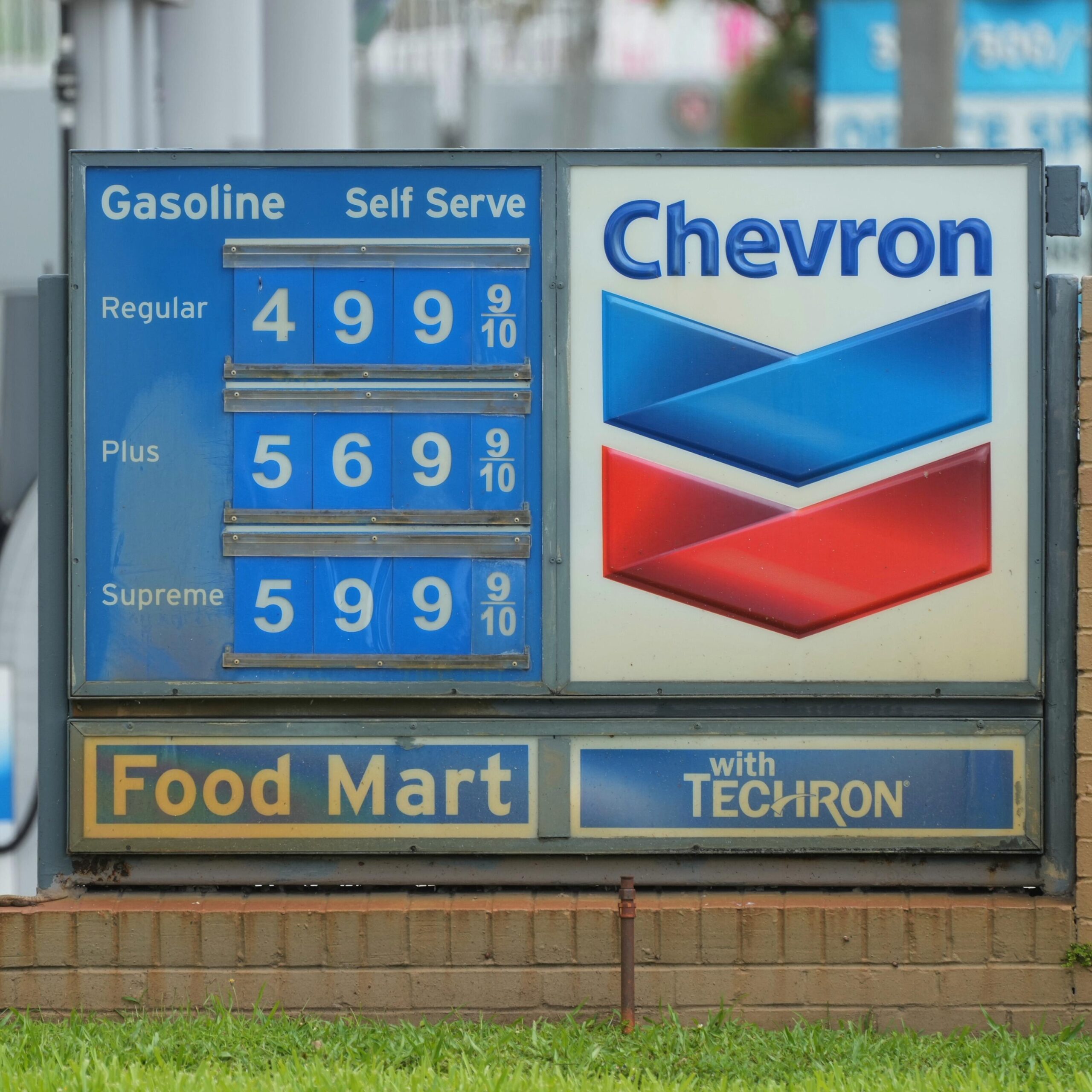
NADWORNY: The high gas prices that the Iran war kicked up have complicated the administration’s attempt to rein in inflation. Now the president says he loves inflation.
FOLKENFLIK: Paramount and Warner Bros. Discovery have an all-clear from Washington to merge both of the entertainment powerhouses’ own movie studios, streaming services and television news divisions.
NADWORNY: And the NBA finals tonight might give the New York Knicks their first title in over half a century.
FOLKENFLIK: Stay with us. We have the news you need to start your weekend.
(SOUNDBITE OF MUSIC)
FOLKENFLIK: The biggest challenge facing the Trump administration right now – a peace deal with Iran. It’s become a bit of a will-they-won’t-they Washington story.
NADWORNY: It’s gone like this – the president announces a deal is forthcoming, and we wait.
FOLKENFLIK: This week, as we waited, an Apache helicopter went down off the Gulf of Oman. The U.S. blamed Iran. The U.S. struck Iran. Iran struck its Gulf neighbors, and the president threatened to again strike Iran, quote, “very hard.” Then, hours later, Trump announced he’d canceled that plan and that a peace deal was forthcoming.
NADWORNY: Joining us now is NPR senior contributor Ron Elving. Good morning, Ron.
RON ELVING, BYLINE: Good to be with you, Elissa.
NADWORNY: So this deal is a memorandum of understanding. And yesterday, Iran’s foreign minister said it’s in the final stages and that his country’s leadership had approved it. Do we know exactly what’s on the table yet?
ELVING: Not really. We only know what might be. Right now, the one thing the two sides seem to have agreed on is their interest in having an agreement, or what each side can say is an agreement. That would help President Trump celebrate his 80th birthday this weekend by claiming victory and by ending what has become a politically expensive misadventure.
And if there really is a deal that holds up, it should reenergize the world oil market and bring prices down worldwide for gas and fertilizer and, ultimately, food, as well. It would help Iran get back to selling its oil and accessing some of its frozen assets. And so for the moment, everyone seems eager to sign and smile. But the real test comes once a deal is actually in place and we see whether both sides perform as agreed and whether that produces the desired results.
NADWORNY: Right. OK, Ron, last week, you talked about the bipartisan upset on Capitol Hill over Trump’s pick of Bill Pulte, the head of the Federal Housing Finance Agency, to step in as director of National Intelligence. So now there is a new name, Jay Clayton. Will this pick satisfy the lawmakers?
ELVING: It surely won’t satisfy all of them, but it seems likely to placate them, or at least to placate enough for Clayton to be confirmed. Clayton has been a U.S. attorney for the Southern District of New York. His background in intelligence is quite limited, but Pulte had no such background at all. That’s why a bipartisan group of senators has been loath to even have him in the job for a minimal transition period. And that alone may abbreviate the confirmation process for Clayton and lead some senators to give him the benefit of the doubt.
NADWORNY: OK. On to the economy. President Trump had this response Wednesday when he was asked about the new data that showed the highest level of inflation in more than three years.
(SOUNDBITE OF ARCHIVED RECORDING)
PRESIDENT DONALD TRUMP: The numbers were great. You know what I really love? I love the inflation. You know why?
NADWORNY: That sentence, I love the inflation. It got a lot of attention. But there was more to his answer. I mean, what point was he making?
ELVING: It would make sense for him to brush off that ugly inflation report and claim that the upward trend would soon be reversed and that inflation would come down. And he may have meant to say he loved not inflation itself, but the inflation number that was out that morning, the measurement, if only because it could have been still worse. And if that’s what he meant, then he failed to say it clearly enough. So now he’s on tape, saying he loves the inflation. Not a good look in an election year. Trump has already fallen 20 points among independents since the start of last year. He won’t be on the ballot this fall to bring out his hardcore base of supporters. So November could bring a serious setback in the midterms.
NADWORNY: Yes, of course, which people will be paying attention to inflation. OK. Finally, Ron, what are you going to do tomorrow night?
ELVING: Tonight, of course, it’s the Knicks and Spurs…
NADWORNY: (Laughter).
ELVING: …In Game 5 in the NBA finals. But tomorrow night, well, it’s going to be hard not to watch the Octagon on the White House South Lawn. This is the new spectacular arena that’s been built near the site of Trump’s rally on January 6, 2021. That rally became an assault on the Capitol and routed the members of Congress. On Sunday, the South Lawn will be the site of Trump’s multimillion-dollar UFC cage match. It’s a huge moneymaking event to mark Trump’s 80th birthday, and it just might be splashy enough and flashy enough to keep the focus off that particular number and the other age-related issues swirling around the nation’s second octogenarian president.
NADWORNY: (Laughter) That is NPR senior contributor Ron Elving. Thank you so much, Ron.
ELVING: Thank you, Elissa.
(SOUNDBITE OF MUSIC)
FOLKENFLIK: The Trump administration has blessed the union of two rival Hollywood titans.
NADWORNY: The Justice Department said late yesterday it has no qualms about Paramount’s $111 billion bid for the much bigger Warner Bros. Discovery. The merger would tie up Paramount’s movie studios with Warner’s, Paramount+ with HBO and CBS with CNN. David, you have been covering this for a while now, and the Justice Department had been investigating this proposed merger. So what did it conclude?
FOLKENFLIK: Well, it said after a careful eight-month review that it found there would be no threat to competition within the industry, which is to say, people, you know, let’s say producers or directors or actors, would they be unfairly disadvantaged because you had the combination of these two enormous studios, you know, and these television properties, and also that consumers wouldn’t be adversely affected. They said, no harm, no foul, and they put zero conditions on this. Often, when you have major mergers, you have to spin off properties here or there. You have to make promises to the government. None of that was done here by the Justice Department’s Antitrust Division.
NADWORNY: So how surprising is that?
FOLKENFLIK: Well, there’s two ways to answer that question. One is this is the biggest combination of like with like I can think of in the history of Hollywood. These are, you know, the two of the last remaining enormous legacy properties in Hollywood, the studios. You’ve got these two major TV news divisions. You’ve got the two streamers. It is very much like with like. And at the same time, of course, the Justice Department’s antitrust regulators, as did Paramount, argued, Look, we’re in an age of streamers. You have these digital giants. They’re enormous. You have the resources behind Netflix and Apple, the world’s largest digital device makers. And you’ve got Amazon, the everything store, doing its own with Prime Video. There is plenty of competition out there. Why would we only look at it through the narrow frame of Hollywood? So there are arguments to be made for it. People thought that this was likely to happen, and at the same time, it’s extraordinary.
NADWORNY: This merger would put a Trump ally in charge of CNN, which is one of the president’s frequent targets in the media. I mean, did politics play a role in their approval?
FOLKENFLIK: And this is why, actually, that despite the size and magnitude of this, this was all but predicted by people analyzing this. President Trump has said, for example, that he wanted CNN in the hands of the Ellisons. Larry and David Ellison took over Paramount’s parent company only just last year. Larry Ellison, the co-founder of Oracle, one of the richest people on the planet, his son David, the founder of Skydance Media, which helped to arrange this bid for Paramount last year. So he took over CBS. Trump has liked what he’s seen. Ellison, among other things, has put Bari Weiss, a former opinion journalist – the founder of the center-right news and views site, the Free Press – in charge of CBS. And there’s been an extraordinary level of controversy and crisis since. Trump has liked what he’s seen, and therefore it was believed that his regulators would give it sort of the matador defense and green light that puppy.
NADWORNY: OK. So with the end of the DOJ investigation, I mean, is it going to be smooth sailing for the takeover bid?
FOLKENFLIK: Well, the FCC, Federal Communications Commission, has to review it, as well, because there are CBS’s locally owned stations that are part of the combination, and there’s going to be an enormous infusion of foreign capital into this for this deal. The Saudi Sovereign Wealth Fund is among the investors. But people expect that to go through. But you have states’ attorneys general, and you also have the European Union and regulators in the United Kingdom still reviewing this. We don’t know exactly what all that means, but we have seen Democratic states’ attorneys general becoming much more aggressive about challenging antitrust deals like this in the courts, and that’s likely where this is headed.
NADWORNY: David, thank you for your reporting on this.
FOLKENFLIK: You bet.
(SOUNDBITE OF MUSIC)
FOLKENFLIK: The Knicks are just one win away from an NBA title, and the city of New York is unhinged. Will the San Antonio Spurs spoil things?
NADWORNY: And in college football, what will the NCAA do with Brendan Sorsby? Joining us now to answer these questions is sportswriter Howard Bryant. Good morning.
HOWARD BRYANT: Good morning. How are you?
NADWORNY: I am good after last night’s win, which we have to talk about. World Cup match. The U.S. scored four goals – four…
BRYANT: Four.
NADWORNY: …In its opening match over Paraguay. Wow. I mean, nobody expected much from this American team. Did you think that last night’s results are going to change your mind?
BRYANT: No, maybe not. I mean, it’s fun. I mean…
NADWORNY: Yeah.
BRYANT: …I think that when you think about soccer and the World Cup and the United States, obviously, it begins with the women, and that is the – they’re always going to be the standard because of their dominance.
NADWORNY: So good.
BRYANT: And so the men, on the other hand, you don’t have any expectations for them. They scored four goals. They had never scored four goals before. You don’t go into this expecting that sort of excitement. However, as a host nation, there is a sort of added level of adrenaline that’s going to come with it, and I think that there is a sort of feeling that, you know, maybe one of these days, there’ll be a great run that American soccer fans on the men’s side will be able to sort of enjoy. But I think that it’s hard to have a better debut than that with all…
NADWORNY: Right.
BRYANT: …The turmoil that men’s soccer has had. So have fun with it. Enjoy it.
NADWORNY: Yep.
BRYANT: Exactly. And see what they do against Australia.
NADWORNY: OK. The New York Knicks and their fans have been waiting 53 years for a title. It could happen tonight…
BRYANT: It could.
NADWORNY: …In San Antonio. Do you think the Spurs are going to force a Game 6 in New York? What’s going to happen?
BRYANT: It’s been a crazy series. I think that the Knicks have been the best team this postseason. They’ve only lost three games. They have been, by far, the more poised team. They are on the cusp of a championship. They should win tonight, and if they don’t win, then they should win probably the next game in New York. And it really feels inevitable. This team reminds me – I know New Yorkers are going to hate it, but I’m going to say it anyway – they have that 2004 Red Sox feel to them, this feel of inevitability that everything they do works for them. You know, the Red Sox fired their manager in 2003, and then they bring in Terry Francona, and he takes them to the championship.
The Knicks fired Tom Thibodeau last year, and then this new team, which is actually, in a lot of ways, the same team, they come back and they’re on the cusp of a championship. This team has been down by 20 points twice in the playoffs in the fourth quarter and has won. There is this feeling of inevitability. They should win. On the other hand, San Antonio has had the lead in the final two minutes of all the games. And so, you know, Victor Wembanyama has come back, and he said, hey, we can win the next three games. And they can. But I think – after 53 years, I think that city has been waiting to explode, and I think they’re going to get their chance.
NADWORNY: Amazing. Going to be a great game. OK. So, finally, in college football, Texas Tech quarterback Brendan Sorsby was banned for life by the NCAA for betting on his own team. That has been basically an unbreakable rule.
BRYANT: Forty times, by the way, Elissa.
NADWORNY: Oh, goodness. That’s a lot.
BRYANT: Forty times.
NADWORNY: OK, so that’s kind of like a no-no, I mean, going back over a century. But this week, a Texas judge granted Sorsby an injunction allowing him to play this season before his trial in February. I mean, what’s your take on this? A lot of people condemned it.
BRYANT: Well, my feeling on it is it’s total corruption in a lot of ways.
NADWORNY: Really?
BRYANT: And this is the – the hard part of all of this is that this is what they’ve all asked for. And it’s what the sports have asked for when – in 2018, when the barring of sports betting was lifted by the Supreme Court. It’s exactly what we knew was going to happen. You know, we talk about gambling addiction and the whole thing, but it’s the teams. It’s the league. I don’t see Texas Tech saying, hey, for our integrity, we shouldn’t have this player. They want him, too, because he’s a great player.
NADWORNY: Right.
BRYANT: And so this is what has happened. This is what you knew was going to happen. And one of the things that – one of the more difficult pieces of this is that so much of media, as well, is underwritten by gambling as well. So it’s not surprising, but this is just another step to – we don’t trust the games anyway. It’s going to get even worse.
NADWORNY: Yeah. That’s sportswriter Howard Bryant. Thank you.
BRYANT: Oh, my pleasure. Thank you.
FOLKENFLIK: That’s UP FIRST for Saturday, June 13, 2026. I’m David Folkenflik.
NADWORNY: And I’m Elissa Nadworny. Dave Mistich produced today’s podcast with help from Gabe O’Connor.
FOLKENFLIK: Our editor is Dianna Douglas, assisted by Melissa Gray, Emily Kopp, and Ariel Plotnick. In the control room today is our director, Andy Craig, and our technical director, David Greenburg, with engineering support from Zo van Ginhoven, Jay Czys and Simon-Laslo Janssen.
NADWORNY: Shannon Rhoades is our senior supervising editor. Our executive producer is Evie Stone. Catherine Laidlaw is our deputy managing editor.
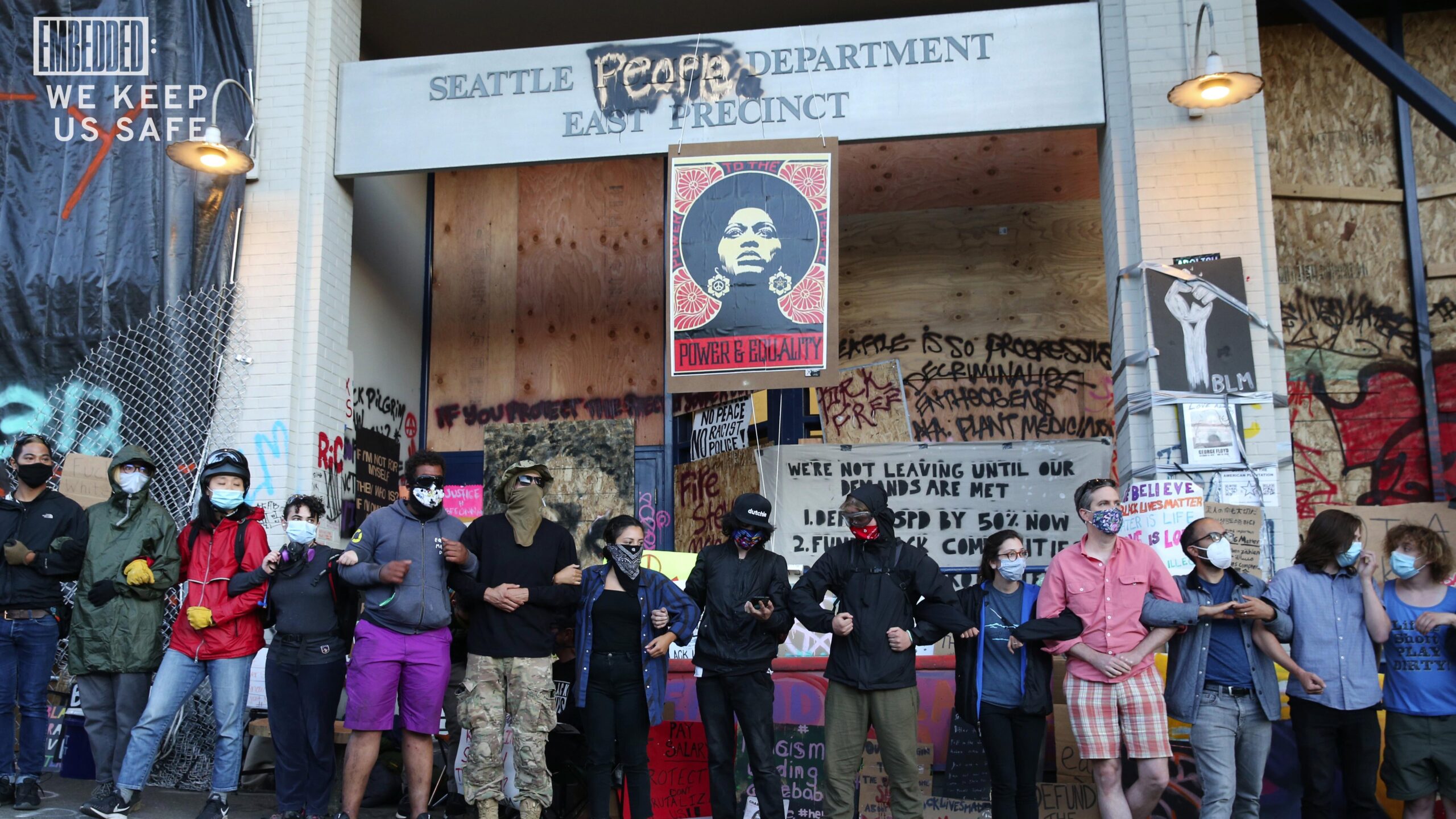
FOLKENFLIK: Tomorrow on The Sunday Story, a Black teenager was killed at a protest against police violence in Seattle in 2020. Why, six years later, is the case unsolved?
NADWORNY: Thanks for joining us in the podcast feed. We’ve got so much more for you on your radio.
FOLKENFLIK: To find your local NPR station, just go to stations.npr.org.
(SOUNDBITE OF MUSIC)