
Transcript:
AILSA CHANG, HOST:
It’s CONSIDER THIS, where every day we go deep on one big news story. Today, what will it take for oil to start flowing again? President Trump and Iran say an agreement has been reached to end the war and reopen the Strait of Hormuz. It is said to be formally signed on Friday in Switzerland.
(SOUNDBITE OF ARCHIVED RECORDING)
PRESIDENT DONALD TRUMP: I think a lot of great things are going to happen in the Middle East right now. And very importantly, the oil is plummeting down and the stock market is shooting up like a rocket.
CHANG: That was President Trump speaking at the G7 meeting on Monday. The ongoing Iran war has sent oil prices soaring and has exacerbated inflation in the U.S. A lot of that economic pressure is from the near-total closure of the Strait of Hormuz since the war began almost four months ago.
(SOUNDBITE OF ARCHIVED RECORDING)
TRUMP: The Iran deal that we made is going to bring a lot of success to the world because the oil was really clogged up there for a while.
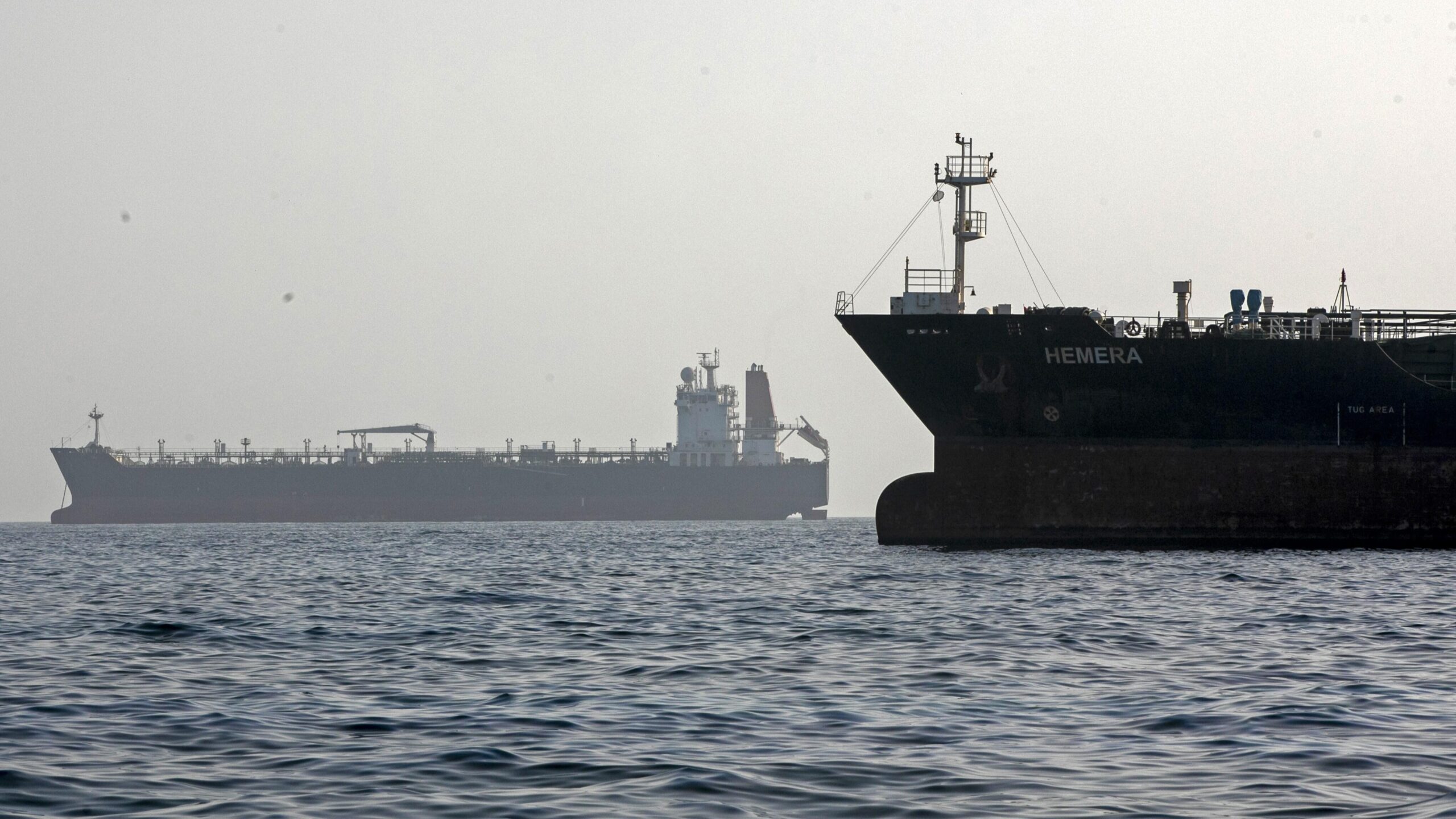
CHANG: Before the war, roughly a fifth of the world’s oil traveled through the Strait of Hormuz. Now, the traffic is way below that, in part because of blockades put in place by Iran and the U.S. But even if a deal ends those blockades, there’s another major issue – safety. One major risk is the possibility of sea mines. Here’s retired U.S. Navy Admiral James Stavridis on CNN in April.
(SOUNDBITE OF ARCHIVED RECORDING)
JAMES STAVRIDIS: If I’m the master, the captain of a big 200,000-ton oil tanker, I’m not enthusiastic about having the honor of leading the first convoy through the strait when this thing gets cleared up. Someone has to clear those mines.
CHANG: CONSIDER THIS – even with an agreement to reopen the Strait of Hormuz, it may take a while for activity to pick up in that crucial waterway. What will it take for shipping companies to feel safe? After the break, we’ll hear from the chief safety and security officer of a major shipping association.
(SOUNDBITE OF MUSIC)
CHANG: From NPR, I’m Ailsa Chang.
(SOUNDBITE OF MUSIC)
CHANG: It’s CONSIDER THIS FROM NPR.
(SOUNDBITE OF ARCHIVED NPR CONTENT)
CHANG: With the U.S. and Iran set to sign a memorandum of understanding on Friday, there is renewed hope that shipping traffic will move freely through the Strait of Hormuz once again.
(SOUNDBITE OF ARCHIVED RECORDING)
TRUMP: As you know, they’re doing a little hunting for a couple of mines that they’ve already found. But it’s essentially – ships are starting to go out now. On Friday, it’ll be completely opened.
CHANG: As we keep hearing during the course of this war with Iran, the strait is a critical shipping channel, especially for oil and fertilizer. And so we turn now to Jakob Larsen. He’s chief safety and security officer for BIMCO, the international shipping association. Welcome to All Things Considered.
JAKOB LARSEN: Thanks a lot. Nice to be here.
CHANG: Nice to have you. OK, so as we just heard, President Trump expects the strait to be completely opened again in just a few days. But based on what you know, do you think ships will be able to pass quite safely through by then?
LARSEN: No. I think on the face of it, that’s quite unlikely. The situation is basically unchanged compared to just before this here deal was announced last Friday. So ships are still waiting inside the Persian Gulf. Both the U.S. and Iran are still enforcing their respective blockades in the Strait of Hormuz and surrounding waters. And it’s very difficult and very risky to – for ships to move through the strait currently.
CHANG: What about the issue of mines? Because there’s a question about whether Iran laid any mines in the strait during this war. What is your sense of that?
LARSEN: Yeah. It’s very difficult for me to assess whether they actually laid mines or not.
CHANG: Right.
LARSEN: So we are a bit in the hands of the naval forces there. But if, as expected, they have laid mines, then the whole central part of the Strait of Hormuz is considered a mine danger area and will be risky to go through. But we are a little bit in the hands of the military here. We don’t have any accurate information ourselves regarding the mine threat, but it – from the looks of it, it could well take some few weeks or even a few months before the mine threat has been completely neutralized.
CHANG: What will it take for operators to feel confident that it is safe to sail through the strait? What kind of information do you need?
LARSEN: What we need is assurances from both sides of the conflict that a given route is safe to navigate. And with that, I think shipping will gradually start to pick up. And of course, we need assurances also that hostilities will not be reopened, and that requires more than just unilateral statements. We need credible assurances from both sides. And once that is in place and that they, you know, assure us that the route they declare open is actually safe to use, then we will see ships start to move. But that doesn’t mean that everything is hunky-dory…
CHANG: Right.
LARSEN: …Because there are still lots of unanswered questions.
CHANG: Well, one unanswered question is this question of fees, right? President Trump has declared the strait will be permanently toll-free, but Iran has said that no tolls will be levied, but there will be so-called fees. Did shipping companies pay fees to Iran prior to this war?
LARSEN: No, they didn’t. The Strait of Hormuz is an international straits. And in accordance with international conventions, these have freedom of navigation, so all ships can sail in and out as long as they do it in a proper and safe way. And therefore, fees are, you know, not part of international law, and it would be a complete breach of…
CHANG: Right, there’s some debate about whether fees would even be legal – right? – under international law.
LARSEN: Yeah, exactly.
CHANG: Yeah.
LARSEN: Yeah, exactly. And international law has, you know, that freedom of navigation concept, which is so broadly described in the U.N. Convention on the Law of the Seas (ph). And that doesn’t include anything about fees. And the Strait of Hormuz is considered an international strait, so…
CHANG: Yeah. Well, then how concerned are you that the flow of goods through the Strait of Hormuz will be permanently changed as a result of this war?
LARSEN: I mean, it’s obviously a concern, also given that the international rules-based order seems to be under a lot of pressure these recent months. So there is some concern, obviously. And shipping industry is a firm supporter of international conventions because it’s really the bedrock of free and international and effective trade, which – you know, at as low a cost as possible. So therefore, we are concerned, but we also have hopes that common sense will prevail and we can return to…
CHANG: Well, can I ask, though, going forward, will shipping companies ever feel like they can rely on the Strait of Hormuz again or in the same way? I mean, has this whole experience convinced you that maybe it’s time to invest in alternative routes?
LARSEN: I think the shipping industry is, of course, really concerned with the fact that Iran now has demonstrated that they are able to virtually close the strait. So I think a lot of, especially the oil-producing countries, they are looking to alternatives, and that could, for example, be pipelines. Now, whether that will materialize or not, I think time will show.
CHANG: Jakob Larsen, chief safety and security officer for BIMCO, thank you very much.
LARSEN: Thank you.
(SOUNDBITE OF MUSIC)
CHANG: This episode was produced by Erika Ryan and Chris Harland-Dunaway. It was edited by Sarah Handel and Tinbete Ermyas. Our interim executive producer is Courtney Dorning.
(SOUNDBITE OF MUSIC)
CHANG: It’s CONSIDER THIS FROM NPR. I’m Ailsa Chang.