Blog
-
U.S.-Iran fighting appears to pause. And, life inside Israel’s military zones in Gaza
Good morning. You’re reading the Up First newsletter. Subscribe here to get it delivered to your inbox, and listen to the Up First podcast for all the news you need to start your day.
Today’s top stories
After two days of intense strikes, fighting between the U.S. and Iran appears to have paused. The U.S. says it hit 170 targets in Iran. Iran says it targeted U.S. military bases in the Gulf. The fighting coincided with a weeklong funeral for former Supreme Leader Ayatollah Ali Khamenei and four of his family members killed on the first day of the conflict.
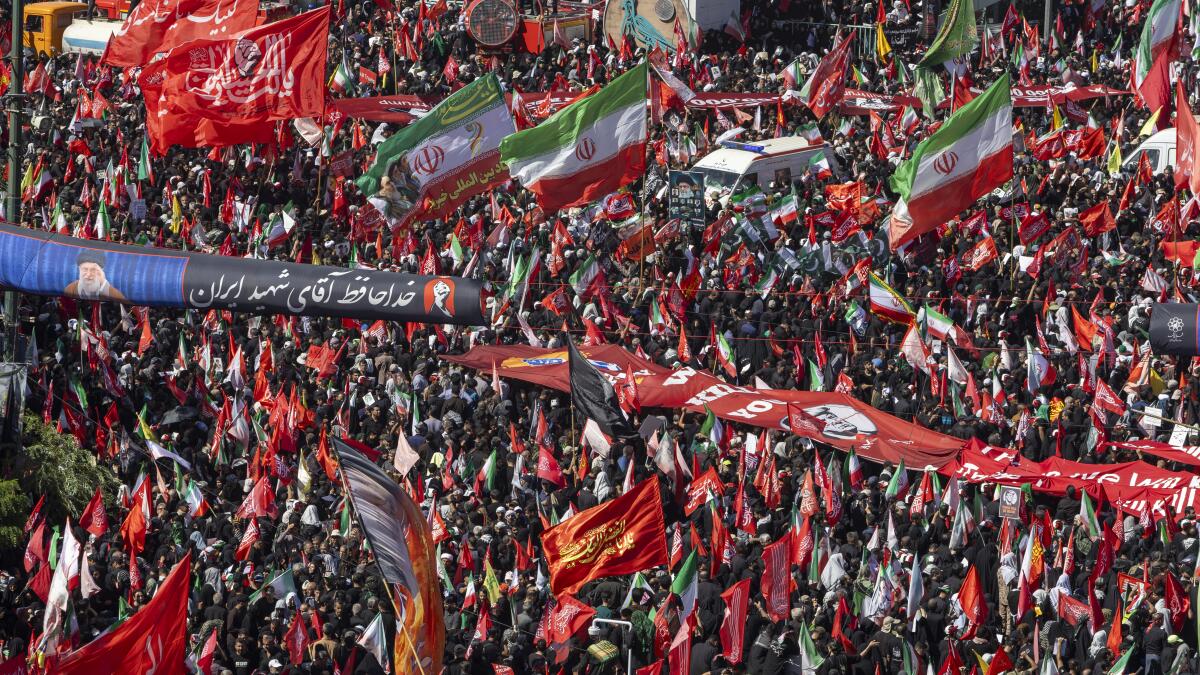
Huge crowds line the streets of the holy city of Mashhad for the burial of Iran’s late supreme leader, Ayatollah Ali Khamenei on July 9, 2026 in Mashhad, Iran. (Majid Saeedi | Getty Images) - 🎧 Tensions remain high in the region, NPR’s Carrie Kahn, who is in Tel Aviv, tells Up First. In the recent series of attacks, Jordan intercepted incoming fire from Iran. Iran yesterday threatened the United Arab Emirates. Eyal Zamir, the Israeli armed forces chief of staff, said that the country is prepared if fighting resumes.
Thousands of Haitian and Syrian immigrants with Temporary Protected Status (TPS) are at risk of losing their ability to work in the U.S. due to a recent Supreme Court ruling. The court gave the Trump administration the green light to revoke TPS for more than 300,000 people. TPS allows immigrants to legally reside in the United States when conditions in their countries make it unsafe to return.
- 🎧 Many immigrants’ work permits are tied to their TPS and their driver’s licenses are linked to those permits, says reporter Kathryn Mobley of NPR network station WYSO. Reporting from Springfield, Ohio, home to a large Haitian community, Mobley says some immigrants are staying home, while others are reaching out for help. Local nonprofits are encouraging people to apply for asylum, though the process is lengthy and offers no guarantee of protection from deportation. Some Springfield residents say they have already lost manufacturing jobs following the ruling.
President Trump dismissed the remaining members of the bipartisan U.S. Election Assistance Commission, drawing criticism from Democrats and voting rights advocates. A White House official said that Trump can take this action due to the Slaughter decision. Last month, in the Slaughter Case, the U.S. Supreme Court ruled that a president has greater flexibility in removing members of independent federal agencies.
The U.S. brokered a ceasefire between Israel and Hamas last year, but nine months later, that agreement has stalled. The deal called for an Israeli withdrawal from Gaza, new governance in Gaza and Hamas’s disarmament. Instead, Israeli forces have expanded their control from about half of Gaza at the start of the ceasefire to nearly 70%, according to Israeli officials and NPR’s analysis. Israeli Prime Minister Benjamin Netanyahu says that the military is tightening its grip to surround Hamas. For Palestinians, that has meant more displacement, shrinking access to aid and another cycle of grief. More than 1,000 Palestinians have been killed since the ceasefire took effect, according to Gaza’s Health Ministry. In a new report, NPR’s Anas Baba and Aya Batrawy document what daily life looks like for families trapped between expanding military zones, with shelling at night, gunfire by day and nowhere safe to go.
Deep dive

Andy Burnham smiles during a campaign visit to Ashton-in-Makerfield before a by-election, in Manchester, England, on June 9. Burnham is expected to succeed Keir Starmer as the U.K.’s Labour Party leader and prime minister. (Jon Super | AP) Nominations opened yesterday in the Labour Party election to succeed Keir Starmer as the U.K.’s next prime minister. Former Greater Manchester Mayor Andy Burnham, 56, is widely expected to be the next person to take on the role. Analysts say that Burnham’s upbringing and experience as mayor have influenced his politics and could help Labour win back working-class voters who have shifted toward right-wing parties in recent years. Here are some moments that have defined his career so far:
- ➡️ In 2009, as secretary of state for culture, media, and sports, Burnham launched an inquiry into the 1989 Hillsborough disaster after victims’ families challenged the official account. The inquiry later found that police failures, not the victims, who were labeled as hooligans, caused the disaster.
- ➡️ Burnham entered Parliament at age 31, serving 16 years and ran twice for Labour leader before being elected as mayor of Greater Manchester in 2017. There he gained a national reputation.
- ➡️ During the COVID pandemic in 2020, Burnham gained national attention after clashing with the government over new lockdown restrictions during a live television news conference.
Weekend picks

In Alice and Steve, Jemaine Clement and Nicola Walker play long-time friends who turn on each other after he gets involved with her 26-year-old daughter. (Lara Cornell | Disney+) Check out what NPR is watching, reading and listening to this weekend:
🍿 Movies: Moana returns in Disney’s new live-action remake, featuring Dwayne Johnson as Maui and Catherine Laga’aia as Moana. The film includes a new song by Lin-Manuel Miranda.
📺 TV: Hulu’s Alice and Steve is a six-part British comedy about two longtime best friends in their 50s who turn against each other when Steve starts a relationship with Alice’s 26-year-old daughter.
📚 Books: Ten new book releases for July include titles by Colson Whitehead, Sigrid Nuñez, Daniel Mason and Nathaniel Rich. Plus, award-winning journalists deliver some nonfiction reads.
🎵 Music: NPR Music’s New Music Friday podcast is highlighting their favorite albums released today, featuring artists such as Jack White, Baby Rose and Suki Waterhouse.
🎭 Theater: The Black Opera Project is commissioning three original operas that celebrate and showcase the Black American experience. The first production, Lalovavi, will make its world debut this week in Cincinnati. (via WVXU)
3 things to know before you go
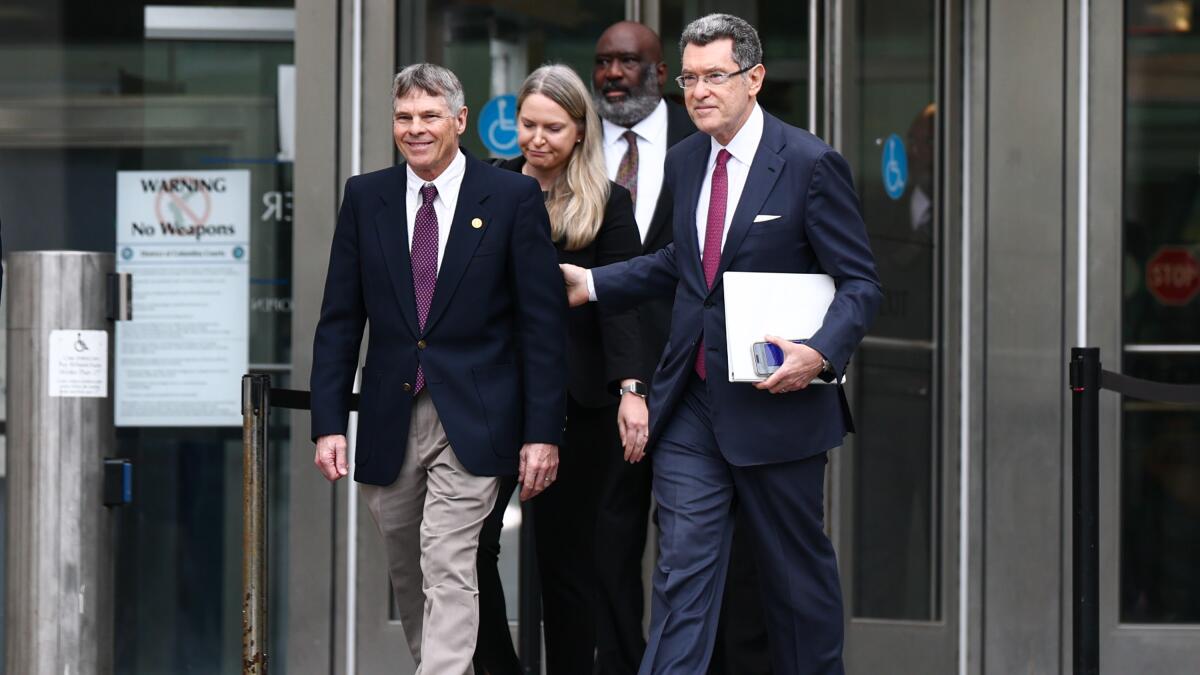
Former U.S. Olympian David Hearn (left) walks with his attorney Norman Eisen to speak to reporters and protesters gathered after his arraignment at the Superior Court of the District of Columbia in Washington, D.C. on Thursday. (Finn Gomez | Getty Images) - Former U.S. Olympic canoeist David Hearn pleaded not guilty on Thursday to a charge of destruction of property of the Lincoln Memorial Reflecting Pool in D.C. Superior Court.
- Mountain bike enthusiasts are working on making The Velomont, a multi-use trail that will span the length of Vermont, user-friendly for everyone.
- The Trump administration is proposing changes to Biden-era environmental rules aimed at reducing pollution from heavy-duty vehicles, including buses and large trucks.
This newsletter was edited by Majd Al-Waheidi.
-
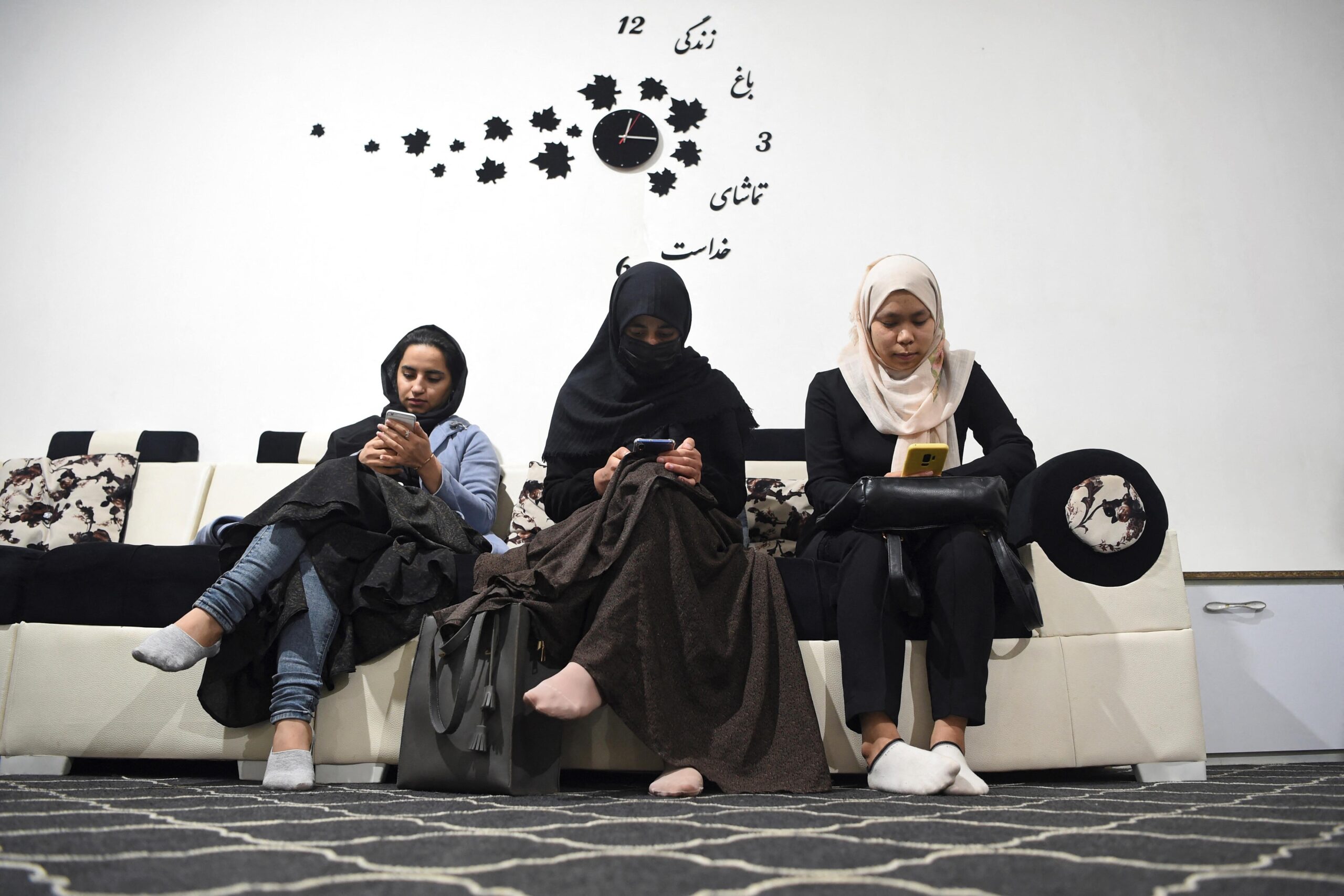
Taliban declares war on smartphones
Farzana, 40, is a midwife who covers 10 villages in Moqor district of Afghanistan’s Ghazni province. Until recently, worried mothers often sent her photos of newborns with rashes, swelling or skin infections so she could decide who needed help most urgently.
But since the Taliban began enforcing a ban on smartphones that took effect in June, Farzana says she has stopped using her smartphone out of fear. She can now only be reached through a regular phone line — a more costly option in a country where people rely heavily on WhatsApp for calls, messages, photos and urgent coordination.
“I cannot be everywhere at once,” said Farzana, who like many Afghans goes by one name. “Sometimes a photo or a message helps me understand whether a mother or newborn needs urgent help.”
For stories about life in our changing world, subscribe to NPR’s Global Health newsletter.
Across Afghanistan, smartphones have become part of a fragile support system. Families use them to consult doctors remotely, arrange transport to distant clinics, send photos of wounds and symptoms, ask relatives for money, document abuse and reach schooling that is no longer available in person to many girls and women. That fragile network is now under threat.
Smashed and confiscated
Taliban authorities in Afghanistan have ordered government employees, judges, police and members of the military to stop using smartphones under a directive that took effect June 16. The order threatens violators with confiscation, destruction of their devices and punishment (which are not specified).
The use of what are known as feature phones — with calling and texting options but no touch screen and no photo or recording capabilities — is permitted.
The ban does not yet apply to private phone ownership by ordinary Afghan civilians. But in some provinces, restrictions have already moved beyond government offices and into hospitals, schools and universities, raising fears that the policy could become an early test for broader limits on public smartphone use.
The restrictions began as a verbal order from Taliban supreme leader Hibatullah Akhundzada and were later formalized in a military court directive circulated to court heads, police commanders and intelligence chiefs across the country’s eight administrative zones. The directive says anyone caught using a smartphone will have the device smashed and face “legal and sharia punishment.” Exemptions require a written decree from Akhundzada himself. A separate court order covers “all officials of the military and civilian institutions, including judges.”
The Taliban have also created monitoring lists recording employees’ names, positions, workplaces, mobile carriers and phone numbers. Security officials have instructed members to destroy their own smartphones and submit proof on a designated form.
One government employee in Herat, who requested that NPR not use his name for fear of retaliation by the Taliban, says phone restrictions had quietly been in place in his office for months before the June order took effect nationally. When he and his colleagues resisted, he said, officials confiscated and smashed their phones.
A possible trigger for the ban
The timing of the order followed protests in Herat in early June, after Taliban forces arrested women and girls accused of “improper hijab” — not meeting the dress code of covering the face and body in the prescribed manner and not wearing makeup. Witnesses said Taliban forces opened fire on demonstrators, killing at least one person. Video of the shooting spread online before the Taliban could contain it.
The Taliban administration did not respond to a request for comment.
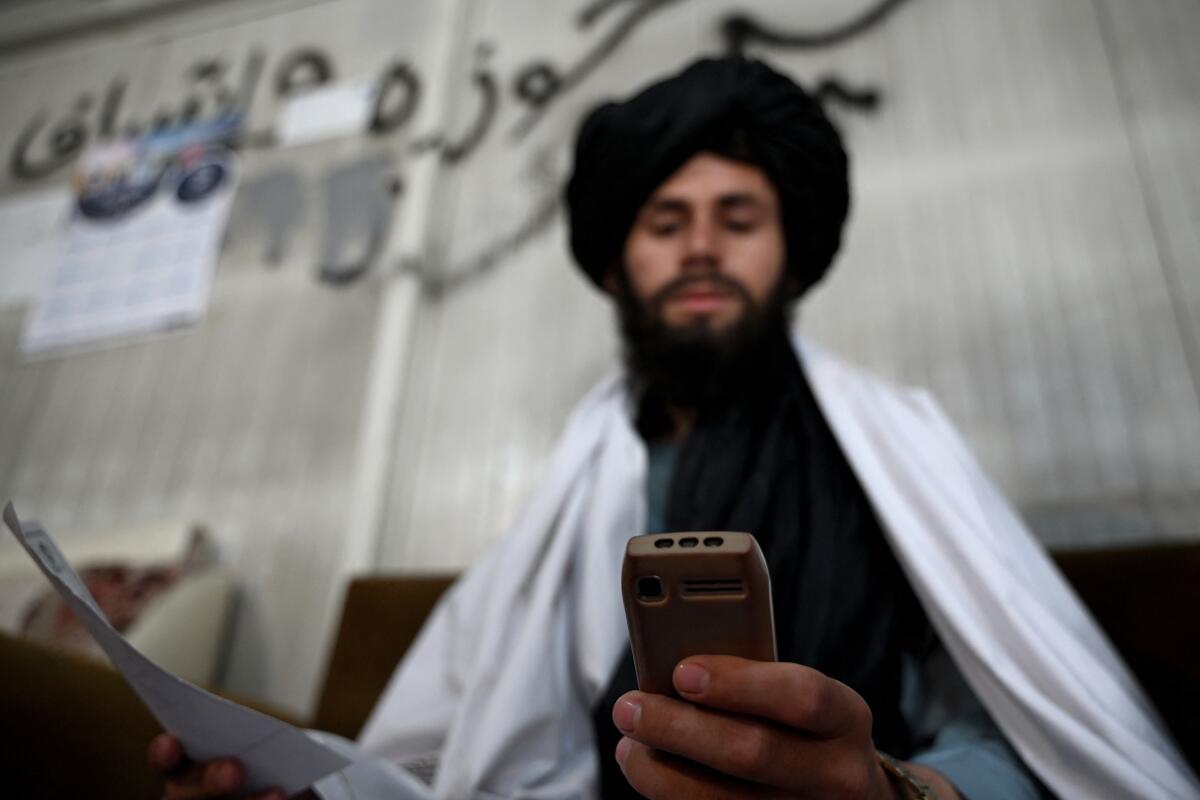
Taliban staff used to rely on smartphones. After a ban was announced, they’re using feature phones — also known as “dumb phones” — which do not have a screen and are designed for calls and texts. This Taliban administrator is using such a phone at the Department of Information and Culture building in Kandahar. (Sanaullah Seiam/AFP | via Getty Images) The restrictions have reached deeply into education, where phones are not only tools for communication but also part of how students study, save lessons, contact teachers and stay connected to their families.
In Kandahar province, an 18-year-old madrassa student named Baryalai, who also requested anonymity because he fears retaliation from the Taliban, said the change at his school was total. “Now there’s a complete ban,” he said. “No one brings smartphones anymore.”
A teacher at the same school, 30-year-old Omar Istanikzai, said he had left his own phone at home that morning without being told to. “I think this is a good decision so that there is more focus on studies,” he said.
Others see the policy very differently.
How schools are responding
At Kabul University, the leadership council ordered a complete smartphone ban for professors, staff and students effective June 21. The decision was announced at an academic council meeting where members were not permitted to ask questions. At Herat University, notices posted at the entrance warn that no one may enter with a smartphone, and the restriction extends into student dormitories, where Wi-Fi service has also been suspended. In Baghlan province, students carrying smartphones have been turned away at the university gate.
A student at Kabul University said the restriction has also made it harder for students to remain in touch with their families during emergencies. He asked that his name not be used because he has been targeted by the Taliban before and is afraid he would face retaliation for speaking out if they could identify him. His family lives in Badakhshan province, he said, and after a security incident involving students on July 4, his mother was terrified because she could not easily reach him.
“She was so worried,” he said. “If something happens, our families need to know whether we are safe. Without our phones, we are cut off from them.”
For many students, a phone is a classroom and a library. They use it to photograph lessons written on the board, receive assignments, download books, search for academic materials, use dictionaries and contact instructors outside class. For girls and women barred from secondary school and university, it can be one of the last ways to keep studying privately.
In Kandahar, the provincial Education Department said its own ban on students and teachers was rooted in a “sharia perspective” and warned that smartphones risked “the destruction of the future generation.” The Taliban’s higher education minister has called smartphones “one of the three main enemies of Muslims” and last October restricted their use on university premises to only the most senior administrators.
What could be lost
For many Afghans, however, the phone is not destroying their future. It may be one of the few tools they still have to protect it.
That is especially true in healthcare, where distance, poverty and Taliban restrictions already make treatment difficult. Afghanistan’s health system is under severe strain, with many hospitals and clinics facing shortages of staff, medicine and funding. Patients in rural provinces often travel for hours, sometimes across several districts or provinces, to receive treatment. For women, the barriers are even greater. Taliban restrictions on movement, education and employment have limited women’s access to care and threatened the future pipeline of female doctors, nurses and midwives.
In that environment, a phone can narrow the distance between a patient and help. A pregnant woman can call relatives to arrange transport. A mother can ask a midwife whether her newborn needs urgent care. A patient can send a photo of an injury before deciding whether to make a costly trip to a hospital. A health worker can consult colleagues through messaging apps.
For Farzana, those messages are part of daily work. They help her decide when a situation cannot wait.
“The ban makes it hard to attend to every woman in every village,” she said.
Faraidon Farzad, 29, grew up in a village in Malistan district of Ghazni province, where reaching a doctor was never simple. Now pursuing a Ph.D. in artificial intelligence, he has developed a system that analyzes smartphone photos of wounds for signs of infection — redness, discoloration and changes in tissue — that could help flag when a patient needs medical attention.
The project won a special award at Moscow’s Archimedes innovation exhibition this year. It is still in the research stage and would need larger datasets and clinical validation before wider use, Farzad said.
“Mobile phones are widely available, affordable and easy to use,” he said. “In many areas, especially rural communities, people may not have quick access to specialists, but they often have access to a smartphone. A mobile-based tool could provide early guidance and encourage patients to consult healthcare professionals sooner.”
Farzad’s project is not ready for broad use. But it shows what mobile technology could make possible in a country where access to medical care is already fragile.
Esmat Khan Amiri, 26, from Daykundi province, used his phone for a different kind of health-related action. After his father was repeatedly brought to an operating room at a hospital in Kandahar and turned back without surgery, Amiri posted a video describing the ordeal.
“I did not have power, money, or connections, but I had a phone,” he said. “I wanted people to know what was happening.”
The video spread on social media, and Amiri said the resulting pressure led the hospital to finally operate on his father.
Giving voice
“A smartphone is not only a tool for entertainment or communication,” Amiri said. “For people who are ignored, silenced, or discriminated against, it can become a voice.”
Since the Taliban returned to power in 2021, phone footage has repeatedly captured images the government could not control: protests, arrests, public punishments and complaints from inside hospitals. The same device that helps families seek medical advice can also expose mistreatment.
That visibility is part of what makes smartphones threatening to the Taliban. They allow information to move beyond official control — from a village, a classroom or a hospital ward to the wider public.
For Afghans who have few other ways to demand help, that matters. A phone can connect a mother to a midwife, a student to a lesson, a patient to a doctor or a family to an audience when institutions ignore them.
Now, as the Taliban moves to restrict smartphones, one of the country’s most popular tools has become one of its most contested.
Fatima Faizi is a journalist based in New York. She previously reported for The New York Times in Afghanistan, and her work focuses on human rights, women, education and the impact of Taliban rule on daily life.