Blog

  • Class action suit against AI makers over deepfake child sexual abuse material expands

    Class action suit against AI makers over deepfake child sexual abuse material expands

    New plaintiffs in a class action lawsuit against Elon Musk’s AI company, SpaceXAI, allege that the company’s image-generation models were used to create child sexual abuse material and that the company failed to adequately share information about an alleged perpetrator with authorities.

    Two plaintiffs, one in Wyoming and the other in Wisconsin, joined the lawsuit filed by three Tennessee teenagers earlier this year, according to an amended complaint filed on Tuesday. All the plaintiffs are referred to as Jane Does. The suit was also expanded to include Stability AI, the company behind the Stable Diffusion image generator, as a defendant.

    The suit alleges that the perpetrators, including a plaintiff’s male friend and another plaintiff’s stepfather, used the companies’ AI models to alter photos taken when the plaintiffs were underage to make child sexual abuse material (CSAM). The five plaintiffs accuse the companies of producing CSAM, benefiting from sex trafficking ventures, negligence, defective product design and creating a public nuisance.

    “Public nuisance means that this is not just something that is problematic for our clients … this is something that is a scourge on society,” said Annika Martin, an attorney for all five plaintiffs. “We want to put these guardrails in place so that we do not cause this harm across an entire generation of children.”

    The plaintiffs are asking the AI companies to install more effective guardrails to prevent the creation of exploitative and abusive imagery as well as seeking monetary compensation.

    The case of Jane Doe 4

    While SpaceXAI, like other internet companies, is required by law to report suspected child sexual exploitation, including CSAM, to the nonprofit National Center for Missing and Exploited Children (NCMEC), the lawsuit alleges that the company failed to adequately do so.

    SpaceXAI was previously known as xAI. The company rebranded this month following its merger with Musk’s SpaceX earlier this year.

    According to the complaint, the stepfather of Jane Doe 4, a woman in her 20s in Wyoming, used SpaceXAI’s chatbot, Grok, to generate about 7,000 sexually explicit images and videos from a single photograph taken when Jane Doe 4 was about 11. The AI-generated images included depictions of her nude, performing sexual acts on men, including her stepfather. Some images also included explicit captions.

    SpaceXAI only sent one tip regarding Jane Doe 4 to NCMEC in February, when the stepfather asked the model to generate an image depicting the girl being raped by multiple men, according to the complaint. The company did not include any of the abusive images with its report, and also failed to share the alleged perpetrator’s IP address with NCMEC and law enforcement, even after officials requested it multiple times, according to the complaint.

    Many electronic service providers submit a large volume of reports of suspicious activity to NCMEC, but do not include “sufficient or actionable information” because the law did not require it, the center wrote in a report in March.

    When law enforcement eventually tracked down and investigated the stepfather, they found that he, like the other perpetrators mentioned in the lawsuit, traded the sexually explicit images with others online, according to the complaint. Two days after law enforcement searched his digital devices and charged him with child exploitation offenses, he died by suicide.

    “Jane Doe 4 entered a period of extreme personal crisis,” the complaint said. “She had to grapple with the trauma of her own sexual exploitation while at the same time assisting her mother in navigating the loss of her stepfather … Her family was torn apart, and her life became a nightmare.”

    Law enforcement told Jane Doe 4 that her stepfather had used Grok because it was more responsive to his prompts than other AI models, according to Martin, the lawyer representing the plaintiffs in the class action lawsuit.

    NCMEC declined to comment on the case and referred NPR to law enforcement. The Wyoming Division of Criminal Investigation, whose task force on internet crimes against children was identified as one of the law enforcement agencies involved in Jane Doe 4’s case in the complaint, did not respond to a request for comment. SpaceXAI did not respond to a request for comment.

    Apps that can alter photographs to make intimate images and pornography have existed for years in the shadows of the internet. But the creation of nonconsensual intimate images became much more mainstream in 2025 when major AI companies including Google, OpenAI and xAI updated their image generation tools in a way that allowed users to strip people down to bikinis.

    From late 2025 into early this year, people used xAI’s tools to make a large number of altered photos showing women and children stripped down to bikinis or even less. As a result, countries including Indonesia, Malaysia and the UK launched investigations and imposed temporary bans on xAI. Currently, according to NPR’s testing, chatbots created by Google and OpenAI refuse to respond to the prompt “put her in a bikini.” A free version of Grok showed an error in loading images after receiving the same prompt.

    The Stability AI logo is being displayed on a smartphone in this photo illustration on June 10, 2024. A class action lawsuit filed against SpaceXAI and Stability AI alleges the companies' AI tools were used to make sexually explicit images of children.
    The Stability AI logo is being displayed on a smartphone in this photo illustration on June 10, 2024. A class action lawsuit filed against SpaceXAI and Stability AI alleges the companies’ AI tools were used to make sexually explicit images of children. (Jonathan Raa/NurPhoto via Getty Images)

    Stability AI is a new defendant

    Stability AI, which makes the image generation tool Stable Diffusion, was added as a new defendant in connection with the claims filed by the three initial teenage plaintiffs in Tennessee. The complaint was updated to add that “The application on the perpetrator’s phone used to create the AI CSAM of Plaintiffs relied on Stability AI’s image-producing tools.”

    Unlike proprietary models such as those made by SpaceXAI, OpenAI and Anthropic, Stability AI’s models are open-weight, which means it’s much easier for users to remove restrictions that model makers have put in place. What’s more, the model maker generally doesn’t have insight into user queries. Nonetheless, the lawsuit alleges Stability AI could have restricted its models’ ability to generate CSAM but chose not to in its more recent releases.

    The Verge reported in November 2022 that Stability AI said it filtered out not-safe-for-work (NSFW) content from its training data to restrict the Stable Diffusion Version 2 model’s ability to generate CSAM. This decision drew backlash from users, including one who decried the update as “censorship,” The Verge reported.

    A more recent version of Stability AI’s model was frequently used to generate NSFW content and generated a higher proportion of such content compared with outputs from Stable Diffusion Version 2, according to a research paper by scholars from the University of Wisconsin-Madison, the Massachusetts Institute of Technology and other institutions, which has not yet been peer-reviewed. Stable Diffusion Version 2 was also much less popular than the Stability AI models that came before and after it, the researchers found.

    “When they realized that nobody wanted to use their model when they put those guardrails in place, they rolled those guardrails right back so that everybody would want to use their model again,” Martin said. “They knew exactly how to rein this behavior in and they chose not to for profit.”

    Stability AI did not respond to a request for comment.

  • NPR News: 07-09-2026 1PM EDT

    NPR News Now Standing Video – RSS Version ( (Photo: NPR))
  • NPR News: 07-09-2026 12PM EDT

    NPR News Now Standing Video – RSS Version ( (Photo: NPR))
  • Tiny Desk Radio: ADG7, Sandbox Percussion, Beth Gibbons

    Tiny Desk Radio: ADG7, Sandbox Percussion, Beth Gibbons

    Korean zithers, plumbing pipes, water glasses and singing saws — these are just some of the rare and unusual instruments you’ll hear on this episode. Host Bobby Carter, with guests Lars Gotrich and Tom Huizenga, guides us through sets by the South Korean group ADG7, classical ensemble Sandbox Percussion and Beth Gibbons, best known as the voice of Portishead.

    Look for Tiny Desk Radio on your local NPR station.

    ADG7: Tiny Desk Concert

    Sandbox Percussion: Tiny Desk Concert

    Beth Gibbons: Tiny Desk Concert

    This episode of Tiny Desk Radio was written by Lars Gotrich. Walter Ray Watson, Dhanika Pineda and Noah Caldwell were our producers. Suraya Mohamed is our executive producer. Sonali Mehta is the executive director of NPR Music. And our theme was composed by Kaelin Ellis.

  • ‘Solo agers’ are a growing group. Changes that would help them could help everyone

    ‘Solo agers’ are a growing group. Changes that would help them could help everyone

    Stay up to date with our Up First newsletter, sent every weekday morning.

    Ailene Gerhardt hears a lot of stories. It’s all part of her job. She’s a patient advocate, helping people navigate their care and the complexities of the healthcare system. During the last several years she’s heard from more and more people getting older without adult children, a spouse, or both. But the healthcare system remains stuck in the past, she says, assuming older people have family to support them, when that’s often not the case.

    Gerhardt started and runs a network called Navigating Solo, which offers support and community to this group of older adults, often referred to as “solo agers.”

    “Instead of looking at the concept of solo aging as something that’s a crisis to be solved — it’s not a crisis to be solved,” she says. “It’s a reality to be supported.”

    That reality is growing as Baby Boomers and Gen Xers age. According to a 2023 AARP report, one in ten adults over age 50 lives alone and doesn’t have a partner or children. Different lifestyles and changing societal attitudes suggest these numbers will grow in the future. Plenty of people are single by choice.

    More inclusive systems

    Gerhardt says right now, solo agers are expected to take the lead in planning for their housing, finances, and transportation to appointments, often by hiring professionals to help them. But rather than feeling like the odd ones out in systems that cater to couples and families, she says, why can’t the systems themselves be more inclusive of solo agers?

    To take one example: instead of assuming every patient has someone who can pick them up from a medical appointment after being under anesthesia — and drive them home — she’d like the onus to be on hospitals and medical offices to arrange transport and an escort. She says she has heard from people who have canceled a procedure because their ride backed out at the last minute.

    “In both my solo aging advocacy hat and my healthcare advocate [hat], like, that is just infuriating,” she says, “that people do not have the support they need to maintain their health in a productive way.”

    But Gerhardt says this isn’t an intractable problem. “Let’s look at designing the system, or re-designing the system, so that anyone and everyone can have strong support. Quite honestly that benefits everyone,” she says, citing curb cuts as a good example of this. Disability rights advocates fought for years to have towns and cities install curb cuts — a slope from the sidewalk to the street that lets a wheelchair user cross the road easily and safely. But curb cuts quickly became popular with people pushing strollers, bikers, and anyone else seeking an easier way into the street.

    Building services for the future

    Sara Zeff Geber has been writing and speaking about solo aging for more than 10 years, including giving talks to lawyers and financial planners, “to bring awareness to the fact that not everybody is a couple and not everybody has that proverbial adult daughter to help them.”

    She believes she was the first person to use the term “solo aging,” seeing it as a lot more positive than the previous description: “elder orphans.”

    Ideas about relationships and parenthood are less rigid than they used to be. Given this, she says, “Whatever foundation we build now” for solo agers, “is going to be hugely important for generations that follow.”

    Jason Resendez hopes those generations will have more government support than the current crop of older adults. He is CEO of the National Alliance for Caregiving. He says there is growing recognition that many people are aging by themselves. That said, federal funding cuts are coming to home-based services for older adults, and to Medicaid, he says, “which makes it a lot harder to age in place when you don’t have a family caregiver to absorb the elimination of those social service supports.”

    On the whole, Resendez says, U.S. society is still hooked on the idea of “individual ruggedness.” But as he looks to the future, “More and more people will be aging, more and more people will be aging alone,” and the social safety net will come under a lot of strain. “I think it’s when we are at that boiling point, that maybe we’ll have policymakers finally recognize, ‘Hey, this isn’t just an individual responsibility.’”

    Creating the resource he will need

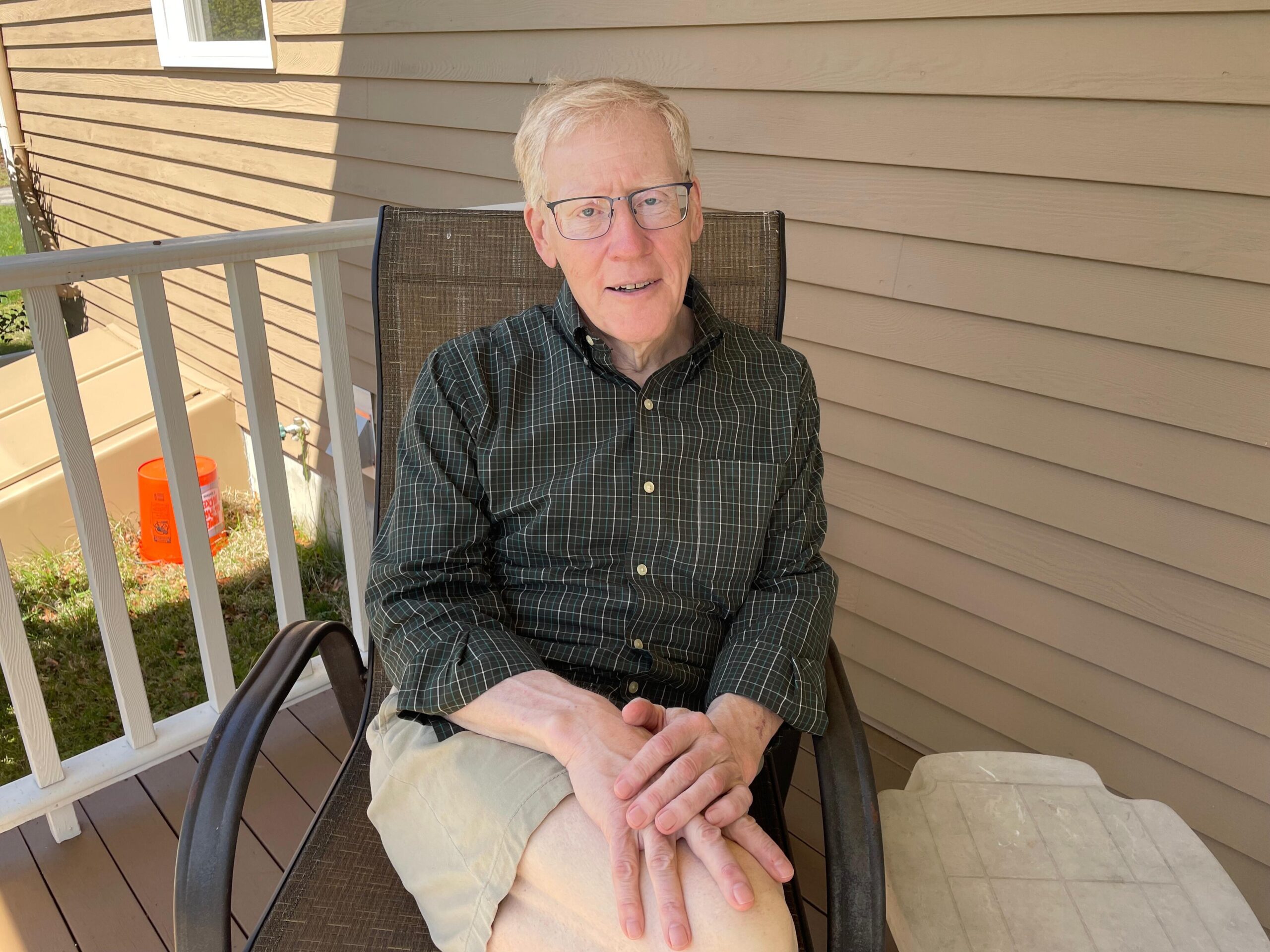
    Carl Smigielski was a family caregiver to his husband, Moshe, a Vietnam veteran who died in 2019 after living with Alzheimer’s for several years.

    But Smigielski doesn’t expect to have a caregiver of his own. He’s 61, lives alone in Richmond, R. I., and believes it’ll stay that way. “Right now it wouldn’t align with me to have another intimate relationship so I was pretty clear,” he says. “You’re going to be doing this alone.”

    Carl holds a photo of himself (r) and his late husband Moshe Gara (l), towards the end of Moshe's life. Carl was Moshe's caregiver when he had Alzheimer's disease.
    Carl holds a photo of himself (r) and his late husband Moshe Gara (l), towards the end of Moshe’s life. Carl was Moshe’s caregiver when he had Alzheimer’s disease.

    But he’s gotten involved with a nonprofit organization that has long recognized solo agers. It’s called the Villages (not to be confused with the large retirement communities in central Florida.) The Village Movement consists of hyperlocal groups that are mostly run by volunteers.

    The Villages started 25 years ago with one village in Boston. There’s now a network of them dotted across the U.S. Their aim is to help people live independently by offering a combination of practical and social support, such as rides to appointments, help moving furniture or changing lightbulbs, friendly check-ins for those who want them, and social events.

    People gather for lunch at the Richmond Community Center in Richmond, R.I., where Carl Smigielski is about to explain the concept of a local 'village' for older adults.
    People gather for lunch at the Richmond Community Center in Richmond, R.I., where Carl Smigielski is about to explain the concept of a local ‘village’ for older adults. (Ashley Milne-Tyte for NPR)

    Members join to tap the network’s resources. Volunteers make it happen. While not designed specifically for solo agers, Barbara Hughes-Sullivan, executive director of the Village to Village Network, says “anywhere from 30 to 60%” of village members are in that demographic, depending on the individual village.

    Smigielski is both a member and a volunteer. He is helping to start a new village in his rural part of Rhode Island. “I wanted to retire to something,” says the longtime software engineer. “I didn’t want to retire to boredom … and I really have met the kindest people.”

    He’s spending part of this day at a community center to explain the village concept to a group of older adults over lunch, including his mother, Jacqueline. She is 87, a widow, and eager to volunteer. Afterwards he heads back to the home he used to share with his husband. After speaking in front of the group, he needs to decompress in the quiet of the house and yard.

    Smigielski says he’s not an obvious candidate for a network like this. He enjoys his own company, and doesn’t expect to need help changing lightbulbs for decades. But after years of caregiving, followed by the Covid years, he realized something.

    “The social support, regardless of how able we are, that’s intrinsic to us,” he says. “I went through my battles of thinking I was an exception to that rule, I could be the human who didn’t need social connection – because I don’t need a lot of it, but I need it.”

    For now, he still has his mom to drive him to medical procedures where he needs help getting home afterwards. But eventually he expects to tap the network he’s helping create to sustain him as he gets older.

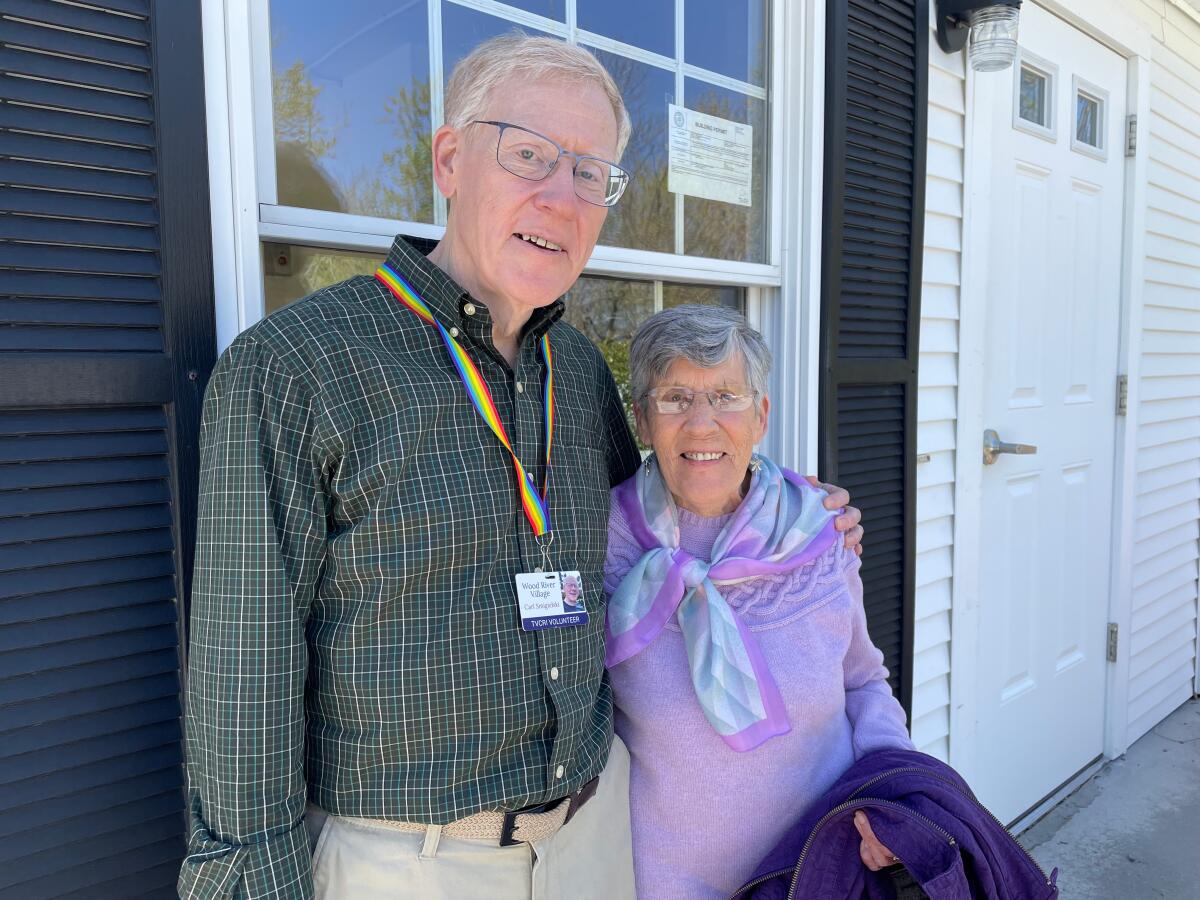
    Carl Smigielski and his mother, Jacqueline, outside the Richmond Community Center in Richmond, R. I. Each is part of the other's support system.
    Carl Smigielski and his mother, Jacqueline, outside the Richmond Community Center in Richmond, R. I. Each is part of the other’s support system. (Ashley Milne-Tyte for NPR)

    Transcript:

    PIEN HUANG, HOST:

    More Americans are entering old age without children, spouses or other close relatives to lean on. They’re known as solo agers, and their numbers are expected to rise as younger generations get older. Advocates say the shift is also an opportunity to rethink how communities and support systems are designed. Ashley Milne-Tyte reports.

    ASHLEY MILNE-TYTE: As a professional patient advocate, Ailene Gerhardt hears a lot of stories. And during the last several years, she’s heard more and more from people getting older without adult children, a spouse or both. She says the healthcare system is stuck in the past, assuming older people have family to support them, but that’s often not the case. Gerhardt runs a network called Navigating Solo.

    AILENE GERHARDT: Instead of looking at the concept of solo aging as something that’s a crisis to be solved – it’s not a crisis to be solved. It’s a reality to be supported.

    MILNE-TYTE: She says to take one example of that reality. Rather than assume every patient has someone who can pick them up from a medical appointment after being under anesthetic and drive them home, she says why can’t the onus be on the healthcare system to arrange transport and an escort?

    GERHARDT: Let’s look at designing the system or redesigning the system so that anyone and everyone can have strong support. Quite honestly, that benefits everyone.

    MILNE-TYTE: She says acknowledging solo agers’ reality makes them feel less invisible. Jason Resendez is CEO of the National Alliance for Caregiving. He says there is growing recognition in some parts of government that many people are aging by themselves. That said, cuts are coming to home-based services for older adults and to Medicaid.

    JASON RESENDEZ: Which makes it a lot harder to age in place when you don’t have a family caregiver to absorb the elimination of those social service supports.

    MILNE-TYTE: Carl Smigielski was a family caregiver to his husband, Moshe, who died in 2019. He’s 61, lives alone in Richmond, Rhode Island, and expects it to stay that way.

    CARL SMIGIELSKI: Right now, it wouldn’t align with me to have another intimate relationship. So I was pretty clear, like, you’re going to be doing this alone.

    MILNE-TYTE: But he’s gotten involved with an organization that has long recognized solo agers. It’s called The Villages, and it consists of hyperlocal groups, called villages, that are mostly run by volunteers. Members join to tap the network’s resources. Volunteers make it happen, with rides to appointments, help moving furniture or changing light bulbs, and social events.

    UNIDENTIFIED PERSON #1: There’s Barbara (ph). Hey, you’re back from Florida.

    MILNE-TYTE: Smigielski is helping to start a new village in his rural part of the state. He’s come to this community center to explain the concept to a group of older adults over lunch.

    SMIGIELSKI: In many ways, if someone does transition to assisted living, there’s services there. It’s those of us living independently where there’s a gap.

    UNIDENTIFIED PERSON #2: Yeah.

    MILNE-TYTE: Smigielski, a software engineer, says he’s not an obvious candidate for a network like this. He enjoys his own company and doesn’t expect to need help changing light bulbs for decades.

    SMIGIELSKI: But the social support, regardless of how able we are, that’s intrinsic to us, and I went through my battles of thinking I was an exception to that rule. I could be the human who didn’t need social connection ’cause I don’t need a lot of it. But I need it.

    MILNE-TYTE: Right now, his 87-year-old mother still drives him to hospital appointments and can sign him out if she needs to. But eventually, he expects to tap the network he’s helping create to sustain him as he gets older. For NPR News, I’m Ashley Milne-Tyte.

    (SOUNDBITE OF IMOGEN HEAP SONG, “THE WALK”)

  • NPR News: 07-09-2026 11AM EDT

    NPR News Now Standing Video – RSS Version ( (Photo: NPR))
  • Former Olympian pleads not guilty in reflecting pool vandalism charges

    Former Olympian pleads not guilty in reflecting pool vandalism charges

    Former U.S. Olympic canoeist David Hearn pleaded not guilty to damaging the Lincoln Memorial Reflecting Pool in D.C. Superior Court Thursday morning.

    Federal prosecutors charged Hearn with a single count of destruction of property causing more than $1,000 in damage to the pool.

    Hearn has previously claimed, which his attorneys repeated during a short press conference outside the court, that he simply touched the water in the pool out of curiosity.

    The Trump administration had just completed a $14 million renovation of the pool.

    But shortly after the work finished, peeling paint and algae gathered in the water. The remodel has been largely criticized as a massive failure and waste of taxpayer dollars.

    Superior Court Judge Carmen McLean released Hearn on his own recognizance. His next hearing is scheduled for Aug. 5.

    Norm Eisen, one of Hearn’s attorneys, spoke to reporters outside of court following the hearing. He said the administration is using Hearn as a “scapegoat … for their own failures.”

    “It is not a crime to touch the reflecting pool, to touch water in the United States of America,” he said.

    Prosecutors say there is a host of evidence against Hearn.

    This is a developing story.

  • NPR News: 07-09-2026 10AM EDT

    NPR News Now Standing Video – RSS Version ( (Photo: NPR))
  • Former coach at Bucknell University charged in death of freshman football player

    A former strength and conditioning coach at Bucknell University was charged Monday in the death of a football player who collapsed during training, according to the Pennsylvania Attorney General’s office.

    Calvin “CJ” Dickey Jr. was a freshman training in July 2024 at the university in Pennsylvania when Mark Kulbis told him and other football players to do 100 “up-downs” along with some full-body plank drills, according to the attorney general’s office. Dickey had sickle-cell trait, a medical condition that can increase the risk of serious injury or death following extreme exertion.

    Dickey, who had been recruited to play lineman positions at the university, started struggling and passed out, according to the attorney general’s office. Kulbis was the only coach in the training room, according to the office.

    Dickey was taken to the hospital and died two days later.

    The attorney general’s office said an autopsy found that his death was caused by the exercises along with his sickle-cell trait, body weight and exertional rhabdomyolysis, a rare but life-threatening condition in which muscles can break down from overexertion or other causes.

    Kulbis had been told about Dickey’s medical condition and received training from the school on it, according to the attorney general’s office.

    Kulbis has been charged with felony aggravated hazing and misdemeanor counts of involuntary manslaughter, reckless endangerment and hazing, according to the attorney general’s office. Bail was set at $10,000.

    His lawyer did not immediately respond to an email from The Associated Press requesting comment.

    “The facts show this was an intentional, deliberate hazing perpetrated by a coach who knew C.J.’s health condition made him vulnerable to extreme workouts,” Pennsylvania Attorney General Dave Sunday said in a statement. “The facts show this defendant received information about C.J.’s health condition, along with training about NCAA anti-hazing standards, and disregarded that information.”

    Bucknell University said in a statement that it has cooperated with the attorney general’s office throughout the investigation.

    “Because this is now an active criminal matter, and related civil litigation remains pending, the University will not comment on the allegations or legal proceedings,” the statement said.

    Last year, Dickey’s family filed a lawsuit against the university, along with Kulbis and a handful of school officials, arguing that the athlete’s death was “completely avoidable.”

    “If Defendants had followed well-established, well-known practices to protect athletes who have sickle cell trait, CJ would still be alive today,” the lawsuit states.

    Dickey and some of his freshman teammates were told to do the “up-downs” on the first day of practice as punishment for not doing drills the correct way, according to the lawsuit. Also known as “burpees,” the exercise is where a person jumps to the ground face down and then comes back to a standing position repeatedly.

    Michael Caspino, a lawyer for the family, said in a news conference announcing the lawsuit that athletes who have sickle-cell trait are not supposed to be worked out hard on their first day of practice.

    “They are to be eased into their practice regiment,” he said. “Otherwise, they can get rhabdomyolysis.”

    Kulbis served as head football strength and conditioning coach for the university for about six years, according to his LinkedIn profile. He left in January 2025, about six months after Dickey’s death.

    Sickle-cell trait, which is diagnosed through a blood test, doesn’t usually affect people’s daily lives. But it can cause decreased blood flow and muscle breakdown after intense exertion, dehydration or high body temperatures. In very rare cases, that can result in collapse and death.

    The NCAA requires new athletes be tested for sickle-cell trait. Its website states that the trait only becomes a threat in rare situations when “athletes push the limits of their physical conditioning.”

    “Coaches should conduct appropriate sport-specific conditioning based on sound scientific principles and be ready to intervene when student-athletes show signs of distress,” the NCAA’s website states.

  • NPR News: 07-09-2026 9AM EDT

    NPR News Now Standing Video – RSS Version ( (Photo: NPR))