Blog
-
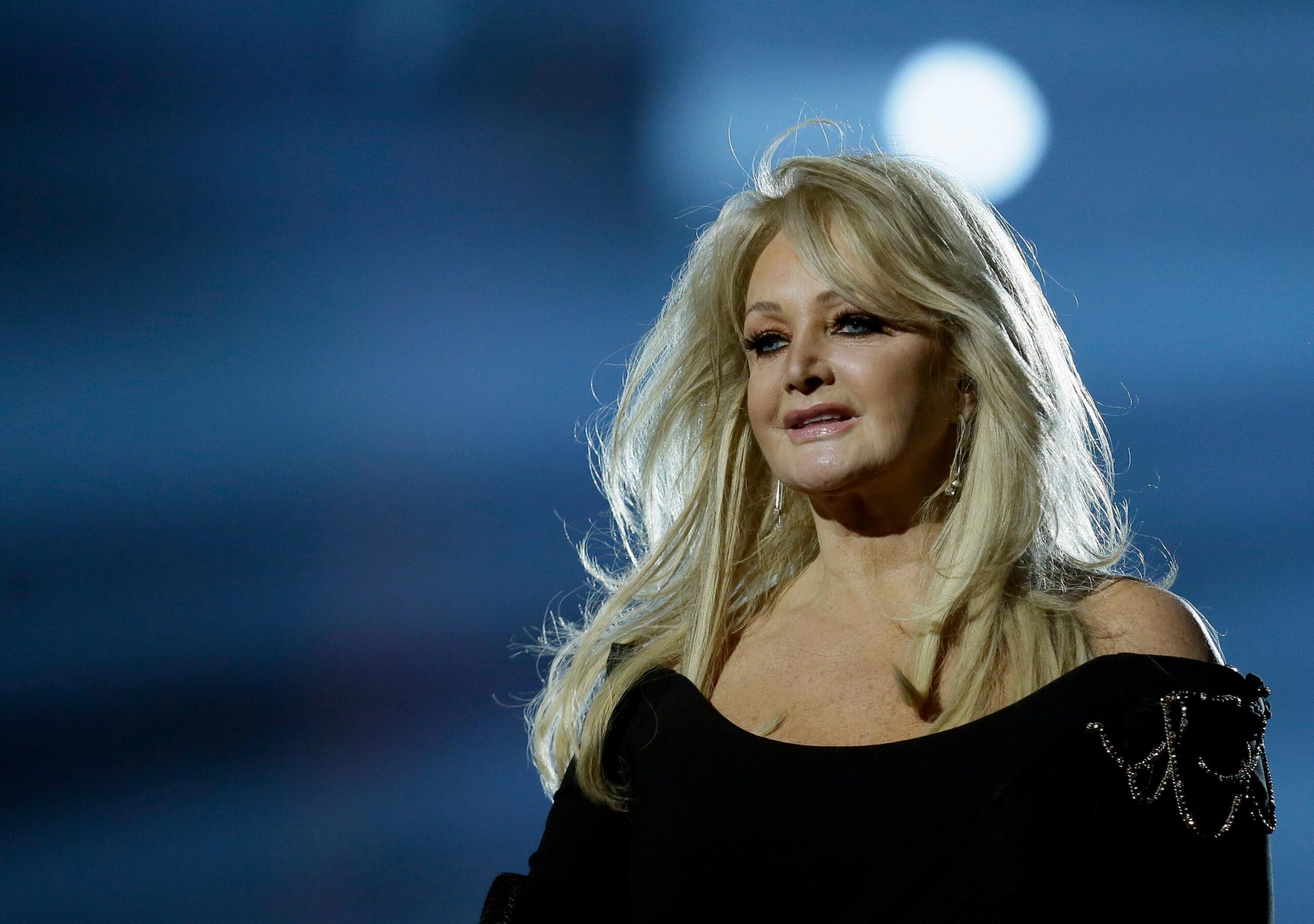
Bonnie Tyler, singer of ballad ‘Total Eclipse of the Heart,’ has died at 75
LONDON — Bonnie Tyler, the gravelly voiced, Grammy-nominated Welsh pop star best known for singing the chart-topping power ballad “Total Eclipse of the Heart” in 1983 and seeing new generations succumb to its bombastic charms during solar and lunar eclipses, has died. She was 75.
Tyler died “unexpectedly” in a hospital in Portugal where she was being treated for an illness, her family said Thursday in a statement on her website. She was hospitalized in May in Faro, where she had a home, for emergency intestinal surgery and was later placed in an induced coma.
“Bonnie’s family and team are heartbroken to announce that Bonnie unexpectedly passed away last night in hospital in Portugal as a result of the illness that she was being treated for, her family said.
Tyler earned three Grammy nods, represented Britain at the Eurovision Song Contest 2013 — where she came in 19th — and was awarded an MBE for her services to music by Queen Elizabeth II in 2023, all largely thanks to “Total Eclipse of the Heart,” which has had more that 1 billion streams, boosted by real eclipses in 2017 and 2024.
The song spent four weeks at No. 1, the video has surpassed 1 billion views and when Stereogum reevaluated it in 2020, the music outlet declared it an “extinction-level event rendered in musical form.”
“It’s pop music as heart-pounding, chest-thumping, blood-gargling, heavens-falling passion explosion. It’s sheer spectacle. It’s fireworks and lasers and lightning and thunder. It soars and swoops and barrel-rolls,” the site said.
The song has never really gone away, covered by the English singer Nicki French in 1995 and the band Westlife in 2006. Cate Blanchett sang it while hitting Billy Bob Thornton with her car in 2001’s “Bandits,” it appeared at a wedding scene in 2003’s “Old School” and One Direction sang it in 2010 on a U.K. version of “The X Factor.”
Early life
Tyler was born — as Gaynor Hopkins — a coal miner’s daughter in public housing with an outside toilet in Skewen, Wales, about seven miles outside Swansea. She grew up with three sisters and two brothers.
She adored the Beatles and her first album was “A Hard Day’s Night.” The first song she bought was “Hippy Hippy Shake” by the Swinging Blue Jeans at 13 and watched “Top of the Pops” religiously, according to her memoir, “Straight From the Heart.”
She would record “Top of the Pops” on a reel-to-reel two-track recorder and write down the lyrics of songs she loved. Her favorites were songs by Janis Joplin, Nina Simone, Tina Turner, Wilson Pickett and Otis Redding.
“I used to sing them into my hairbrush for hours and hours, and that’s how it all started for me. I fell in love with singing just from doing that. Looking back, even then my voice had a husky tone to it, but I didn’t think much of it. I thought everyone’s voices were different from each other’s,” she wrote.
In 1976 she had to have surgery to remove nodules on her throat, leaving her with that trademark vocal sound. Changing her name to Sherene Davis, she was fronting a soul band when she was discovered by talent scout Roger Bell, who brought her to London for demo sessions. Then she waited for a label until RCA said it was interested.
Under her new RCA-sanctioned name Bonnie Tyler, her debut album “The World Starts Tonight” in 1977 contained her first chart hit, “Lost in France,” and she was nominated for a breakthrough artists award at the Brits Awards. She then had a No. 3 hit in 1978 with “It’s a Heartache,” but soon drifted. She then signed with Sony and saw Meat Loaf perform “Bat Out of Hell” on the BBC. Impressed, she requested to work with Meat Loaf songwriter and producer Jim Steinman.
‘Total Eclipse of the Heart’
Steinman introduced her to his song “Total Eclipse of the Heart,” which would become the debut single for her fifth studio album, “Faster Than the Speed of Night.” He borrowed one of the song’s lyrics — “Turn around, bright eyes” — from his 1969 musical “The Dream Engine” written as a student at Massachusetts’ Amherst College. He told her the song was from a prospective musical version of “Nosferatu.”

FILE – Singer Bonnie Tyler performs her song “Believe in Me” during a rehearsal for the final of the Eurovision Song Contest at the Malmo Arena in Malmo, Sweden on May 17, 2013. (Alastair Grant | AP) “Jim liked to put down a basic rhythm track, do nine takes of the song, choose the best one and then put the kitchen sink on there, like Phil Spector used to,” Tyler told The Guardian in 2023. “He gave me a cassette to listen to in my hotel and we both preferred take two.”
Featuring E Street Band members Roy Bittan on piano and Max Weinberg on drums, “Total Eclipse” is a rumination on lost love: “Once upon a time there was light in my life/But now there’s only love in the dark,” she sings.
The video, a staple of early-days MTV, was shot in a frightening gothic former asylum in Surrey, where the guard dogs apparently wouldn’t set foot in the rooms downstairs where they used to give people electric shock treatment. The visuals included slow-motion tossed doves, candles, dancing ninjas, dancing greasers, Tyler in frighteningly big shoulder pads, fencers, gymnasts, wind machines and shirtless boys wearing swim goggles being doused with water.
“Faster Than the Speed of Night” earned a Grammy nomination for best rock vocal performance — losing to Pat Benatar’s “Love Is a Battlefield” — and Tyler got another nod for “Total Eclipse of the Heart” in the best pop vocal performance category, losing to Irene Cara’s “Flashdance — What a Feeling.”
After the ‘Eclipse’
Tyler never reached such dizzying heights again but stayed current with such movie soundtrack singles as “Holding Out For a Hero” — from 1984’s “Footloose” — and “Here She Comes” from “Metropolis” also in 1984.
Her 2019 disc “Between the Earth and the Stars” featured duets with Rod Stewart, Cliff Richard and Status Quo’s Francis Rossi, and she ended that year performing a Vatican Christmas concert before Pope Francis.
In 2013, she switched gears to make a country-flavored record in Nashville, “Rocks and Honey,” which included the Vince Gill duet “What You Need From Me” and a little ballad called “Believe in Me,” written by American songwriter Desmond Child and British songwriters Lauren Christy and Christopher Braide. “Believe in Me” was picked to represent the United Kingdom at that year’s Eurovision Song Contest in Sweden.
“It was an absolutely wonderful atmosphere there,” she told the San Francisco Examiner in 2023. “I was being interviewed every 15, 20 minutes, and when I walked out onstage behind the British flag, I thought the roof was going to come off! It was awesome, just awesome!”
In 2017, she joined Joe Jonas’ band DNCE for a performance on the cruise ship Oasis of the Seas as part of a “Total Eclipse Cruise.” When the moon passed in front of the sun, they played “Total Eclipse of the Heart.”
Tyler was married to property developer and former Olympic judo competitor Robert Sullivan.
-
A Florida airport is officially renamed for Trump. What does he stand to gain?
It’s official: President Donald J. Trump International Airport is open for business.
The South Florida facility was called Palm Beach International Airport for over half a century until Thursday, when a months-old state law took effect, adding the airport to the growing list of places and things that now bear President Trump’s name.
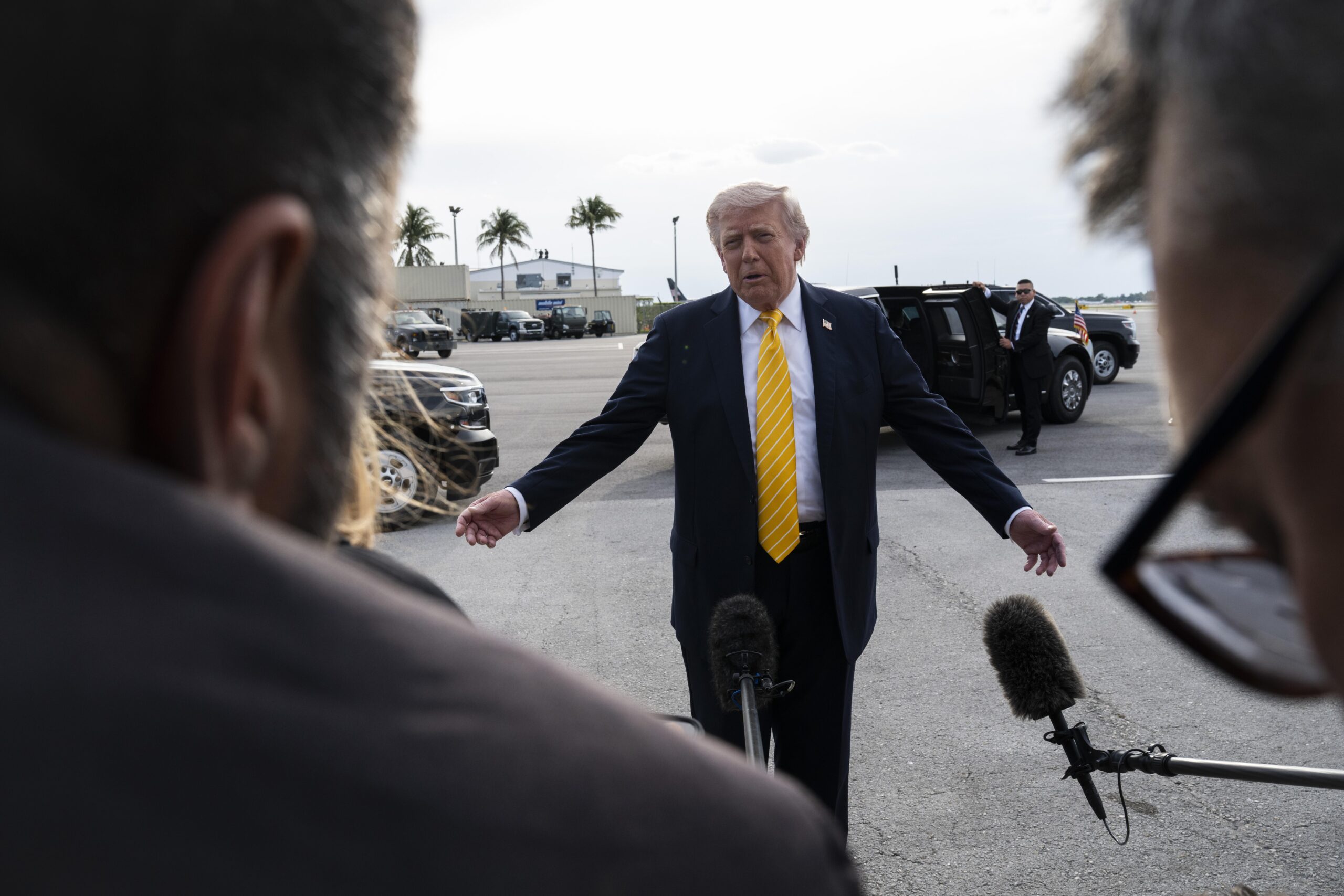
Trump flies in and out of this airport relatively often, as it’s mere miles from his oceanfront estate, Mar-a-Lago. The lifelong New Yorker declared Palm Beach his permanent residence in 2019, and travels there regularly from the White House. More than 8 million passengers fly through its airport each year, on over a dozen airlines.
“Florida, get ready to take the exit for President Donald J. Trump International Airport,” Transportation Secretary Sean Duffy wrote on X earlier this week, alongside a photo of an updated airport sign on the interstate. Separately, a 4-mile stretch of the main road linking Mar-a-Lago to the airport was renamed for Trump in January.
The Federal Aviation Administration authorized the name change to take effect Thursday, meaning it now officially identifies the airport as “DJT” instead of “PBI.”
The airport said in an online FAQ that the transition — including updates to signage, branding and public-facing materials — “will occur in phases.” For example, passengers should still search “PBI” when booking flights and checking bags, until the International Air Transport Association (IATA) code changes on August 18.
The airport says ownership and operations will not be affected, describing it as a “branding change only.”
“While we recognize that the required name change may be received in different ways by our passengers, we’re grateful for your continued support through this transition period,” airport officials wrote. “While some things may evolve over time, our core focus remains the same: providing a safe, reliable and welcoming airport experience.”
The name change — now the subject of two separate local lawsuits — is controversial for several reasons.
For one, while a dozen other U.S. airports are named after American presidents, Trump is the first to receive that distinction while in office.
John F. Kennedy International Airport in New York, for example, was renamed for the late president a month after his assassination in 1963. Ronald Reagan Washington National Airport in the D.C. area added his name in 1998, nearly a decade after he left office.
“Airports named after presidents have traditionally been designated once they leave office and through decisions made by local communities and local authorities — not imposed from above,” Florida Rep. Lois Frankel, a Democrat, said in a May statement, calling it “a clear overreach” by the legislature.
Trump also took the unusual step of registering trademarks for the airport’s new name.
DTTM Operations, the private company that manages Trump’s intellectual property, filed three applications in February, for “DJT,” “President Donald J. Trump International Airport” and “Donald J. Trump International Airport.” As of this week, all are pending approval.
Trump Organization spokesperson Kimberly Benza told NPR over email that “it is the company’s normal practice to file for trademark protection because the ‘Trump’ name and brand is internationally known and a frequent target of infringers, counterfeiters and unauthorized users around the world.”
Trump and the Trump Organization have denied any attempts to gain financially from the effort. But the move to trademark the name has raised questions about whether Trump could benefit.
“Most of the time, these things are meant to be an honorary renaming and … in this case, obviously, there’s a private entity owned by Trump’s family whose trademarks are now licensed to a publicly-owned airport,” said Josh Gerben, a D.C.-based trademark attorney. He says none of the other presidential namesakes hold their own trademarks.
Benza said, “the President and his family will not receive any royalty, licensing fee, or financial consideration whatsoever from the airport renaming.”
Trump has long faced accusations of profiting off the presidency, fanned most recently by financial disclosures revealing he made more than $1 billion in cryptocurrency and other business ventures last year. The White House has denied any financial conflict of interest. But experts say even the perception can be harmful.
“If you go back to 1976, Jimmy Carter was a peanut farmer, and he sold off his peanut farm before he became president,” said Jake Linford, a professor at the Florida State University College of Law who specializes in copyright and contracts. “And that has been the custom, the norm. And it was a norm that Trump violated.”
The White House did not respond to NPR’s requests for comment.

Air Force One pictured outside Palm Beach International Airport in April. Trump makes frequent trips to his Florida home. (Alex Brandon | AP) Legal experts see a loophole in the licensing agreement
Earlier efforts by U.S. House Republicans to rename Virginia’s Washington Dulles International Airport after Trump seem to have stalled. But the idea of renaming the Palm Beach airport quickly became a reality in the red state Trump calls home.
The Florida legislature passed the renaming legislation, along party lines, in February. By the time Republican Gov. Ron DeSantis signed it into law in March, DTTM had already filed multiple trademark applications for the new name.
As a result, the bill specifically requires that there be an agreement between Trump and Palm Beach County authorizing the free, “perpetual and unrestricted” use of the name itself.
“Because otherwise they could theoretically be in violation of these trademarks that Trump had filed,” said Gerben.
The Palm Beach County board of commissioners voted 4-3 to approve the licensing agreement in early May, after a meeting where members of the public spoke strongly in favor of and against the renaming. The 35-page document includes variations of branding and logo options, including some featuring a golden eagle.
The agreement allows the county to freely use the name “President Donald J. Trump International Airport” for airport signage, merchandise and more. And it explicitly says that Trump “is prohibited from receiving royalties, fees, or revenue from the purchase or sale of any such merchandise by County or airport retailers.”
But legal experts told NPR that they see a potential loophole: sales that happen beyond the airport.
Because the license is non-exclusive, Gerben says, Trump could in theory license the airport name trademarks to third parties. And the contract doesn’t say anything about restricting those profits.
“So based on my reading of the agreement, it would seem that if [the Trump Organization] wanted to sell merchandise online, that they would be able to do so without any connection to the airport,” he says.
Rebeca Krogman, a spokesperson for the airport, told NPR by email that it has no current plans to sell branded merchandise following the name change, and is “unaware of any vendors currently selling airport-branded merchandise.”
The Trump Organization and White House did not respond to NPR’s questions about potential plans for merchandise sales outside the airport. But Eric Trump, the president’s son and executive vice president of the Trump Organization, took to social media in May to deny reports that the family could profit from the name change.
“The agreement expressly prohibits any profit-sharing from the sale of merchandise at the airport,” he wrote on X.
The three trademark applications list a wide variety of goods that would bear the airport’s name, including: watches, jewelry, collectible coins, cuff links, purses, backpacks, suitcases, umbrellas, tote bags, clothing, robes, neckties, belts and “plastic slippers used in the airport environment when going through security to keep feet and socks clean.”
The applications also span a number of services: airport construction, aircraft fueling, baggage check-in, passenger shuttles, ticket booking, airport lounges, snack bars, baggage security screening and more. These are all things an airport would typically do, says Gerben, who reviewed the applications this week.
“They are licensing the rights to Palm Beach County to basically operate the airport using Donald Trump’s name, and that’s going to appear everywhere at the airport,” he explained. “Think about it appearing on the shuttle vehicles or the terminals and all the different places that you see an airport name when you’re walking through the airport.”
Gerben calls them “very well drafted” from a legal perspective. Linford, however, points out that the merchandising clause of the licensing agreement “doesn’t talk about services” the way it talks about royalties from goods, which raises another question.
“So you could imagine a Trump airport lounge in the new Donald J. Trump International Airport where licensing fees going back to DTTM … and back to Trump’s holdings more generally isn’t foreclosed by this [agreement] at all,” he said.
Eric Trump’s denial did not explicitly mention services either.
“The agreement clearly states that in no event will Licensor, Trump, or any affiliate or entity we have an economic interest in or receive any royalties, fees, or revenue from the purchase or sale of any Airport Merchandise,” he wrote, doubling down on his tweet in May.
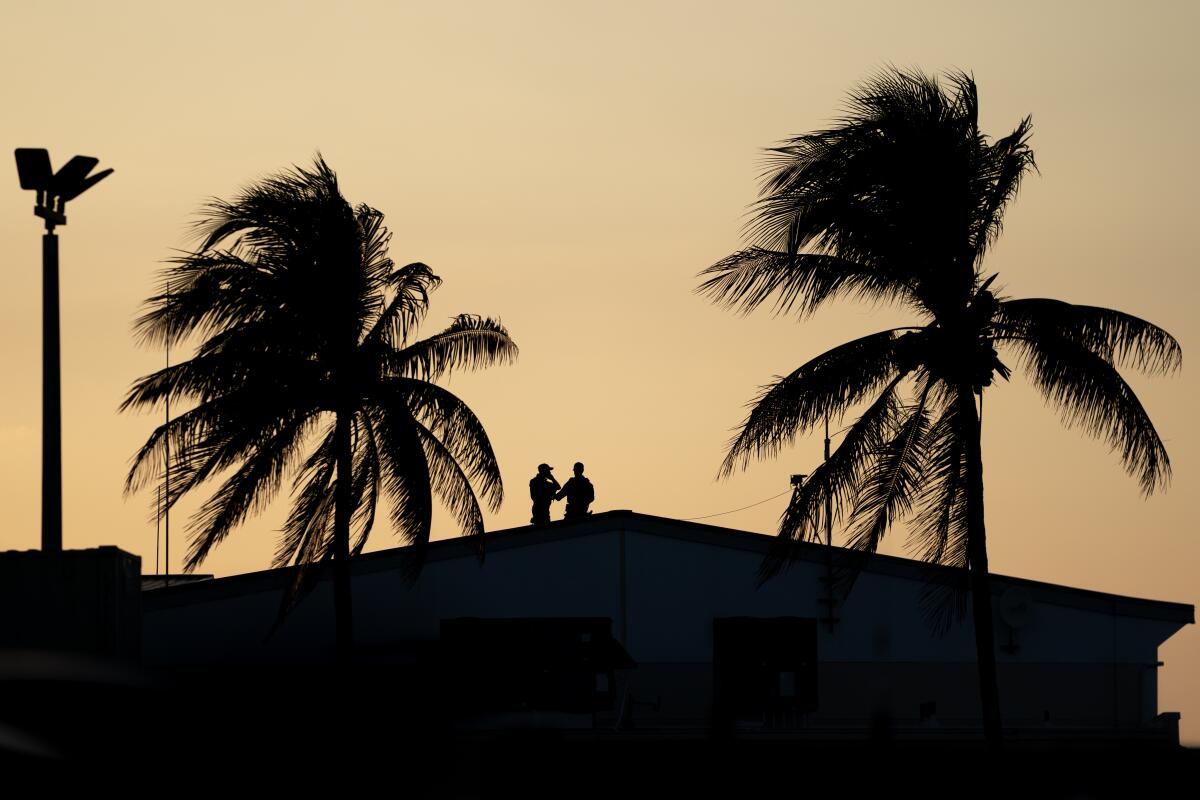
Members of the U.S. Secret Service stand by ahead of Trump’s arrival at Palm Beach International Airport in February. (Nathan Howard | Getty Images) The rebrand raises other questions
The new arrangement gives Trump more power over the airport in other ways, the lawyers say.
For one, it requires any merchandise for sale at the airport “to be purchased through approved retailers to the extent permitted by law.”
“So the airport or any of the concessionaires at the airport can’t just go out and source their own merchandise,” Gerben says. “Whoever’s making it has to be approved by Trump.”
He says that while many trademark licensing agreements have a clause requiring merchandise to be of a certain quality, it’s rare that they would specify the exact manufacturer.
As it’s written, Gerben says, it allows the Trump organization to “funnel to whatever company they want the ability to make all the merchandise that’s going to be sold on airport premises.” That could have cost implications for customers or the airport, depending on that manufacturer’s margins.
“I’m not sure that this clause in and of itself is enough to prevent any sort of kickback,” says Linford.
According to the agreement, Trump also retains control over any use of his “name, likeness, image and biographical information” at the airport. Gerben says that allows the Trump organization to control how he is presented, in photographs, signage and more.
“So if they don’t like the expression on Trump’s face on a picture that the airport plans to use, they’re going to have to find another picture,” he says. “If they don’t like some language that describes Trump or his presidency … they’ll have to rewrite it again.”
All of these things, he says, create more hoops for the county to jump through and could increase the cost of the renaming process, which already includes replacing signs and uniforms.
Airport officials have estimated the price tag at $5.5 million, according to member station WLRN. The 2026-2027 state budget that DeSantis signed into law last week allocates $2.75 million for the renaming.
Krogman, the airport spokesperson, told NPR that the rebranding will occur in phases “based on available funding.”
“The Department of Airports will continue to pursue all available funding sources, including legislative appropriations, eligible Florida Department of Transportation funding opportunities, grants and other airport funding sources,” she wrote, adding that any future funding decisions will go through the airport’s normal budgeting process.
-
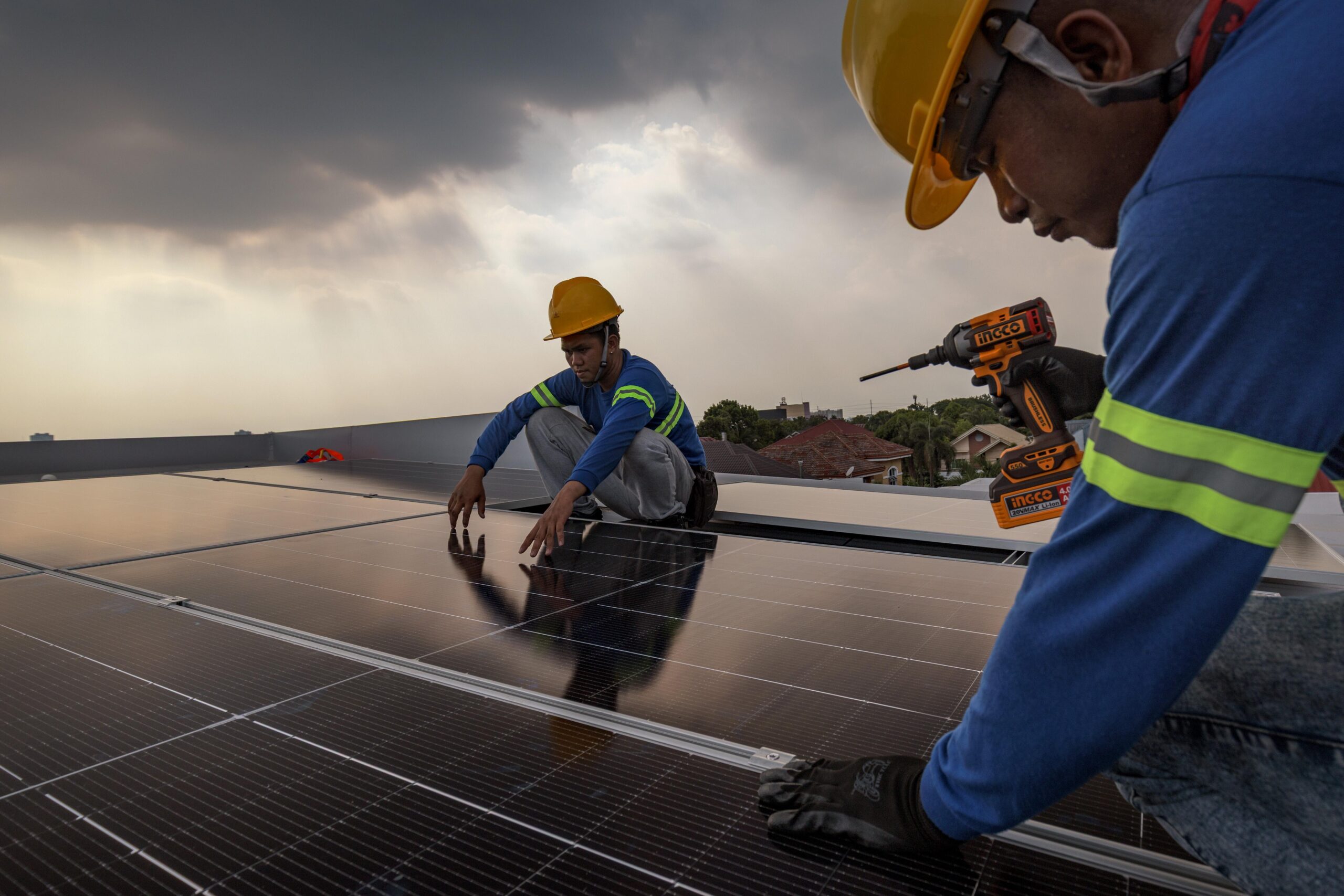
The Iran war has pushed some countries away from oil and toward clean energy
A new round of bombing has begun in the Middle East. More than four months after the beginning of the U.S.-Israeli war with Iran, one thing is clear: some countries are not going back to fossil fuel imports in the same way they relied on them in the past.
Instead, countries across Asia and Africa are speeding up the adoption of solar, batteries and electric vehicles in a deliberate strategy to decrease their dependence on imported natural gas and oil.
The war has underscored the precarity of oil and natural gas supplies and prices. The effective closure of the Strait of Hormuz cut off more than a fifth of liquified natural gas or LNG supplies, and prices haven’t been the same since. European and Asian prices for natural gas, which is mainly used for electricity and heating, are up more than 50% from when the war began. Oil prices climbed Wednesday after President Trump said the ceasefire was over.
Countries are forging a new energy path with renewable and electric vehicle technologies sourced from China. In March, Chinese exports of solar panels were up more than 80% compared to last year, according to energy think tank Ember. China exported more than 2 million electric passenger vehicles between January and May, with nearly half of those exports occurring in April and May, according to a recent analysis note from SIA Energy, an oil and gas consultancy.
“If China’s car industry were handing out a salesman of the year award for 2026, President Trump would be a leading contender,” the SIA Energy note says.
Last year, the global use of electric vehicles meant the world avoided consuming around 1.7 million barrels of oil per day, according to the International Energy Agency. That’s more than the daily crude oil production of Nigeria. Burning fossil fuels is the primary driver of global warming, so climate scientists see these energy transition technologies that cut into fossil fuel demand as key climate solutions.
The ongoing conflict in the Middle East has been “an accelerator for the transition,” says Jan Rosenow, climate and energy professor at Oxford University. In an uncertain world, he says, many countries have found that investing in renewables and EVs give them energy security – and makes economic sense.
“And that’s not gonna go away,” Rosenow says.

Singapore is one of many countries seeing a recent surge of Chinese EV imports. “If China’s car industry were handing out a salesman of the year award for 2026, President Trump would be a leading contender,” writes oil and gas consultancy SIA Energy in an analysis note. (Ezra Acayan | Getty Images) Speeding up the transition
The fossil fuel industry has long framed natural gas as a “transition fuel” away from coal and oil. But the Iran war has underscored the riskiness of natural gas.
“The Gulf seemed like a safe space [for sourcing natural gas], and then this happened,” says Fareed Mohamedi, managing director at SIA Energy.
Asian natural gas prices shot up over 100% from pre-war levels at their peak in March, and in recent months countries like the Philippines and Tuvalu have faced war-triggered energy crises. Governments have been forced to close schools and offices, and ration fossil fuel supplies.
But imports of solar, batteries, and EVs have been cushioning the blow. Pakistan’s investments in solar and batteries have allowed it to reduce oil and natural gas imports, saving the country billions of dollars, according to the nonprofit Centre for Energy and Clean Air.
Other countries, such as the Philippines, are following in Pakistan’s footsteps. The Philippines imported more than $400 million in solar panels from February to May, according to Chinese export data. That’s a 139% increase from a year ago, according to Ember.
Chinese solar and battery imports have changed the calculus for investments in global renewable projects, says Dele Kuti, Global Head of Energy & Infrastructure for Standard Bank, the largest bank in Africa. In 2025, Standard Bank’s financing for renewable energy power projects outpaced that for non-renewable power projects by a ratio of eight to one.
“The Chinese crashed the market!” Kuti says, “We started looking at, when it comes to solar projects, it’s actually not bad from a cost perspective.”
The fact that the Iran war happened just four years after the energy crisis spurred by Russia’s invasion of Ukraine has laid bare the risks of relying on imported fossil fuels, says Kaushik Deb, who leads the India Team at the University of Chicago’s Energy Policy Institute. “What this crisis is doing is kind of creating the need for this energy transition to happen much faster,” Deb says.
“This is where the transformation to electric on the transportation side,” he says, “or increasing the share of renewables in the electricity grid is so, so, so central.”
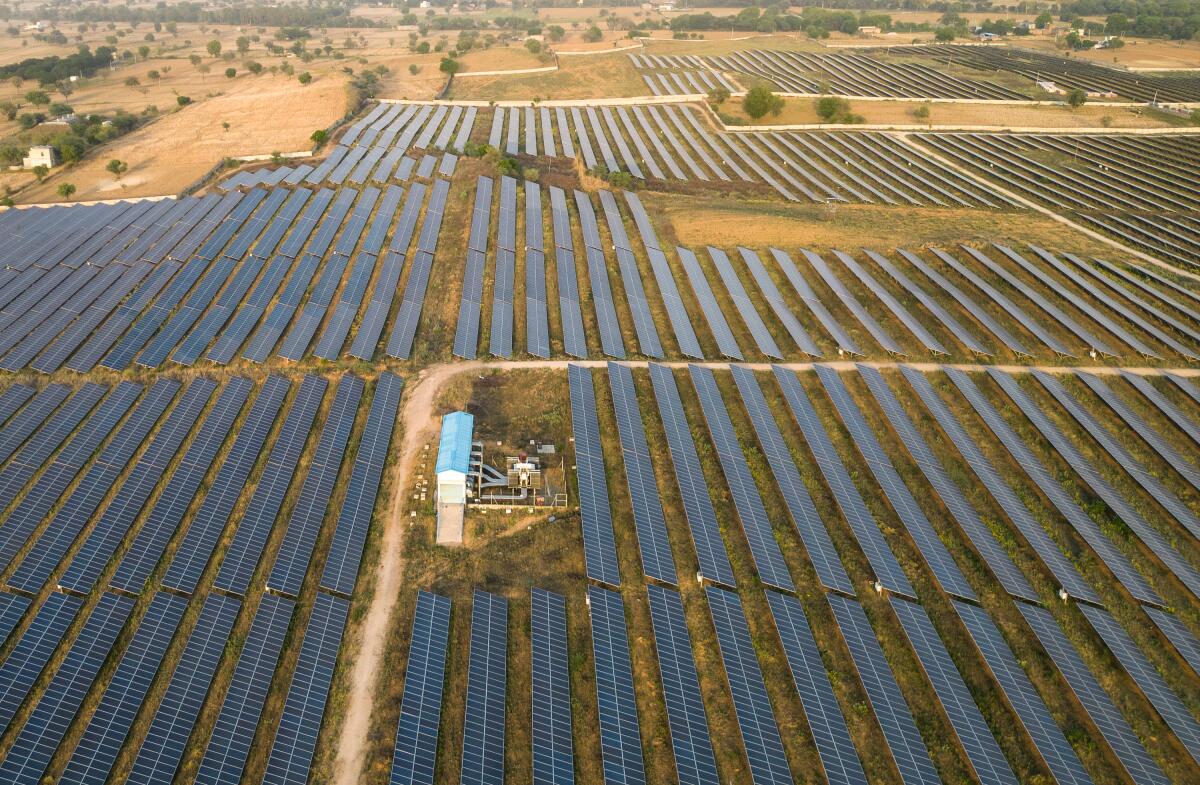
An aerial view of solar panels are seen arranged in rows across a solar power plant in Haryana, India. “What this crisis is doing is kind of creating the need for this energy transition to happen much faster,” says Kaushik Deb who leads the India Team at the University of Chicago’s Energy Policy Institute. (Ritesh Shukla | Getty Images) More EVs equal less oil demand long term
In recent months, electric vehicle sales have risen around the world, driven largely by Chinese exports. Those new electric vehicles mean fewer people filling up with gasoline. That affects global oil demand, says Kingsmill Bond, analyst at Ember. Forty-five percent of global oil is used for road transportation, such as cars, motorcycles and trucks, according to the International Energy Agency (IEA).
Before the war in Iran, the IEA was expecting global oil demand to rise this year. But the disruptions caused by the closure of the Strait of Hormuz led them to downgrade expectations to a decline in oil demand for this year.
The Trump administration continues to double down on fossil fuels. While new EV sales are up in the rest of the world, they have slumped in the U.S. compared to last year, according to Cox Automotive. The abrupt removal of federal tax credits for EV buyers, a policy change Trump pushed for, is a major factor.
For the foreseeable future, the world will still need oil and natural gas for things such as fertilizer, plastics and jet fuel, Mohamedi says. “But demand for oil and diesel is falling like a brick,” he says.
Because of renewables and EVs, Mohamedi says, “Countries can say, ‘I don’t need this insecurity.’”
-
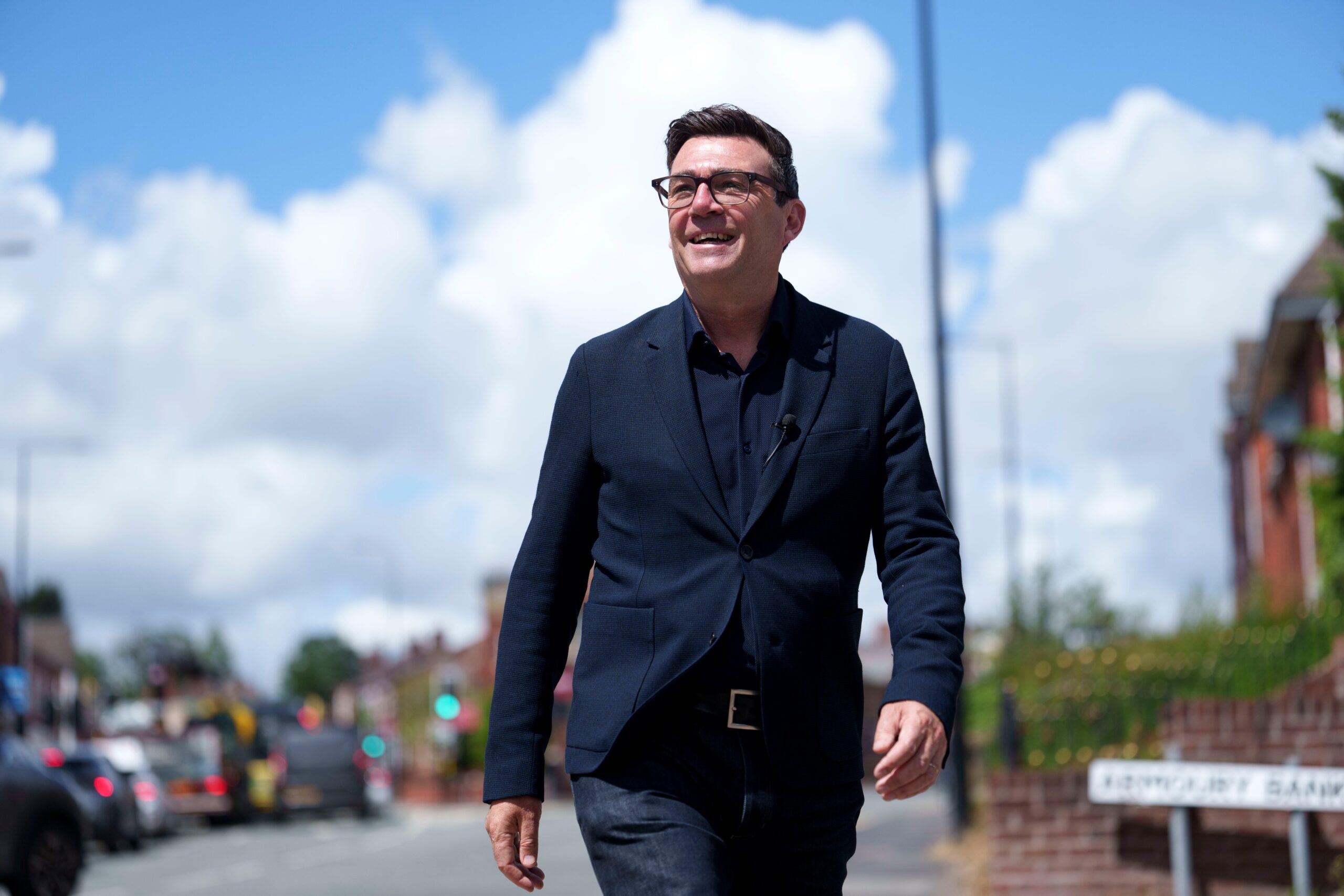
How England’s class divide shaped Andy Burnham, the U.K.’s likely next prime minister
MANCHESTER, England — Born and raised in northern England, Andy Burnham moved to the generally more posh south to study English literature at the University of Cambridge, where one professor recalls him wearing a soccer jersey to class.
“I think that might be quite common on the streets of northwest England, but it’s not necessarily a common thing in a Cambridge college,” professor John Mullan told the Times of London. He recalled the young Burnham as a soccer-obsessed lad who recited Shakespeare and dated “the coolest girl in the college.” She is Dutch-born Marie-France van Heel, and the couple are now married.
The soccer jersey was an early example of the working-class identity that would later define Burnham in politics.
Now widely expected to succeed Keir Starmer as prime minister this month, Burnham, 56, often highlights his northern, blue-collar roots. Analysts say his upbringing and his time as mayor of Greater Manchester — which prides itself as the world’s birthplace of the working class, during the Industrial Revolution — have shaped his national policies. That background could also help his center-left Labour Party win back working-class voters, some of whom have shifted to voting for right-wing parties in recent years.
“I want to do whatever I can to make Labour a party that [people] can believe in again, a party that’s solidly on the side of working-class people,” Burnham told the U.K.’s Channel 4 News in May.
Early on, Burnham fought stereotypes of northern soccer fans

Then-Culture, Media and Sport Secretary Andy Burnham speaks at an official memorial event at Liverpool’s Anfield Stadium to mark the 20th anniversary of the Hillsborough disaster in which 96 football fans died. (Peter Byrne | PA Images via Getty Images) Born in a suburb of Liverpool to parents who worked as a telephone engineer and a receptionist, Burnham was raised in a village about halfway between there and Manchester. After graduating from Cambridge, he and van Heel stayed south, moving to London. Burnham was first elected to Parliament at age 31, with Labour, representing a northern district.
He served as secretary of state for culture, media and sports under Prime Minister Gordon Brown, and in 2009, was sent to Liverpool to give a speech on the anniversary of the 1989 Hillsborough disaster, when nearly 100 soccer fans were crushed to death in an overcrowded stadium in northern England. It was the deadliest sports accident in British history. But the victims were stereotyped as hooligans, and many survivors and victims’ families felt the government had not done enough to investigate. Initially, the crowd heckled Burnham. Fighting back tears, he abandoned his prepared remarks, nodding his head as the crowd chanted for justice.
“They were treated so badly, and [Burnham] was one of the first politicians to really listen,” says Charlotte Wildman, a University of Manchester historian who studies the working class.
Burnham launched a government inquiry that found police failures, not the victims themselves, were responsible for the disaster. That helped change a national stereotype, Wildman says.
“Particularly northern, working-class men were demonized. They were accused of being violent, aggressive, criminal, and that was a very entrenched stereotype,” she says.
It’s a demographic in which some feel left behind by globalization, ignored by politicians in the more affluent south, where London is — and which Burnham won over early, with his Hillsborough advocacy.
Born in Liverpool, educated at Cambridge, but famous for what he did in Manchester

A view of the skyline behind Deansgate station in Manchester, on June 22. (James Speakman | PA Images via Getty Images) As a member of Parliament, Burnham ran twice for the Labour leadership. In 2015, he was nominated by his fellow lawmaker and friend, Keir Starmer. But he lost both times and ultimately quit Parliament after 16 years, to return north. In 2017, he was elected mayor of Greater Manchester — where, in local politics, he built a national reputation.
In the 1980s and ’90s, Manchester was known for two things: post-industrial blight, and a vibrant indie music scene (with bands like The Smiths, New Order, The Stone Roses and Oasis). Burnham set out to fix the former, and immerse himself in the latter.
Redevelopment was already underway in Manchester when Burnham took office, and he doubled those efforts, seeking to change the stereotype of his city, in the same way he’d done for soccer fans. He took control of city buses, and convinced the central government to devolve more powers over education and housing to cities like his.
“Regeneration, it was almost like marketing and branding!” Wildman notes. “Manchester used to have such a negative image. It was so associated with urban decay.”
Today, Manchester’s skyline is lined with construction cranes. An area of canals and former industrial warehouses hosts an arts center. There are glass skyscrapers that look more like Dubai than England. And Manchester now has one of the fastest-growing municipal economies in the United Kingdom.
Burnham is pitching what he calls “Manchesterism” as a model for economic growth nationwide. He says he’ll shift power away from the central government in London, toward cities and regions — and open a branch of Downing Street in the north.
“Imagine good growth in every postcode and hope in every heart. Imagine no more, let’s make it happen,” Burnham said in a June 29 policy speech.
He also promises to cut tax rates for retail businesses, build the most public housing since World War II, and cut welfare spending in a way that’s “fair and lasting.”
“‘Manchesterism’ for us is people coming together to effect change, doing things for themselves, and having a real can-do attitude,” says Rose Marley, CEO of Co-operatives UK, a Manchester-based federation of cooperative businesses. “From an economic viewpoint, Andy would call it an end to neoliberalism.”
Marley worked as an adviser to Burnham when he was mayor. But she met him earlier, on the city’s indie music scene — where Burnham moonlights as a DJ. She recalls how, when he first arrived from London, he was “suited and booted” and acted like a lawmaker straight from Parliament at Westminster.
“But on the very first day he arrived, the tie was loosened, and the idea of this Westminster MP went out the very quickly!” Marley recalls. “The Mancunian way is trainers and T-shirts! That’s when he started DJing.” (Mancunian is what people from Manchester are called.)
Burnham became a national figure during COVID

People wear protective suits as they walk along Market Street in the near-deserted city center in Manchester, England, on April 15, 2020, during the nationwide lockdown to combat the coronavirus pandemic. (Anthony Devlin | AFP via Getty Images) When the pandemic hit, the U.K.’s central government tailored lockdowns to local infection numbers, and Manchester was subject to tighter restrictions than many other cities. But the rules were often confusing.
In October 2020, Burnham happened to be holding a news conference on live TV, when an aide passed him a phone with news of another lockdown — and the mayor reacted angrily, lashing out at the central government.
“This is no way to run the country in a national crisis. It isn’t. This is not right,” Burnham said, predicting the restrictions would disproportionately hurt lower-paid blue-collar workers. “People too often forgotten by those in power!”
Burnham’s outburst went viral, and he became a national hero during those dark, uncertain days of the pandemic, says Joshi Herrmann, founder of The Mill, a local Manchester news site.
“He expressed helplessness, a feeling that perhaps the government didn’t really understand what it’s like to be in a place like Manchester. He really identified himself as a different type of politician in this country,” Herrmann recalls. “And I think without that moment, he wouldn’t be going into Downing Street in the next few weeks.”
Learning to govern on the national stage

Andy Burnham is sworn-in as a member of Parliament in the House of Commons in London, on June 22. (House of Commons via AP) Since then, Burnham has remained one of Britain’s most popular politicians.
But he’s likely to face many of the same challenges that hurt Starmer: low national growth, high energy prices, pressure to ramp up defense spending, amid Russia’s ongoing war in Ukraine — and a certain volatile ally across the Atlantic.
Herrmann says he’s not sure how Burnham will weather those.
“Andy Burnham is someone who really likes to have affirmation. I don’t know what lengths he’ll go to to make sure Donald Trump isn’t truth socialing about him in [the] middle of the night, because he won’t like that,” Herrmann says. “He will be more hurt by that, I think, than someone like Keir Starmer.”
Governing a country rather than a city, he says, is something Britain’s next prime minister will quickly have to get used to.
Transcript:
SCOTT DETROW, HOST:
British Prime Minister Keir Starmer resigned this week. Next month, his center-left Labour Party will choose his successor. NPR’s Lauren Frayer has this profile of the front-runner, a man who has been shaped by England’s north-south divide.
LAUREN FRAYER, BYLINE: Andy Burnham was born and raised in Northern England but went to the generally more posh South for college, studied literature at Cambridge, where Professor John Mullan recalls him wearing a soccer jersey to class.
JOHN MULLAN: And I think that might be quite common on the streets of Northwest England, but it’s not necessarily a common thing in a Cambridge college.
FRAYER: It was an early example, Mullan told The Times of London, of the working-class identity that would come to define Burnham, the politician. Elected to Parliament at age 31, he served as sports minister and gave this speech on the 20th anniversary of the 1989 Hillsborough disaster…
(SOUNDBITE OF ARCHIVED RECORDING)
ANDY BURNHAM: The 96 fellow football supporters who died will never be forgotten.
FRAYER: …When soccer fans were crushed in an overcrowded northern stadium and then blamed for their own deaths, accused of being hooligans.
CHARLOTTE WILDMAN: You know, they were treated so badly, and he was one of the first politicians to really listen.
FRAYER: Historian Charlotte Wildman says Burnham launched a government inquiry that found police failures were to blame at Hillsborough and helped change a stereotype.
WILDMAN: Particularly northern working-class men were demonized. They were accused of being violent, aggressive, criminal, and that was a very entrenched stereotype.
FRAYER: Burnham then ran for the leadership of his center-left Labour Party, nominated by his friend, Keir Starmer, but he lost twice and retreated north to Manchester, the birthplace of the working class in the Industrial Revolution. As mayor there, he sought to change the city’s stereotype with a program of…
WILDMAN: Regeneration, of almost, like, marketing and branding – you know, Manchester used to have such a negative image, and, you know, it was so associated with urban decay.
FRAYER: Nowadays…
(SOUNDBITE OF CONSTRUCTION EQUIPMENT BANGING)
FRAYER: It’s kind of become a cliche Manchester is this skyline of construction cranes, but it’s really true. I’m standing near these canal area, formerly warehouses, industrial space. And there’s now an art center, and there are glass skyscrapers. Looks more like Dubai than England.
(SOUNDBITE OF EQUIPMENT WHIRRING)
FRAYER: Manchester is the fastest growing city in the country. Burnham gets credit, though…
ROSE MARLEY: You know, those cranes and that economic development, we were already on that trajectory, you know, as he started out as the mayor.
FRAYER: Rose Marley worked as one of Burnham’s advisers, though they first met on Manchester’s famous indie music scene. Marley recalls Burnham’s transformation from a buttoned-up MP to a DJ.
MARLEY: He started wearing his trainers and his T-shirts and started DJing, so he pretty much became, you know, a full-on Mancunian within weeks, really (laughter).
FRAYER: By day, Burnham reversed the privatization of buses and got the central government to hand cities more power over things like education and housing. In local politics, he became a national figure, especially during COVID.
JOSHI HERRMANN: A particular press conference that he gave during the pandemic in 2020.
FRAYER: Joshi Herrmann founded the local Manchester news site, the Mill. He recalls how Burnham learned of a new lockdown while on live TV and lashed out, saying it would hurt blue-collar workers.
(SOUNDBITE OF ARCHIVED RECORDING)
BURNHAM: People too often forgotten by those in power.
FRAYER: This was under then-Prime Minister Boris Johnson’s often-confusing health guidance. And Burnham…
HERRMANN: He expressed the sense of helplessness, a feeling that perhaps the government didn’t really understand what it was like to be in a place like Manchester. He really identified himself as a different type of politician in this country. And I think without that moment, he wouldn’t be sort of going into Downing Street in the next few weeks.
FRAYER: Burnham is one of Britain’s most popular politicians. He may win back some working-class voters who’ve deserted Labour for the far right. But he’ll also face the same challenges as Starmer – low national growth, high energy prices, pressure to ramp up defense and a certain rather volatile ally across the Atlantic.
HERRMANN: Andy Burnham’s someone who really likes to have affirmation. I don’t know what lengths he will go to to make sure Donald Trump is not Truth Socialing (ph) about him in the middle of the night because he won’t like that. He will be more hurt by that, I think, than someone like Keir Starmer.
FRAYER: Governing a country rather than a city is something Britain’s next prime minister may have to get used to. Lauren Frayer, NPR News, Manchester, England.
(SOUNDBITE OF ELMIENE SONG, “MARKING MY TIME”)