Blog

  • Trying to avoid cyclosporiasis? Wash your hands, wash your produce

    Transcript:

    MARY LOUISE KELLY, HOST:

    OK, a little news you can use now – although I sincerely hope you do not have to – because we’re going to spend these next few minutes talking about a parasite that can reproduce in our intestines. According to the Centers for Disease Control and Prevention, the CDC, at least 17 states are reporting cases of cyclosporiasis, which causes cramping and diarrhea. Kali Kniel’s lab at the University of Delaware works on food safety and public health. Professor Kniel, welcome.

    KALI KNIEL: Thank you, Mary Louise. It’s great to be here.

    KELLY: OK, tell us a little bit more about what is cyclosporiasis and why these cases appear to be spreading so fast.

    KNIEL: Yes. So cyclosporiasis is a gastrointestinal disease, meaning it’s associated with pretty severe diarrhea, nausea, fatigue. And it’s caused by ingesting the human protozoan parasite called Cyclospora. This is a tiny microorganism, and the oocysts actually, if you were to line up 10, they would be roughly the width of a single strand of hair. So that’s how tiny they are. And these oocysts are – it’s what we call them – the part of the organism that’s shed into the environment by human feces, and that’s what then is ingested on a contaminated food product.

    KELLY: So contaminated water, contaminated produce. I was reading there are certain types of produce that are – that appear to be particularly problematic. Basil, cilantro, raspberries?

    KNIEL: Yes. Historically, outbreaks of cyclosporiasis have been associated with herbs, imported herbs, as well as domestically grown produce. So herbs like cilantro, basil, parsley, berries and leafy greens. Also snow peas and green onions.

    KELLY: And just to be clear, this – as far as we know, this is not spread through person-to-person contact.

    KNIEL: That is correct.

    KELLY: OK.

    KNIEL: Because of the way it’s transmitted, it’s very unlikely that any person-to-person transmission occurs.

    KELLY: So the symptoms sound not fun – diarrhea, cramps, nausea. They also sound like any number of other tummy bugs or bouts of food poisoning from other things. How should people experiencing those symptoms gauge, do I need to go find a doctor or run to the emergency room? Or should we just, forgive my wording, but let this run its course?

    KNIEL: That’s a great question. And that’s why often foodborne illness really is underreported. This can be a self-limiting disease, but if you are having severe diarrhea or if you are dehydrated, that is definitely a reason to go see a physician. Also, if you see a physician, you could be diagnosed through a fecal sample that tells you you do have cyclosporiasis. Then you can be treated. There is antibiotic treatment for this that does work, and it’s very efficient. But important that people stay hydrated, wash their hands well when they’re at home. You know, just kind of normal good personal hygiene.

    KELLY: All right. Wash your produce. Wash your hands. Kali Kniel is a professor studying microbial food safety at the University of Delaware. Professor Kniel, thanks.

    KNIEL: Thanks, Mary, Louise.

    (SOUNDBITE OF BADBADNOTGOOD AND GHOSTFACE KILLAH SONG, “FOOD”)

  • ‘Everywhere Man’ traces the trajectory of under-the-radar music producer Peter Asher

    Transcript:

    TERRY GROSS, HOST:

    This is FRESH AIR. I’m Terry Gross. One of the successful British invasion bands of the ’60s was the duo Peter and Gordon. Peter is my guest, Peter Asher, who later became a famous record producer. The first record Peter and Gordon released became a No. 1 hit in England and the U.S. That song, “A World Without Love,” was written by Paul McCartney for the Beatles. But John Lennon didn’t like it, so Paul put it away until Peter asked to record it. Paul had been living in the Asher family home where Peter, his sisters and his parents lived. We’ll hear why a little later. It’s a great story. So here’s “A World Without Love” from 1964.

    (SOUNDBITE OF SONG, “A WORLD WITHOUT LOVE”)

    PETER AND GORDON: (Singing) Please, lock me away. And don’t allow the day here inside where I hide with my loneliness. I don’t care what they say. I won’t stay in a world without love. Birds sing out of tune and rain clouds hide the room. I’m OK. Here I’ll stay with my loneliness. I don’t care what they say. I won’t stay in a world without love. So I wait, and in a while, I will see my true love smile. She may come, I know not when. When she does, I’ll know. So, baby, until then, lock me away.

    GROSS: Peter and Gordon went on to have other hits including “Nobody I Know,” “I Don’t Want To See You Again,” and “I Go To Pieces.” After the duo split up, in 1968, Peter became the first A&R man at the Beatles’ new Apple record label. The first person he signed was James Taylor, who had never recorded before. Peter didn’t stay long at Apple. He moved to LA, produced and managed Taylor and helped turn him into a star.

    He introduced Taylor to Carole King and launched King’s performing career. He produced and managed Linda Ronstadt. Other artists he produced over the years include Randy Newman, Cher, Neil Diamond, Morrissey, Diana Ross, Elton John, Bonnie Raitt, Barbra Streisand, Robin Williams and Steve Martin. Wow, that’s really a phenomenal list.

    Peter Asher is part of other important moments in music history. Peter co-owned the gallery where John first met Yoko while her work was on exhibit there. Peter was unintentionally responsible for Mick Jagger meeting Marianne Faithfull, which began their romance. In addition to the many Grammys his artists won, he won three producing Grammys, and in 1977, was on the cover of Rolling Stone. A new documentary chronicles Peter Asher’s life. It’s called “Peter Asher: Everywhere Man.” It’s playing in select theaters around the country.

    Peter Asher, welcome to FRESH AIR. I really like this documentary. You’ve had such an interesting life. So let’s start with “World Without Love.” Did Paul ever explain why John rejected it?

    PETER ASHER: I think it was the lyrics. First of all, I think – I don’t think it’s quite true to say that Paul wrote it for the Beatles. I think he wrote it pre-Beatles, actually.

    GROSS: Oh, that’s right. You say he wrote it when he was 16.

    ASHER: I recollect he was like 16 or something like that.

    GROSS: Right.

    ASHER: Which is extraordinary. And I think what John didn’t like about it was the lyrics, that he thought that please lock me away was an absurd line to put in a song. And so he would actually say to Paul, OK, I will lock you away. The song’s over.

    GROSS: So it’s copyrighted to Lennon-McCartney.

    ASHER: Everything was.

    GROSS: Yes, I know. And Paul told me, one of the times I interviewed him, that he regrets having the Beatles songs that Paul or John wrote independently credited to both of them, especially because even if Paul wrote a song himself, the credit started with Lennon, Lennon-McCartney.

    ASHER: I’m not that sure I agree with Paul about that. I think it was something particularly charming and emphasized the closeness of their relationship that they agreed to credit everything to the two of them. And I think that was actually a very fair division of credit and saved them many arguments, because at the beginning, of course, they did actually write together. The songs they wrote in our house in London, as you point out, were songs that John came over, they sat down together at the piano or together with two guitars facing each other and wrote together. So I think that even if they just later did it in commemoration of those moments of togetherness and creativity, I think it was kind of a cool thing to do.

    GROSS: So since you were talking about them writing songs together, let’s hear a clip from the documentary. And this is a part where Paul is talking about living with your family and what that was like. And it leads into writing with John Lennon at your home. And in the second part of this clip, we’ll hear you.

    (SOUNDBITE OF DOCUMENTARY, “PETER ASHER: EVERYWHERE MAN”)

    PAUL MCCARTNEY: It was such a family.

    (SOUNDBITE OF MUSIC)

    MCCARTNEY: Clare was a very nice younger sister, a lot of fun. And then there was Peter. He’s a interesting, bright guy – I could talk to him about anything – and also very interested in music. Very musical. So there’s a lot of connection there. They got a piano in my room. And there was a piano in the basement as well. So when John came to visit, we could write there on the piano at the same time.

    ASHER: There was a little music room in the basement. And I do remember one particular occasion shortly after Paul had moved in. John came over, and he and Paul went down to this music room. They were down there for a couple of hours, and then Paul called up the stairs to me in my bedroom and asked if I wanted to come down and hear this song they had just finished writing. And they sat side by side at the piano and hammered out the first version anyone had ever heard of this brand-new song they had just finished called “I Want To Hold Your Hand.”

    GROSS: Peter Asher, your reaction was what when you heard the song?

    ASHER: Amazement. I mean, I thought, am I losing my mind, or is this one of the best songs I’ve ever heard in my life? Or possibly both. But I was thrilled and amazed. And they looked at me for some kind of reaction. And I said, I think that’s amazing. And perhaps the biggest giveaway is the fact that I immediately asked them if they could play it again.

    And perhaps the second giveaway is the fact that they were delighted to play it again. I think they knew that they’d written something special. Whether they had in mind the fact that it was going to break the whole – change the whole attitude of the whole world, starting with America, that everyone was going to become a Beatle fan when they heard “I Want To Hold Your Hand,” that that was the magic track that set off the American Beatlemania epidemic, I don’t know. But that’s what it turned out to be.

    GROSS: So Paul was living with your family because your sister, Jane Asher, was a famous actress by then.

    ASHER: Yes.

    GROSS: And Paul was her boyfriend.

    ASHER: Yes.

    GROSS: The Beatles had a home in London for when they were there, but Paul found it too chaotic. He must’ve moved in very early in the Beatles’ career because if he and John hadn’t yet written “I Want To Hold Your Hand,” that had to be pretty early.

    ASHER: That’s a good point. Yes, that’s correct. I’m very bad at dates, as I told you. But, yes, that certainly would be true.

    GROSS: So watching Paul’s fame, what did it teach you about what it means to be famous? Because you were on the verge of becoming famous yourself.

    ASHER: It’s a good question. I don’t really know I learned anything about becoming famous. And certainly, nobody was famous in a way that compared to the Beatles in any sense. But certainly, when we got to America, there’s no question the template for a famous British invasion member had been sort of set by the Beatles.

    And then all the girls who chased you around the streets and stuff, which they did, were following what they’d seen in the Beatles movie and how they knew everyone reacted to the Beatles. The screaming reached fever pitch. And we were lucky to be sort of part of that whole madness. And it was a thrilling time.

    GROSS: Did you always feel lucky that girls were chasing after the band and that they were screaming, probably so loud they couldn’t actually hear the music that you were playing, and you might not have been able to hear?

    GROSS: Gordon when you were singing with him on stage. So, like…

    ASHER: Yes, that was very annoying. That was true. I mean, it was certainly one of the downsides of the technology of that era. Monitors hadn’t been invented yet at all.

    GROSS: Oh, you had no monitors?

    ASHER: No monitors at all, let alone the fancy in-ears that we all have today, so we couldn’t hear ourselves at all. I mean, Ringo, I remember, did an interview explaining that he knew where he was on the song by watching the backs of Paul and John. He could tell from their movements which bit of the song they were in. But you couldn’t hear anything, between the screaming and the technological setbacks. It was guesswork.

    GROSS: It must have been strange for you from, you know, going to a guy who was playing, you know, like, small clubs…

    ASHER: Yes.

    GROSS: …To suddenly having a No. 1 record, touring America, getting on “The Ed Sullivan Show.” It’s, like, an extreme jump.

    ASHER: It was, indeed. I mean, I often say that – you know, there was a comparison between – at one point, you know, I remember when I was – before I’d even made the record, I was at university reading philosophy – at London University – and bicycling home from school in – 4 in the afternoon in the dark and the rain very often, if it was a British winter. And only less than a year later, I think, I was instead driving down Sunset Boulevard in the broad sunshine in a rented Mustang, being recognized by beautiful women. And at that point, I kind of went, this is a substantial improvement, you know?

    (LAUGHTER)

    ASHER: I think this is better. So I made the decision to quit university, of course, and take up this pop stuff full time.

    GROSS: Did it change your self-image to have women chasing after you?

    ASHER: No, but it’s fun, that’s for sure. I don’t think it – I don’t know it changed my self-image. Did I suddenly feel suave and grown-up and manly? I don’t think so. I think my insecurities remained intact. But it was certainly amusing.

    GROSS: (Laughter) So you loved American jazz, folk music, rock ‘n’ roll.

    ASHER: Yes.

    GROSS: And suddenly, you go – I mean, you go to America and everybody’s really, really absorbed in the British invasion. Americans were in love with British bands. Was that incomprehensible to you?

    ASHER: It was a surprise. I mean, because that’s the whole miracle of the British invasion. We loved all this music – you know, as you said, folk music and jazz. And I was a big jazz fan. And it just was extraordinary. And then we learned all this music – R&B and The Everly Brothers in our case and so on – and decided who we wished to emulate among the stars of American music. And then the miracle is that we somehow learned it all and tweaked it slightly and sold it all back to you. It was a remarkable achievement from a business point of view, I suppose.

    GROSS: I want to mention another connection between your family and the Beatles, which is your mother was a professional oboe player. She performed with symphonies and taught oboe at the Royal Academy of Music, also taught private lessons, and one of her private students was George Martin, who later became the Beatles’ producer. I don’t think he was producing them yet. Am I right about that?

    ASHER: That’s right, yeah. I don’t think so, no. I think that’s correct. Yeah, it was an extraordinary coincidence. So by the time my mother was introduced to George Martin as her daughter’s boyfriend’s record producer, she was like, oh, it’s George, you know?

    GROSS: (Laughter).

    ASHER: She had given him private lessons to – ’cause he was concerned about passing his exams at the Guildhall School of Music, and he had to – oboe was his second instrument, and he required some further training, evidently. But presumably it was successful.

    GROSS: Let’s talk about your very first career (laughter), which was as a child actor. And, as I think we mentioned earlier, you were in a film with Claudette Colbert, you had a part in the TV series “The Adventures Of Robin Hood,” which I used to watch, and you were in a TV series with Boris Karloff – episodes, or an episode. So what was the experience for you, being, like, I think, 8 during part of this? And…

    ASHER: I was 8 when it started. I did my first film, “The Planter’s Wife,” with Claudette Colbert and Jack Hawkins when I was 8, yes.

    GROSS: Yes. So what was the experience like for you? Did you feel like, this is exciting, I’m getting to meet movie stars, or did you just…

    ASHER: Yes.

    GROSS: Oh, OK.

    ASHER: But I enjoyed acting, too. I mean, I was – I enjoyed the work. But it’s all very standard. You read the script, learn your lines, and do what the director wants you to do and hope that it was good.

    GROSS: What was it like seeing yourself onscreen? Did you go to a movie theater and see yourself?

    ASHER: Yes. We used to go and see rushes quite often in the evening, you know, and see what you’d shot that very day, or the day before, perhaps, ’cause they had to develop the film, I suppose.

    GROSS: Did it make you any more or less comfortable with yourself in terms of how you looked? Did it make you self-conscious?

    ASHER: I don’t think so, actually. I think maybe self-consciousness comes when you’re 10 or comes with puberty. (Laughter) I don’t know. I don’t think I felt very self-conscious at that point, no.

    GROSS: Did your mother feel comfortable with you as a performer, since she was a performer, too? She played oboe.

    ASHER: Yes, she was surprisingly cool with it. I mean, all three of us got signed – Jane and Clare and I. And we all did bits…

    GROSS: Those were your two sisters? Yeah.

    ASHER: My two sisters and I. And we did bits of acting. The only thing we did together was Jane and I did one of those episodes of “Robin Hood” that you mentioned. We played in – there was one called “Children Of The Greenwood” when we played a brother and sister peasant couple, whereas in the other episodes I did, I played Prince Arthur – rather posher. But, no, we – yeah, we – so we were all signed and all worked and all enjoyed it, but Jane enjoyed it the best and also was the best at it.

    GROSS: And had a career.

    ASHER: And built a very fine acting career which persists to this day.

    GROSS: I mean, part of the reason why you became an actor is that you and your two sisters had red hair. So you all had red hair.

    ASHER: That’s the reason we got signed. Yeah. Some agent spotted us and said, oh, they’re – you know, they’re very picturesque or something.

    GROSS: But…

    ASHER: And…

    GROSS: Yeah.

    ASHER: Yeah.

    GROSS: But most of the stuff you were in was probably black and white (laughter).

    ASHER: Yes. And we were never all three of us in something together. That’s why, if you look at the casting directory of that era, it has to say in the black and white – alongside the black and white photographs, it says, all have red hair, in big letters because that was not evident from the photos in the guide ’cause they couldn’t afford color printing at that point.

    GROSS: Well, let’s take a break here. My guest is Peter Asher. The new documentary about him is called “Everywhere Man.” We’ll be right back. This is FRESH AIR.

    (SOUNDBITE OF BRAD MEHLDAU’S “BLACKBIRD”)

    GROSS: This is FRESH AIR. Let’s get back to my interview with Peter Asher. Americans first knew him as half of the ’60s British invasion band Peter and Gordon. Their hits included “A World Without Love,” “Nobody I Know” and “I Go To Pieces.” Asher went on to become a Grammy-winning record producer. His two most enduring music relationships were with James Taylor and Linda Ronstadt.

    So let’s get back to you touring. So when you first got to America, what struck you as musically most different about the U.S. versus England?

    ASHER: Everything was different. The radio stations were completely different. You know, we only had the BBC. You had all these brilliant little stations where the DJ actually played the records himself, which, in the BBC, never happened. Somebody else, you know, put the needle in the groove and so on, and it was very organized.

    And then, as a jazz fan, the craziest thing was, you know, in England, when – if a jazz – legendary jazz player came to England, they’d be playing concert halls and being treated with extreme respect. And in New York, you know, there are just all these jazz clubs. And all my heroes were playing these places that were, like, scummy, kind of smoke-ridden little jazz clubs, which was very exciting for us. But there was a huge difference in how they treated the music. I already had copies of DownBeat with all the jazz clubs I wanted to go to circled. I knew who was playing where and when and so on. And I remember going to see people like Roland Kirk and – whereas in England, we’d see Thelonious Monk in Royal Festival Hall. So their attitude to music was completely different, at least to jazz.

    GROSS: In the ’60s, while you were performing and recording with Gordon, your singing partner, you also became the co-owner of a bookstore and an art gallery that were…

    ASHER: Yes.

    GROSS: …Part of London’s underground culture of the time. Describe what was new about the clothes, the music and the sense of liberation after growing up during the period England was rebuilding and suffering food shortages after World War II.

    ASHER: Absolutely. Well, rationing – people are amazed to realize that rationing didn’t end till 1956, the last item – whatever was the last thing that was still rationed.

    GROSS: And what year were you born?

    ASHER: ’44. So, you know, yes, it was a big change. And I think that is part of it ’cause the – Britain, as we grew up, was – everything was rationed. Everything was gray and standardized, and there were shortages of everything. And we very much admired, you know, the spirit of the Blitz and all that stuff, and tighten your belt and, you know, fight them in the beaches and, well, the general spirit of the thing. And obviously, we won the war in theory, but it certainly didn’t feel like it. And we could see that America was the country that was going to change the world from then on. The British Empire’s days already were – it was kind of numbered, it turned out.

    So the Churchillian attitude was sort of fading away. I think we decided, you know, that was all very well. We admired what our parents have accomplished. Thank God we won the war, and all that stuff, but now it’s time to have some fun. So we’re going to wear silly clothes and bright colors and smoked dope and have a good time. And we did.

    GROSS: So how did you change during that period?

    ASHER: I wore silly clothes and dressed up and…

    (LAUGHTER)

    GROSS: And smoked dope.

    ASHER: And smoked dope and had fun. It was that era in the ’50s where you sort of tried to look like a grown-up, you know? And then by the time we got to the ’60s, you wanted to avoid desperately looking like a grown-up. You wanted to look like somebody cool and young.

    GROSS: So the gallery that you co-owned is where John and Yoko met…

    ASHER: Yes.

    GROSS: …During a period when the gallery was exhibiting her work. Were you there when they met?

    ASHER: I was there when John showed up, but I can’t remember. I wasn’t actually the person who introduced them or anything. But John came in his Mini Cooper with a chauffeur. And yeah. I mean, I – it was John Dunbar, who ran the art half of the Indica operation, and he’d seen Yoko or talked to Yoko or something. And that’s – he suggested that Yoko would be a good person to be, you know, exhibited in our gallery, which she was indeed. And I certainly saw John there at one point, but I don’t think I was the person who actually physically introduced them.

    GROSS: So the gallery…

    ASHER: Even though sometimes I get blamed for it in that context.

    GROSS: But that gallery was the place that the whole controversy started about whether Yoko broke up the Beatles.

    ASHER: Well, exactly. I mean, it was – it’s funny because I tell the story as part of my stage show, which is a bit half stories, half music. When I tell that story, it gets such wildly different reactions at different days. ‘Cause sometimes it’s a – ah, you know, what a sweet love story. Other times, it’s kind of – I don’t know. And then finally – one time that only this happened – as soon as I told the story, somebody jumped up to their feet and said, it was you. You broke up the Beatles. I had to say, no, I didn’t. You know? Only ’cause I didn’t.

    (LAUGHTER)

    GROSS: Not your fault. You are absolved.

    ASHER: Not my fault. Exactly. Exactly, so.

    GROSS: So I think this is a good time to take another break. If you’re just joining us, my guest is Peter Asher, and the new documentary about him is called “Everywhere Man.” We’ll be right back after a short break. I’m Terry Gross, and this is FRESH AIR.

    (SOUNDBITE OF SONG, “I GO TO PIECES”)

    PETER AND GORDON: (Singing) When I see her coming down the stream, I get so shaky, and I feel so weak. I tell my eyes, look the other way. But they don’t seem to hear a word I say. And I go to pieces, and I want to hide. Go to pieces, and I…

    GROSS: This is FRESH AIR. I’m Terry Gross. Let’s get back to my interview with Peter Asher. Americans first knew him as half of the ’60s British invasion band Peter and Gordon. Their hits included “A World Without Love,” “Nobody I Know” and “I Go To Pieces.” Asher went on to become a Grammy-winning record producer. His two most enduring music relationships were with James Taylor and Linda Ronstadt.

    So in terms of your music life, you went through a transitional time in the late ’60s. Gordon Waller, your singing partner, decided he wanted to go solo.

    ASHER: Yeah.

    GROSS: And you knew that you wanted to produce recordings.

    ASHER: I did. I – the minute I went into the recording studio and figured out what producers did, I thought, this would be so cool. You know, I loved the idea of being able to influence the arrangement and mix and sound and identity – musical identity – of a song.

    GROSS: Before you had produced any record, you became the first A&R man for the Beatles’ new Apple record label.

    ASHER: Yes.

    GROSS: A&R stands for artists and repertoire. Describe what your job was.

    ASHER: Well, Apple took this very bold step of actually soliciting tapes. Because normally, there’s – no unsolicited material was supposed to be sent in to most major record companies. But we actually took ads going, you know, send your tapes to Apple Records. And, God, did they ever.

    GROSS: (Laughter).

    ASHER: We got giant mailbags full of tapes. And the sad thing was, they mostly were not any good. And not just that. It’d be weird stuff, like somebody sends in a hundred pages of lyrics that they know John Lennon is anxiously awaiting to write music for and things like that. And you’d suddenly realize there’s an awful lot of odd people out there who think they need to be signed to Apple Records. But eventually, of course, we did find a few good people, but usually not, sadly, through the unsolicited tapes. They usually came through connections or friends or coincidences, like me meeting James and things like that.

    GROSS: Why did the label go through that route?

    ASHER: Because it was the spirit of Apple, I think – the idea that, you know, we are the first label who’s going to really pay attention to artists and take them seriously. ‘Cause everyone had experience of trying to get a record company to listen to you and they refused, you know? And until you had a manager, until you went through proper channels, it was really hard to do that. So we were kind of going – we wanted to be the ones who – we got it. You know, if you’re sitting in your bedroom writing songs, you don’t have to keep them a secret anymore. Send them to us.

    GROSS: Well, the first person you signed was James Taylor, and you did not…

    ASHER: Yes.

    GROSS: …Find him in the slush pile.

    ASHER: Correct.

    GROSS: How did you find him?

    ASHER: Well, when Gordon and I played America, we were supplied backup bands kind of locally. There’d be some promoter in, say, the Midwest or something would find a band to back you up and usually would just find an out-of-work local group who would do it for cheap, and so the quality of those bands varied enormously. But one band that I actually liked that came to us in that manner was a band called the King Bees, and one of the King Bees was a guitar player called Danny Kortchmar. And Danny and I, when the King Bees were backing us up on the road, became great friends. We’re – we remain great friends to this day. He’s a brilliant guitar player and a remarkable man.

    And then, subsequently, Danny was in a band with his childhood friend James Taylor. And that band was called The Flying Machine, and it suffered all the vicissitudes that living in New York could convey. And, you know, there were drug problems and money problems and food problems and all this other stuff going on. So finally, that band broke up. James decided to go to London, and when Danny found this out, he said to James, you should look up my friend Peter Asher. He’s OK. And we toured together for, you know, a while back.

    And so that’s how I got a – my phone rang, and this guy on it said – you know, very sort of cultured, slightly Southern accent, that – explained that he was a friend of Kootch’s. And, you know – and I said, great. You know, if you’re in London, come over. I mean, come and visit. So he came to dinner the following evening. And he’d already made a demo tape the previous week, and he played me a couple of songs on the tape, and I was completely blown away. And then he picked up my guitar and – which was leaning in the corner of the room – and played me something live, and I couldn’t believe it. I thought his guitar playing was exceptional, his singing was exceptional, and the songs were brilliant. I can wax on about each of them if needed ’cause they were all different. I mean, his guitar playing was slightly classical but with jazz kind of harmonies on it. He listened to a lot of Manhattan records, and his singing style owed more to Ray Charles and Sam Cooke.

    And so I said, look, you know, this is amazing. I love your music. I’ve just got this new job, as it happens. I’m head of A&R for a record label. Would you like a record deal? And he kind of went, yes, please, I’d love one. And that was that. So he was the first artist signed to Apple Records. I took him into Apple offices the next day – or the following day, I’m not sure – and Paul and George were both there at the time. So they came in and sat and listened to James sing a couple of songs and kind of went, yes, we agree. I mean, I was going to sign him anyway, but obviously getting the bosses onside was very important.

    GROSS: What was your vision for him? What did you encourage him to do?

    ASHER: Just keep writing some great songs ’cause I loved his songs. And then we started talking about the kind of record we should make. And that’s when I decided that on this particular album – on the Apple album – I orchestrated it quite a bit. I had a friend of mine called Richard Hewson, who was a jazz guitar player and a classical music composer, to write some arrangements for us ’cause I was most anxious that people take James seriously – that they not think he’s just – yeah, oh, it’s another long-haired folky because he definitely wasn’t, and isn’t. ‘Cause that was the thing of that era. You know, if you sang and played the acoustic guitar, you were a folk singer, whether you sang folk songs or not.

    But in this case – so we made – that’s why we made the first album. And that album, as you probably know, was not tremendously successful. You know, it just laid the groundwork for the first album we made when we got to America.

    GROSS: Yeah. You left with James Taylor for the U.S…

    ASHER: Yeah.

    GROSS: …Which is where you recorded his second album.

    ASHER: Correct.

    GROSS: And you left Apple for good. You hadn’t stayed at Apple very long when you…

    ASHER: No. I would have got – if I hadn’t left, by the way, I would have got fired ’cause Allen Klein came in.

    GROSS: Why?

    ASHER: Well, because Allen Klein was coming in and firing everybody. I could see the writing on the wall, so I wrote Allen a letter of resignation. But he was in charge of Apple overall at the time, you know? And I’m sure you’ve read about the fights between John and Paul about whether Allen Klein was evil or not, or whether he could be a good manager. And Paul lost the argument in this instance, and they hired Allen Klein to be the head of Apple. And it was clear that he was going to fire everybody, and he did fire most people. So if I hadn’t quit, I certainly would have been fired pretty – in short order.

    GROSS: Well, let’s take a break here. My guest is Peter Asher. The new documentary about him is called “Everywhere Man.” We’ll be right back. This is FRESH AIR.

    (SOUNDBITE OF JAMES TAYLOR SONG, “MOON RIVER”)

    GROSS: This is FRESH AIR. Let’s get back to my interview with Peter Asher. Americans first knew him as half of the ’60s British invasion band Peter and Gordon. Their hits included “A World Without Love,” “Nobody I Know” and “I Go to Pieces.” Asher went on to become a Grammy-winning record producer. His two most enduring music relationships were with James Taylor and Linda Ronstadt.

    So let’s get back to talking about James Taylor. You recorded your second album with him in the U.S. He was going through, at various times – he had a heroin habit. And…

    ASHER: Yes.

    GROSS: You probably don’t want to dwell on this, but I would like to ask you if it interfered either with his music or with your relationship.

    ASHER: It interfered with his music a lot. I mean, it – I think it takes up some of – quite a bit of your attention, you know, being a junkie, ’cause it’s quite a complicated process. And you have to keep finding it and buying it and – you know. So, yes, it changed that. And our relationship – no. I mean, I knew very little about it. I had to sort of look up, you know, as it were, what drug addicts were, you know? We didn’t know a whole lot about it. So I just thought, oh, he spends a lot of time in the bathroom, or whatever, and worried about him. But eventually, you know – eventually, we discussed it openly. And I was basically saying to him, what can I do to help? And so I helped him as – in whatever way I could. It – and of course, the actual process of becoming clean took him, you know, years. But eventually, of course, he did it very successfully.

    GROSS: One of my favorite James Taylor recordings is “Fire And Rain” from his second album, “Sweet Baby James,” which, of course, you produced. And it’s a song about a friend who died by suicide. Did he tell you the story behind the song?

    ASHER: A little bit. I mean, he’s told it publicly. I mean, Suzanne was a – some – a friend who had killed herself, and I think people didn’t want to tell him or something. So there was some delay in him actually getting the information. And of course, there’s the thing about flying machines in pieces on the ground, and there’s been much misinterpreted. And people think it relates to a plane crash, and it doesn’t at all. The flying machine was the band, as I explained before, that he was in with Cooch that broke up. So that was the flying machine in pieces on the ground.

    GROSS: So I want to play “Fire And Rain,” which was recorded in 1970. And I want our listeners to know that it’s Carole King on piano. And…

    ASHER: Yes.

    GROSS: After we hear this, you can explain why and how you got her to play.

    (SOUNDBITE OF SONG, “FIRE AND RAIN”)

    JAMES TAYLOR: (Singing) Just yesterday morning, they let me know you were gone. Suzanne, the plans they made put an end to you. I walked out this morning, and I wrote down this song. I just can’t remember who to send it to. I’ve seen fire, and I’ve seen rain. I’ve seen sunny days that I thought would never end. I’ve seen only times when I could not find a friend. But I always thought that I’d see you again.

    GROSS: OK. So how did you get Carole King to play piano on that, and why?

    ASHER: Well, actually, Danny Kortchmar is the – is a key figure yet again in this story because when I came out to LA, I wanted to put together a little band to play on the whole track. And I – ’cause I wanted to keep it much simpler than the preceding album had been and to make sure that every song was based entirely around the arrangement that was sort of self-contained in his guitar playing and his singing. And I found a drummer called Russ Kunkel, and Danny Kortchmar himself was going to play guitar, obviously. And then I was trying to choose the – a piano player.

    And I – by this time, I had heard some of Carole King’s demos. I already was a huge fan of hers. Goffin and King wrote so many of my favorite songs – of course, you know, “Will You Still Love Me Tomorrow” being the first one when she was 18 that was No. 1 all over the place. And that went on to do, you know, “Natural Woman” and “I’m Into Something Good” and “Up On The Roof.” And I loved Carole King’s piano playing, specifically ’cause it was very much an accompanist’s kind of piano playing – not flashy, not complicated, but just right. Sort of sing a song, write a piano.

    So I got to meet Carole through Danny Kortchmar. I then asked Carole if she would consider playing on this James Taylor album that we were about to make. I said, I’d – would need you for about five days. I love your playing. I think you and James would sound great together. And she said, maybe.

    And she didn’t know who James was. So I invited over to my house, where James was staying at this point. And she sat down next to James at the piano bench. James played his guitar, and she started playing piano. I suggested they just sit and start playing, and it worked perfectly. I thought her piano playing was exactly, exactly what I had in mind. And James loved her, too. And of course, he was a Carole fan already. And so we sort of booked Carole, as it were, as a studio musician for the next five days. And that was when we recorded every track on “Sweet Baby James.” And if you look, you’ll see that Carole King is credited on piano on every one of them.

    GROSS: And that’s how Carole King and James Taylor became friends and collaborators.

    ASHER: Yes. Exactly so.

    GROSS: And he recorded her song “You’ve Got A Friend” before she did. So…

    ASHER: Barely. Yeah. They were almost the same time.

    GROSS: Did she have any problem to – I mean, she would get composer royalties, so it would work in her favor in that respect. But, I mean, it could have taken away from her own recording.

    ASHER: Yes. Exactly. No, it was an act of great generosity. What actually happened was kind of interesting. When James was playing the Troubadour in Los Angeles after “Sweet Baby James” was a big hit, I persuaded Carole to actually play with James live, which she did. So when Carole agreed to play with James at the Troubadour, James had the idea that Carole might like to do a little set of her own to get her feet wet, as it were, in terms of actually being a performer in front of a live audience. So she agreed to do that. And it was on the opening night at the Troubadour at the sound check that, while Carole was sound-checking her own piano just to make sure it would all work and everything, she ran through a song she’d just finished writing the night before.

    And James and I were just sitting in the audience at the Troubadour in the empty house. And we heard Carole sing this brand-new song she just finished called “You’ve Got A Friend.” And James fell in love with the song completely. So eventually, we asked Carole if James could learn it, and finally asked very rather nervously, I think, whether she would consider letting us record it, even though knowing that she was going to record it, as well. And both versions “You’ve Got A Friend” got made.

    And the miracle is, you know, rather than it hurting anybody, it was a huge success on both counts. You know, James’ version of “You’ve Got A Friend” was a No. 1 single all over the place. And Carole’s version of “You’ve Got A Friend” was a key track on the album that became “Tapestry” and went on to sell a gazillion billion copies.

    GROSS: Yes, I think you were required to own a copy of that album.

    ASHER: (Laughter) Exactly.

    GROSS: Everybody I knew had a copy. So since you produced the James Taylor version, why don’t we hear that? Do you want to say anything about the production?

    ASHER: It’s quite minimal. Carole didn’t actually play on our version. It’s basically James and Danny Kortchmar on a couple of acoustic guitars and Russ Kunkel playing congas, I think, largely. I think I may be playing cabasa on it, doing some little tiny backbeats on the chorus, but that’s about it.

    GROSS: OK, this is James Taylor, “You’ve Got A Friend,” produced by my guest, Peter Asher.

    (SOUNDBITE OF SONG, “YOU’VE GOT A FRIEND”)

    TAYLOR: (Singing) When you’re down and troubled and you need a helping hand and nothing, oh, nothing is going right, close your eyes and think of me, and soon I will be there to brighten up even your darkest night. You just call out my name and you know, wherever I am, I’ll come running – oh, yeah, baby – to see you again. Winter, spring, summer or fall, all you got to do is call, and I’ll be there – yeah, yeah, yeah. You’ve got a friend.

    GROSS: So that was James Taylor, and that recording was produced by my guest Peter Asher. There’s a new documentary about him called “Everywhere Man.” We’ll be right back after a short break. This is FRESH AIR.

    (SOUNDBITE OF THE MOONLIGHT ORCHESTRA’S “BLUE BAYOU”)

    GROSS: This is FRESH AIR. Let’s get back to my interview with Peter Asher. Americans first knew him as half of the ’60s British invasion band Peter and Gordon. Their hits included “A World Without Love,” “Nobody I Know” and “I Go To Pieces.” Asher went on to become a Grammy award-winning record producer, and he worked extensively with James Taylor and Linda Ronstadt.

    Let’s talk about your recordings with – and your relationship with Linda Ronstadt. You were recommended by a friend to go hear her. Now, she was already pretty famous ’cause she had recorded and performed with the band Stone Poneys.

    ASHER: Yes.

    GROSS: So people knew who she was. But the band had broken up, and she was kind of – where was she in her career at this point, when you heard her?

    ASHER: I don’t remember exactly. I suppose, you know, “Different Drum” was a hit, and “Long Long Time” was a hit, but she hadn’t taken off in a huge way, I guess. And I hadn’t heard of her. I mean, I’d heard the records, I think, on the radio, but I didn’t know anything about her. And somebody recommended I go and see her, said, go and see this girl who’s playing at The Bitter End in New York ’cause she’s amazing. And she was amazing in every respect. She looked amazing. She sounded amazing. She was amazingly smart and bright and brilliant and well-read and fascinating as a person. So I was knocked out, and her voice just impressed the hell out of me.

    GROSS: Now, I understand why you were excited about her. Why was she willing to sign with you?

    ASHER: Well, she was thinking about changing managers. She was with a couple of people, and at that point, I think, she was with Herbie Cohen, who turned out to be slightly dishonest, apparently. When the band got arrested at an airport with forged air tickets, he had something to do with it or something. But anyway, for whatever reason, she was looking for another manager.

    GROSS: I think one of the things that she felt was that her input wasn’t taken seriously by previous producers, that she was, like, the chick singer.

    ASHER: Right. I think that was true. And the same thing applies to the record producer and manager, you know, both of which I was in the case of James and eventually Linda.

    GROSS: I think two of the greatest tracks on the first album that you did with her are “Heart Like A Wheel,” a song by Anna McGarrigle, and “You’re No Good.” And I think she suggested “Heart Like A Wheel.” She had wanted to record it, and…

    ASHER: Yes.

    GROSS: …I think everyone else who was working with her didn’t.

    ASHER: Yes.

    GROSS: And you suggested the song, “You’re No Good.” What made you think of that song for her?

    ASHER: I think Kenny Edwards, our bass and was originally one of the Stone Poneys, I think he might have suggested it, as well. We all knew the song. I’d learned it from The Swinging Blue Jeans English hit, but he knew it from the – whoever did the R&B version. And then we cut it a couple of different cut times trying to get it right. And the final version owes a great deal to the genius of Andrew Gold, a fantastic guitar player and keyboard player and drummer and bass player – that he played a lot of the – most of the instruments on the final version of the record that we did. And we finally thought that we’d got it right. And then we – I remember playing that back, and kind of rarely is one actually super confident that a record’s a hit, but in this case, we were listening to “You’re No Good” and kind of went, if that’s not a hit record, you know, I don’t know what is, or, I’ll eat my hat, or whatever the idiom is.

    GROSS: Well, you didn’t need to eat your hat (laughter).

    ASHER: Exactly. Exactly.

    GROSS: It did really well. So let’s hear it. This is Linda Ronstadt, “You’re No Good,” produced by my guest, Peter Asher.

    (SOUNDBITE OF SONG, “YOU’RE NO GOOD”)

    LINDA RONSTADT: (Singing) Feeling better now that we’re through. Feeling better ’cause I’m over you. I learned my lesson. It left a scar. Now I see how you really are. You’re no good, you’re no good, you’re no good. Baby, you’re no good. I’m gonna say it again. You’re no good, you’re no good, you’re no good. Baby, you’re no good. I broke a heart that’s gentle and true. Well, I broke a heart over someone like you. I’ll beg his forgiveness on bended knee. I wouldn’t blame him if he said to me, you’re no good, you’re no good, you’re no good. Baby, you’re no good.

    GROSS: So that was Linda Ronstadt, “You’re No Good,” produced by my guest, Peter Asher.

    One of the things that you did was you decided, like, the musicians are so important on recordings, you started putting their names on album covers. And a lot of album covers did not mention who the musicians were.

    ASHER: Yeah. A lot of…

    GROSS: It was a common practice to name them on jazz albums ’cause those were instrumental albums.

    ASHER: Yes.

    GROSS: But most rock albums of the period were – you know, the front person was a vocalist. So talk about why you did it and the impact you think that had.

    ASHER: Apparently it had a substantial impact, according to the musicians, and I’m very glad if it did. Because, yes, I mean, Motown Records, for example, you had no idea who anybody was. I never saw any Motown players listed on any album – Supremes, Four Tops, nothing. And so – and that seemed to be fairly consistent throughout the industry. And I remember looking at records as – you know, as a fan back in London, I would always wonder who was playing on it and couldn’t find the information. You know, the guy who took the album cover photograph was more likely to get a credit than the people who played all this breathtaking music.

    So it seemed to me entirely logical. You know, it was – I wasn’t doing anything magical, and – I just thought they should be listed ’cause they played so well, so we put them on the back of the record. And apparently it did make a difference to those musicians because they would obviously get hired based on, I want something that sounds like that, you know? And that’s a good thing. So I still do that to this day, but it’s more common these days.

    GROSS: I want to thank you so much for talking with us. The film is fascinating – the documentary about you called “Everywhere Man.” And I wish you good health and continued performances and producing.

    ASHER: Thank you very much indeed.

    GROSS: The new documentary “Peter Asher: Everywhere Man” is in select theaters nationwide. Asher continues to tour as a one-man stage show, sharing stories and songs from his decadeslong career. This Halloween, he’ll perform at a place he knows well that very rarely hosts public events – Abbey Road Studios.

    Tomorrow on FRESH AIR, President Trump is pushing Congress to pass a law that would require showing a passport or birth certificate to register to vote and create strict ID requirements to vote. The rules of the midterms are being rewritten, from redistricting to campaign money. We talk with Ari Berman, who’s covered voting rights for years at Mother Jones. I hope you’ll join us.

    To keep up with what’s on the show and get highlights of our interviews, follow us on Instagram – @nprfreshair.

    (SOUNDBITE OF BRAD MEHLDAU’S “BLACKBIRD”)

    GROSS: FRESH AIR’s executive producer is Sam Briger. Our technical director and engineer is Audrey Bentham. Our engineer today is Charlie Kaier. Our interviews and reviews are produced and edited by Phyllis Myers, Ann Marie Baldonado, Lauren Krenzel, Therese Madden, Monique Nazareth, Thea Chaloner, Susan Nyakundi, Anna Bauman and Nico Gonzalez-Wisler. Our digital media producer is Molly Seavy-Nesper. Roberta Shorrock directs the show. Our cohost is Tonya Mosley. I’m Terry Gross.

    (SOUNDBITE OF BRAD MEHLDAU’S “BLACKBIRD”)

  • Platner Pressured To Drop Out, NATO Summit In Turkey, US Out Of World Cup

    Transcript:

    (SOUNDBITE OF MUSIC)

    STEVE INSKEEP, HOST:

    Graham Platner faces calls to drop out of the Senate race in Maine.

    A MARTÍNEZ, HOST:

    A woman he dated says the Democratic candidate raped her in 2021. Platner denies it but says he is considering his best path forward. What are his options?

    INSKEEP: I’m Steve Inskeep with A Martínez, and this is UP FIRST from NPR News.

    (SOUNDBITE OF MUSIC)

    INSKEEP: President Trump is in Turkey today meeting with NATO allies he has spent years berating. He wants them spending more on their own defense. As Russia’s attacks on Ukraine intensify, Europe wants to know if America still has their back.

    MARTÍNEZ: And the U.S. is out of the World Cup after a blowout loss to Belgium in the round of 16 that capped Team USA’s tournament full of promise and political controversy. Stay with us. We’ve got news you need to start your day.

    (SOUNDBITE OF MUSIC)

    MARTÍNEZ: Graham Platner is under pressure this morning to end his bid for the U.S. Senate.

    INSKEEP: Yeah. The Democratic Party has been depending on Platner to win a race considered vital to their hopes in the midterm elections. And on Monday, Politico published allegations by a woman he dated. She also gave an interview to CNN and accused Platner of raping her. Platner denies this allegation but posted a video saying he is assessing his next steps.

    (SOUNDBITE OF ARCHIVED RECORDING)

    GRAHAM PLATNER: Regardless of the inaccuracy of the reporting but mindful of the political reality it will inflict, we are taking the time to reflect on the best path forward.

    MARTÍNEZ: NPR political reporter Elena Moore has been tracking the latest developments. And a warning to our listeners – this story contains descriptions of sexual assault. Elena, tell us about these serious allegations.

    ELENA MOORE, BYLINE: Politico’s story details an account made by a former girlfriend of Platner, Jenny Racicot, who alleges that in 2021, Platner entered her home intoxicated and forced her to have sex with him, despite her repeatedly saying no. Here’s part of how she described it in an interview with CNN’s Jake Tapper.

    (SOUNDBITE OF TV SHOW, “THE LEAD WITH JAKE TAPPER”)

    JENNY RACICOT: He violated multiple layers of consent that night by coming into my home when I asked him not to and by advancing on me when I told him not to.

    MOORE: And NPR has not independently verified those claims, but Politico says it was able to corroborate the allegations by reviewing past messages sent between the accuser and her therapist and talking with individuals whom she confided in.

    MARTÍNEZ: OK. What is Graham Platner’s response?

    MOORE: Well, in a statement to NPR, Platner adamantly denied the allegations, calling them troubling, serious and false. But, A, as we heard, he also said he would take time to think about what’s next.

    MARTÍNEZ: Yeah. It seems many Democrats, though, are unwilling to wait. What are people in the party saying?

    MOORE: Well, almost instantly after Politico’s story published, we started to see a steady drumbeat of calls for Platner to end his bid for Senate. That included calls from high-profile Democrats, most notably Senate Minority Leader Chuck Schumer, who said that the Senate Democrats’ campaign arm wouldn’t spend in the main race if Platner remains on the ballot.

    MARTÍNEZ: Now, not the first time, though, that Graham Platner has dealt with a scandal.

    MOORE: Right.

    MARTÍNEZ: What makes this one different?

    MOORE: Well, he’s faced other allegations about his behavior towards women, but this is the first time a major news outlet is reporting an allegation of assault. And obviously, that’s an extremely serious claim and one that follows several other pretty serious scandals. That includes, you know, back in May, when Platner’s campaign confirmed reporting that he had exchanged sexually explicit messages with multiple women towards the start of his marriage, as well as last fall, when past online comments Platner had made resurfaced, including some where he disparaged sexual assault victims. In his response to a lot of these controversies, Platner has acknowledged he’s not a perfect person. He’s talked a lot about struggling with post-traumatic stress disorder after serving in the military, and he’s argued these are experiences many voters can relate to.

    MARTÍNEZ: Now to the politics of this because that’s what happens. What does this mean for Democrats?

    MOORE: Yeah. These allegations are a serious blow. Remember, this is a race Democrats have seen as key to taking back the Senate this fall. President Trump lost Maine in 2024, and party officials see incumbent Republican Senator Susan Collins as vulnerable. Plus, despite all his controversies, Platner was neck and neck with Collins in recent polling, lifted by an economic populist message that’s been resonating with folks who want political change.

    MARTÍNEZ: Now, we heard Graham Platner say that he is reassessing. What happens if he decides to drop out?

    MOORE: Yeah. It’s technical. Maine election law says that a general election candidate has to drop out on or before the second Monday in July. If Platner were to do that, Maine Democrats would have until the 27th to select a replacement. If that happens, A, it’s currently unclear who that would be.

    MARTÍNEZ: That is NPR political reporter Elena Moore. Elena, thanks.

    MOORE: Thanks, A.

    (SOUNDBITE OF MUSIC)

    MARTÍNEZ: NATO leaders are gathering in Turkey’s capital, Ankara, today for the start of the annual summit of the alliance’s 32 member states, with President Trump among those going to be there.

    INSKEEP: Yeah. The war in Ukraine continues. The U.S.-led war with Iran is not resolved. And NATO leaders hope to project unity while confronting some of the alliance’s biggest challenges in decades.

    MARTÍNEZ: NPR’s Hadeel Al-Shalchi is in Ankara – joins us now. So what’s at stake at this summit? What are leaders going to try to accomplish?

    HADEEL AL-SHALCHI, BYLINE: Well, just like Steve mentioned, the opening day is about demonstrating unity and credibility, but it also comes at a time when the U.S. is planning to shrink its presence in Europe. It says it wants to focus its resources elsewhere. The administration just announced a six-month Pentagon review of U.S. forces in Europe. So this week, the main issues will include increasing defense spending, investing in military capabilities, and there’s going to be a focus on sustaining support for Ukraine to keep deterring Russia. Allies are also expected to discuss their commitment to spend 5% of GDP on defense and broader security needs. That’s a major increase from NATO’s previous target. NATO’s secretary-general has said there will be announcements on tens of billions in new military contracts.

    Now, President Trump has argued for some time that NATO allies rely too heavily on the U.S., and he’s warned that the U.S. support can’t be taken for granted. So this summit is also an opportunity for European allies to show that they’re stepping up.

    MARTÍNEZ: The wars in Ukraine and Iran – how are they shaping or influencing NATO’s priorities?

    AL-SHALCHI: Well, the leaders are meeting as Russia attacked Kyiv again this week, killing at least 22 people, according to Ukrainian officials. So Russia’s invasion of Ukraine has brought NATO back to its original mission – collective defense against a major military threat in Europe, Allies see supporting Ukraine not just as helping Kyiv defend itself but as strengthening Europe’s own security by weakening Russia’s military capabilities.

    Now, the U.S.-Israeli war with Iran is also hanging over the summit. There’s a fragile ceasefire. It’s holding, with – both sides are meant to meet again soon to iron out the final terms of a deal. But the situation on the ground continues to be unstable. Just this morning, a tanker was struck in the Strait of Hormuz. Again, President Trump says that Europe isn’t doing enough to help him in this war. Allies have been reluctant to take part in efforts to secure shipping through the Strait of Hormuz or provide military support to the U.S.

    MARTÍNEZ: All right. You mentioned that it – all of this is in Ankara. That’s the capital of Turkey. Why Ankara as the venue at this moment?

    AL-SHALCHI: So let’s remember, Turkey has the alliance’s second-largest military. It controls access to the Black Sea through the Turkish straits and has acted as a mediator in major conflicts across the Middle East. It’s also been involved in ceasefire talks in Iran, for example. Also, Turkey’s defense industry is growing. So this summit is really President Erdogan’s chance to present Turkey as an indispensable NATO ally, especially after years of being at odds with many European countries because of Turkey’s human rights record.

    NATO now sees that they, too, need Turkey, not only to help with the wars in Ukraine and Iran but also to manage the relationship with President Trump. Trump has praised Erdogan – you know, he’s a strongman he’s admired many times – and even said last week he wouldn’t even have come to the NATO summit if it wasn’t for Erdogan. So NATO is muting its criticisms of Erdogan’s authoritarian rule. Deterring Russia, making NATO stronger is just more important today.

    MARTÍNEZ: That’s NPR’s Hadeel Al-Shalchi in Ankara. Thank you very much.

    AL-SHALCHI: You’re welcome.

    (SOUNDBITE OF MUSIC)

    MARTÍNEZ: The U.S. men’s national soccer team’s World Cup is over.

    INSKEEP: Wasn’t even close. The Americans lost to Belgium 4-1 in the round of 16, ending a run that inspired a new generation of fans and filled stadiums for the rare World Cup here at home. Right before the end, they also became the center of controversy.

    MARTÍNEZ: NPR sports correspondent Becky Sullivan was at the game in Seattle. Becky, a big broad question here, but what happened?

    BECKY SULLIVAN, BYLINE: (Laughter) Boy, ain’t that the question to ask me, A? I mean, jeez, so much had been made of this past four-year cycle for the U.S. men. They had this promising young team back in 2022. You might remember that should’ve had these past four years to improve and mature. They had all these guys who were getting experience on top-flight clubs in Europe. They had the name-brand coach, Mauricio Pochettino. They had the home field advantages you mentioned. And yet somehow, all of that amounted to just another exit at exactly the same stage as their previous three World Cup appearances – a loss in the round of 16 – and for the third time in a row at the hands of a European opponent.

    And obviously, watching this game last night, Belgium was just quite clearly the better team. They took advantage of all these countless U.S. turnovers, defensive mistakes. They just won easily. And so after the game, all of the U.S. players were just so glum. It’s hard to choose which one to play for you, but here is goalkeeper Matt Freese.

    (SOUNDBITE OF ARCHIVED RECORDING)

    MATT FREESE: This moment hurts. Yeah, this moment hurts more, stings more than probably any other moment in my life. But I know that this is a step along a longer journey. It’s a painful step, but it is a step regardless.

    MARTÍNEZ: All right. So that’s the game, Becky. Let’s talk about the red card, the Folarin Balogun…

    SULLIVAN: Jeez.

    MARTÍNEZ: …Red card, and whether he should’ve been on the pitch or not. If you’re Team USA, maybe you think, oh, it was too harsh of a call. He should’ve been right where he was, playing with us. And then if you’re Belgium, you’re thinking, well, wait a second. It’s the world against us. And maybe that inspired them. I mean, what do you think factored into the way we saw that play out?

    SULLIVAN: You know, all I’ll say, A, is that it’s just not every day that FIFA decides to delay, as you’re talking about, the suspension – the automatic suspension of one game for a player who gets a red card. It’s certainly not every day that the president of the United States decides to make a phone call to the head of FIFA to ask for a review of said red card, as President Trump did last week. I mean, this was just quite the hubbub around this game that had blown up over the past couple days.

    The U.S. players – they said afterward that they hadn’t let this whole thing get to them, that they weren’t affected by all the noise. But the vibe shift, I thought, around the U.S. team was profound. There was so much excitement – A, you might remember – about them before all of this. But then this weekend came this FIFA decision to allow Balogun to play despite the red card – that was already so unusual, so unexpected – then, of course, the news about Trump calling Gianni Infantino, the president of FIFA, directly to ask for this review. And I think for many U.S. fans, at least, the whole thing suddenly carried with it a bit of a stench, even if the red card had, as you say, felt bogus to begin with.

    But, you know, I think for me, it was hard to wonder if, you know, all of the above had gotten to the team. And certainly, Belgium was energized by it. It really just kind of turned the whole script on its head.

    MARTÍNEZ: And now, if you’re Team USA – or you’re wondering, well, how good are we, really? – I mean, I guess we’re back at Square 1.

    SULLIVAN: I think that’s exactly right. I mean, I don’t see how they escape feeling like they have ended this exact in the same place they started from. And I think, too, it’s tough to compare them with another host country in this tournament, Mexico, who had their own round-of-16 loss in these last few days, fought tooth and nail till the end in this battle with England in this game. And just by contrast, the Americans just didn’t really have any fight at all in this game.

    And so, you know, what’s next for them? It’s hard to say. Their coach, Pochettino, has been tight-lipped about whether he plans to leave or stay. I think nobody would really be surprised if he left. And, boy, it’s just a really long four-year wait until the next World Cup for these guys.

    MARTÍNEZ: And you’re right. Mexico fought until the very last second against England.

    SULLIVAN: Yeah.

    MARTÍNEZ: That last goal that Belgium scored against the U.S., that was the U.S. just giving up.

    SULLIVAN: Yep.

    MARTÍNEZ: Absolutely giving up, yeah. OK.

    SULLIVAN: (Laughter).

    MARTÍNEZ: World Cup not over yet. What’s still left to come?

    SULLIVAN: Yeah. Well, we’re on the brink of the quarterfinals. There is still one sort of final quarterfinal that hasn’t been set yet, but the other three are in place. Those are going to be France versus Morocco, Norway versus England and Spain versus Belgium. Personally, I’m very eager to see how Norway does. I think they’re the sort of Cinderella that is left in this tournament. This is their first World Cup appearance since the 1990s. And of course, I think maybe as you know, they have this thrilling, terrifying, funny striker…

    MARTÍNEZ: (Laughter).

    SULLIVAN: …All of the above – in Erling Haaland, who is incredible to watch. He has seven goals so far in this World Cup and counting. That’s must-see TV. I will certainly be tuning in.

    MARTÍNEZ: Yeah. The Viking King – can’t wait to see more of him. NPR’s Becky Sullivan in Seattle. Becky, thanks.

    SULLIVAN: You’re welcome.

    (SOUNDBITE OF MUSIC)

    MARTÍNEZ: And that’s UP FIRST for Tuesday, July 7. I’m A Martínez.

    INSKEEP: And I’m Steve Inskeep. Today’s UP FIRST was edited by Tina Kraja, Jason Breslow, Russell Lewis, Alice Woelfle and Mohamad ElBardicy. It was produced by Ziad Buchh and Nia Dumas. Our director is Christopher Thomas, who’s putting up with us yet another day. We get engineering support from Eowyn Fain, and our technical director is Damian Herring. Our supervising senior producer is Vince Pearson. Join us again tomorrow. Damian will, I assume. Right? Yeah. OK.

    (SOUNDBITE OF MUSIC)

  • How anti-DEI hit the military

    How anti-DEI hit the military

    Transcript:

    B A PARKER, HOST:

    Hey, everyone. You’re listening to CODE SWITCH, the show about race and identity from NPR. I’m B.A. Parker. If you grew up with elders who served in the military, you might have had some version of this moment. It’s a family gathering, and an elder casually tells you about their time in World War II or the Korean War or the Vietnam War or Desert Storm. I’ve had this conversation about all of them. The most cherished came from my Grandpa Roy (ph).

    He was a private in World War II, who drove trucks. And though he never really spoke about the war itself, he did regale me with stories about all the places he got to visit, from driving in Myanmar, which he called Burma, to running from insects in Australia, to crossing the equator in South America. It was a singular experience for a young Black man who never left his hometown before, crossing the ocean to fight for freedom abroad that he wasn’t even fully granted at home. All of that young lived experience is synthesized into his official Army portrait, hanging in our family’s living room. My grandpa’s smiling in his uniform, holding a cigarette, and that’s all we got. Clint Smith, the author, poet and staff writer at The Atlantic, has a similar story from his own family.

    CLINT SMITH: My grandfather’s brother served in World War II. He was part of the Red Ball Express, which was a group of largely Black soldiers who were not allowed to participate in combat.

    PARKER: Most Black servicemen weren’t allowed access to firearms, and so they largely played support roles.

    SMITH: You’d have general after general on the record saying that if it weren’t for these soldiers and their sacrifice and their bravery and their courage, the supplies, the food, the ammunition wouldn’t have gotten to the front lines, and the war wouldn’t have been won.

    (SOUNDBITE OF TV SHOW, “ROLL OUT”)

    UNIDENTIFIED NARRATOR: (As narrator) France, 1944. With the French…

    PARKER: During the Normandy invasion, the Allies had destroyed French railroads, and supplying the front line became a huge logistical problem that they solved by urgently sending trucks.

    (SOUNDBITE OF TV SHOW, “ROLL OUT”)

    UNIDENTIFIED NARRATOR: (As narrator) By the skillful and dedicated drivers of the legendary Red Ball Express.

    UNIDENTIFIED ACTOR #1: (As character) Let’s go. Let’s go. Roll out. Roll out.

    (SOUNDBITE OF WHISTLE)

    PARKER: What you’re hearing there is from the first episode of “Roll Out.” It was a short-lived sitcom that CBS aired in the post-“M*A*S*H” 1970s. It’s fine.

    (SOUNDBITE OF TV SHOW, “ROLL OUT”)

    UNIDENTIFIED ACTOR #2: (As character) What happened to this truck?

    (LAUGHTER)

    UNIDENTIFIED ACTOR #3: (As character) World War II, sir. We never seen it coming.

    (LAUGHTER)

    PARKER: And that, in turn, was inspired by a 1952 movie called the “Red Ball Express.”

    (SOUNDBITE OF FILM, “RED BALL EXPRESS”)

    DAVIS ROBERTS: (As Private Dave McCord) We’re in the transportation corps, aren’t we? That means we’ll be driving trucks.

    HUGH O’BRIAN: (As Private Wilson) Yeah. The kind of work they don’t care who does.

    PARKER: And that’s about the extent of the cultural memory, a 1952 movie that’s actually mostly about two white men and a sitcom that didn’t last a season. So outside of families like Clint’s, this history is pretty buried. So what happens to stories like Clint’s uncle Lawrence (ph) or my Grandpa Roy’s now under Pete Hegseth’s Pentagon?

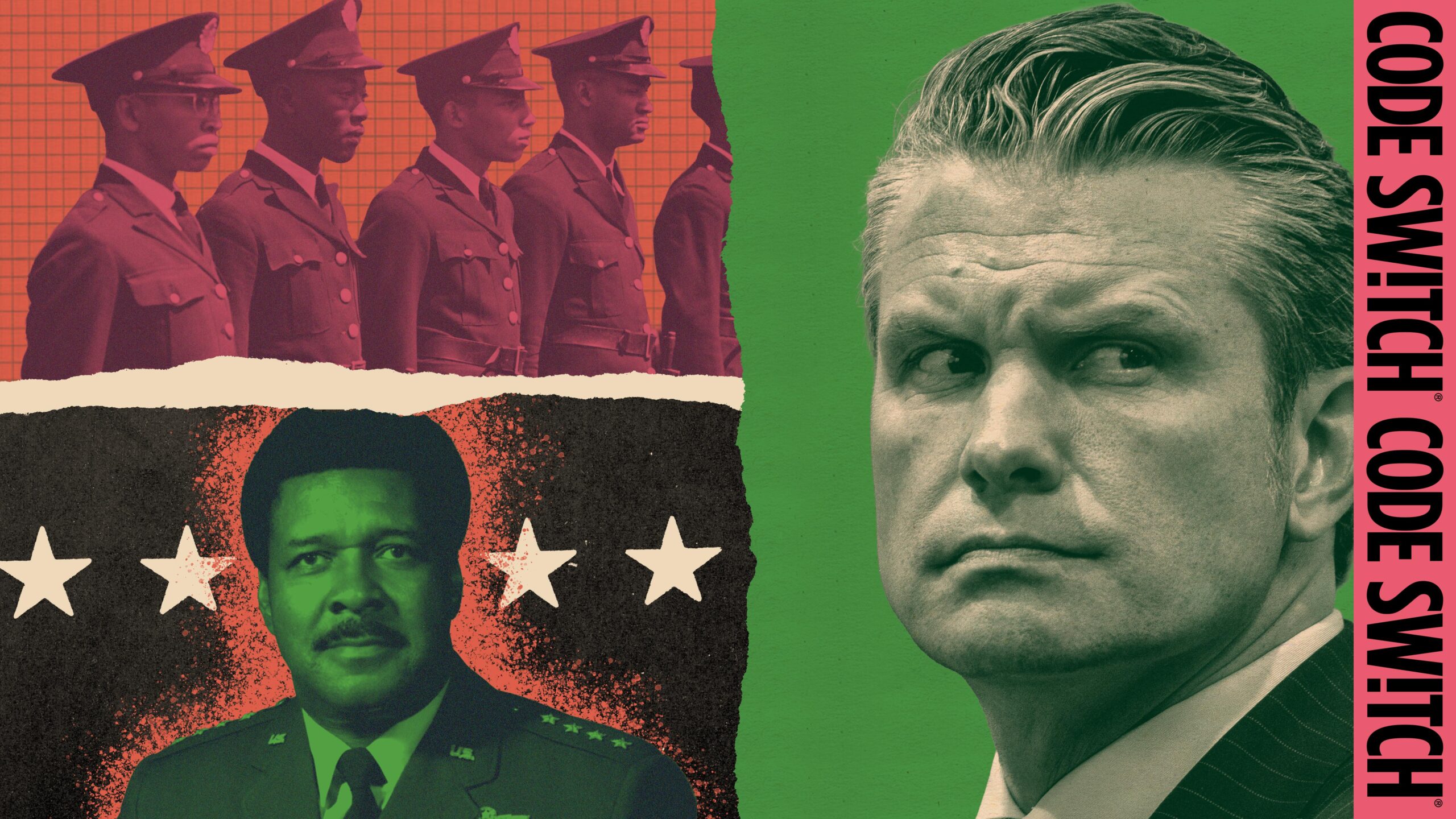
    Black service members have been disproportionately impacted by efforts to dismantle diversity initiatives, alter grooming standards and even hijack the promotion tracks of high-ranking career officers, particularly women and leaders of color. Clint recently wrote about all of this in a piece for The Atlantic called “The Betrayal Of Black Patriots.” He interviewed two dozen current and former Black military members about how the Pentagon had changed under Hegseth and what those changes mean. So in today’s episode, I talked to Clint Smith about what it means when a country that’s never quite figured out how to honor its Black soldiers decides to stop trying.

    As someone who has written a lot about Black history and how we remember it or don’t, why did you decide to write about Black service members in the military now?

    SMITH: You know, I looked around and obviously recognized that we were in a different sort of political moment. And part of it is that I was a high school teacher before I was a writer and a journalist. And when I taught high school, I taught high school in Prince George’s County, Maryland. I remember the Army and the National Guard setting up tables in the lunchroom when my students came, and more than any college, more than any community college, the military was a consistent presence at our school attempting to enlist many of the young men and women and telling them that they would have the opportunity to get a college education, to see the world if they joined the military.

    And it – I always had complicated feelings about that, right? I don’t think you can disentangle the sort of contemporary landscape of immigration across Central and South America and even beyond across the ocean from much of what America has done and much of what the American military has done over the course of generations. So you hold that on the one hand. At the same time, as I mentioned, like, the military has been a central and, in some ways, singular force for upward mobility for Black Americans in ways that it’s difficult to think about another space, maybe the federal government, that has afforded people the same level of opportunity.

    I’ve seen it in my own family, you know, like, I have family members who didn’t have a lot of choices coming out of school. And then they went to the military and they served in the military for 20, 25, 30 years. And it provided, you know, financial stability. Like, it doesn’t only impact that person, but it impacts the entire extended family. They become the sort of central financial pillar of that family. And I take that seriously. And so when I think about the military showing up at tables with, you know, my students, these 15-, 16-, 17-year-olds, I was kind of caught in two minds about it. But more recently, I’ve been in conversation with some of those students.

    One of my students in particular, who I was especially close to, is in the National Guard. And he was deployed to Washington, D.C., when Trump deployed the National Guard into the city, as he did for several cities across the country. And I was just thinking about, you know, how is he feeling about being deployed to an American city in the political context in which Trump is utilizing the military, while also recognizing that the National Guard has paid for his education, has paid for his schooling and given him and his family opportunities that maybe he otherwise wouldn’t have had.

    And so I’m always interested in these stories of cognitive dissonance. And so I had some conversations with him and then got more interested in exploring, well, how are Black folks in the military writ large thinking about what it means to serve in this political moment?

    PARKER: Was that former student able to answer that question for you?

    SMITH: You know, paraphrasing his answer, you know, I think he was kind of like, as long as I’m not asked to do something harmful. You know, I think the way that he was justifying his position to himself, but also to me, was that it felt like he was being used as a political pawn, which he didn’t appreciate. But he also felt that he still had some level of agency with which to decide how to navigate the situation, right? So, you know, you can come in, and you can be a head-bashing, brazen extension of much of what this administration is doing, or you can come and try to take a more measured approach, a more thoughtful approach.

    And I think that that’s something that would come across in many of the conversations that I had over the course of several months with folks who were in the National Guard, the Army, Navy, Air Force, etc., is that they, while these directives were coming down from the administration and from the Pentagon, there still was a level of autonomy and agency people believed they had to be intentional about what they did or didn’t do in the name of the U.S. military.

    PARKER: I mean, so many of the people that you interviewed come from military families. What did they tell you about why they chose to serve?

    SMITH: There’s a range of reasons. I mean, a huge one is the recognition that it can provide financial and social stability in ways that few other institutions can and that it has done so for many generations. You know, they watch their father or they watch their cousin or they watch their uncle or they watch their great-granddad benefit from being a part of the military, even when the military was not treating them with the respect that they deserve.

    And, you know, what’s unique about the military in some ways is that once you get past 20 years, it triggers a pension that you get for the rest of your life. And the longer you stay in after those 20 years, you know, 25, 30, 35, the higher the pension you receive when you ultimately retire is. I have family members who retired after, say, 25 years and then got another job, and so are making the salary from their other job while also receiving the 25-year pension from the military. And that…

    PARKER: Really?

    SMITH: I mean, that’s transformative for people, right? Like, so that is a consequential part of it. But beneath that is really this feeling of demonstrating a patriotism and demonstrating a commitment to a country, even if that country hasn’t always demonstrated that same commitment to you. And I was struck by how many people I spoke to talked about this idea of, like, fighting for what this country can be. More than they were fighting for what this country is today. And that came up over and over again.

    It was this idea that, you know, I don’t swear allegiance to a president. I don’t swear allegiance to Congress. What I do is I swear allegiance to a Constitution. And then there’s also this, you know, and in a generational sense, not only as an American, but specifically as a Black American. You know, one of the folks I talked to who’s still in the Army, who’s an officer in the Army, he said, I’m not going to leave the military. Like, I’m not going to let these people chase me out. We built this country. Right?

    Like – and I think that sometimes people can use that in a sort of, like – people can say it and not take seriously, like, what it means for people. But, like, he literally was like, no, Clint. Like, my folks have been here longer than the vast majority of white people’s families. So there is this deep anchor, this feeling of being tethered to this country in a way that the folks who joined the military take very seriously, and they are not quick to abandon their role in that project.

    PARKER: I mean, with that being said, like, Secretary Hegseth and the Trump administration have been targeting diversity initiatives, like, taking down portraits of Black Servicepeople, renaming military bases, honoring Confederate figures. How have you seen these cultural mandates impact Black servicepeople?

    SMITH: It’s been really hard, and I think Black service members have been experiencing a sort of cognitive dissonance, and they have been experiencing this feeling of despair, a feeling of being subjected to disrespect, that the policies and the rhetoric coming from this administration and coming from the Pentagon are suggesting that they are not worthy of being there. Certainly, if they’re in a high-ranking officer position, that they don’t deserve to be in that position.

    You know, Secretary Hegseth has made no secret of the fact that he thinks that functionally, as a Black person or a woman, if you are in a high-ranking position, it is because you are there at the expense of a white man who actually deserves to be there. He has no notion of Black people being in positions of power without attributing that to affirmative action or attributing that to DEI or attributing that to something other than the military record, the capabilities, the intelligence of the people, the Black people and the women who sit before him.

    And he’s shown this, you know, over and over again, over the course of the last year and a half. He has blocked the appointments of people who have gone through the process of being promoted to various ranks – admiral, one-star, two-star, three-star, four-star general. And the thing that is consistent in that is that he is preventing those who have made statements in support of the importance of diversity and equity and inclusion. Those who themselves seem to embody his limited conception of, like, a woke military that he wants to eradicate. And as a result, you know, just recently, he blocked another group of Black officers and women officers from being promoted in ways that are, to this degree, kind of unprecedented in recent American military memory, you know? And I think the thing that’s important for people to understand is that these decisions aren’t made, like, on a whim, right?

    Like, the decision to promote someone to admiral, the decision to promote someone to general is made by a military committee that takes into account your entire military record, all of your character references, all of your combat service, all of your public service. Like, all – it is – they – no one is brought up for promotion and promoted through this committee simply because of their gender or their race. It’s simply not true. And so it’s incredibly disconcerting.

    And so there’s this feeling of despair that people are navigating, but also this feeling of, well, as hard as this is, our ancestors experienced worse, right? Like, there are people whose ancestors were formerly enslaved and fought for the Union Army, people who, you know, their ancestors were coming from towns where they were lynched and terrorized and then went and fought for this country in World War I and World War II, all the while fighting in segregated units. And people who were sprayed with hoses during the Civil Rights Movement, and then who went to fight for this country in Vietnam.

    And so people at once experience a sense of frustration, despair and anger at how they’re being treated today, while also trying to keep it in perspective with the way that their ancestors have been treated and how, despite the fact that they feel like they’re going backwards rather than forwards, they are still in a better position than their ancestors were, and that they have a responsibility to continue to stay in the military because there is this sense of the Trump administration being a season in American history – right? – and this season will pass. And what a lot of folks I spoke to have said is that we have to make sure that enough of us are still here to keep the ship steady and to rebuild the ship after this administration is gone because we will be here much longer than they will.

    PARKER: I want to bring up an example of one of the slights that you mentioned in your article about a portrait of General Chappie James, who was the first Black four-star general who – I guess he sounds like a badass. Can you catch us up on his legacy and what happened with his portrait?

    SMITH: Yeah. I mean, I think there are a lot of people who think that he was a badass, you know? I mean, he is someone who has an extensive military record. He served in World War II, served in Vietnam. He was a fighter pilot. There’s a remarkable story about him confronting who would then become the future leader of Libya, Muammar Gaddafi, when he was a young rebel taking over Libya in a coup. And there’s this moment where Gaddafi is driving a military vehicle onto this U.S. Air Force base, and Chappie James closes the gate before Muammar Gaddafi can get in. And then Muammar Gaddafi tries to pull out his gun. And Chappie James, almost in a John Wayne-esque style, pulls out his gun before and points to Gaddafi and is like, you better not move your hand or you’ll regret it. And Gaddafi slowly backs away and then drives off.

    And it becomes this sort of military lore. You know, that’s – it sounds like a scene from a movie. And he would go on to become the first four-star general in the U.S. Air Force. And what’s interesting about General Chappie James is – so his portrait was taken down from the Pentagon. It was in the Air Force gallery, and it was removed from that space in the Pentagon. And many of the folks that I spoke to talked about how, when it was there, it was a source of pride, and Chappie James was in many ways a sort of aspirational figure, this feeling that this is a person who represents what is possible for Black people in the military. Like, if I do my service, if I (inaudible) someone who reaches the highest military standards, that I, too, can become a four-star general with my portrait on the wall and leave a legacy that will be remembered throughout American history.

    And when it was removed, to many people, it felt as if the very possibility of ascending to the position that he occupied was also removed. And Chappie James is interesting also because he wasn’t this, like, radical liberal by any means. In many ways, he was kind of a Reagan Republican. He had very conservative political ideologies. Ronald Reagan himself really loved him and talked about what an excellent pilot he was, what a model military man he was. Even just a few years ago, Florida named a bridge after him in a bill that was signed by Ron DeSantis. And so his ideological positions, his political positions, were more closely aligned with that of the Republican Party and the current administration.

    And in some ways, the fact that he was still taken down despite his political disposition was almost a sort of further slap in the face because it created this sentiment among many folks in the Pentagon and beyond that, like, man, if sharing the politics of these people, if having an exquisite military record, serving decades and decades for your country and being as Reagan said, you know, the sort of model pilot, model soldier isn’t enough, then none of us will ever be enough. And so it almost amplified that sense of despair that many people were feeling that under this administration, under this secretary, Black officers would never get the shot that they deserved.

    PARKER: And noting here that we reached out to the Pentagon, and they said that two portraits of General Daniel Chappie James Jr. are currently on display at the Pentagon. They added that one of his portraits has been on loan since 2021 and has never been moved or taken down. Clint also reached out to the Pentagon for comment multiple times for his own reporting and got different answers each time. But he says that his sources sent him documentation showing that the portrait has, in fact, been removed and says he stands by his reporting.

    (SOUNDBITE OF MUSIC)

    PARKER: When we come back…

    SMITH: Just like, man, what does it mean to go abroad and fight fascism when in many ways, you were experiencing a sort of version of fascism and domestic terrorism here in the United States?

    PARKER: That’s coming up. Stay with us.

    (SOUNDBITE OF MUSIC)

    PARKER: Parker. Just Parker. CODE SWITCH. I’m talking to reporter Clint Smith of The Atlantic about how Black service members are faring under Pete Hegseth’s Pentagon. Clint walked us through portraits coming down, promotions being blocked, an institution telling its own people they don’t belong. So I had to ask Clint the question that kept nagging me after reading and hearing about his reporting.

    All right. I think there are some people who would say this is an institution that, for decades, has displayed racism, misogyny, homophobia, transphobia. Why be a part of an institution that actively does not want them there?

    SMITH: Yes, I think that is true. And what is true is that the people within the military in many ways represent the plurality and the heterogeneity of Black America, right? Like, there are people in there who themselves represent all sorts of different dispositions, positions, orientations, identities that exists within the Black identity. And I think that different folks make different decisions about what they want to be complicit in and what their theory of change is, right? Like, there are some people I spoke to who are like, I could make a decision to not be a part of this institution because of the history of imperialism, the history of militarism, the history of, as you said, sexism, racism, transphobia, homophobia. Or I could go into this institution and be a part of what helps to change it.

    And their position is that if everyone who wants to make the military a better version of itself leaves, then the military will never change. And this is a thing that people have to wrestle with even beyond the context of the military, right? I mean, people have to think about this in the context of the schools they attend. People have to think about this in the context of the workplaces they operate in. People have to think about this in terms of the communities and neighborhoods they live in, the cities they’re part of.

    And obviously, we’re in a moment where a lot of people feel like so much of the progress that has been made on these fronts is moving backwards. But there’s also a sense that, again, that this is a season, or as some say this is a storm or this is a fever, you know, to use these different metaphors. And this one person I spoke to said, this is a fever, and it’s going to break. But we just have to ensure that when the fever does break, we are still here to sort of put things back together.

    PARKER: Is there a generational divide between how young Black service members are responding to the military’s cultural shift versus the older guard?

    SMITH: You know, what’s interesting in there is, and yet it manifests itself in a particular sort of way because I think the older guard, so to speak, are people who themselves have experienced different levels and gradations of racism and discrimination throughout their time in the military. You know, I spoke to folks who joined the military in the ’60s, in the ’70s, when the military was rife with a sort of racism that was more forceful, more conspicuous, oftentimes more violent, and they remember that time.

    And so what they’re experiencing and how they make sense of this moment today is informed by the decades of experience that they have had in the military and in America that has given them a sense of perspective, they might say, about what they are willing to tolerate and not. But because they often have already gotten past their 20 years, there is this feeling of, well, actually, you know, I’m going to get my check for the rest of my life because of the sacrifices I’ve made for this country.

    And there’s a sort of, like, I’ve done my time, and I don’t have to subject myself to this anymore, while many of the younger folks have not necessarily experienced virulent racism in the way that one would have, maybe in the ’60s or ’70s or ’80s in the military, but they have not themselves gotten to the 20-year mark, which means you don’t get that forever check. You don’t get that pension that comes to you every month. And again, going back to the beginning of our conversation, we were talking about the practical reasons, the financial reasons, the social reasons that people often join the military. That is a huge part of it. And so for some of the younger people, they might have less tolerance, actually, than some of the older generation does.

    But because of the reality of the professional position they’re in and how far into their tenure they are, sometimes – again, I can’t speak too broadly because everybody makes different decisions – sometimes, maybe oftentimes, they make a decision like, I’ma just put my head down and keep going because I just have to get through the next 2 1/2 years or however they’re thinking about it until we have a new secretary, until we have a new administration, until we are not operating in the same political context that we are today.

    It’s a tricky moment for a lot of people, you know? Like, when I was having a lot of these conversations, there was a real fear that Trump was going to deploy U.S. soldiers, not even the National Guard, but, like, active military infantry to American cities – right? – to put down some of these protests that were happening. And for some people, they were like, if that happens, I’m out, right? Like, I can’t be a part of that.

    And so, everybody, I think, is trying to figure out, like, what is their red line. But again, you’re weighing this against. Like, and I said this before, but I really need to emphasize, like, many of these folks who are in the military become the central financial means of stability for their entire family unit. And so your – if the calculus is not only, like, do I agree with the war in Iran or not, or do I think that I’m going to be deployed to Minneapolis or not. It’s, like, if I step away from this, am I letting down or sort of ceding my responsibility to my family who needs me and who I’m only able to support because of the professional position I’m in within the military? And so I just – again, I’m like the both/and guy, the complexity guy. But I do think…

    PARKER: Yeah.

    SMITH: …It’s important for people to, like, sit with the full picture.

    PARKER: It really is a stress test. Whoa.

    SMITH: So much of being a Black American is a stress test. Yeah.

    PARKER: I’m thinking about – I don’t know if you’ve ever seen the Spike Lee film “Miracle At St. Anna.”

    SMITH: I don’t think so.

    PARKER: All right. Let me tell you – I mean, the movie’s got its problems, but there’s this really impactful scene where these Black soldiers are storming into battle. This is World War II, while on the other side is a voice that’s called Axis Sally on a bullhorn who is telling them you are dying for a country that does not respect you. And so it’s kind of like the opening of “Saving Private Ryan,” but they’re being told that they’re dying for naught. And I think about that in juxtaposition with, like, I think one of the people you interviewed said they’re concerned that everything they’ve done has been in vain. So those are the kind of – the dualities that I’m trying to navigate when I’m reading your article.

    SMITH: Yeah. I think those are the dualities the people who are in the military are trying to navigate every day. I mean, it is true that Black Americans have, for many years, and, you know, many would argue today, fight for a country that refuses to fight for them. You know, I’ve been working on a book the last five years about World War II memory. And I’ve traveled across the world, and I’ve gone to Nagasaki and spent time with atomic bomb survivors. I’ve gone to Seoul, Korea, and spent time with women who were forced into sex slavery by the Japanese military. I’ve gone to Normandy – spent time with World War II veterans. I’ve gone to Bariloche, Argentina, to sort of chase the trail of Nazis who fled Europe after the war. I’ve been to Berlin – spent time with Holocaust survivors.

    But I’ve also spent time here in the U.S. with people who were born into Japanese incarceration camps in California, with some of the surviving Navajo Code Talkers in Arizona and New Mexico on the Navajo Nation. And those two, in particular, are interesting ’cause they – I very much put them in conversation with the experience of my Uncle Lawrence, who, you know, grew up in Mississippi in a town where multiple people had been lynched during his childhood and as a 19-year-old enlisted to fight in the Army – U.S. Army during World War II.

    And I – whenever I think about his story, just like, man, what does it mean to go abroad and fight fascism when, in many ways, you were experiencing a sort of version of fascism and domestic terrorism here in the United States, that you and your family and your community were subjected to, like, a constant barrage of not only disrespect, but violence, like, physical, psychological and emotional violence?

    And I put that in conversation with the experience of, you know, Japanese Americans who went and fought for the United States during World War II, while their families were locked in open-air prison camps. I think about the Navajo Code Talkers who went and used their language as a secret code to transmit messages in the Pacific, when just a few years before they had been put in boarding schools to try to extract that language from that culture, and they were asked to use that very language to fight on behalf of this country. And so I say that because the experience of Black Americans in that regard is not necessarily unique.

    Like many people who have experienced racism in this country, thinking particularly of those two groups, have conceived of a way to, like, fight for a country that not only doesn’t fight for them, but that actively subjugates and oppress them. And again, within those communities, there are differing positions. Some within the Navajo community are like, why would I ever go do that? Like, why would I ever go fight for this country when this country has for generations extracted my language, my culture and physically removed my family from our land? Japanese Americans were like, why would I go fight for a country that is keeping my family in a prison camp?

    And then, at the same time, there are some who believe that, in fact, this is a way to demonstrate our commitment to America, and maybe, again, not America as it is today, but America as it can be. America as it aspires to be, you know, as Dr. King writes about the Constitution, talking about it as a promissory note – right? – that this promise of what America can be is the thing that we are moving toward, even when the country itself seems as if it is serving as the obstacle to us getting there. So, yeah, it’s hard and it’s complex, and people can be of two minds and often are, you know? But I think that complexity and that duality and that cognitive dissonance is worth sitting with because it reflects the really difficult nature of these questions.

    PARKER: I don’t know. We’ve been aspiring for 250 years, Clint.

    SMITH: I hear it.

    PARKER: I’m ready for a result.

    SMITH: I hear it.

    (SOUNDBITE OF MUSIC)

    PARKER: Clint Smith, thank you very much for talking with me.

    SMITH: Thank you. It’s been a pleasure.

    (SOUNDBITE OF MUSIC)

    PARKER: And that’s our show. CODE SWITCH has a newsletter, and it’s pretty good, if I do say so myself. You should sign up for it at npr.org/codeswitchnewsletter.

    This episode was produced by Jess Kung. It was edited by Courtney Stein. Our engineer was on Annlie Huang and a big shout-out to the rest of the CODE SWITCH massive – Cristina Cala, Xavier Lopez, Leah Donnella, Dalia Mortada, Maya Dangerfield, Barton Girdwood, Yolanda Sangweni and Gene Demby. And I’m B.A. Parker. Hydrate.

    (SOUNDBITE OF MUSIC)