Blog
-
What happened in the opening day of the NATO summit in Ankara, Turkey
Transcript:
SCOTT DETROW, HOST:
NATO leaders, including President Trump, arrived in Turkey’s capital, Ankara, today. Most European and other allies are spending more on defense and expanding their military capabilities, but President Trump’s increasingly confrontational approach toward many NATO countries has forced a debate into the open – how NATO projects unity despite uncertainty about the U.S.’s commitment to the alliance. NPR’s Hadeel Al-Shalchi reports from Ankara.
HADEEL AL-SHALCHI, BYLINE: At this year’s summit in Ankara, there was one arrival everyone was bracing for.
(SOUNDBITE OF ARCHIVED RECORDING)
PRESIDENT DONALD TRUMP: (Speaking Turkish).
UNIDENTIFIED PEOPLE: (Yelling, inaudible).
(SOUNDBITE OF MILITARY BAND MUSIC)
AL-SHALCHI: President Trump opened his visit with a few words of Turkish.
(SOUNDBITE OF FIGHTER JETS PASSING OVERHEAD)
AL-SHALCHI: He’s the only leader who got the full ceremonial welcome, a flyover, a military band and a personal greeting from host President Erdogan. And as anticipated, it didn’t take long before he showed his disquiet to his NATO alliance partners.
(SOUNDBITE OF ARCHIVED RECORDING)
TRUMP: I was very disappointed with NATO. And frankly, if it weren’t held in Turkey, where my friend happens to be a very strong leader, a very strong person, it’s possible that I wouldn’t have attended.
AL-SHALCHI: Trump has long argued that NATO allies rely too heavily on the U.S. He says Europe isn’t doing enough to help in his war in Iran. Allies have been reluctant to take part in efforts to secure shipping through the Strait of Hormuz or provide military support to the U.S.
(SOUNDBITE OF ARCHIVED RECORDING)
TRUMP: Italy turned us down. And Germany turned us down, and France turned us down. And it’s OK. But, you know, why are we spending hundreds of billions of dollars and they’re not there for us? We’ve always been there for them.
AL-SHALCHI: So this week, allies are hoping to convey a message of unity and credibility. NATO Secretary General Mark Rutte tried to set the tone of this year’s summit with a soccer analogy.
(SOUNDBITE OF ARCHIVED RECORDING)
MARK RUTTE: No team wins because of one brilliant player. Everyone matters. No one wins alone.
(SOUNDBITE OF MUSIC)
AL-SHALCHI: With a glitzy video, Rutte announced billions in arms deals to prove to Trump NATO is serious.
TORREY TAUSSIG: Financially, European allies are stepping up.
AL-SHALCHI: Torrey Taussig is the director of the Atlantic Council’s Transatlantic Security Initiative. She says while the spending increases are significant, allies are also grappling with questions over the future of the alliance.
TAUSSIG: My biggest concern is that it is the political confusion about how committed the United States is to this alliance that weakens fundamentally deterrence in the eyes of Moscow.
AL-SHALCHI: Taussig says that even though NATO is trying to prove its relevance to Trump, many allies are still wary.
TAUSSIG: It is unavoidable when you speak with allied officials, European officials that there is a crisis in confidence about whether the United States would be there in an Article 5 type contingent.
AL-SHALCHI: Taussig is referring to the NATO article that says that an armed attack against one or more of the allies is considered an attack against all. She says for this year’s summit, allies are focused on one main goal.
TAUSSIG: This is what I would call a high-stakes summit with low expectations – very high stakes for where this alliance goes on delivering from the pledges of last year and also keeping the United States engaged and committed to the alliance. That means, for the purposes of this summit, keeping the president happy.
(SOUNDBITE OF MILITARY BAND MUSIC)
AL-SHALCHI: And that will be on leaders’ minds as they gather for dinner tonight to the strains of a military band. The optics are of pageantry, alliance and solidarity. But the real test is whether President Trump shares that vision. Hadeel Al-Shalchi, NPR News, Ankara.
-
‘Hello darkness my old friend,’ sing U.S. Soccer fans
Transcript:
SCOTT DETROW, HOST:
The United States is out of the World Cup after a decisive 1-4 loss to Belgium last night in Seattle. We wanted to get a pulse on how the tournament is going to look and feel now that, sad to say, all three host nations are out. So we called up Roger Bennett. He’s the founder and CEO of the Men in Blazers Media Network and has been traveling around the U.S. in a tour bus covering the World Cup.
ROGER BENNETT: (Laughter).
DETROW: Roger Bennett, welcome back to ALL THINGS CONSIDERED.
BENNETT: Oh, Scott Detrow, you legend. It’s lovely to be here on even the saddest of days for all who care about the football game in this nation.
DETROW: It’s hard to take a moment of silence on the radio, so let’s just take a blip and then I’ll ask you – what happened?
BENNETT: (Laughter) Oh, hello darkness, my old friend. Another World Cup, another meek round-of-16 exit for our men last night in Seattle. I think we went in with hope in our hearts. This team had raised hope. They had played swaggy, buccaneering football. They made a nation care, and then only darkness. Part of it was self-sabotage – the reinstatement of our star striker…
DETROW: Yeah.
BENNETT: …Who’d been banned for one game that needed geopolitical interference. I don’t know if it was the pressure, if it was just karma. But we went out in the end, utterly meekly, again in the round of 16 – fourth time in the last five World Cups. It’s a ceiling. You know, we can put a man on the moon. We invented Animal Style In-N-Out burgers. This country can do anything it puts its mind to, apart from having a men’s team, that is. We love dream teams in America. We remain, in men’s football, a dream-on team, and it’s an agony.
DETROW: But they were looking so good, and it was so fun and uplifting and positive. And it wasn’t that kind of eking their way to a draw that the previous World Cup, you know, advancements have been. I mean, to ask a very 2026 question, do you think President Trump ruined the vibes?
BENNETT: (Laughter) There was definitely a complete and utter vibe change. And I think the story is yet to come out. The players were shell-shocked after the game. This team had been mediocre for the past two years. They have struggled. And then when we kicked off this World Cup, something transcendent happened. Three weeks ago, no one in America, other than the soccer fans, knew the name Flo Balogun.
DETROW: Yeah.
BENNETT: Suddenly, scored three goals, every WhatsApp group is crackling – we must have Flo back. We’ve lost Flo. In comes the president. You know, he’s talked about it, that he made FIFA reinstate him in the most unorthodox way. We’ve seen this team soar, and last night we saw them exit this tournament without even cocking a fist and putting up a fight with the nation watching. It’s going to take a long, long time for this team to rebound from that loss moment.
DETROW: Yeah. You have spent so much time thinking and watching soccer grow in fits and starts in the U.S. Do you think there’s ever going to be a point where it feels the way the Azteca felt with England and Mexico the other night? Just – like, it felt like the ground was shaking. It felt like everything that happened on the field was the most important thing in human history. Do you think…
BENNETT: (Laughter) Oh, by the way…
DETROW: How do you think soccer gets to…
BENNETT: By the way…
DETROW: Yeah.
BENNETT: It was. It was…
DETROW: Yeah.
BENNETT: …The most important thing in human history – those English giants who emerged barely intact from the Azteca. Like, 1066 – big date in English history; Battle of Britain, 1940; I think 2026, surviving the Azteca with a win, that will be talked about for generations for those that watched it. Look, I think about it like this – 2026, this World Cup has been the good stuff. We needed this, Scott. Memories are being made. Joy is being had. This World Cup is still the World Cup of Lionel Messi. And it’s also about the world falling in love with Buc-ee’s one nugget at a time. You know, Waffle House is having a great World Cup. These are the things that will be remembered.
And I think the agony of last night? When the smoke is cleared, that the United States team will not have woven themselves into the tapestry, the history, the telling of this World Cup other than for that one geopolitical moment. And that sense of missed opportunity, that sense of regret, that sense of what if is the thing that is ruminating in the heart of everyone who loves the game and its growth in this nation.
DETROW: Well, Roger Bennett, you have been my own personal podcast Sherpa through many World Cups now, and I appreciate that as a listener, and I appreciate you coming on ALL THINGS CONSIDERED to talk about it.
BENNETT: Genuinely an honor. Love all the work you do. Thank you for having me on.
-
Next gen crabbers use social media to tell their story and sell their catch
Transcript:
MARY LOUISE KELLY, HOST:
Chesapeake Bay blue crabs – they are to Maryland what lobsters are to Maine, a signature seafood part of the identity. But these are not easy times on the bay. The crab population has been falling while the average age of a crabber has been climbing into the late 50s. So who are the next generation of crabbers? NPR’s Frank Langfitt hit the water to find out.
(SOUNDBITE OF BOAT RUNNING)
FRANK LANGFITT, BYLINE: So we’re just on a little cove. It’s early morning. There’s some seagulls. The sun is still not up.
JACK TORNEY: My name is Jack Torney. I was born and raised in Annapolis, Maryland, and I’m a full-time commercial crabber.
(SOUNDBITE OF BOAT RUNNING)
LANGFITT: Jack is laying out 2,400 feet of line, and every 16 feet, he’s got little pouches of razor clams to catch the crabs.
(SOUNDBITE OF BOAT RUNNING)
LANGFITT: Torney is 23, with a blonde goatee. He’s equipped his boat with a roller that lifts the line from the muddy bottom to the surface. It’s kind of like a crab conveyor belt.
TORNEY: There’s the first one in the morning.
(SOUNDBITE OF SCOOPING CRABS INTO BIN)
LANGFITT: He scoops them up with a metal mesh net and tosses them in a bin. They scurry about, looking to escape.
(SOUNDBITE OF SCOOPING CRABS INTO BIN)
LANGFITT: Crabs have excellent vision and are feisty. One faces off against me, bears his blue claws, ready for battle. And they’re not happy.
TORNEY: They will definitely not be happy because they’ll be going to steamer later tonight.
LANGFITT: Crabbing can be thrilling, and Torney loves the work.
TORNEY: I enjoy being out on the water. Growing up, I didn’t like going to school, just because I didn’t like being in a building all day. I’d rather be in nature.
LANGFITT: But becoming a commercial crabber isn’t easy. Maryland has capped licenses for the past decade at around 5,400 annually to protect the fishery. Licenses are often passed down through families. Turnover is extremely low. Torney says he’s part of a dying breed.
TORNEY: There is not many, say, 18- to 30-year-olds left crabbing.
LANGFITT: Why is that?
TORNEY: Because most people my age, they don’t see it as a full-time job. They’d rather work in the office building than be out on the water.
LANGFITT: Torney is a first-generation crabber, but in his time on the water, he’s seen worrying signs.
TORNEY: There’s definitely less crabs from when I first started when I was 14.
LANGFITT: A recent University of Maryland survey found the crab population fell by half between 2011 and 2023, though, a survey this year showed an encouraging rebound. Scientists blamed the drop in the crab population on the loss of marsh habitat to waterfront development and the invasive blue catfish, which eat juvenile crabs. Torney works alone to keep costs down. But rising prices, including fuel, cut into his profits.
TORNEY: It costs around a hundred to $150 to leave dock a day. But also, you got to put in licensing fee, marina slip, any wear and tear on motor, oil changes.
LANGFITT: Torney says a solo crabber can earn about $95,000 a year but overhead consumes a third of that. To earn more for what he catches, Torney uses Facebook to sell directly to consumers.
TORNEY: I will put a post out around 10 a.m. this morning. Let everybody know I’ll have them fresh off the boat.
LANGFITT: One of Torney’s contemporaries is Luke McFadden. McFadden’s 30. To sell his crabs and promote the industry, he’s become a social media star. McFadden post videos on how to catch crabs and pick them.
(SOUNDBITE OF ARCHIVED RECORDING)
LUKE MCFADDEN: You got the claws. Grab them like this. We’re going to break them against the knuckle.
(SOUNDBITE OF CRAB SHELL CRACKING)
MCFADDEN: And pull. Sometimes you get the whole thing. Like, that’s the entire arm meat right there.
LANGFITT: McFadden is a handsome, freckle-faced Korean American. He’s built a social media following of more than 3 million. I recently visited his crab stand, which is about a mile from the water.
MCFADDEN: Thank you, man. I appreciate you guys so much. It was really nice to meet you guys.
LANGFITT: The stand is a converted 41-foot fishing boat McFadden placed in a gravel parking lot. Among his customers today, Kodi Holbrook and Jenny Sarisky. Sarisky works retail. Holbrook’s an electrician. They’re in their 20s.
KODI HOLBROOK: We saw him on YouTube. So we decided to come down and take a look.
LANGFITT: And where do you live?
HOLBROOK: New York. Long Island, New York. So, yeah, we drove down this morning, about 4.5 hours.
LANGFITT: Just to meet Luke?
HOLBROOK: Yeah, pretty much.
LANGFITT: What do you like about the social media presence?
HOLBROOK: The aspect of the water and seeing people actually catch the seafood and to see where the food comes from that we’ve been eating all our lives.
LANGFITT: McFadden sells all kinds of branded merchandise from the boat.
MCFADDEN: We have two different kinds of seasoning. I have a Korean barbecue style. We also have it on potato chips. We got T-shirts from my merchandise brand.
LANGFITT: Not everyone here on the bay is a Luke McFadden fan. Last year, one of his boats was vandalized. McFadden says his style rubs some old-school crabbers the wrong way. But while out crabbing one morning, he also told me that to make it in this business these days, people have to adapt.
MCFADDEN: You’re going to have to get creative in a lot of ways. You’re going to have to make the most out of everything that comes over your rail. For me, it’s the crabs, and it’s the story.
(SOUNDBITE OF CRABS POURING INTO BIN)
LANGFITT: The story young crabbers are telling about fighting the odds to keep this Chesapeake Bay tradition alive.
Frank Langfitt, NPR News on the Chesapeake Bay.
(SOUNDBITE OF ENYA SONG, “ORINOCO FLOW”)
-
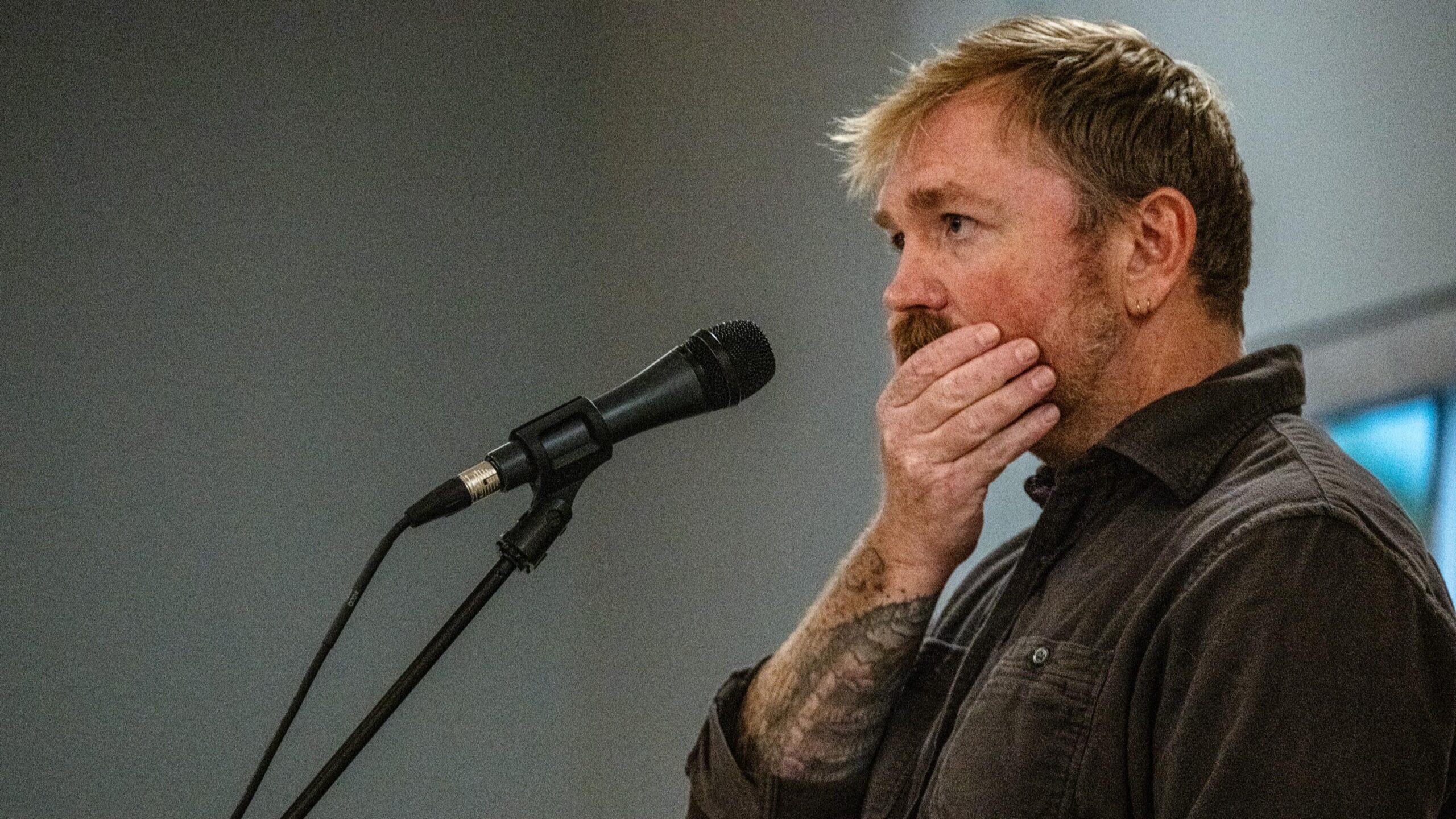
Amid serious allegations, what’s next for Graham Platner’s Senate campaign?
Transcript:
SCOTT DETROW, HOST:
It’s CONSIDER THIS, where every day we go deep on one big news story. Today, accusations of sexual assault in a high-stakes Senate race and uncertainty about a candidate’s next steps. Graham Platner’s supporters and defenders are walking away and calling on him to drop out of Maine’s high-stakes Senate race.
(SOUNDBITE OF ARCHIVED NPR CONTENT)
JOEL PAYNE: Whether it’s new allegations or even digging deeper into allegations that are already on the public record, it’s pretty clear that Republicans were going to make this fall campaign about Graham Platner. That’s the political problem for him.
DETROW: That is Democratic strategist Joel Payne speaking to NPR Tuesday. Platner’s bid for the U.S. Senate is a key race for Democrats to win back the Senate this fall, and time is running out. Platner has less than one week to withdraw or else his name will still be on the ballot this fall, and that is causing a lot of anxiety inside his party.
CONSIDER THIS – Democrats made a big and risky bet with Graham Platner’s candidacy, and that bet may no longer be paying off. So what’s next?
(SOUNDBITE OF MUSIC)
DETROW: From NPR, I’m Scott Detrow.
(SOUNDBITE OF MUSIC)
DETROW: It’s CONSIDER THIS FROM NPR. Graham Platner was once seen as the key to Democrats flipping enough seats to retake the U.S. Senate. Now Democratic Party leaders are withdrawing their endorsements and calling for him to drop out of the Senate race in Maine. Yesterday, Politico reported that a woman he once dated accused him of sexual assault. Platner denied the accusation and said, quote, “any accusation of nonconsensual behavior is categorically untrue.” But this news came after other reports of unsettling behavior from women who previously dated Platner and an extramarital sexting scandal.
So where does the race go from here? For that, we called Adam Jentleson. He’s a Democratic strategist and the founder and president of the Searchlight Institute, a liberal think tank. Thanks for coming by, Adam.
ADAM JENTLESON: Thanks for having me.
DETROW: Is this campaign viable anymore?
JENTLESON: No, it’s absolutely not. I’m surprised Platner hasn’t dropped out already, but he’s gone, and, you know, the sooner, the better because Maine Democratic Party rules do allow the party to select a replacement as long as he drops out before Monday. So the clock is ticking. I think, you know, Democrats still have a great chance to win this seat if he drops out. So, you know, he should get out sooner rather than later.
DETROW: Platner had a lot of support from Democratic voters, even amid all those other scandals. What to you is the least terrible way to quickly choose a new nominee who the voters didn’t get behind?
JENTLESON: I think you have to figure out a claim to legitimacy for this new nominee. You know, we saw how, you know, not actually being elected by voters dogged Kamala Harris as the nominee when she was picked by, you know, essentially party insiders to be the nominee. You know, she was vice president, but she was – she did not win the Democratic nomination in the traditional way. So I think you got to apply the same standard here. You know, there were seven Democratic candidates who ran for two statewide slots about a month ago in the primary, right? There was the race for senator, and there’s the race for governor.
DETROW: Yeah.
JENTLESON: In those seven candidates, there are a lot of credible nominees, all of whom I think would have a solid chance at beating Susan Collins. The only one who can’t is Platner himself. You know, and all of them would have some claim to legitimacy because a lot of people cast their votes for them. I think, you know, holding a convention that you have to plan in less than a month and then, you know, crafting rules and bylaws that everybody agrees to, you could make it work, but it’s – you know, if you use subjective standards to choose the nominee at that convention, I think you’re going to run into a lot of trouble, and you run a real risk of leaving the party divided, which would be a real disaster as we head into the general election against Susan Collins.
DETROW: Well, that’s what I ask – want to ask about because a big part of Platner’s strength was that he was not an establishment figure. He did not come up in politics in any way at all, and that really appealed to voters in a way that we’ve seen in a bunch of states right now. I mean, how do you get those people who supported Platner to be on board with a mainstream politician who is chosen one way or another through a very quick process that isn’t as open as a regular primary?
JENTLESON: Well, I think there’s risk in overstating that case, to be honest with you. I think, you know, the primary that Maine had a month ago was sort of a split screen – right? – because, you know, on the Senate side, you had people casting their vote for Platner, who, as you say, is an antiestablishment politician. But on the governor side, on the same day, those voters went to the polls and elected Chellie Pingree, who’s – or – excuse me – Hannah Pingree, the daughter of Chellie Pingree, who is, you know, an establishment politician. You know, she’s wonderful. I think she’s going to be a great governor, and I think she’s got a great chance to win, you know? But she wasn’t an antiestablishment candidate, you know?
And when you look at the votes, you know, about 156,000 Mainers cast their votes for Graham Platner, you know? And the guy who is sort of positioned as the antiestablishment candidate, you know, who Graham is trying to, you know, railroad through as his replacement, Troy Jackson, only got about, you know, 45,000 votes. So 100,000 Mainers voted for Graham Platner but then supported either Hannah Pingree or Nirav Shah, as well.
DETROW: Adam, let me…
JENTLESON: So a lot of those same people who voted for him also supported some of the more establishment politicians.
DETROW: I want to make sure we have time for one more thorny question with all of this. I’m wondering if you think the Democratic Party, the party that embraced #MeToo, that talked about believing women – do you think it lost credibility or moral authority by sticking with Platner through all of the scandals leading up to this moment?
JENTLESON: Not if they get rid of him. I think, you know, one of the things the Republicans did is when they were faced with these questions, they stuck with them. They stuck with Trump. They stuck with Matt Gaetz. They stuck with any number of nominees after knowing deeply immoral things about them. So as long as we take care of business here and replace him with somebody we can all get behind, I think we can hold our heads high.
DETROW: You still think Susan Collins is beatable?
JENTLESON: I absolutely do. You know, this is a very favorable national environment for Democrats. Trump’s numbers are terrible. Susan Collins has been, you know, a die-hard supporter of Trump time and again. She’s lost her independent streak. You know, we just have to get somebody in this race who can just, you know, be normal and, you know, make the case and prosecute the case against Susan Collins. And in that case, I think this seat is still very winnable.
DETROW: Put be normal on a bumper sticker. That is Adam Jentleson, Democratic strategist, founder of Searchlight Institute think tank. Thanks so much.
JENTLESON: Thank you.
DETROW: This episode was produced by Tyler Bartlam and Karen Zamora, with audio engineering by Ted Mebane. Our director is Jonas Adams. It was edited by Patrick Jarenwattananon and Tinbete Ermyas. Our interim executive producer is Courtney Dorning.
(SOUNDBITE OF MUSIC)
DETROW: It’s CONSIDER THIS FROM NPR. I’m Scott Detrow.
-
After the U.S.’s loss to Belgium in the World Cup, where does the team go from here?
Transcript:
SCOTT DETROW, HOST:
The World Cup’s round of 16 wraps up today. And with the U.S. men’s loss to Belgium last night, there will be no more matches for this year’s squad. But what a ride it was – highs, lows, scandals, everything. To wrap up the U.S. team’s journey through the tournament, we turn now to NPR’s Becky Sullivan, who has been there for all of it. Hey, Becky.
BECKY SULLIVAN, BYLINE: Hey there, Scott.
DETROW: You’ve had a little less than 24 hours to think about all of this. I don’t know if that’s enough time, but…
SULLIVAN: (Laughter).
DETROW: …How are you looking back at this run?
SULLIVAN: You know, I – it’s hard to say because the rest of the tournament before this week and before last night was so positive, and then it was just such a disappointment last night. And I think what was so deflating about it – it’s not that they went out in the round of 16, but it’s the way that they went out. Their opponent was Belgium, of course – the first team that they had faced in this World Cup that was ranked in the top 20 in the world by FIFA. And the Americans were just outclassed from the first minute they stepped foot on the field, it seemed. Belgium just scored so effortlessly. I mean, it was honestly downright embarrassing for the U.S. So a little hard to know what to make of it, given the other positives.
DETROW: Yeah. Where do you think the U.S. fell short?
SULLIVAN: You know, it’s hard to say. There was this idea, I think, coming into this World Cup that the talent of the American players was finally, for the first time, maybe on the level of – definitely not England or France or anything just, like, not yet but exactly this kind of sort of second-tier European squad like Belgium, that these were guys on the American squad who had come up through European-style academy systems. Most of the starters have key roles on teams in Europe big leagues, meaning that every week they’re playing against top-level world-class talent. But it’s hard not to feel like after last night’s loss that they’re in exactly the same place that they started from four years ago.
I also think this weekend’s red card controversy with President Trump and FIFA President Gianni Infantino dented the vibe a little bit. It certainly provided some extra inspiration for Belgium. And so, yeah, just a bummer of a way to end this for so many fans who had been so energized for weeks.
DETROW: Right. Let’s say, though, that last night it had been a close competitive loss – right? – and…
SULLIVAN: Yeah.
DETROW: …They’re still out of the tournament. What would the positive parts of this run be, you know, up until the moment it really turned south yesterday?
SULLIVAN: (Laughter) Yeah. I mean, I think the biggest unequivocal positive has been the way that this team energized fans, filling up these stadiums. I mean, I just went to five of these USA games with stadiums packed with, like, sixty-seven, sixty-eight thousand people. What a summer for the World Cup it’s been here. I mean, Scott, have you ever heard so many people talking about the U.S. men’s national soccer team? These…
DETROW: Cannot say I have.
SULLIVAN: These guys have been just, like – they’ve just been asked over and over and over again about how meaningful this was, how important the opportunity was to build the sport here in America. And so I think that’s what made last night a little tough too. Here’s midfielder Tyler Adams talking about that.
(SOUNDBITE OF ARCHIVED RECORDING)
TYLER ADAMS: I think that was the goal – was to obviously inspire people that the support was growing in the U.S., which I think we saw. I mean, the support was unbelievable. I think our initial reaction as a team was that in this moment we let them down.
SULLIVAN: Now, I will say I think it’s too early to judge the full extent of the impact this summer has had. Like, maybe a 7-year-old who watched midfielder Malik Tillman hit these two amazing free-kick goals over these past couple games, maybe that kid’s now going to grow up and be practicing them, and he’ll turn into a star for the team in, like, the 2040s. I don’t know. But I will say that already, I do think that, like, for longtime soccer diehards, for reporters who’ve been covering the sport in this country for decades, to see how far things have come – that the stadiums are full watching the teams, that people are wearing the jerseys on the streets – I think that was incredible for all of them to see.
DETROW: So maybe closer than this theoretical 2046 run (laughter). What do you think comes next in the short term for the team?
SULLIVAN: I think the biggest question in the short term is what to do with coach Mauricio Pochettino, who is this Argentinian sort of hotshot, big-name coach they brought in, and certainly, I think, made a huge impression on players and teams. U.S. Soccer has offered him an extension. They said in a statement that the talks are still ongoing now that the World Cup run is done, but we will have to wait to see.
DETROW: NPR’s Becky Sullivan, thanks so much.
SULLIVAN: You’re welcome.
-
A college student’s unsung hero helped her when she got a breakup text in class
Transcript:
MARY LOUISE KELLY, HOST:
Time now for “My Unsung Hero,” our series from the team at the Hidden Brain podcast. “My Unsung Hero” tells the stories of people whose kindness left a lasting impression on someone else. Today’s story comes from Jennifer Novak. Novak’s first year of college was hard. She was living in a new city, enmeshed in an abusive relationship and struggling to keep up with the demands of school. Things came to a head that spring when she received a breakup text from her boyfriend during an afternoon math class.
JENNIFER NOVAK: As I’m walking out of class, you know, I was trying to hold back tears and feeling more and more disconnected from the rest of the world. But because these feelings were so intense, you know, I wanted to just get back to my dorm and sort of be alone. I felt like I couldn’t even finish the walk there. So I sat down and began having some really, really dark thoughts about who I was, what my self-worth was and if any of this was really even worth it. That’s when a young man named Nico (ph) approached me. He introduced himself. He stood a few feet away, and he said to me, hey there, I’m just wondering if I can sit down with you for a while. I sort of just nodded and said, yeah, that was fine. He was welcome to sit.
And then after a breath in, he says, you know, I just noticed that you seem so intensely sad. Is it OK if I sit with you and spend some time talking with you about where you’re at right now? And something about his energy and the way in which he approached that felt like it was a safe and right moment to open up about what was going on. So I started talking about how I was feeling and what was going on. I don’t remember exactly what he said in this conversation. What I do remember is that I felt very seen and I felt very supported in this nonjudgmental space of this stranger in this moment in which I needed someone to connect with.
And as we wrapped up our conversation, he spent a few moments asking me, you know, did I have someone that I could talk to, that I could call, that these things that I’m experiencing are not going to last forever. And then Nico got up and he walked away. And I look back on this moment as such a pivotal one in my life because he took the time to notice, I finally had that I matter moment that I think motivated me to take those next steps and to really make sure I was going to be OK. I think a lot about how if that individual hadn’t stepped into my life in that particular moment, how I might have had a very different trajectory.
(SOUNDBITE OF MUSIC)
KELLY: Jennifer Novak lives in Maryland and works as a therapist. You can find more stories of unsung heroes and learn how to submit your own at hiddenbrain.org.