Transcript:
(SOUNDBITE OF MUSIC)
STEVE INSKEEP, HOST:
President Trump said he’ll sign a deal with Iran, and this time, Iran confirmed it.
A MARTÍNEZ, HOST:
It’s set to be signed Friday in Switzerland. Israel was left out. So what do they think of the agreement with their longtime enemy?
INSKEEP: I’m Steve Inskeep with A Martínez, and this is UP FIRST from NPR News.
(SOUNDBITE OF MUSIC)
INSKEEP: On his 80th birthday, the president did not celebrate the Iran deal by jumping on top of the fence at a UFC match at the White House, but some of the fighters did, as the president looked on. Mara Liasson analyzes the politics of a Paramount+ TV program on the White House lawn.
MARTÍNEZ: And right after the fight, the president headed to France for the G7 summit. How might they help with the aftermath of the war in Iran? Stay with us. We’ve got the news you need to start your day.
(SOUNDBITE OF MUSIC)
MARTÍNEZ: The United States and Iran say they are ready to stop their nearly four-month war.
INSKEEP: The president started the war by saying a U.S. bombing campaign would set up Iran’s people to overthrow their government. That government is still in power, and Trump now makes an agreement with it. In recent weeks, reports of the terms have included payments to Iran to stop the fighting, although the actual terms are unknown. It is thought to be a temporary deal to end the shooting and return to negotiating the hard issues, including the status of Iran’s nuclear program.
MARTÍNEZ: NPR’s Carrie Kahn joins us now from Tel Aviv. So, Carrie, President Trump announced this final agreement on his social media platform, posting Sunday evening. What do you have to say?
CARRIE KAHN, BYLINE: He portrayed it as a victory for the U.S. and that once it is signed this Friday in Geneva, the U.S. naval blockade of Iranian ports will end. Trump says the Strait of Hormuz will be open and free to all, and he added, ships of the world, start your engines. Let the oil flow. Oil prices did drop on news of a deal. Iran is also claiming the deal as a victory. Iran’s deputy foreign minister said the cessation of fire will be immediate and on all fronts, and he did state that includes Lebanon.
MARTÍNEZ: OK. So details, Carrie. What do we know about any details here?
KAHN: Not a lot. Lots of questions remain. But Trump says the straits opening will happen after the deal is signed on Friday. That’s in Geneva, and it will begin with a sweeping of the vital waterway of all minds. He said in the past that the pact would entail a 60-day ceasefire while both sides begin negotiations on a permanent end to the war. And then comes the really tough issues like Iran’s nuclear capabilities and sanctions relief. In an interview with The New York Times last night, Trump said Iran would be allowed low-level nuclear enrichment, but what that looks like is unknown. And then there’s the role of Israel in all of this deal. Israel has not been part of talks leading up to the agreement, and as of now, is not expected at the future negotiations.
MARTÍNEZ: OK. So what has Iran said about this deal?
KAHN: Iran’s Supreme National Security Council confirmed the deal, too. It said it was agreed to and that Iran expects fighting on all fronts to end, including Lebanon. The semi-official state news agency, Mehr, did have a lengthy 14-point draft of what Iran says is in the memorandum of understanding with the U.S. Most important – and this could be another wrench and finalization of the deal – Iran says the U.S. will release $24 billion in blocked funds during the 60-day ceasefire. And they said that half of that amount, quote, “must be made available to Iran before further negotiations begin” (ph). No word from Washington on that point.
INSKEEP: OK. And what about Israel? What are they saying?
KAHN: Officially, Israel’s defense minister, Israel Katz, posted a response that also casts doubt about Israel’s cooperation and U.S. control over its military actions. He said both he and Prime Minister Benjamin Netanyahu agree Israel will not retreat from Lebanon, where it’s fighting Iranian-backed Hezbollah militants or Syria or Gaza. He added that is, quote, “despite all the existing pressures and those that may yet come” (ph). Israel struck a Beirut suburb Sunday after detecting Hezbollah drones in northern Israel, and that cross-border clash almost scuttled yesterday’s announcement of the deal.
MARTÍNEZ: That’s NPR’s Carrie Kahn in Tel Aviv. Carrie, thank you very much.
KAHN: You’re welcome.
MARTÍNEZ: President Trump celebrated his 80th birthday and the country’s 250th birthday last night, with a spectacle never before seen at the White House. It was a UFC fight right on the White House lawn.
(SOUNDBITE OF ARCHIVED RECORDING)
BRUCE BUFFER: We are live from the South Lawn of the White House.
INSKEEP: We should do things on NPR like that sometimes.
MARTÍNEZ: (Laughter).
INSKEEP: Anyway, mixed martial arts fighters went after each other in a scene that included the White House backside, along with giant ads for Monster Energy drink, Bud Light and sports betting. The Paramount+ streaming program included shots inside the White House and fighters warming up in a historic room in the building next door.
MARTÍNEZ: Steve Inskeep’s a grappler. That’s why I wouldn’t take him on. NPR’s Mara Liasson has been covering all of this. So, Mara, this wasn’t just a presidential birthday bash. I mean, this was a major political event. So what was President Trump conveying with this fight?
MARA LIASSON, BYLINE: That’s right. I think on the simplest level, Trump wanted a spectacle for his own entertainment for his 80th birthday, happy birthday, Mr. President. But the cage match at the White House also happened in the middle of an election season where age and generational change are big issues. Trump’s critics say he’s been showing signs of decline. He’s closed his eyes at White House meetings. There’s been a lot of talk about his health. The White House denies that he’s ever fallen asleep. But the fight last night certainly contradicted the image of decline. Trump’s brand is strength and toughness – fight, fight, fight. It’s also spectacle and hype.
And it was an unprecedented scene. As Steve said, fighters warmed up barefoot in these grand meeting rooms at the White House filled with historic paintings. There was a pre-fight broadcast from inside the White House, and even the commentators kept on saying how surreal it felt. But Trump is a base politician, and there is a lot of overlap between the UFC fans, young men, particularly white noncollege-educated men, who are a critical part of his MAGA base. And even though his support is still very strong among that demographic, it has slipped a lot.
MARTÍNEZ: All right. So let’s get into some of the criticism. Is the criticism mostly coming from Democrats, or is Trump facing maybe broader blowback on this?
LIASSON: Well, mostly from Democrats, but Republicans will complain privately. Democrats say that Trump is spending money on his personal whims, a birthday party, a grand arch, a ballroom, not worrying about problems that ordinary people are facing. And for Republicans, their concern is just that they want him to focus more on issues that might actually help them keep their majorities in Congress in the midterms.
MARTÍNEZ: OK. So what do they want him to be saying out loud? What do they want him talking about?
LIASSON: What they’d like him to be talking about is ordinary people’s concerns, first and foremost, high prices. They want him to tell them how he plans to bring down gas prices, how he plans to keep rural hospitals open, how he plans to make it easier to buy a home, etc.
MARTÍNEZ: So what does the White House say in response to all that?
LIASSON: Well, the White House says that Trump, like any president, can and should walk and chew gum at the same time. They say there’s nothing preventing him from having a birthday celebration or worrying about the aesthetics of the National Mall while also doing the work of a president. And they point to the deal with Iran as a perfect example because just before the fight began, Trump announced a deal to end hostilities there. That’s a big promise he’s been making to end the unpopular war. And also, he left immediately after the fight to fly to France for the G7 summit. So a UFC fight and a trip to an international summit all in one day, the White House says that proves their point.
MARTÍNEZ: That’s NPR’s Mara Liasson. Thanks a lot.
LIASSON: You’re welcome.
MARTÍNEZ: All right. So as Mara said, President Trump will join leaders of the world’s wealthiest nations for a summit in the French Alps today, known as the G7.
INSKEEP: The meeting we expect will involve talk of that peace agreement between the United States and Iran. The closure of the Strait of Hormuz raised oil prices and affected just about every economy on Earth.
MARTÍNEZ: We turn now to NPR’s Eleanor Beardsley, who is following from France. Eleanor, this G7 summit will open in a few hours. What’s the mood there?
ELEANOR BEARDSLEY, BYLINE: Well, leaders will be bracing for the arrival of President Trump later today, but that’s usually the case because he has a tendency to dictate the timing, the agenda, and the mood of such international summits. Commentators are saying he’ll be arriving in a good mood, like a hero, fresh off of a deal to end the war with Iran. But European analysts are also noting that both the U.S. and Iran are claiming total victory and that the U.S. is only fixing something it had broken. So basically, the world is back to where we were before the U.S. and Israel launched this war 107 days ago, they say. French President Emmanuel Macron is hosting the summit. This is his last G7, his last year in office. He reacted last night when the news broke, speaking from Evian-les-Bains in the French Alps, where he’ll be receiving President Trump and the leaders of Canada, Japan, the U.K., Italy and Germany later today. He was cautiously optimistic. Here he is.
(SOUNDBITE OF ARCHIVED RECORDING)
PRESIDENT EMMANUEL MACRON: (Speaking French).
BEARDSLEY: He says, “we need to see the consequences of this agreement, support for Lebanon, the reopening of the Strait of Hormuz long term and, of course, an agreement on Iran’s nuclear and ballistic weapons.”
MARTÍNEZ: So trying to remember, didn’t European leaders say that they would help reopen the Strait of Hormuz once the fighting stops? If so, I mean, is that still on the table?
BEARDSLEY: Yes, it absolutely is. Around 40 countries met in April in Paris, led by Britain and France, and they said they would contribute to such a force once the war ends. And France has an aircraft carrier in the region, the Charles de Gaulle, standing by. Alice Rufo, who is France’s deputy defense minister, spoke this morning on the radio. Here she is.
(SOUNDBITE OF ARCHIVED RECORDING)
ALICE RUFO: (Speaking French).
BEARDSLEY: So she says, “we are ready to contribute to reopening the strait and demining it as long as there’s this agreement in place and the fighting has stopped.” You know, Trump disparaged, he even mocked British Prime Minister Keir Starmer and President Macron for this offer of force after the war ends a couple of months ago. But he wants them involved today. Analysts say Trump will be counting on these allies to help him buttress the deal and give it credibility. So we likely will see Trump treating his allies with respect in the next couple of days, they say.
MARTÍNEZ: OK. So that’s the big topic at the G7. What else will be discussed there?
BEARDSLEY: Artificial intelligence, world trade imbalances, immigration and also the war in Ukraine, which is a top priority – ending it is – for Europeans. That’s four of the G7 members. President Zelenskyy will be at the summit. Ukraine has been very successful striking deep into Russia with its own, you know, drones and missiles, long range, that’s crippling Russian oil refining capacity. And Zelenskyy is hoping that strength will get Trump back to the negotiating table to put pressure on Russia to end the war.
MARTÍNEZ: And one more thing. Anything else on President Trump’s European agenda?
BEARDSLEY: Well, the summit ends Wednesday, but we know President Trump will be staying at least through Wednesday night because he’s been invited to a tete-a-tete dinner by President Macron at the palace of Versailles, where there will be fireworks to celebrate America’s 250th anniversary.
MARTÍNEZ: But no Octagon cage at the Palace of Versailles. You haven’t seen…
BEARDSLEY: No.
MARTÍNEZ: That’s NPR’s Eleanor Beardsley. Thank you.
BEARDSLEY: Thank you.
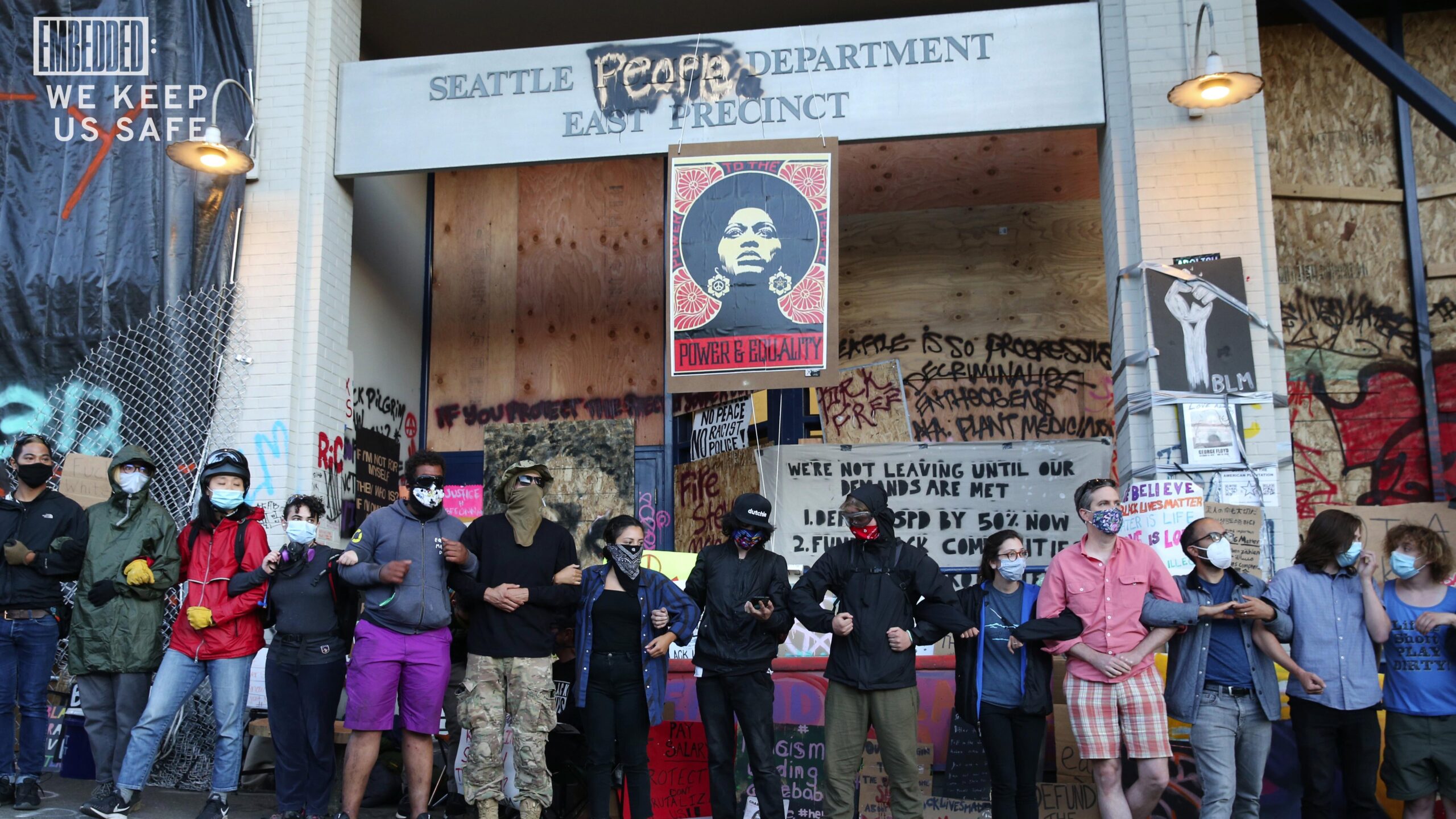
MARTÍNEZ: Before you go, don’t forget to listen to UP FIRST Sunday Story. In 2020, an anti-police violence protest in Seattle ended in a teenage boy’s death. And as the questions mounted, protesters closed ranks.
(SOUNDBITE OF ARCHIVED NPR CONTENT)
ASHLEY DORELUS: It’s, like, what’s the No. 1 rule of Fight Club?
DAVID GUTMAN: Don’t talk about Fight Club.
DORELUS: Exactly.
MARTÍNEZ: On The Sunday Story, the unsolved killing of a young man and how the protesters’ circle of silence continues to hide the truth. Listen now to The Sunday Story from UP FIRST on the NPR app.
(SOUNDBITE OF MUSIC)
MARTÍNEZ: And that’s UP FIRST for Monday, June 15. I’m A Martínez.
INSKEEP: And I’m Steve Inskeep. Today’s UP FIRST was edited by Tina Kraja, Kelsey Snell, Miguel Macias, Mohamad Elbardicy and Taylor Haney. It was produced by Ziad Buchh and Ben Abrams. Our director is Christopher Thomas. We get engineering support from Zo van Ginhoven, and our technical director is Carleigh Strange. Join us again tomorrow.
(SOUNDBITE OF MUSIC)