Blog

  • Israel Reacts To Iran Deal, Trump Meets World Leaders At G7, Georgia Primary Preview

    Transcript:

    (SOUNDBITE OF MUSIC)

    LEILA FADEL, HOST:

    The U.S. and Iran have a deal to end the war, but Israel is not happy.

    A MARTÍNEZ, HOST:

    Israel’s prime minister rejects Iran’s demands for Israel to withdraw from Lebanese land.

    FADEL: I’m Leila Fadel. That’s A Martínez, and this is UP FIRST from NPR News.

    (SOUNDBITE OF MUSIC)

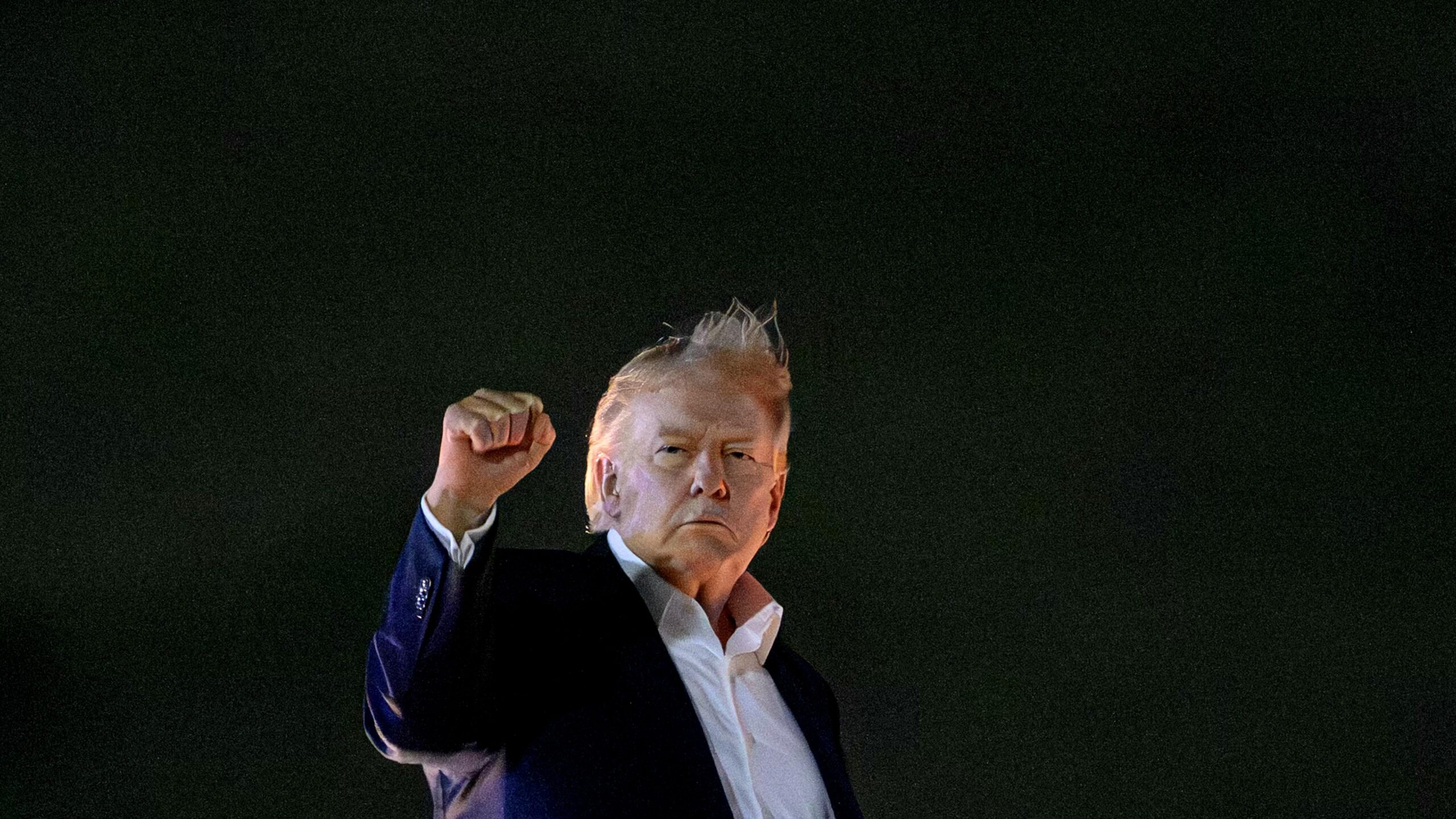
    FADEL: President Trump is meeting with world leaders in France today. They’re expected to discuss the deal with Iran. But European leaders are eager to talk about Ukraine. What else is on the agenda?

    MARTÍNEZ: And voters in several states are heading to the polls today, including high-stakes runoffs in Georgia, a swing state, where President Trump’s endorsement is facing another test. He’s backing a different candidate in the state’s Senate race than Georgia’s Republican governor. Stay with us. We’ve got the news you need to start your day.

    (SOUNDBITE OF MUSIC)

    MARTÍNEZ: The U.S. and Iran will sign an agreement to negotiate an end to the war this Friday in Switzerland. What those negotiations will look like are still not clear.

    FADEL: But what is known is that Israel, which began the war with the U.S., will not be a party at those talks. Israel’s prime minister has been sidelined in the agreement and could be a spoiler in negotiations to end the war.

    MARTÍNEZ: For more, we go to NPR’s Carrie Kahn in Tel Aviv. So, Carrie, what’s in the agreement that Israel does not like?

    CARRIE KAHN, BYLINE: It’s not so much what is in the agreement, but what is not. We don’t have a lot of the details yet, as you said. But first and foremost, for Israel, there is no stated plan to deal with Iran’s nuclear capabilities. Prime Minister Benjamin Netanyahu says that’s why Israel started the war with Iran in the first place – to prevent what he said was this imminent nuclear threat, right? But the agreement being signed is just a commitment to negotiate, and that’s concerning to Israel. Also unclear what will happen to Iran’s proxies fighting with Israel, Hezbollah in Lebanon and Hamas in Gaza, and Israel rejects Tehran’s demands for Israel’s withdrawal from all Lebanese territory, which Israel has significantly attacked and occupied during this war. And that’s something Netanyahu says will not happen, and that could be a major sticking point in getting this pact even signed.

    MARTÍNEZ: And what is Netanyahu saying publicly about that and not being part of the negotiations to end the war?

    KAHN: He is not happy, and he’s getting a lot of heat here at home for it. He held a press conference last night and immediately addressed the criticism that his goals were not met, especially Iran’s nuclear question, which he calls his life’s mission – not to allow Iran to get a nuclear weapon. He says that will remain his priority. He was asked, of course, about his relationship with Trump. Recently, Trump has publicly called Netanyahu crazy, difficult, ungrateful. Netanyahu clearly didn’t want to address any rift. He just said, look, Trump doesn’t do everything I say, nor do I do everything Trump asks.

    (SOUNDBITE OF ARCHIVED RECORDING)

    PRIME MINISTER BENJAMIN NETANYAHU: (Non-English language spoken).

    KAHN: “We are partners, and often we agree, and sometimes we disagree.” That happens in the best of families was all he would say.

    MARTÍNEZ: All right. So what are Israelis saying about the deal?

    KAHN: There seems to be widespread dissatisfaction with the deal from the streets to the political corridors. Here’s Ori Ben Ami. He’s a communication and relationship coach that we talked to in Tel Aviv. He called the deal shameful, as it leaves Israel out of the picture and Hezbollah still active in Lebanon and Hamas still in Gaza.

    ORI BEN AMI: I think it’s a loss for us. We did a lot of effort. We’ve been through a hell of a time here in Israel it seems like not for a lot of benefit.

    KAHN: Political opponents and Netanyahu’s allies are hammering him over it. Remember; elections are coming this fall. The far right, even those in Netanyahu’s governing coalition, are calling it dangerous. And just remember, a few months back, Netanyahu saw a very different political landscape here for himself. He and the U.S. together would bring down Iran, and he would sail to another electoral victory. Now, just months before voters go to the polls, he has this very public rift with the U.S. president, and he is left out of negotiating the war’s end.

    MARTÍNEZ: That’s NPR’s Carrie Kahn in Tel Aviv. Carrie, thanks.

    KAHN: You’re welcome.

    (SOUNDBITE OF MUSIC)

    MARTÍNEZ: It’s President Trump’s first full day at the G7 summit.

    FADEL: Qatar and the UAE are not part of that group, but their top officials will be meeting with Trump today, key stakeholders to the deal he just came to with Iran. But as much as the European members of the G7 want the war to end, they are just as focused on getting Russia to negotiate an end to its war in Ukraine.

    MARTÍNEZ: NPR’s White House correspondent Danielle Kurtzleben is here. So, Danielle, what has the president done so far at the conference?

    DANIELLE KURTZLEBEN, BYLINE: Well, yesterday he met with French President Emmanuel Macron, and this morning, he and other G7 leaders met with Ukrainian President Volodymyr Zelenskyy. And while Iran has understandably gotten a lot of attention in the run-up to the summit, leaders at the G7 have been eager to talk Ukraine. Just this week, Russia fired dozens of missiles at Ukraine, killing 11 and sparking a fire on one of Ukraine’s religious landmarks. And that all just came hours after Trump spoke to Russian President Vladimir Putin and Zelenskyy.

    And ahead of the G7 amid all that, EU Commission President Ursula von der Leyen said one goal would be to increase the pressure on Russia in order to get Putin to negotiate. But of course, the topic of Iran will be central at this G7 meeting, as well. Like you said, Trump will meet with leaders from Qatar and the UAE, both of which had targets Iran attacked during this war. And then after all that, there’s a bigger meeting between G7 leaders and Middle Eastern leaders.

    MARTÍNEZ: So what’s the reaction been to the Iran deal there at the G7?

    KURTZLEBEN: Well, Macron praised it in brief remarks yesterday, calling the agreement important in that it deals with the nuclear issue. But of course, we don’t know how that will shake out in further U.S.-Iran talks. It’s also possible that the leaders of G7 countries – that’s a group that includes Canada, the U.K., France, Germany, Italy and Japan – that they’re going to praise Trump this week, even while they’re pretty frustrated with him. I mean, this war did hurt their economies after all. And additionally, we did see Trump get upset when some European countries didn’t help out with the war to his liking, such as allowing the U.S. to use their airspace.

    But zooming out, as our colleague Franco Ordoñez has reported, Trump’s repeated antagonism toward European nations – whether it’s regarding NATO or Greenland or tariffs – it’s pushed those countries together, making them more willing to just kind of band together and push back against the U.S., like with Iran, for example. And Macron has been one of the louder European voices calling for those nations to be a little more independent from the U.S.

    MARTÍNEZ: All right. So what’s left on President Trump’s G7 agenda?

    KURTZLEBEN: Well, in addition to those meetings he still has planned, there are other big topics the White House says it wants to talk about, like AI regulation, the Ebola outbreak in Africa and critical minerals. Beyond that, Trump has a private dinner with Macron before he leaves at the Palace of Versailles, no less, which seems like it’ll be the kind of spectacle Trump really enjoys. But altogether, he just seems to have come into this summit feeling like he has a better hand because of the Iran breakthrough. But there are still a lot of challenges to discuss. Not to mention, he’s just not been on the best of terms with a handful of leaders here.

    As for news, one more thing – there is the possibility of more news from Trump at the end of this trip because often at this type of summit, the president does take questions right before he leaves.

    MARTÍNEZ: All right. That’s NPR’s Danielle Kurtzleben. Thanks a lot.

    KURTZLEBEN: Thank you.

    (SOUNDBITE OF MUSIC)

    MARTÍNEZ: Another Tuesday brings another set of primary elections that tell us how American voters are feeling about the state of politics.

    FADEL: Yeah. That includes a set of runoffs in Georgia, which got some major endorsements over the weekend.

    MARTÍNEZ: NPR political reporter Stephen Fowler is covering this from Atlanta. All right, so there are Georgia runoffs for the Republican nominations for governor and U.S. Senate. What do we need to know there?

    STEPHEN FOWLER, BYLINE: Let’s start with the Senate. Jon Ossoff is, on paper, the most vulnerable incumbent on the ballot for Democrats, and whoever wins this Republican primary will set up a high-profile, big-money matchup in November. So in the wee hours of the morning Sunday, after early voting already finished, President Trump made a lengthy endorsement for his pick to try and beat Ossoff, Congressman Mike Collins. Trump dinged Collins’ opponent, former football coach Derek Dooley, for not living in Georgia, for not voting in 2016 and 2020 and for saying that Trump lost Georgia in 2020, which he did. Dooley has the financial and political support of outgoing Governor Brian Kemp, whose argument, among other things, is that Dooley is the more electable candidate in a purple state like Georgia in a year that will likely be harder for Republicans at the ballot box.

    MARTÍNEZ: Yeah. Kemp also rejected Trump’s falsehoods around the 2020 election. The two have not had the best relationship since then. Was that a factor in the endorsement?

    FOWLER: Republican strategists and voters alike that I’ve talked with in the last little bit say that that certainly didn’t help Dooley’s chances. And the Collins endorsement is not inherently a surprise if you’re paying attention. Mike Collins has been one of the more prototypical Trump-era congressmen. He’s very brash online and with his campaign messaging, especially when it comes to emphasizing Trump’s policies around immigration. What was surprising is Governor Brian Kemp’s endorsement Sunday in the race to replace him of current Lieutenant Governor Burt Jones, who also has Trump’s backing.

    MARTÍNEZ: Why was that surprising?

    FOWLER: Well, in that conversation about electability in a divided state like Georgia, Jones is the more hard-right candidate, and he’s less appealing to middle-of-the-road voters than this billionaire healthcare executive outsider, Rick Jackson, who’s also in the runoff. Burt Jones was heavily involved in efforts to overturn the 2020 election in Georgia, and he’s the leader of the state Senate, where he helped shepherd through some of the more controversial legislation in recent years in Georgia around everything from abortion restrictions to voting law changes. So Kemp’s argument that Trump’s candidate isn’t right for the Senate but is right to be the next governor highlights this big divide in the Republican Party that we’re seeing right now.

    MARTÍNEZ: All right. There are other primary contests this midterm season, and you’ve been keeping track of some of them. What else is worth keeping tabs on?

    FOWLER: Well, in Oklahoma, there is a series of musical chairs that left seats open after former Senator Markwayne Mullin was appointed the Homeland Security secretary. Mullin’s current replacement isn’t running for a full term, so you’ve got a House representative, among others, seeking a promotion, then others looking to earn the nod for that House seat.

    In Alabama, you’ve got some runoffs, including both parties’ nominee for U.S. Senate and another case where President Trump has his pick facing somebody else in a runoff. Then there’s D.C., where a highly consequential mayoral primary and the race to be the district’s nonvoting member of Congress are on the ballot, plus, A, a rollout of a new ranked choice voting system for all you election nerds out there like me.

    MARTÍNEZ: That’s NPR’s nerdy Stephen Fowler. Stephen, thanks.

    FOWLER: Thank you.

    (SOUNDBITE OF MUSIC)

    MARTÍNEZ: And that’s UP FIRST for Tuesday, June 16. I’m A Martínez.

    FADEL: And I’m Leila Fadel. Today’s episode of UP FIRST was edited by Tina Kraja, Rebekah Metzler, Ben Swasey, Mohamad ElBardicy and Taylor Haney. It was produced by Ziad Buchh and Ben Abrams. Our director is Christopher Thomas. We get engineering support from Neisha Heinis. Our technical director is Carleigh Strange, and our supervising senior producer is Vince Pearson. Join us again tomorrow.

    (SOUNDBITE OF MUSIC)

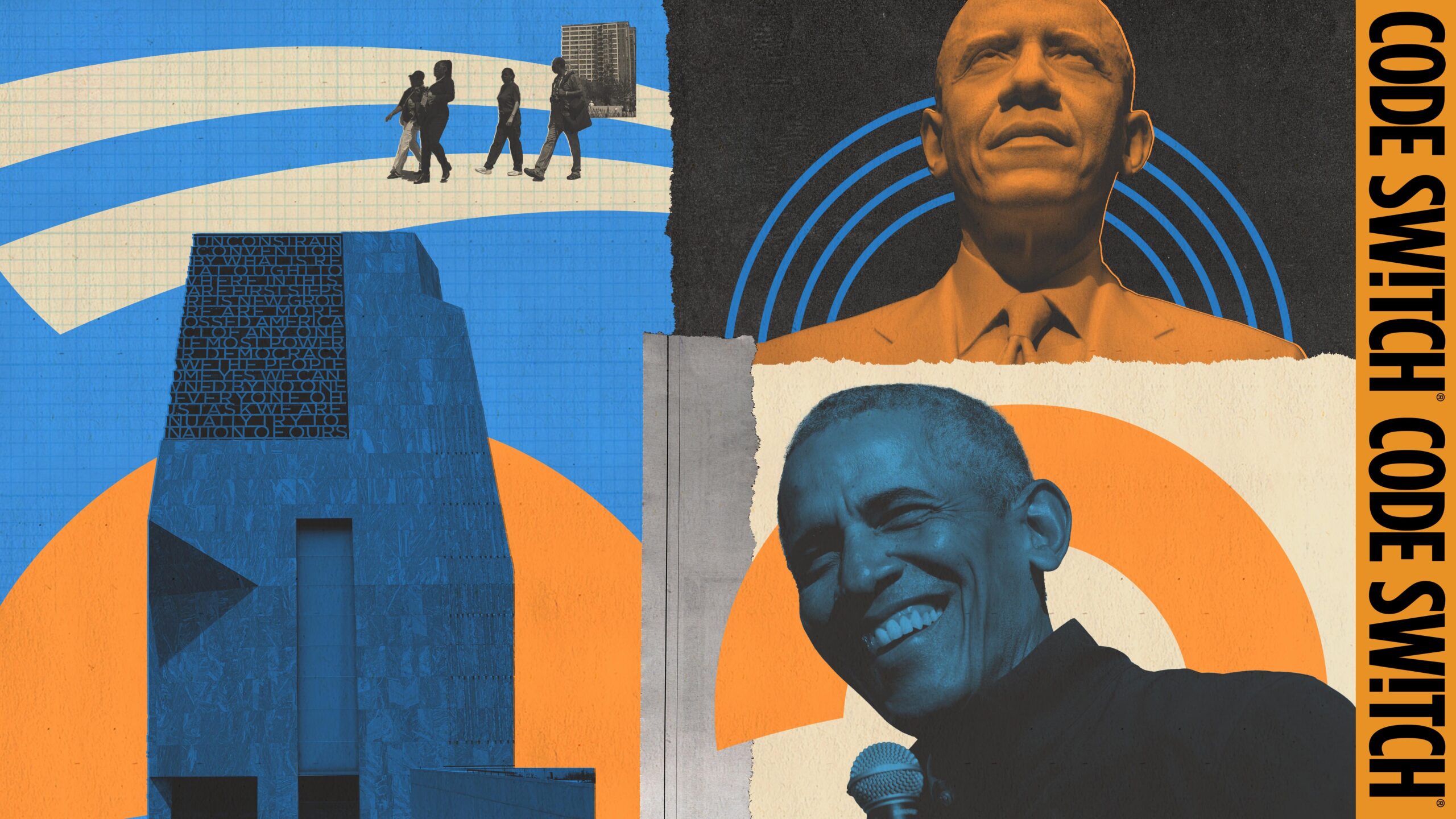
  • Obama’s new Presidential Center and his tricky relationship with the South Side

    Obama’s new Presidential Center and his tricky relationship with the South Side

    Transcript:

    (SOUNDBITE OF MUSIC)

    GENE DEMBY, HOST:

    What’s good, y’all? You’re listening to CODE SWITCH, the show about race and identity from NPR. I’m Gene Demby.

    B A PARKER, HOST:

    And I’m B.A. Parker.

    DEMBY: OK. So there’s this school on the South Side of Chicago called Hyde Park Academy. It’s really big, and it has a lot of the challenges that really big inner-city schools with lots of poor kids have – you know, old building, not a lot of resources.

    PARKER: We’ve heard that story before, yeah.

    DEMBY: Just last month, some students there walked out of class to protest because three students died over the course of just one month. That’s horrible. But the students who walked out said that the school had cut the community groups offering support services. But right across the street – Stony Island Avenue – from Hyde Park Academy is the sprawling, ambitiously designed campus of the Obama Presidential Center.

    PARKER: Not the presidential library, even though that’s still what some folks call it.

    DEMBY: Right, right, right. But there is actually a Chicago public library branch on the center campus grounds. But anyway, it has a big basketball court. There are grills for everybody to use. There’s a state-of-the-art playground and a museum. Parker, there’s a sledding hill.

    PARKER: A sledding hill?

    DEMBY: Yeah, ’cause, you know, Chicago is famously flat. And so Michelle Obama, you know, who grew up nearby on the South Side, had them build one because she never got to sled as a kid.

    PARKER: Oh.

    DEMBY: The Obama Center reportedly cost around $850 million to build, and the Obama Foundation touts the fact that it was almost all private money that was raised to pay for this thing. But you know how it goes. The city, of course, had to come up off some money for costs related to its construction in a public park there. So the Obama Center is set to officially open to the public on Juneteenth. But from almost the moment around 10 years ago – they announced it back in 2017 – that this pretty spot sitting on Lake Michigan would be the spot for the Obama Center, there has been pushback – like, a lot of it – and from a lot of different directions.

    PARKER: Yeah. I’ve heard about some of that. There were people concerned that this big, shiny new campus to commemorate the Obama presidency would speed up the gentrification already happening on the South Side – people having to move because the cost to rent in the neighborhood was going to go up even higher.

    DEMBY: Right, right, right. And other folks were concerned that letting the Obama Center build on this public park in the city, that would mean opening up parkland to other private builders.

    PARKER: But also, like, don’t the folks on the South Side deserve nice things, too?

    DEMBY: And that’s a really big sentiment, too, Parker. People have a lot of feelings about their new neighbor, like this 2019 Hyde Park graduate who requested we not use her name because she currently works for the city and is not authorized to speak to the media.

    UNIDENTIFIED PERSON: And I was saying the Obama Center isn’t a bad thing. It is truly a really good thing if it is used right, if it is prioritized for the people who live in that community. The studio, the little park – I can see myself walking my dog in the little garden next to little Nancy (ph) and Karen (ph).

    DEMBY: But she did share that the neighborhood around the Obama Center has become too pricey for her and her family, and she wondered how all this would affect her old school.

    UNIDENTIFIED PERSON: People like – students like me wouldn’t be able to attend there. That’s the end goal. They don’t want to continue to cater to Black students, if that’s the way they want to move.

    DEMBY: But, you know, public space is always contested, not unlike a presidential legacy.

    PARKER: True. And the architecture of this place – I mean, what’s a diplomatic way to say it looks excessive?

    DEMBY: (Laughter) Right. Right. It looks like a giant – they call it the Obamalisk pejoratively.

    PARKER: Oh, boy.

    DEMBY: But a lot of the architectural reviews of this center are about the very different vibe you get from looking at this place, depending on where you’re standing. Like, either it looks like a beacon in the sunlight or this big foreboding monolith.

    PARKER: I mean, it probably looks different if you’re a tourist walking the grounds than it would if you’re one of the kids of that high school across the street.

    DEMBY: And it’s, like, transforming this intensely segregated neighborhood. And so that’s what we’re going to answer today, Parker, because we’re talking to two South Siders who have been looking into the Obama Center, and we’re going to dig into the complicated local legacy of the man and the myth that this sprawling project commemorates and celebrates. And we’re going to try to think back to those heady, hopeful days not all that long ago when the South Side’s dreams and the country’s dreams were all wrapped up in each other.

    PARKER: Take it away, Gene.

    (SOUNDBITE OF MUSIC)

    DEMBY: So I wanted to pick the brains of some of our CODE SWITCH play cousins who live on the South Side. These are folks who have been covering the Obama Center and, you know, all the drama around it from different angles in their day jobs since the notion of putting the center on the South Side was just a baby idea.

    NATALIE MOORE: I am Natalie Moore, a Chicago native, longtime reporter and editor in Chicago. And I teach journalism at Northwestern University.

    MAIRA KHWAJA: And I’m Maira Khwaja. I’m a writer and an educator and a multimedia producer. I’ve been at the Invisible Institute for the past 10 years. It’s a journalism production company on the South Side of Chicago. We mostly investigate police misconduct, but for many years, we also had a youth program at Hyde Park Academy, which is across the street from the Obama Center. And I interviewed kids about their feelings about the development for many years.

    DEMBY: Both of you are Chicagoans. But the South Side was for decades – it was, like, the largest Black neighborhood in the United States.

    MOORE: It is the capital of Black America.

    (LAUGHTER)

    DEMBY: Atlantans – feel like a bunch of Atlantans will get mad at that. But, like, you know, the estuary into which all the rivers of the Great Migration flowed. It’s part of the reason Barack Obama was drawn to it – right? – when he was, like, working through his big questions of identity. It’s where he met Michelle, obviously.

    MOORE: You know, I did stories back then, you know, about why the first Black president came from the South Side of Chicago because I am serious when I say Chicago is the capital of Black America. You look at – you know, Black History Month founded here, Black studies, you know, all the – you know, the different ways that things have converged here in the heartland.

    DEMBY: Like, can you talk about, if you lived in the South Side during his presidency – like, I read about and heard about how there was, like, you know, a Secret Service detail in the block – right? – that he and Michelle used to live on. Was there other ways in which his sort of, like, presidency was, like, physically felt in the space of the South Side of Chicago when he was in the White House?

    MOORE: Well, I used to live on Greenwood, the same street…

    DEMBY: OK.

    MOORE: …As the Obamas.

    DEMBY: Neighbors.

    MOORE: Two blocks away. We moved there.

    DEMBY: Did you borrow sugar from them?

    MOORE: No. They were in the White House by the time…

    DEMBY: OK (laughter).

    MOORE: …We moved there.

    KHWAJA: Also, same.

    DEMBY: Oh, word?

    MOORE: You were on Greenwood, too?

    KHWAJA: I was on 53rd and Greenwood, yeah. They were on 50th.

    MOORE: I was on 52nd and Greenwood.

    DEMBY: Oh. So neighbors, yeah.

    KHWAJA: Neighbors, yeah.

    DEMBY: You can borrow sugar from each other if not from the Obamas.

    KHWAJA: (Laughter).

    MOORE: So, you know, when the Obamas were in town – I mean, I remember one time, I had a flat tire. I’m trying to come home. And the police are like, you can’t come down this block because I wasn’t on the list. I’m like, but do you see I have this flat tire.

    DEMBY: (Laughter).

    MOORE: And I had to drive all the way around to try to get home. You know, it was an inconvenience. But it wasn’t – like, they weren’t there a lot.

    KHWAJA: Yeah. And when they were, you could just go to Valois, which is his favorite diner, and sometimes meet him, which was a fun way to meet him.

    DEMBY: Oh, whoa.

    KHWAJA: So I don’t know. It was kind of cool, like, to get to meet him that way.

    DEMBY: You’ve met your neighbor Obama at some point?

    KHWAJA: Yeah.

    DEMBY: Both of you, like, bumped into him at the diner?

    KHWAJA: A couple times.

    DEMBY: Oh, wow.

    KHWAJA: A couple times.

    MOORE: I’ve met him in the capacity as being a journalist, not as a neighbor (laughter).

    DEMBY: (Laughter) Not just neighbor, yeah

    MOORE: Yeah. And there was a certain ownership that people felt. They saw him. They knew him. This wasn’t something that was abstract.

    KHWAJA: Yeah. And, like, globally, too. Whenever you travel, and if you say that you’re from Chicago, any taxi driver or whatever would be like, Obama.

    DEMBY: Obama, right.

    KHWAJA: You’d be like, yeah.

    DEMBY: (Laughter).

    KHWAJA: That is my neighbor. Like, it was exciting in that way. And the merch game was unmatched.

    MOORE: It’s still Oprah, Michael, Obama.

    (LAUGHTER)

    DEMBY: What do you remember about how people talked about the Obama presidency in the city back when he was in the White House? Like, what was the vibe?

    MOORE: I would say mostly excitement. You know, there’s 2008. And then there’s 2016. But, you know, I was a reporter the whole time of his presidency, and yeah, I just – I think it was exciting. And then, you know, you have folks, Black folks – not just Black folks – who, you know, just really don’t believe in the imperialist nature of a presidency. So, you know, I heard some of that. You know, sometimes things were a little unfair, you know, questioning his motives or, you know, who he is. And then there are, you know, other critiques that are rooted in policy and understanding that the empire knows no color.

    DEMBY: But, Maira, you were pretty young during the Obama presidency. Now you work with younger people who probably don’t remember a pre-Obama America, right? So, like…

    KHWAJA: No.

    DEMBY: …How do the people in the neighborhood you work with talk about or think about his legacy to you?

    KHWAJA: There’s honestly something kind of amazing about the fact that having a Black president was not, like, considered remarkable to them. Like, when I would talk to students a lot about – high school students about voting or, like, take them to vote once they turned 18…

    DEMBY: Oh, you would take them to vote?

    KHWAJA: Yeah. That was, like, part of what I did. And then if they didn’t want to vote, I would, like, interview them about why just to, like, understand their, like, interest in civics or disinterest. And I think there was overall not an interest in voting, in part because the students I worked with, their interaction with the government in general was through the lens of just being policed every day, and having police in their school, police around their school, cop cars waiting outside of Hyde Park Academy every day expecting a fight.

    And so, to them, it’s like, participating in voting or anything was, like, just the same thing as interacting with the police. And so Obama kind of fell into that, too. He visited Hyde Park Academy a few times. That was cool. Like, it’s cool. He’s very nice, right? Like, he’s a celebrity. But there wasn’t this feeling of, like, oh, me, too – I could be like that.

    DEMBY: For sure. I mean, for those of us who are not from the Chi, who don’t have a sense of the geography there, like, how would you describe the specific area that the Obama center is located?

    MOORE: For people who aren’t from Chicago, the South Side is like this blank, amorphous term. But it’s the largest geographic part of the city. So it is in Jackson Park, which, you know, it’s near the Woodlawn neighborhood, which is a Black neighborhood. My mother grew up in west Woodlawn. This is where Lorraine Hansberry’s father bought a house that was the inspiration for “A Raisin In The Sun.” But I would say, the park is more of a South Side park rather than just a Woodlawn park. Woodlawn is just south of the University of Chicago, so there have always been housing tensions that are there.

    DEMBY: Housing tensions because the University of Chicago is a well-resourced school. And so much of the South Side of Chicago, where it is, is, like, working-class, middle-class Black families. And all the sort of friction and drag that comes on…

    MOORE: Correct.

    DEMBY: …Housing for Black folks.

    KHWAJA: Yeah. One thing I’d love to mention about the geography of where the Obama center sits is that it kind of straddles this extremely wealthy part of Hyde Park. And then you cross this park, and then you’re at Hyde Park Academy, which, like Natalie said, is actually in Woodlawn. And so, quickly, you shift from, like, wealthy Hyde Park into a much lower-income area. There’s affordable housing right around there that has been kind of under threat. And a lot of tenant unions have been organizing around it.

    The other thing I’d say, too, to these observations about how Jackson Park has been used and cherished over the years is I remember when the Obama center was deciding on where they were going to build. And one of the advocates for building it in Jackson Park was the president’s adviser, David Axelrod. And I remember he famously said that nobody uses Jackson Park and that this would bring people to Jackson Park. And that, like – I continue to feel and hear that in my head every time I’m in Jackson Park, biking through for the cherry blossoms, going to the house music picnic.

    MOORE: Yeah. But there’s some invisible lines within the park on who was going where. Like, I never go to the cherry blossoms because I always forget.

    KHWAJA: Right, right, right. They’re also there for, like, three days (laughter).

    MOORE: Yeah. I’m not opposed to them.

    (LAUGHTER)

    MOORE: So I always miss the window. But have I taken my daughter on the swings? Yes.

    KHWAJA: Right.

    MOORE: Do I go to the beach? Yes.

    KHWAJA: Yeah. People love Jackson Park and have been using it for a long time. And it’s just an important thing to think about when you think of what this impact will be.

    DEMBY: When he says nobody, he’s like – he means certain nobodies, right? Like…

    KHWAJA: Yeah, exactly. He means, like, tourists (laughter).

    DEMBY: So, Natalie, you’ve been down to the new center. You’ve seen the Obamalisk, as his detractors have called it. You’ve seen the new center. What do you think of it?

    MOORE: So I’ve been covering this story since before the site was even picked.

    DEMBY: So you have, like, a longitudinal view on, like, this – yeah.

    MOORE: Yes. I would say the campus itself is beautiful. There’s a lot of open space and winding walking paths. There’s a beautiful public library branch. There’s gardens. There’s a lagoon, and then there’s, like, Michigan on the other side. So you can walk from one space to the other. You know, the – some of the architecture critics here were skeptical of the building because nothing is that tall. But now that it’s done, there’s a sense of, OK, I see how all of this works.

    I guess I’ll finally say, having a building like this so big in a community or swath of a community that’s not used to it, you know, is a little – it’s jarring. But people also point out, like, there’s this wonderful Picasso statue in Daley Plaza that was – when it was built decades ago, people hated it. They’re like, this is ugly. Why is this here? We need to replace it, and now it is beloved. So I do think over time, we might see some different opinions on how this space looks. But I would say, from a campus perspective, it’s beautiful.

    KHWAJA: The playground is – looks really cool.

    MOORE: Oh, yeah, the playground.

    KHWAJA: And, like, my biggest fear about the architecture or, like, frustration, rather, is the playground that the Hyde Park Academy students would play on was across the street, and they built home court over that. And I know that that campus will be heavily policed, and I’m like, well, where’s – where are they going to play? And so my hope is that the new playground, which does look dope, like, that’s a space that the kids can come to.

    DEMBY: Have you been, Maira? Have you been down to the Obama Center?

    KHWAJA: I have not been inside of it, no. I’ve, like, looked around the campus, but I have not been inside.

    DEMBY: Gotcha. Yeah, the thing you said now is interesting, is, like, the way that sort of – when things are sort of habituated into the landscape in these ways. Like, you know, I remember thinking about the Vietnam War Memorial was, like, hated when it was first, like, introduced on the Washington Mall, right? And now is, like, this sort of, like, almost, like, the paragon of how you should do something that’s, like, that somber. And so many of the reviews I’ve been reading about the Obama Center have been kind of almost necessarily in conversation with the Trump moment, and it’s like, oh, I wonder how people will think about the way this place looks when we are further removed from this particular moment. Do you have any sense of, like, how the area around the Obama Center will be policed?

    MOORE: So it is supposed to be public.

    DEMBY: But, you know.

    MOORE: What I am interested in seeing is what does that public look like. Outside of the Obama Center, there’s so much policing at the beach. And I know people are thinking, what are you talking about? Yes, Chicago has lots of beaches.

    DEMBY: Yes, it does.

    MOORE: Because Lake Michigan is a sea. It is not a placid lake. You cannot see the other side. So, you know, there’s already a heavy police presence in public parks. So, yes, I will be curious to see what this is like.

    KHWAJA: Yeah. I think this summer, in particular, I’m interested and anxious to see what the policing will be like because in the neighborhood of Hyde Park and the beaches that Natalie is describing, the police presence has dramatically intensified as the weather has gotten warmer. There is a lot of fear around groups of Black teenagers just gathering, and it is pretty stark, the difference in how people are policed in that area. So I’m excited to hear that, you know, we’re all supposed to be able to use the park grounds, and I think that it’ll be really beautiful. And the summer, I think, will be a contentious time. Tends to be a contentious time.

    (SOUNDBITE OF MUSIC)

    DEMBY: When we come back…

    KHWAJA: I do think that even people that love Obama and that love the center have not been able to argue with the facts of, like, the affordability crisis and the displacement.

    DEMBY: Stay with us, y’all.

    (SOUNDBITE OF MUSIC)

    DEMBY: Gene. Just Gene for this part. CODE SWITCH. And we’re talking about the impact of the opening of the Obama Presidential Center on the South Side of Chicago. So I’m talking to some locals, Maira Khwaja, a writer and organizer who’s worked with students at the school, kind of next door to the center, and the journalist Natalie Moore.

    Natalie, you have been following this, obviously, from the moment this center was announced, right? You’ve been following the story for a while. And, you know, from the beginning, there’s been all these concerns around, like, what putting the Obama Center in this location would do to the rest of the neighborhood. There’s been really intense pushback from people in the neighborhood from organizers trying to stop it from being built. Like, could you talk about the universe of concerns that they had in the early stages when this was, like, in the sort of gestational stages of the center being built?

    MOORE: You know, one of the stories that I did early on was there was a lot of concern that this was going to be a land grab for the University of Chicago.

    DEMBY: Yeah. That was one of the things I heard, too. Yeah.

    MOORE: Yeah. And so a project that I did with another reporter was we created a boundary and said, let’s see who the biggest landholder is in East Woodlawn. And it was not the University of Chicago. It was actually the city of Chicago because these were vacant lots, like, houses that were torn down, property that the city inherited. So the city really had more of the power to help shape because of what they owned. So that was the big takeaway.

    DEMBY: Gotcha.

    MOORE: And I remember doing that story. The late Mattie Butler, a housing organizer, did affordable housing, said there is enough room for everybody in this community because there’s so much vacancy that people don’t have to leave. There’s no need for displacement because there’s so much to build on.

    KHWAJA: Totally. And Miss Butler and, like, the tenant unions that she worked with – they really did say throughout their 10-year campaign that – we’re not anti-Obama Center. Like, we just want to be able to stay here to enjoy it. And that’s also what the young people at Hyde Park have said over the past 10 years of interviewing them – was, like, we feel like we’re going to be pushed out or our family’s going to be pushed out. Like, it seems really cool. I hope my younger siblings get to enjoy it.

    DEMBY: Have we seen any of that happen? Like – but have we seen people displaced? Have we seen housing prices go up?

    KHWAJA: So yeah. So the Illinois Answers Project recently put out a story that had some really helpful data. In the past 10 years, the median sale price of a single-family home in Woodlawn has jumped 4.6 times. So…

    DEMBY: Jeez.

    KHWAJA: The real estate speculation has been dramatic. If you’re just browsing on Zillow, you’ll see homes for $1 million in Woodlawn. So, yes, people have been displaced.

    DEMBY: I’m curious about how the Obama Foundation was responding to all these complaints – right? – to all the sort of pushback they were getting from South Siders.

    MOORE: Not much. They’ve stayed on message about, this is development for the community. We want to be on the South Side. This community is important to us. It’s near where Michelle Obama grew up. It’s addressing some of the things that she said that she didn’t see as a kid. And I also think that they were able to punt because, like I said, the city owns so much of the property.

    DEMBY: Like, they could say, it’s not our – it’s like, this is not our question to solve.

    MOORE: Yeah. And I would just say in general, you know, just to broaden this out, like, outside is so expensive. Like, Woodlawn is not the only neighborhood that is suffering from affordability issues.

    DEMBY: Right.

    MOORE: You know, the city hasn’t been able to pass other measures that housing advocates have wanted. Like, rent is really high. You know, there is a citywide housing crisis that is going on, and there are very few neighborhoods that are exempt from that.

    DEMBY: Right. I’m curious about when people are organizing, you know, to – and pushing back on the Obama administration. There’s, like, the singular effective representational power of the Obama presidency – right? – for Black folks in particular. And I imagine part of what the organizers had to deal with was also just people who rock with the Obamas, who were, like, Obama fans. Was that a dynamic that was present on the ground? Like, were people – were there Obama stans, for lack of a better word, who were sort of, like, hey, hey, hey – not too much of our president? You know what I mean?

    KHWAJA: I would say – yeah. I don’t – I wouldn’t say they were organizing. But I do think that even people that love Obama and that love the center have not been able to argue with the facts of, like, the affordability crisis and the displacement. Some people want the displacement also. There’s a lot of hatred of poor working-class people. There – I think there are, like, not just developers, but I do think there are people who are like, yeah, I don’t want that housing to be so close to the Obama Center. I think that’s been a hard legacy in some ways of Chicago’s public housing crisis since demolishing high-rise public housing. I think there’s just a lot of feeling of, like, I don’t want people who are in public housing to be in my neighborhood. Like…

    DEMBY: Yeah.

    KHWAJA: Why are they here now? And that’s something that I have noticed in talking with people. But I would also love to add that I think one thing I did notice in terms of people feeling activated around the housing campaign, whether or not they got deeply involved, I think one of the things that made people more sympathetic to it was in the early days of the campaign. I think this is 2017. President Obama sat in, like, a conference – like, one of those community meetings. And he was directly asked about if the Obama Center would sign on to a CBA, a community benefits agreement.

    DEMBY: What’s a CBA, for those of us who don’t know?

    KHWAJA: Yeah. A community benefits agreement is basically, like, a packaged piece of legislation that provides protections that are negotiated around, like, housing or jobs – some set of agreements with the community. And so sometimes a CBA can be about environmental concerns. That’s been a – that’s a conversation right now in another part of the city. But the Obama CBA was specifically around housing protections.

    (SOUNDBITE OF ARCHIVED RECORDING)

    BARACK OBAMA: Michelle and I, as residents of the community, as people who have worked and lived there for a very long time, feel very confident in our ability to make sure that we have a very inclusive process where everybody has their say.

    KHWAJA: And he basically was like, you guys – broadly speaking, he was like, there’s no community organization that speaks for all the community. We know what’s best. You should trust us. And he just shut it down.

    DEMBY: That’s very fascinating, considering he is a community organizer, famously, right?

    KHWAJA: Yeah.

    DEMBY: Like, he would have been one of the people maybe on the other side of this in a different lifetime.

    (SOUNDBITE OF ARCHIVED RECORDING)

    OBAMA: I’ve been there. You know that? I used to be the organizer…

    (LAUGHTER)

    OBAMA: …Insisting on accountability for the community.

    (APPLAUSE)

    KHWAJA: But it – I remember, for me, it was jarring. It was really jarring to hear him just flat-out refuse to engage with organizers. And I think a lot of people like me were also kind of taken aback by it.

    DEMBY: Natalie, from, like – from the outside, this seems kind of like, you know, your classic gentrification and revitalization story. Like, you got – this person wants to build something. They have deep pockets. They want to build something in a neighborhood, and that building might speed up the rise of housing costs, speed up displacement. But in this case, the deep-pocketed developer person is the first Black president. Is that too simple a framing here?

    MOORE: I would say yes.

    DEMBY: OK.

    MOORE: This may be going on a tangent, so just bear…

    DEMBY: Yeah. For sure.

    MOORE: …With me here. Black South Side neighborhoods, in particular, have been stripped away and also starved from investment. So when things do come to a neighborhood, there are concerns about, who is this for? When I have heard organizers say, this is a wholesale attempt by the Obamas to just push us out – they don’t want us here – I don’t agree with that sentiment. I think that’s going too far. My take has been that there’s a lot of overstating on all sides. There are not white yuppies who are dying to move to Woodlawn to live by the Obama Center. I also don’t think that the Obama Center is going to spur this renaissance of Black-owned businesses on 63rd Street either. And, you know, Gene, you and I have talked about this. Gentrification is a fraught word because it often does not happen…

    DEMBY: …In Black…

    MOORE: In Black…

    DEMBY: …Neighborhoods. Right.

    MOORE: …Neighborhoods.

    DEMBY: Right.

    KHWAJA: Right. Totally.

    MOORE: So what does that look like here, to have a beautiful development but making sure everybody gets to use it? I think that there are some bolder things the foundation could have done, given Barack Obama’s legacy as a community organizer. Michelle Obama grew up in South Shore. They got married at the South Shore Cultural Center. You know, they lived near the community. So I think their intent is not, we’re building this so we can push Black people out. That said, if you do feel left behind in this country or this city and neighborhood, I understand that more protections are needed. I also want to highlight the pushback from a white-led group called Protect Our Parks.

    DEMBY: OK.

    MOORE: Their issue was, we don’t think this should be built on park land. That was just their fundamental feeling.

    DEMBY: I was reading about this.

    MOORE: And this group kept suing. And the courts kept throwing it out. And, you know, there was a final ruling in 2018 that said, this isn’t going to happen. So when I see a white-led group called Protect Our Parks that doesn’t advocate for equity otherwise, that is a very intentional, curious choice to me.

    DEMBY: Got you.

    KHWAJA: I appreciate you bringing that distinction up because I think that that was part of the reason that the housing campaign had to be so strong in its messaging about saying, yes Obama center, no displacement. Because in media, specifically national media, it’s hard to make that distinction of, like, not all these people organizing around issues related to the center are on the same page. And I know that they’ve had to turn down, you know, interviews from outlets that are kind of secretly right-wing because they’re like, wait, what’s the angle on why they’re trying to be critical of the center? It makes it really hard to talk about this, which is why I think even Natalie and I are being, like, so careful with our words, too, because I don’t – I just never wanted to be, like, disrespectful because I know also how much this does mean to so many people.

    MOORE: It just means – to people.

    KHWAJA: It means – I, like, really can’t understate, like, how excited so many people really, deeply are.

    MOORE: How many Black family reunions are going to be coming here every summer.

    KHWAJA: Exactly.

    DEMBY: A thousand percent. Like, it’s going to be a site of pilgrimage for a lot of people who, like, you know – if my mom and I find myself in Chicago, this is going to be on our list.

    KHWAJA: As it should be. And then, also the people that live around there, like, I’m like, I’m sure I’ll take the kids I babysit to go play on that playground. That’s going to be the nicest playground in the area, like, absolutely.

    DEMBY: Absolutely, yeah.

    KHWAJA: So, you know, I’m always like, I don’t want what I’m saying, this ideally nuanced critique, to become fodder for a white supremacist who just hates Obama.

    DEMBY: Well, I mean, to that point, I mean, this Obama center is coming into being on Juneteenth, at a time when, again, the vibe, friends, the vibes are trash.

    KHWAJA: (Laughter).

    DEMBY: They’re absolute trash. Democratic voters are pissed at Trump. They’re just as angry at Democrats in Washington. In the decades since he left office, like, that Obama-era hope is increasingly hard to feel. And, like, the most cutting appraisals of his presidency are coming from the left, like, not just the right. So how does a building dedicated to optimism around democracy and the American project, like, how does that land differently right now for y’all?

    KHWAJA: So I haven’t been inside yet. But I will say that friends of a variety of backgrounds that have gotten a preview of the center all said that they cried and that basically that it felt like the promise of 2015. And so you just feel this stark contrast between, like, how bad the vibes are in 2026 and, like, what so many of us believe to still be possible in 2015. And the contrast sounds devastating. But, yeah, I’m curious. Is that how you felt about it, too, Natalie, that it felt like it was a monument to how we felt in 2015?

    MOORE: Yeah, so the piece that I wrote after the press day was a take about, what does it mean to have a museum talking about democracy when democracy is falling apart? And I think we should – we keep saying Jackson Park. We haven’t said who it’s named after. The park is named after Andrew Jackson.

    DEMBY: I was wondering about that.

    MOORE: A slave-holding president. So there are these interesting juxtapositions that are there. So it’s so hard not to think about Trump’s presidency in this moment.

    (SOUNDBITE OF MUSIC)

    MOORE: The museum opens not with the Obamas but with other struggles, like suffragists, labor movement, you know, Black Panthers. So they are talking about movements that have worked, and have also floundered, before you even get into the Obama story. So I think that the museum is really designed for people just to have some nostalgia and think about that moment of hope, but to leave there and feel like they can do something, no matter how small it is, especially given the moment. Now, they’re not – they don’t ever say the word Trump. And when you ask – don’t even ask them that. Just talk about democracy. But that is their way. And they have to know that people are thinking about this.

    (SOUNDBITE OF MUSIC)

    DEMBY: Natalie Moore, Maira Khwaja, thank you for talking to us. Appreciate you.

    MOORE: Thanks for having us.

    KHWAJA: So good to see you guys, see both of you.

    DEMBY: By the way, we reached out to the Obama Foundation for comment. But we did not hear back from them in time for this episode. And, y’all, that is our show.

    PARKER: And just a reminder that you can follow CODE SWITCH wherever you listen to podcasts, so you never miss an episode. This episode was produced by Jess Kung. It was edited by Courtney Stein. It was engineered by Kwesi Lee.

    DEMBY: And thank you to Maira Khwaja and the Invisible Institute for sharing some of the interviews they did with students from Hyde Park Academy. And we would be remiss if we did not shout out the rest of the CODE SWITCH massive. That’s Christina Cala and Xavier Lopez, and Dalia Mortada and Leah Donnella. And Barton Girdwood, and Maya Dangerfield, and Yolanda Sangweni. As for me, I’m Gene Demby.

    PARKER: And I’m B.A. Parker.

    DEMBY: Be easy, y’all.

    PARKER: Hydrate. Happy Juneteenth, y’all.

    (SOUNDBITE OF MUSIC)
  • What we know about an Iran deal

    What we know about an Iran deal

    Transcript:

    SCOTT DETROW, HOST:

    It’s CONSIDER THIS, where every day we go deep on one big news story. Today, what we know about an Iran deal. After months of war and deadlocked negotiations, President Donald Trump announced Sunday on social media he has struck a deal with Iran.

    (SOUNDBITE OF ARCHIVED RECORDING)

    PRESIDENT DONALD TRUMP: The Iran deal that we made is going to bring a lot of success to the world because the oil was really clogged up there for a while.

    DETROW: That was Trump speaking today in France ahead of the G7 summit. According to Trump and Iranian officials, the deal would open the Strait of Hormuz and end fighting on all fronts, including between Israel and Hezbollah in Lebanon. But Israel, the U.S. partner in this war, is not a party to this agreement, and Israeli officials have said that their forces in Lebanon are not going anywhere. Prime Minister Benjamin Netanyahu has yet to comment on the deal. Trump says a final agreement would limit Iran to enrich uranium for, quote, “nonmilitary purposes forever.”

    (SOUNDBITE OF ARCHIVED RECORDING)

    TRUMP: This is a very powerful document. It’s not like the Obama document, which was just a terrible document. This is a very powerful document, and I want it to be released. So probably pretty soon. I would say after – sometime after Friday.

    DETROW: CONSIDER THIS – Trump says the long-sought deal to end the U.S.-Israel war with Iran is imminent. But without Israel on board, will it actually stick?

    (SOUNDBITE OF MUSIC)

    DETROW: From NPR, I’m Scott Detrow.

    (SOUNDBITE OF MUSIC)

    DETROW: It’s CONSIDER THIS FROM NPR. The U.S. and Iran have reached an agreement that could end more than three months of war in Iran. But a day after the deal was announced, we still do not know what exactly is in it. We have called on two of our correspondents to break down what we know and what we don’t know. NPR’s Danielle Kurtzleben is here in Washington, and Greg Myre is in Tel Aviv. Greg, I’m going to start with you. This memorandum of understanding has not yet been released, but is there anything that we know about that that should be set into motion, and how soon?

    GREG MYRE, BYLINE: Yeah, Scott, there is. If this agreement works as planned, several important things could start happening quickly, anytime over the next couple days. The U.S. and Iran will end the sporadic attacks taking place despite a ceasefire. Iran and the U.S. will lift their dueling blockades of the Strait of Hormuz, reopening it to oil tankers. And Israel and Hezbollah fighting in Lebanon should stop. So these are all significant positive developments, but if you remember, these conditions existed before the war began, so it’s really just a return to the status quo. The hard stuff has been put off for negotiations over the next 60 days, and this includes the fate of Iran’s nuclear program. Again, remember, the U.S. and Iran were negotiating this issue in Switzerland back in February, and as it turns out, that’s where this new agreement is supposed to be formally signed on Friday.

    DETROW: OK. So, Danielle, Greg lays this out like a return to the way things were before the war began. So I’m curious how President Trump is portraying it.

    DANIELLE KURTZLEBEN, BYLINE: Well, he’s sure been making it sound like he’s done something unprecedented. In a social media post, he wrote, quote, “the leaders of the region have, for the first time, found a president who can help them achieve real peace.” But like Greg said, this is, in many ways, a return to the status quo. And let’s also remember more than 3,000 people in Iran have been killed in this war, along with 15 U.S. service members. So in short, Trump is, yeah, overstating this as a victory when it really appears to just be fixing some of the problems he created.

    But he’s also probably celebrating because he needed an off-ramp here. His approval plummeted amid this war, including his approval on the economy, which had been a strong point for him. Gas prices went up. Fertilizer prices went up. Inflation passed 4%, so he wanted out. And now, since this all was announced, yeah, oil prices have fallen and stocks went up, so Trump is likely happy, even if this memorandum isn’t the win he says it is.

    DETROW: OK. Greg, how is Iran responding to all of this?

    MYRE: Yeah, multiple Iranian officials have spoken out in support of this agreement. And the general tone is that this is positive for Iran, though they’re deeply suspicious of the U.S. when it comes to the upcoming negotiations. The Iranians are also offering a somewhat different interpretation on how parts of this agreement will work. Iran wants billions of dollars of its assets that have been frozen abroad. It wants U.S. and international sanctions lifted, and it wants this sooner rather than later. U.S. officials are stressing that this will be performance-based, that Iran will have to deliver on its part of the deal first before it gets money. Also, Iran’s foreign ministry suggested Iran could charge fees for ships going through the Strait of Hormuz, even as it opens up. Well, Trump is saying it will be toll-free.

    DETROW: Danielle, you were talking about the economic implications of this war. It’s been pretty unpopular in the U.S. from the beginning. I’m curious whether you think this deal offers Trump a way to move on, even if there end up being problems with Iran down the road.

    KURTZLEBEN: I mean, it really depends on what those problems are. In general, yeah, this gives him a way to move on in the sense that we’ll see gas and diesel prices drop, but it could be weeks or more until they’re even anywhere near pre-war levels. And then for those prices to trickle through to other goods, that could take some time as well. But let’s be real. Those prices are what many Americans care about. So will this ease Trump’s political problems? Yeah, maybe some. But there are more complicated questions that hover over all of this.

    For example, how long of a memory will Americans have for this time of high prices? And then if Trump doesn’t get what he wants on the nuclear front, does he look weak? Does this hurt his party in the midterms? And you really get the sense that the White House knows that the messaging is important here. Senior administration officials have done multiple calls where they’re really just pushing back against what they call misinformation and emphasizing what they are framing as the big wins, even while we still don’t know details.

    DETROW: OK. So, Greg, you’re talking to us from Tel Aviv, and this agreement actually does call for a second ceasefire, and that’s one between Israel and Hezbollah in Lebanon. Curious – is a truce likely to hold there?

    MYRE: Yeah, Scott, that really is a big question mark. Israeli troops are still all over southern Lebanon. Israel’s prime minister, Benjamin Netanyahu, said Israel will keep them there indefinitely. Now, Hezbollah supports the ceasefire but considers it a prelude to an Israeli withdrawal from Lebanon. So if these Israeli troops remain on Lebanese territory, this will keep the region very tense.

    And one other point we should emphasize – Netanyahu spoke this evening about the Iran war and said, quote, “this victory will endure for generations.” But that really goes the kind of – against the kind of assessment we’re hearing throughout Israeli society today, particularly politicians and political analysts. They’re saying overwhelmingly that this is a very bad deal outcome for Israel. For decades, Netanyahu has been the leading Israeli voice in opposing Iran. He wanted to topple its government and dismantle its nuclear program. He long sought a major military campaign against Iran. It finally happened in the past few months, and now it’s fallen far, far short of his goals.

    DETROW: Danielle, all of this is happening as President Trump’s in France for the G7 summit. Is he likely to find criticism there for launching this war or support for ending it?

    KURTZLEBEN: Well, we already saw a little general praise from French President Emmanuel Macron today. He called the deal important for addressing the nuclear issue, in his words. But of course, we still don’t know how that nuclear issue will shake out. It’s just possible that altogether, the leaders at the G7 are going to praise Trump even while they’re pretty frustrated with him. This war, after all, hurt their economies.

    Now, the U.K. and France have said they’ll take the lead on getting mines out of the strait. That apparently is being discussed this week. But zooming out, as my colleague Franco Ordoñez has reported, Trump’s repeated antagonism towards European countries regarding NATO, Greenland, tariffs, it’s really pushed those countries together and made them somewhat more willing to link arms and just disagree with the U.S. sometimes.

    DETROW: That is NPR’s Danielle Kurtzleben in Washington and Greg Myre in Tel Aviv. Thanks to you both.

    MYRE: Sure thing, Scott.

    (SOUNDBITE OF MUSIC)

    DETROW: This episode was produced by Kai McNamee with audio engineering by Ted Mebane. It was edited by James Hider, Rebekah Metzler, Sarah Handel, Courtney Dorning and Tinbete Ermyas. Our interim executive producer is Courtney Dorning.

    (SOUNDBITE OF MUSIC)

    DETROW: It’s CONSIDER THIS FROM NPR. I’m Scott Detrow.

  • As the U.S. turns 250, this historian has blunt advice: ‘America has to grow up’

    As the U.S. turns 250, this historian has blunt advice: ‘America has to grow up’

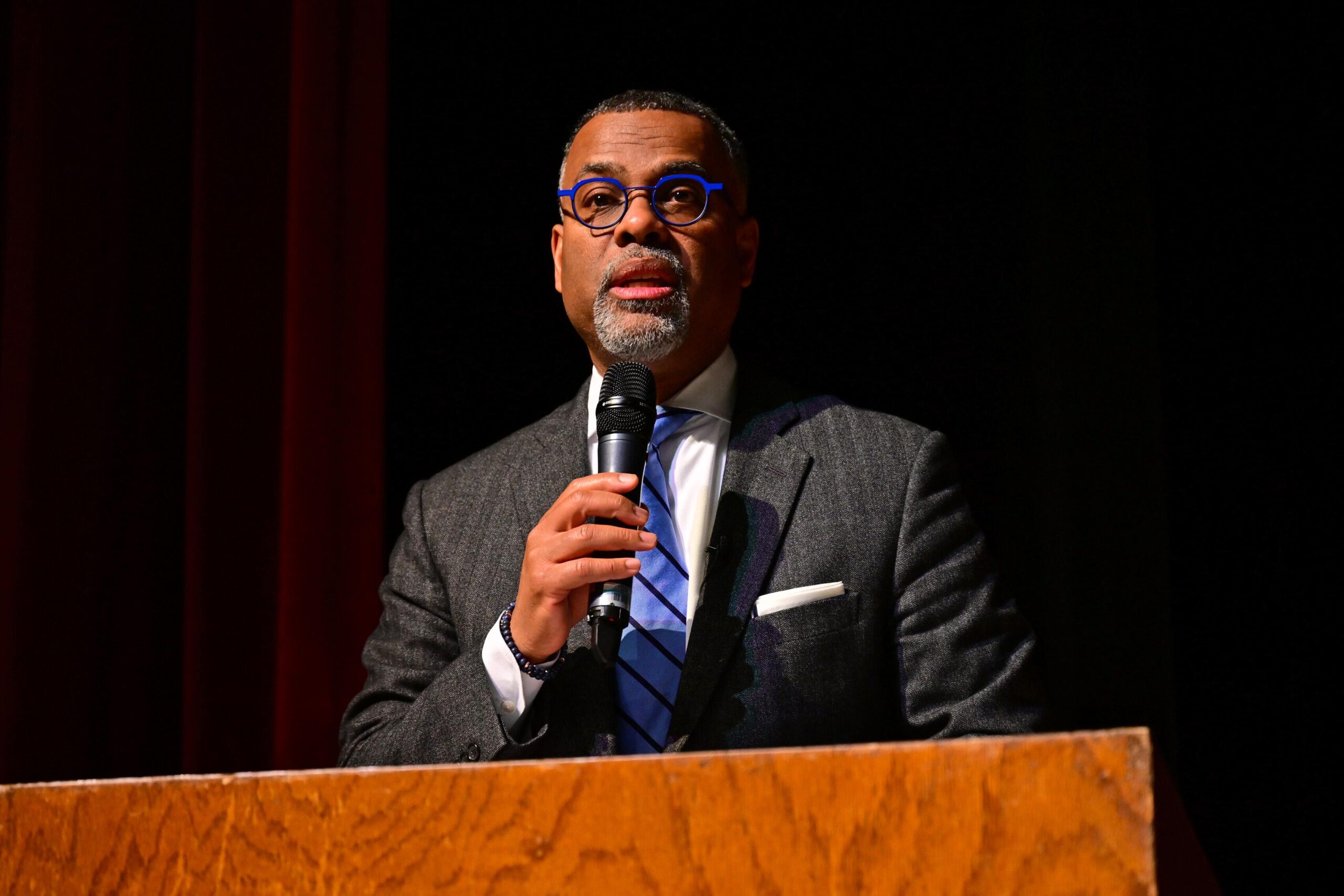
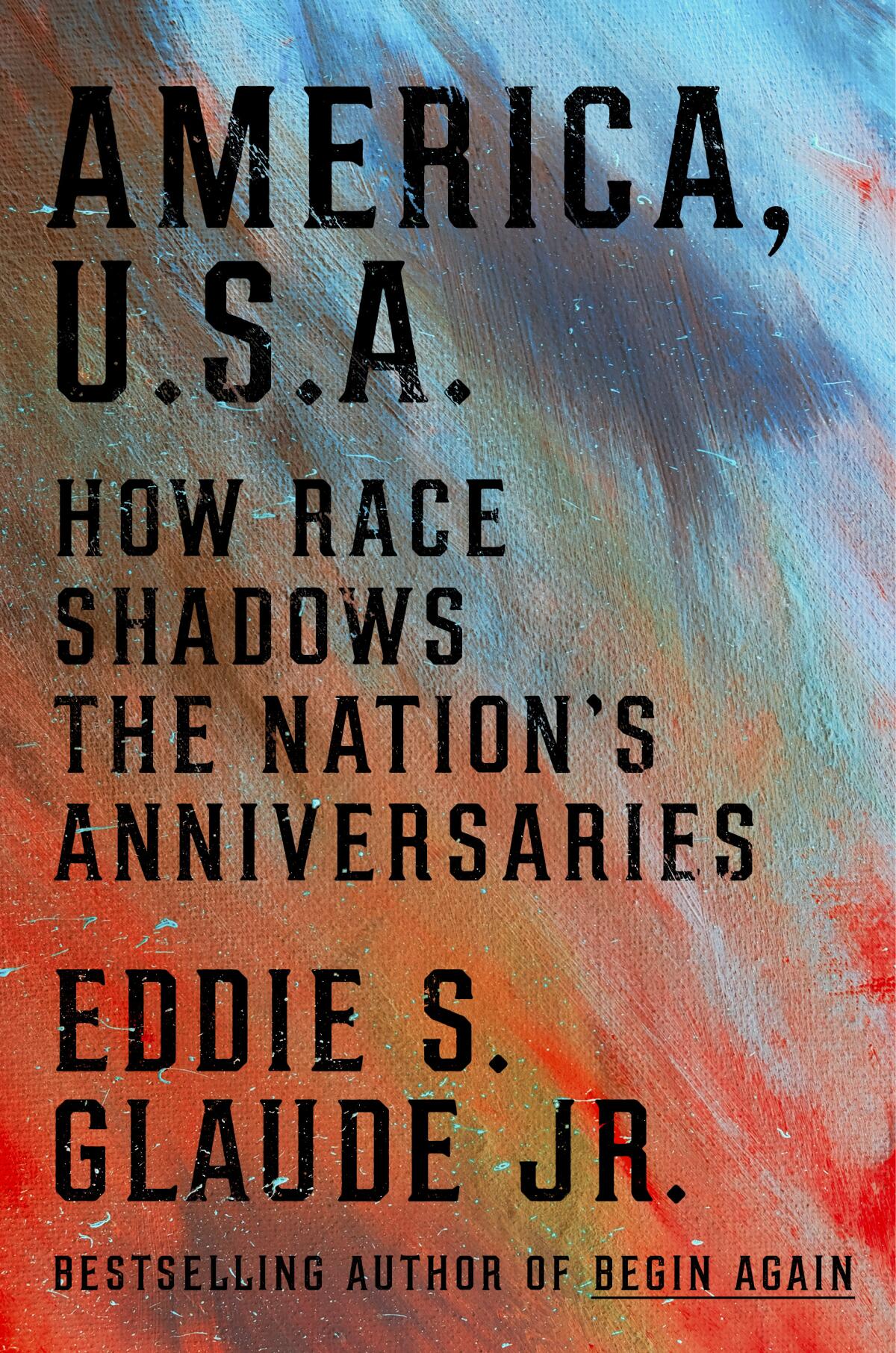
    As the United States prepares to celebrate its 250th anniversary, historian and Princeton professor Eddie Glaude Jr. says he’s feeling rageful. He opens his new book, America, U.S.A.: How Race Shadows the Nation’s Anniversaries, bluntly, with the declaration: “I do not love America, and never have, especially now.”

    Glaude points to the Supreme Court’s dismantling of the Voting Rights Act, and to redistricting efforts that threaten to limit Black representation in Congress.

    “What I was trying to do with this book was kind of write some security underneath my feet. So that I could actually get this rage under control, to get my sadness, my melancholy under control,” Glaude says.

    America, U.S.A. looks at the country through the lens of its previous anniversaries and centennials. Today, as in the past, Glaude says, “the divided soul of the nation is in full view.” As the 250th anniversary approaches, he says it’s past time for the country to acknowledge the ways it has failed to deliver on its founding principles:

    “America has to grow up. It can no longer hide in its adolescence,” he says. “America imagines itself at once as a beacon of freedom and as a white republic. And to hold those two things together … deposits the kind of madness at the heart of the country.”


    Interview highlights

    (Penguin Random House)

    On starting his book with the sentence: “I do not love America”

    I had written some version of the introduction and it didn’t land. I thought I was holding something back. … And so I returned to that first paragraph, and suddenly this sentence just came on the page. And I got up and I started walking around my study and I was afraid of what this would mean if I left it there. And then something inside of my head just simply said, “But this is what you have to say. You have to begin here and then you can explain.” So I left it.

    On the significance of the country’s anniversaries

    Each of these moments, the country has to tell a story about itself. It has to tell a story about its founding. And so here we are in the 250th and look at the kinds of the contours of the story — just don’t look at the UFC arena or the Great American Fair or the garden of statues of heroes. But they’re going to tell a story [about] the saintliness of the founders, a story about the sacredness of this grand experiment.

    On what patriotism means to him

    Sometimes patriotism, to my ear, sounds like a rebel yell.

    Eddie Glaude Jr.

    Sometimes patriotism, to my ear, sounds like a rebel yell. Those people who embrace the flag, who wrap themselves up in the piety of the country, are often, more than not, folk who think I should be in my place, folk who are behind the assault on voting rights, folk who want to deny the specificity of the experiences that shape how I see this place. So usually when I hear a robust, visceral embrace of love of country, you know, my head goes on a swivel. Who sang it, and for what ends and for what purposes?

    On a storybook version of America’s founding he was told during a 2024 tour of Philadelphia’s Congress Hall

    [The guide was] walking us through the House and then the Senate, and he’s telling us these stories and finally talks about the conflict. [He says] that they weren’t divided according to party but, you know, region and whatnot. And [he] said the biggest conflict is that they came from the South and the North. And I was like, OK, here we go. We’re going to start talking about slavery. And then he says they didn’t know how to shake hands. That was the example of the conflict between the congresspersons, that one would bow [and the other would shake]. And I was like, that’s it? And then I just saw ghosts. I saw ghosts all around Congress Hall. But it was an example for me of a startling example of the storybook version of the country.

    Anna Bauman and Susan Nyakundi produced and edited this interview for broadcast. Bridget Bentz and Meghan Sullivan adapted it for the web.

    Transcript:

    TONYA MOSLEY, HOST:

    This is FRESH AIR. I’m Tonya Mosley, and my guest today is Eddie Glaude Jr. He’s a professor at Princeton and a familiar voice on the country’s hardest conversations about race and democracy. He’s the author of “Begin Again,” lessons from the late James Baldwin, and “We Are The Leaders We’ve Been Looking For.” Those books look clearly at this country’s failures but still held onto something hopeful. But his latest book set sentimentality aside. It’s called “America, U.S.A.: How Race Shadows The Nation’s Anniversaries.” In it, Glaude takes us to the country’s big birthdays – 1876, 1926, 1976, and now the 250th – and shows us the same ritual each time.

    The nation throws itself a party and quietly edits out the parts of the story it cannot bear to face. He goes back to 1876, the centennial, with Frederick Douglass watching the promise of emancipation come undone. And he argues that what happened then is happening again now. It’s a book written in grief and rage – and underneath both, a stubborn kind of love of country. We spoke earlier this month in Seattle on stage at the Cascade PBS Ideas Festival, a daylong gathering of journalists and thinkers hosted by Seattle’s public media station. Here’s our conversation.

    (APPLAUSE)

    MOSLEY: I am so honored to be in conversation with you for so many reasons. I’ve had the pleasure of talking with you many times, our first time, though, in person with each other. And I think a great way to start is to actually have you read a passage from the book. Let’s start with the very first page.

    EDDIE GLAUDE JR: Sure. But before I started reading, I want to just say how honored I am to be in conversation with you. To have an opportunity to talk about this book in this moment with you is so meaningful to me. So here it is.

    (Reading) Bitterness at the bottom of the cup. I do not love America and never have, especially now. It seems to me misplaced or dangerous to love something so abstract and so morally dubious. Love is most often felt and experienced close to the ground, in the life lived in a particular place in time and in memories that take up resonance in the heart. I suspect love of country is shorthand for the heartfelt relationships and experiences that make us who we are, things that happen in the place we call home, no matter how complicated that place may be.

    (Reading) James Baldwin was right. Whoever is part of whatever civilization helplessly loves some aspects of it and some of the people in it. And I suppose that is why, in part, we are willing to risk our lives in defense of this place and of what it might become. But in America, those feelings and experiences have always been stained by the ugliness of what white people believe about color, that somehow or in some inscrutable way, the color of one’s skin determines your value. You end up spending much of your life trying to prove to others and to yourself, not because you are obsessed with white people, but because you want to live, that you are not an N-word.

    (Reading) Some Americans may believe that this view is a relic of a past that we have long left behind. After all, they might say, we elected a Black president and vice president. Look how far we’ve come. Stop complaining, I hear them say. You teach at Princeton University. You are not a victim. But I speak from the experience of a life lived in this country, and I trust what I know, what I’ve seen and what now sits in the pit of my stomach.

    (APPLAUSE)

    MOSLEY: When did that sentence – I do not love America – become true to you? When did you consciously realize that that was a truth for you?

    GLAUDE: I had written some version of the introduction. And it didn’t land. But I was holding something back. And so, you know, writing is mostly about revision. And so I returned to that first paragraph, and suddenly this sentence just came on the page. And I got up and I started walking around my study. And I was afraid of what this would mean if I left it there, and then almost as if, you know, something inside of my head just simply said, but this is what you have to say. You have to begin here, and then you can explain it. So I left it there. And I decided, you know, in this time, you have to be courageous and vulnerable and daring. And I…

    MOSLEY: And truthful.

    GLAUDE: Yeah, exactly.

    MOSLEY: One of the things that struck me from the very beginning of this book was that I realized I wasn’t reading from the same man who wrote “Begin Again,” because in “Begin Again, which is a previous book of yours, you use James Baldwin’s work to kind of beat back despair. And in this book in particular, I felt that optimism of a truth teller, of a freedom fighter, it was gone.

    GLAUDE: Yeah. Yeah.

    MOSLEY: Am I right in that feeling? In the same way that Langston Hughes, we felt in his later writings and in James Baldwin.

    GLAUDE: Yeah. So in so many ways, I’m arguing with Jimmy. You know, in “Notes Of A Native Son,” Baldwin says, you know, I love my country more than anything. And because of that love, I reserve the right to criticize it relentlessly, to paraphrase him. I never begin there. I didn’t begin there. Maybe it’s because I’m from Mississippi, you know?

    MOSLEY: Mm hmm.

    GLAUDE: But I’m rageful. There are moments when I’m battling depression because the country has done this again. At the end of “Begin Again,” I said, well, you know, we can – we have to make a choice, right? Will we do this or that? And we have a choice to put this moment behind us, and look what we did. And now people have to raise their children in the midst of this. They’ve gutted the Voting Rights Act. They’re redrawing districts. We’re in the midst of what could very well be described as a Second Redemption, a Second Lost Cause. And, you know, the last sentence of the book speaks that emotion. And so what I was trying to do with this book was kind of write some security underneath my feet – right? – so that I could actually get this rage under control, to get my sadness, my melancholia under control.

    MOSLEY: Why anniversaries as a way to look at this country’s relationship with race? You could have chosen court cases. You could have chosen lots of different ways. What is it about our nation’s anniversaries that allow us to see the problem so clearly?

    GLAUDE: So at each of these moments, the country has to tell a story about itself. It has to tell a story about its founding. And so here we are in the 250th, and look at the kinds of – the contours of the story. Just don’t look at the UFC arena.

    (LAUGHTER)

    GLAUDE: Or the Great American Fair, or the garden of statues of heroes. But they’re going to tell a story. It’s going to be a particular story. We’re the greatest nation in the history of the world. It’s going to be a story about the – you know, the saintliness of the founders, a story about the sacredness of this grand experiment. In each of these anniversaries, the nation has to tell a story about itself about its founding. And in each of these moments, Tonya, the country is struggling and grappling with its contradiction. In each of these moments, the divided soul of the nation is in full view. All right, Du Bois in 1903 wrote “The Souls Of Black Folk.” And in “The Souls Of Black Folk,” he says that Black folks see themselves through the eyes of those who despise them. This is what he called double consciousness.

    But I believe that double consciousness is actually a consequence of the double consciousness of the nation, that America imagines itself at once as a beacon of freedom and as a White republic. And to hold those two things together with – you can’t, really, without contradiction. And it deposits a kind of madness at the heart of the country. And we see it evidenced every single milestone anniversary, 1876, 1926, 1976 and by God, 250 years later, 2026.

    MOSLEY: If you’re just joining us, we’re listening to the conversation I had onstage with Eddie Glaude Jr. at the Cascade PBS Ideas Festival in Seattle. Glaude’s new book is “America, U.S.A.: How Race Shadows The Nation’s Anniversaries.” More of our conversation after a break. This is FRESH AIR.

    (SOUNDBITE OF CUONG VU AND PAT METHENY’S “SEEDS OF DOUBT”)

    MOSLEY: This is FRESH AIR. Let’s get back to my conversation with Eddie Glaude Jr., recorded at the Cascade PBS Ideas Festival in Seattle. Glaude is the James S McDonald, distinguished University professor of African American Studies at Princeton University. His new book is “America, U.S.A.: How Race Shadows The Nation’s Anniversaries.”

    I want to talk with you in particular about two moments, 1926, 1976. But I’m very curious about the title, “America,” comma, “U.S.A.” Why both of those in the title?

    GLAUDE: Yeah. You know, usually it’s not a comma. It’s a hyphen.

    MOSLEY: Yes.

    GLAUDE: The Italian American, the Irish American, you know, the Black American, African American. The hyphen gives us a sense of the kind of the idea of America best represented by Ellis Island, yes? We need to remind the Trump administration about Ellis Island, right?

    (LAUGHTER)

    GLAUDE: But the comma signals a break, not connection. And so, “America, U.S.A.” actually reflects the divided soul of the country. And so, part of what I’m doing is signifying on these attempts to tell the story of America and trying to capture in the title, by way of the comma, the divided soul, the double consciousness that haunts this place.

    MOSLEY: And you’re talking about the anniversaries and all of the pomp and circumstance. As I’m reading your book, don’t laugh at this, but that song, “God Bless The USA” – proud to be an American because at least I know I’m free. And as I’m reading the words in your book, for the first time, those words, at least I know I’m free, kept coming back up for me. And I wonder, what’s your relationship to patriotism overall, and to that idea of us holding such reverence and such pride in this myth and this idea of freedom being something that could be bestowed upon us?

    GLAUDE: Yeah. Patriotism. You know, the first sentence, what it’s trying to do is hold off idolatry, the idolatry of the state, right? Something so morally dubious and so abstract, right? And sometimes – and I’ll say this, and I wonder what you think about this, but sometimes patriotism to my ear sounds like a rebel yell.

    MOSLEY: Say more.

    GLAUDE: Those people who embrace the flag, who wrap themselves up in the piety of the country are often more than not folk who think I should be in my place, folk who are behind the assault on voting rights, folk who want to deny the specificity of the experience that shape how I see this place. So usually, when I hear a robust, visceral embrace of love of country, you know, my head goes on a swivel. Who’s saying it and for what ends and for what purposes, you see? We’ve always served as a kind of counter to the myth, to the illusion that this place is a beacon of freedom.

    MOSLEY: Us meaning Black folks?

    GLAUDE: Yes. Yes. John – just think about John Adams. This is an apocryphal story. But John Adams supposedly said to King George, we will not be your Negroes. At the very moment in which he’s giving voice to a notion of freedom, it’s based on an intimate understanding of unfreedom – us. In the early days of July Fourth, if we showed up to the July Fourth celebrations, like the July days of 1834 in New York, we would literally be physically attacked because our bodies represented the contradiction of what was being said.

    We have a counter calendar, what I call a counter, alternative, commemorative calendar around freedom. While the nation is celebrating itself as the embodiment of freedom, we are celebrating January 1. Why? Because January 1, 1808, was the day that they ended the transatlantic slave trade. We’re celebrating in August, West Indian Emancipation Day. Why? Because it’s the end of slavery.

    We celebrate the most important of all of those days in the early 19th century, is July 5. Douglass’ famous July 5, 1852, oration stands in the tradition. Why July 5? It’s the abolition of slavery in the state of New York. Juneteenth stands in that tradition, where we’re giving voice to a notion of freedom over and against a country that embraces the idea of freedom but doesn’t quite live it in practice.

    MOSLEY: I want to spend some real time on two of the anniversaries that sit on top of each other. So 1876 and 1976. So 1876 is where you note that racial justice starts to get treated as philanthropy.

    GLAUDE: Yeah.

    MOSLEY: It’s a gift that white people can extend and also withdraw, rather than something that is owed. Can you talk more about that and why this reframe of understanding this is so important as we read through your book and your ideas?

    GLAUDE: Yeah. Well, I’m trying to figure out this cycle. Why is it that we’re always returning to this? What’s going on? And one of the ways I’ve resolved it is that – or I haven’t resolved the cycle – of the way in which I describe it is, OK, if America imagines itself as a beacon of freedom and as a white republic and if you can’t hold those things without contradiction, how do you finesse it? Well, you finesse it by assuming that white people possess freedom to give and to take away. Oh, let me be clear now, before people get uncomfortable. When I say white people, I’m talking at a certain level of generality. This is my reading of James Baldwin. Baldwin will say, I happen to love – and I say this – I happen to love a lot of people who happen to be white, and then there are white people.

    (LAUGHTER)

    GLAUDE: The point is is that we’re all – we all bear the burden of racialization. We’re all socialized in this way in which these categories matter to how we see ourselves and understand ourselves, right? So those people believe that they possess freedom to give and to take away. And so what we see is antislavery movement, right? Folk are fighting against slavery and they are arguing that this contradicts their commitment to principles of equality and liberty and democracy and the like. And then, once the Civil War amendments are passed, particularly the one that ends slavery – the 13th Amendment – what do we get? This debate about whether or not these folk can bear the burden and responsibility of citizenship. So you see folk who were once – right? – antislavery suddenly become – right? – folk who are arguing against extending citizenship to Black folk.

    So 1876 is this moment. Douglass is – Frederick Douglass is…

    MOSLEY: Frederick Douglass.

    GLAUDE: …Grappling with this. He’s an example of these freedom snatchers – these people who believe that they can give freedom and to take away. He was born in slavery. He – you know, he escaped. He witnessed Lincoln sign the Emancipation Proclamation, the ratification of the 13th, 14th and 15th Amendments, and he lived long enough to see Jim Crow. He called these folk the apostles of forgetfulness, right? And then he would say – and he said in 1875 – I don’t want your alms, I want justice. He’s skeptical of people who want to do something for us as opposed to with us, huh?

    And so 1876 is this extraordinary moment, Tonya, when the country engages, for the first time after the carnage of the Civil War, in a national remembrance of its founding and it engages in this horrific act, at scale, of disremembering.

    Frederick Douglass was actually invited to be on the dais with President Grant. He’s trying to get in. This is in Philadelphia. Not in Philadelphia, Mississippi, but Philadelphia, Pennsylvania.

    (LAUGHTER)

    MOSLEY: Yes.

    GLAUDE: He’s trying to get in. He shows the Philadelphia police officer his ticket, which puts him on the dais. The officer says, there’s no way an N-word should be on the dais with President Grant. He would not allow him in. If it wasn’t for a senator who sees him – Senator Conkling, I believe – who sees him and then escorts him in, Frederick Douglass would not have been able to even enter the exposition. Then they sit him on the stage – the most famous orator in the United States at the time. They sit him on the stage and he cannot say a word. He’s just there, silent. Silent.

    So there’s this disremembering that’s happening as the country barrels towards the end of the 19th century with the violence of these coups that are taking place – political coups that are taking place in Mississippi and Alabama and Georgia in the – against the backdrop of the horror that will leave over 53,000 Black people dead by the end of the 19th century. The country tells itself a story about the grandness of the American project. My, my, my.

    MOSLEY: My guest is Princeton professor Eddie Glaude Jr. To accompany his new book, Glaude worked with classical composer Joel Thompson to create music to capture what Glaude sees as the spirit of the nation. Here’s pianist Leah Claiborne performing the piece called “And Blue.”

    (SOUNDBITE OF JOEL THOMPSON’S “AND BLUE”)

    MOSLEY: That was Leah Claiborne performing “And Blue.” More of our conversation with scholar Eddie Glaude Jr. after a break. I’m Tonya Mosley, and this is FRESH AIR.

    (SOUNDBITE OF JOHN COLTRANE’S “UNTITLED ORIGINAL”)

    MOSLEY: This is FRESH AIR. I’m Tonya Mosley. Let’s get back to my conversation with scholar Eddie Glaude Jr., professor at Princeton University and a familiar voice on the country’s hardest conversations about race and democracy. This latest book, “America, U.S.A.,” takes us through the country’s big birthdays from the centennial in 1876 to now, 2026, as we approach the 250th, revealing how the ritual is the same each time. The nation throws itself a party and quietly edits out the parts of the story it cannot bear to face. It’s a book written in grief and rage and, underneath both, a stubborn kind of love of country. Glaude is also the author of several other books, including “Begin Again” and “We Are The Leaders We’ve Been Looking For.” We spoke earlier this month in Seattle onstage at the Cascade PBS Ideas Festival, a daylong gathering of journalists and thinkers hosted by Seattle’s public media station.

    I’m thinking about 2020, when we all seemed to be coming to this same realization in the same way that we found during Reconstruction, where, oh, we understand the ills. We want to right the wrongs. And the white allies are in our corner, and they believe us, and they’re speaking truth to power as well. And then something happens. Like, the idea of it being a philanthropic effort, this idea that you can put it on the shelf, and then you can take it off the shelf when it comes to racial equality.

    GLAUDE: Yeah. Yeah. Sentimentality. At the heart of this idea that certain people think that they possess freedom to give and to take away is the cycle of sentimentality and rage. You cry your crocodile tears. I remember writing this passage, trying to figure it out just five years ago, six years ago. We were in the midst of a racial reckoning. I was crying on national television about George Floyd and the like. And in the blink of an eye, we’re here. In the blink of an eye. And the only thing I could conclude is that people were lying. You weren’t telling the truth. Or you didn’t have anywhere else to land. And you just returned back, returned to the status quo.

    And so I was trying to describe it in a way, drawing on Baldwin’s notion of sentimentality – and Oscar Wilde and others, right? That sentimentality is really just, you know, about your own individual feelings. Baldwin says it’s the mask of cruelty, right? You cry your crocodile tears for us. Oh, we want to do this for you. We’re going to make sure. We’re going to resolve – we’re going to absolve ourselves of our sins by actually engaging in this effort. We’re going to tell the truth about what we’ve done.

    And then when the people who bear the brunt of what we’ve done continue to ask for justice, then the question becomes, what else do you want? We’ve given you enough. Overreach. How much more are you going to ask? And as soon as you hear those questions, we’re on the cusp of the backlash, the rage. And here we are, because sentimentality carries with it rage. Uncle Tom – you know who’s the flip side of Uncle Tom? Nat Turner.

    MOSLEY: Yes. Yes.

    GLAUDE: Same side of the same coin in our imaginations.

    MOSLEY: Yes.

    GLAUDE: This – I’m thinking we’re being too hard. Y’all all right?

    UNIDENTIFIED AUDIENCE MEMBERS: Yes.

    (LAUGHTER)

    GLAUDE: You sure? I’m just checking on you.

    MOSLEY: This is Seattle, OK?

    GLAUDE: OK, I’m just checking on them.

    MOSLEY: This is not – we can go there. We can go there with Seattleites.

    (APPLAUSE)

    GLAUDE: I’m just checking on them. Yeah.

    MOSLEY: I want to go back to Frederick Douglass, though, 1876. It’s the centennial, as you said. It’s the nation’s hundredth birthday. He is turned away initially. And…

    GLAUDE: Yeah. Yeah.

    MOSLEY: …He is the most famous Black man in America at the time. He’s watching it all collapse around him. Take me, in particular, though, to July 5.

    GLAUDE: Yeah.

    MOSLEY: 1875. What was he contending with as he’s preparing to speak?

    GLAUDE: Yeah. And, you know, usually we talk about July 5, 1852, when he delivers that famous July 5 address in Corinthian Hall in Rochester, New York. But in 1875, the old man has to figure out what he’s going to say to the country, what he’s going to say to these people in Metropolitan Church.

    And he knew exactly what was going to happen come 1876. They would tell the story of the grandness of the American project. And it so mirrors our day. But here’s that moment. Douglass says, and I always get choked up when I say it, we gained our freedom through the falling out of white men. Now we must brace ourselves – I’m paraphrasing – for what will happen now that they’ve reconciled. What – we must brace ourselves for what’s to come.

    MOSLEY: Yes.

    GLAUDE: And it’s a powerful speech, so much so that I try to pull it forward by the time I get to 2025…

    MOSLEY: Yes.

    GLAUDE: …And I’m trying to write to the 2026 celebration, yeah.

    MOSLEY: Yes. I was surprised to know that you went to school in Philadelphia, but you had never really taken tours of all of the landmarks. But you decide to take a tour of Independence Hall, what was it, like 2024?

    GLAUDE: Yeah.

    MOSLEY: So not that long ago.

    GLAUDE: Yeah.

    MOSLEY: And you’re on this tour. And you’re hearing this tour guide tell a story. And what’s interesting about that time period is there was a lot of effort that went into making it diverse to kind of show a more perfect union. And you’re noticing something very specific as you’re going through this tour. What did you find?

    GLAUDE: Well, it’s the storybook version of America, right?

    MOSLEY: Yes.

    GLAUDE: And he’s talking, he’s taking us through the Congress Hall, right? And I’ve never been a tourist. I could go – I go overseas, and I stay in my hotel and read books. My wife hates it.

    (LAUGHTER)

    GLAUDE: So I’m in Philly. I never go to the Liberty Bell or any of that stuff. But here, I wanted to return to it. And he’s telling a story. And he looks like he’s cosplaying a kind of drill sergeant. He has his, you know, force outfit on.

    MOSLEY: Yeah.

    GLAUDE: And he’s walking us through the House and then the Senate. And he’s telling us these stories. And finally, he talks about the conflict between, that they weren’t divided according to party but, you know, region and whatnot. He said, the biggest conflict is that they came from the South and the North. And I was like, OK, here we go.

    (LAUGHTER)

    GLAUDE: We’re going to start talking about slavery.

    MOSLEY: Lots to get into. Yes.

    GLAUDE: Got it. And then he says, they didn’t know how to shake hands. That was an example of the conflict…

    MOSLEY: That was the conflict

    GLAUDE: …Between the congresspersons, that they didn’t – one would bow and one would – and I was like, that’s it? We’re not going to – and so – and then I just saw ghosts. I saw ghosts all around Congress Hall. You know, pursed-lip ghosts, right? But it was an example for me – a startling example – of the storybook version of the country because in that very building, Congress decided by – only one person voted – decided to maintain the fugitive slave law.

    MOSLEY: Yes.

    GLAUDE: And Moses Gordon’s story is located right in that moment.

    MOSLEY: Talk a little bit about Moses Gordon.

    GLAUDE: Moses Gordon was – you see how good she is?

    (LAUGHTER)

    GLAUDE: Moses Gordon was enslaved and manumitted in 1776, just three months after the signing of the Declaration of Independence in North Carolina. His slavemaster was Caleb Trueblood, a Quaker. And for two years, Moses Gordon lived as a free man. But the colony or the – you know, South – North Carolina had passed a statute saying that you could not manumit your slaves unless – for meritorious service unless they fought in the Revolutionary War. So Moses Gordon was captured two years later and sold back into slavery and he freedom dreamed. And then he escaped, and he escaped to Philadelphia, and for 10 years he lived as a free man.

    But because of the fugitive slave clause in the Constitution and the Fugitive Slave Act of 1793, Moses Gordon was a thief because he stole himself. He belonged to the man to whom he was sold – Brigadier General William Skinner. And 10 years later, he was captured, put in shackles and was to be sent back to North Carolina. In the papers of John Parrish, a Quaker abolitionist in – at Haverford College, reside – are the manumission papers of Moses Gordon, and on the back, John Parrish wrote, instead of returning to slavery, Moses Gordon committed suicide. And that becomes a story of freedom snatching. He was freed, enslaved, escaped, captured, death. And it becomes a through line.

    MOSLEY: We’re listening to the conversation I had on stage with Eddie Glaude Jr. at the Cascade PBS Ideas Festival. Glaude’s new book is “America, U.S.A.” More of our conversation after a break. This is FRESH AIR.

    (SOUNDBITE OF JOHN COLTRANE QUARTET’S “OUT OF THIS WORLD”)

    MOSLEY: This is FRESH AIR. Let’s get back to my conversation with Eddie Glaude Jr. recorded at the Cascade PBS Ideas Festival. Glaude is the James S. McDonnell distinguished university professor of African American studies at Princeton University. His new book is “America, U.S.A.: How Race Shadows The Nation’s Anniversaries.”

    I want to take us now to 1976 ’cause this is a time period where you and I are alive, we’re coming of age. How old were you in 1976?

    GLAUDE: Eight.

    MOSLEY: You were 8 years old. Yeah. It’s the bicentennial. And the question has shifted by then. This is the apex of white flight, the thick of desegregation fights.

    GLAUDE: Yeah.

    MOSLEY: And it’s the first time, as you write in your book, that the nation is forced to kind of acknowledge Black history. But the question isn’t whether Black freedom should be retracted. It’s whether we should participate at all in the bicentennial.

    GLAUDE: Yeah.

    MOSLEY: Can you talk briefly about that?

    GLAUDE: Sure. You know, it’s just – I remember as – well, I have a photo. I have a vague memory of me being in red, white and blue pants…

    (LAUGHTER)

    MOSLEY: Yeah.

    GLAUDE: …How kitschy…

    MOSLEY: Yeah.

    GLAUDE: …The ’76 bicentennial celebration was – you know, from red, white and blue whoopee cushions to a range of things. But this is a celebration really of white ethnics in 1976. Remember, 1926, there is this real intense debate around immigration.

    MOSLEY: And this is such an interesting point in history because this is where immigrants have the ability to become white.

    GLAUDE: Yes.

    MOSLEY: They have a choice to make.

    GLAUDE: Yes.

    MOSLEY: And as Black people, we sit very squarely in that because we’re representative of what?

    GLAUDE: The journey of the country itself, right?

    MOSLEY: Yes.

    GLAUDE: But, you know, 1926, you know, if you’re from Italy, you’re from Ireland, you’re Jewish, you’re from the S-hole (ph) countries of Europe – right? – the Klan can’t stand them. They are as much against Irish Catholics – Catholicism in particular – as they are against Black people in the 1920s. But by 1976, their children are claiming the revolution as their own. Black folk are still arguing. We’re in this moment of deep dissensus, Tonya – Watergate, Vietnam, Black Power, the Black student – SDS. There’s all of this deep suspicion and skepticism about the country. And so the bicentennial is supposed to be this ritual that’s going to bring us together over and against all of this conflict and discord that’s defined the decade of the ’60s and the early part of the ’70s.

    And is this the first year? ‘Cause in – 1926 is the first time Negro History Week is celebrated – in 1926. 1976, Negro History Week becomes Black History Month. President Ford recognizes and acknowledges Negro History Week and then Black History Month. But there’s this debate – ’cause Black folk are still struggling – ought we to celebrate this? Because what’s happening is that instead of disappearing Black history, Black history is being absorbed into the story of America to affirm America’s inherent goodness.

    MOSLEY: So you write about the Reagan years.

    GLAUDE: Yeah.

    MOSLEY: This is the time period where we start talking about, like, color blindness.

    GLAUDE: Yeah.

    MOSLEY: It’s assorting. It parts Black history to fit into this fairy tale, but it – but we’re still kind of off to the side. It’s not integrated into the full story.

    GLAUDE: What so – makes this moment so crazy is that they don’t even accept the redacted version of our story. So Reagan signs MLK holiday into law. Barack Obama becomes the kind of culmination of that, right? Even so much so you can tell the story of the March on Washington in such a way that, you know, affirms the possibility of American life. We lost our way with Black power. But no, no, no, no, this is what we’re doing. The MAGA folk don’t even want that to be a part of the story. But what we see in this moment is this absorption of Black history as an affirmation of the inherent goodness of the country. So our story is blunted. It doesn’t provide a critique, right? Instead – right? – the country can tell our story and pat itself on the back. Look at you. Look at me.

    MOSLEY: Exceptionalism.

    GLAUDE: Look how far we’ve come.

    MOSLEY: Yep.

    GLAUDE: Look how decent we are, right? And then, in the blink of an eye, we find ourselves here.

    MOSLEY: You call this book an elegy. It’s pitched in the note of the blues. But I want to know, very quickly, why the blues is the right form of the story of America at this 250th anniversary? And I’m going to double this question as well to ask you what you will be doing on July Fourth or July 5?

    GLAUDE: Why the blues and what am I going to be doing? America has to grow up. It can’t – it can no longer hide in its adolescence. You know, when grown folk act like kids, they’re monstrous, more often than not. And so it keeps telling itself this story that affirms its innocence. And what the blues does, the blues – right? – takes you to the heart of the problem. B.B. King’s nobody loves you but my mother, and she can be jiving, too.

    (LAUGHTER)

    GLAUDE: It offers a tragic sense of the world, right? We don’t have to be all angels, right? The devil and the angel is in us, so all we need to do is to look in the mirror. So we need to grow up, because if you don’t grow up, you can bomb Iran and then tell somebody else to fix it. If you don’t grow up, you can do all of this evil in these detention centers, in these black sites and not hold anybody responsible, right? You can become complicit with evil because you are by definition innocent. So the country has to sing the blues. And you know what? We’ve deposited it there since we got here.

    MOSLEY: That’s the thing you talk about, too, is, like, we aren’t just a part of American history. We are interwoven into the very meaning of what this country is.

    GLAUDE: It’s on our tongue. It’s in our food. We have made – your country? No, no. We, in the fullness of our diversity, make this place swing. So on July Fourth and July 5, we need to show the full diversity of America and claim the country as our own.

    MOSLEY: Eddie Glaude, this has been a pleasure. Thank you so much for this conversation. When you say, I do not love this country, actually, this book is a love letter to America.

    GLAUDE: Oh, you’ve got me.

    MOSLEY: Yes. Thank you.

    GLAUDE: Absolutely.

    (APPLAUSE)

    MOSLEY: Eddie Glaude Jr., author of “America, U.S.A.: How Race Shadows The Nation’s Anniversaries.” After a short break, book critic Maureen Corrigan reviews some spring releases on her summer reading list. This is FRESH AIR.

    (SOUNDBITE OF BILL EVANS TRIO’S “MILESTONES”)