Blog

  • What to expect from Wimbledon’s early rounds and Serena Williams’ return

    Serena Williams is back on Wimbledon’s Centre Court four years after stepping away from competitive singles tennis, facing 20-year-old Australian Maya Joint in one of the tournament’s most anticipated opening-round matches.

    Williams, a seven-time Wimbledon singles champion, is playing her first singles match since her last professional singles match at the 2022 U.S. Open, after returning to competition in doubles earlier this month. Still, Jon Wertheim of Sports Illustrated says her presence alone changes the atmosphere.

    “She is still Serena Williams,” Wertheim told NPR’s Morning Edition. “I think her aura will almost matter as much as everything else.”

    While Wertheim said an eighth Wimbledon title is unlikely, he predicted Williams has a strong chance of winning her highly anticipated first-round match.

    Beyond Williams, the women’s draw is wide open, with top-ranked Aryna Sabalenka, defending champion Iga Świątek and American Jessica Pegula among the leading contenders.

    On the men’s side, defending champion Jannik Sinner remains the favorite despite a shaky five-set opening victory. Wertheim also pointed to Americans Ben Shelton and Frances Tiafoe as players to watch, saying the U.S. “could have a really big Wimbledon in 2026.”

    Listen to the full interview by clicking on the blue play button above.

    The radio version was adapted for the web by Majd Al-Waheidi and edited by Treye Green.

  • Supreme Court upholds birthright citizenship on constitutional grounds

    In a sharp rebuke to President Trump, the Supreme Court ruled Tuesday that the Constitution guarantees automatic birthright citizenship to virtually all children born in the United States.

    Chief Justice John Roberts wrote the court’s 6-3 opinion.

    The decision firmly rejected the executive order that Trump issued on the first day of his second term. It sought to bar citizenship for babies born in the U.S. to parents who either entered the country illegally or who are living and working here legally with temporary visas. The executive order never went into effect because every lower court judge who reviewed it concluded, in the words of one judge, that it was “blatantly unconstitutional.”

    Trump has long maintained that the Constitution does not guarantee birthright citizenship. But as Chief Justice Roberts observed, the men who wrote the Fourteenth Amendment to the Constitution after the Civil War defined citizenship in broad terms on purpose, rejecting the views of those who wanted to limit citizenship. The resulting language of the amendment says, “All persons born or naturalized in the United States and subject to the jurisdiction thereof, are citizens of the United States.”

    Trump maintained that the provision was meant to apply only to former slaves, but “wasn’t meant for the entire world to occupy the United States.” That interpretation, however, has not been embraced by the courts or the legal norms of the country for 160 years. Indeed, Chief Justice Roberts’ opinion for the court pointed to the court’s landmark ruling well over a century ago in the 1898 case of Wong Kim Ark, born in San Francisco in 1873 to Chinese immigrants. Back then, no documentation was required for immigrants entering the United States, and his parents ran a business in San Francisco until they ultimately returned to China. In 1895, their son visited his family in there, but was denied re-entry upon his return to the U.S., on the grounds that he was not a citizen. He challenged that denial and won in the Supreme Court.

    By a 6-to-3 vote, the justices interpreted the words, “subject to the jurisdiction thereof,” to mean that all children born in the U.S. were automatically granted citizenship — with three limited exceptions, only one of which exists today — for the children of foreign diplomats.

    The decision in the Wong Kim Ark case was so widely accepted that even in periods of great hostility to immigrants, the notion of birthright citizenship remained untouchable. So much so that in World War II, when Japanese citizens were held as enemy aliens in detention camps in the United States, their newborn children were automatically granted American citizenship because they were born on U.S. soil. In addition, Congress subsequently codified that legal understanding.

    The ACLU’s Cecillia Wang, herself a birthright citizen born to Chinese parents, argued the birthright case in April before the Supreme Court. As she put it, the men who wrote the Fourteenth Amendment deliberately chose to confer automatic citizenship on the child, not the parent, the idea being that “in America we do not punish children for the sins of their fathers, but instead we wipe the slate clean. When you’re born in this country, we’re all American, all the same.”

    Dissenting from Tuesday’s decision were Justices Clarence Thomas, Neil Gorsuch and Samuel Alito.

    This is a developing story and will be updated

    Corrections:

    • June 30, 2026
      An earlier version of this story in one instance incorrectly said that the opinion was 6-to-2. The opinion was actually 6-3.
  • US & Iran In Qatar For Talks, SCOTUS Birthright Ruling, Colorado Primary Preview

    Transcript:

    (SOUNDBITE OF MUSIC)

    STEVE INSKEEP, HOST:

    People in Lebanon are caught in a regional war and don’t know when they can return to their homes.

    MICHEL MARTIN, HOST:

    Their government made an agreement that leaves Israeli forces in charge of their towns. What would it take for that to change?

    INSKEEP: I’m Steve Inskeep with Michel Martin, and this is UP FIRST from NPR News.

    (SOUNDBITE OF MUSIC)

    INSKEEP: It’s the last day of the Supreme Court’s term. We expect a ruling on birthright citizenship. President Trump’s administration sought to change the long-accepted meaning of the 14th Amendment. So what are the implications?

    MARTIN: And it’s primary day in Colorado. The races there could give a read on the national mood. A democratic socialist is on the rise, there’s a scramble to win Latino votes, and rural voters say nobody in Washington is listening. Stay with us. We’ll give you news you need to start your day.

    (SOUNDBITE OF MUSIC)

    MARTIN: The United States and Iran both say they’ve sent delegations in Qatar today.

    INSKEEP: They are showing up for talks over a long-term peace agreement, although, as we will hear, it is not clear they actually will talk with each other. The two sides have traded attacks in recent days rather than words.

    MARTIN: We’re joined now by NPR’s Ruth Sherlock in Beirut. Hello, Ruth.

    RUTH SHERLOCK, BYLINE: Hi. Good morning.

    MARTIN: So President Trump said the U.S. and Iran had planned to meet. The Iranians say they are not. So what can you tell us about what’s actually happening?

    SHERLOCK: Well, the White House says President Trump’s son-in-law, Jared Kushner, and special envoy Steve Witkoff have gone to Doha. But as you say, Iran says they’re not there to meet them. Iran says this meeting is with Qatari officials on topics including the release of billions of dollars of frozen assets. That was in the memorandum of understanding, this MOU signed between the U.S. and Iran. Iran’s president has said he expects around half – $6 billion – of these frozen assets in Qatar to be released in this interim phase.

    You know, underpinning the hurry here is this fundamental lack of trust on both sides, but the Iranians in particular are worried that with all the back-and-forth and failed previous talks, the Trump administration would renege on its commitments. And, you know, as you mentioned, it’s not been going well recently. The Iranians are also furious about a separate deal the U.S. brokered between Israel and Lebanon.

    MARTIN: So let’s talk more about that deal. What are the Iranians unhappy with?

    SHERLOCK: Well, Israel is fighting Hezbollah, the militia in Lebanon which is heavily supported by Iran. And the deal says Hezbollah would be disarmed. And crucially, it makes Israel’s full withdrawal from the large amounts of land it’s occupying now here actually conditional on Hezbollah first disarming. Hezbollah was never part of the agreement and has outright rejected it, calling it a surrender of sovereignty. And this, though, has also been widely criticized by independent experts who say the problem here is the Lebanese army, who would disarm Hezbollah, is quite weak and is simply unable to do this. And therefore, this agreement essentially cedes Lebanese territory to Israel.

    MARTIN: You’ve also been speaking to some of the people displaced from these southern areas. What are you hearing from them?

    SHERLOCK: You know, people here told us they feel sold out by the Lebanese government over this deal. Many are from areas that are now controlled by Israel. Israel says it’s weakened Hezbollah enough that the Lebanese army can now take over these southern border areas and oversee disarmament. But there is still support for Hezbollah in these areas by people who see them as a protector from Israel. Lebanon is a country of many religions with a long history of sectarian violence.

    I spoke with Ali Shaito (ph). He’s a mechanical engineering student who’s displaced. He now lives in a tent in Beirut. And he warned that if the Lebanese army tries to remove Hezbollah’s weapons, it could push the country to civil war.

    ALI SHAITO: To have a war between each other, not with another country. No one could take the weapon of Hezbollah.

    SHERLOCK: Lebanon’s president insists that the Lebanese army will deploy to the southern border. Israel has agreed to withdraw initially from a couple of towns in the south that are going to be called pilot zones, where the Lebanese army would deploy and disarm Hezbollah. But as I said, many Lebanese are really worried about all this.

    MARTIN: That’s NPR’s Ruth Sherlock joining us from Beirut. Ruth, thank you.

    SHERLOCK: Thanks, Michel.

    (SOUNDBITE OF MUSIC)

    MARTIN: This is the last day of the U.S. Supreme Court’s current term, and several major rulings are expected. Two cases involve bans on transgender athletes.

    INSKEEP: The case attracting the most attention is about birthright citizenship and whether it should still be automatically granted to any child born in the United States.

    MARTIN: Here to tell us more about this is NPR immigration policy correspondent Ximena Bustillo. Ximena, good morning.

    XIMENA BUSTILLO, BYLINE: Good morning.

    MARTIN: So, you know, this had been considered a settled issue. So how did it get before the court, and how might it go?

    BUSTILLO: President Trump signed an executive order on his first day in office barring citizenship for children born in the U.S. if parents entered the country illegally or are here on a temporary status, like a visa. It brings into question the 14th Amendment to the Constitution that says, quote, “all persons born or naturalized in the U.S. and subject to the jurisdiction thereof are citizens of the United States.” A decision siding with Trump would upend over a century of legal precedent and raise several logistical challenges for millions of mixed-status families. But if Trump loses in court, it would be a blow to one of his several immigration-related campaign promises.

    MARTIN: Ximena, you know, we’re still sorting through the effects of immigration rulings that came last week, mainly one on temporary protected status, or TPS. You’ve been following this very closely. How has that played out?

    BUSTILLO: Right. And that gave the administration more power to end TPS, particularly for Haitians and Syrians. And that’s a program that allows people to stay in the U.S. because their countries have been considered unsafe to return to. The administration is arguing they need to either find a way to adjust their status or leave. And now hundreds of thousands of people are waiting to see when they may lose permission to legally live and work in the U.S.

    MARTIN: You mentioned that the case was specifically about Haitians and Syrians, but other groups could be affected next, I take it. So who are they?

    BUSTILLO: Right. Officially, there are only four countries that still have TPS that has not reached an expiration date yet. That’s Lebanon, El Salvador, Sudan and Ukraine. And some Venezuelans still also have an active TPS. This all totals to more than a quarter of a million people, and all of these designations will expire by the end of this year. El Salvador, particularly, has had TPS since 2001. And I spoke with Todd Schulte of FWD.us, an immigrant advocacy group. And he says it’s possible that by the end of the year, there’s no one with TPS.

    TODD SCHULTE: These are people who have been building their lives here for over a quarter century, and there is no precedent in modern immigration history for revoking status (inaudible) population like that.

    BUSTILLO: I asked the Department of Homeland Security whose status they could terminate next, but they didn’t respond. And this administration has been a sharp critic of TPS, arguing that the program is meant to be temporary.

    MARTIN: Overall, then, how could the court end up shaping Trump’s immigration policy, if you can put all this together from TPS to this birthright citizenship issue?

    BUSTILLO: For a lot of families, it’s just all related. The administration wants to limit how people can legally be in the country. And TPS is one way, and citizenship by birth is another. There are TPS recipients who have U.S. citizen children at the center of the birthright ruling. And even if birthright is supported by the court, immigrant advocates say that families may need to continue to be making this decision of whether to stay together. And, you know, there was a lot of focus on people here without legal status, and the administration’s policies have been focusing more towards narrowing legal migration, and sending these cases to be litigated at the highest court underscores that message.

    MARTIN: That is NPR immigration policy correspondent Ximena Bustillo. Ximena, thank you.

    BUSTILLO: Thank you.

    (SOUNDBITE OF MUSIC)

    MARTIN: Primary elections in Colorado today could yield some clues about voter preferences nationwide.

    INSKEEP: Yeah, some national themes are emerging in races for governor and the Senate and the House. There’s a democratic socialist candidate, competition for Latino votes and rural voters worried they’re being left out.

    MARTIN: Bente Birkeland with Colorado Public Radio is following all this, and she’s with us now. Bente, good morning. Thanks for joining us.

    BENTE BIRKELAND, BYLINE: Thanks so much for having me.

    MARTIN: So these are primaries, which means, you know, parties are sorting out their candidates for the fall. So let’s start with Congress. What are the key races there?

    BIRKELAND: In Denver, Democrat Diana DeGette has held this congressional seat for three decades, and she’s facing two challengers. Melat Kiros is a 29-year-old first-time candidate and a democratic socialist. We will see if they can continue their momentum after wins in New York primaries. The other candidate is Wanda James, a University of Colorado regent. The winner in this race is the overwhelming favorite in November. This is a deep blue Denver district.

    MARTIN: Can you say more about this race? Are the challengers to DeGette drawing, like, a generational contrast? Is that part of their campaign?

    BIRKELAND: Yes, it is part of the campaign. I think we hear from a lot of voters dissatisfaction with what’s happening at the national level, and the push for fresh faces and younger candidates is playing into the race.

    MARTIN: There’s also a race in what’s considered a toss-up district that has a Republican – Gabe Evans – incumbent now. Can you tell us about that?

    BIRKELAND: Yes. Evans doesn’t have a Republican challenger, but two Democrats are vying to oppose him – former state lawmaker Shannon Bird – she bills herself as a bridge builder in this purple district – and current state lawmaker Manny Rutinel. He’s leaning into his history as the child of an immigrant and, in this heavily Latino district, says Bird hasn’t done enough to oppose ICE.

    MARTIN: You’ve also been reporting on rural voters who’ve been affected a lot by tariffs and energy prices, and presumably that could impact some of these races. What are you hearing?

    BIRKELAND: We heard dissatisfaction with Washington. Caleb Measner is 27. He works in construction. He voted for President Trump twice but doesn’t support the direction of the country and how expensive things are.

    CALEB MEASNER: Seems like we have kind of a ruling class that doesn’t have to follow any of the rules anymore, and we just all kind of face the brunt of it. And I just don’t think that’s any way we’re supposed to live. That’s not the values our country was created on.

    BIRKELAND: Another voter, John Iannone (ph), is from Colorado’s eastern plains. He’s a data center engineer and farmer and an unaffiliated voter.

    JOHN IANNONE: I’m furious that we’re in Iran in another war when they promised we weren’t going to be in a war. The tariffs cost me a fortune. I was really upset about that.

    BIRKELAND: He said he reluctantly voted for Trump in the last election but is not happy with how his second term is going.

    MARTIN: OK, but Trump isn’t on the ballot. So did you get the impression from these voters that they were going to take Trump’s performance into account when making their decision about the congressional representative?

    BIRKELAND: Certainly in some of the races, especially the Democratic primaries, Trump is front and center in all the ads, and a lot of the messaging is around how much candidates have or will push back against the Trump administration.

    MARTIN: And finally, Democratic Governor Jared Polis, he’s term-limited, so who’s looking to replace him?

    BIRKELAND: In the Republican primary, there are two state lawmakers – Scott Bottoms, who’s also a pastor, and Barbara Kirkmeyer. And there’s a political outsider, Victor Marx. He served in the Marine Corps and says he’s a high-risk humanitarian who’s rescued people overseas, but opponents say he’s lying. As a blue state, the stakes are especially high on the Democratic side. In that race, there’s a well-known name, U.S. Senator Michael Bennet, and Colorado Attorney General Phil Weiser. And while they have similar policy positions, both are trying to run on pushing back against the Trump administration.

    MARTIN: That’s Colorado Public Radio’s Bente Birkeland in Denver. Bente, thank you.

    BIRKELAND: Thanks so much.

    (SOUNDBITE OF MUSIC)

    MARTIN: And that’s UP FIRST for Tuesday, June 30. I’m Michel Martin.

    INSKEEP: And I’m Steve Inskeep. Today’s UP FIRST was edited by Tina Kraja, Larry Kaplow, Mohamad ElBardicy and Alice Woelfle. It was produced by Ziad Buchh and Nia Dumas. Our director is Christopher Thomas. We get engineering support from Stacey Abbott, and our technical director is Zac Coleman. Our supervising senior producer is Vince Pearson. Join us again tomorrow.

    (SOUNDBITE OF MUSIC)
  • Venezuelans deported from the U.S. were killed hours later in powerful quakes

    Venezuelans deported from the U.S. were killed hours later in powerful quakes

    The last time Georgelyss Montes saw her best friend, Angelo Mejía Meléndez, was four years ago, at a goodbye party before he left for the U.S.

    “We were like, ‘You are stupid for leaving us!” she joked.

    Last week, she got word he was coming home, unexpectedly, as a deportee. Mejía Meléndez was one of 146 Venezuelan nationals who landed in Caracas after being deported from the U.S. on Wednesday.

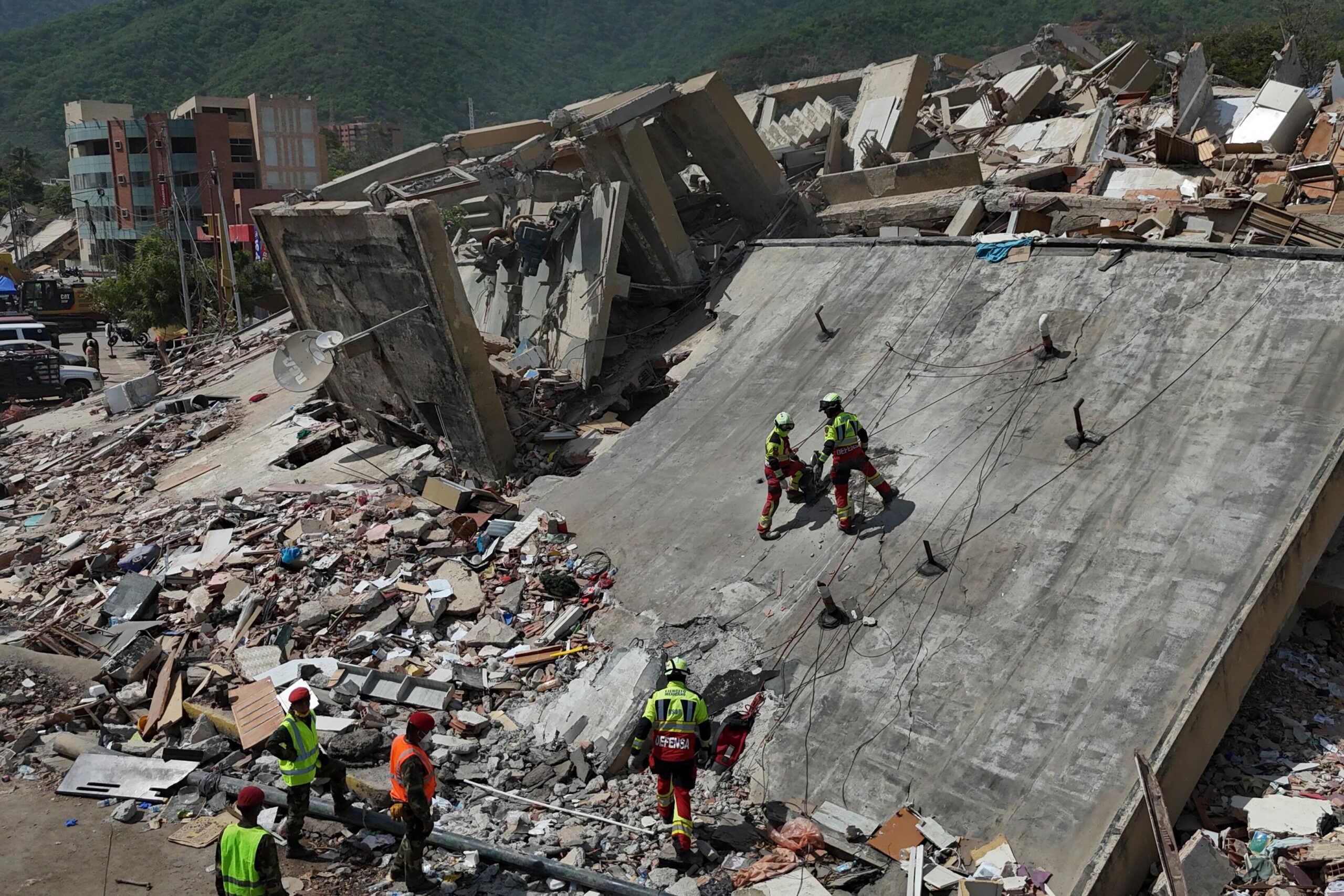
    Passengers on that plane, which included women and children, were being processed in a guarded hotel in La Guaira when powerful twin earthquakes struck, according to family members. The building they were in pancaked.

    Angelo Mejía Meléndez was building a life in Miami, working at a pier. The Venezuelan national was deported to Caracas and died in the earthquakes hours later.
    Angelo Mejía Meléndez was building a life in Miami, working at a pier. The Venezuelan national was deported to Caracas and died in the earthquakes hours later. (Georgelyss Montes)

    The family of Mejía Meléndez had planned to celebrate with him once back home. Instead, they had to spend days searching hospitals and morgues. Ultimately, they identified his body by a distinctive pizza tattoo on his arm.

    “We grew up together,” Montes said. “It’s so hard.”

    Mejía Meléndez was building a life in Miami. He worked at a pier. He was happy to be in the city, near the ocean. In a recent voice note to his mom, Mejía Meléndez told her how much he loved her. He also shared that his bosses had bought a new Jet Ski, and that they named it after him.

    “They told me I was doing a good job, that they loved me — things are going well!” he told his mother. “I love you so much — if I were to be born again, I would want you to be my mother.”

    Hoping for a sign of life

    Of the 146 deportees aboard that flight, there are conflicting accounts of how many survived the earthquakes.

    The Venezuelan agency in charge of transporting the deportees declined to tell NPR how many have survived. In a message through WhatsApp to NPR, the agency said families have been informed of the status of their loved ones — a statement some family members dispute.

    Víctor Guanipa Toyo is still missing. He was deported, and his family believes he was being processed in the hotel with the other deportees when it collapsed in the earthquake.
    Víctor Guanipa Toyo is still missing. He was deported, and his family believes he was being processed in the hotel with the other deportees when it collapsed in the earthquake. (Alonso Guanipa Toyo)

    Alonso Guanipa Toyo told NPR his brother, 32-year-old Víctor, is among the missing deportees.

    “The government is not doing anything,” Alonso Guanipa Toyo said. “My family is looking for him in the hospitals, in the shelters, in the morgues.”

    He said his brother appeared to be in a hospital, according to a database he searched. But as of Monday, Víctor had yet to be found.

    Alonso Guanipa Toyo said he believes there are deportees alive under the rubble.

    “If there’s not a corpse, there’s no dead (person),” Alonso Guanipa Toyo said.

    His brother Víctor lived in Pecos, Texas, where he worked in construction during the day and as a rideshare driver at night.

    “My brother was very humble,” Alonso Guanipa Toyo said.

    Víctor was detained by immigration authorities in Texas on June 12. He and his wife were at a nightclub when they were picked up.

    Alonso Guanipa Toyo said his brother had no criminal record and was in the U.S. legally.

    Alonso Guanipa Toyo said the first thing he did when he heard the news of the earthquakes was look up the building where the deportees were.

    “I saw the building had collapsed,” he said.

    Still, he said his family continues to search for Víctor.

    The unexpected result of a deportation

    It’s unclear whether the Trump administration will continue to deport Venezuelans post-earthquakes. The Department of Homeland Security did not respond to a request for comment from NPR.

    That angers Oswadeliz Nuñez, whose son Daniel Núñez remains missing after being deported.

    Daniel Núñez called his mother, Oswadeliz, about 30 minutes before the earthquake, to tell her he had landed in Venezuela. She has not heard from him since.
    Daniel Núñez called his mother, Oswadeliz, about 30 minutes before the earthquake, to tell her he had landed in Venezuela. She has not heard from him since. (Oswadeliz Núñez)

    “Venezuelans are not animals,” she said. “They are humans, not criminals. My son paid taxes.”

    For almost five years, Daniel had been living in Jacksonville, Fla., where he worked in construction. Oswadeliz Nuñez says her son’s only crimes were crossing the border illegally and a misdemeanor for driving without a license.

    He was arrested by immigration authorities on his way to work in May.

    “My biggest hope is that my son is alive,” she said.

    She said she briefly talked to him on the phone before the earthquakes struck. Daniel told her he had landed in Venezuela and was being processed.

    “In those four minutes he told me a lot of things — that we were going to live in Venezuela together, that we were going to keep going,” she said. “That happiness lasted 30 minutes.”

    Nearly a week later, Oswadeliz Nuñez says, “I don’t have any more strength.”

    “At this point, we need help getting their bodies from under the rubble,” she said. “We need their bodies.”

    Transcript:

    SCOTT DETROW, HOST:

    Dozens of Venezuelans were deported from the U.S. to Caracas on June 24, the same day two devastating earthquakes struck. Many of the people deported were among the nearly 2,000 killed by the tremors and that death toll is expected to climb. NPR’s Sergio Martínez-Beltrán reports on the deportees’ fate.

    SERGIO MARTÍNEZ-BELTRÁN, BYLINE: So the last time Georgelyss Montes saw her best friend, Angelo Mejia Melendez, was four years ago. Mejia Melendez was leaving for the U.S. and Montes and other friends were sending him off.

    GEORGELYSS MONTES: (Speaking Spanish).

    MARTÍNEZ-BELTRÁN: “I remember we got so drunk. I told him, you’re stupid for leaving us.”

    Last week, Montes got word that Mejia Melendez was coming home unexpectedly as a deportee. Mejia Melendez was one of 146 Venezuelan nationals who landed in Caracas on the morning of June 24 after being deported from the U.S. Passengers on that plane included women and children. They were being processed that afternoon in a hotel in La Guaira when powerful twin earthquakes struck, according to family members. The building they were in pancaked.

    MONTES: (Speaking Spanish).

    MARTÍNEZ-BELTRÁN: “It’s impressive. There’s nothing left. It’s horrible,” Montes says. She and Mejia Melendez’s family had planned to celebrate with him once he was back home. Instead, they had to spend days searching hospitals and morgues. Ultimately, they identified his body by a distinctive pizza tattoo on his arm. Of the 146 deportees aboard that flight, there are conflicting accounts about how many survived the earthquakes. The Venezuelan agency in charge of transporting the deportees tells NPR through WhatsApp it has notified each family of the status of their loved ones, a statement some parents and friends dispute. Alonso Guanipa Toyo tells NPR his brother, 32-year-old Victor, is among the missing deportees.

    ALONSO GUANIPA TOYO: (Speaking Spanish).

    MARTÍNEZ-BELTRÁN: “The Venezuelan government is not doing anything,” he says.

    TOYO: (Speaking Spanish).

    MARTÍNEZ-BELTRÁN: “My family is the one looking for Victor in the hospitals, in the shelters, in the morgues.” Guanipa Toyo says his brother Victor appeared to be in a hospital according to a database he searched. But as of Monday, Victor had yet to be found. Guanipa Toyo says he believes there are deportees alive under the rubble.

    TOYO: (Speaking Spanish).

    MARTÍNEZ-BELTRÁN: “If there’s not a corpse, there’s no dead person,” Guanipa Toyo says. His brother Victor lived in Pecos, Texas, where he worked in construction during the day and as a rideshare driver at night. Victor was detained by immigration authorities in a Texas nightclub on June 12. Guanipa Toyo says his brother had no criminal record and was in the U.S. legally. He’s angry at the Venezuelan government and the U.S. government.

    TOYO: (Speaking Spanish).

    MARTÍNEZ-BELTRÁN: “ICE continues to arrest people and deport them knowing what’s happening there in Venezuela,” he says.

    The Department of Homeland Security did not respond to questions from NPR on whether it will continue deporting Venezuelans after the earthquakes. That has angered family members who say Venezuelans are not criminals and that their death could have been prevented if they had not been deported on June 24. But there’s not much time left. It’s been nearly a week since the earthquakes. The families of the missing continue to race to recover the bodies of their loved ones. Others hope for a miracle. For those who had confirmation of the death of their loved ones, they are left with memories. Georgelyss Montes has been listening to a voice note her best friend, Angelo Mejia Melendez, sent to his mom recently.

    (SOUNDBITE OF ARCHIVED RECORDING)

    ANGELO MEJIA MELENDEZ: (Speaking Spanish).

    MARTÍNEZ-BELTRÁN: “What’s up, Mom? How are you?”

    (SOUNDBITE OF ARCHIVED RECORDING)

    MELENDEZ: (Speaking Spanish).

    MARTÍNEZ-BELTRÁN: “Today at work, I got a surprise. The bosses bought a jet ski, and they named it after me. They said I’m doing a good job, and they said they loved me.”

    (SOUNDBITE OF ARCHIVED RECORDING)

    MELENDEZ: (Speaking Spanish).

    MARTÍNEZ-BELTRÁN: “Mom, I love you so much. If I were born again, I would want you to be my mother again. I love you. Thank you for what you have done for me.”

    Sergio Martínez-Beltrán, NPR News.

    (SOUNDBITE OF MUSIC)

  • U.S. murder rate approaches a record low

    U.S. murder rate approaches a record low

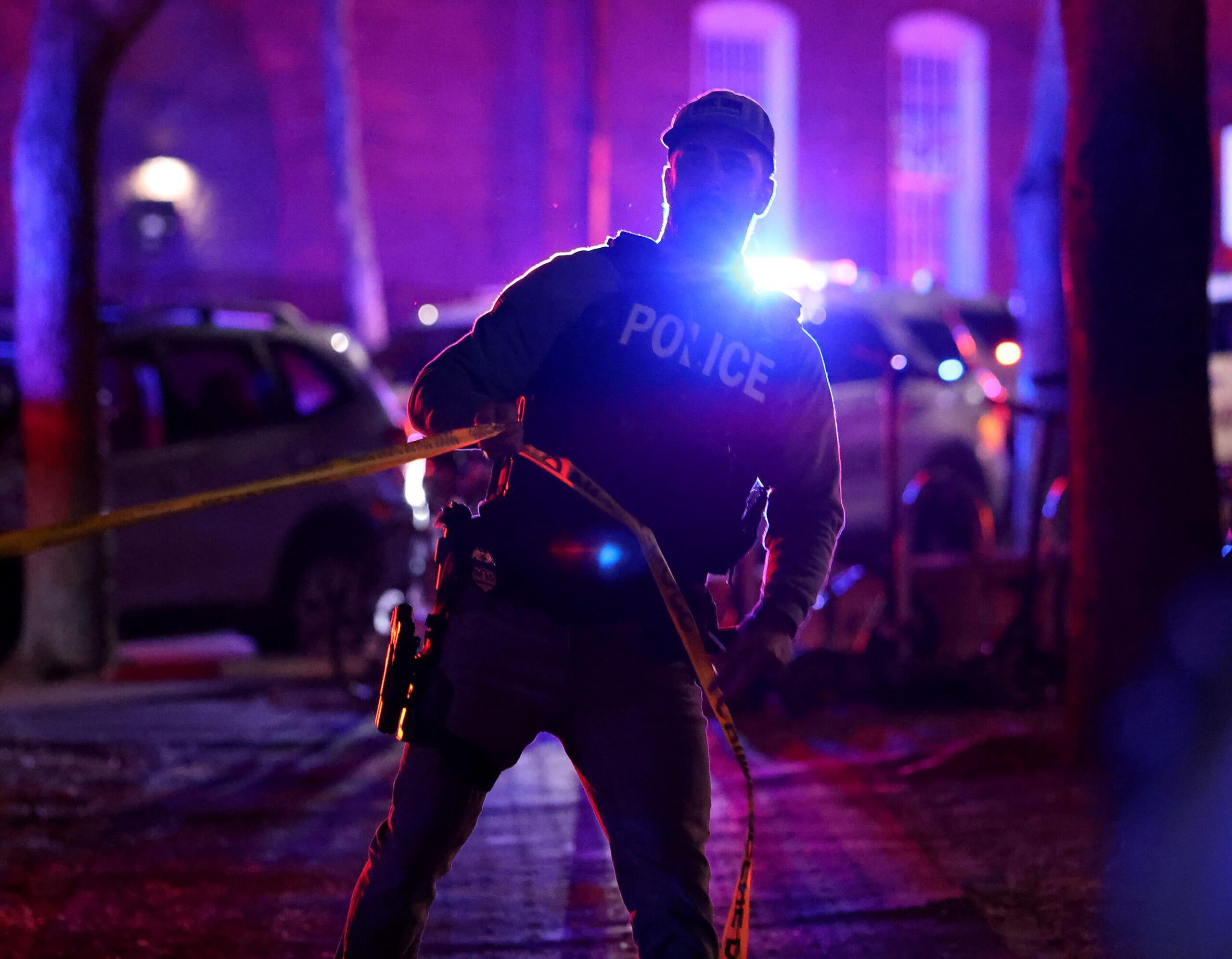
    As the U.S. nears its 250th birthday, it’s doing pretty well by at least one measure: the national murder rate.

    “The United States almost certainly had the lowest murder rate ever recorded in 2025, with the FBI having data back to 1960,” says crime data analyst Jeff Asher. “And the available evidence suggests that we’re going to go even lower this year.”

    Asher published his prediction in late May, basing it in part on the early data he collects directly from about 600 police agencies for his site The Crime Index. That nationally representative sampling shows murders dropped 18.7% in the first four months of this year, compared to the same period last year. All violent crime dropped 6.4%.

    An important caveat is that this would be the lowest murder rate on record meaning since the FBI started publishing national murder numbers in the 1950s. There are some older records of national rates of homicide (a larger category than criminal murder) kept by the Centers for Disease Control and Prevention.

    “They [the CDC] have good homicide data back to 1930 or so, and there’s a few years in the 1950s that were slightly lower than 2025,” Asher says. “But if you put another big drop on top of that, then you’re talking about this year potentially being the lowest homicide rate ever recorded, too.”

    If there’s another “big drop” in violence this summer, it will be especially striking in light of where things stood just a few years ago. The Crime Index shows the national murder rate spiking to 6.8 deaths per 100,000 in 2021— a 54% increase over the previous low of 4.4 deaths per 100,000 in 2014. Criminologists and law enforcement officials worried the country had settled into a “new normal” of violence, especially chaotic retaliatory shootings involving young people.

    The prosecuting attorney’s office for King County, Washington, which includes Seattle, publishes some of the most detailed regional reports on shootings in the country. In the first quarter of 2022, it logged 384 “shots fired” incidents and 22 people killed. In the first quarter of this year, those numbers were 204 and nine.

    “We’re still having gang violence. We’re still having drive-by shootings. We’re still having armed robberies,” says Gary Ernsdorff, who supervises the Special Operations Unit in the King County prosecutor’s office. “But the numbers across the board in each one of those categories seem to be decreasing.”

    As the overall volume of violent crimes shrinks, Ernsdorff says he thinks things may simply be returning to normal following the social disruption of the COVID-19 pandemic.

    “When people are idle, when kids are not in school, when people aren’t employed, they statistically get into more trouble and more criminal acts,” he says. “We had a perfect environment to see a spike in crime.”

    But Jerry Ratcliffe, faculty director of the master of applied criminology program at the University of Pennsylvania, says it’s important to keep in mind that other developed countries did not see the same kind of big crime spikes during the pandemic.

    “That was really unique to us, which means it leads me to think it was more related to George Floyd,” Ratcliffe says. The social upheaval following Floyd’s murder in 2020, he argues, disrupted a generation-long decline in crime rates built in part on the data-driven, targeted policing strategies that emerged in the 1990s.

    “That’s something we saw withdraw for a year or two. What we’re seeing now is a re-engagement of policing a few years down the line. And we continue to see again that crime reduction,” Ratcliffe says.

    LaMaria Pope has had a front-row seat for the recent change. She works for Choose 180, a violence-prevention nonprofit focused on young people in the Seattle area, and she remembers the anxiety of the pandemic years.

    “There was a lot of guns floating around,” she says. “There was almost nothing to do but engage in crime. And knowing that, ‘Oh, we want to defund the police, if we call they’re not going to come for two hours’ — kids are smart and they picked up on that.”

    She credits the return to in-person programming, school and structured activities for much of the improvement. “We have a better way to connect and make an influence on our young people,” she says.

    But Pope isn’t ready to declare victory. The cycle of retaliatory violence remains a constant undercurrent in the communities she works with.

    “I will say it is better than it was four years ago,” she says. “But we’re still fighting that fight. It is not over.”

    Even a record-low homicide rate — 4.1 or even 4.0 per 100,000 — would still be double Canada’s rate of 1.9.

    “We’re still talking about 13- or 14-thousand murders,” crime data analyst Asher says. “This is not a solved problem.”

    Transcript:

    JUANA SUMMERS, HOST:

    As we approach America’s 250th birthday, the nation is doing pretty well, according to at least one metric – its murder rate. Violent crime is down, and as NPR’s Martin Kaste tells us, 2026 may prove to be America’s least murderous year on record.

    MARTIN KASTE, BYLINE: That prediction came last month from respected crime statistics analyst Jeff Asher.

    JEFF ASHER: It’s not even a bold thing to say at this point.

    KASTE: Asher runs The Crime Index, which collects numbers directly from police departments and produces reliable forecasts of national crime trends well ahead of the release of the official statistics from the FBI.

    ASHER: The United States almost certainly had the lowest murder rate ever recorded in 2025, with the FBI having data back to 1960, and the available evidence suggests that we’re going to go even lower this year.

    KASTE: Preliminary data indicate murders were down another 18% in the first months of this year. This downturn is especially remarkable when you consider the surge in violence just a few years ago during the pandemic. The national murder rate spiked about 50% higher than its previous lows in the mid-twenty-teens. In 2022, there was a worry that the U.S. had settled into a new normal of shootings, especially among young people. LaMaria Pope works for a violence prevention nonprofit in the Seattle area called Choose 180, and she remembers that moment.

    LAMARIA POPE: There was a lot of guns floating around. It was almost nothing to do but engage in crime and knowing that, oh, we want to defund the police. Oh, if we call, they’re not going to come for two hours. And, you know, kids are smart, and they picked up on that.

    KASTE: But that new normal turned out to be transitory. Gary Ernsdorff is with the King County prosecuting attorney’s office in Seattle, which publishes detailed quarterly shooting statistics.

    GARY ERNSDORFF: We’ve been really heartened by the numbers. Anytime we see shots fired going down, you know, it’s a positive trend.

    KASTE: Shootings are down by about a half so far this year in King County compared to 2022. Ernsdorff says all the various kinds of violence are still happening. It’s just that there are fewer incidents of all of them, and he has a straightforward explanation.

    ERNSDORFF: What we have to realize is COVID wasn’t normal, right? When people are idle, when kids are not in school, when people aren’t employed, they statistically get into more trouble and more criminal acts.

    KASTE: But Jerry Ratcliffe sees other factors at work too. He’s a professor of criminology at the University of Pennsylvania in Philadelphia, another city that saw a spike in murders, followed by a decline. He says you also have to keep this in mind.

    JERRY RATCLIFFE: Other countries experienced the COVID pandemic, but they didn’t experience the significant increase in violence and crime that we saw in the United States. So that was really unique to us, which means – leads me to think it was more related to George Floyd.

    KASTE: He thinks the social upheaval following the murder of George Floyd in 2020 interrupted a generation-long downward trend in crime rates that started in the 1990s, a trend driven by multiple factors that include better policing strategies. Since the ’90s, police have become steadily more reliant on data, targeting the most dangerous offenders.

    RATCLIFFE: And that’s something that we saw withdraw for a year or two. What we’re seeing now is a reengagement of policing a few years down the line, and we continue to see, again, that crime reduction.

    KASTE: But it’s not all good news. Even at a record low, the U.S. murder rate is still higher than rates in other developed countries, more than double the rate in Canada. At the anti-violence program Choose 180 near Seattle, LaMaria Pope says the young people she works with still deal with that reality.

    POPE: I will say it’s better than it was four years ago, but we’re still fighting that fight. It is not over.

    KASTE: Martin Kaste, NPR News.

    (SOUNDBITE OF HERMANOS GUTIERREZ’S “IT’S ALL IN YOUR MIND”)