Blog

  • Breaking down the Supreme Court’s ruling on transgender student-athletes

    Transcript:

    JUANA SUMMERS, HOST:

    Among several major decisions the Supreme Court released today was one regarding transgender athletes. The court ruled that states may ban trans women and girls from participating in women and girls sports at publicly funded schools. The decision was 6 to 3 on ideological lines. The majority opinion noted that 27 states have enacted such bans in the last six years. Let’s hear more about this ruling as well as its consequences from Brooke Migdon of The 19th, who covers LGBTQ+ issues. Hi, Brooke.

    BROOKE MIGDON: Hi. Thanks for having me.

    SUMMERS: Thanks for being here. So, Brooke, this opinion was prompted by two cases from trans athletes who wanted to compete for their schools – one from West Virginia, another from Idaho. What are the legal statutes they were challenging?

    MIGDON: Yeah. The two athletes, Becky Pepper-Jackson and Lindsay Hecox, were challenging their state’s bans in West Virginia and Idaho. They were saying that the bans violated Title IX, which is a landmark federal statute prohibiting sex-based discrimination in school sports. And they also argued that those bans violated the equal protection clause of the Constitution.

    SUMMERS: It’s interesting that all of these justices agreed that the state bans did not violate Title IX, but the disagreement was really over the equal protection clause. Can you say more about that?

    MIGDON: So the majority opinion was written by Justice Brett Kavanaugh, decided that the state bans did not violate the equal protection clause. The three liberal justices disagreed with that. They basically said that, you know, they disagreed with the majority’s view that the bans did not violate the equal protection clause because transgender student athletes make up a relatively small population. You know, they basically wrote in their dissents, you know, it shouldn’t matter how small a population is. It still doesn’t warrant discrimination.

    SUMMERS: So where does all of this leave schools? I mean, if trans athlete bans are upheld as constitutional, is it just what – up to whatever the state that you live in says is legal?

    MIGDON: Yeah, exactly. So similar bans have been passed in 25 states. So 27 states total prohibit transgender athletes from competing on school sports teams that match their gender identity. But, you know, there’s still a lot of states who don’t have those policies. There are states who have, on, you know, the other hand, inclusive school sports policies that allow transgender athletes to compete on teams that best align with their gender identity. So nothing happens to those state laws as of now. The real question is what could happen to those states in the future. But this ruling does nothing to compel those states to ban transgender athletes.

    SUMMERS: We mentioned that you cover LGBTQ+ politics. What have you heard from advocates who are reacting to and taking in what this ruling might mean?

    MIGDON: Both girls’ legal teams have described this ruling as heartbreaking and a disappointment. But their message is that this ruling is very narrow. It does apply to West Virginia and Idaho specifically. You know, for the transgender young people in those states, that doesn’t make this any easier.

    You know, this definitely isn’t an outright win for, you know, let’s say, President Trump’s administration, which has pretty aggressively sought to bar transgender student athletes from competing in women and girls school sports. It was a major campaign issue for the president. But this ruling doesn’t ban transgender athletes nationwide. It kicks the issue back to the states, and, you know, the states will have to decide from there. Advocates are, you know, disappointed in the ruling, obviously, but it was not unexpected. And right now, they’re still reviewing different legal avenues to pursue other challenges.

    SUMMERS: And I’ll just note here that President Trump has responded to this news on social media, on Truth Social, calling this a big win, saying that that takes – and I’m quoting the president here – “that ridiculous situation off of the table.” Brooke, this is not the only time recently that the Supreme Court has ruled on the rights of transgender people. Can you remind us of some of the other rulings that the court has decided and what’s to come?

    MIGDON: So the Supreme Court fairly recently allowed President Trump’s administration to enforce its ban on transgender troops serving in the military. It also ruled last summer on a Tennessee law banning gender-affirming care for minors. I think the Tennessee decision could be an indicator – a good indicator of what we may see regarding this decision moving forward. I mean, advocates are still challenging gender-affirming healthcare bans, and state courts are still reviewing those bans, and they’re still issuing decisions on them.

    A state court in Kansas recently blocked the state’s gender-affirming healthcare ban. So, you know, even though the Supreme Court ruled in the Tennessee case, that ruling, like the one we saw this morning, was very narrow and isn’t necessarily applicable to every state that is seeking to ban gender-affirming care or transgender athletes.

    SUMMERS: That was Brooke Migdon, LGBTQ+ reporter from The 19th. Thanks so much.

    MIGDON: Thank you.

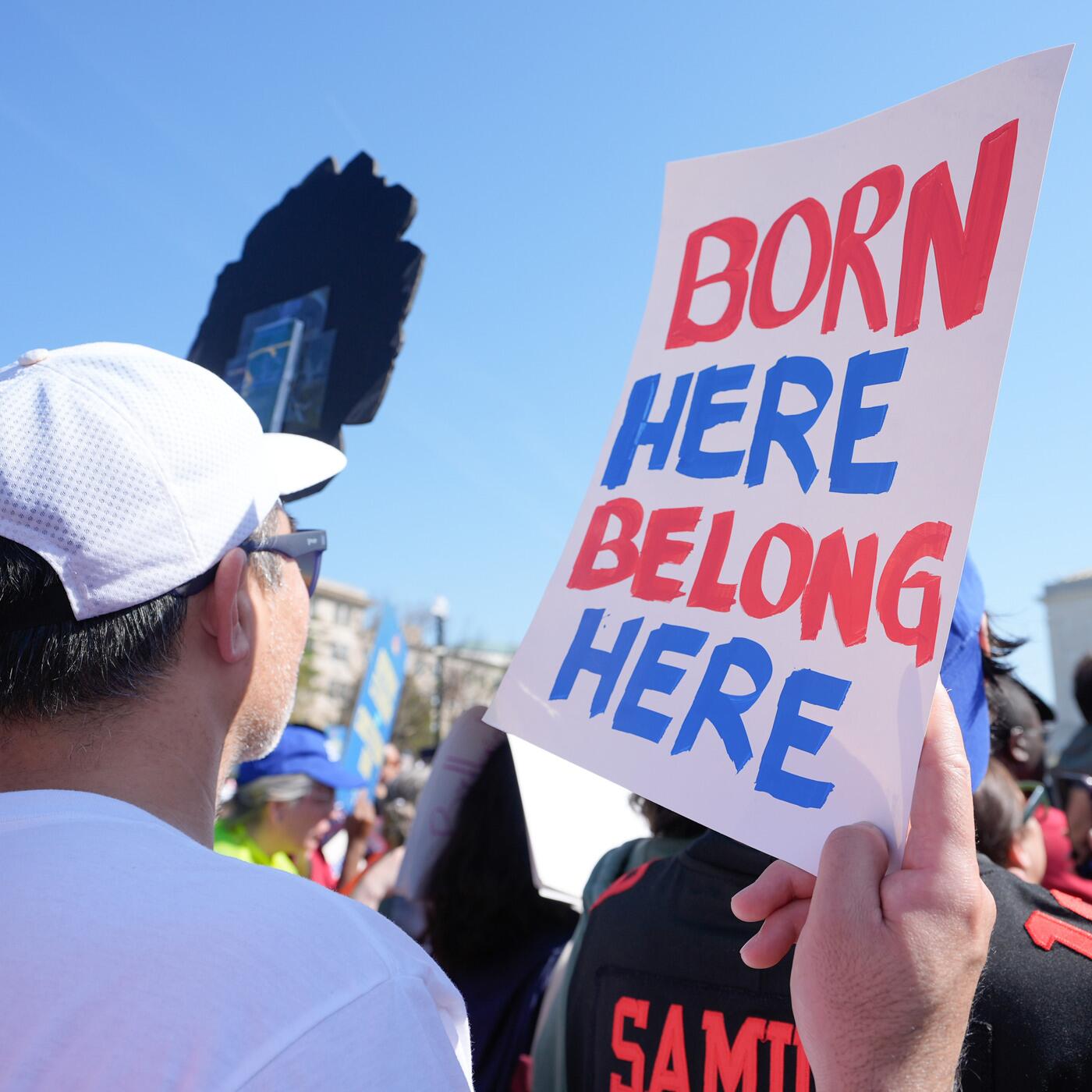
  • Supreme Court upholds birthright citizenship, rejecting Trump’s executive order

    Transcript:

    JUANA SUMMERS, HOST:

    All children born in the U.S. are citizens, according to the 14th Amendment to the U.S. Constitution. On his first day in office, President Trump sought to bar citizenship for babies born in the U.S. if their parents entered the country illegally or were only living here temporarily. A majority of justices ruled today that he cannot do that. Joining us now to unpack the decision and what it means are NPR Supreme Court and Justice correspondent Carrie Johnson and our senior national political correspondent Mara Liasson. Hi to both of you.

    MARA LIASSON, BYLINE: Hi there.

    CARRIE JOHNSON, BYLINE: Hi, Juana.

    SUMMERS: Carrie, I want to start with you. Chief Justice John Roberts wrote the opinion in this case. What did he say on behalf of the majority?

    JOHNSON: The chief took a march through history, starting with English common law, because he says this basically has been the understanding for well over a hundred years. He also mentioned Dred Scott, one of the worst decisions in the history of the U.S. Supreme Court and spent a lot of time on the 14th Amendment. That amendment says all persons born and naturalized in the U.S. and subject to the jurisdiction thereof are citizens of the United States.

    The chief was joined by four other justices fully in his opinion, the court’s three liberals as well as Amy Coney Barrett. Now, Brett Kavanaugh wrote his own opinion. He agreed that this case – in this case that the people challenging Trump’s executive order should win but not based on the 14th Amendment. His reasoning was based on narrower ground that Congress passed laws codifying what that amendment has to say. And those statutes were enough for the court to decide against President Trump here. Kavanaugh said that might mean Congress could go back and have something to say about the law.

    SUMMERS: Got it. OK. What about the dissenters in this case?

    JOHNSON: They were much more aggressive. Justice Clarence Thomas wrote a lengthy dissent, the longest among everyone else who did the writing today. He said the majority misunderstood what the 14th Amendment is about. Justice Samuel Alito says the court made a serious mistake. He also spent time talking about birth tourism. This is also something President Trump’s worried about – the idea that wealthy people are coming to the country just to have a baby who becomes a citizen and then leaving without loyalty or allegiance to the country. Now, this does not seem like a widespread problem, but we don’t have data on that.

    SUMMERS: Mara, over to you. What do you make of this decision and what it might mean for President Trump?

    LIASSON: Well, politically, it’s a setback. It’s a legal loss. If the court had voted for Trump, they would have changed the definition of what it means to be an American and who gets to decide what it means to be an American. Donald Trump was not happy about this decision. He posted on Truth Social, too bad for the country. But he also said that it could be, quote, “easily resolved” if Congress would pass legislation banning birthright citizenship, kind of the Kavanaugh point of view.

    SUMMERS: Now, globally, it isn’t unheard of for the idea of automatic birthright citizenship to be revoked. Ireland, I believe, did it back 20 years ago. Mara, is this realistic that Congress can address it as some of the conservatives and the president himself have suggested?

    LIASSON: Well, conservatives will push for this, but it remains to be seen if a majority – even of Republicans – in Congress want to vote on birthright citizenship this close to an election. Donald Trump has been very frustrated recently about the limits of his power in the Senate. Republican senators are very loyal to him, but they’re not willing to do everything he wants when he wants it.

    And also, this is an election that has not been first and foremost about immigration. For independents and swing voters, this election has been about the economy and affordability, not about birthright citizenship. So it’s an open question about how much Donald Trump wants to push this and make birthright citizenship the focus of his midterm campaign.

    SUMMERS: Now, the president does have a lot of leeway when it comes to immigration and protecting the nation’s borders. The Supreme Court just affirmed that there are limits to that power. Carrie, does today’s decision create guardrails around the president’s ability to act on this issue?

    JOHNSON: In some ways, yes. We now have five votes from the Supreme Court saying this is part of the Constitution, so it would require an amendment to change that. But for some of the people who brought this challenge, like the Legal Defense Fund and the ACLU, this was really supposed to be an easy case and reaffirm our understanding of the law and the way it’s been for over 160 years. And they were surprised at how divided the Supreme Court was on this issue. For that reason alone, I don’t think we’re done talking about this politically or legally.

    LIASSON: No. I think that Trump has really succeeded in pushing the Overton window – in other words, changing the parameters of the debate. Before this, birthright citizenship was outside the parameters. It was a settled matter. Now it’s inside. And even though the Supreme Court reaffirmed the executive’s control over immigration policy in other cases, they drew the line at birthright citizenship. And in a weird way, that’s a – that could be a political boon for him because if they had ruled for him, he – there would have been a tremendous amount of chaos to sort out which babies were citizens and which were not. And now, he can just keep the message without the headaches of implementation.

    SUMMERS: And it was a big day at the Supreme Court, so I do want to turn to another case that was decided. The court struck down limits on political party spending. Carrie, tell us more.

    JOHNSON: The justices struck down yet another post-Watergate law that tried to police money in politics. They said this is a free speech issue, that money is speech and First Amendment protected and not an issue of public corruption.

    SUMMERS: Mara, talk to us about the politics here.

    LIASSON: Well, this was a clear win for Republicans and conservatives. They already have a huge financial advantage in this cycle. This ruling will make it even more effective. It will allow them to coordinate with Republican candidates more easily. It will allow them to buy advertising spots at lower rates. Now, whether voters care about campaign finance as a voting issue, I’m not sure, but this ruling does fit into the overall argument that Democrats are trying to make, which is that Donald Trump and his party are corrupt. They only care about billionaires. They’re getting rich off their offices, and they don’t care about ordinary people.

    SUMMERS: All right. Last thing here for each of you. And, Mara, I’ll start with you. How do you think this term went for President Trump?

    LIASSON: Overall, I think it was a big winning term for Trump. The court expanded executive power over and over again. That’s what Trump wants. He says Article 2 gives him the right to do whatever he wants. So I think the term was a big winner. Yes, there were some big exceptions – birthright citizenship was one, tariffs was another. But overall, he comes out of this term with the executive’s powers enhanced.

    JOHNSON: Yeah. And in fact, the Slaughter decision this week, which basically gives President Trump and future presidents the power to fire, at will, heads of formerly independent agencies, that’s going to have huge repercussions and could have big consequences for democracy too.

    SUMMERS: NPR’s Carrie Johnson and Mara Liasson, thanks to both of you.

    LIASSON: You’re welcome.

    JOHNSON: Thanks.

  • How FDR’s voice guided Americans through some of America’s most challenging years

    Transcript:

    SCOTT DETROW, HOST:

    Let’s go back now – way back – to March 12, 1933. The unemployment rate in the United States was 25%.

    (SOUNDBITE OF ARCHIVED RECORDING)

    FRANKLIN D ROOSEVELT: My friends, I want to talk for a few minutes with the people of the United States about banking.

    DETROW: President Franklin Delano Roosevelt got on the mic for the first of what became dozens of fireside chats. In honor of the 250th anniversary of the Declaration of Independence, our series America in Pursuit explores culture, history and objects in American life. Next up, NPR’s Clare Lombardo tells us about Roosevelt’s microphone.

    CLARE LOMBARDO, BYLINE: During his presidency, Franklin Delano Roosevelt spoke directly to the country, introducing relief programs…

    (SOUNDBITE OF ARCHIVED RECORDING)

    ROOSEVELT: To provide a smashing answer for those cynical men who say that a democracy cannot be honest, cannot be efficient.

    LOMBARDO: Telling Americans in 1939 about the war growing in Europe…

    (SOUNDBITE OF ARCHIVED RECORDING)

    ROOSEVELT: I have said not once but many times that I have seen war and that I hate war.

    LOMBARDO: And later, after Pearl Harbor…

    (SOUNDBITE OF ARCHIVED RECORDING)

    ROOSEVELT: We are now in the midst of a war, not for conquest, not for vengeance, but for a world in which this nation and all that this nation represents will be safe for our children.

    ANTHEA HARTIG: Even if you were very poor, you might, like, know someone with a radio or you might kind of huddle around.

    LOMBARDO: Anthea Hartig is the director of the Smithsonian’s National Museum of American History. The NBC microphone that Roosevelt used is in its collection. The RCA Type 50-A was saved for years by Carleton Smith, the NBC announcer who introduced every one of those fireside chats. He donated it to the museum himself.

    (SOUNDBITE OF ARCHIVED RECORDING)

    CARLETON SMITH: Ladies and gentlemen, the president of the United States.

    LOMBARDO: This summer, that microphone is at the Smithsonian Castle in Washington, D.C., in a special exhibit called American Aspirations. Clare Lombardo, NPR News.

    (SOUNDBITE OF MUSIC)

  • In Colorado, Latino voters will be crucial in deciding a toss-up congressional race

    Transcript:

    JUANA SUMMERS, HOST:

    It’s Tuesday, which means time for more primaries that may offer clues about the path to November and which party will control the U.S. House next year. Colorado is up today, and one big question is who will win the Democratic nomination to face Republican Congressman Gabe Evans. Colorado’s 8th Congressional District is home to one of the year’s most competitive races, and as Colorado Public Radio’s Rae Solomon reports, Hispanic voters there will play an important role in the outcome.

    RAE SOLOMON, BYLINE: It’s one of those startlingly bright Colorado days, and Angel Merlos is walking the streets of a pristine subdivision in the suburbs of Denver, Colorado, at the southern tip of the state’s 8th Congressional District.

    (SOUNDBITE OF ELECTRONIC DOORBELL CHIMING)

    SOLOMON: He’s got an app on his phone pointing him to the homes of Hispanic voters.

    (SOUNDBITE OF DOOR OPENING)

    ANGEL MERLOS: Hello. Hi. My name is Angel. We’re talking to voters here in the community.

    SOLOMON: Merlos is with the Libre Initiative. That’s a conservative Latino political advocacy group focused on limited government. He’s canvassing to drum up Hispanic support for sitting Republican Congressman Gabe Evans, who’s running for reelection in this very competitive, very purple district. The first door on his list belongs to independent voter Glenn Mommens, and it starts off with an awkward moment.

    GLENN MOMMENS: I would probably not be voting for Gabe Evans.

    MERLOS: OK.

    MOMMENS: Yep.

    SOLOMON: In November’s election, Evans will face one of two Democrats who are now in the midst of a tight primary. The seat is considered a toss-up, and Democrats are eyeing it as a potential key pickup in their quest to retake the House. Mommens tells Merlos that he used to vote Republican when he was younger but started supporting more Democrats in recent years.

    MOMMENS: The results I’ve heard about from Gabe Evans, and I’m not impressed with.

    SOLOMON: Eighth Congressional District spans from these Denver suburbs deep into rural parts of the state. It’s Colorado’s newest district drawn up after the 2020 census, and it has the state’s largest Hispanic population.

    MIKE CORTES: It helps to be a Latino if you’re trying to get Latino votes, but it’s not enough.

    SOLOMON: That’s Mike Cortes, head of the Colorado Latino Leadership, Advocacy & Research Organization. In 2022, CD8 voters elected a Hispanic Democrat to Congress. Two years later, they voted for Gabe Evans, a Hispanic Republican. That shift mirrored presidential politics when many Latino voters swung for President Trump. Of course, Latino voters are hardly a monolithic voting bloc. That’s why University of Denver political scientist Jesse Acevedo says groups from across the political spectrum are so eager to court Hispanic votes and boost turnout.

    JESSE ACEVEDO: Given the makeup of the district and how competitive is, Latinos will have an important impact on who wins CD8.

    SOLOMON: Jarrek Holmes agrees. He’s director of Trust Brigade, a deep canvassing group working to flip CD8 to Democrats.

    JARREK HOLMES: It’s 40% of the district. I mean, it is such a huge proportion of the district that it is by and away the most important group.

    SOLOMON: That’s why Trust Brigade volunteer Caitlin Smith is out with her clipboard in a working-class Denver suburb on a mild Saturday morning. She approaches a corner house where the garage door is open.

    CAITLIN SMITH: We’re volunteers. We’re out talking to people about voting and the state of the country. And we’re curious on whether there’s anything you’re worried about.

    JOHN DIPETRILLO: I wouldn’t worry if I were you guys.

    SOLOMON: That’s John DiPetrillo, a Hispanic 8th Congressional District voter. He says he votes in every election, just not for any Democrats.

    DIPETRILLO: Donald Trump’s going to take care of it, so don’t worry about it. He’s going to take care of the unemployment rate. He’s going to take care of the economics. He’s going to get the fuel prices down.

    SOLOMON: In fact, DiPetrillo says he sees his vote for the Republican congressional candidate in this district as a reflection for his support for the president. And no amount of Latino voter outreach can change his mind. For NPR News, I’m Rae Solomon in Thornton, Colorado.

    (SOUNDBITE OF ARC DE SOLEIL’S “MUMBO SUGAR”)

  • Supreme Court upholds birthright citizenship, issues final rulings of its term

    Transcript:

    (SOUNDBITE OF MUSIC)

    STEVE INSKEEP, HOST:

    The Supreme Court affirmed birthright citizenship for Americans.

    MICHEL MARTIN, HOST:

    A majority rejected a campaign finance restriction.

    INSKEEP: And the court upheld a ban on transgender students in girls’ sports.

    MARTIN: I’m Michel Martin with Steve Inskeep, and this is a special episode of UP FIRST from NPR News.

    (SOUNDBITE OF MUSIC)

    INSKEEP: The court rejected President Trump’s bid to deny citizenship to some children born in the U.S. The president had personally attended arguments in trying to overturn the language of the Constitution.

    MARTIN: Republicans won a different case that lets the party spend money in coordination with individual candidates, and the court combined two cases on transgender athletes. States may require students to play on boys’ or girls’ teams based on biological sex.

    INSKEEP: What do the decisions reveal about the court and the country? Stay with us. We’ve got analysis of today’s rulings.

    (SOUNDBITE OF MUSIC)

    MARTIN: The Supreme Court has issued the final decisions of this term. The court ruled that President Trump’s executive order trying to limit automatic citizenship to babies born in the U.S. is unconstitutional. The court also struck down limits on how much political parties can raise and spend on candidates, and it let states ban transgender girls from participating in sports at publicly funded schools. Joining us to talk about today’s decisions are NPR Supreme Court and justice correspondent Carrie Johnson, legal affairs correspondent Nina Totenberg and senior national political correspondent Mara Liasson. Nina, I’m going to go to you first. Let’s start with the birthright citizenship decision – eagerly awaited decision by all parties. What struck you about the decision?

    NINA TOTENBERG, BYLINE: It wasn’t a surprise that the Supreme Court struck down President Trump’s executive order that would have denied citizenship to babies born in the United States who are here, whose parents were here illegally or even legally on visas. Every judge up until today who had ruled on it had struck down his executive order, and it never, as a result, went into effect. But today, by a 6-3 vote, the court reached the same conclusion that the citizenship clause covers babies born in the United States and guarantees them automatic citizenship.

    And the author of the opinion, of course, was the chief justice, John Roberts. And it was very interesting – his delivering the summary of his opinion – because he went out of his way trying not to antagonize President Trump by saying that much of what this administration argued in the court was the same thing. However, at the core, at the end, he said dating back to British citizenship, which was guaranteed to American colonists – and that’s where they got the idea that everybody born in the U.S. should be American citizens – that that, from the founding of the 14th Amendment and dating back even to the ideas of the 1700s, means that anyone born on U.S. soil is guaranteed U.S. citizenship.

    MARTIN: Nina, what do you make of the fact that the justices were split on this ruling? Given, as you said, that every lower court has ruled in this way, the fact that the court was split at this level, what does that say to you?

    TOTENBERG: It tells you just how conservative this court is. You could even say, in some ways, that this was a 5-4 ruling because Justice Kavanaugh did not sign on to the chief justice’s opinion. He said, look, Congress legislated this in the 1950s. So it legislated the same thing, so I agree that children born on U.S. soil are automatic U.S. citizens. But he didn’t sign on to his reasoning about what the founders intended in the Constitution.

    MARTIN: Just briefly, though, Nina, you were in court today when the opinions were read. Could you just describe what that was like? You were telling us at an earlier decision day, there was some sort of unusual tension manifest among the judges. So what was it like today?

    TOTENBERG: You know, there was at least one descent from the bench, but it was not like the other day. It was much more normal. And it is the last day of the term for all practical purposes, and therefore, everybody is just ready to flee. All the justices are ready to flee. They’ve been working their tails off – pardon the expression – for the last two or three months to get everything done. And it’s been a very, very contentious term. And I – you don’t have to be a genius to know that these folks don’t particularly get along. But they got along enough to get to the end of the term and get it done by the end of June. And this was a calmer court today, getting ready to leave town, I would say.

    INSKEEP: We’re listening to NPR’s Nina Totenberg at the Supreme Court. And, Nina, when you say the phrase working their tails off, I immediately think of Nina Totenberg working all those years at the Supreme Court. NPR’s Carrie Johnson is also covering this case – she is here in Studio 31 – or, I should say, covering this day of rulings, Carrie, because we have these separate rulings on the issue of transgender kids in sports. What’s the decision?

    CARRIE JOHNSON, BYLINE: This was a decision in a combination of cases – one from West Virginia, another from Idaho – with respect to trans students’ participation in women and girls’ sports and – at the high school level and the college level. Just as Brett Kavanaugh wrote the majority opinion in this set of cases, he said schools that receive federal funding for education programs can determine eligibility for women and girls’ sports teams based on biological sex. That’s important because about half the states have enacted bans that would not allow trans girls and women to participate in these sports. The Supreme Court majority, led by Brett Kavanaugh, now says those bans are totally fine. They can stay in effect.

    At issue, two separate laws – Title IX, which is an important law that governs federal funding for education programs and prohibits discrimination on the basis of sex, as well as the equal protection clause of the Constitution.

    INSKEEP: And…

    TOTENBERG: Can I just add one thing?

    INSKEEP: Go right in.

    TOTENBERG: Sitting in the justice’s box today were Justice Kavanaugh’s wife, his mother and his two teenage girls. And he has been their coach in various sports for years, and he’s a big sports enthusiast. So it was no accident that he talked so passionately about what sports do for young women and what Title IX did for young women, and stressing his argument that it is only because of concerns about safety and undue influence on competitiveness that he and the court reached this decision.

    INSKEEP: Carrie Johnson, Nina makes a point there that reminds me that opinions on this are not split on straight partisan lines. There are lots of people who would consider themselves liberals who had a problem with trans girls in sports.

    JOHNSON: It’s a complicated issue in terms of the culture wars, and the Trump administration and the MAGA movement have really been on the offense on several of these culture-war issues involving trans students and adults, for that matter.

    MARTIN: Carrie, let me ask you about another consequential decision reached this morning that loosened campaign finance restrictions. So briefly, tell us about this decision and what impact could that have on political campaigns with several primaries left and midterm elections in November.

    JOHNSON: Yeah. This is another important decision considered to be a very big victory for the Republican National Committee, which had pushed quite hard to get rid of limitations on coordination with candidates and spending for advertising dollars, something that our colleague Mara Liasson says the RNC could put into effect within the hour. Important because it continues this trend of the conservative Supreme Court viewing these issues on the lens of the First Amendment – that this is free speech, that this money counts as free speech – dating all the way back to Citizens United.

    And in fact, former Senator Russ Feingold of Wisconsin, a Democrat who – if you’ve been around long enough to know, he passed an important campaign finance law with John McCain back in the day – said this is the latest in a series of bad decisions by the Supreme Court that’s flooded the political system with unprecedented amounts of money leading to potential corruption and the idea that billionaires can buy politicians.

    INSKEEP: I’m glad you mentioned NPR’s Mara Liasson because she is on the line with us to analyze the politics of this a little bit. And, Mara, first, let’s talk about that birthright decision – huge but not surprising defeat for President Trump. How is he likely to take this?

    MARA LIASSON, BYLINE: I think we’re waiting for an angry Truth Social post at the moment, but I think he’ll say that he’s going to continue to fight for this. I think that that’s the message he wants to send to his MAGA base. Remember, this was his first executive order, the very first one that he did on his first day in office. So he’ll keep on pushing for this. But for the moment, you could argue that it was a political win for him in another way because he doesn’t have to deal with the chaotic consequences of getting rid of birthright citizenship right before an election.

    INSKEEP: Interesting point. And so there’s not the blowback.

    LIASSON: But he gets the message, yeah.

    INSKEEP: He gets the message. He gets the messaging that he wants to the people who support that message. Let me ask now about the campaign finance case. The president has responded to this one, quote, “big win for Republicans.” Is it?

    LIASSON: And I – it’d be hard to disagree with him on that one.

    INSKEEP: Go on and explain why that would be.

    LIASSON: Big win for the Republicans. Republicans have a lot more money. This makes it easier for them to spend it. They don’t have to use the old rules of no coordinating with candidates. They also are going to get lower rates to buy political ads on television. I guess this hurts somebody who owns a local TV station. But yeah, it’s very much in concert with other things that this court has done around campaign finance. They believe that money is speech. And so that wasn’t much of a surprise.

    I think in all, when you look at the whole term – and I’d be interested to see what Nina thinks about this – it was a pretty successful term for him. Executive power got expanded, and that is what he’s been pushing for. And this is a court that believes in the unitary executive. They got rid of Humphrey’s Executor, which means…

    INSKEEP: Yeah.

    LIASSON: …That he can fire people without cause who are in – heads of federal agencies. They haven’t ruled yet about the Fed. They seem to think that’s a kind of special case, but that’s TBD.

    INSKEEP: They held it off for now. Let me just bring…

    LIASSON: Yeah.

    INSKEEP: …In Nina Totenberg. Nina, how would you assess this term if it was asking how it looks for President Trump?

    TOTENBERG: I would say that with the exception of birthright and the tariff case, this was a gonzo term for Trump. He won most of everything he wanted. Even on tariffs, as everybody always knew, there are some ways around it, even though some of those may be limited. And when it comes to birthright – Mara’s right – and everything else pretty much that he wanted, he got. And this is a court that by a 6-3 majority is devoted to the idea of executive power, and it has strengthened it over and over and over again.

    MARTIN: You’re listening to a special bonus episode of UP FIRST from NPR News to make sense of the Supreme Court’s blockbuster rulings. When we come back, we’ll bring someone who’s been keeping a close eye on all the Supreme Court cases we’ve been talking about. That’s Kim Wehle. She’s professor of law at the University of Baltimore School of Law.

    (SOUNDBITE OF MUSIC)

    MARTIN: You’re listening to a special episode of UP FIRST from NPR News to make sense of the Supreme Court’s blockbuster rulings. We’re going to turn now to my conversation with Kim Wehle. She is professor of law at the University of Baltimore School of Law. She teaches constitutional law there.

    Let’s start with that birthright citizenship decision. The Supreme Court ruled that virtually all children born in this country are entitled to birthright citizenship. How much of a – I don’t know what word to use – rebuke is this to President Trump?

    KIM WEHLE: Well, you know, in listening to you restate the holding, it’s ironic because you just restated the text of the 14th Amendment, which says all persons born. So this is the kind of decision that they could have just pointed to the Constitution and said, there’s really not a job for the Supreme Court here. You just read the text. We’re textualists, as the majority likes to say. And here we have a 5-4 ruling – or if you count Justice Kavanaugh’s concurrence, 6-4 – 6-3 – on a debate around the plain language of the Constitution itself. So I think the fact that this has become a challenged issue and a debate in the country, in a way, is a win for people, you know, in the Trump camp that want to see this historic constitutional right dismantled.

    MARTIN: I was going to ask you about that, what you make of the split decision and also the fact that, as you just heard our colleague Nina Totenberg say, that the court seemed to be going – or rather Justice – Chief Justice Roberts seemed to be going out of his way to not directly challenge or rebuke or disagree with the president. It sort of skirted what is the key sort of simple constitutional question. And I was just curious of what you make of that.

    WEHLE: Yeah. I mean, I think Justice Kavanaugh – it’s almost an invitation in his concurrence, speaking of him in particular, for Congress to come back and try to tinker with the law that followed up on the 14th Amendment and to create more exceptions. I think that was sort of a hint. Listen, bring it back to us with different legislation, and we’ll see if we can take a second whack at the 14th Amendment.

    I mean, but what the chief justice did was go back to the common law and said, you know, this is the – this is what kings did in England, and it was adopted here, and there really wasn’t any ambiguity. Again, these are – this majority relies on text and relies also on history and tradition. We’ve seen that with abortion. We’ve seen that with gun rights. And so he kind of takes that safe avenue and says, listen, this is as historical as it comes.

    And Justice Thomas in his dissent basically relies on the Dred Scott case and says, no, this is really about, you know, formally enslaved people and the 14th Amendment. And I think some – you know, somewhat ironically, maybe, Justice Jackson in her concurrence says, wait a minute. You’re the ones that are saying the Constitution’s colorblind when it comes to affirmative action and things like that but not when it comes to the 14th Amendment. So you can see the debate amongst the justices or really frustration with each other. But I think, frankly, the majority and Justice Jackson are solidly on firm grounds with reading the language, as the language – the text states.

    MARTIN: Any sense of why they waited until the very last day of the term to issue this ruling?

    WEHLE: Well, I have to think for – and I’ve thought this for a long time – that this court is worried probably about – or some of them – the president of the United States saying one day, listen, this is a fake court. You know, he’s – he has – he’s violated lots of statutes. He’s rebuked or just ignored hundreds of lower court decisions. And that one day, their own authority – which they don’t have a standing army. They don’t have a police force. You know, they have Marbury v. Madison, saying that they have the authority to interpret the Constitution.

    So I think they’re – they have to be very sensitive to the, you know, legitimacy of the court itself with this particular president. So maybe waiting to the end, where there’s not as much court-watching and discussion of the Supreme Court – it’s hard to know. But it’s almost like, you know, announcing news on a Friday. It’s going to die faster.

    MARTIN: So let’s turn to another case decided today. The court ruled – this is actually two cases that were brought before the court, and it’s sort of one – rolled into sort of one decision. The court ruled that states may ban transgender girls and women from participating in sports at publicly funded schools. This attended to high schools and colleges. What’s your take on this? It doesn’t seem like it was a surprise to people sort of watching the court, but I am – I’m curious about your take on it.

    WEHLE: Yeah. This was not that much of a surprise. There was some – there’s been waffling with this court on how to define sex when it comes to transgender people. And under the – under Title VII, which is about discrimination in employment, Justice Gorsuch authored an opinion a while back saying that sex does include transgender. Here you’re talking about money authorized for sports. And Justice Kavanaugh and his majority says, for purposes of this statute – Title IX – funding, sex means sex.

    The whole point of this statute dates back to the 1970s, when the disparity in girls’ and boys’ sports was, you know, major. And this was designed to equalize that biological sex fairness. And he notes, you know, listen, even the plaintiffs didn’t dispute that. They wanted a carve-out for certain kinds of transgender kids. And essentially, they’re saying, no, that’s just – that’s too granular. This is pretty straight up, straightforward.

    MARTIN: And another decision that was not a surprise was the court struck down limits on how much political parties can raise and spend on candidates. So overall, the birthright citizenship decision is just one of a few where the court ruled against Trump. And there was also the decision striking down President Trump’s tariff program. Overall, how would you view this term when it comes to how it – how this court connected with the president’s agenda?

    WEHLE: Yeah. I think it’s because of the birthright citizenship case and even the tariff case – which, again, shouldn’t have been a really difficult decision. These are – and they ended up, you know, with a split court. I think we have to be careful in suggesting that these are serious strikes against the Trump administration. I mean, basically declaring the Congress having acted unconstitutionally for nearly a hundred years in creating agencies that constrain the president’s ability to fire some people – that’s a really, really big deal.

    And also, with this campaign finance – which I know listeners are probably, you know, a little glazed over trying to understand it – I’m going to read from Justice Kagan’s dissent.

    (Reading) The majority invalidates Congress’s restriction of coordinated expenditures and enables parties to serve as an alternative checking account.

    So what she says is a donor will be able to give now as much as a half a million dollars to cover a candidate’s bill, when before that, it was only $7,000. So we’re going to see basically potential, according to her, quid pro quo – I’ll give you money if you vote my way – that kind of action through parties instead of through candidates. And she says, listen, there’s nothing in the First Amendment that bans this at all. This is almost the use of the First Amendment to green-light this kind of massive amount of money in politics where, you know, big donors choose their politicians and choose their policy. It’s inherently antidemocratic.

    MARTIN: That’s Kim Wehle. She’s a professor of law at the University of Baltimore School of Law. Professor Wehle, thank you so much for joining us once again.

    WEHLE: Great to be with you.

    (SOUNDBITE OF MUSIC)

    INSKEEP: You’ve been listening to a special edition of UP FIRST from NPR News.

    MARTIN: This edition of UP FIRST was produced by Ana Perez, Lilly Quiroz and Milton Guevara. We get engineering support from Zac Coleman and Damian Herring. Our deputy executive producer is Kelley Dickens. Our executive producer is Jay Shaylor.

    (SOUNDBITE OF MUSIC)
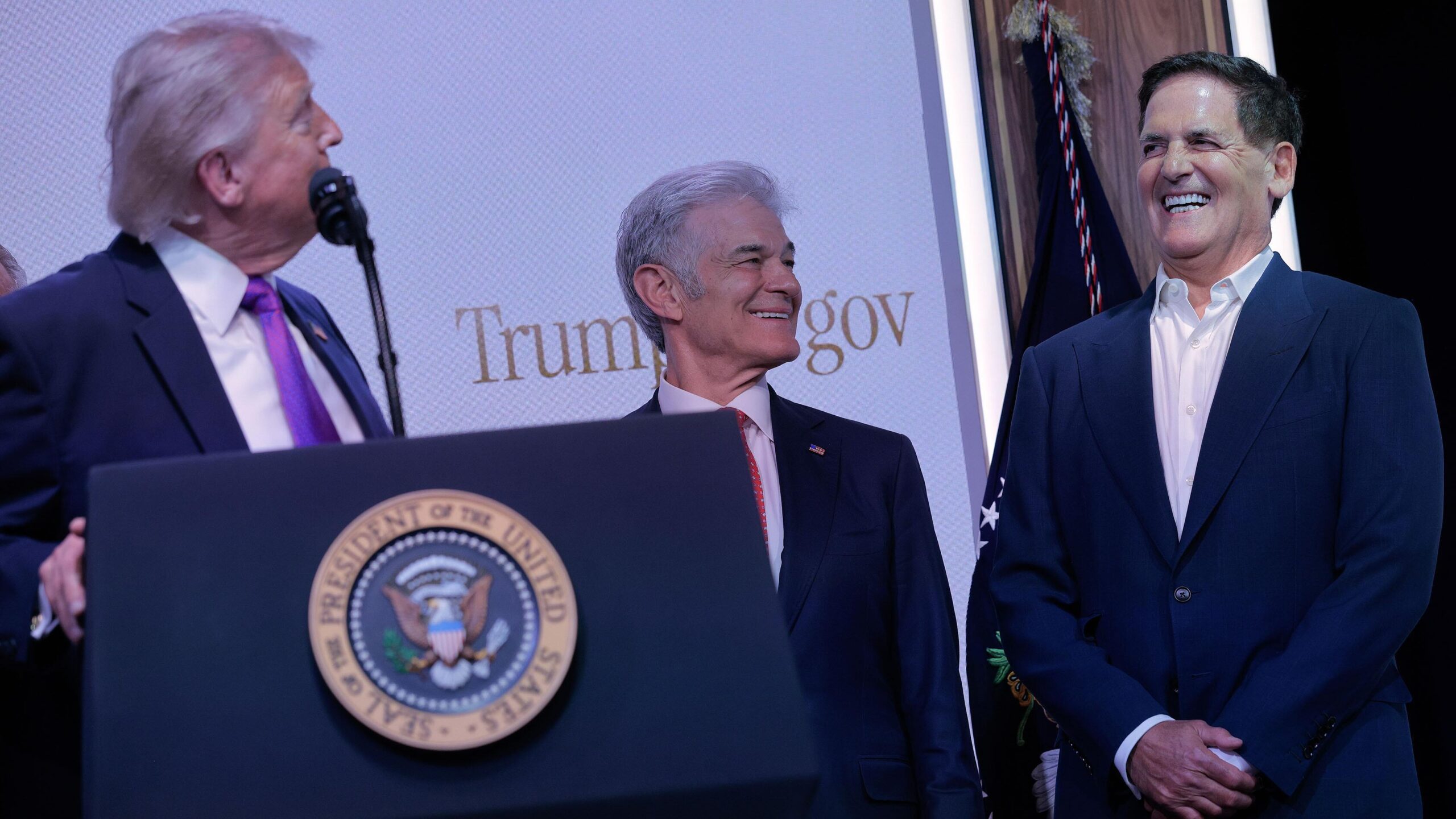
  • Rep. Tom Kean returns to Congress, says depression is why he went missing for months

    New Jersey Republican Thomas Kean Jr. said it was struggles with depression that kept him away from Congress for nearly four months with no explanation to his constituents.

    Kean last voted on March 5th, missing numerous votes and other appearances on Capitol Hill since. In April, House Speaker Mike Johnson told reporters he had spoken to Kean and that he was dealing with an undisclosed medical issue. Kean was not spotted until recently at his New Jersey home.

    Speaking from the House floor on Tuesday, the second term lawmaker said he had checked into a hospital for testing several months ago after health concerns, and was subsequently diagnosed with depression.

    “Talking about myself has never come naturally,” Kean said. “But I believe that I owe an explanation to the people of New Jersey’s seventh district, to my colleagues in this chamber and to the American people for my absence.”

    Kean said he originally did not think his diagnosis would result in a long-term absence. Doctors recommended he remain in the hospital to address the illness, and it was his fastest route to recovery, he said.

    “It is physical. It is emotional,” he said. “And until you experience it yourself, it is difficult to fully understand how powerful this illness could be.”

    Kean said he miscalculated how long he would be away, estimating it would be a matter of weeks. However, he said like the roughly 48 million Americans who have battled the illness, he learned there is no timeline for recovery.

    “I am grateful that I accepted help,” Kean said. “Today I stand before you healthier, stronger and excited to return to the work that I love.”

    Kean’s absence proved a struggle for House Republicans, who contend with a razor thin majority to pass party priorities. For weeks, Kean and his office declined to share additional details on why he was away, feeding rumors and speculation and raising interest in a member known for his privacy.

    Despite his absence, Kean won the GOP primary earlier this month to defend his seat in Congress in this fall’s midterm elections. He will face Democrat Rebecca Bennett, a former U.S. Navy helicopter pilot and healthcare executive.

    Bennett has targeted Kean’s absence in her campaign. Democrats have said Kean’s 7th congressional district is a top target to flip in their pursuit of taking back the majority.

    “Tom Kean Junior, wherever you are, you have failed this district,” Bennett told supporters at an event last week.

    In a statement after Kean’s remarks on Tuesday, Bennett said she was relieved he was well and wished him good health.

    “But let’s be clear: I got into this race because Tom Kean Jr. was failing our community long before this absence,” she said.

    Kean is not the first member of Congress in recent years to speak publicly about their struggles with depression. Sen. John Fetterman, D-Pa., took leave from the Capitol in 2023 after he was diagnosed with the illness. In Fetterman’s case, his office announced the news within days of his starting treatment.

    Kean was elected to Congress for his first term beginning in 2023, flipping a district that was represented by former Democratic Congressman Tom Malinowski.

    He comes from a long line of politicians: His father, former New Jersey Gov. Thomas Kean Sr., was appointed by former President George W. Bush as a chair of the 9/11 Commission. Kean’s grandfather and great grandfather also served in Congress.

  • ‘Dead but Dreaming of Electric Sheep’ is full of beautifully written grotesqueries

    ‘Dead but Dreaming of Electric Sheep’ is full of beautifully written grotesqueries

    Paul Tremblay has made a career of pushing the horror genre – and the novel format – in strange and exciting new directions.

    In his latest, Dead but Dreaming of Electric Sheep, the author offers an amalgamation of genre elements that can be best described as psychological-dystopian-science-fiction horror. It’s a mouthful, but the narrative does all of that and more in a way that defies categorization.

    Julia Flang is a former semiprofessional gamer working two mediocre jobs she dislikes and living in a modest ranch house in a San Fernando Valley suburb with her retired uncle, whom she calls Uncle Fun. Julia likes movies and gaming but there’s little else going on in her life, so when her estranged mother, the CFO of a large tech company, contacts her with a possible job offer – a “once-in-a-lifetime thing” that pays handsomely just for doing the interview – she hesitantly agrees.

    The job is relatively simple and perfect for someone with gaming skills: using a controller built into a phone to get a man, who is stuck in a vegetative state, from California to the East Coast. It will require her to learn how to control his body – walking, moving, sitting, standing, using his arms – so she can maneuver him out of the facility where he is located and into cars and planes and through crowded airports. A fan of movies, Julia decides to call the man Bernie – after the movie Weekend at Bernie’s. When the ethics of the job start to bother her, Julia realizes it’s too late and she must go through with it. However, she’s soon contacted by people interested in sabotaging the whole thing, people who, like her, don’t align with the shady interests of conglomerates and those set to make “gobs of money” from this new, somewhat inhuman technology.

    As with every Tremblay novel, any synopsis barely scratches the surface. The novel’s chapters alternate between Julia and you (yes, you). Julia’s chapters are “normal” in the sense that they obey a chronological order and have action, basic descriptions of movement and places, and dialogue. The chapters in second person are like fever dreams from a shadow world; the desperate experiences of a man trapped inside his own body with no control of it, no clue what’s happening to him, and only a few fragmented memories of his life. Also, Tremblay uses a similarly fragmented style of storytelling (including words and sentences trapped in boxes and/or “moving” on the page) to keep things interesting but also confusing and creepy.

    This novel operates on several different levels and – planes of existence? Bernie has a head full of AI that controls his body, but his consciousness is still there and struggling to regain control, struggling to remember things. There are monsters, leeches, mysterious rabbits, and eerie shadows in his world, but the true horror comes from the lack of control, from being moved around against his will and having no clue what comes next. Bernie is the embodiment of losing control to AI, and when taken together with the commentary of creativity and AI and the meta interludes in which the author takes a wrecking ball to the fourth wall and addresses readers, this is the best anti-Generative AI story horror has produced so far.

    Despite the horror of it, this is a very funny novel. Julia is sarcastic and struggles to keep her comebacks in line, but the conversations she has and messages she writes are always entertaining. However, the humor is far from the crown jewel here. That title belongs to a plethora of big ideas Tremblay juggles. The nature of life, death, and consciousness, the evils of conglomerates, inhuman practices in the name of capitalism, and AI, and even what it means to be human are all explored here: “Is Bernie alive? Is he feeling pain? Is he experiencing everything as a prisoner looking through the bars of his body? Has his consciousness been winnowed to a metaphysical keyhole? Where does consciousness begin or end?” There are no definite answers here, but the way Tremblay infuses humanity, love, the importance of relationships, and humor throughout the narrative provides the kind of answers that can’t and don’t need to be spelled out.

    A genre-bender full of big ideas that constantly switches between a world full of real or uncomfortably plausible nightmares and a bizarre hellscape in which loss of self, memory, and autonomy are only the tip of the proverbial iceberg, Dead but Dreaming of Electric Sheep is a horrific and terrifyingly disorienting novel that invites readers to consider a future that already started. Tremblay has always been an innovator, but this beautifully written collection of real and imagined grotesqueries cements him not only as one of the most original and exciting voices in horror but also as one of the smartest, most engaging authors in contemporary fiction.

    Gabino Iglesias is an author, book reviewer and professor living in Austin, Texas. Find him on X, formerly Twitter, at @Gabino_Iglesias.