Blog

  • Going outside in this heat? Follow these guidelines to stay safe

    Going outside in this heat? Follow these guidelines to stay safe

    As the holiday weekend approaches, large swaths of the Midwest and the Eastern U.S. are under extreme heat warnings or heat advisories, according to the National Weather Service.

    Heat is a serious health threat. Hundreds of people die of heat-related illness in the U.S. each year. Heatstroke can damage your body, leading to multiple organ failure or kidney failure, and it can trigger a heart attack.

    If you plan to spend time outdoors this week, here’s a roundup of advice from NPR reporting on how to protect yourself and your loved ones.

    For the latest stories on the science of healthy living, subscribe to NPR’s Health newsletter.

    1. Assess the heat risk before you go outside

    There’s not an absolute temperature at which extreme heat turns dangerous. Rather, it depends on your individual circumstances, how acclimated to heat you are and how long you’re exposed to the heat, Lewis Halsey, a professor of environmental physiology at the University of Roehampton in the U.K., told NPR.

    Humidity is also a key factor, he says. Sweating works better to cool you off in dry heat than in humidity. Wind flow can also affect the risk of overheating.

    “If it’s a very humid day and there’s no wind speed, then you are more at risk, even if the air temperature is lower,” Ashley Ward, director of Duke University’s Heat Policy Innovation Hub, told NPR’s Life Kit.

    Keep an eye out for heat advisories or warnings in your area issued by the National Weather Service. These typically take into account the local heat index, which includes humidity as well as the air temperature, to get a more accurate read on how hot it will feel outside.

    But they are not foolproof, says Nick Staub, incident commander for extreme heat response in Maricopa County, Ariz. “We see a significant number of heat-related deaths on days that are not an extreme heat warning,” Staub said, speaking on NPR’s Short Wave.

    One reason for this is that the heat index values are calibrated for shady locations with light wind. If you’re in direct sunlight, it can be 15 degrees hotter than in the shade.

    Instead of relying on heat indices alone, check the National Weather Service’s HeatRisk tool, which takes several factors into account, including: how far above normal the current temperature is for your location and time of year; heat duration; and humidity forecasts.

    Carrying your own shade is one way to stay cool. Experts advise avoiding the midday sun altogether.
    Carrying your own shade is one way to stay cool. Experts advise avoiding the midday sun altogether. (Alex Wroblewski | AFP via Getty Images)

    2. Know if you’re high risk

    Some people are at higher risk for heat-related illness, as NPR has reported, and they need to take extra care to stay cool.

    This includes people who aren’t acclimatized to the heat because they are from cooler regions or spend little time outdoors. Infants and small children can be particularly at risk, partly because of their small body size. Kids also might not notice how they’re feeling, or not communicate it clearly, so it’s important to watch for changes in their behavior that might suggest they’re overheating.

    People in their 60s and older may have a reduced ability to sweat and thus cool off. Pregnant women’s bodies also may not cool off well, and heat can raise the risk of pregnancy-related health problems. People with certain chronic health conditions or on certain medications may have trouble too.

    And finally, outdoor workers or others who do strenuous outdoor activity and those without access to air conditioning are at high risk.

    3. Check prescriptions — heat and some medicines don’t mix

    Certain medications can make people more vulnerable to heat. For instance, blood pressure drugs, which millions of people take, are diuretic. “Those medications are trying to get rid of fluid from your body,” Wafi Momin, a cardiologist at Memorial Hermann Health System in Katy, Texas, told NPR. And if you then add heat, “that can cause a very dangerous situation” of dehydration.

    Other types of medications can impair your body’s ability to cool off, including anticholinergic medications (a category that includes Benadryl) and stimulants, like ADHD drugs. ACE inhibitors, commonly prescribed for heart issues, make it harder to notice you’re thirsty, and beta blockers — another heart medication — can decrease sweating.

    “When you’re taking these medications and you’re exposed to heat, it’s like asking a car to drive up a mountain in the summer with the air conditioner broken,” David Eisenman, a physician and researcher at the University of California, Los Angeles, told NPR. “Overheating becomes much more likely.”

    Psychiatric medications can also interfere with your body’s thermoregulation. Antipsychotics and some antidepressants can reduce how much you sweat.

    Sedative medications like benzodiazepines may “reduce alertness and perception of heat, says Dr. Ashwini Nadkarni, a psychiatrist and medical director of Brigham General Adult Psychiatry at Mass General Brigham in Boston.

    Patients should still take their prescribed medications, Eisenman stresses. But he urges them to take heat risks seriously and make a plan to keep cool.

    Ask your doctor whether any of your medicines could increase your risk of heat-related illness. And you can explore a list of medicines that contribute to heat sensitivity from the Centers for Disease Control and Prevention.

    4. Know the difference between heat exhaustion and heat stroke and when to seek emergency care

    The warning signs of heat exhaustion include fatigue, extreme thirst, nausea, headache, shortness of breath, rapid breathing, muscle cramping and feeling dizzy or lightheaded.

    Heatstroke is a much more serious emergency. The warning signs include all the above but also may include a strong, rapid heartbeat, confusion, vomiting, seizures, slurred speech, or passing out. Watch for a body temperature that exceeds 103 degrees F.

    The first step to help anyone who exhibits symptoms of heat exhaustion or heatstroke is to get them to immediately stop what they are doing and rest somewhere out of the sun, Dr. Matt Leonard, attending emergency physician at Suburban Hospital, Johns Hopkins School of Medicine, told NPR.

    Take steps immediately to cool the person who’s overheated: Get them into air conditioning if possible, or at least shade with a fan or breeze. Mist them with a spray bottle, for example, or pour water over their head. The most important places to cool are the head and face, the armpits and the groin, he says.

    If symptoms point to heatstroke (watch especially for neurological symptoms like confusion), get them to an emergency room right away.

    Staying hydrated and letting your skin aerate can help you stay cool.
    Staying hydrated and letting your skin aerate can help you stay cool. (Spencer Platt | Getty Images)

    5. Keep cool: Avoid midday sun and choose protective clothing

    One of the simplest ways to keep your body temperature at a reasonable level on a hot summer day is to only go outside in the morning or evening when it’s cooler. And stay in the shade, especially if you’re doing anything active.

    “That midday sun can add as much as 20 degrees or more to the actual air temperature,” Carol Ewing Garber, professor of movement science at Columbia University, told NPR. “You really have to be careful about that.”

    And it’s important to protect your skin, says Leonard. Your skin is an “amazing self-cooling apparatus,” he says. It’s designed “to move warm blood away from your core to keep your vital organs cool.”

    Consider wearing lightweight clothing that blocks the sun, and include a hat. Leonard recommends wicking athletic fabrics that allow you to sweat.

    Choose loose-fitting silhouettes, recommends Dr. Renee Salas, assistant professor of emergency medicine at Harvard Medical School. If your clothes are too tight, the sweat on your skin can’t evaporate, which is key to keeping your body cool. “I’m sure people don’t love sweating profusely, but sweating is actually our friend when it comes to heat,” Salas told Life Kit.

    6. Prehydrate — and rehydrate often

    If you’re outside or in a hot place, dehydration can happen fast. So prepare by hydrating in advance, says Momin, of Memorial Hermann Health System. “Grab a glass of water or a sports drink before you head out to the outdoors,” he says.

    Bring plenty of water with you, and don’t wait until you’re thirsty to start drinking during an outdoor activity. “The moment you begin to feel thirsty, you’re likely anywhere between 10 to 25% dehydrated already,” says Neil Gandhi, a physician at Houston Methodist Hospital.

    Water is the best way to hydrate. Adding electrolytes is not necessary under normal circumstances. But they can be helpful if you’ve gotten overheated or you’re doing something very physically active and sweating a lot. In that case, it can be a good idea to replace those electrolytes promptly, Asher Rosinger, an associate professor and director of the Water, Health, and Nutrition Lab at Penn State University, told NPR.

    7. If you struggle with mental health, take extra care

    Higher temperatures are known to have an impact on mental health. Studies show that higher temperatures are linked to higher rates of visits to the Emergency Department for mental health conditions and addiction.

    And suicide risk goes up too, a recent study found. “We think that every summer roughly an additional hundred young adults are dying by suicide due to increasing temperatures,” says study author and psychiatrist Dr. Joshua Wortzel at the Hartford HealthCare Institute of Living, who runs the institute’s Heat Mind Lab.

    If you or someone you know may be struggling with suicidal thoughts, contact the 988 National & Suicide Crisis Lifeline by calling or texting 988.

    So, what can people with mental health conditions do to protect themselves from excessive heat? Avoid exposure to heat as much as you can, says Nadkarni of Mass General Brigham. She advises “staying indoors in cooler places” and making sure to hydrate.

    She also recommends people talk to their doctors about what their risks are. There can be added risk for people with substance use disorders — alcohol and certain drugs are diuretics and can cause dehydration. And people with mental illness are also vulnerable to heat-related illness, says Nadkarni, so it’s important to watch out for symptoms and seek medical attention promptly if they develop.

    Lean into your social networks during times of high heat, suggests Amruta Nori-Sarma, an environmental health researcher at Harvard University’s Chan School of Public Health. “If you have a loved one that you know is prone or vulnerable, make sure that you’re checking in with them when there’s a heat wave,” she says.

    Rhitu Chatterjee contributed to this report.

    Other reporting was drawn from earlier NPR stories. Contributing reporters include: Allison Aubrey, Alejandra Borunda, Maria Godoy, Pien Huang, Emily Kwong, Suzette Lohmeyer, Christine Ro, and Clare Marie Schneider.

  • NPR News: 07-02-2026 9AM EDT

    NPR News Now Standing Video – RSS Version ( (Photo: NPR))
  • NPR News: 07-02-2026 8AM EDT

    NPR News Now Standing Video – RSS Version ( (Photo: NPR))
  • Trump denies conflict of interest over crypto. And, Vatican excommunicates rebel group

    Good morning. You’re reading the Up First newsletter. Subscribe here to get it delivered to your inbox, and listen to the Up First podcast for all the news you need to start your day.

    Today’s top stories

    President Trump’s financial disclosures reveal that he and his family earned more than $1 billion through cryptocurrency ventures and other businesses last year, according to a 927-page report filed with the Office of Government Ethics. The report shows that more than $500 million came from the cryptocurrency venture “World Liberty Financial,” which was co-founded by Trump family members. The sale of souvenir “meme” coins featuring Trump’s image generated more than $600 million. Other income included more than $50 million from settlements with media companies and millions in profits from Trump-branded products like Bibles, sneakers and watches. These earnings, which have outpaced his real estate business, have sparked concerns about potential conflicts of interest. The White House released a statement denying any conflicts of interest, and spokesperson Anna Kelly applauded Trump for making the U.S. “the crypto capital of the world.”

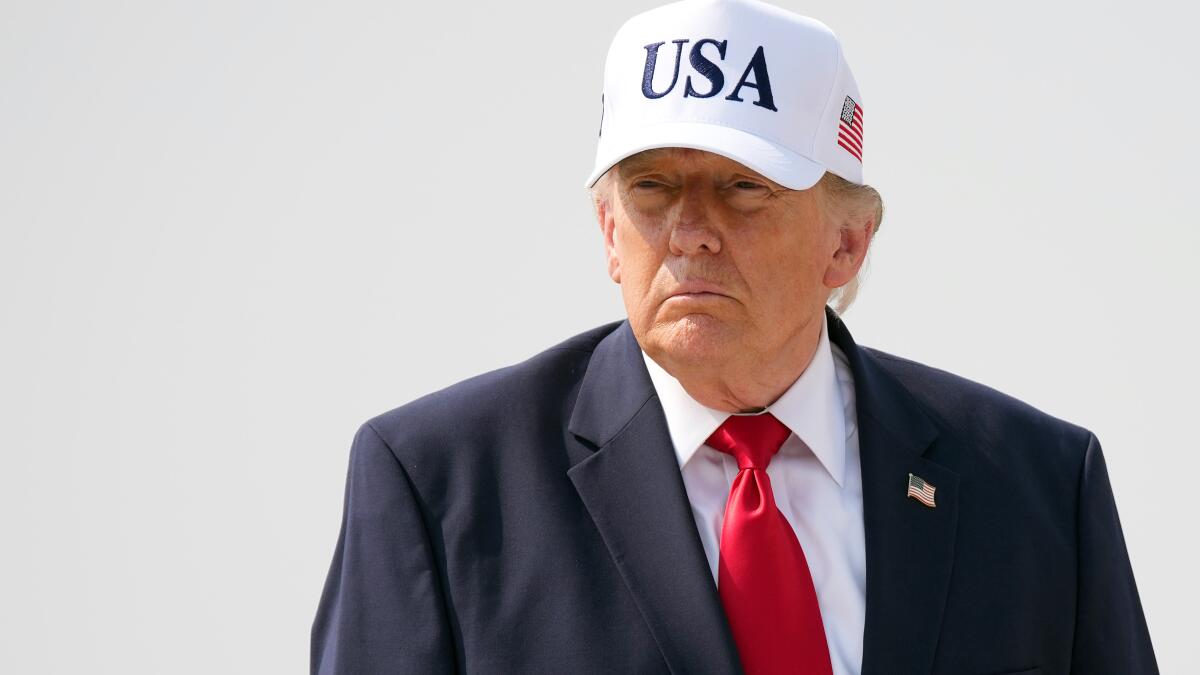
    President Trump walks to board Air Force One as he departs Bismarck Municipal Airport on July 1, 2026, in Bismarck, North Dakota. Trump traveled to North Dakota to attend the Theodore Roosevelt Presidential Library dedication.
    President Trump walks to board Air Force One as he departs Bismarck Municipal Airport on July 1, 2026, in Bismarck, North Dakota. Trump traveled to North Dakota to attend the Theodore Roosevelt Presidential Library dedication. (Andrew Harnik | Getty Images)
    • 🎧 Democrats have had a lot to say regarding the president’s earnings, NPR’s Linda Kenyon tells Up First. Sen. Adam Schiff of California suggested Trump has earned more money in the first year of his current term than in the rest of his life combined. Rep. Jason Crow of Colorado referred to the president’s cryptocurrency earnings as another example of what he described as “grift and corruption.” Crow also highlighted that the president took his first flight yesterday on a brand-new Air Force One, a gift from a foreign government valued at roughly $400 million.

    The Vatican this morning formalized the excommunications of the bishops and priests of the conservative group known as the Society of St. Pius X, declaring that it has entered schism and broken communion with the pope and the Catholic Church. The group, known as SSPX, celebrates the traditional Latin Mass and opposes some modern church reforms. In the Catholic Church, the appointment of new bishops is the responsibility of the pope. But yesterday, the group defied Pope Leo XIV by consecrating four bishops without his approval. The Society framed its actions as a defense of Catholic tradition. During the ceremony, the Rev. Davide Pagliarani, head of the Society of St. Pius X, described the consecrations as an act of service rather than rebellion. Two of the excommunicated men teach in the U.S., where the group’s membership has been growing, according to the society.

    A little over a week has passed since rare double earthquakes struck Venezuela. Thousands of people are feared dead as the official death toll continues to rise and hope diminishes for finding survivors in the rubble. Yesterday, the number of people killed by the quakes reached 2,295, and more than 11,200 people were injured, said Jorge Rodríguez, the president of Venezuela’s National Assembly. Tens of thousands of people remain unaccounted for. The number of people left homeless could be staggering. An analysis of satellite data by Corey Scher and Jamon Van Den Hoek from Oregon State University estimated that 58,870 buildings were likely damaged or destroyed by the earthquakes. The U.N.’s International Organization for Migration has reported that up to 6.8 million people could be affected by the disaster, needing shelter, water, sanitation, healthcare and other relief items. Here are the most significant developments since the tragedy occurred.

    The U.S. men’s national team defeated Bosnia-Herzegovina 2-0, marking its first FIFA World Cup knockout round victory since 2002. With this win, the U.S. advances to the Round of 16, where it will face Belgium on July 6. The team will have to play without U.S. forward Folarin Balogun, who will be suspended after receiving a red card for a cleat-first challenge on Bosnian defender Tarik Muharemović. Balogun has scored three goals in three World Cup matches, including the first goal of yesterday’s game. Balogun is currently the top goalscorer for the U.S. team in the 2026 World Cup.

    • 🎧 NPR’s Becky Sullivan says it’s hard to know how the U.S. will fare against Belgium next week. The Belgian team easily beat the U.S. 5-2 in a friendly back in March, but Sullivan says Belgium also looks like one of the most beatable “good teams” in the tournament so far. So the U.S. has a good chance, even without Balogun. A win would bring the American men to the quarterfinals, the furthest they’ve ever advanced in a modern World Cup.

    Life advice

    Got a fridge full of half-eaten food like this rotisserie chicken and not sure what to do with it? Chefs share creative cooking tricks and storage techniques to motivate you to use it all up.
    Got a fridge full of half-eaten food like this rotisserie chicken and not sure what to do with it? Chefs share creative cooking tricks and storage techniques to motivate you to use it all up. (Pulse/Getty Images | Corbis RF Stills)

    Don’t let your leftovers go to waste. According to the nonprofit ReFED, about a quarter of all food products are wasted nationally. Life Kit spoke with chefs who shared clever storage techniques and cooking tips to help you make the most of your food scraps.

    • 🍽️ Start with a mindset shift. Consider cooking with leftovers as a creative and experimental exercise rather than a guilt-driven one.
    • 🍽️ Develop a collection of flexible, go-to recipes that can use up a variety of ingredients. For example, if you have leftover rice, you can cook it with other ingredients, such as rotisserie chicken and older vegetables, to make fried rice.
    • 🍽️ Save yourself the guessing game of wondering what is in your fridge by labeling and dating your leftovers.
    • 🍽️ Never throw away herb stems, as they still have the same herby flavor as the leaves. If you blend them with a clove of garlic and olive oil, you can create a base sauce. You can do the same thing with vegetables like broccoli to make soups.

    For additional guidance on creative ways to use your leftover odds and ends, listen to this episode of NPR’s Life Kit. Subscribe to the Life Kit newsletter for expert advice on love, money, relationships and more.

    Picture show

    Garland Jones, recreational therapist and senior program director of the YMCA of South Florida's special needs program, teaches Mackenzie Wesley, 5, to breathe safely in water by using a ping pong ball as a visual aid.
    Garland Jones, recreational therapist and senior program director of the YMCA of South Florida’s special needs program, teaches Mackenzie Wesley, 5, to breathe safely in water by using a ping pong ball as a visual aid. (LA Johnson | NPR)

    Children with autism are 160 times more likely to die from drowning compared to their peers, according to a 2017 study from Columbia University. This is largely because about half of autistic children have a tendency to wander away from safe environments. That fact, combined with an attraction to water, can be very dangerous. High-quality swim lessons can be a vital preventative measure to combat this issue. Florida, which has one of the highest childhood drowning rates in the nation, expanded a voucher program this month that puts children ages 1-7 who have autism at the front of the line for subsidized swim lessons. The YMCA of South Florida’s low-cost Swim Buddies program is one of the largest programs specifically designed for children with disabilities in the area. One of its key features is its focus on individualization and one-on-one instruction, rather than traditional group lessons. Staff members assess each child’s needs and tailor the lessons accordingly. Take a look at how this program is helping children with autism.

    3 things to know before you go

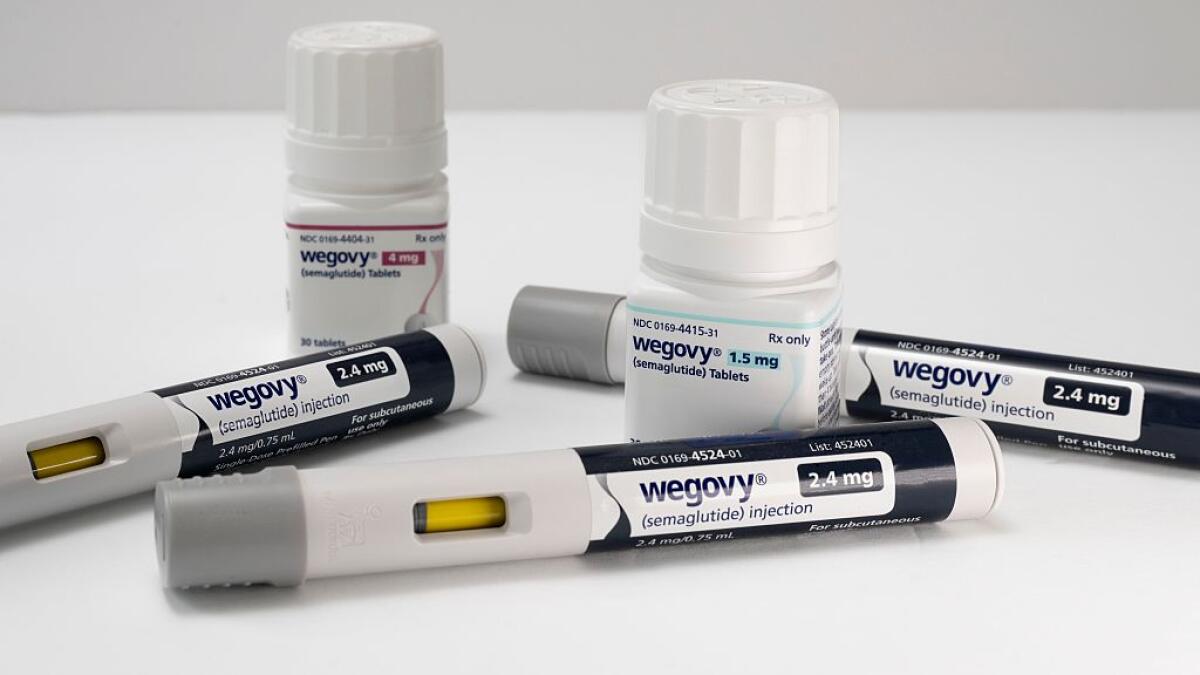
    Photo Illustration of the new Wegovy 1.5 mg and 4 mg semaglutide tablets with injectable prescription weight loss pens on a white background. Its a prescription medicine used with a reduced calorie diet and physical activity. (Photo by: Michael Siluk/UCG/Universal Images Group via Getty Images)
    Photo Illustration of the new Wegovy 1.5 mg and 4 mg semaglutide tablets with injectable prescription weight loss pens on a white background. Its a prescription medicine used with a reduced calorie diet and physical activity. (Photo by: Michael Siluk/UCG/Universal Images Group via Getty Images) (Universal Images Group | Getty Images)
    1. A Medicare pilot program for GLP-1 drugs launched yesterday, allowing beneficiaries to get a weight loss prescription for $50 a month.
    2. Kroger is set to acquire the Pittsburgh-based Giant Eagle grocery store chain for $1.65 billion. (via WESA)
    3. Dozens of states might be responsible for millions of dollars next year to help feed low-income families through the federal Supplemental Nutrition Assistance Program (SNAP). Under the One Big Beautiful Bill Act, states with error rates of 6% or higher will be required to cover 5%, 10% or 15% of SNAP benefits in the coming years. (via KCUR)

    This newsletter was edited by Suzanne Nuyen.

    Transcript:

    (SOUNDBITE OF MUSIC)

    A MARTÍNEZ, HOST:

    President Trump and his family made more than a billion dollars last year, much of it from crypto.

    MICHEL MARTIN, HOST:

    His enormous earnings are raising a lot of questions about possible conflicts of interest. The White House says there’s nothing wrong with it.

    MARTÍNEZ: I’m A Martínez. That is Michel Martin, and this is UP FIRST from NPR News.

    (SOUNDBITE OF MUSIC)

    MARTÍNEZ: Democratic socialists are gaining momentum after primary wins in New York and Colorado. Republicans are betting they can paint the whole party as too extreme, which could be a challenge for Democrats eyeing midterm races. Can they tap into that democratic socialist energy without the label?

    MARTIN: And the U.S. men are through to the World Cup’s round of 16. They beat Bosnia-Herzegovina, although they had to play a man down for their first knockout win in 24 years. But their top scorer is suspended for the next game. Stay with us. We’ll give you news you need to start your day.

    (SOUNDBITE OF MUSIC)

    MARTIN: President Trump’s financial disclosures show that the president and his family took in more than $1 billion through cryptocurrency sales and other business ventures.

    MARTÍNEZ: The report released this week shows the crypto earnings sharply outpaced Trump’s real estate businesses, which had already made the president a wealthy man. They also raise questions about possible conflicts of interest.

    MARTIN: NPR’s Linda Kenyon is with us this morning. Welcome, Linda. Glad to have you with us.

    LINDA KENYON, BYLINE: Thank you. Good morning.

    MARTIN: Now that we’ve had some time to dig into this 927-page financial disclosure document, what exactly are we learning about the crypto earnings for the president and his family?

    KENYON: Well, we’re learning a lot. The 2025 report, which was filed with the Office of Government Ethics, shows the cryptocurrency venture World Liberty Financial, which was co-founded by Trump and his family members, took in more than $500 million. In addition, the sale of Trump’s souvenir-type meme coins took in more than 600 million. The official version of those meme coins with Trump’s face stamped on it was launched just days before he took his second-term inauguration. Other income included more than 50 million from settlements with media companies, millions from selling Trump-branded bibles, sneakers, watches. Those watches with the Trump imprint brought in more than $4.7 million all by themselves. And that’s all separate from the president’s overseas real estate ventures, many of them with countries that have been negotiating with the U.S. on tariffs and military aid and several other issues.

    MARTIN: What’s the White House saying?

    KENYON: Well, the White House has released a statement that denies any conflict of interest. Spokesperson Anna Kelly said, quote, “neither the president nor his family has ever engaged or will ever engage in conflicts of interest.” She also applauds the president for making the U.S., as she put it, the crypto capital of the world through executive actions. President Trump himself also answered reporters who asked about his earnings when he was leaving for the Dakotas yesterday at Joint Base Andrews.

    (SOUNDBITE OF ARCHIVED RECORDING)

    PRESIDENT DONALD TRUMP: We have funds that run my money.

    UNIDENTIFIED REPORTER: But you are benefiting. I mean, you’re probably making hundreds of thousands of dollars (ph).

    TRUMP: Well, I made a lot of money before I became president. And they invest my money, and I don’t talk to them. I never – I don’t even speak to them. So I have many people. I don’t know what they call it – closed accounts or something. You put your money in, and that’s it. I don’t talk to them. They’re big institutions, and they run it.

    KENYON: That’s not unlike the response that White House press secretary Karoline Leavitt gave when she was asked about Trump’s meeting with top investors in his meme coin, a meeting that took place in May of 2025.

    (SOUNDBITE OF ARCHIVED RECORDING)

    KAROLINE LEAVITT: The president is abiding by all conflict-of-interest laws that are applicable to the president. And I think everybody – the American public believe it’s absurd for anyone to insinuate that this president is profiting off of the presidency.

    KENYON: Trump on Wednesday said he’s also earning more because the stock market is doing well, saying everybody is profiting.

    MARTIN: So the White House and the president deny any conflict or abuse of the office. Linda, I have to note that even some of the president’s traditional supporters – some of the podcasters, for example – are raising questions about this. But what about other people? Are there other critics of this?

    KENYON: Yes, absolutely. Democrats have a lot to say. For example, California Senator Adam Schiff suggested the president has made more money in the first year of his term than in the rest of his life combined. And Congressman Jason Crow called the president’s crypto earnings another example of what he termed grift and corruption. The Colorado Democrat also pointed out that Trump, on Wednesday, was taking his first flight on a brand-new Air Force One, a gift from a foreign government – Qatar – valued at more than $400 million and will stay in the Trump realm when he leaves office. The White House says the aircraft will be a donation to Trump’s presidential library.

    MARTIN: That’s NPR’s Linda Kenyon. Linda, thank you.

    KENYON: Thank you.

    (SOUNDBITE OF MUSIC)

    MARTIN: Democratic socialists have scored some high-profile victories over the last few days.

    MARTÍNEZ: And in the view of many Republicans, that should be a warning sign for voters. Here’s President Trump on Wednesday.

    (SOUNDBITE OF ARCHIVED RECORDING)

    TRUMP: We’re not going to let communists get in our way. We’re not going to let anyone get in our way.

    (CHEERING)

    TRUMP: Not the communists.

    MARTÍNEZ: For Democrats, these kinds of attacks come as no surprise, but they still pose a challenge for the party as they look ahead to this year’s midterms and a path back to the majority in Congress.

    MARTIN: NPR political reporter Elena Moore has been keeping an eye on all this and is with us now. Good morning, Elena.

    ELENA MOORE, BYLINE: Good morning, Michel.

    MARTIN: So we saw democratic socialists win big victories in New York City last week and then again this week in Denver. How are they doing it?

    MOORE: Well, it’s a mix of things. Democrats have struggled to coalesce around a clear post-2024 message. But many of these successful campaigns endorsed by the Democratic Socialists of America, or DSA, do have a core message, one that’s centered around economic populism and rejecting the political status quo. They’re also not shying away from more polarizing issues, like abolishing ICE and an end to U.S. military aid in Israel. And taken together, it’s a platform that appears to be energizing people, at least in these super blue areas.

    MARTIN: What did that look like in Denver?

    MOORE: To back up real quick, the DSA is not a registered political party. It’s a membership group. So that’s why these candidates are running in the Democratic Party primary. And that’s what Melat Kiros did in Denver. She’s a 29-year-old first-time candidate who unseated longtime Democrat Diana DeGette. And make no mistake, DeGette is seen as a progressive on Capitol Hill, but she’s also been there since 1997, the year Kiros was born. So Kiros campaigned as an antiestablishment candidate, calling for a new type of politics. And like many leftist candidates this year, she tried to differentiate herself by vocally rejecting money from corporate PACs and pro-Israel lobbying groups and criticizing her opponent for taking those same kinds of donations in the past.

    MARTIN: Can you talk about the drawbacks that some other Democrats see in these DSA victories?

    MOORE: Well, several of these candidates are going from activist to politician, and skeptics are wasting no time highlighting at least one of these candidates’ past comments disparaging Democrats. Some Democrats are hesitant to associate with DSA, saying it could complicate their message in toss-up races where control of Congress will ultimately be decided. Matt Bennett with the centrist think tank Third Way argued that Republicans will paint any Democrat as a democratic socialist in hopes that it will make them seem too extreme.

    MATT BENNETT: Of course, it’s possible to run as a left-leaning populist without adopting the maximalism of the extremes. But it is very hard for Democrats now to distinguish themselves.

    MARTIN: What did the democratic socialists say to that?

    MOORE: Well, I talked to Claire Valdez about it. She’s one of two candidates for Congress who won in New York last week. She argues this is not a radical movement.

    CLAIRE VALDEZ: We’re seeing it not just in New York City, but really around the country that there’s broad consensus around the need to re-center working-class, you know, Americans in our politics and really fight to make sure that the Democratic Party is leading on these issues.

    MARTIN: So with all that said, what’s the calculus for Democrats as they look ahead in November?

    MOORE: Well, candidates who don’t want to be associated with DSA are going to try to strike a balance, tapping into some of that same messaging without the DSA label. And that’s not going to stop the GOP from framing people as extreme. But given how frustrated folks are with politics right now, I’ll be watching to see if voters are more willing to look past those kind of attacks.

    MARTIN: That’s NPR’s Elena Moore. Elena, thank you.

    MOORE: Thanks, Michel.

    (SOUNDBITE OF MUSIC)

    MARTIN: OK. Now, a 2-0 win may not sound like much of a nail-biter, but last night in the FIFA World Cup, the U.S. men’s national team looked like it might be on the ropes before pulling out a win against Bosnia and Herzegovina.

    MARTÍNEZ: It’s the first time in almost a quarter century that the United States has won a game in the World Cup knockout stage.

    MARTIN: NPR sports correspondent Becky Sullivan was there. Hopefully, she’s gotten her heart rate back down. And now she’s joining us on the line from San Jose, California. Good morning, Becky.

    BECKY SULLIVAN, BYLINE: Good morning, Michel.

    MARTIN: I mean, what a game. How big…

    SULLIVAN: Yeah.

    MARTIN: …Of a win is this?

    SULLIVAN: Unbelievable. Yeah. I mean, this was a wild ride. It’s a huge win, Michel, because, I mean, just being there, the U.S. had to work and work and work to get that first goal to go up 1 to 0 just before halftime. And then there’s striker Folarin Balogun, who is this, like, the newest big star of this team, made this disastrous mistake in the second half. He got his legs tangled up with a Bosnian defender. He stepped on the defender’s ankle.

    It went to a video review, and it was deemed a red card, meaning he was out for the game, of course. And the U.S. was forced to play down a man for the remainder of the game, which was, like, 25 minutes plus stoppage time. And I don’t think any fan in the stadium was confident at all in that point in a U.S. win. Bosnia was, of course, only down one. Anything could have happened. And they pulled it off for the biggest win for the U.S. men’s national team in a good long time.

    MARTIN: OK. So tell us about the win. There was this hero moment…

    SULLIVAN: Yes.

    MARTIN: …In the second half when the U.S. went up 2-0. Tell us about it.

    SULLIVAN: Yeah, exactly. Yeah. So they were playing shorthanded. They’re down a guy. But this yellow card on a Bosnian defender gave the U.S. this golden opportunity, a free kick from near the top of the penalty area. And up steps midfielder Malik Tillman. He couldn’t have hit a prettier shot, just right over the wall of defenders and into the net. He is just one of the best, most skilled players on the team, and yet he is also just one of the quietest, most understated, one of the most soft-spoken people I think I’ve ever met. Sometimes you even struggle to hear him when he’s just speaking to a small crowd of us reporters, and here is how he put it after the game.

    (SOUNDBITE OF ARCHIVED RECORDING)

    MALIK TILLMAN: I’m a different type of person on the pitch. Of course, maybe you don’t really see my emotions. But if you score a goal like this, I mean, I think also you guys saw my emotions, and so it’s a great feeling, and, of course, a very proud moment for me.

    SULLIVAN: (Laughter) Yes, you can hear how quiet he is there. He was born in Germany. His mom is German. His dad was in the American Armed Forces. He’s American. And so, Malik is just one of these dual nationals that the U.S., of course, is very happy to have on the team right now ’cause when you can score a shorthanded goal like that, Michel, there is nothing that takes the wind out of the sails faster for an opponent in a game like that.

    MARTIN: OK. But this red card – right?

    SULLIVAN: Yes.

    MARTIN: For…

    SULLIVAN: It is a big deal. Yeah. Unfortunately, it’s a big deal because Balogun has become a huge centerpiece of this team in the World Cup. So far, he has played three games. He had three goals, which is already tied for the second most all time by any American man in a single World Cup. He’s not the type of guy who picks up a lot of yellow and red cards. This is his first-ever red card for the national team. So sitting out is going to be a big deal. Here is his teammate Christian Pulisic after the game.

    (SOUNDBITE OF ARCHIVED RECORDING)

    CHRISTIAN PULISIC: It’s just disappointing. Like, I understand it’s, you know, a dangerous act in a way, but, like, he’s just trying to put his foot on the ground, and it wasn’t high on his leg. It’s just so unfortunate.

    SULLIVAN: You can just, like, really hear the disappointment in his voice. I mean, Pulisic is exactly the guy, by the way, who benefits from Balogun being on the field because Balogun is good. It takes away some of the pressure from Pulisic, who has long been the biggest star of the U.S. men’s national team. Now the opponent next week, Belgium, will get to focus more of that attention on Christian Pulisic.

    MARTIN: So for people who don’t know the game that well yet, that means that Balogun is out for the next match, which is against Belgium. So what else are we going to see there?

    SULLIVAN: Yeah. You know, it’s hard to know. You know, Belgium has been a team with some real ups and downs this year, on one hand. You had Belgium and the U.S. playing in a friendly back in March. Belgium won that one really easily, actually. It was 5-2, kind of a big blowout win. But on the other hand, they’ve looked like one of the most beatable, quote-unquote, “good teams” in this tournament so far in this World Cup. So I think it’s a difficult one to predict. The U.S. certainly has a chance even without Balogun, and a win, Michel, would bring the Americans to the quarterfinals, which would match the deepest run they’ve ever had in a modern World Cup.

    MARTIN: That is NPR’s Becky Sullivan. Becky, thank you.

    SULLIVAN: You’re welcome.

    (SOUNDBITE OF MUSIC)

    MARTIN: And that’s UP FIRST for Thursday, July 2. I’m Michel Martin.

    MARTÍNEZ: And I’m A Martínez. Today’s episode of UP FIRST was edited by Jan Johnson, Russell Lewis, Jason Breslow, Alice Woelfle and Mohamad ElBardicy. It was produced by Ziad Buchh and Nia Dumas. Our director is Christopher Thomas. We get engineering support from Stacey Abbott. Our technical director is Zac Coleman, and our deputy executive producer is Kelley Dickens. Join us again tomorrow.

    (SOUNDBITE OF MUSIC)

  • NPR News: 07-02-2026 7AM EDT

    NPR News Now Standing Video – RSS Version ( (Photo: NPR))
  • Danny McBride on creating ridiculous male characters: ‘There’s nothing funnier than somebody who’s full of hot air’

    Wild Card: Danny McBride ( (NPR))

    A note from Wild Card host Rachel Martin: Actor and writer Danny McBride has built a career exploring the hilarious extremes of the male psyche. He creates characters with an almost delusional sense of confidence who are flying high on their own supply, only to come crashing down when the inevitable weight of self-doubt shows up.

    But no matter where these characters are on their journey through American masculinity, be it Jesse from “The Righteous Gemstones” or Kenny Powers from “Eastbound & Down,” their fragility makes them all the more endearing. Danny McBride has a new book out on these same themes. It’s called “Thrilling Tales of Modern Men.”

  • NPR News: 07-02-2026 6AM EDT

    NPR News Now Standing Video – RSS Version ( (Photo: NPR))