Blog
-
Egypt complains officials were biased in World Cup loss to Argentina
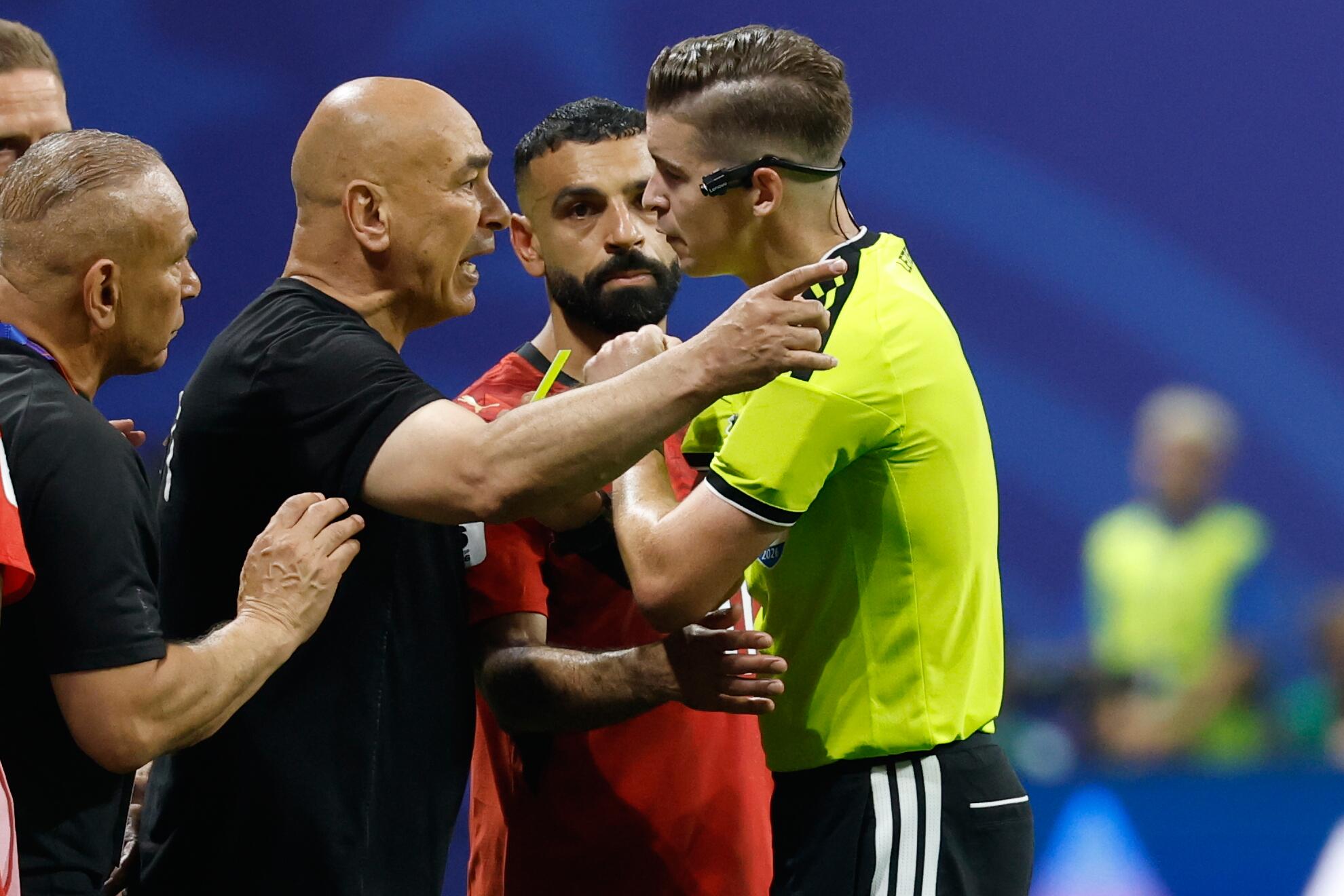
ATLANTA — The Egyptian Football Association (EFA) said Wednesday it “cannot remain silent” after what it believes was unfair and biased officiating in Egypt’s 3-2 round of 16 loss against Argentina on Tuesday.
Egypt coach Hossam Hassan and several players criticized the officiating after being left in disbelief as Argentina scored three unanswered goals in 13 minutes to pull off one of the biggest comebacks in World Cup history.
“Defending the rights and interests of the Egyptian national team is not a matter that can be ignored, minimized, or treated as secondary,” the EFA said in a statement. “It is a responsibility that we carry with full conviction and determination.”
FIFA’s chief of refereeing Pierluigi Collina, in a statement issued later Wednesday, said while constructive discussion about decisions would always be part of football, “unfounded allegations have no place in our sport.”
“Nobody can question the integrity of the FIFA World Cup match officials,” he said. “When this happens, it may provoke reactions that lead to threats against them and their families. This is not right.”
The EFA said that the referee failed to use the Video Assistant Referee (VAR) system appropriately, leading to the loss to Argentina.
Egypt appeared to have netted its second goal in the 58th minute, but a VAR review determined that Marwan Attia had fouled Argentina defender Lisandro Martínez early in the buildup up to the goal.
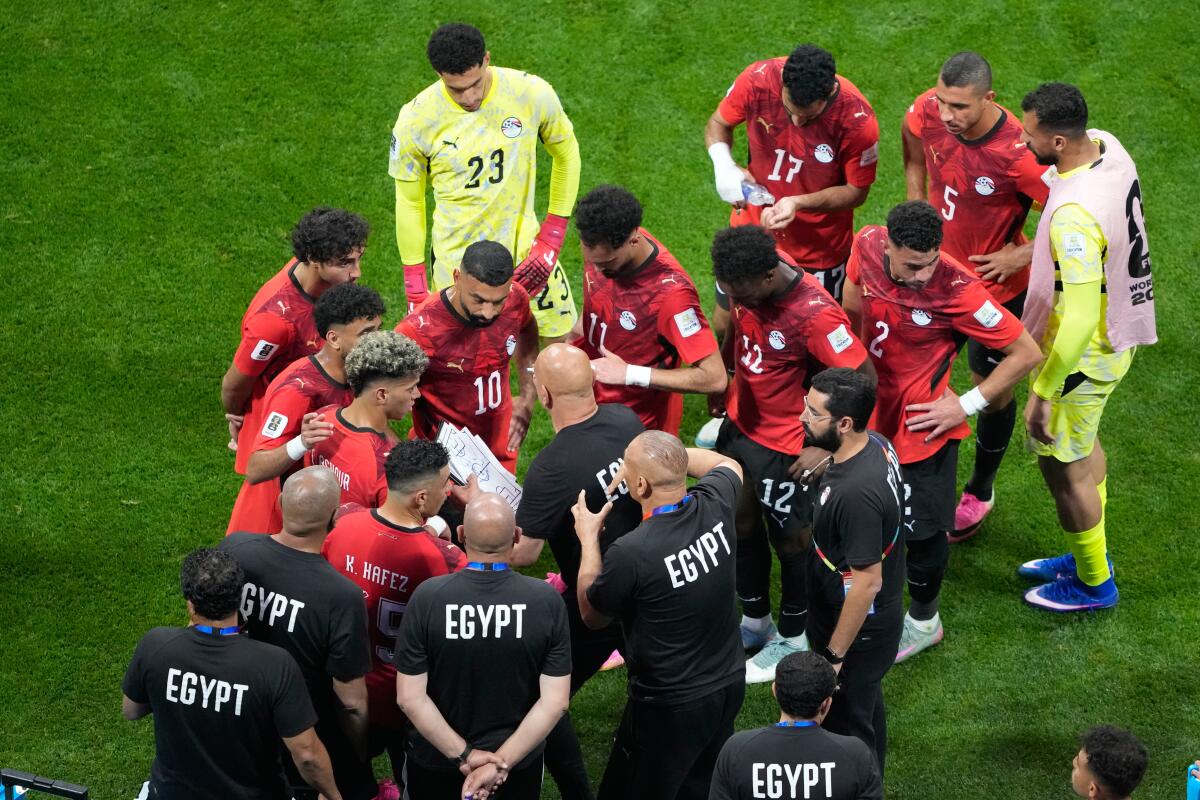
Egypt head coach Hossam Hassan talks to his players during the World Cup round of 16 soccer match between Argentina and Egypt in Atlanta, Tuesday, July 7, 2026. (Chris Carlson | AP) “Several key incidents raised serious concerns and left profound questions about the consistency and fairness of decisions that directly influenced the course of the game,” the EFA statement read.
Collina said “during a competition, we prefer not to focus on specific incidents,” but he defended the Attia decision.
“If a foul is identified in the build-up and is deemed to have had an impact on the goal, the VAR will recommend an on-field review,” Collina said. “There is no defined limit regarding either the distance from goal or the amount of time between the incident and the goal.”
He said in the disputed case, Attia “clearly treads on the foot of Argentina No. 6 Lisandro Martínez.”
“We believe that a foul is a foul,” Collina added. “Regardless of whether the foul appears ‘obvious,’ if the referee did not see it on the field of play, the VAR can intervene.”
Mostafa Ziko netted later to give Egypt a 2-0 lead, but all momentum shifted onto Argentina’s side when Lionel Messi assisted Cristian Romero in the 79th minute — the first of three consecutive goals.
Hassan held his arms up in an “X” shape to signal racial abuse after Argentina’s game-winner two minutes into stoppage time. After the game, Hassan said his team was the victim of a soccer establishment that favored Messi and Argentina.
In the dramatic climax to the game Egypt’s goalkeeping coach Saafan Elsaghir was red-carded and several yellow cards were dished out to Egyptian players. The EFA’s statement said that a number of experts and analysts have defended Egypt, underlining the importance of integrity, fairness and transparency in officiating on soccer’s biggest stage.
The EFA statement expressed the frustration among Egypt players, staff and supporters.
“Every player who wears the Egyptian shirt, and every supporter who stands behind the team, deserves fairness, respect, and equal application of the laws of the game.”
-
Trump flies partway home from Turkey in an old Air Force One
WASHINGTON — President Donald Trump flew partway home from a NATO summit in Turkey on an old baby blue Air Force One plane instead of the new Qatari-gifted and retrofitted red, white and navy blue jet he arrived in, a surprise swap that came as the U.S. and Iran once again began trading strikes.
Trump offered little clarity on the swap, instead saying he would fly on the legacy aircraft “for old time’s sake,” and indicating that both aircraft would make a previously unscheduled stop on the way back to the United States at Royal Air Force Mildenhall, a base used by U.S. troops.
The travel switch raised fresh security questions about the new aircraft that the U.S. spent $400 million to retrofit. Images of the Qatari-gifted jet captured since its unveiling show it is not equipped with some of the same missile detection and countermeasure systems as the older jets.
Trump boarded the new jet at Mildenhall, and it promptly took off for Joint Base Andrews outside Washington after he greeted service members stationed there.
“We just landed and met up with our new Air Force One, which was sent earlier to RAF Mildenhall, so we could show the wonderful Servicemembers, as per the entire Base’s request,” the Republican president said on social media. “They were very excited.”
He said stopping at Mildenhall “was on our way back to the States from Turkey, with virtually no deviation of flightpath.”
During the flight, Trump denied to the reporters accompanying him that security concerns involving Iran were a factor in flying two planes home. Asked if he was aware of any credible threats against Air Force One by Iran, Trump brushed off the question.
“I have a threat all the time. I’m No. 1 on their list,” he said, repeating comments from earlier Wednesday that he is one of Iran’s top assassination targets.
When the reporters asked Trump if he knew why they were asked to keep their window blinds closed during the flight from Turkey to the U.K. aboard the older Air Force One, Trump replied that it probably was due to the “sleazebags over here” — an apparent reference to Iran. He said he was not asked to close the window blinds in his compartment. Iran and Turkey share a border.
New Air Force One doesn’t have same security measures
The swap was also announced less than a day after the U.S. military conducted a series of large strikes in Iran in retaliation for its attacks on merchant shipping in the region, and before a new series of strikes on Wednesday.
Trump first announced in a social media post that the gleaming new plane he had proudly shown off a day earlier would instead visit the U.K. base on the way home so military members could “tour the Aircraft.” Trump said he instead would be flying home in an older plane previously used as Air Force One.
When asked later during a news conference if security concerns had played a role in the switch, Trump didn’t directly answer but said that when it came to Iran, he was “No. 1 on the list for killing.”
When another reporter followed up, Trump said he’d be “going home by normal methods” while the new plane would be shown off to troops.
When asked if the missing countermeasures systems played a role in the jet being swapped out, the U.S. Air Force directed questions to the White House.
“The new Air Force One is a state-of-the-art aircraft that has been fitted with high-level security protocols that ensure the safety of the President and his staff,” spokesman Steven Cheung said in a statement. “As the President has said recently, there are many enemies of America who have their sights on him, and we use every tool at our disposal — including distraction and misdirection — to address those threats.”
Plane’s transponder was turned off for some of the flight
Trump departed Turkey aboard one of the older Boeing VC-25As that have carried presidents for 3 1/2 decades. Consumer flight trackers were unable to monitor its transponder early in the flight after takeoff, suggesting it had been temporarily disabled by the crew — a security measure used when ferrying the president to and from high-risk environments like war zones, not a major NATO ally hosting a long-scheduled summit.
Other world leaders’ flights departed with trackable transponders, including those from Germany and the U.K.
The luxurious Boeing 747-800 gifted by Qatar, that was modified to carry Trump, departed earlier Wednesday from Turkey and landed at RAF Mildenhall on Wednesday afternoon, flight trackers showed.
Iran has several missiles and drones in its inventory with enough range to make the roughly 800-mile (1,300-kilometer) flight from its own borders to Turkey, including some of its Shahed drones and Shahab ballistic missiles.
However, according to the Center for Strategic and International Studies, Iran does not possess weaponry that would be capable of effectively striking England at a range of roughly 2,500 miles (4,000 kilometers).
The U.S. Air Force, which oversees the running of the fleet of aircraft used by every president, had previously said that they had to prioritize making only some of the necessary upgrades and changes in order to deliver the Qatari jet — also known as the “bridge” aircraft — into service.
The Air Force argued that the rapid conversion of the jet was done “without accepting any risk regarding security, safety, or secure communications,” but did concede that “several highly complex engineering modifications required for the final (Air Force One aircraft) were intentionally excluded from the Bridge aircraft.”
Jeremiah Gertler, a senior analyst for Teal Group, an aviation and defense consulting firm, previously told The Associated Press that the absence of countermeasure systems, as well as a seemingly smaller number of communications antennas, suggested that the Qatari jet was better suited to only work as a domestic aircraft.
Trump’s first flight on the new Qatari jet was to North Dakota last week.
The original Air Force One planes were built from scratch near the end of the Cold War and they were hardened against the effects of a nuclear blast and included a range of security features, such as anti-missile countermeasures and an onboard operating room.
The jets are also equipped with air-to-air refueling capabilities for contingencies, though it has never been utilized with a president on board.
The pair of Boeing jets that are currently being modified to act as the permanent upgrades to the Air Force One jets have been delayed, and are expected to be delivered in 2028.
-
Trump wraps NATO summit on a positive note, after meeting Zelenskyy
ANKARA, Turkey — U.S. President Donald Trump said at a NATO summit Wednesday in Turkey that the U.S. will give Ukraine a license to make Patriot air defense systems to counter missile attacks from Russia in their more than four-year war, a huge coup for Kyiv which has long requested the technology.
Allowing foreign manufacture of Patriots, which the U.S. had resisted, was a turnaround for Trump that mirrored his day at the NATO meeting: Upon arriving, he lashed out at European partners for resisting his efforts to take control of Greenland and for not supporting his war in Iran. But by day’s end, he described a gathering of unity and “tremendous love,” and praised member nations on their progress in increasing their defense spending.
NATO’s European members plus Canada have scrambled to meet the alliance’s increased defense spending targets, which Trump has demanded as the U.S. draws down troops in Europe and insists the continent take more responsibility for its own security.
Trump had reopened old wounds among the 32 NATO leaders by insisting again ahead of the summit that the U.S. should control Greenland, a semiautonomous Danish territory. That led Denmark’s Prime Minister Mette Frederiksen to say her country is “ready to defend every inch of NATO including our own territory.”
Trump also blasted some European countries for refusing to participate in the Iran campaign, singling out Spain as “a terrible partner in NATO” and renewing his threats to cut off trade.
Trump strikes a positive tone on Zelenskyy
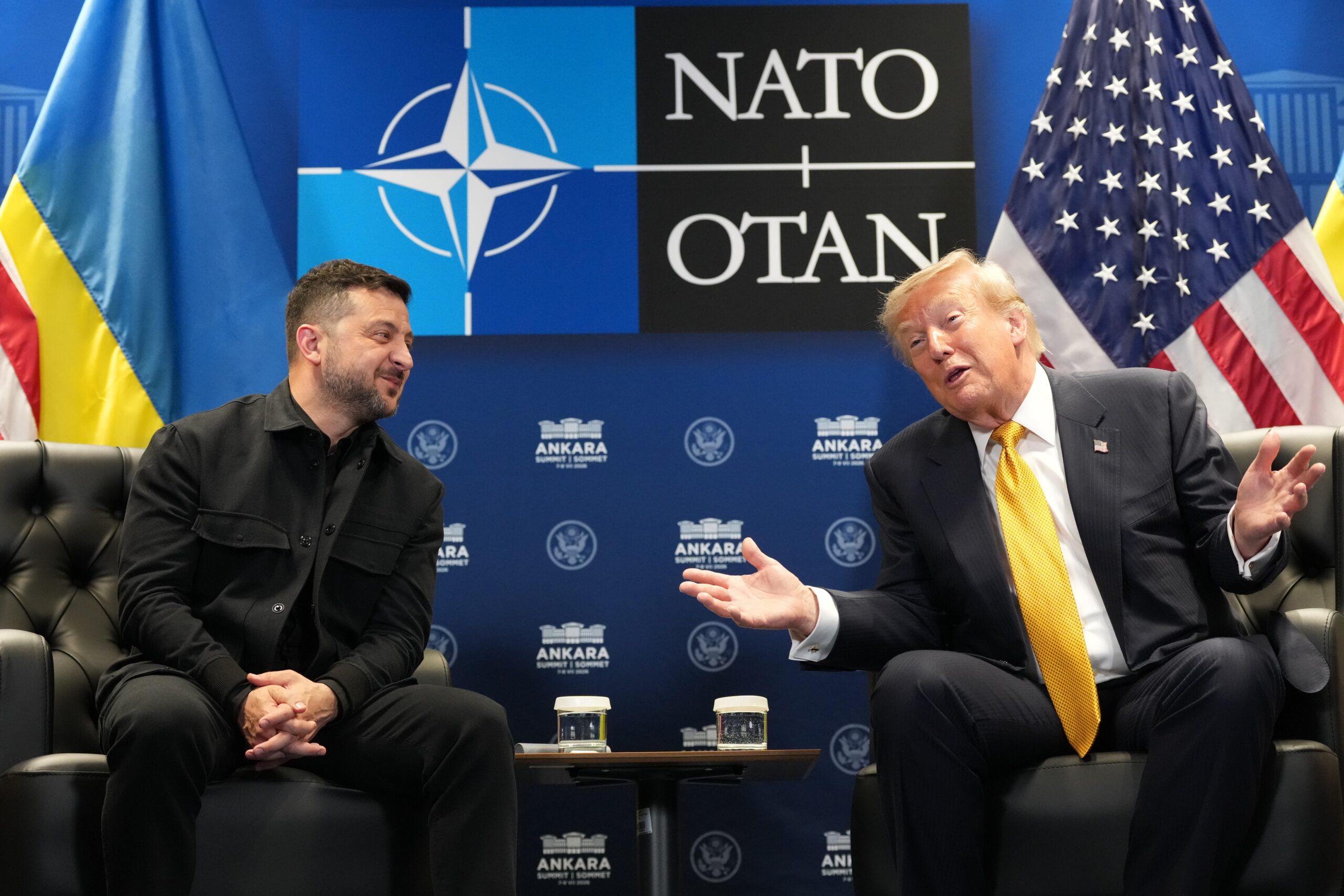
But the tone of Trump’s meeting with the Ukrainian President Volodymyr Zelenskyy was a break from earlier encounters which ended in acrimony, and Trump praised the Ukrainian leader’s willingness to reach a deal on ending the fighting in Ukraine.
“We’ve actually developed a good relationship. It’s hard to believe,” Trump said during a news conference with Zelenskyy, adding that he believed a deal on ending the war was on the horizon and that the U.S. would “work on some kind of security package” to provide to Ukraine.
Trump said the Ukrainian president has “done an amazing job” and “been very effective” in the war as he pledged to grant Ukraine a license to manufacture the Patriot defense systems.
“We’ll give them the right to make Patriots. We’ll show them how to do it,” Trump said. “I think they can produce them pretty quickly.”
Patriots are expensive, in high demand and take a long time to produce. Zelenskyy has for years been asking for more of them, and more recently for a license so that Ukraine can manufacture its own.
NATO chief backs latest U.S. strikes on Iran
Ahead of the summit, NATO Secretary-General Mark Rutte praised Trump for the series of U.S. strikes on Iran overnight, after Tehran struck three merchant ships in the Strait of Hormuz.
“I think what you did last night was absolutely necessary,” Rutte said to Trump. “It was a very strong response, and I’m with you on this.”
The U.S. strikes, as well as the revoking of a license allowing Iran to sell its oil on global markets, underscored the fragility of an interim deal to end months of fighting.
Trump said of the interim agreement with Iran: “For me, I think it’s over” — but added he will allow talks to continue.
“It’s just a waste of time dealing with them,” he said.
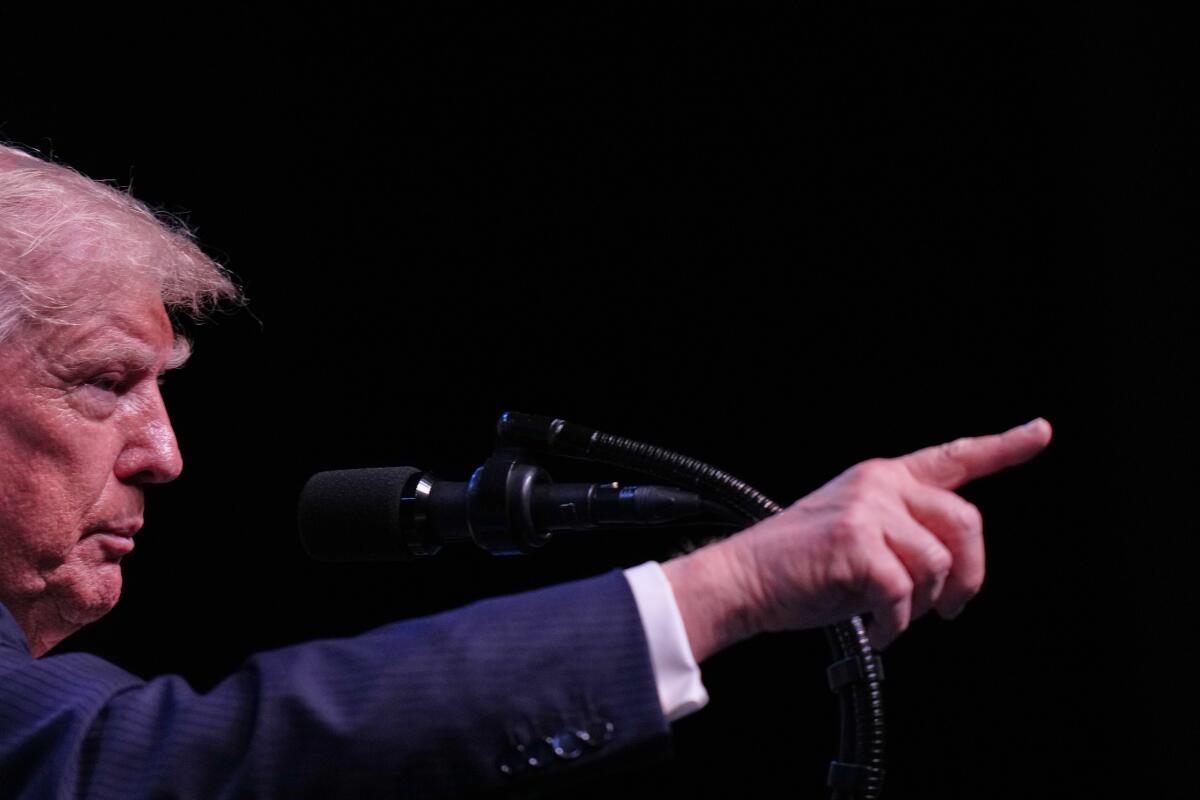
President Donald Trump points during a media conference at the NATO summit in Ankara, Turkey, Wednesday, July 8, 2026. (Francisco Seco | AP) NATO leaders sought to show Trump they were boosting defense
Rutte has dedicated a huge amount of energy to keeping Trump’s support for NATO and to holding the summit together. On Wednesday, he sought to tamp down the president’s ire by giving him credit for recent increases in defense spending from NATO allies.
“Grab the win. It’s there,” Rutte told Trump on Wednesday.
The NATO chief pointed to countries including Estonia, Latvia, Poland and Denmark that are investing more in defense, but noted that the Trump administration expects “the Europeans and Canadians will equalize their spending with the United States.”
Last month Rutte went to Washington to hail the “Trump Trillion” — the $1.2 trillion that European allies and Canada have added to defense spending since Trump came to power in 2017.
As leaders converged on Ankara, Rutte hosted a “big reveal” event to showcase the many deals planned for the increased spending — much of it to be spent on U.S. companies, creating thousands of jobs for Americans.
At last year’s summit, the allies agreed to invest 5% of their gross domestic product on defense — 3.5% on their defense budgets and 1.5% on infrastructure so troops and equipment can move faster in times of conflict.
Yet figures released by NATO on Tuesday showed that Slovenia, Belgium, Spain and the Czech Republic have struggled to meet the alliance’s old spending target of 2% of GDP.
The Trump administration wants to see a leaner “NATO 3.0,” with Europe taking responsibility for its own security, including Ukraine, with conventional weapons while America would continue to provide its nuclear umbrella.
The Pentagon has launched a six-month review of U.S. military presence in Europe, leaving allies to seek clarity on just how deeply Trump intends to cut U.S. force numbers.
Zelenskyy pushes for NATO entry
Zelenskyy made a fresh appeal Tuesday for Ukraine to be allowed to join the alliance, saying Ukrainian armed forces are highly experienced and would only boost NATO’s defense capabilities. Russia is vehemently opposed to that.
Zelenskyy has highlighted Ukraine’s adaptability and its ability to strike deep inside Russia. He said Ukraine’s armed forces are “eliminating” on average 30,000 Russian troops every month.
In a declaration following Wednesday’s summit, NATO leaders pledged to provide Ukraine with $80 billion to help meet its defense needs this year and next, noting “the long-term threat Russia poses to Euro-Atlantic security.”
Concern has been mounting among some countries with borders near Russia that Moscow might be preparing a hybrid attack — a combination of conventional warfare with tactics like cyberattacks — on the continent as Russian President Vladimir Putin struggles to secure victory in Ukraine.
Trump administration to lift Syria’s terrorism designation
Trump also met with Syrian President Ahmad al-Sharaa, a former insurgent who led the offensive that unseated autocrat Bashar Assad in December 2024. Despite having once been an al-Qaida fighter, al-Sharaa has won Trump’s backing as he seeks to rebuild Syria and restore its shattered ties with the West.
Later, U.S. Secretary of State Marco Rubio said in a statement that Trump has told U.S. lawmakers that the U.S. will soon remove Syria as a state sponsor of terrorism as part of a year-long normalization process with the country’s new government.
“Lifting sanctions on Syria will unlock international trade and investment, give Syria a chance to rebuild, and open up a new chapter for the Syrian people,” Rubio said.
In June 2025, Trump signed an executive order ending a number of economic sanctions before revoking the terrorism designation a few weeks later for al-Sharaa, though the designation for Syria remained.
-
U.S. launches new airstrikes on Iran and Tehran fires back at Gulf Arab states
DUBAI, United Arab Emirates — The United States launched new airstrikes against Iran early Thursday, and Tehran responded by targeting Bahrain, Kuwait and Qatar in crossfire that again threatened an interim deal intended to help end the war in the Persian Gulf.
The strikes came hours after U.S. President Donald Trump said recent Iranian attacks on ships in the Strait of Hormuz signaled the end of the fragile ceasefire. The U.S. struck a variety of military sites and port facilities early Wednesday after Iran targeted several merchant vessels off the coast of Oman, sparking Iranian fire then as well.
But Thursday’s attacks appeared bigger all around, with sirens sounding at least twice in Bahrain, home to the U.S. Navy’s 5th Fleet headquarters. There was no immediate word of damage in the three Gulf Arab countries. Kuwait’s military said it was actively intercepting incoming drones and missiles. Iran’s Revolutionary Guard claimed attacks on Bahrain and Kuwait.
U.S. strikes hit more targets
The U.S. military’s Central Command said it hit some 90 targets across Iran, releasing black-and-white footage of what appeared to be strikes on an airport runway and missile launchers.
“U.S. forces remain vigilant, lethal, and prepared to execute operations directed by the Commander in Chief,” it added.
The U.S. says the strikes were intended to “further degrade” Iran’s ability “to threaten freedom of navigation” in the strait, through which a fifth of the world’s traded oil and natural gas passed before the war began with U.S. and Israeli attacks on Feb. 28.
Iranian state media reported explosions in several locations, including Bushehr, home to Iran’s nuclear power plant complex, and the southern port cities of Chabahar, Konarak, Bandar Abbas and Sirik.
In Iran’s southwestern Khuzestan province, at least three people were killed, state media reported. In Iranshahr, authorities said a strike had killed a firefighter at an airport. Those fatalities followed at least nine people being killed in Wednesday’s strikes in Iran.
For the first time since April, it also appeared the U.S. strikes targeted Iranian bridges. State media reported a strike on a railway bridge in Iran’s northeastern Golestan province, and the Revolutionary Guard said two bridges had been attacked on the route to Mashhad, where officials plan to bury the late Ayatollah Ali Khamenei on Thursday. But it wasn’t clear if the Golestan attack was the same one mentioned by the Guard.
Trump warns that ‘it will get much worse’ if attacks on shipping happen again
After leaving a NATO summit in Turkey, Trump posted several videos on his social media site of what he said were explosions in Iran and issued another warning to the Islamic Republic.
“This is in retribution for yesterday’s bombing of ships by Iran. If it happens again, it will get much worse!” Trump wrote.
Trump had said earlier in the day that the latest back-and-forth fighting would not result in “long-term” military action.
“Anything that happens is going to happen very fast,” Trump said, though he also suggested the U.S. military might “just finish the job.”
Trump also renewed his past threats to hit Iran’s civilian infrastructure, including electric plants and desalinization plants, and to seize the oil-production hub of Kharg Island.
After three tankers were hit Tuesday, the U.S. launched strikes on Iran, and Iranian forces retaliated by targeting American military sites in the Persian Gulf.
Iran has asserted that the interim ceasefire deal gives it the right to manage traffic through the strait. Parliament Speaker Mohammad Bagher Qalibaf, a key negotiator in talks seeking a permanent end to the war, was defiant in a post on X on Thursday morning: “America still hasn’t learned that bullying and breaking promises are no longer cost-free. Let me put it plainly: if you strike, you’ll get hit.”
Strikes raise fears that war could resume
Trump fueled concerns that the war could restart by saying the interim agreement to pause fighting was “over,” although he added that he would allow negotiations to continue.
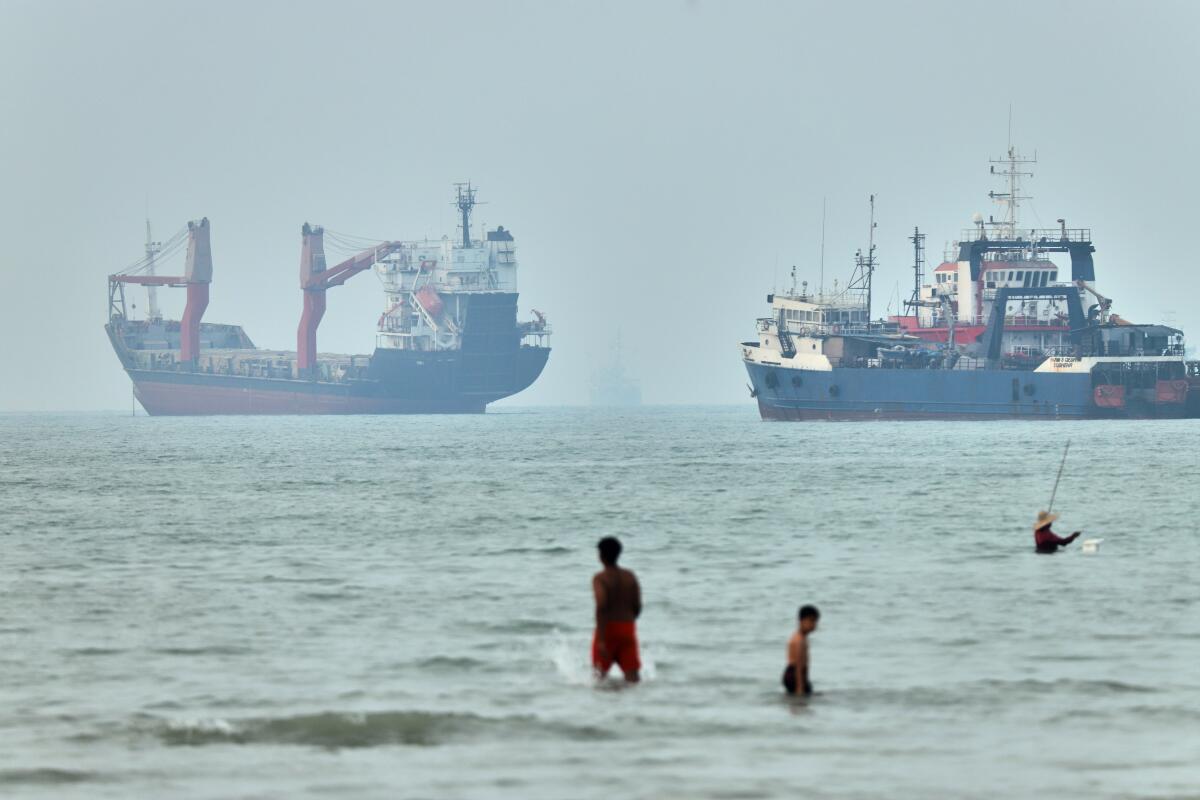
Children wade in the water with cargo ships at anchor in the background and a fisherman nearby, in the Strait of Hormuz off Bandar Abbas, Iran, Tuesday, June 30, 2026. (Amirhosein Khorgooi | ISNA via AP) Attacks have repeatedly threatened the shaky ceasefire, but Trump’s comments added new uncertainty, and oil prices shot up after he spoke. A renewed conflict could engulf the wider Middle East and would likely again halt energy shipments through the strait.
“For me, I think it’s over,” Trump said when asked about the status of the ceasefire. He added that U.S. representatives can continue negotiations, but he cast doubt on the outcome. “They can talk, but I think they’re wasting their time,” he said.
Iranian Deputy Foreign Minister Kazem Gharibabadi, also a top negotiator, retorted on X that Trump’s remarks “are not a sign of power but an admission of the failure” of U.S. policy toward Iran.
Trump has made other threats to seize Kharg Island, including last month, when he also questioned whether the U.S. “has the stomach for it.” Some 90% of Iranian oil exports pass through the island.
The new attacks on ships in the strait, despite the negotiations, could reflect a divide among Iran’s leadership. Hard-liners seek lasting control over the waterway, which is a globally important conduit for fuel shipments and has become a critical lever in confronting the West. Pragmatists want a permanent peace deal to lift international sanctions and provide desperately needed economic relief.
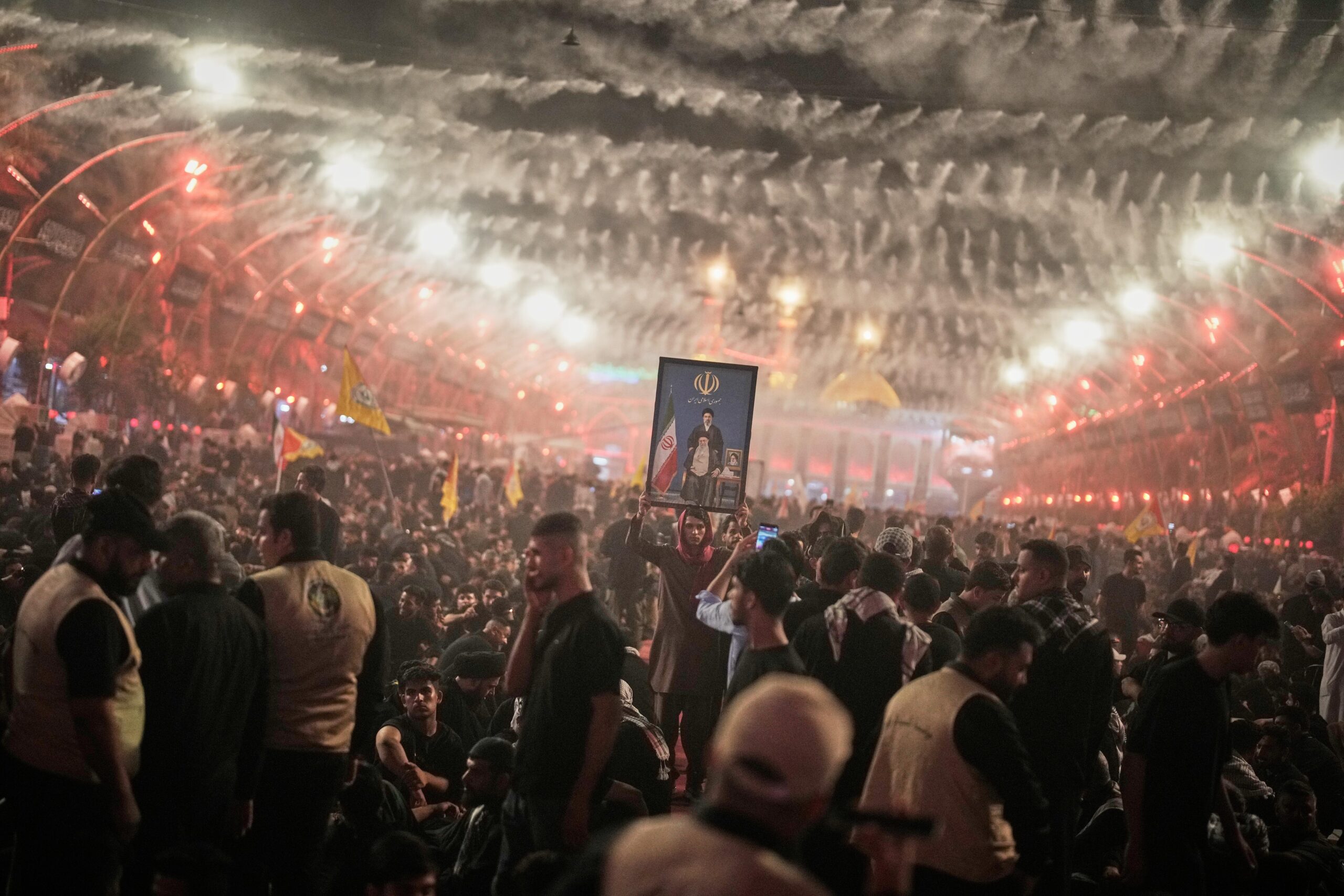
Negotiations to reach a final deal were due to start after the funeral for Khamenei, who was killed Feb. 28 in the war’s first moments. The funeral, which ends Thursday, was supposed to be a period of lower tensions.
The talks are meant to focus on the toughest matters, including fully reopening the strait and rolling back Tehran’s disputed nuclear program.