Blog
-
How to navigate a toxic workplace
Click here for the original audio.
Tessa West, a psychology professor at New York University and author of the book, “Jerks at Work: Toxic Coworkers and What To Do About Them,” talked with host Indira Lakshmanan in January about how to survive difficult workplaces and bad bosses. We revisit their conversation.
This article was originally published on WBUR.org.
-
World Cup quarterfinals begin with France versus Morocco
The first of four World Cup quarterfinal matches is Thursday night.
Here & Now‘s Robin Young talks with NPR’s Jasmine Garsd ahead of the 4 p.m. kickoff in Foxborough, Mass., between France and Morocco.
This article was originally published on WBUR.org.
-
U.S. and Iran exchange airstrikes
The U.S. and Iran have exchanged airstrikes for the second day in a row, hours after President Trump said the ceasefire is over.
Here & Now‘s Robin Young discusses what’s happening now and what might come next with Jim Walsh, senior research associate at the Massachusetts Institute of Technology’s Security Studies Program.
This article was originally published on WBUR.org.
-
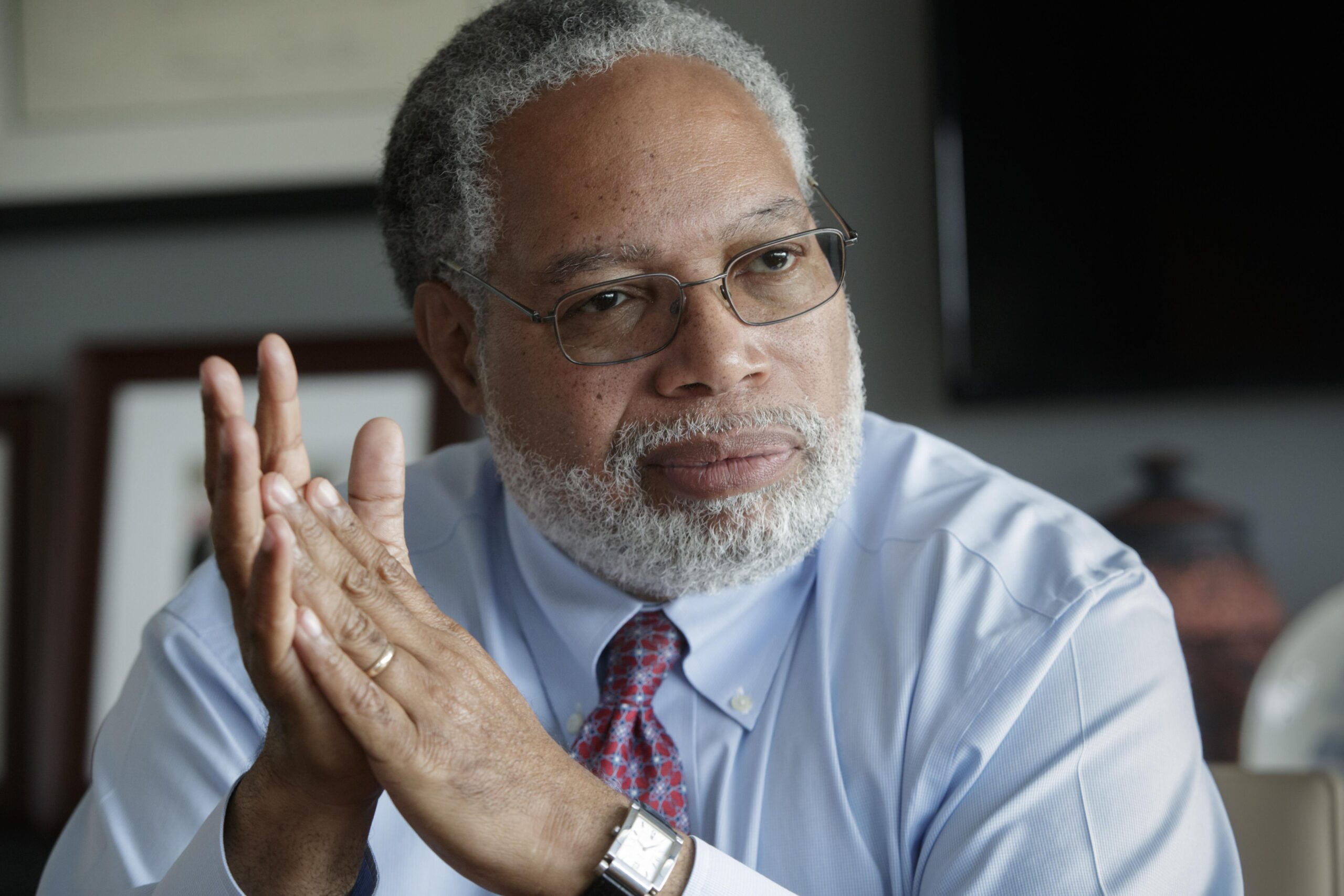
Smithsonian chief emphasizes ‘accuracy and integrity’ after White House report
In a memo addressed to staffers sent Tuesday, the secretary of the Smithsonian, Lonnie G. Bunch III, defended the institution after the White House issued a 162-page report that characterizes the National Museum of American History as a place which has become “subject to institutional capture by a radical, activist ideology that is fundamentally opposed to telling the noble, honest story of the great country we know and love.”
In his email, which NPR has obtained, Bunch wrote in part: “While there will always be room for improvement, this report is not a fair characterization of the work and totality of the National Museum of American History. At the Smithsonian, our work is driven by scholarship, accuracy and an uncompromising commitment to tell the fullness of America’s story. As public servants and the keepers of this institution, we are charged with helping a nation find understanding, hope and clarity and as part of that duty, we are dedicated to excellence, reflection and growth.”
He continued: “We remain focused on what grounds us: a steadfast commitment to scholarship, nonpartisanship, independence, accuracy and integrity. For nearly 180 years, the Smithsonian has worked alongside partners across government — from the White House to Congress to our governing Board of Regents — guided by our enduring mission to increase and diffuse knowledge. That purpose remains: to pursue knowledge with rigor and to serve the American public with clarity and care.”
The White House report was issued on July 4 by the Domestic Policy Council under the title “Saving America’s Story: How Ideological Capture at the Smithsonian Institution’s National Museum of American History Erases Our Heritage.”
The council faults the National Museum of American History on a multitude of fronts, saying it underemphasized the Founding Fathers and early colonial and Revolutionary history; was not sufficiently celebratory of the country’s 250th anniversary; and that it engaged in “anti-white,” “illegal alien” and transgender activism.
It also accuses the museum of trying to “indoctrinate” teachers and students through its exhibitions, programming and teaching resources.
In the report, the council also specifically criticizes museum director Anthea Hartig, who has led the National Museum of American History since 2019 and is concurrently the president of the Organization of American Historians, calling her “an activist advancing an ideological agenda contradictory to the museum’s founding purpose of fostering patriotism.”
The Trump administration has made the Smithsonian museums one of its primary targets in its efforts to reshape cultural narratives to align with its viewpoints. In August 2025, the White House requested a “comprehensive internal review” of eight Smithsonian museums, including the National Museum of American History, following an executive order issued by President Trump in March 2025 in which he called for the removal of “improper ideology” from the Smithsonian’s offerings.
According to the Smithsonian’s charter, all of its 21 museums, 14 education and research centers, and the National Zoo are meant to be run independently of the federal government. The Smithsonian is overseen by Bunch and a board of regents, which includes Vice President Vance, Supreme Court Chief Justice John Roberts and other members appointed by Congress.
In an interview with NBC’s Meet the Press on Sunday, Bunch spoke about the Smithsonian’s 250th anniversary special exhibition at the Smithsonian Castle, which is called “American Aspirations.”
He told NBC: “It’s really important for people to understand that America is much an ideal as it is a place, that it’s a series of aspirations that have really shaped who this country is. And so for me, what is so powerful is to say, ‘Let us honor the words of Thomas Jefferson and the founders, but let us use those to challenge us to be better.’”
Jennifer Vanasco edited this story.
-
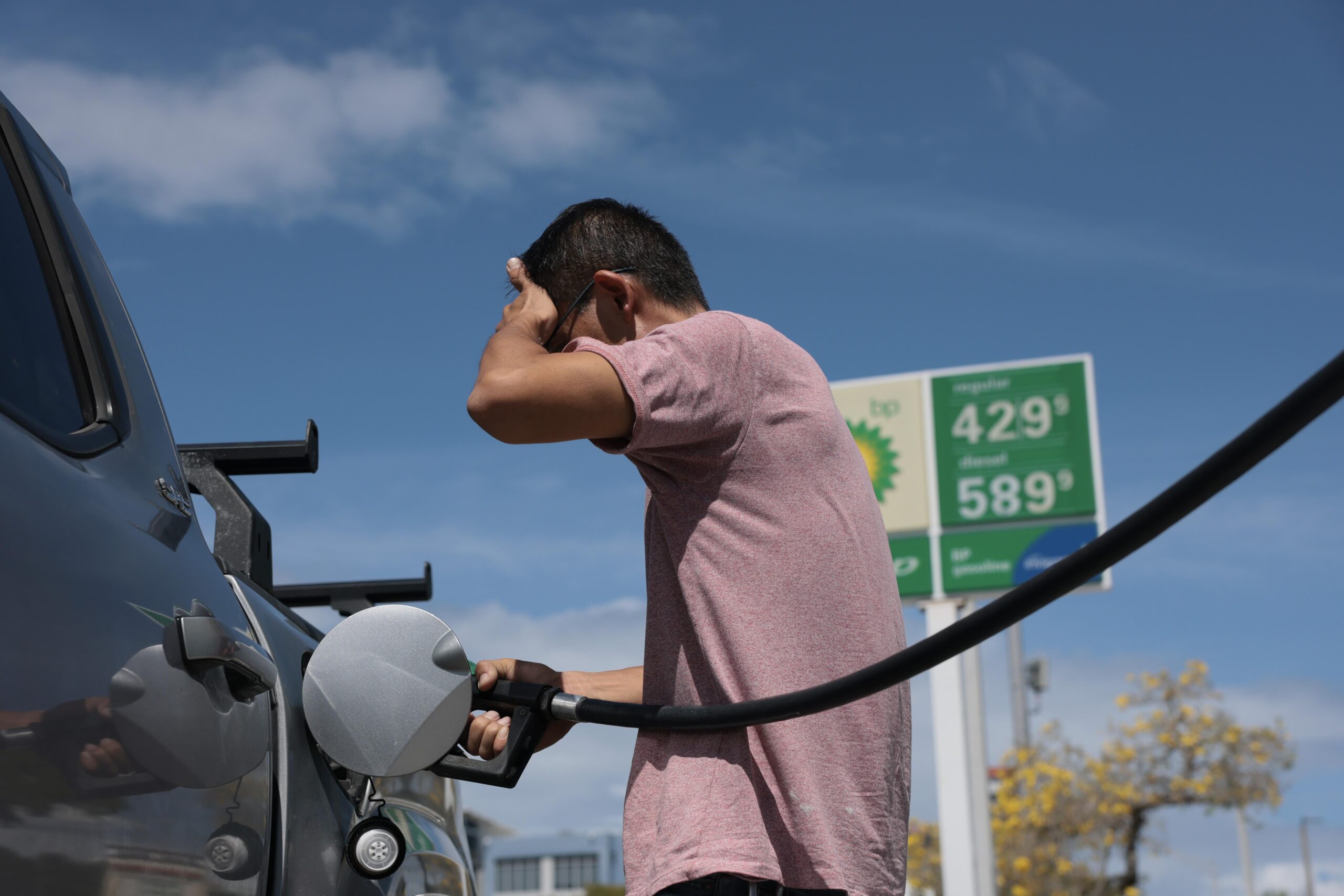
How to deal with seesawing gas prices
To say gas prices have been unpredictable this year would be an understatement.
On Thursday morning, drivers across the U.S. were spending an average of $3.85 per gallon of regular unleaded, according to AAA.
The average cost of a gallon this year peaked in May at $4.56, and plunged as low as $2.79 in January, the organization reported.
Oil prices have spiked around the world in recent months after the U.S. and Israel launched a war on Iran, which has disrupted shipping through the Strait of Hormuz. But the on-and-off hostilities have done more than simply raise gas prices in a straight line — they’ve caused gas to become more expensive one week, only for the price to fall the next. Prices go up when fighting rekindles or the strait is closed, and drop when peace talks resume. They’re climbing again after Trump said the tenuous ceasefire was over.
Now, drivers are unsure of what price they’ll find when they pull into a gas station, said Emily Blain, an accredited financial counselor in Minnesota.
“‘How bad is it going to be this time? Is it going to be not as bad as I think, or is it going to be worse than I think?’” Blain said. That can contribute to stress, she added, “and since many people are going to the gas pump fairly often, that absolutely adds up.”
How volatile prices affect consumer behavior
When it comes to price, gas is one of the more volatile consumer goods. U.S. motor fuel prices jumped as much as 35.8% annually over the last two decades and fell by as much as 27.8% in the same period, according to the USDA’s Economic Research Service.
Loading…
That unpredictability can influence consumers’ buying habits — and it’s been doing so in recent months.
Data from the cash back app Upside found that when gas prices rose in the first two and a half weeks of March, drivers visited gas stations more often but bought less fuel each time.
“Some drivers can’t afford to fill up their tank at a given time, so there’s definitely some cash constraints,” said Upside principal research economist Thomas Weinandy. Other drivers might be in the habit of spending a set amount on fuel, which now buys less than it did weeks or months earlier, he added. “Someone might be used to just saying, ‘put $20 on pump 1,’ and they continue that behavior.”
When prices fall back down, drivers typically buy more gas per visit, a phenomenon Weinandy says began to appear in the June data.
Experts say that consumers can expect price swings to stick around. Lauren Swift, senior editor for Autotrader and Kelley Blue Book, told NPR over email that historically when “gas prices have seen a sharp uptick due to war or other global conflicts, they take a very long time to come back down, typically years.”
What drivers can do
Though changes in the price of gas can often appear minimal, increases can put a dent in household budgets over time. The financial website NerdWallet found that a $0.50-per-gallon spike could cost drivers in some states around $500 more per year.
“There is not much control you have over the prices, so all we can really do is to prepare to pay more at the pump,” said Kimberly Palmer, personal finance expert at NerdWallet. But drivers still have a say in what they spend on fuel, she said.
Here are a few strategies consumers can use to deal with fluctuating gas prices:
- Assume the price will be high, and build that into your budget. “If we plan ahead knowing that gas prices are expected to be higher, then it can be a nice surprise if they end up going down that week,” Palmer said. If prices drop instead, you’ll have some money left over.
- Use websites or apps to shop around for the best price. Palmer said driving even a few miles out of your way could be worth it to pay substantially less per gallon.
- Use less gas. That could mean cutting back on driving, if that’s an option for you. It could also mean adopting fuel-saving driving habits, such as driving more smoothly, ensuring your tires are inflated and removing excess weight from your vehicle. You may also consider switching to an electric vehicle, if that’s within your budget. Spending less money on gas now gives you a financial cushion should prices rise again later.
For most people, the monthly cost of gas will be dwarfed by other household expenses like housing. But Blain, the financial counselor, said rent increases and property tax hikes typically occur annually and then appear as predictable monthly expenses. Fluctuating expenses, like groceries and gas, are different and can have a more immediate impact on consumers — even if they’re a smaller share of your budget.
“You never know what you’re going to get, to a certain extent,” Blain said. “That feels really uncomfortable regardless of the actual dollar-and-cent impact, which can also be significant at times.”