Blog

  • Calls for Graham Platner to drop out of Maine Senate race continue to grow

    Transcript:

    MICHEL MARTIN, HOST:

    Maine’s race for the U.S. Senate is at the center of a political storm with national implications.

    A MARTÍNEZ, HOST:

    It’s been more than 36 hours since Democrat Graham Platner said he was weighing his options for a Senate campaign, following allegations of sexual assault. He has not made an announcement yet, but Democrats in Maine and around the country appear to be ready to move on from Platner.

    MARTIN: In a few minutes, we’ll hear from a former Maine state senator who could replace Platner if he drops out. But first, political correspondent Kevin Miller with Maine Public is here to bring us up to speed on this story. Good morning, Kevin.

    KEVIN MILLER, BYLINE: Hello, Michel. Thanks for having me on.

    MARTIN: Thanks for coming. So, Kevin, Graham Platner’s campaign to unseat Republican Senator Susan Collins has been dogged by numerous controversies, but this time seems different. Now there’s a steady call for him to drop out. Why is that?

    MILLER: Yeah, you’re right. He’s had these controversies, but he’s always been able to rise above it, usually by saying those things happened years before. He received treatment for PTSD from his four combat tours in Iraq and Afghanistan. But then a former romantic partner accused him earlier this week of sexually assaulting her just five years ago. And even though his populist message has clearly resonated with many voters, those latest accusations were sort of the red line for state Democratic leaders and many of his national allies.

    MARTIN: And from what we’re hearing, it seems that Democratic leaders are just not waiting for Platner to officially withdraw.

    MILLER: No, they’re not. And that’s because they only have until July 27 to name a new nominee and Platner has to drop out by Monday to make that possible. Party leaders have been kind of quietly putting together their succession plans, if you will, and consulting with their lawyers. They said last night that they are committed to a, quote, “open and transparent process,” but they haven’t provided the details yet of how that would work out. So for instance, will they hold a new state convention, caucuses around the state? You know, who exactly gets to decide?

    MARTIN: And these are thorny issues, given that there is lingering resentment in the Democratic Party over 2024 and how the national party handled President Biden’s withdrawal.

    MILLER: Yeah. Exactly. I think it’s safe to say that party leaders really want to avoid being viewed as handpicking a so-called establishment candidate during an election when they really need huge turnout among Democrats and independents to defeat Susan Collins.

    MARTIN: But it does sound like potential candidates are starting to come forward. So who are the biggest names?

    MILLER: Well, we just had two hotly contested Democratic primaries for governor and a U.S. House seat about a month ago. Many of those folks are contenders. One is the former Maine Senate president, Troy Jackson. He’s a logger from the very northern tip of Maine and an unabashed progressive who has spent years pushing some of the same ideas as Platner – things like Medicare for all, workers’ rights, higher taxes on billionaires.

    Another progressive is our current secretary of state, Shenna Bellows. She’s made national headlines pushing back against President Trump, and then there’s Dr. Nirav Shah, who headed the state’s COVID-19 response and was second in charge at the U.S. CDC for a time.

    MARTIN: And, of course, the context here that Democrats really want to take back the Senate. And experts have been saying to win the Senate back, the Democrats have to defeat Collins in Maine. So are national groups affecting this internal debate in Maine?

    MILLER: I’d say it’s unclear at this point, but they’re definitely trying. The Senate Majority PAC, which is the big super PAC for Democratic Senate candidates, they’ve said it would only continue investing tens of millions of dollars in Maine if Platner withdraws. And then yesterday we saw the group Our Revolution, which is a spin-off of Bernie Sanders’ campaign, endorse Troy Jackson. But I’d say kind of it’s a tightrope for these national groups to walk because Maine is a fairly independent state, where Platner was so popular because of his loud, anti-D.C. establishment message.

    MARTIN: That is Kevin Miller with Maine Public. Kevin, thanks so much for sharing this reporting with us.

    MILLER: Thank you.

  • Democratic strategist Maria Cardona on calls for Graham Platner to drop out of race

    Transcript:

    A MARTÍNEZ, HOST:

    For analysis on the situation in the Maine Senate race, we turn to Democratic strategist Maria Cardona. Maria, does Platner’s delay in announcing a decision hurt the party’s chances of defeating Susan Collins?

    MARIA CARDONA: Well, it certainly doesn’t help because the party’s going to need as much time as possible to focus on a new candidate, to give that candidate as much help as possible to get their campaign off the ground, to start communicating the message of how important it is for Democrats to beat Susan Collins. So time is of the essence here, and time is running out. So Graham Platner and his team had better focus on – if it’s true what they say, that the most important thing here is to beat Susan Collins, then he has got to get out as soon as possible.

    MARTÍNEZ: His background is not exactly secret, or at least a lot of the things in his background aren’t secret. What does it say about the Democratic Party’s vetting process?

    CARDONA: Well, it certainly says that his team whiffed because one of the most important things that you have got to do as a campaign is opposition research, not just on your – on the person that you are running against, not just on your opponent, but on yourself. You have got to understand what it is in your background that could be brought forth, that could be used against you, that could come up and have this be the end of your campaign, which is exactly what happened to Graham Platner.

    And so to me, it has been political malpractice. As somebody who has been in this business for decades, you have to understand the importance of what it is that your opponents can use against you and what it is in your background that can come out to harm you in your campaign. And so to move forward, you have got to know what it is that you are not just running against for your opponent, but what it is that they can use against you. And so to not have done that, I think, is a huge mistake.

    MARTÍNEZ: Tuesday, on the show “The View,” co-host Sunny Hostin said that she would have plugged her nose and would’ve voted for him anyway if she was a Maine resident, despite all of the allegations – the new allegations against him. Why do you think, Maria, this has become a bit of a moral litmus test for Democrats?

    CARDONA: Because we cannot be the party who pretends to run against a Republican Party who currently has a four-time convicted felon and a civically adjudicated rapist in the White House and have our hair on fire because of it and then have somebody in our party who has got these kinds of allegations against them. We can’t be the party who is running against a party who has not been open and forthcoming about the Epstein files and run against a party who has been OK with people who have done so much harm against women and then have a candidate who has this kind of allegations against them.

    MARTÍNEZ: Do you think generally…

    CARDONA: We have got to be the party who is standing up against that.

    MARTÍNEZ: But do you think generally Democrats right now would agree with Sunny Hostin more than disagree?

    CARDONA: I don’t. I don’t think they would agree with her. I think there are so many people – I mean, you are already seeing it with the folks who have been with Graham Platner, with all of the Democrats who have been supporting his campaign up until now. When this came out, this is the redline. They have said, this is too much. And they have completely and quickly been saying that they now have withdrawn their support of him, withdrawn their endorsements. And we’ve got to move on. This is not something that the Democratic Party should be supporting by any means.

    MARTÍNEZ: If the Democratic Party can move on in Maine and Platner does indeed suspend his campaign, the party will choose a replacement. How does the Democratic Party then avoid the kind of blowback that Vice President Kamala Harris faced when she went to a general election vote for a candidate that was not chosen by voters?

    CARDONA: Well, I think that you have to try to focus on what that person – whoever the person ends up being – what they can bring to Maine voters. And if it is somebody who has been in office before, like Troy Jackson, and if it is somebody who has in some way, shape or form been vetted by the public, I think that is going to give us a better chance. And then that way, the campaign can focus on the message of the importance of beating Susan Collins, the message of the importance of trying to bring Medicare for all and workers’ rights and affordability and healthcare and all of the things that Graham Platner supposedly was standing for. That can be the message for this new person, this new campaign to focus on and then, hopefully in the end, be able to beat Susan Collins.

    MARTÍNEZ: That is Democratic strategist Maria Cardona. Thanks.

    CARDONA: Thank you so much.

  • Investigator details surveillance of Tyler Robinson on the day Charlie Kirk was shot

    Transcript:

    MICHEL MARTIN, HOST:

    Prosecutors in the Charlie Kirk murder case in Utah have introduced previously unreleased video evidence. Yesterday was Day 2 of an expected weeklong court hearing. The state has to convince a judge there’s enough evidence to bring suspected shooter Tyler Robinson to trial on aggravated murder charges. Sean Higgins with member station KUER was in the courtroom.

    SEAN HIGGINS, BYLINE: Robinson was dressed in plain clothes but in ankle shackles and only one hand free. He showed little emotion throughout the day, only occasionally taking notes or whispering with his defense team. He has yet to enter a plea to the charges against him, which include aggravated murder and six other counts. Yesterday, a big focus was on surveillance video taken on and near the Utah Valley University campus where Kirk was shot in September, video recorded the day of and after the shooting.

    David Hull, the state’s lead investigator in the case, testified that video shows Robinson arriving around 8:30 in the morning, moving around campus and eventually escaping the scene shortly after Kirk was shot at 12:23 in the afternoon.

    (SOUNDBITE OF ARCHIVED RECORDING)

    UNIDENTIFIED PERSON: What are we seeing now?

    DAVID HULL: Mr. Robinson lowering and jumping off of the roof of the Losee building onto the grass area and then moving away towards Campus Drive, and he appears to be carrying some kind of an object in his hand at this time.

    HIGGINS: Previously, only still images and short clips of the footage were released to the public. Prosecutors and defense attorneys also sparred over the line between religion and politics. The state is claiming Robinson deliberately targeted Kirk for his political views. Defense attorney Richard Novak objected to an affidavit submitted by the prosecution. In it, a colleague of Kirk describes in detail Kirk’s alleged feelings on a wide range of political and religious issues.

    (SOUNDBITE OF ARCHIVED RECORDING)

    RICHARD NOVAK: There’s a constitutional concern that this type of evidence being sanctioned by the court is going to suggest to the jury pool that this is a case about religion. This is not a case about religion. The state doesn’t even allege this is a case about religion. The state alleges a one enhancement based on Mr. Robinson’s perceptions of Mr. Kirk’s political expression.

    HIGGINS: Utah District Judge Tony Graf provisionally admitted the affidavit pending a final decision at a later date. He did not release it to the public. Today is expected to bring testimony from the lead law enforcement officer on the state’s evidence response team. The hearing is scheduled to last through Friday.

    For NPR News, I’m Sean Higgins in Salt Lake City.

    (SOUNDBITE OF THIS WILL DESTROY YOU’S “LEATHER WINGS”)

  • Iran Ceasefire Over, Platner Replacements Emerge, Olympic Committee Lifts Russia Ban

    Transcript:

    (SOUNDBITE OF MUSIC)

    A MARTÍNEZ, HOST:

    President Trump says the ceasefire with Iran is over.

    (SOUNDBITE OF ARCHIVED RECORDING)

    PRESIDENT DONALD TRUMP: I don’t want to deal with them anymore. They’re scum.

    MICHEL MARTIN, HOST:

    It comes after U.S. strikes on Iran following attacks on commercial ships. It’s all happening while the president is in Turkey for the NATO summit.

    MARTÍNEZ: I’m A Martínez. That is Michel Martin, and this is UP FIRST from NPR News.

    (SOUNDBITE OF MUSIC)

    MARTÍNEZ: Democrats are making plans to move on from their Senate candidate in Maine, Graham Platner. He denies accusations of serious sex crimes and hasn’t said whether he’ll drop out yet, but his replacements are already coming out of the woodwork.

    MARTIN: And while the war in Ukraine intensifies, the International Olympic Committee decided to lift its suspension on Russia.

    (SOUNDBITE OF PRESS CONFERENCE)

    KIRSTY COVENTRY: We don’t condone any wars, including this one. I don’t believe athletes should pay the price.

    MARTIN: It opens the door for Russian athletes to compete in the 2028 Los Angeles Games. Stay with us. We’ll give you news you need to start your day.

    (SOUNDBITE OF MUSIC)

    MARTIN: The U.S.-Iran ceasefire is over. That’s what President Trump just said from Turkey this morning. He was asked by reporters after the U.S. struck Iran overnight once again. U.S. Central Command said it launched the strikes to impose heavy costs for the attacks on commercial shipping in the Strait of Hormuz.

    MARTÍNEZ: Iran said today it responded by targeting Bahrain and Kuwait. This is all happening while President Trump is not that far away from that region, attending a NATO summit in Turkey.

    MARTIN: NPR White House correspondent Danielle Kurtzleben is in Ankara traveling with the president and is with us now. Good morning, Danielle.

    DANIELLE KURTZLEBEN, BYLINE: Hey there, Michel.

    MARTIN: So what exactly did President Trump say this morning?

    KURTZLEBEN: Well, he was blunt. He said he considers the ceasefire finished, and he had more harsh words for Iran’s leadership after that. Let’s listen.

    (SOUNDBITE OF ARCHIVED RECORDING)

    TRUMP: I think it’s over. I don’t want to deal with them anymore. They’re scum.

    KURTZLEBEN: However, he didn’t quite say that talks are over. When a reporter asked him if talks would continue, he said this.

    (SOUNDBITE OF ARCHIVED RECORDING)

    TRUMP: I don’t care. They can talk, but I think they’re wasting their time. They’re a bunch of lying guys.

    KURTZLEBEN: So long story short, things are pretty unclear right now. Now, meanwhile, Trump also criticized fellow NATO members in Europe for not assisting the U.S. more in their war with Iran, as he has done in the past. For example, he said, as he also has in the past, that he wants to cut off trade with Spain, though it’s not clear how that would work. Now, all of this said, President Trump often changes his mind, so we’re going to be watching to see what more he says about this ceasefire surprise announcement.

    MARTIN: And this comes in the middle of what was already not an easy summit. So tell us a bit more about that, about the context of all this.

    KURTZLEBEN: Right. I mean, there’s just been a lot of tension between Trump and NATO for quite a while now. Now, it’s worth mentioning that this morning, NATO Secretary General Mark Rutte praised Trump for his action against Iran. But these strikes extend the conflict that European countries just didn’t want to be a part of. And now Trump, of course, has said that he considers the ceasefire dead.

    Now, add on to all of that the other Trump NATO baggage, which is considerable. The White House had gone into this summit prepared to continue pushing NATO countries to spend more on defense, as they have been pushing for throughout his presidency. And Trump this morning also repeated that he wants the U.S. to take over Greenland, so taking territory from a fellow NATO member, which doesn’t go over well with other NATO members.

    MARTIN: But it does seem as though Trump has revived efforts to end the Ukraine war, recently speaking with Russian President Vladimir Putin. And I understand that he is meeting with Ukrainian President Volodymyr Zelenskyy. What can you tell us about those discussions?

    KURTZLEBEN: Well, that’s happening this afternoon – actually, in a couple hours now. The president is scheduled to meet with Volodymyr Zelenskyy, but it’s not clear where things stand here. President Trump just before this trip, like you said, spoke to both Zelenskyy and Putin, and he came away saying that he feels really optimistic about ending that war. But when reporters asked him yesterday about why he feels so good – for example, what changed his mind? – he didn’t list any specifics. Instead, he said then and he said today as well that the war affects Europe more than the U.S. and that it just doesn’t affect the U.S. that much, the idea being that Ukraine is just so far away. So Trump’s message here seems to be, hey, we don’t have to help. I just want to.

    So this afternoon, after that meeting, we’re going to see what more he has to say about Ukraine. He has a press conference this afternoon, and you can imagine news might come from that.

    MARTIN: That is NPR’s Danielle Kurtzleben traveling with the president in Turkey. Danielle, thank you.

    KURTZLEBEN: Thank you.

    (SOUNDBITE OF MUSIC)

    MARTIN: Maine’s race for the U.S. Senate is at the center of a political storm with national implications.

    MARTÍNEZ: It’s been more than 36 hours since Democrat Graham Platner said he was weighing his options for a Senate campaign following allegations of sexual assault. He has not made an announcement yet, but Democrats in Maine and around the country appear ready to move on from Platner.

    MARTIN: Political correspondent Kevin Miller with Maine Public is here to bring us up to date. Good morning, Kevin.

    KEVIN MILLER, BYLINE: Hello, Michel. Thanks for having me on.

    MARTIN: Thanks for coming. So, Kevin, Graham Platner’s campaign to unseat Republican Senator Susan Collins has been dogged by numerous controversies, but this time seems different. Now there’s a steady call for him to drop out. Why is that?

    MILLER: Yeah, you’re right. He’s had these controversies, but he’s always been able to rise above it, usually by saying those things happened years before. He received treatment for PTSD from his four combat tours in Iraq and Afghanistan. But then a former romantic partner accused him earlier this week of sexually assaulting her just five years ago. And even though his populist messages clearly resonated with many voters, those latest accusations were sort of the redline for state Democratic leaders and many of his national allies.

    MARTIN: And from what we’re hearing, it seems that Democratic leaders are just not waiting for Platner to officially withdraw.

    MILLER: No, they’re not. And that’s because they only have until July 27 to name a new nominee, and Platner has to drop out by Monday to make that possible. Party leaders have been kind of quietly putting together their succession plans, if you will, and consulting with their lawyers. They said last night that they’re committed to a, quote, “open and transparent process,” but they haven’t provided the details yet of how that would work out. So, for instance, will they hold a new state convention, caucuses around the state? You know, who exactly gets to decide?

    MARTIN: And these are thorny issues, given that there is lingering resentment in the Democratic Party over 2024 and how the national party handled President Biden’s withdrawal.

    MILLER: Yeah, exactly. I think it’s safe to say that party leaders really want to avoid being viewed as hand-picking a so-called establishment candidate during an election when they really need huge turnout among Democrats and independents to defeat Susan Collins.

    MARTIN: But it does sound like potential candidates are starting to come forward. So who are the biggest names?

    MILLER: Well, we just had two hotly contested Democratic primaries for governor and a U.S. House seat about a month ago. Many of those folks are contenders. One is the former Maine Senate president Troy Jackson. He’s a logger from the very northern tip of Maine and an unabashed progressive who has spent years pushing some of the same ideas as Platner – things like Medicare for All, workers’ rights, higher taxes on billionaires. Another progressive is our current secretary of state, Shenna Bellows. She’s made national headlines pushing back against President Trump. And then there’s Dr. Nirav Shah, who headed the state’s COVID-19 response and was second in charge at the U.S. CDC for a time.

    MARTIN: And, of course, the context here that Democrats really want to take back the Senate, and experts have been saying to win the Senate back, the Democrats have to defeat Collins in Maine. So are national groups affecting this internal debate in Maine?

    MILLER: I’d say it’s unclear at this point, but they’re definitely trying. The Senate Majority PAC, which is the big super PAC for Democratic Senate candidates, they’ve said it would only continue investing tens of millions of dollars in Maine if Platner withdraws. And then yesterday we saw the group Our Revolution, which is a spinoff of Bernie Sanders’ campaign, endorse Troy Jackson. But I’d say kind of it’s a tightrope for these national groups to walk because Maine is a fairly independent state and where Platner was so popular because of his loud anti-D.C. establishment message.

    MARTIN: That is Kevin Miller with Maine Public. Kevin, thanks so much for sharing this reporting with us.

    MILLER: Thank you.

    (SOUNDBITE OF MUSIC)

    MARTIN: The International Olympic Committee has opened the door to Russia’s return to competition in time for the Los Angeles Summer Games in 2028.

    MARTÍNEZ: The decision is described as provisional, and it comes as Russian missile strikes are killing civilians deep inside Ukraine. And there are also questions about doping by Russian athletes.

    MARTIN: NPR’s Brian Mann is with us to tell us more about this. Good morning, Brian.

    BRIAN MANN, BYLINE: Good morning, Michel.

    MARTIN: So why is the IOC welcoming Russia back now?

    MANN: Yeah, IOC officials have signaled for a long time they were increasingly uncomfortable with these sanctions. Athletes compete in the Olympics from numerous countries that are at war. But after Russia’s full-scale invasion of Ukraine in 2022, the IOC hit Russia and Belarus with tough sanctions. So speaking at a press conference yesterday, IOC President Kirsty Coventry said Russian athletes shouldn’t be blamed for Moscow’s actions.

    (SOUNDBITE OF PRESS CONFERENCE)

    COVENTRY: We don’t condone any wars, including this one. I don’t believe athletes should pay the price.

    MANN: Now, Coventry says some restrictions will remain in place, at least for now. The Russian flag and national anthem still aren’t allowed at Olympic events, but the IOC has signaled that, too, could change before the LA Games.

    MARTIN: You know, Brian, the IOC made this change very soon after Russian cruise missile strikes killed civilians in Kyiv. So how are Ukrainians reacting to this?

    MANN: They’re angry. I’m hearing a lot of fury. Vladyslav Heraskevych is a Ukrainian Olympic bobsledder (ph). He told me yesterday this decision will allow Russian athletes to compete, even if they’re part of the war effort.

    VLADYSLAV HERASKEVYCH: What we see in Russia – Russian athletes are involved in propaganda, so Russian athletes are taking active part, and they’re involved in activities in some propaganda events.

    MANN: So Ukraine’s Olympic committee also pointed out that hundreds of Ukrainian athletes, Michel, have been killed since the full-scale invasion.

    MARTIN: And Russian athletes have also been involved in numerous large doping scandals over the years. And what is the IOC saying about that?

    MANN: Yeah. The IOC did acknowledge yesterday the Russian Anti-Doping Agency, called RUSADA, still doesn’t meet international standards. The IOC says it’s going to be working to make sure Russian athletes are clean ahead of the LA Games. But I spoke with Travis Tygart, who heads the U.S. Anti-Doping Agency. He points out Russian doping has caused scandals at multiple Olympics, including Sochi and again at Beijing. He fears that could happen again in LA.

    TRAVIS TYGART: We don’t want to have, here in the United States, a Sochi-type Olympics that was defrauded by state-sponsored doping out of Russia. And until we can get some proof that that’s not going to happen, it’s really hard to get your head around them just carte blanche coming back into competition.

    MANN: So Tygart says he’ll be watching in the coming months to see how transparent Russia is willing to be.

    MARTIN: We ask how Ukraine is responding, so I think it’s only fair to ask how is Russia responding to this IOC decision?

    MANN: Well, they’re celebrating. Russia’s minister of sport, Mikhail Degtyarev, issued a statement saying – and I’m quoting here – “the return of our country into the Olympic family is a green light toward full restoration of the rights of our athletes” (ph). The IOC is still allowing federations – individual sports federations that govern some athletic events – to impose their own restrictions on Russian athletes. That’s still a concern in Moscow. But overall, here, Russians are describing this as a big win.

    MARTIN: That is NPR’s Brian Mann. Brian, thank you.

    MANN: Thank you.

    (SOUNDBITE OF MUSIC)

    MARTIN: And that’s UP FIRST for Wednesday, July 8. I’m Michel Martin.

    MARTÍNEZ: And I’m A Martínez. Today’s episode of UP FIRST was edited by Rebekah Metzler, Megan Pratz, Jennifer Portman, Alice Woelfle and Mohamad ElBardicy. It was produced by Ziad Buchh and Nia Dumas. Our director is Christopher Thomas. We get engineering support from Eowyn Fain. Our technical director is Damian Herring. Our supervising producer is HJ Mai. Join us again tomorrow.

    (SOUNDBITE OF MUSIC)
  • NPR News: 07-08-2026 6AM EDT

    NPR News Now Standing Video – RSS Version ( (Photo: NPR))
  • What’s behind the push to make peptide therapies more readily available

    What’s behind the push to make peptide therapies more readily available

    Every day, Dr. Alexander Weber finds himself fielding another round of questions about peptides — and whether the trendy therapies can help his patients recover from sports injuries or surgery.

    He doesn’t offer them in his practice as an orthopedic surgeon, but he shares what the research shows about how well they actually work.

    “My stock answer is we just don’t have enough data,” says Weber, chief of sports medicine at the University of Southern California.

    “The anecdotal evidence, even from patients that I see, is that they feel like these injectables help them, but we just need to study it,” he adds. Weber authored a review of the research, published early this year, noting the lack of evidence supporting their clinical use.

    However, cautionary words from the medical establishment seem to have done little to quench the public’s appetite for these therapies, which have not undergone the large-scale trials needed to gain approval from the Food and Drug Administration.

    They are promoted widely in wellness and longevity circles for injury recovery, muscle growth, skin health, metabolism and more. Health Secretary Robert F. Kennedy Jr. has extolled their benefits in an interview with Joe Rogan earlier this year and promised to reverse Biden-era restrictions that have prevented compounding pharmacies in the U.S. from making them.

    The restrictions have, in effect, relegated the substances to a grey market, fed by suppliers overseas — raising new safety concerns as users inject themselves with unvetted substances.

    The era of peptide prohibition could soon be over, though.

    Later this month, a new panel of outside experts appointed by the FDA will make recommendations on whether seven peptides — including some of the most popular injectables like TB-500, BPC-157 and MOTs-C — should be added to a list that gives compounding pharmacies the greenlight to, again, manufacture the products.

    “This is not about recommending that anybody take a peptide. This is about ensuring patients have safe and effective access to the medications they need,” says Lee Rosebush, a pharmacist and attorney who represents peptide makers and others in the industry.

    “The FDA’s actions during the Biden administration opened up the Wild Wild West,” he adds.

    For new discoveries, everyday mysteries, and the science behind the headlines, follow NPR’s Short Wave podcast.

    An air of credibility

    Peptides are a string of amino acids — smaller than a protein — that often act as signaling molecules in our bodies and help regulate the immune system, metabolism and many other critical functions. They can be synthesized and delivered as drugs. Some of those like insulin are naturally occurring in the body. Others are modified versions, as with many of the blockbuster GLP-1 weight loss drugs.

    One of the highly sought after synthetic peptides under consideration this month, called BPC-157, is based on a peptide found in human stomach juices. Another, TB-500, is related to a molecule found in many types of cells, called thymosin beta-4.

    Weber believes the massive success of the GLP-1 drugs for diabetes and weight loss has lent an air of credibility to these injectable wellness peptides, even though those drugs underwent extensive human trials before coming to market. That’s not the case for any of the seven peptides under consideration this month.

    “Whenever I see these people on social media saying they’re experts in this field and they’ve been doing it for a really long time, sure, you can say those things, but show me the data,” he says.

    In a review of the evidence last month, the FDA’s own scientists recommended against changing the status of any of the seven peptides under consideration at the July meeting.

    But it’s unclear how the newly-assembled FDA panel — called the Pharmacy Compounding Advisory Committee — will weigh the agency’s assessment of the data.

    Many of its members have ties to the peptide industry and work for clinics that offer injectable peptides.

    “I think what’s going on here is the advisory committee may be stacked with people who are known to have certain viewpoints on a topic rather than who are coming at this in an unconflicted and unbiased way,” says Dr. Aaron Kesselheim, an expert on FDA law and professor at Harvard Medical School and Brigham and Women’s Hospital.

    In a statement to NPR, a spokesperson for the Department of Health and Human Services said all the committee members have “undergone an ethics and vetting process,” and the agency is “committed to robust, transparent discussions about the products.”

    While the panel is tasked with making recommendations, FDA leadership has the final say on what happens.

    Risks vs. benefits

    Outside groups have echoed the concerns raised by the agency’s career scientists. For example, the nonprofit Institute for Safe Medication Practices published a white paper on wellness peptides earlier this year, drawing attention to the gaps in evidence and warning that much of the data comes from preclinical studies done in animals, not humans.

    “With anything that you’re taking, whether it’s an FDA-approved product or a supplement, you always have to weigh the risk versus benefit,” says the institute’s president Rita Jew.

    “These peptides really do not have established effectiveness, so the only thing you have is risk,” she says.

    Peptide proponents like Rosebush counter that pharmaceutical companies have no interest in running the kind of costly studies on these peptides that are needed to legitimize them because many of them can’t be patented.

    “These products will likely never go through an FDA approval process,” he says. “So without allowing compounding pharmacies to do this, patients will never get access.”

    The agenda for the July 23 and 24 meeting specifies that the committee will review the data behind these injectable peptides for specific indications, such as migraines, ulcerative colitis and osteoporosis.

    But, if the FDA ultimately reclassifies these peptide therapies so they can be compounded, Kesselheim says patients will have no trouble finding doctors who are comfortable prescribing them for all sorts of conditions.

    “That’s why this discussion is so important and why the FDA’s authority here is an important one to exercise appropriately with optimal outside advice,” he says.

  • Trump says ceasefire with Iran is ‘over’ as NATO summit wraps

    Trump says ceasefire with Iran is ‘over’ as NATO summit wraps

    President Trump said Wednesday he believes the current ceasefire with Iran is over after an exchange of attacks between the U.S. and Iran, the latest escalation straining the agreement to end the war.

    “I think it’s over. I don’t want to deal with them anymore. They’re scum,” Trump told reporters in Ankara, Turkey, where he is attending the NATO summit.

    The U.S. launched a second round of attacks Wednesday, after striking 80 targets on Tuesday, according to U.S. Central Command.

    The stunning turnaround comes just three weeks after Trump celebrated the signing of a memorandum of understanding between the U.S. and Iran to help end the war he and Israel started. Trump insisted the deal would bring “peace and security” to the region. But within just weeks, he’s amped up aggression.

    “We hit them very hard last night. Probably hit them hard again tonight,” he said earlier Wednesday.

    Trump said the U.S. hasn’t attacked Iran at the “highest level” yet, saying he could hit electric plants and desalination plants.

    “I don’t want to do that but if we have to, we’ll take them out,” Trump said. Attacks on civilian infrastructure could constitute a war crime.

    He also floated the idea of reinstituting the naval blockade on Iran.

    Trump’s declaration in Ankara that the understanding is moot has already impacted markets, with oil prices starting to climb again. And it leaves his party, and his own approval ratings, in a precarious position once again with four months until the midterm election and little time to remedy the conflict that Americans have disapproved of from the start.

    The president, however, did not rule out talks continuing to permanently end the war with Iran.

    He said the top U.S. negotiators, special envoy Steve Witkoff and his son-in-law Jared Kushner, want to continue to negotiate.

    But, Trump added, “as far as I’m concerned, it’s just a waste of time dealing with them. They’re liars,” he said.

    There was no immediate response from the Iranian government.

    Trump’s comments came after the U.S. and Iran traded attacks again overnight Wednesday, the second such escalation since the two sides signed an interim deal in mid-June.

    The strikes followed Tuesday’s attacks from Iran on three commercial ships in the Strait of Hormuz. The U.S. said it carried out strikes on Iranian targets in what it said was retaliation for the previous Iranian aggression. The Iranian Revolutionary Guard said it responded to those strikes by launching missiles and drones against Kuwait and Bahrain, two Arab Gulf countries that host U.S. military bases.

    Trump was in Ankara to attend the NATO summit where he has continued to air grievances, lamenting that European countries don’t contribute enough to their own defense spending, as Russia’s war against Ukraine has dragged on.

    He has also expressed frustration since the U.S. and Israel’s war with Iran began that Europe hasn’t been supportive enough of his agenda.

    Earlier in the day, the president said he was “testing” allies on how they’d help with the war.

    “Italy turned us down, and Germany turned us down, and France turned us down, and it’s OK, but you know, why are we spending hundreds of billions of dollars and they’re not there for us? We’ve always been there for them,” Trump said.

    The tension between Trump and NATO nations has also grown as the president continued on Tuesday to insist that the U.S. should have control of Greenland, a territory currently under Denmark.

    Despite friction in the alliance, Trump and the allies have found common ground on Ukraine.

    Trump met with Ukrainian President Volodymyr Zelenskyy on the sidelines of the gathering, and said that the U.S. will allow Ukraine a license to produce Patriot Missiles, which he called “pretty cool.”

    “We’re going to give a license to you to make ‌Patriots … This way, you can’t complain that we’re not giving ’em enough,” Trump said in the meeting with Zelenskyy.

    Negotiating an end to the conflict between Russia and Ukraine has been an elusive goal for Trump, who has teased recently that the end of the war is “getting closer,” without providing much further detail. He also said he would soon speak with Russian President Vladimir Putin.

    On Tuesday, Trump met with the leader of the host nation, Turkish President Recep Tayyip Erdogan, whom he considers a friend. The two discussed the U.S. potentially selling F-35 fighter jets to Turkey — despite there being a congressional ban in place that prevents this.

    “We have a very good relationship. … Why wouldn’t we do that?” Trump said in his meeting with Erdogan.

    Tina Kraja in Washington, D.C., contributed reporting to this story.

  • NPR News: 07-08-2026 5AM EDT

    NPR News Now Standing Video – RSS Version ( (Photo: NPR))
  • This factory was severely short on workers. Then it offered flexible work

    This factory was severely short on workers. Then it offered flexible work

    Sign up for the Planet Money newsletter. The world is confusing. Economics can help.


    LAFAYETTE, Ga. — The freedom to choose your work hours has been a game changer for many white-collar workers. Now, it has quietly become an option for some blue-collar workers as well.

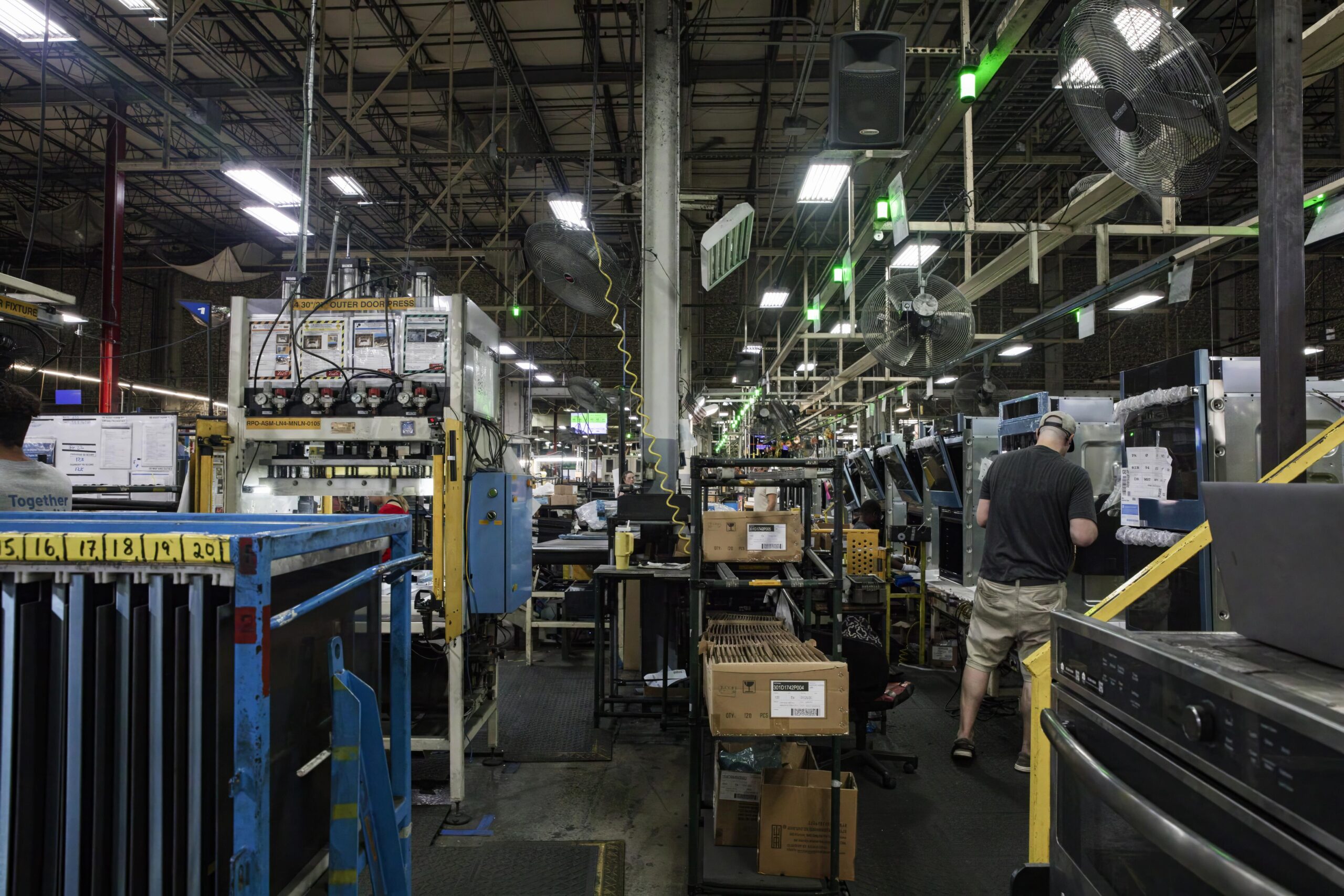
    With U.S. manufacturers struggling to staff up, a handful are opening the doors to people who may not be seeking a traditional career in the industry or even a 40-hour workweek.

    It’s a change that manufacturers including Stanley Black & Decker and Georgia-Pacific are embracing. And it has also taken hold in rural northwest Georgia.

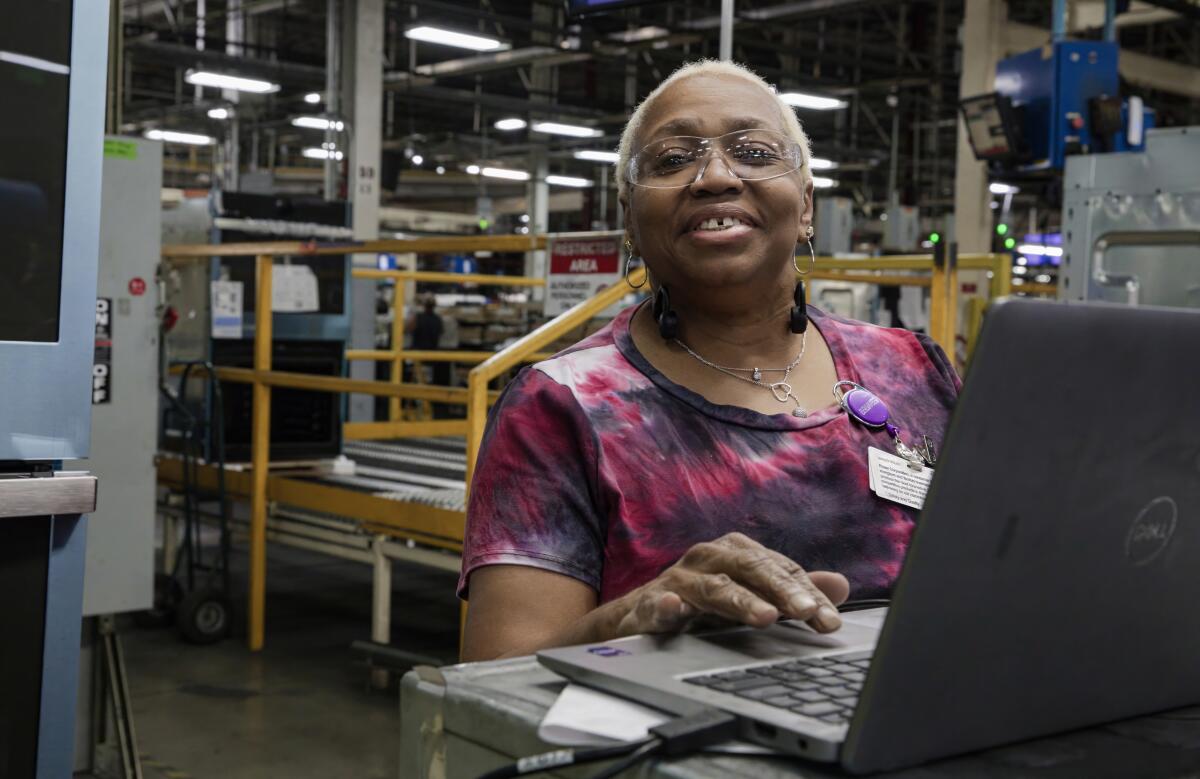
    Ruth Ransom calls it the best thing she has ever heard.

    “I wasn’t interested in working full time,” says the 68-year-old grandmother, who considered herself retired when she learned of the opportunity to pick up shifts at the Roper Corp., a kitchen appliance plant owned by GE Appliances. “I was just wanting to work part time, maybe two days a week somewhere. You know, just to get out of the house.”

    Ruth Ransom, 68, likes having flexible hours and the option to choose what type of work she wants to do.
    Ruth Ransom, 68, likes having flexible hours and the option to choose what type of work she wants to do. (Julie Holder for NPR)

    Today, Ransom is part of a pool of more than 900 workers who sign up for shifts via an app. Not only do workers make their own schedules, deciding how many four-hour shifts to pick up each week, but they also choose what kind of work they want to do. Assembly line jobs are fast-paced and physically demanding, so Ransom often opts for quality control, which she finds less taxing.

    “It’s your choice,” she says. “I love it.”

    A COVID-era struggle leads to a “crazy” idea 

    GE Appliances first embraced flexible work out of necessity. During the COVID-19 pandemic, the company found itself inundated with orders and severely short on workers.

    “People were buying appliances in record numbers, because they were staying at home and they were cooking,” says Tony Gabbert, the plant’s director of manufacturing operations. “It was a great time, great problem to have when you’re just selling product so fast that you can’t hardly make them quick enough.”

    The not-great problem was that workers were staying home, even quitting, because of COVID-19. On some days, the plant was hundreds of workers short. Salaried employees, including Gabbert, had to step in to keep the highest-priority lines moving.

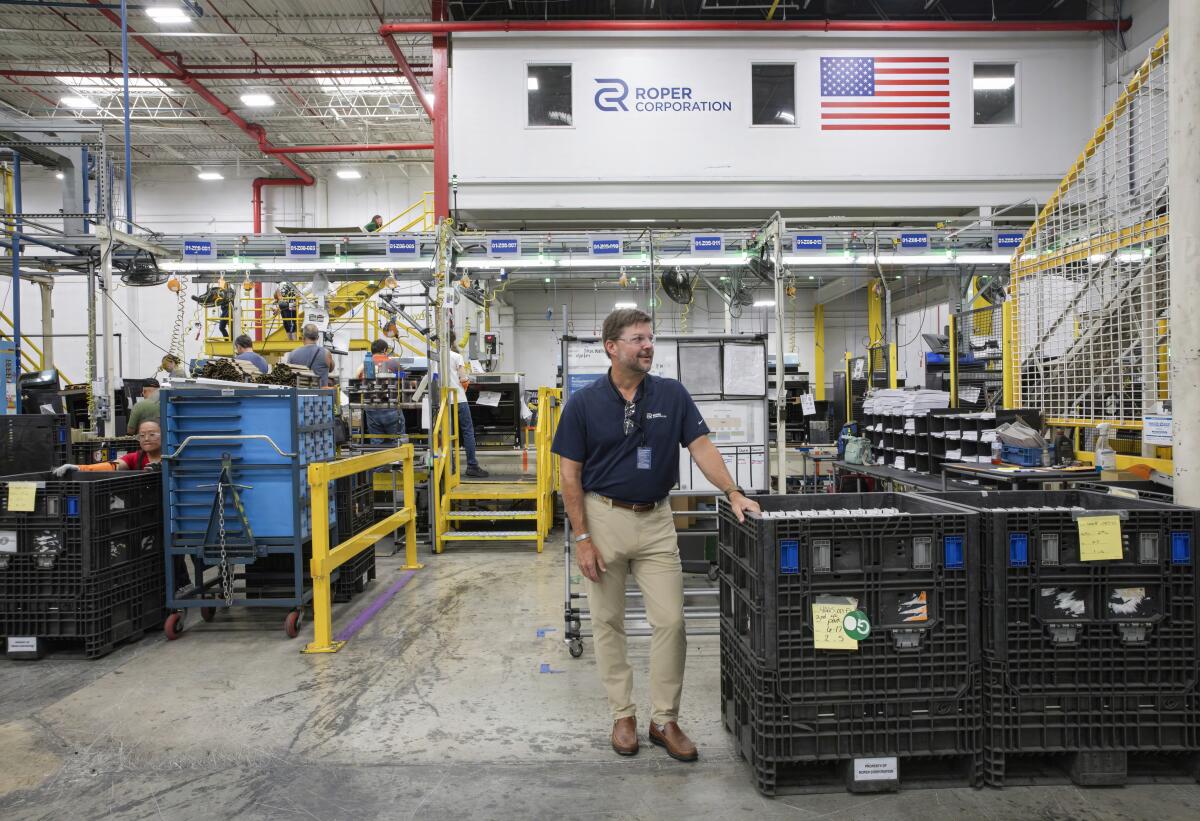
    Tony Gabbert is the plant's director of manufacturing operations.
    Tony Gabbert is the plant’s director of manufacturing operations. (Julie Holder for NPR)

    Amid the crunch, Gabbert learned of a staffing firm called MyWorkChoice. Its pitch was intriguing. The firm would recruit and vet a pool of workers who could be trained to do different jobs, building ovens and ranges across the plant. The workers, who would remain employees of MyWorkChoice, would use an app to sign up for open shifts, covering for absences and helping out with increased demand.

    Gabbert presented the idea to his boss, Bill Good, GE Appliances’ vice president of manufacturing. Today, the two of them chuckle, recalling his response.

    “I did say this is crazy,” says Good, who has worked in manufacturing for almost four decades.

    An industry that runs on consistency

    The mantra in manufacturing, Good says, is that you need consistency to build a quality product. It’s why, for generations, the proposition to workers was simple.

    “We would say: Hey, we have a 40-hour job. We will pay you this amount. This is your benefits. You show up every day, and that is a nonnegotiable,” says Good.

    What was initially proposed felt like the antithesis of that: adding workers who could sign up for as little as two hours of work at a time.

    “The two-hour increments scared the heck out of me, because I was envisioning people coming and going at a rate that we could not control,” says Good.

    In a typical week at Roper, about 450 flexible workers pick up shifts through the MyWorkChoice app. They work an average of 24 hours a week.
    In a typical week at Roper, about 450 flexible workers pick up shifts through the MyWorkChoice app. They work an average of 24 hours a week. (Julie Holder for NPR)

    So they settled on four-hour shifts. They started out small, in just a couple of areas of the plant, and expanded over time. Today, in any given week, about 450 flexible workers — roughly half the pool — pick up shifts at the plant, with workers putting in an average of 24 hours a week.

    Their contributions have been key to GE Appliances’ $180 million expansion of the Georgia plant, completed last year, which added 600 new jobs.

    Prizing flexibility over money and benefits

    Good’s hope is that some of the workers who make their way to manufacturing through MyWorkChoice will discover that they want a career in the industry after all.

    But many may not.

    “I think with the current workforce, the way that it has changed, it’s not the way that it was 20 years ago, where you come, you stay at a job and you work those hours,” says Darcy Duvall, the plant’s director of human resources operations.

    She has found that people are comfortable with app-based work. Workers get rated on their reliability. Those with the highest ratings get the first pick of shifts.

    “This is like the Uber of manufacturing,” Duvall says.

    She has also come to see that many workers prize flexibility despite the significant trade-offs — like lower pay and almost no benefits. MyWorkChoice employees can opt into their own group healthcare plan, but few do.

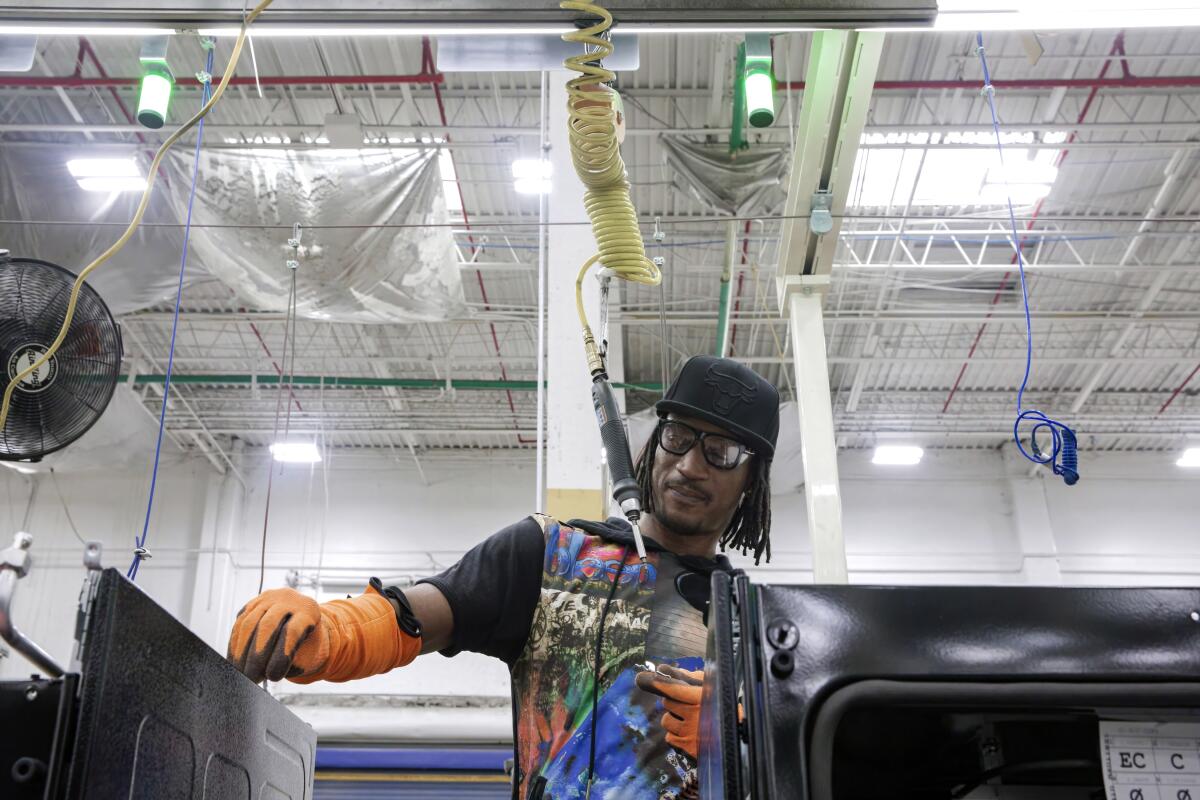
    Kwame Crockett started working at Roper a few days a week to supplement his job managing properties in a mobile home park. He's now working full-time hours at the plant but is happy that he can take off time whenever he wants.
    Kwame Crockett started working at Roper a few days a week to supplement his job managing properties in a mobile home park. He’s now working full-time hours at the plant but is happy that he can take off time whenever he wants. (Julie Holder for NPR)

    Kwame Crockett is among a sizable share of flexible workers who are putting in full-time hours at the plant. When he first started with MyWorkChoice, he saw it as a way to supplement his other job, managing and remodeling properties in a mobile home park. He’d sign up for shifts at the plant a few days a week.

    “At the time, it worked out perfectly,” he says.

    More recently, he has been working five days a week. Under the agreement between GE Appliances and MyWorkChoice, Crockett could become a full-time employee of the plant and gain access to GE Appliances’ full benefits package, which includes paid time off, paid holidays, on-site healthcare and even a 401(k) match.

    But Crockett isn’t interested — for now, anyway.

    “I’ve thought about it,” he says. “But I never know when my other remodeling or anything might kick up. So I might need a vacation or a little time off, you know?”

    Keeping experienced workers on the job

    The flexible work option has also helped GE Appliances keep longtime employees with decades of experience on the job.

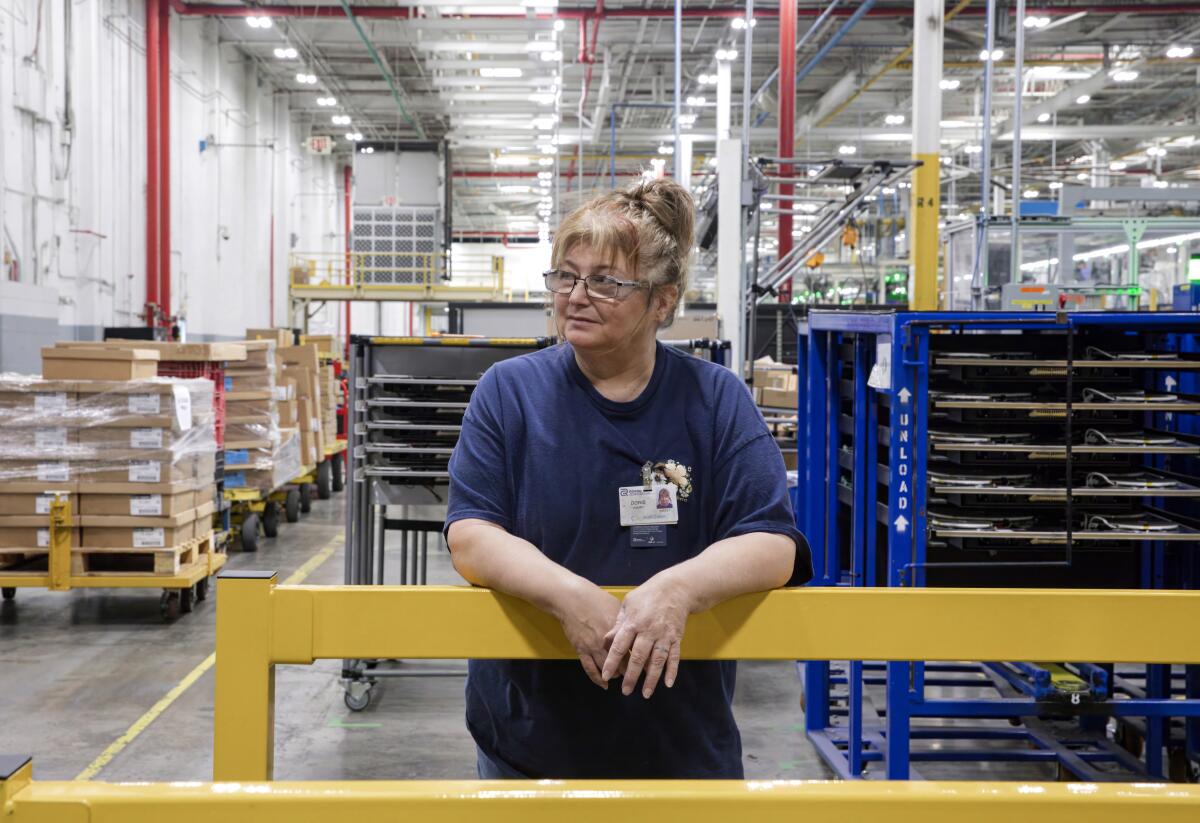
    Doris Hamby worked at the plant full time for 35 years. After her husband died, she might have retired. Instead, she went part time. These days, at 62, she works three to four days a week.

    Doris Hamby worked at the factory full time for 35 years before going part time. Her schedule allows her to spend time with her grandkids and take care of her mother.
    Doris Hamby worked at the factory full time for 35 years before going part time. Her schedule allows her to spend time with her grandkids and take care of her mother. (Julie Holder for NPR)

    “That way I can spend time with the grandkids, and my momma’s real sick so I’m having to take care of her too,” she says.

    After her move to part time, her boss got her back on the same line, so she’s doing the same work, although for a couple of dollars less per hour. Being free to set her own schedule makes it worth it, she says.

    “I got people asking me, ‘When you going to retire? When you going to quit?’” Hamby says.

    Last year, she told her co-workers maybe by the end of the year. Now, she’s saying maybe by the end of this year.

    “I’ll probably be here a while,” she says.