Blog
-
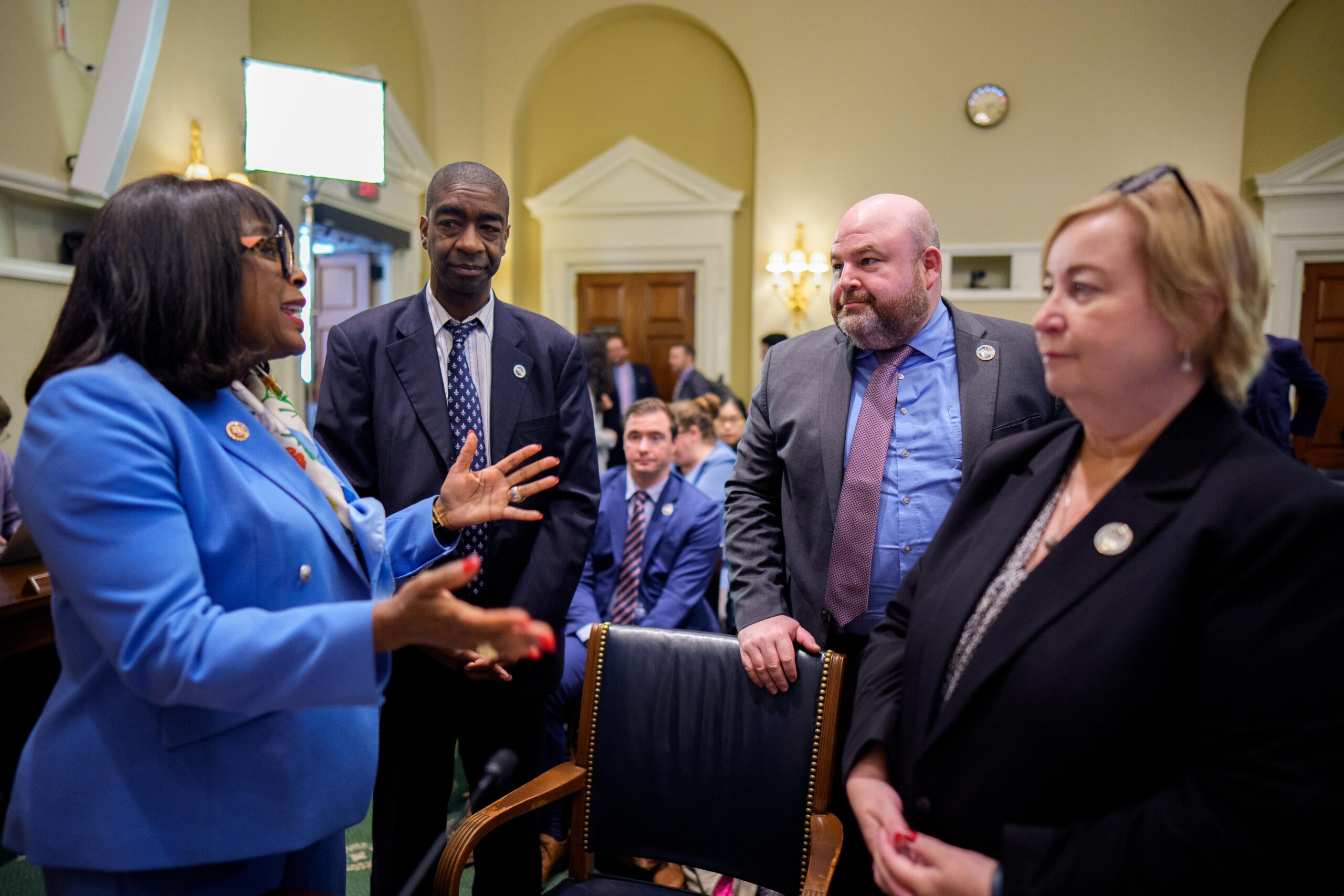
President Trump cleans house at the bipartisan Election Assistance Commission
With just months until the midterms, President Trump relieved the remaining members of the bipartisan U.S. Election Assistance Commission, a move that drew swift condemnation from Democrats and voting rights advocates.
An association of state election officials sent word out to its members on Thursday about Trump’s dismissals, and in a statement a White House official said the president “reserves the right to remove individuals that may not be totally aligned with the important task of securing America’s elections and ensuring every legal vote is counted. The Slaughter decision gives the President precedence to do so.”
In the Slaughter case, the U.S. Supreme Court late last month ruled that a president has a freer hand to remove members of independent federal agencies.
The EAC moves also come as Trump continues to try to influence elections in unprecedented ways.
For instance, Trump issued a 2025 executive order that called on the EAC to add a proof-of-citizenship requirement to the federal voter registration form it maintains. Judges have blocked that executive order’s main provisions, saying they exceed a president’s constitutional authority.
The EAC was created by the Help America Vote Act of 2002 (HAVA). The under-the-radar agency certifies voting systems and develops guidelines for state and local election administration, among its charges.
Its four commissioners are nominated by the president and confirmed by the Senate. HAVA specifies that no more than two commissioners may belong to the same political party. A Republican, Don Palmer, had already departed earlier this year, leaving two Democratic members — Thomas Hicks and Benjamin Hovland — and one Republican, Christy McCormick. Trump dismissed Hicks and Hovland; McCormick resigned her position.
All three had been confirmed by the Senate unanimously.
A spokesperson for the EAC did not respond to a request for comment.
California U.S. Sen. Alex Padilla and New York U.S. Rep. Joe Morelle, the ranking Democrats on committees with jurisdiction over elections, quickly blasted the commissioners’ removals.
“President Trump is trying to dismantle yet another independent guardrail of our democracy designed to keep elections fair and secure,” they said in a statement. “Purging commissioners just months before the midterm elections and further gutting support for our state and local elections officials is a blatant part of his plan to politicize our elections and enable more unlawful and dangerous election interference.”
Michael Waldman — president and CEO of the Brennan Center for Justice, which advocates for expanded voting access — said in his own statement that the dismissals “are deeply concerning in light of President Trump’s relentless efforts to try to interfere in elections.”
“Congress deliberately structured the Election Assistance Commission as a bipartisan agency to help states administer free, fair, and secure elections,” he said. “These removals leave the agency without leadership and unable to carry out its major responsibilities.”
Matt Weil, vice president of governance at the Bipartisan Policy Center, noted in a statement that the EAC has operated without a quorum for much of its existence, yet he called Trump’s dismissals “unprecedented” and “a significant loss for one of the federal government’s few institutions explicitly designed around bipartisan governance.”
-
In private call, Education Dept. tried, but failed, to reassure disability advocates
Catch up on what you missed with our Education newsletter, sent weekly.
In a call with disability rights advocates Thursday, officials from the U.S. Department of Education tried to ease concerns about plans to move the agency’s special education offices to the Department of Health and Human Services (HHS).
The effort seemed to fail.
“Today’s briefing left more questions than answers for parents and educators,” says Chad Rummel, who leads the Council for Exceptional Children, and was one of many disability advocates who attended the call. “Today we heard that there is no clear and transparent plan around the move to HHS.”
According to a recording of the call obtained by NPR, the acting assistant secretary overseeing special education, Kelly Rogers, said she wanted to reassure advocates that the move would not harm federal protections for students with disabilities. “The U.S. Health and Human Services is not taking over IDEA. Period.” Rogers was referring to the Individuals with Disabilities Education Act, a federal law that guarantees students with disabilities a quality public education alongside their nondisabled peers.
Yet Rogers also said in the same breath that staff at the Office for Special Education and Rehabilitative Services (OSERS) — many of the people actually responsible for supporting states and schools in implementing IDEA — would be moving to HHS. She said she would continue to oversee that staff from her perch at the Education Department “with additional support by HHS.”
While department officials have been pitching this move as a way to streamline federal bureaucracy in education, advocates think it is doing the opposite. “This proposal appears to add another layer of bureaucracy while creating additional confusion and uncertainty for families, educators, and state agencies,” says Denise Marshall, CEO of the Council of Parent Attorneys and Advocates (COPAA).
In Thursday’s call, Rogers said, “This administration is firmly committed to carrying out the federal government’s duty to enforce federal protections for individuals with disabilities.” She continued, “This partnership does not alter that obligation.” Rogers did not share a specific timeline for these changes to take effect.
NPR followed up with the Education Department by email after the call, and while the agency did not respond to questions about its timeline, press secretary Savannah Newhouse wrote, “Advocates, parents, and teachers in the special education community have nothing to fear” about the changes. “What our partnership with HHS does is place these important federal responsibilities in a better positioned agency and draw on HHS’ expertise of working with people with disabilities of all ages.”
The private briefing came three weeks after the initial announcement that the Education Department would move two of its core functions — special education and civil rights — to other agencies in an ongoing Trump administration effort to dismantle the department altogether. The department has already shared plans to move more than a dozen of its offices to other agencies as part of its “Returning Education to the States” campaign.
For decades, the Education Department has overseen IDEA and other services for people with disabilities, like helping adults transition to life after school. While the federal government has never directly managed how schools serve students, it has been responsible for keeping schools accountable for meeting the needs of those students, providing federal funding for services and offering technical assistance to local leaders.
For months, the disability community has been on edge about how moving oversight of IDEA could affect students.
“The concern is not that IDEA disappears overnight. The concern is that the administration is preserving IDEA at the Department of Education on paper, while moving much of the work that makes IDEA real for families somewhere else,” said Jacqueline Rodriguez, CEO of the National Center for Learning Disabilities. “For students, that could mean more confusion, slower guidance, weaker monitoring and less accountability when services are delayed or denied.”
Newhouse, from the Education Department, denied that the changes would affect how staff do their jobs. “A different building, a different floor, or a different desk doesn’t change their job responsibilities and commitment to serve students with disabilities every single day.”
Department officials say federal funds dedicated to special education will continue to flow to states and schools through the agency for now, but it’s unclear how those systems may change when OSERS staff move to HHS.
“The administration acknowledged today what the law has always required: The Department of Education and the secretary of education remain legally responsible for administering and enforcing IDEA. This reorganization neither advances the stated goal of closing the department nor transfers new authority to the states,” says Marshall of COPAA. She called on Congress to step in and stop this move — a federal agency can only be completely dissolved by an act of Congress.
But as Marshall and other advocates pointed out, administration officials seem keenly aware of this fact, which may be why the Education Department is keeping some staff, including Rogers, at the Education Department.
Marshall called the strategy “a sham.”
Edited by: Nirvi Shah
Visual design and development by: LA Johnson -
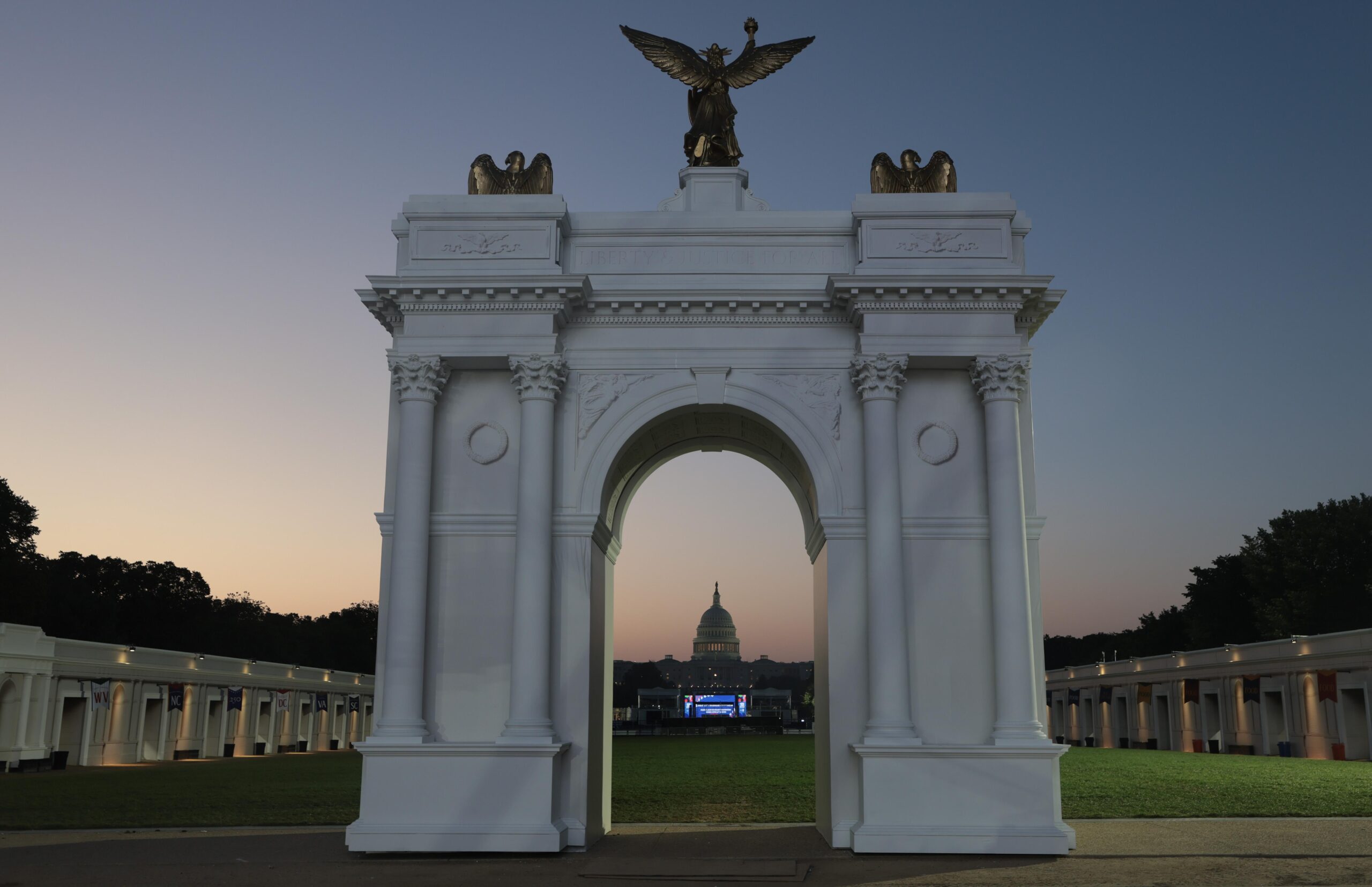
Trump’s arch clears another hurdle, setting up a big debate: Do height limits apply?
In its quest to build a 250-foot arch near the National Mall, the Trump administration is arguing that a longstanding law restricting building heights in D.C. does not apply — to the project or to any federal structures at all.
The topic resurfaced at Thursday’s meeting of the National Capital Planning Commission, the second federal body tasked with reviewing the arch. The first, the Commission of Fine Arts — an aesthetic-focused panel packed entirely with Trump appointees — quickly approved the administration’s incomplete design in May.
The National Capital Planning Commission, in contrast, focuses on urban planning issues such as materials, placement and pedestrian safety. One of its three presidential appointees is Will Scharf, chair of the commission, who also serves as White House staff secretary and accompanied Trump on his trip to a NATO summit in Turkey this week.
The planning commission voted 8-1 on Thursday to approve the preliminary site and building plans for the arch, with three members voting “present.” After more than two hours of public comment in opposition, followed by minimal discussion, the panel left the project team with more questions to answer before its next meeting in early September, and a promise to revisit the height question then.
“I’m guessing that we’re going to have a vigorous debate on this subject when this project next comes before the commission,” said Scharf.
At last month’s meeting — when the commission cautiously advanced the project — Scharf planted seeds of doubt about whether the 1910 Height of Buildings Act applies to the arch, which would be built along the Arlington Memorial Bridge in Virginia.
“I believe, speaking personally, that the Height of Buildings Act is not applicable to federal construction,” Scharf said, contradicting what he acknowledged was the “long-held” view of the commission he has led for the past year.
The Department of the Interior seems to side with Scharf. Ahead of Thursday’s meeting, its Office of the Solicitor submitted a four-page memo arguing in part that the 1910 act — despite being federal law — is “just a local zoning ordinance and does not apply to the United States.”
The planning commission responded with a four-page memo of its own earlier this month, outlining the law’s legislative history and application over time.
“Since 1938, NCPC has operated with the understanding that the HBA was intended to bind federal projects and has applied the HBA accordingly,” wrote Meghan Hottel-Cox, the commission’s general counsel and secretariat.
Changing that, she said, would mean big changes not only to the commission’s process but for D.C. itself.
“If the HBA no longer applies to federal property in the District, it could fundamentally reshape the city’s architectural fabric, the balance of local vs. federal authority, and the visual character of the nation’s capital,” she added.
A White House official told NPR over email that the administration does not believe the Height of Buildings Act restricts the project, adding: “We expect the Arch proposal to proceed as-is.”
That was the backdrop of Thursday’s meeting, at which protesters rallied outside and over 40 people spoke out against the arch. They echoed a wide range of concerns reflected in the nearly 2,000 written comments the commission has received so far about the arch, as well as the lawsuit that Vietnam War veterans have brought against it.

The arch would be constructed on the Arlington Memorial Bridge in Virginia, near the military cemetery and directly across from the National Mall. (Win McNamee | Getty Images) Critics say the arch would block the historic view line between the Lincoln Memorial and Arlington National Cemetery and “desecrate” one of the nation’s most hallowed resting places.
Many also take issue with the process, from the lack of congressional authorization and public buy-in in the first place to the speed with which it seems to be moving through the required environmental and historical preservation reviews.
“Our greatest memorials emerged through time, public consensus, and history’s judgment, not the preferences of those holding office,” D.C. resident Kristopher Reichert, who co-chairs the local chapter of the right-leaning, anti-Trump group Principles First, said during the meeting. “No administration, regardless of party, should claim the privilege of reshaping America’s monumental core without first demonstrating the restraint that has defined our republic for nearly 250 years.”
Why D.C. has height limits (it’s not what you might think)
The lack of skyscrapers may be one of D.C.’s most distinctive physical features. Its tallest structure is the 555-foot Washington Monument, which can be seen from all over the city.
There is a lingering myth that height limits were created to protect views of the Washington Monument. In fact, they were borne out of more practical considerations, said Elizabeth Morton, a planning and urban design consultant who lectures at George Washington University.
In the 1890s, the city completed its first residential skyscraper, a 164-foot behemoth called the Cairo.
“That aroused a lot of concern from neighbors, both about fears of blocking light and air and also there were concerns — which were legitimate at the time in American cities at the time — about safety and the ability of firefighting equipment to actually reach the full height of those buildings,” Morton said.
In response, Congress, which directly governed D.C. at the time, passed the first Height of Buildings Act in 1899, which exempted federal buildings from the limits. It passed a revised version in 1910, changing some of the height limits and quietly removing that exemption.
That law has shaped the skyline of the city ever since.
“It’s really about the relationship of a building to the street and to the public realm around it,” Morton said. “And it’s also a way to preserve distance and view corridors … the sense of a procession through the city that tells a story.”
The law grandfathered in certain existing structures, like the Old Post Office Tower (315 feet), and was amended several times to allow for individual exemptions, like the Basilica of the National Shrine of the Immaculate Conception (329 feet) and the National Press Club building (14 stories).
But exceptions have been rare.

Demonstrators protested the arch with a replica of their own in Virginia in May. (Anna Moneymaker | Getty Images) “There hasn’t been one in decades, as far as I know,” said Sara Bronin, a George Washington University Law School professor who specializes in property, land use, zoning, and historic preservation.
The Interior Department now argues that federal buildings are exempt from the Height of Buildings Act in part because of the exemption that appeared in the 1899 version of the law. Bronin is skeptical of that argument.
She says the nature of the back-and-forth between the two federal agencies “suggests that this may be a matter that will show up at some point in court.”
What this could mean for the arch
The commission has a recommendation for how the arch could comply with height restrictions without losing any inches.
In its report prepared for Thursday, the commission says architects would simply need to redistribute the height of the statue, citing a 2014 tweak to the law that allows a “20-foot habitable penthouse” to exceed the height limit under certain conditions.
It proposes lowering the arch’s height from 166 feet to the maximum of 130 feet, and increasing the height of the gold statues on top — a winged woman flanked by two eagles — to 100 feet tall. That, plus a 20-foot penthouse, would keep the statue at 250 feet overall — but with very different proportions.
Morton says she appreciates the commission’s attempt at a compromise, but thinks “the suggestion to make it even more top-heavy seems unwise.”
“From an architectural point of view, if you’ve got a really big statue, there’s a solid base at the bottom that psychologically holds it up,” she says. “The function of [an arch] is as a gateway … and having a very large vertical element on top is really distracting and unsettling.”
That recommendation went largely unaddressed on Thursday, as commissioners ultimately voted to postpone discussion of the height limits to the next meeting, “prior to taking final action on the project.”
They also asked the project team to return with a justification for the proposed height. According to the report, architects did consider smaller designs but ruled them out because a lower opening obstructed more of the view between the Lincoln Memorial and Arlington National Cemetery.
“In addition, because the arch is intended to celebrate 250 years of American independence, the smaller heights were not considered representative of this milestone,” the report says.
Priya Jain, who spoke at the meeting on behalf of the Society of Architectural Historians, said she would have liked to see proof that the Department of the Interior considered other sizes and sites for the arch.
“The applicant is required to develop and present alternatives that will mitigate the project’s adverse effects,” she said. “We believe this effort has been seriously lacking.”
Jessica Bowron of the National Park Service — representing Secretary of the Interior Doug Burgum on the panel — said before the vote that the Interior Department would continue to move the project forward.
“On behalf of the department, I can certainly commit that we will continue to work to be responsive to the comments of the commission,” she said.
The department has been asked to address a wide array of questions beyond the height limit, including implications for planes flying to and from the nearby Ronald Reagan Washington National Airport, safety and accessibility considerations for pedestrians and cars navigating the traffic circle where the arch would stand and whether construction noise could be mitigated so as not to disturb funerals at the nearby cemetery.
What this could mean for D.C.
Morton says the commission’s decision on the arch could amount to a “hugely consequential ruling” for how the Height of Buildings Act is applied going forward.
“I would just really try to encourage the commission not to abandon decades of planning and decades of city building that guides the federal government with the Height of Buildings Act,” she said. “I do feel like there are very well articulated principles that have made our city a world-class capital that are violated by this project.”
Commission member Evan Cash was the sole vote against advancing the arch at both meetings. On Thursday, he reiterated his concerns about the arch’s purpose and process before making the case that the Height of Buildings Act applies.
“We need to dispel the notion that the height act is simply local zoning,” he said. “It is an act of Congress legislating for the nation’s capital at a time when Congress directly controlled the district’s government in 1910.”
He said it was “staggering” that the Department of the Interior is arguing otherwise, and he worried it could set a precedent in which the commission decides the heights of future projects on a case-by-case basis.
“I’m not willing to lend my vote to plans that could have the effect of upending decades of [commission] practice and the century-old height framework, all without congressional authorization or a commemorative works process, for a project that — as far as I can tell — has only one real advocate, and that advocate is not Congress,” he said.
Cash was presumably referencing Trump, who once told a reporter that the arch was for “me.” The Department of the Interior says the purpose of the arch is to celebrate America’s 250th birthday.