Transcript:
MARY LOUISE KELLY, HOST:
It’s CONSIDER THIS, where every day we go deep on one big news story. Today, who in America gets compensated when the government wrongs them? Well, if you ask President Trump, he would say…
(SOUNDBITE OF ARCHIVED RECORDING)
PRESIDENT DONALD TRUMP: People have been destroyed by crooked politicians, and they should be reimbursed for that.
KELLY: Here he is speaking with NBC’s Kristen Welker earlier this month, he’s talking about the nearly $1.8 billion fund that was going to reimburse people who claim they were targets of politicized prosecutions, including people who stormed the U.S. Capitol on January 6. The DOJ now says it is not moving forward with the fund, but Trump personally hasn’t ruled it out.
(SOUNDBITE OF ARCHIVED RECORDING)
TRUMP: Well, look, if it was up to me, I’d pay them the kind of money that they deserve.
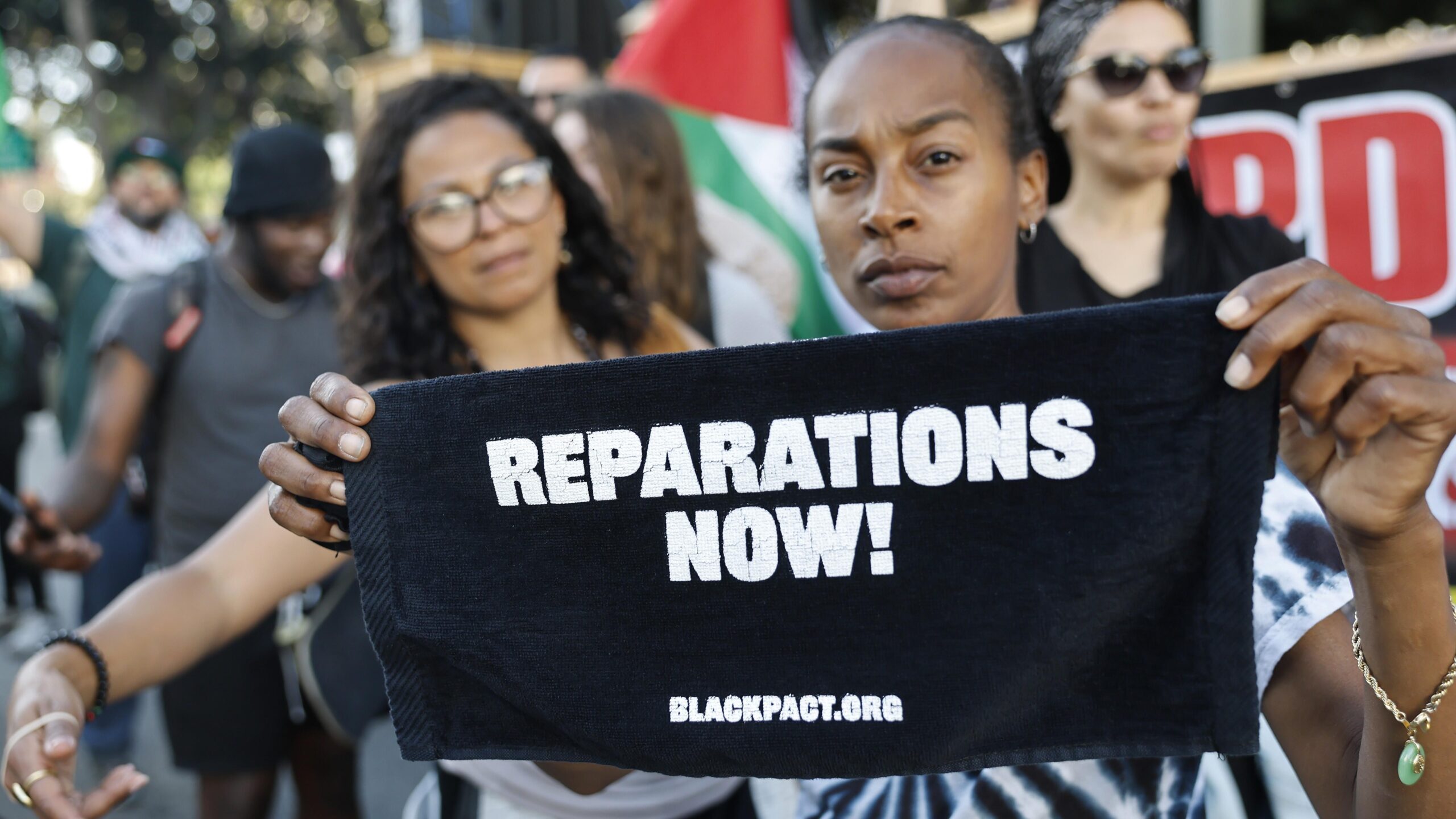
KELLY: Money that they deserve. By contrast, we’ll note that while the Trump administration was pushing this anti-weaponization fund, a bill to study slavery reparations has failed to advance for decades. CONSIDER THIS – not every group that’s been harmed by the government gets compensated. So who counts?
(SOUNDBITE OF MUSIC)
KELLY: From NPR, I’m Mary Louise Kelly.
(SOUNDBITE OF MUSIC)
KELLY: It’s CONSIDER THIS FROM NPR. It’s Juneteenth, the holiday that commemorates the end of slavery in the U.S., and our colleagues at NPR’s Code Switch have been looking at a question tied to this day, which is, who in America actually gets compensated when the government wrongs them? Gene Demby is co-host of Code Switch. He spoke with my colleague, Ailsa Chang.
AILSA CHANG, BYLINE: I just want to start in a place that may feel unexpected as it relates to this term reparations, and that is the anti-weaponization fund. That’s the fund that the Trump administration announced last month. It never happened. But can you tell us how that idea connects to what you’ve been reporting on?
GENE DEMBY, BYLINE: Right. So back in May, the Justice Department announced this nearly $1.8 billion fund that was set aside to compensate people the administration, the White House says, were wronged by the federal government. And it was strongly implied that a lot of that money could go to people pardoned for their roles in storming the capital on January 6, 2021. And, Ailsa, the number itself is telling ’cause it’s not around $1.8 billion, as Rebecca Nagle, who’s a journalist and a citizen of the Cherokee Nation, told me.
REBECCA NAGLE: I believe the exact number of the fund is 1.776 billion. To me, I read that number as intentionally being 1776.
KELLY: Ah.
DEMBY: Yeah. So, you know, we’re just weeks from the country’s 250th birthday. And the administration picked this number that points right back to the founding.
KELLY: OK. And so since the idea was announced last month, this fund – it’s gotten a lot of heat from both Republicans and Democrats. Tell us the status of this fund right now.
DEMBY: I mean, it’s in limbo. And that’s the wild part. Like, the acting attorney general, Todd Blanche, told Congress flat out…
(SOUNDBITE OF ARCHIVED RECORDING)
TODD BLANCHE: We are not moving forward with the fund.
DEMBY: But, Ailsa, he refused to put that in writing.
(SOUNDBITE OF ARCHIVED RECORDING)
BLANCHE: I don’t know what the purpose of putting something in writing. I’m telling you what we’re doing. I’m not committing to doing anything in writing. No.
UNIDENTIFIED PERSON #1: Not committing. OK.
DEMBY: And then the president kept saying he still liked the idea. And he said, quote, “if it was up to me, I’d pay them the money they deserve,” end quote. But then a federal judge stepped in and issued an injunction blocking this fund, and she gave the Justice Department a deadline that happens to fall on this Juneteenth to produce a sworn statement, you know, put it in writing under penalty of perjury, signed by both Blanche and the treasury secretary promising that this anti-weaponization fund is firmly done, scrapped. She even barred them from reviving it under a different name. So as we speak, the clock is ticking on that deadline.
CHANG: OK. There’s been this whole saga. OK. But can you explain, just step back a little and explain how something like the anti-weaponization fund ties into this larger picture of race and identity in America and to reparations.
DEMBY: Yeah. So it’s because of the contrast around who gets made whole. So for decades, there’s been a bill sitting in Congress, and it wouldn’t even pay reparations for slavery. All it would do is study the question at the federal level, what’s owed after 246 years of slavery, after another century of Jim Crow and the discrimination that followed that. And that bill has been introduced over and over and over for more than 35 years, and it has never once reached the floor for a vote. We talked with Don Tamaki. He’s a lawyer who worked on California’s Reparations Task Force, and his family was incarcerated in the Japanese American concentration camps, you know, that were built…
CHANG: Yeah.
DEMBY: …By the U.S. government during World War II. His family and those like his that were imprisoned waited 46 years before they eventually got a formal apology and got financial redress from the government. But in contrast, he said…
DON TAMAKI: When it comes to Black Americans, Congress doesn’t even have the will to study what happened, let alone do anything about it. So I think there’s a lesson in the Japanese American redress effort about the ability of America to right its wrongs. But the corollary is that is what’s happened to reparations for Black Americans, which still remains unfulfilled.
DEMBY: And yet on the flip, we had this proposal to compensate anyone who believes that they were prosecuted for political reasons, including January 6 defendants. And that came together fairly quickly under this administration.
CHANG: I mean, it kind of blows me away, Gene. OK. So one thing that came out of your reporting was that the money that the administration wanted to use actually is there because of what is essentially an existing mechanism for reparations. Is that right?
DEMBY: Yeah. This…
CHANG: That’s wild to me.
DEMBY: This blew my mind. Like, I did not know this before going into this reporting, but the money that the anti-weaponization fund would draw on comes from something called the judgment fund, and that’s basically the government’s account for paying settlements. And the machinery to pay those settlements – it exists in large part because Indigenous people, native nations, spent more than a century building it. They had…
CHANG: Wow.
DEMBY: …No way to sue the U.S. government directly. So they fought to create these legal tools to do so. And so when the DOJ announced the fund, they cited a case called Keepseagle as precedent.
CHANG: And what was Keepseagle about?
DEMBY: So Keepseagle was this case where Native American farmers sued the USDA for discrimination back in 1999. I talked with the legal scholar Maggie Blackhawk, who’s Fond du Lac Band Ojibwe, and she explained the significance of citing their precedents like this.
MAGGIE BLACKHAWK: Most of the American public doesn’t have a sense of what was actually done to Native people. And so…
UNIDENTIFIED PERSON #2: Yeah.
BLACKHAWK: …It’s an easy place to just point to without setting off alarm bells, saying, ah, we’re doing this because we’ve done it before.
DEMBY: Yeah.
BLACKHAWK: Here’s my precedent, move on. Whereas if they were pointing back to, for example, instances of human enslavement and saying, this is why we’re doing it. Everyone would be marching in the streets.
DEMBY: Everyone’s antenna would twitch as like, hey, wait a second, right? Yeah.
BLACKHAWK: Exactly.
UNIDENTIFIED PERSON #2: Yeah.
BLACKHAWK: There’s no antenna.
CHANG: Wow. So basically, if I’m understanding this correctly, Gene, she is saying because most Americans do not know this history, the administration can borrow tools built by the very people seeking redress for real harm and then repurpose those tools for their own purposes.
DEMBY: Exactly. And there’s a word she uses for that pattern. She calls it the boomerang, the idea that what a government builds to control or harm people on the margins eventually comes back around to everybody.
BLACKHAWK: What they’re doing is taking those mechanisms that people who have been harmed by the violence of the United States and turning it towards their own supporters.
DEMBY: And Rebecca Nagle says there’s a way that our government treated Native people, treated Indigenous people as a blueprint for a lot of other stuff.
BLACKHAWK: And so I think that people think that history and that those aspects of our government will kind of stay in their place. And I think we’re living through this moment where it’s clear that it’s not (laughter).
DEMBY: Yeah. Yeah.
BLACKHAWK: And that, you know, like, those scary things that our government has done in the past are things that our government still knows how to do.
CHANG: Dang. So what do you think, Gene? Is this story over in the case of the anti-weaponization fund?
DEMBY: No, and that’s kind of the point. Like, the fund may be frozen, but the machinery forward is still very much in place. And at the same time, the Justice Department is actively trying to stop slavery reparations efforts happening at the local level, not at the federal level, but, like, in cities and states. Just days ago, the Justice Department announced a motion to intervene in a program in suburban Chicago that was giving millions in cash and assistance to descendants of Black residents as redress for things like discrimination in housing. And the government called it a form of illegal race discrimination because other races besides Black people can’t benefit.
KELLY: That is Gene Demby, co-host of NPR’s Code Switch, speaking with my colleague, Ailsa Chang. This episode was produced by Erika Ryan and Karen Zamora. It was edited by Courtney Stein, Ashley Brown and Tinbete Ermyas. Our interim executive producer is Courtney Dorning. Thank you to our CONSIDER THIS+ listeners who support the work of NPR journalists and help keep public radio strong. Supporters also hear every episode without messages from sponsors and unlock bonus episodes of CONSIDER THIS. You can learn more at plus.npr.org.
(SOUNDBITE OF MUSIC)
KELLY: It’s CONSIDER THIS from NPR. I’m Mary Louise Kelly.