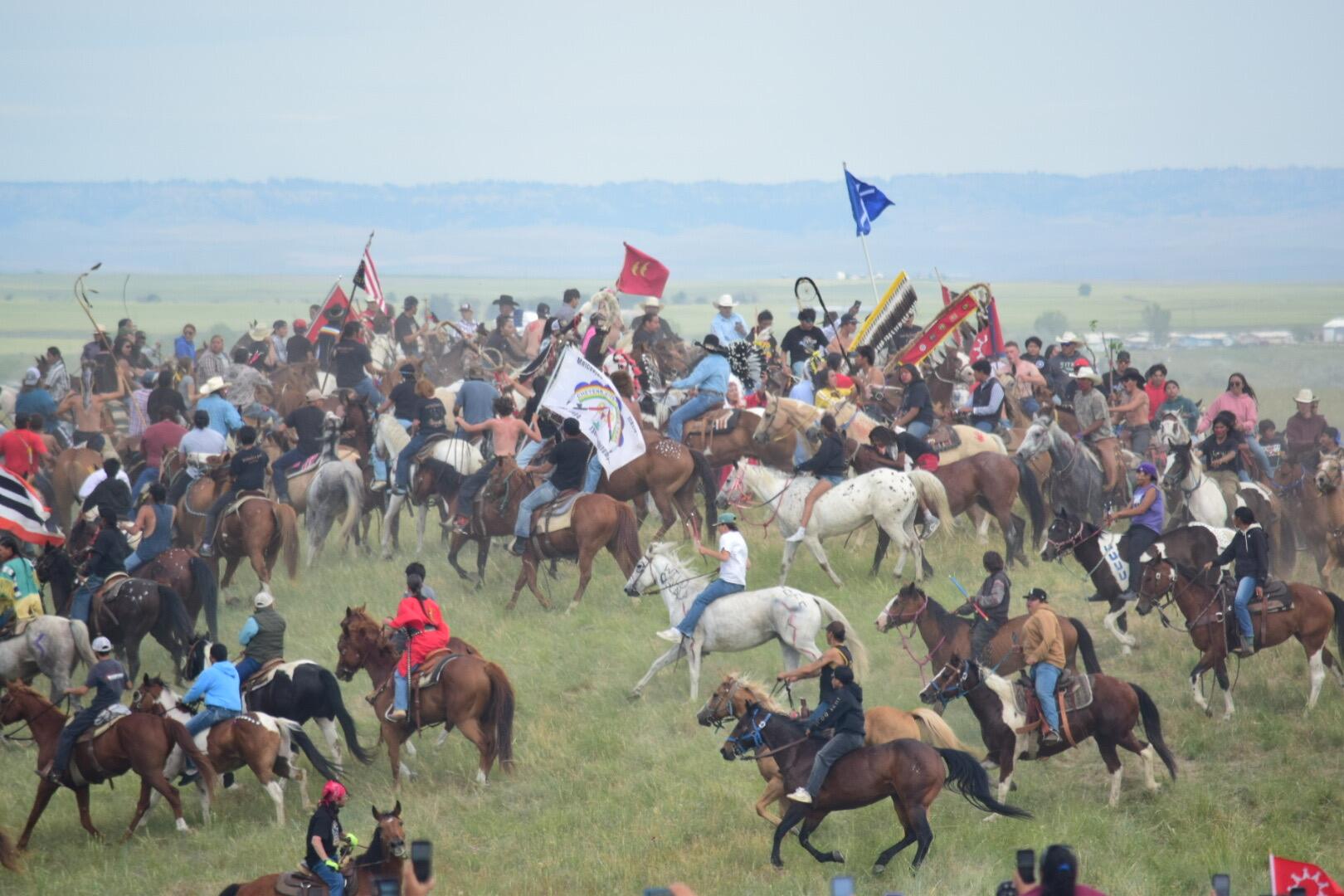
CROW AGENCY, Mont. — Under the expansive Montana sky, hundreds of members and descendants of 19 tribal nations gather at one of America’s most famous battlefields. They’re here to watch as Native American riders on horseback charge onto the same land their ancestors did 150 years ago when they defeated the U.S. Army’s 7th Cavalry under the command of Lt. Col. George Armstrong Custer.
The riders race across the dry landscape — kicking up clouds of dust before circling at the top of a hill at Little Bighorn Battlefield National Monument. Some of them are wearing headdresses and regalia, others are wearing tank tops and T-shirts. Many of them are carrying their tribal flags in a show of unity — the same unity that made possible their swift victory on June 25, 1876.
“It was so important then, 150 years ago. … It’s important today still,” said Gaby Strong, who is Sisseton-Wahpeton and Mdewakanton. “Our victories are still possible.”
Custer’s goal was to force Native Americans onto reservations. After the 1874 discovery of gold in the Black Hills, Indigenous peoples living off reservations were directed to report to their U.S. field offices, called Indian Agencies, or be deemed hostile.
Native American leaders, including Crazy Horse and Sitting Bull, organized villages and tribes together in a resistance effort.
Several battles broke out in what is now Montana and South Dakota as military forces attempted to push remaining groups onto reservations.
“Crazy Horse, he went from band to band, leader to leader, to tell them about this idea of our relatives coming together for a much greater cause than themselves,” said Christopher Eagle Bear. He is Sicunga Lakota from the Rosebud Sioux Tribe.
In 1876, Custer was tracking a nomadic village of various peoples, including the Oceti Sakowin (Sioux), Cheyenne and Arapaho. Custer was tracking that camp with the help of about three dozen Arikara and Crow scouts. Scouting for the U.S. government was a common practice among many tribes.
Custer divided his forces of around 700 men into three columns, hoping to surround the village.
By June 25, the village had swelled to an estimated 8,000 people. Custer decided to attack early out of fear the allied tribes would disband and escape — a decision which proved to be a fatal mistake.
“It was early morning, they were camped. Then all of a sudden they’d seen Custer’s platoon coming over the ridge,” Eagle Bear said, recounting the battle known to the Lakota as the Battle of Greasy Grass.
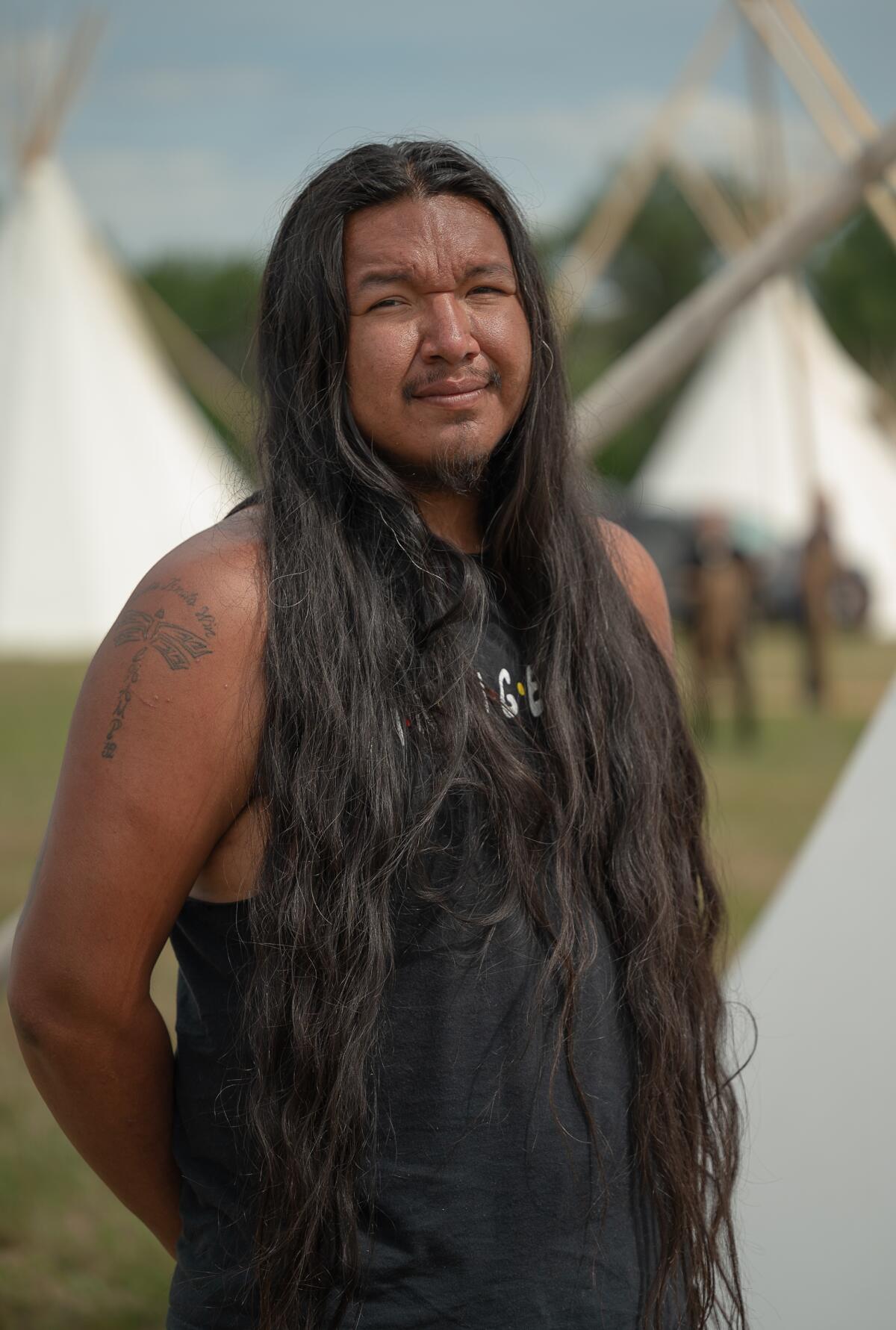
“They say the battle lasted as long as it took you to make a cup of coffee and drink it,” he said.
Custer was outnumbered. By the battle’s end, 268 of Custer’s forces were killed, mostly U.S. soldiers. Custer was among those killed. On the other side, fewer than 100 Native Americans were killed, including women and children.
Custer’s crushing defeat sparked fear and outrage nationwide. The U.S. government responded by changing its approach to Indian policy, shifting to forced assimilation. Just three years after the battle, the first off-reservation federal Indian Boarding School opened in Carlisle, Pa. Hundreds more followed, beginning a century of abuse that attempted to erase Native ways of life.
“They realized that they couldn’t destroy us head on. … So after that, they did the next best thing that you could do to tear apart a nation, and that was take away the children,” said Eagle Bear.
Youth leaders hope to inspire the next generation
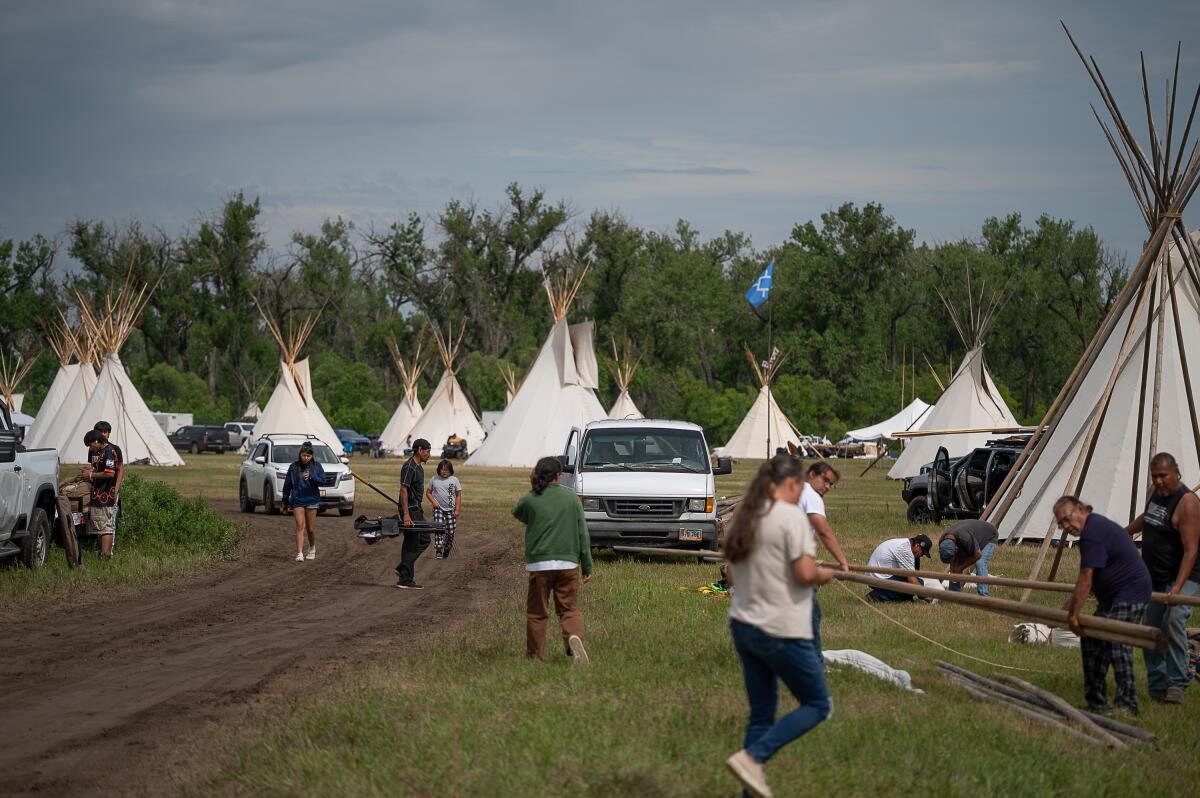
Eagle Bear is camping at the site of that historic village. To commemorate their victory, people from various tribal nations have set up their tipis here, and there is a council lodge in the middle of the camp.
Eagle Bear is here as one of the coordinators for the Rosebud Sioux Tribe’s camp, and he said he wants to set an example for the next generation.
“Someday from now, you know, the kids that are here today, they’re going to come together during the 200th anniversary and they’re going to talk about what they witnessed as kids,” he said. “My prayers are being answered every single day with the fact that these kids are here.”
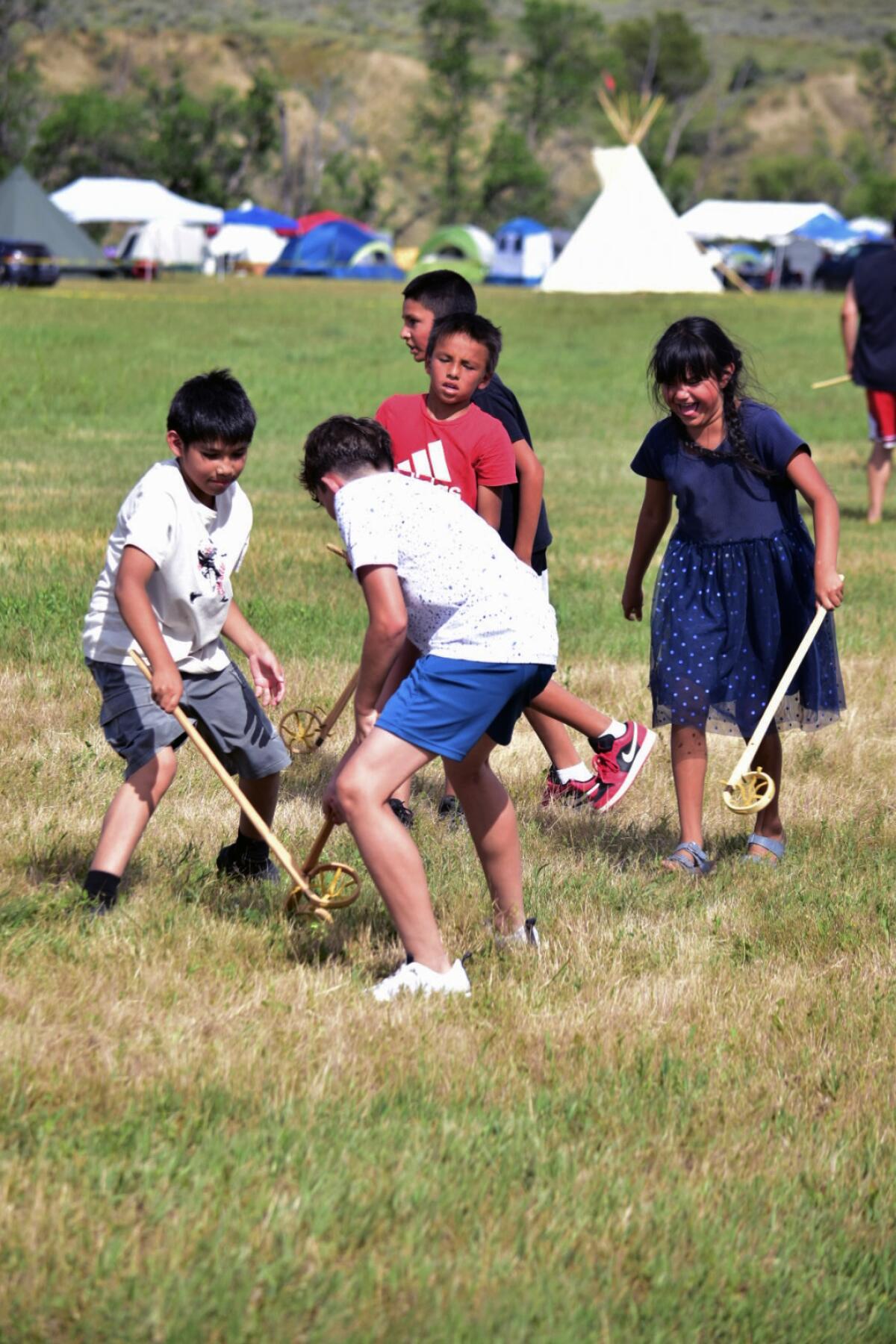
Just feet away, a group of children are playing lacrosse with traditional sticks to the sound of drumming. And cooking for the camp are members of the Sicunga Youth Council.
“We’ve been planning this for roughly eight months now. So it’s very heartwarming to see everyone that actually showed up and that’s here,” said Ashlen Bonshirt, a member of the youth council.
“We did plan the lacrosse, and there’s yoga, and there are all these different amazing things for our youth,” she said. “But on the other side of it is the garbage, the showers — everything that is here, we had to plan for it.”
The camp is full of young people. School groups, youth councils and kids with their families are staying in tipis all around. Many of them are learning things about the battle that weren’t covered in school.
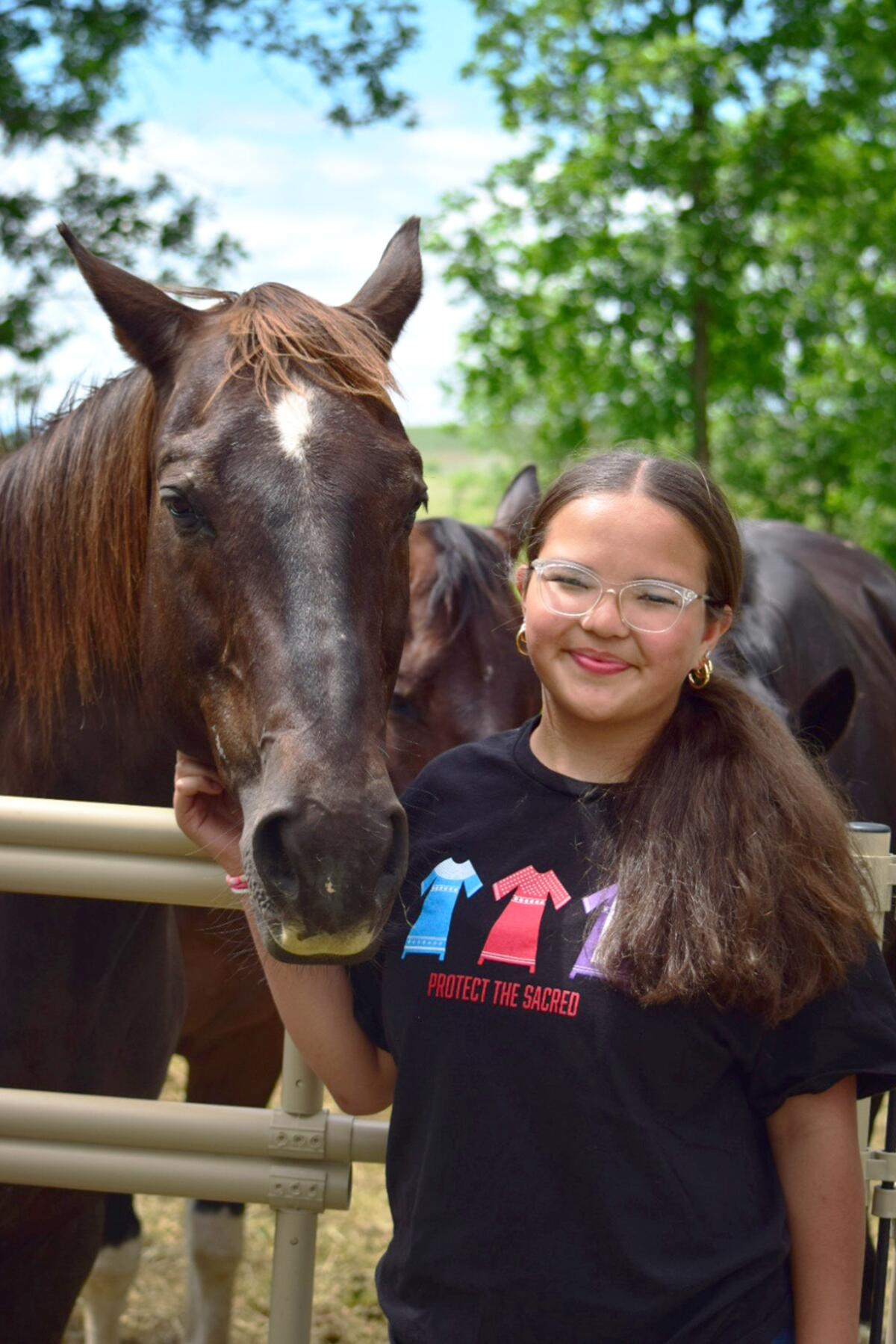
“I feel like a lot of it is whitewashed,” said 13-year-old Gianna Larocque-Mahto. She’s Dakota, of the Sisseton-Wahpeton Oyate, and she’s here with her grandmother.
“We didn’t get to learn about the Native people’s side, like the Dakota people’s side. We only got to learn from one perspective,” she said. “And I feel like that’s not fair. … I think it’s important that we learn from all different people’s perspectives and not just one person.”
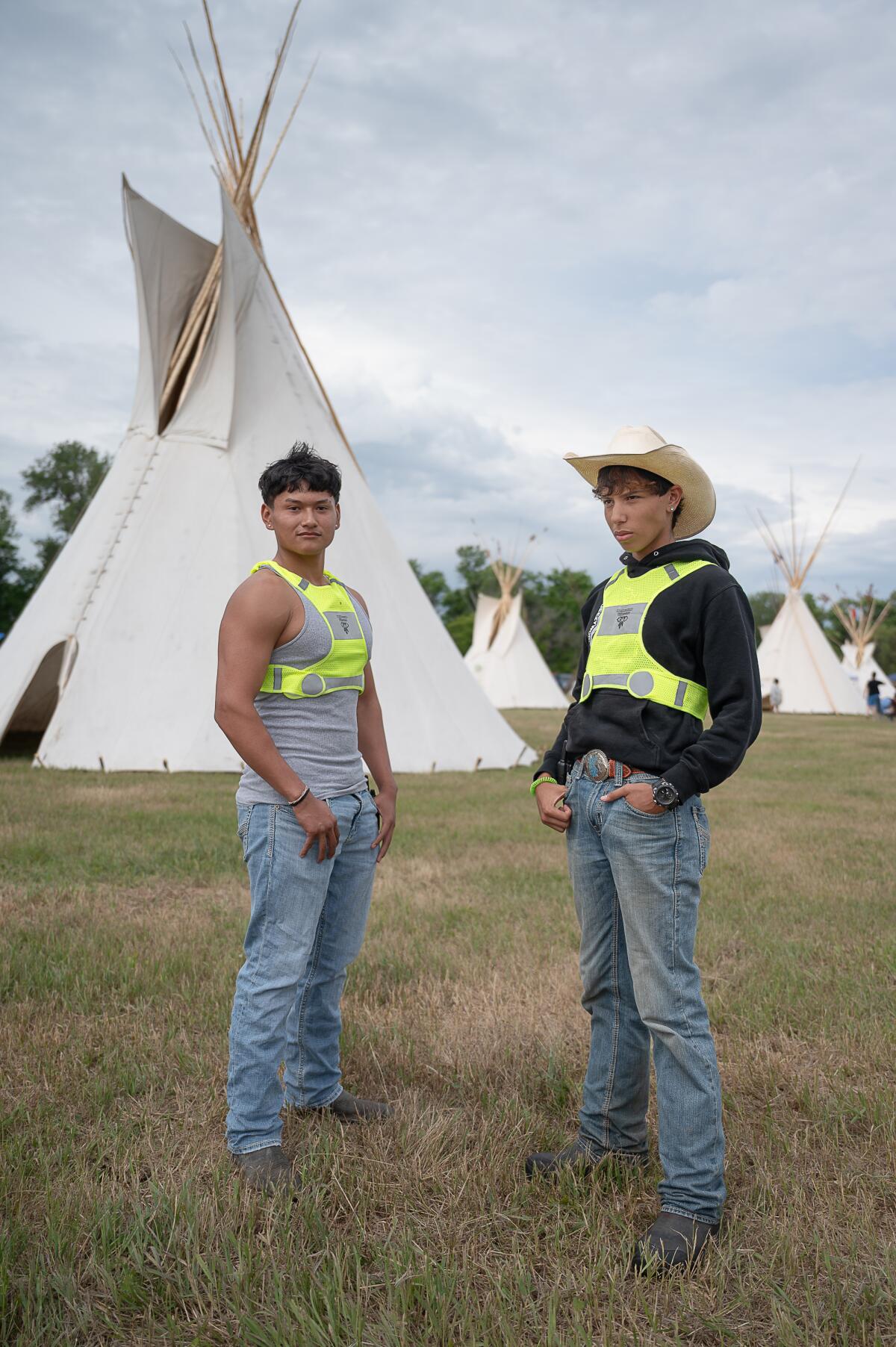
Eighteen-year-old Champion Marquez is Cheyenne. He’s also staying at the camp, and he’s been volunteering here this week — working security, helping elders and setting up tipis.
Marquez said the commemoration gives him hope for the future. “Hope that a bunch of new generations are going to learn about what happened at the Battle of Little Bighorn. Seeing all these kids having fun, playing with each other, all these events for them happening.”
“Seeing all this here just [reassures] that … we’re still here.”
Transcript:
SCOTT SIMON, HOST:
One hundred and fifty years ago this week, Lieutenant Colonel George Armstrong Custer launched an attack on an encampment of Native tribes in what is now Montana. Often called Custer’s Last Stand, the Battle of Little Bighorn was a decisive victory for Plains tribes. It was also a significant moment in the nation’s history as the U.S. government moved to force Indigenous peoples onto reservations. NPR’s Kadin Mills takes us to the site of that historic battle.
KADIN MILLS, BYLINE: Much like their ancestors did 150 years ago, members and descendants of over a dozen tribes charged on horseback onto the historic battlefield.
(SOUNDBITE OF HORSES WHINNYING)
MILLS: They race across the dry landscape, kicking up clouds of dust before circling at the top of a hill at Little Bighorn Battlefield National Monument.
(SOUNDBITE OF ARCHIVED RECORDING)
UNIDENTIFIED RIDERS: (Ululating).
MILLS: It looks like a scene from 1876, except in addition to headdresses and war paint, many of the riders are also wearing tank tops and T-shirts. And they pose for pictures in front of the crowds that have gathered here.
UNIDENTIFIED RIDER: (Whooping).
MILLS: The riders are also carrying the flags of their numerous tribal nations in a show of unity – the same unity that led to Custer’s demise in what many Native people call the Battle of Greasy Grass.
CHAMPION MARQUEZ: And we were ready to charge until Custer then came and tried to sneak attack us.
MILLS: That’s 18-year-old Champion Marquez.
MARQUEZ: We, like, fought back and basically beat them. Kind of like the “Avatar” movie.
MILLS: He’s Cheyenne, and he’s been volunteering here this week, working security, helping elders and setting up tepees. Plus learning a lot more about this battle than he has in school.
MARQUEZ: I learned that we just fought them. I didn’t know that we actually, like, gathered up as a tribe, like, of 2,000 people and then we fought.
MILLS: When Custer and his troops were tasked with dealing with, quote, “hostile Indians,” they thought disbanding the camp would be easy.
CHRISTOPHER EAGLE BEAR: It was the biggest victory that our people had against the United States government.
MILLS: That’s Christopher Eagle Bear. He’s Sicangu Lakota of the Rosebud Sioux Tribe. He said the allied tribes hoped this would be the final blow to the U.S. military and that the government would leave them alone.
EAGLE BEAR: They realized that they couldn’t destroy us head-on. So after that, they did the next best thing that you could do to tear apart a nation. And that was take away their children.
MILLS: Just three years later, the first federal Indian boarding school opened in Pennsylvania. Hundreds more followed, beginning a century of abuse that attempted to erase Native ways of life.
EAGLE BEAR: A couple of my grandfathers, my grandmothers, my uncles and aunties – they were all products of boarding schools. And over the course of that, we lost one thing. And that was our identity. That was our spirit.
MILLS: Eagle Bear is here today with his grandfather, reclaiming that identity. Together, they’re the main event organizers for their tribe’s camp, where they’re surrounded by the sounds of drumming and kids playing traditional games like lacrosse.
UNIDENTIFIED CHILDREN: Four. Five.
ASHLEN BONSHIRT: We’ve been planning this for roughly eight months now. So it’s very heartwarming to see everyone that actually showed up and that’s here.
MILLS: That’s Ashlen Boneshirt. She and her friend Mylah Gabriel are both 18 and members of the Sicangu Youth Council.
MYLAH GABRIEL: You know, this is us telling people we’re still here, you know, and we’re proud. And we’re not just, you know, hiding.
MILLS: They’re here with Dominique Harris (ph). She’s the youth council’s project coordinator.
DOMINIQUE HARRIS: The fact that they’re so young and they’re here now – it just gives them the perfect opportunity and space to learn about the history of this battle, why it’s important to our people and the effect that it has on us to this day.
MILLS: As we walk through the encampment, we weave between tall canvas tepees that stretch to greet Montana’s big sky. That’s when we meet Gaby Strong. She’s Sisseton-Wahpeton and Mdewakanton.
GABY STRONG: This camp is full of youth and young people. I think one of the important messages here is this is a commemoration of a victory from 150 years ago, but our victories are still possible today.
MILLS: As important as it is for the young people to be here, Christopher Eagle Bear says he’s grateful that his grandfather can be here, too, surrounded by a new generation learning and celebrating their cultures.
EAGLE BEAR: I wanted my grandpa to see this before he made his journey so that whenever he goes to the spirit world, he’ll be able to tell all those leaders, like Crazy Horse and Sitting Bull, that we’re still here. And you guys did a great job.
MILLS: Eagle Bear says he feels a duty to set that same example for future generations.
Kadin Mills, NPR News, Crow Agency, Montana.